Thursday, October 7, 2021

FCC ready to fund $164 million to RDOF winners


The FCC is ready to authorize $163,895,636 to 42 providers in the second round of funding for new broadband deployments through the Rural Digital Opportunity Fund.  In this funding wave, 42 broadband providers will bring fiber-to-the-home gigabit broadband to approximately 65,000 locations in 21 states over the next 10 years. 

The FCC also announced that 85 winning bidders have chosen not to pursue buildout in 5,089 census blocks in response to letters the FCC sent asking applicants to review their bids in areas where there was evidence of existing service or questions of potential waste. 

“More help is on the way to households without broadband,” said FCC Acting Chairwoman Jessica Rosenworcel.  “This is an important program for getting more Americans connected to high-speed internet, and we are continuing careful oversight of this process to ensure that providers meet their obligations to deploy in areas that need it.”

In July, the Commission sent letters to 197 winning bidders offering providers an opportunity to withdraw their funding requests from places where there was evidence of service or where questions of waste have been raised.  In response to these letters, numerous winning bidders have conducted new due diligence on the areas in question, and many have decided not to pursue support in the identified areas.


Pluribus nets $20 million to advance its distributed cloud networking

Pluribus Networks announced $20 million in new funding for its solutions for distributed cloud networking and SDN automation.

Pluribus said it will use the financing to bolster R&D for multiple new product initiatives along with sales and marketing resources that will further accelerate the company’s penetration into the distributed cloud market, while supporting expansion into adjacent sectors.

“With such pronounced momentum of cloud infrastructure towards distributed data center architectures, Pluribus is uniquely positioned to address a number of multi-site data centers, edge computing and metro use cases by providing networks that are highly distributed and perform at scale. The recent thorough due diligence and investment from Morgan Stanley Expansion Capital, along with the strong support of our existing investors, is an affirmation of our technology, vision and market position,” said Kumar Srikantan, Pluribus Networks, president and chief executive officer.

The new funding round was led by investment funds managed by Morgan Stanley Expansion Capital. This adds to Pluribus’ existing portfolio of top-tier investors, including Ericsson, New Enterprise Associates (NEA), Temasek, Menlo Ventures, Jerry Yang’s AME Cloud Ventures, Data Collective Venture Capital and Mohr Davidow. Prior to this financing round, Pluribus had previously raised $125 million in funding

https://www.pluribusnetworks.com/

Lightwave Logic announces $33M for electro-optic polymers

Lightwave Logic announced that Lincoln Park Capital Fund purchased $3 million of common stock at closing, which was sold at $9.16/share. Under the purchase agreement, Lightwave Logic will have the right, but not the obligation, to sell up to an additional $30.0 million of its common stock to Lincoln Park over a 36-month period.  Lightwave Logic will control the timing and amount of any sales to Lincoln Park with no upper limits to the price Lincoln Park may pay to purchase such common stock. The purchase agreement may be terminated by Lightwave Logic at any time, in its sole discretion, without any additional cost or penalty.

Jim Marcelli, President and Chief Operating Officer of Lightwave Logic, commented, "While we are comfortable with our current cash position of approximately $15 million and burn rate, this financing provides additional flexibility for us as we move forward toward commercialization of our products.

Lightwave Logic is developing a platform leveraging its proprietary engineered electro-optic (EO) polymers to transmit data at higher speeds with less power. 

http://www.lightwavelogic.com

Lightwave Logic and Polariton announce record polymer modulator

Lightwave Logic has achieved world-record performance for a polymer modulator, as demonstrated in an optical transmission experiment by ETH Zurich, using its proprietary, advanced "Perkinamine" chromophores and Polariton Technologies' newest plasmonic EO modulator, a silicon-photonics-based plasmonic racetrack modulator offering energy-efficient, low-loss, and high-speed modulation in a compact footprint.

Polariton's plasmonic modulator transmitted 220 Gbps OOK and 408 Gbps 8PAM. Transmission of an optical signal was conducted over 100 m using a low-voltage electrical drive of 0.6Vp, an on-chip loss of 1 dB, and an optical 3 dB bandwidth of beyond 110 GHz. 

The groundbreaking results were presented as a post-deadline paper at the prestigious European Conference on Optical Communications (ECOC).

"Our mission at Lightwave Logic is to continually push the frontiers of high-speed performance for electro-optic polymers, shaping the 'impossible' into reality and a new normal for the industry," said Dr. Michael Lebby, Chief Executive Officer of Lightwave Logic. "Through our collaboration with Polariton, we have achieved a new world-record for a racetrack plasmonic modulator device structure. The acceptance of a post-deadline peer reviewed paper at ECOC 2021 provides third party validation of this incredible result.

Wednesday, October 6, 2021

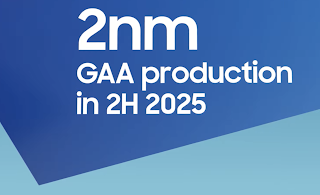
Samsung Foundry targets 3nm in 2022, 2nm in 2025

Samsung Foundry is scheduled to start producing its customers' first 3nm-based chip designs in the first half of 2022, while its second generation of 3nm is expected in 2023.

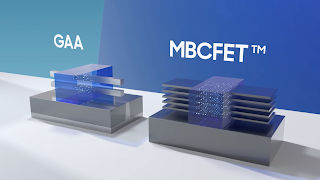
During its 5th annual Samsung Foundry Forum (SFF) 2021 underway this week, Samsung Electronics unveiled plans for continuous process technology migration to 3- and 2-nm based on the company’s Gate-All-Around (GAA) transistor structure.

Samsung said its first 3nm GAA process node utilizing Multi-Bridge-Channel FET (MBCFETTM) will allow up to 35 percent decrease in area, 30 percent higher performance or 50 percent lower power consumption compared to the 5nm process. In addition to power, performance, and area (PPA) improvements, as its process maturity has increased, 3nm’s logic yield is approaching a similar level to the 4nm process, which is currently in mass production.

The 2nm process node with MBCFET is in the early stages of development with mass production in 2025.

“We will increase our overall production capacity and lead the most advanced technologies while taking silicon scaling a step further and continuing technological innovation by application,” said Dr. Siyoung Choi, President and Head of Foundry Business at Samsung Electronics. "Amid further digitalization prompted by the COVID-19 pandemic, our customers and partners will discover the limitless potential of silicon implementation for delivering the right technology at the right time."

Additionally, Samsung is advancing its 14nm process in order to support 3.3V high voltage or flash-type embedded MRAM (eMRAM) which enables increased write speed and density. It will be a great option for applications such as micro controller unit (MCU), IoT and wearables. Samsung’s 8nm radio frequency (RF) platform is expected to expand the company’s leadership in the 5G semiconductor market from sub-6GHz to mmWave applications.

http://news.samsung.com

POET's Interposer selected for 100G CWDM4 and LR4 engines

POET Technologies has secured a commitment from a leading network systems company for a unique multi-engine design for 100G CWDM4 and 100G LR4 Optical Engines based on the POET Optical Interposer.  The combined value of the NRE and the purchase order for initial units exceeds US$1.2 million.

The POET Optical Interposer enables the integration of electronic and photonic devices into a single multi-chip module using advanced wafer-level semiconductor manufacturing techniques and packaging methods. The company says its platform eliminates costly components and labor-intensive assembly, alignment, burn-in and testing methods employed in conventional photonics. 

“We have been engaged with this customer for several months on a breakthrough design to incorporate multiple optical engines in a single industry standard transceiver module, something that only a POET Optical Interposer-based engine can enable,” noted Vivek Rajgarhia, President & General Manager of POET Technologies Inc. “The LR4 product is directed at the client side of major telecom networks, using rigorous standards for data communication between a transport network backbone to data centers and customer locations globally. Our customer is already selling into the well-established telecom equipment market, and with the POET Optical Engines, will be able to offer a solution to its customers that delivers superior performance at a price that cannot be matched today by competing solutions."

http://www.poet-technologies.com


AT&T to leverage Frontier’s Ethernet and fiber infrastructure

AT&T announced a deal with Frontier Communications to bring fiber-optic connectivity to large enterprise customers outside AT&T’s current footprint. The two companies signed multi-year strategic agreements that will also support deployment of AT&T’s 5G mobility network.

Frontier is pursuing a Build Gigabit America fiber expansion plan that will pass 10 million locations by the end of 2025. Frontier expects to make fiber available to 600,000 new locations in 2021, resulting in approximately 4 million fiber locations passed by the end of the year. 

AT&T said the agreement will enable it to quickly reach additional locations by utilizing Frontier’s fiber network. Together, the two companies will enable high-speed connectivity to large enterprise customers within Frontier’s 25-state footprint.


Specifically, AT&T will be able to utilize Frontier’s fiber network to help reach enterprise customers in Frontier’s service territories reaching 25 states. AT&T will also use Frontier’s network to strengthen nationwide deployment of its 5G network. In addition, AT&T will tap Frontier’s Ethernet network to boost connectivity between cell towers and the core network.

https://about.att.com/story/2021/att_frontier_deal.html

Frontier accelerates fiber buildout

 Frontier Communications has set a new objective to reach 10 million total fiber locations by the end of 2025. Frontier made significant progress toward this objective in the second quarter of 2021, building fiber to approximately 157,000 new locations. Frontier now expects to reach 600,000 new locations in 2021, resulting in approximately 4 million fiber locations passed by the end of the year.

Nick Jeffery, President and Chief Executive Officer of Frontier, said “Demand for high-speed broadband is growing rapidly, and fiber is the best product to meet the needs of consumers and businesses. Frontier is already doing what customers want and cable can’t – delivering symmetrical download and upload speeds with far lower latency than our competition. Early next year, we will start delivering 2 gigabit per second services, further stretching our performance lead to where only fiber can compete. We have hard work ahead of us, but momentum is increasing as we rally the Frontier team around our mission to Build Gigabit America.”


The company provided the following updates:

  • Frontier’s currently is able to deliver symmetrical 1 Gbps download and upload speeds;
  • The company plans to launch a symmetrical 2 Gbps offering in the first quarter of 2022 that will unlock next-generation digital experiences for customers;
  • Frontier plans to deploy fiber to reach 10 million locations by 2025; and
  • Frontier has set a new target of $250 million run rate savings by 2023 from simplifying its operations and improve the customer experience.

In addition, Frontier reported consolidated Q2 revenue of $1.62 billion, a 7.9% decline from consolidated revenue reported in the second quarter of 2020, due to declining consumer copper subscribers and wholesale revenue, and the impact of fresh start accounting. 

Frontier’s overall data and internet services revenue of $839 million decreased slightly in the second quarter of 2021 primarily due to declining copper subscribers. fiber broadband revenue was $268 million, a 13.6% increase over the second quarter of 2020, due to subscriber gains and higher ARPU. Consumer fiber net adds were approximately 12,000 in the quarter, the eighth consecutive quarter of positive consumer fiber net adds, resulting in broadband customer growth of 3.3% relative to the second quarter of 2020.

Second quarter 2021 operating income was $298 million. Net income was $4.58 billion due to approximately $4.2 billion of reorganization gains in the quarter, primarily related to the extinguishment of debt.

Capital expenditures increased to $385 million in the quarter from $225 million in the second quarter of 2020, as fiber expansion initiatives accelerated.

https://investor.frontier.com/

https://s1.q4cdn.com/144417568/files/doc_financials/2021/q2/FYBR-2021-Investor-Day-Presentation.pdf

Frontier emerges from Chapter 11 and sets sights on fiber expansion

Frontier Communications completed its financial restructuring process and emerged from Chapter 11. Through the bankruptcy proceedings, Frontier has reduced its debt by approximately $11 billion and annual interest expense by approximately $1 billion. The company says it is now well-positioned to accelerate its transformation to become a leading telecommunications technology company in the United States through investment in innovation, fiber...


Vertical Systems: Gigabit services driving U.S. retail Carrier Ethernet

Gigabit services are the largest and fastest growing source of U.S. retail Carrier Ethernet revenue, according to Vertical Systems Group’s latest ENS (Emerging Networks Service). 

The Ethernet services delivered using 1 Gbps and higher speed ports now contribute more than half (54%) of U.S. Ethernet revenue, and comprise just over one quarter (26%) of ports installed at customer sites.

Solid revenue growth is projected through 2025 for gigabit port capacities, in contrast to revenue erosion for lower speed Ethernet connectivity. 

Vertical’s analysis includes detailed projections for six services across five speed segments. The speed segments are 10+ Gbps, 1 Gbps, 100 Mbps, 10 Mbps, and Sub-10 Mbps. Service segments covered include DIA (Dedicated Internet Access), Ethernet Access to IP/MPLS, EPL (Ethernet Private Lines), EVPL (Ethernet Virtual Private Lines), Metro LAN and WAN VPLS (Wide Area Network Virtual Private LAN Service).

Ethernet Research Highlights

  • Total U.S. Ethernet revenue dipped as a result of COVID-related disruptions and price compression, however the number of Ethernet ports installed at customer sites continued to expand.
  • 1 Gbps is the top speed segment based on Ethernet revenue through 2025.
  • 100 Mbps remains the largest Ethernet speed segment based on customer port installations.
  • EPL is the top Ethernet service segment based on revenue through 2022.
  • DIA has the highest projected CAGRs through 2025 for both ports and revenue. Demand for DIA is boosted by requirements for secure, dedicated connectivity to cloud services and data centers, as well as access links for SD-WAN underlays.
  • Bandwidth utilization for U.S. Ethernet customer ports is climbing at double digit rates. By 2025, gigabit speed services will contribute an estimated 97% of total Ethernet bandwidth.
  • Requirements for gigabit Ethernet services are spurring new fiber buildouts. All of the Ethernet Service Providers ranked on Vertical’s Mid-2021 U.S. Carrier Ethernet LEADERBOARD also hold a rank position for fiber provider leadership on the latest U.S. Fiber Lit Buildings LEADERBOARD.
  • Ethernet price compression continues across every service and speed combination as billed to customers (i.e., average ‘street price’ net of discounts).
  • Challenges to Ethernet market expansion include SD-WAN, wavelength services and dark fiber.

https://www.verticalsystems.com/2021/10/04/statflash-gigabit-ethernet-2021/

Nokia and MediaTek achieve 3.2 Gbps with FDD/TDD aggregation

Nokia and MediaTek achieved 3.2Gbps peak downlink throughput by aggregating 5G Standalone (5G SA) spectrum using 3 Components Carrier (3CC) aggregation, effectively combining 210MHz of FDD and TDD spectrum.

Nokia supplied its latest AirScale equipment including its AirScale 5G SA architecture powered by its ReefShark System-on-Chip (SoC) technology as well as its cloud-native 5G core. MediaTek provided its new M80 5G modem which combines mmWave and sub-6 GHz capabilities onto a  single chip as well as the user equipment testing platform.


Frequency division duplex (FDD) in 600MHz (n71) is a lower frequency band that provides a wide coverage area, improving cell edge performance. Time-division duplex (TDD) in 2600MHz (n41) has higher bandwidth and capacity. The combination of these spectrum bands supports a range of 5G deployment scenarios including indoor as well enhanced outdoor coverage. The high-band sub-6Ghz spectrum bands support high-capacity and extreme mobile broadband capabilities.

JS Pan, General Manager, Wireless Communication System, and Partnerships at MediaTek, said: “This test demonstrates the importance of carrier aggregation in enabling mobile operators around the world to deliver best-in-class speed and capacity to their subscribers. The combination of Nokia’s AirScale portfolio and our technology boosts the possibilities of spectrum assets and 5G networks. We look forward to continuing to partner with Nokia to advance the 5G ecosystem.”

Arista ships a Wi-Fi 6E access point

Arista Networks has begun taking orders for a new Wi-Fi 6E access point as part of its cognitive campus edge portfolio.

The C-360 wireless platform for next generation campus edge infrastructures is Arista’s cognitive unified edge solution with advanced AI/ML capabilities for understanding which devices are on the wired and wireless network, what they're doing, and whether they're properly segmented. 

Key specs for the C-360

  • Full-featured Wi-Fi 6E, 12 Stream AP
  • Access radios: 4x4:4 6/5GHz Radio + 4x4:4 5GHz Radio + 4x4:4 2.4 GHz Radio
  • 2x2 tri-band multifunctional radio for network assurance, RRM, security and troubleshooting
  • 2x 10 Gigabit Ethernet PoE ports (MACsec capable)
  • Integrated IoT support (BLE/Zigbee)
  • Distributed Data and Control plane
  • IZero-touch deployment through automatic cloud activation and configuration
  • AI/ML driven diagnostics and troubleshooting
  • Network Assurance with Client Connectivity tests
  • Next generation 6 GHz Wireless Intrusion Prevention System (WIPS)

https://www.arista.com/en/company/news/press-release/13241-pr-20211006

Syniverse confirms long running breach of its global SMS network

In an SEC filing, Syniverse, which provides SMS connectivity services for nearly all mobile carriers, confirmed that a cyber breach discovered in May 2021 had been underway since May 2016.

Syniverse said an individual or organization gained unauthorized access to databases within its network on several occasions, and that login information allowing access to or from its Electronic Data Transfer (“EDT”) environment was compromised for approximately 235 of its customers. All EDT customers have been notified and have had their credentials reset or inactivated, even if their credentials were not impacted by the incident. All customers whose credentials were impacted have been notified of that circumstance.

 In its filing, Syniverse also noted that AT&T Mobility generated 11.4% and 13.5% of its total revenues for the six months ended May 31, 2021 and the eleven months ended November 30, 2020, respectively. A significant amount of Syniverse’s remaining revenues were generated by a small number of additional customers, including Twilio. For the six months ended May 31, 2021, Syniverse’s top 10 carrier customers accounted for approximately 45% of its carrier revenue, and its top 10 enterprise customers accounted for approximately 53% of its enterprise revenue.

https://www.sec.gov/Archives/edgar/data/1839175/000119312521284329/d234831dprem14a.htm

Nokia: network automation delivers 65% OPEX cost avoidance

Operators can expect up to a 65% cost avoidance after implementing IP network automation according to Nokia based on a study performed by research firm Analysys Mason.

The study focused on network automation implemented for the operator’s service fulfilment, network lifecycle management, and network and service assurance processes with the Nokia NSP, a domain controller for multivendor IP, optical and microwave networks.

Analysys Mason interviewed a group of global operators on their network automation strategies and results, collecting more than 60 data points. Analysys Mason then extrapolated the quantified benefits that can be expected from automating IP networks.  Analysys Mason found cost avoidance at the domain controller is the result of multiple factors:

  • Process automation reduces the labor time requirement for manual workloads by up to 68%.
  • Consequently, the time needed to roll out new services is reduced by up to 88%.
  • Less manual tasks also means less human errors and higher predictability. The use of a standardized scenarios reduces the frequency of order fallout and issues that require manual correction. Overall, the time spent to process errors is reduced by up to 85%.
  • Automating alarm correlation and root cause analysis offers a significant improvement to the mean time to repair (MTTR) – up to 71%.

Larry Goldman, Chief Analyst and Project Director, Analysys Mason, said: “Our study shows clear benefits at the domain layer, and we highly recommend operators automate network management processes for their IP services. Network automation will be critical to enable future network slicing-based business models. Operators should also look for a network automation platform such as the Nokia NSP to reap the benefits of automation and ensure the efficient and automated management and control of network slice-based services.”

https://www.nokia.com/about-us/news/releases/2021/10/05/nokia-study-finds-operators-can-avoid-65-of-operational-costs-with-ip-network-automation/

Cadence debuts 3D-IC for multi-chiplet and advanced packaging

Cadence Design Systems released its Integrity 3D-IC platform integrating 3D chip design planning, implementation and system analysis.

Cadence says its platform provides system planning, integrated electrothermal, static timing analysis (STA) and physical verification flows, enabling faster, high-quality 3D design closure. It also incorporates 3D exploration flows, which take 2D design netlists to create multiple 3D stacking scenarios based on user input, automatically selecting the optimal, final 3D stacked configuration. 

Features and benefits:

  • Common cockpit and database: Lets SoC and package design teams co-optimize the system concurrently, allowing system-level feedback to be incorporated efficiently.
  • Complete planning system: Incorporates a 3D-IC stack planning system for all types of 3D designs, enabling customers to manage and implement native 3D stacking.
  • Seamless implementation tool integration: Provides ease of use through direct script-based integration with the Cadence Innovus Implementation System for high-capacity digital designs with 3D die partitioning, optimization and timing flows.
  • Integrated system-level analysis capabilities: Enables 3D-IC design through early electrothermal and cross-die STA, which allows early system-level feedback for system-driven PPA.
  • Co-design with the Virtuoso Design Environment and Allegro packaging technologies: Allows engineers to seamlessly move design data from Cadence analog and packaging environments to different parts of the system through the hierarchical database, enabling faster design closure and improved productivity.

“Cadence has historically offered customers strong 3D-IC packaging solutions through its leading digital, analog and package implementation product lines,” said Dr. Chin-Chi Teng, senior vice president and general manager in the Digital & Signoff Group at Cadence. “With recent developments in advanced packaging technologies, we saw a need to further build upon our successful 3D-IC foundation, providing a more tightly integrated platform that ties our implementation technology with system-level planning and analysis. As the industry continues to move toward different configurations of 3D stacked dies, the new Integrity 3D-IC platform lets customers achieve system-driven PPA, reduced design complexity and faster time to market.”

http://www.cadence.com/go/3DIC


Henshall steps down as CEO of Citrix

 David J. Henshall stepped down as President and CEO of Citrix Systems and as a member of the company’s board.

Citrix named Bob Calderoni, Chair of the Citrix Board of Directors as interim CEO and President, effective immediately.

“I would like to thank David for his many contributions to Citrix,” said Bob Calderoni. “David played a key role in accelerating our cloud transition and has driven significant improvements in our products, with over a dozen SaaS services actively supporting more than 11 million subscribers.

“David has also been instrumental in helping the Company and our employees navigate the pandemic, and successfully positioned Citrix to help customers around the world and across industries maintain business operations with minimal disruption. The entire Board thanks him for his contributions over nearly 20 years.”

In addition, based on preliminary unaudited financial information, Citrix said it expects to report revenue at the midpoint to the high end of its previously announced guidance range of $765 million to $775 million for the third quarter ended September 30, 2021. Citrix will report full financial results for the third quarter on Thursday, November 4, 2021, before market open.


VodafoneZiggo picks RedHat Openstack

VodafoneZiggo will deploy a hybrid cloud platform based on Red Hat OpenShift to unify its application infrastructure in the Netherlands, including its new standalone 5G core. The carrier has selected Red Hat OpenShift as its foundation for cloud-native applications across both the network and the business, with 5G Core as its first deployment. After a successful proof of concept, VodafoneZiggo enlisted Red Hat Consulting to support the production roll out of Red Hat OpenShift and to provide guidance for embracing agile development models like DevSecOps as well as moving to a more open, collaborative culture. 


VodafoneZiggo already had a common platform in place for its 4G mobile core and several business applications, built on Red Hat OpenStack Platform. 

“Through a flexible, open strategy, Red Hat strives to help service providers be more central to the digital value chain as they navigate changing industry and consumer dynamics. Red Hat helps drive open innovation around real-world needs in the telecommunications industry, bringing many of these innovations in cloud-native networking to Red Hat OpenShift. We are proud to provide VodafoneZiggo with a foundation to support a wide range of 5G use cases whilst helping minimize operational complexities and costs, ultimately powering diverse new services for people and businesses,” states Darrell Jordan-Smith, senior vice president, Industries and Global Accounts, Red Hat.

Tuesday, October 5, 2021

FCC's mid-band spectrum auction hits $672M on first day

The Federal Communications Commission kicked off its auction of 100 megahertz of contiguous, 3.45 GHz mid-band spectrum.  

“We are moving with record speed and collaboration to free up more mid-band spectrum for 5G,” said FCC Acting Chairwoman Jessica Rosenworcel.  “These airwaves are a critical part of unlocking the 5G promise everywhere in the country.  I want to thank the FCC staff who have worked so hard to start this auction this year.  And I want to thank our partners at NTIA and the Department of Defense for working with us to free up this spectrum for 5G.”

As required by law, auction proceeds must cover 110% of the expected sharing and relocation costs for federal users currently operating in the band – in this case $14,775,354,330, based on a January 14, 2021 estimate from NTIA.

The FCC adopted flexible use service rules for the 3.45 GHz band in March 2021 and established procedures for Auction 110 in June.  License winners will operate within a cooperative sharing framework that will enable commercial use by an array of service providers, while also ensuring that federal incumbents are still protected from harmful interference where and when they require continued access to the band. 

After 2 rounds on the first day, bidding reached $672,410,700.

https://www.fcc.gov/auction/110


VMware's Cross-Cloud service promises agnostic approach

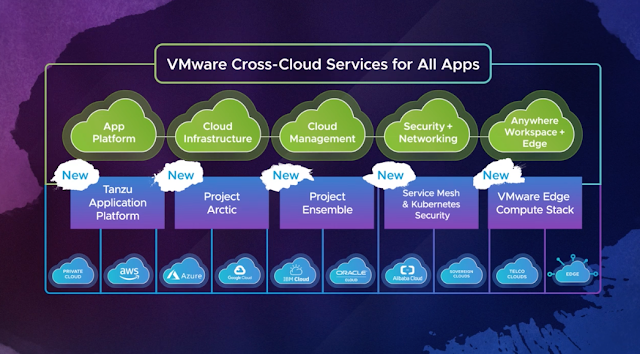
At this week's virtual VMworld 2021, VMware launched new Cross-Cloud services for providing customers with the ability to build, run and better secure apps across any cloud. 


VMware Cross-Cloud services is comprised of five core building blocks:

  • A state-of-the-art platform for building and deploying cloud-native apps;
  • Cloud infrastructure for operating and running enterprise apps;
  • Cloud management for monitoring and managing the performance and cost of apps across different clouds;
  • Security and networking that spans across entire multi-cloud operations to connect and better secure all apps; and,
  • A digital workspace to empower the distributed workforce along with edge solutions to deploy and manage edge-native apps.

“Multi-cloud is the digital business model for the next 20 years, as entire industries reinvent themselves,” said Raghu Raghuram, chief executive officer, VMware. “It’s no longer about a ‘cloud-first’ approach – it’s about being ‘cloud-smart’. Organizations should have the freedom to choose the ’right’ cloud, based on their strategic business goals. With our cloud-agnostic approach, we are uniquely positioned to meet our customers where they are and take them where they want to go. We give every organization the power to accelerate their innovation and control their own destiny in the multi-cloud era.”


http://www.vmware.com


Marvell looks to TSMC's 3nm for custom ASICs

Marvell will use TSMC’s 3nm process technology to offer custom silicon for cloud data center, 5G carrier, automotive and enterprise markets.

Marvell is first to introduce a silicon platform that leverages 3nm process technology, advanced die-to-die interface IP, and TSMC’s advanced 2.5D Chip-on-Wafer-on-Substrate (CoWoS) packaging technology.

“Marvell is proud to be the lead ve3nm3nmndor to offer a 3nm platform for cloud-optimized solutions,” said Sandeep Bharathi, Executive Vice President, Central Engineering, System-on-Chip Group at Marvell. “Our new advanced node platform places Marvell on the leading edge of technology readiness with early Si validation of critical IPs to enable fast time-to-market.”

Marvell's new 3nm multi-chip platform includes two complementary advanced die-to-die interfaces. The first is a flexible extra short reach (XSR) interface for connecting multiple die on a package substrate for applications, like co-packaged optics (CPO) for cloud data centers. 

To address the growing needs for cloud-optimized silicon solutions from leading data center operators, Marvell is also developing an ultra-low power and low-latency parallel die-to-die interface with the highest bandwidth density in the industry. Compatible with emerging Open Compute Project (OCP) standards, the new parallel interface enables high-performance chiplet solutions by connecting multiple silicon devices on an interposer. Both interfaces are also available in 5nm to enable multi-node solutions.

The new platform also incorporates TSMC’s advanced CoWoS packaging technology, empowering continued data infrastructure performance scaling. Marvell said its collaboration with TSMC on CoWoS allows customers to build high-performance solutions for "the most demanding cloud data center applications."

https://www.marvell.com/products/custom-asic.html  


  • Earlier this year, TSMC stated that its 3nm technology (N3) will offer up to 70% logic density gain, up to 15% speed improvement at the same power and up to 30% power reduction at the same speed as compared with N5 technology. N3 is expected to receive multiple customer product tape-outs in 2021. In addition, volume production is targeted in second half of 2022.

Marvell debuts 5nm Prestera switch and 5nm OCTEON 10 5nm DPU

Marvell announced the availability of its 5nm Prestera DX 7321 Ethernet switch, the industry’s first 5nm 50G PAM4 device for the carrier market.

The new Marvell Prestera switch is designed for 5G fronthaul and edge applications. With the addition of the 5nm Prestera device, Marvell's carrier-optimized switch portfolio now comprises four Ethernet switches that scale port speeds from 1Gbps to 400Gbps with aggregate bandwidths ranging from 200Gbps to 1.6Tbps. 

Marvell also announced sampling of its 5nm OCTEON 10 DPU family, which will include hardware accelerators to address workloads required by 5G, cloud, carrier and enterprise data center applications. OCTEON 10 offers a mix of compute, hardware acceleration, data path bandwidth, and I/O including PCIe 5.0 and DDR5. 

Marvell’s 5G network solutions also include Alaska Ethernet PHYs and a broad portfolio of optical solutions for edge, metro and long-haul applications. In addition, Marvell’s COLORZ II 400ZR/ZR+ coherent optical modules are enabling carriers with high-capacity, long-reach DWDM connectivity directly from Ethernet switches.

“Carriers are requiring optimized high-performance, low-power and secured next-generation 5G data infrastructure solutions that enable new high-value applications,” said Raghib Hussain, president, Products and Technologies at Marvell. “Our 5nm switch and DPU set a new bar for power, performance and footprint, providing the breakthrough technology needed to fulfill the potential of 5G.”

https://www.marvell.com/

Marvell completes acquisition of Innovium

 Marvell Technology completed its previously announced acquisition of Innovium. 


Marvell to acquire Innovium for data center switching silicon

Marvell Technology agreed to acquire Innovium, a start-up offering switching silicon for cloud and edge data centers, in an all-stock transaction valued at $1.1 billion.

Innovium, which is based in San Jose, California, offers high-performance switching silicon solutions for cloud and edge data centers. The company was founded in 2014 and has approximately 230 employees.

Marvell, which has an extensive portfolio of Ethernet switch semiconductor solutions, and which recently acquired Inphi, said the deal accelerates its position in cloud data centers. Its portfolio for cloud data centers includes: cloud data center solutions, including: 

  • High-speed Electro-Optical PAM4 and Coherent DSP chipsets 
  • Pluggable COLORZ DCI modules OCTEON-based DPUs for security, offload, and acceleration 
  • Custom Arm-based server CPUs 
  • Full custom ASICs Bravera
  • Flash and HDD-based storage
  • and on closing the acquisition of Innovium, cloud-optimized Ethernet switches

“Our acquisition of Innovium and its complementary offerings further extends Marvell’s leadership in the cloud, and I am excited that Innovium has secured significant share at a marquee cloud customer,” said Matt Murphy, President and CEO of Marvell. “Innovium has established itself as a strong cloud data center merchant switch silicon provider with a proven platform, and we look forward to working with their talented team who have a strong track record in the industry for delivering multiple generations of highly successful products.”

Marvell to acquire Innovium for data center switching silicon

Marvell Technology agreed to acquire Innovium, a start-up offering switching silicon for cloud and edge data centers, in an all-stock transaction valued at $1.1 billion.Innovium, which is based in San Jose, California, offers high-performance switching silicon solutions for cloud and edge data centers. The company was founded in 2014 and has approximately 230 employees.Marvell, which has an extensive portfolio of Ethernet switch semiconductor solutions,...


ADVA’s aPNT+ delivers GNSS-independent timing/sync

 ADVA announced its aPNT+ platform for protecting critical infrastructure from the growing danger of GNSS vulnerabilities and cyber threats to positioning, navigation and timing (PNT) services. 

ADVA says its solution provides end-to-end control and timing network visibility for protection against the catastrophic risks that PNT disruption poses to national security and essential assets such as power grids.

“Cyber threats are at an all-time high. At the same time, the infrastructure that our economies and lives depend on has never been more reliant on weak and highly vulnerable satellite signals. That’s why the US DHS and NIST are driving for PNT services to be more resilient and for network operators to implement strategies to counteract the vulnerabilities of GPS and other GNSS systems, including in-network PTP timing feeds. Our trusted aPNT+ platform is the definitive response. Being open and scalable, it offers an end-to-end range of cost-effective solutions and the industry’s most comprehensive features for augmented resilience, robustness and cybersecurity,” said Gil Biran, general manager, Oscilloquartz, ADVA. 


http://www.adva.com