Monday, March 15, 2021

AEPONYX secures funding for silicon photonics on MEMS

AEPONYX, a start-up based in Montreal, announced the closing of a new $10 million funding round to support the buildout its 5G product portfolio.

Participants in this funding round were Fonds Ecofuel, BDC, Investissement Québec, and Fonds Innovexport.

“We are delighted to bring innovative products to the 5G market” says Philippe Babin, CEO of AEPONYX. “The creation of our integrated photonics with MEMS products enable the

Telecom industry to advance their next-generation networks. With the 5G adoption rate eclipsing where 4G was at this point in time, we see tremendous growth potential.”

AEPONYX said its integrated photonics innovations combined with their fast-tuning and ultra-small MEMS devices are well suited for telecom applications.

“While our technology works beautifully in quantum computing, LiDAR, and sensors, we are targeting telecom as our first market vertical” says Babin.

“These optical devices, combining high data rates with being quite small in size, are exactly what the market is looking for to advance the global 5G infrastructure significantly” stated Fonds Ecofuel’s Managing Partner, Richard Cloutier.

http://www.AEPONYX.com


IP Infusion tunes its OS for 5G and high-capacity optical networks

IP Infusion introduced the latest release of its Network Operating System (NOS) platform (OcNOS-SP 4) featuring:

  • Increased scalability -- Scales from entry-level white box switches to high-end optical and packet transport devices, planning to support 400 Gbps ethernet interfaces and beyond
  • Efficient WAN virtualization – Enables diverse overlay services through EVPN/BGP to achieve Traffic Engineering (TE) and resiliency for disparate environments
  • Operational efficiency – Simplifies the service lifecycle through common, streamlined implementations with support for Segment Routing, Path Computation Element Communication Protocol (PCEP), OpenConfig, self-tuning DWDM transceivers, and MicroPlug XGS Passive Optical Network (PON) and Optical Line Terminal (OLT).
  • Mobile network virtualization, across Radio Access Network (RAN), transport and core, necessitates scalability, enhanced Quality of Service (QoS), resiliency and manageability to accommodate massive increases in 5G bandwidth and satisfy the ever-growing demands by users and applications.

OcNOS-SP 4 provides a unified software platform capable of supporting Disaggregated Cell Site Gateway (DCSG) and Cassini-based Packet Optical network element that are fully compliant with the Telecom Infra Project (TIP) Open Optical Packet Transport (OOPT) specifications. OcNOS-SP 4 also provides support for the latest cost-optimized DCSG platform from UfiSpace (S9500-22XST).

The OcNOS-SP 4 software platform features:

  • Control Plane with extensive network virtualization features, enhanced standards-based Layer 2 and 3 protocols
  • Standard, packet-based timing and synchronization in compliance with ITU G.8275.2 and TIP Specification for DCSG and mobile xHaul use cases
  • Ethernet Virtual Private Networks (EVPN) support for normalized and scalable virtualization, powerful Traffic Engineering to enable QoS, and other protocol enhancements
  • OpenConfig support for network automation and programmability
  • Segment Routing (SR) and Path Computational Element Protocol (PCEP) to simplify and scale the network
  • Tunable DWDM transceivers to significantly reduce sparing requirements and OpEx
  • MicroPlug SFP+ support for Commercial Off-the-Shelf (COTS) white box switches to deliver 10 Gbps XGS (Symmetrical) PON and OLT at lower cost.


“With OcNOS-SP 4, IP Infusion is raising the bar for disaggregation of the mobile network,” said Atsushi Ogata, President and CEO of IP Infusion. “OcNOS-SP 4 unleashes network innovation by enabling mobile operators with access to leading edge technology, massive scalability, operational efficiency and lower TCO, without any compromise.”

Orange to leverage Nokia's Self-Organizing Networks

Orange will leverage Nokia's Self-Organizing Networks (SON) to boost automation and support 5G optimization across its affiliates worldwide.

The deal allows Orange affiliate operators to optimize their mobile networks irrespective of which RAN vendor they run on with the help of Nokia SON technology.


Arnaud Vamparys, Senior VP Radio Networks and 5G at Orange, said: “As a long-term partner, Nokia was a natural choice to help us automate our mobile networks in different geographies. The complexity of radio optimization is growing with 5G beamforming and Nokia’s flexible, automated and multi-vendor platform enables us to maintain our exemplary network quality and customer satisfaction in the 5G era.”

Mark Atkinson, Head of RAN at Nokia, said: “5G deployments and rollouts look much simpler on paper than they do in the real world. We appreciate and understand that our CSP customers have a technology stack that spans multiple vendors, which can lead to inefficiencies and complexity. Working with Orange and its global affiliates to optimize and simplify their multi-vendor networks is a challenge we relish and are proud to be part of.”

Lattice Semiconductor joins DARPA Toolbox Initiative

Lattice Semiconductor's Diamond and FPGA design tools for its highly reliable, low-power, small form factor FPGAs are now included in the DARPA Toolbox initiative. 

The DARPA Toolbox initiative is a new, agency-wide effort aimed at providing access to state-of-the-art technology from leading commercial technology vendors to the researchers behind DARPA programs.

The partnership also provides DARPA organizations with access to a selection of Lattice's soft IP cores and technical support to accelerate technology innovation for DARPA programs and foster the use of Lattice low-power FPGAs in DARPA-designed applications. 

“Partnering with technology innovators like Lattice through our DARPA Toolbox initiative serves to streamline access for our organizations to cutting-edge technologies,” said Serge Leef, the Microsystems Technology Office (MTO) program manager at DARPA and leader of the DARPA Toolbox initiative. “Lattice's portfolio of FPGA design tools and soft IP cores offer a compelling platform for our researchers to consider when implementing applications requiring artificial intelligence at the Edge, 5G communications, and/or automation."

Sunday, March 14, 2021

HyperLight claims breakthrough with its lithium niobate optical modulator

HyperLight, a start-up based in Cambridge, MA developing thin-film lithium niobate (LN) photonic integrated circuits (PICs), announced breakthrough voltage-bandwidth performances in integrated electro-optic modulators. 

HyperLight says its electro-optic PIC could lead to orders of magnitude energy consumption reduction for next generation optical networking.

Current electro-optic modulators require extremely high radio-frequency (RF) driving voltages (> 5 V) as the analog bandwidth in ethernet ports approaches 100 GHz for future terabits per sec capacity transceivers. In comparison, a typical CMOS RF modulator driver delivers less than 0.5 V at such frequencies. Compound semiconductor modulator drivers can deliver voltage > 1 V at significantly increased cost and energy consumption but still fall short to meet the optimum driving voltage. The limited voltage-bandwidth performance in electro-optic modulators poses a serious challenge for meeting tight power consumption requirements from network builders.

HyperLight's integrated electro-optic modulator is capable of 3-dB bandwidth > 100 GHz, a previously impossible voltage-bandwidth achievement. The results are described in a manuscript entitled “Breaking voltage-bandwidth limits in integrated lithium niobate modulators using micro-structured electrodes,” published in Optica on March 8th, 2021.

“We believe the significantly improved electro-optic modulation performance in our integrated LN platform will lead to a paradigm shift for both analog and digital ultra-high speed RF links,” said Mian Zhang, author, CEO of HyperLight. “For example, using sub-volt modulators for digital applications, high speed electronic drivers may have largely reduced gain-bandwidth requirements or possibly be completely bypassed with modulators directly driven from electronic processors. This would save building and running costs for network operators. For RF links, the low-voltage, high bandwidth and excellent optical power handling ability could enable sensitive and low noise millimeter wave (mmWave) photonic links in ultrahigh-frequency bands.”

http://www.hyperlightcorp.com

AT&T to spend $6-8 billion deploying newly acquired C-band spectrum


In an Analyst & Investor Day presentation, AT&T updated its 5G strategy for deploying 5G in both sub-6 (5G) and mmWave (5G+) spectrum bands in 2021.

Some highlights:

  • AT&T will begin offering 5G access to consumers on its current unlimited wireless plans at no additional cost.
  • AT&T secured 80mhz of spectrum and a 29% share of the available licenses in the recent C-band auction. The company plans to begin deploying the first 40 MHz of this spectrum by the end of 2021. AT&T expects to spend $6-8 billion in capex deploying C-band spectrum, with the vast majority of the spend occurring from 2022 to 2024. Expected C-band deployment costs are already included in the company’s 2021 capex guidance and in its leverage ratio target for 2024.
  • Funding C-band spectrum. AT&T’s investment in C-band spectrum via Auction 107 totals $27.4 billion, including expected payments of $23 billion in 2021.
  • AT&T currently has 70% of its low and mid-band spectrum in service. 
  • In 2021, AT&T plans to increase its fiber footprint by an additional 3 million customer locations across more than 90 metro areas.
  • AT&T's 5G+ service is now available in parts of 38 cities in the U.S.
  • AT&T plans to deploy 5G in 17 venues across the country by the end of 2021 including stadiums, arenas and practice facilities.
  • AT&T plans to deploy 5G at 8 U.S. airports by the end of this year.
  • AT&T has begun offering fixed 5G wireless solutions for businesses.
  • AT&T is working with cloud service providers to deliver optimized network routing to localized edge computing zones that can support latency-sensitive applications without dedicated on-premises hardware.
  • AT&T expects between 120 million and 150 million worldwide HBO Max and HBO subscribers by the end of 2025, up from the 75-90 million projected in October 2019.
  • AT&T recently announced plans to spinoff its U.S. video business operations into a newly formed entity jointly owned with TPG Capital.
  • Between 2016 and 2020, AT&T’s total investment in the United States, including capital investment and acquisitions of spectrum and wireless operations, was more than $105 billion.

“Connectivity is at the heart of everything we do - 140 years and counting. From our fiber network backbone to the layers of wireless spectrum technology, we provide 5G network coverage that delivers the speeds, security and lower latency connections that customers and businesses need,” said Jeff McElfresh, CEO – AT&T Communications.

https://about.att.com/story/2021/att_analyst_day.html


SpaceX completes 22nd Starlink mission on Sunday

Only three days since its last Starlink mission, SpaceX launched a further 60 Starlink satellites on Sunday, March 14 at 6:01 a.m. EDT. The booster landed successfully on a drone ship in the Atlantic.

The mission was the ninth launch and landing of this Falcon 9 first stage booster, which previously supported launch of Crew Dragon Demo-1, RADARSAT Constellation, SXM-7, and five Starlink missions.

It also marks the 77th successful recovery on an orbital class booster by SpaceX.

Verizon expands fixed 5G Home service to 10 more cities


Verizon is expanding its fixed 5G Home Internet service to 10 more cities including Cleveland, OH; Las Vegas, NV; Louisville, KY; Omaha, NE; San Diego, CA; Charlotte, NC; Cincinnati, OH; Hartford, CT; Kansas City, MO and Salt Lake City, UT.

As it activates its newly acquired C-band spectrum, Verizon anticipates expanding the service to roughly 15 million homes by the end of 2021.

“We continue to lead the industry with ever-expanding broadband and mobility options for our customers, and our new C-band spectrum holdings, in combination with our extensive mmWave spectrum holdings, will only accelerate that for customers,” said Ronan Dunne, CEO, Verizon Consumer Group. “5G internet disrupts the current delivery of broadband internet service and provides speed and reliability, possible only because of our winning network combination. That’s 5G Built Right.”

Verizon's 5G Home Internet has no data limits and offers speeds up to 1 Gbps. It is priced at $50 a month for Verizon customers with a qualifying mobile plan, and $70 a month for non-Verizon customers. 

https://www.verizon.com/home/internet-service-provider/


IP Infusion's OcNOS validated for TIP's DCSG and Cassini


IP Infusion's OcNOS network operating system, running on Telecom Infra Project’s (TIP) Cassini and Disaggregated Cell Site Gateway (DCSG), has been validated by testing at TIP’s Community Labs at Brazil-based CPqD.

In its trial of TIP’s Cassini and DCSG solutions in extended metro and long-haul scenarios, CPqD found that it was possible to achieve an optical coherent 100/200Gbps transmission over 2,000km without regeneration for long-haul scenarios.

CPqD has been testing and validating open and disaggregated solutions such as DCSG, Cassini, and OpenRAN since opening the TIP Community Lab in Campinas, Brazil in 2018, and were presented by CPqD for the first time at Futurecom in 2019. Since then, CPqD, Padtec, EdgeCore Networks, IP Infusion, Lumentum, and Viavi have been running comprehensive testing protocols for different use cases at the lab.

  • Cassini is an open packet and optical transponder that integrates 200GbE switching with Layer-1 optical transport functions as line-card modules, and covers data center interconnect, metro and access backhaul use cases. It is currently the industry’s highest capacity open-sourced white box packet transponder.
  • DCSG is a 1RU fully-featured cell site router with a wide range of Ethernet connectivity options for client and network sides. As a cell site gateway, DCSG supports Layer-2, Layer-3 and MPLS features – with native time synchronization protocols such as IEEE-1588 v2 and Synchronous Ethernet for the mobile base stations.

“IP Infusion is excited to have collaborated with TIP to demonstrate and prove how disaggregation delivers faster innovation and lowers TCO. In this successful trial, our OcNOS® network operating system, running on Cassini and DCSG solutions, proved once again that high capacity and new advanced services can be achieved with disaggregated solutions,” said Atsushi Ogata, President and CEO, IP Infusion.

https://cdn.brandfolder.io/D8DI15S7/as/jg4rhz2vszxwvxck8xmrnqz/CPQD_Transport_Trial_-_Final_Version.pdf

WSJ: Facebook drops plans for Hong Kong - U.S. cable

Facebook has withdrawn an application with the FCC for the Hong Kong - Americas (HKA) subsea cable project, which had sought to build a state-of-the-art trans-Pacific system terminating in Hermosa Beach, California, according to the Wall Street Journal. The project might be re-configured to land in Taiwan instead. 

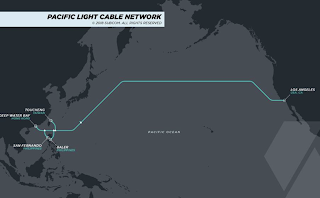
Other subsea cable projects to Hong Kong have also been canceled or been forced to change plans due to ongoing political tension with China, including the Pacific Light project

https://www.wsj.com/articles/facebook-drops-plan-to-run-fiber-cable-to-hong-kong-amid-u-s-pressure-11615400710?


Google gains partial clearance for Pacific Light subsea cable

Google was granted clearance by the FCC to operate the segment of the Pacific Light Cable Network System connecting the United States to Taiwan for the next six months, pending a final disposition of the license application. The temporary authorization does not authorize any commercial traffic on the subsea cable segments to/from the Philippines or Hong Kong. The U.S. Department of Justice, along with the Departments of Homeland Security and Defense,...


Saturday, March 13, 2021

IDC: Server markets grows in revenue, shrinks in shipments

Vendor revenue in the worldwide server market grew 1.5% year over year to $25.8 billion during the fourth quarter of 2020 (4Q20), however, worldwide server shipments declined 3.0% year over year to nearly 3.3 million units, according to IDC's newly updated Worldwide Quarterly Server.

"Global demand for enterprise servers was relatively flat during the fourth quarter of 2020 with the strongest increase to demand coming from China (PRC)," said Paul Maguranis, senior research analyst, Infrastructure Platforms and Technologies at IDC. "From a regional perspective, server revenue within PRC grew 22.7% year over year while the rest of the world declined 4.2%. Blade systems continued to decline, down 18.1% while rack optimized servers grew 10.3% year over year. Similar to the previous quarter, servers running AMD CPUs as well as ARM-based servers continued to grow revenue, increasing 100.9% and 345.0% year over year respectively, albeit on a small but growing base."

https://www.idc.com/getdoc.jsp?containerId=prUS47529021

Friday, March 12, 2021

Coherent receives a higher offer from II-VI

On Friday, March 12, Coherent's board of directors once again determined that a revised acquisition proposal from II-VI Incorporated was a superior acquisition proposal. On Thursday, March 10, Coherent had announced a revised acquisition agreement with Lumentum.  Under the new deal with II-VI, each share of Coherent common stock would be exchanged for $195.00 in cash and 1.0 share of II-VI common stock at the completion of the transaction. ​

Coherent said it has notifed Lumentum that it intends to terminate their amended merger agreement unless Coherent receives a revised proposal from Lumentum by 11:59 p.m. Pacific Time on March 17, 2021.

 Lumentum agreed to acquire Coherent in a cash and stock transaction valued at $5.7 billion, with Coherent stockholders receiving $100.00 per share in cash and 1.1851 shares of Lumentum common stock for each Coherent share they own. The combination will create a leading photonics company with significant positions in the growing market for photonics, an expansive global customer base and a well-diversified revenue mix. The transaction value...


Thursday, March 11, 2021

OIF begins 3.2T Co-Packaged Module Project for data center switching

OIF started a 3.2T Co-Packaged Module project for intra data center switching applications. The 3.2T Co-Packaged Optical Module Implementation Agreement (IA) is the first project initiated under the umbrella of the Co-Packaged Framework Project announced in November 2020. The IA will define a 3.2T co-packaged optical module that targets Ethernet switching applications utilizing 100G electrical lanes. It will include the following interoperability specifications:

  • Optical interface options supporting 400GBASE-FR4 and 400GBASE-DR4 with backwards compatible to 200G interfaces
  • CEI-112G-XSR high speed electrical interfaces
  • Electrical, mechanical, and management interfaces

“This 3.2T Co-Packaging project builds on OIF’s 20+ year successful track record to anticipate and address the industry’s needs,” said Jeff Hutchins, Ranovus and OIF Physical and Link Layer Working Group, Co-Packaging Vice Chair. “With its broad membership from across the eco-system, OIF is well positioned to create unified host, module and control specifications.”

“The industry has clearly articulated the need for a standardized co-packaged solution to address data center power constraints, and further, to enable new network architectures and applications,” said Mark Filer, Microsoft Principal Hardware Engineer and OIF Board Member. “The 3.2T Co-Packaged Optical Module project is a concrete step toward that goal, and OIF is uniquely qualified to rapidly execute on the implementation agreement in order to meet the market needs.”

https://www.oiforum.com/


OIF begins co-packaging framework IA project

OIF has kicked off a Co-Packaging Framework Implementation Agreement (IA) umbrella project to study the application spaces and relevant technology considerations for co-packaging of communication interfaces with one or more ASICs. 


A primary objective of this specification is to identify new opportunities for interoperability standards for possible future work at the OIF or other standards organizations. Upon completion, the work will be summarized in a Framework IA.

“It is critical that the industry be aligned on the solutions needed to move co-packaged interoperability forward,” said Jeff Hutchins, Ranovus and OIF Physical and Link Layer (PLL) Working Group – Co-Packaging Vice Chair. “With its member-driven focus, OIF is the ideal forum to facilitate industry conversation and drive interoperability of co-packaging with ASICs.”

The scope of the Co-Packaging Framework project is to:

  • Identify the key co-packaged applications and their requirements
  • Study and identify key issues associated with co-packaged optics
  • Identify opportunities and develop industry consensus to pursue interoperability standards
  • Document the study in the Framework IA (a technical whitepaper)
  • Launch follow-on standardization activities at the OIF or other appropriate standard bodies

http://www.oiforum.com


EllaLink completes Portugal-Brazil cable, picks Infinera's ICE6 coherent tech

EllaLink completed the marine installation of its trans-Atlantic cable system between Europe and Latin America.

EllaLink has selected Infinera's ICE6 800G coherent technology to light the network, providing a direct single hop transmission path between data centers in each continent. Infinera’s solution will enable EllaLink to offer advanced customer products and services, supporting over 100 Tbps between Portugal and Brazil. Furthermore, the network will support a 30-Tbps link from Portugal to Madeira, with an additional 40-Tbps path between Portugal and Morocco in the future.

Ellalink will use Infinera’s GX Series Compact Modular Platform to provide its customers with low-latency services in a single hop between endpoints. EllaLink also plans to use ICE6 to bolster the capacity on its long-haul terrestrial network between Sines, Lisbon, Madrid, and Marseille. Future network expansions will enable EllaLink to extend its submarine network to French Guiana, Mauritania, the Canary Islands, and Morocco, resulting in the most advanced submarine system connecting Africa, Europe, and Latin America.

Infinera also highlighted the unique innovations in Infinera’s ICE6 technology, such as long-codeword probabilistic constellation shaping (LC-PCS) and intelligent power management. 

“I am proud to announce that we have successfully completed the 6,000 km submarine cable installation, providing EllaLink with the robust system it needs to support the network through its lifetime. Infinera’s ICE6 solution is an ideal fit for us, outperforming other available 800G equipment. Coupled with our differentiated fiber routes, Infinera and ICE6 will provide us the means to offer our customers advanced products and services from day one, in May 2021,” said Diego Matas, Chief Operations Officer at EllaLink.

“Deploying Infinera’s 800G solution on EllaLink’s new network will provide a superior networking experience to their customers when connecting between Europe and Latin America,” said Nick Walden, Senior Vice President, Worldwide Sales, Infinera. “Infinera’s open optical solution will enable EllaLink to offer new and differentiated services, helping to ensure their customers receive the highest level of service.”

https://www.infinera.com/press-release/ellalink-completes-marine-installation-and-turns-to-infinera-for-network-lighting

https://ella.link

EllaLink's transatlantic cable to deploy acoustic sensor tech

EllaLink, which is building a four-pair subsea cable between Portugal and Brazil, will deploy smart sensors on its cable to provide the scientific community with real-time, accurate and relevant data on seabed conditions. This will make EllaLink the first commercial subsea telecom cable system to integrate SMART cable concepts. The EllaLink GeoLab infrastructure, which will be provided by EllaLink in cooperation with EMACOM, will leverage distributed...

EllaLink and Telxius collaborate on Brazil-Portugal subsea cable

The EllaLink Group and Telxius signed a collaboration agreement for international subsea capacity and terrestrial connectivity in Latin America, including cable landing facilities in Fortaleza, Brazil. The complementary infrastructure owned by EllaLink and Telxius will enable European traffic to reach Rio de Janeiro, São Paulo and other key cities in Brazil and across Latin America. EllaLink is an open state-of-the-art 4 fiber pair submarine cable...

New Atlantic Data Center Hub planned in Portugal

The EllaLink Group and aicep Global Parques – Gestão de Áreas Empresariais e Serviços, unveiled plans for a new "Sines Tech – Innovation & Data Center Hub" in Portugal. The new campus is to be built in the Portuguese port city of Sines, in proximity to the landing station for the new Ellalink subsea cable to Latin America. Diego Matas, Chief Operating Officer of EllaLink, added “I am delighted to announce our collaboration with Global Parks...


Nokia launches O-RAN Service Enablement Platform and RIC xApps

Nokia launched its Service Enablement Platform (SEP) for delivering radio network programmability across the Open RAN (O-RAN) ecosystem, along with the first Nokia RIC xApps, including Advanced Traffic Steering and Anomaly Detection, which are currently in proofs-of-concepts and trials with major communication service providers (CSP).

Nokia's SEP combines the near-real-time RAN Intelligent Controller (RIC) and Multi-access edge computing (MEC) together on a single platform. It leverages low-latency information to boost optimization through closed-loop automation and faster, more flexible service deployments. It also adds programmability with AI/ML technologies, enabling innovative RAN use cases, including Automated AI/ML-based network optimization xApps and enterprise-specific RAN adaptation. It is a single platform that deploys both RIC and MEC capabilities for intelligence and innovation, and it can be adapted for specific CSP or enterprise requirements.

Utilizing Nokia’s edge-optimized AirFrame servers, SEP can run on the edge and share infrastructure with Cloud RAN and other virtualized network functions. AirFrame Open Edge provides secured and high-performance ultra-small footprint edge cloud infrastructure for indoor and outdoor environments.

The platform launches with Nokia RIC xApps, a suite of plugins that give CSPs advanced control of 5G radio network use cases, including the Nokia Advanced Traffic Steering xApp, an AI/ML-based optimization algorithm that dynamically improves the efficiency of traffic distribution in the radio access network. It will also include the Nokia Anomaly Detection xApp, which uses machine learning to quickly detect and classify irregular behavior patterns in the RAN. SEP supports xApps from different providers.

Pasi Toivanen, Head of Edge Cloud BU at Nokia, said: “Embracing open collaboration is key to the development of 5G use cases and harnessing the true power of the technology. Nokia’s Service Enablement Platform adds a new intelligence layer to the RAN and enables the creation of high-value add use cases. This is part of Nokia’s continued commitment to leading an open mobile future with a strong network performance and security. We are committed to making it easier for our CSP customers to actively support the adoption of Open RAN principles and standards.”

https://www.nokia.com/networks/solutions/service-enablement-platform/

Microsoft plans new Azure region in China in 2022

Earlier this month, Microsoft announced plans for a new Azure Region to North China in 2022 through its local operating partner, 21Vianet. 

This expansion is expected to effectively double the capacity of Microsoft’s intelligent cloud portfolio in China in the coming years, which includes Azure, Microsoft Office 365, Dynamics 365, and Power Platform operated by 21Vianet.

21Vianet has served as Microsoft Azure's local partner in China since 2014.

“This unveils a big opportunity. Microsoft Cloud operated by 21Vianet was the first international public cloud compliantly launched in China through a local operating partner. Our intelligent, trustworthy, and neutral cloud platform has been empowering hundreds of thousands of developers, partners, and customers from both China and the world to achieve more with technical innovation and business transformation. The upcoming region will reinforce the capabilities to help further nurture local talents, stimulate local innovation, grow local technology ecosystems, and empower businesses in a wide range of industries to achieve more," states Alain Crozier, Chairman and Chief Executive Officer of Microsoft Greater China Region (GCR).

https://azure.microsoft.com/en-us/blog/new-azure-region-coming-to-china-in-2022/


Microsoft Exchange hit by state-sponsored hackers from China

Microsoft warned enterprises using its on-premises Exchange Server platforms of multiple 0-day exploits being used in limited and targeted attacks. The exploit does not affect Microsoft 365 or Azure Cloud deployments.

Microsoft Threat Intelligence Center (MSTIC) attributes this campaign with high confidence to HAFNIUM, a group assessed to be state-sponsored and operating out of China, based on observed victimology, tactics and procedures. HAFNIUM, which primarily targets entities in the United States across a number of industry sectors,  exfiltrates data to file sharing sites like MEGA. The group is believed to use leased virtual private servers (VPS) in the United States to launch their attacks

In the attacks observed, HAFNIUM used the newly discovered vulnerabilities to access on-premises Exchange servers which enabled access to email accounts, and allowed installation of additional malware to facilitate long-term access to victim environments. 

According to media reports, the attack potentially compromised up to 30,000 organizations.

Microsoft has released out-of-band security updates to address four vulnerabilities in Exchange Server. In addition, Microsoft has released alternative mitigation techniques for Exchange Server customers who are not able to immediately apply updates that address vulnerabilities.

Separately, the U.S. Cybersecurity and Infrastructure Security Agency issued a directive requiring federal civilian departments and agencies running Microsoft Exchange on-premises products to update or disconnect the products from their networks.

In addition, the European Banking Authority confirmed that it was compromised by the attack, and that as a precautionary measure, the EBA has decided to take its email systems offline.

https://www.microsoft.com/security/blog/2021/03/02/hafnium-targeting-exchange-servers/

Samsung licenses Nokia's patents for video standards


Samsung entered into a patent license agreement covering the use of Nokia’s innovations in video standards. Under the agreement, Samsung will make royalty payments to Nokia. Financial terms were not disclosed.


Jenni Lukander, President of Nokia Technologies, said: “We are delighted to have reached an agreement with Samsung which further validates Nokia’s decades-long investments to R&D and contributions to multimedia and video technology standards.”


AT&T deploys Band 14 spectrum for FirstNet


AT&T is rolling out Band 14 spectrum in cell sites used by the FirstNet network for first responders. The FirstNet Authority – an independent government agency – granted AT&T the right to use Band 14 specifically to support public safety subscribers on FirstNet.

So far, Band 14 has been deployed on existing cell sites in more than 700 markets nationwide. 

AT&T is also launching new FirstNet cell sites across the country to expand rural and remote coverage – including areas where emergency responses have been previously challenged by a lack of connectivity.

AT&T begins offering fixed 5G for businesses

AT&T is adding fixed 5G wireless solutions for business customers.

AT&T will offer new fixed wireless router options from Sierra Wireless and Cradlepoint.


“It is now almost a full year since the global pandemic accelerated remote work adoption by almost a decade – and throughout the rapid evolution of related business needs, AT&T has been there to enable continued success,” said Mo Katibeh, Chief Product and Platform Officer, AT&T Business. “And today, we’re excited to build on the first, true nationwide business-focused broadband network with fixed wireless 5G connectivity. It’s the ideal solution for businesses to continue to innovate, serve their customers and enable employees to efficiently and effectively work – even when they can’t walk down the hall to someone else’s office.”


SpaceX completes 21st Starlink launch

SpaceX launched 60 more Starlink satellites on Thursday, March 11 at 3:13 a.m. EST.

The mission was the sixth launch and landing of this Falcon 9 booster, which previously supported launch of NASA astronauts Bob Behnken and Doug Hurley to the International Space Station, ANASIS-II, CRS-21, Transporter-1, and a Starlink mission.

SpaceX announced the expansion of its beta service to Germany and New Zealand. The company is also expanding its beta availability in the UK.