Monday, March 15, 2021

Nokia partners with Google Cloud on Cloud RAN

Nokia announced a partnership with Google Cloud to develop new, cloud-based 5G radio solutions combining Nokia’s Radio Access Network (RAN), Open RAN, Cloud RAN (vRAN) and edge cloud technologies with Google’s edge computing platform and applications ecosystem. 


The initial collaboration, which is already underway at Nokia’s Espoo headquarters, will pursue a number of different workstreams. The first, which will focus on Cloud RAN, will integrate Nokia’s 5G vDU (virtualized distributed unit) and 5G vCU (virtualized centralized unit) with Google’s edge computing platform, running on Anthos. Nokia’s 5G standalone network with vCU and 5G core will also be tested on Google Cloud Anthos platform as a cloud-native deployment.

Bikash Koley, VP, Google Global Network and Head of Technology for Telecom Products at Google Cloud, said: “This partnership with Nokia will combine both of our decades of mobile communications expertise to deliver new solutions that help CSPs enable business transformation at the network edge.”

Tommi Uitto, President of Mobile Networks at Nokia, said: “We are excited to develop new 5G solutions at the network edge with Google Cloud. Our service provider customers will benefit greatly from this collaboration with more choice and flexibility to efficiently deploy and orchestrate 5G networks. This will ultimately help our customers deliver 5G services on the network edge providing multiple options of cloud-based solutions paving the way forward.”


Nokia collaborates with AWS on Cloud RAN

Nokia announced a collaboration with Amazon Web Services (AWS) to research and enable Cloud RAN (vRAN) and Open RAN technologies.

The collaboration, which will be conducted at Nokia’s facilities, aims to develop innovative proof of concepts (PoC) to explore and enable Cloud RAN and related technologies. Nokia is pursuing a strategy of collaborating with AWS to extend the reach of its Cloud RAN technologies in support of 5G deployments and the development of new use cases.

The initiative will see engineering teams from both companies research how the combination of Nokia’s RAN (Radio Access Network), Open RAN, Cloud RAN and edge solutions can operate seamlessly with AWS Outposts. The companies cite three distinct areas of collaboration:

  • onboarding and validating Nokia’s 5G vDU (virtualized distributed unit) on AWS Outposts using Amazon EKS for far edge cloud or on-premises deployments 
  • the implementation of Nokia’s 5G vCU (virtualized centralized unit) with AWS Outposts, AWS Local Zones, using Amazon EKS as a cloud native deployment 
  • a proof of concept for an end-to-end solution with Nokia’s 5G Cloud RAN and 5G standalone Core network running on AWS, where end enterprise users can leverage 5G for use cases such as an industrial application.

In addition, Nokia will run AWS EKS Anywhere on the Nokia AirFrame Open Edge server. Nokia AirFrame Open Edge distributes computing capacity into the edge of the network and drives the implementation of Cloud RAN, Multi-access Edge Computing (MEC) as well as 5G.

Dave Brown, Vice President, Amazon EC2, AWS, said: “This collaboration with Nokia will extend the reach of our industry-leading cloud technology to support our Telco and enterprise customers. We look forward to working closely on this collaboration and offer multiple deployment choices for customers to build 5G Cloud RAN and Open RAN solutions. Our customers will benefit from different options to run 5G RAN using AWS Outposts with either Intel or ARM-based CPU choices, or third-party bare metal servers while using Amazon EKS and EKS Anywhere. This will solve for the challenge of CI/CD, automation, and network orchestration by using a common framework of tools across Core and RAN.”

Tommi Uitto, President of Mobile Networks at Nokia, commented: “This is a critically important collaboration and the continuation of Nokia’s Cloud RAN leadership. At Nokia we are committed to supporting our customers and giving them the flexibility and elasticity they need on the network edge. We are building an ecosystem of public cloud partners that will ultimately support our customers and help them to build compelling 5G use cases.”

https://www.nokia.com/about-us/news/releases/2021/03/15/nokia-and-aws-to-enable-cloud-based-5g-radio-solutions/

American Tower tests Infinera's XR optics for point-to-multipoint

Infinera and American Tower completed the first point-to-multipoint coherent optical transmission in a carrier network environment in Latin America. 


This field trial was conducted with Infinera’s XR optics technology over American Tower’s Passive Optical Network (PON) network in Colombia. The trial demonstrated XR optics’ compatibility with existing GPON traffic over a single-fiber PON deployment in a metro regional area.

The proof of concept shows American Tower’s ability to take advantage of the transformative value that XR optics can provide in the company’s existing network infrastructure. 

Infinera said its XR optics could enable network operators like American Tower to dramatically simplify their network architectures and significantly reduce CapEx and OpEx costs while enhancing network scalability. 

“As American Tower is evolving its network in preparation of new Edge Data Center and 5G applications, we are always looking for innovative technologies to help us achieve greater value on our existing infrastructure,” said Paul Choiseul, Fiber CTO EMEA & Latin America at American Tower. “The success of the Infinera XR optics solution over our PON network is the culmination of an idea that was born two years ago, when we shared with Infinera our roadmap to test advanced DWDM technologies over ATC’s PON networks. This technology will allow us to provide high capacity, ultra-low latency solutions over our existing PON networks that will satisfy Edge Data Center and 5G requirements.”

“The trial with American Tower provides another proof point illustrating how Infinera’s digital subcarrier-powered XR optics can be applied to existing networks and can seamlessly coexist with GPON traffic,” said Dave Welch, Infinera Chief Innovation Officer and Co-founder. “This represents a radical shift in the way metro networks can be built, promising a dramatic reduction in TCO, setting a new benchmark in scalability, and increasing service flexibility and velocity.”

https://www.infinera.com/press-release/infinera-and-american-tower-complete-live-network-demonstration-first-in-latin-america

Infinera's XR Optics delivers coherent optical subcarrier aggregation

Infinera introduced a point-to-multipoint coherent optical subcarrier aggregation technology with the potential to significantly reduce the number of transceivers required in an access network while eliminating intermediate aggregation. Infinera's XR optics technology, which is optimized for hub-and-spoke traffic patterns, is powered by independently routable Nyquist subcarriers and coherent optical aggregation capabilities. With coherent subcarrier...


DISH Network enters long term lease with American Tower

DISH Network entered into a master lease agreement for space on up to 20,000 American Tower communications sites across the United States as it deploys its new nationwide 5G network. 


Cash lease payments will commence in 2022 and grow over time as DISH’s network deployment progresses. In addition, DISH may lease shared generators from American Tower on select sites and will have the ability to utilize American Tower’s zoning, permitting and other pre-construction services.

Dave Mayo, DISH’s Executive Vice President of Network Development said, “With the American Tower agreement, DISH now has the complete, robust infrastructure portfolio we need to support our nationwide 5G network deployment. Our team has already developed colocation plans for American Tower sites across the country to bring a new generation of connectivity to Americans.”

Steve Vondran, American Tower’s Executive Vice President and President, U.S. Tower Division stated, “We look forward to this agreement evolving into a long-term, mutually beneficial strategic partnership. We believe that our nationwide portfolio of communications sites is optimally positioned to continue to serve as the backbone of today’s critical mobile broadband networks while assuring a meaningful share of new leasing activity in the marketplace.”


Rogers + Shaw merger to reshape Canadian market

Rogers Communications agreed to acquire Shaw Communications in a $26 billion deal that could reshape the Canadian communications market. Under the transaction, Rogers will acquire all of Shaw’s Class A and Class B shares for $40.50 per share, reflecting a ~70% premium to Shaw’s Class B share price.

The merger will create Canada’s most robust wholly-owned national network and accelerate the deployment of 5G. Once the transaction is complete, the companies plan to invest $2.5 billion in 5G networks across Western Canada, which is expected to create up to 3,000 net new jobs. The deal brings together Shaw’s fibre-to-home, WiFi and wireless networks with Roger's national wireless network and 5G capabilities.

Both Rogers and Shaw began as family operated businesses.

Rogers will also commit to establishing a new $1 billion Rogers Rural and Indigenous Connectivity Fund to connect rural, remote and Indigenous communities across Western Canada to high-speed Internet and closing critical connectivity gaps faster for underserved areas. 

Joe Natale, President and CEO of Rogers Communications, states: “We are proud to join forces with the Shaw family and team as we combine our companies and our 10,000 team members across Alberta, British Columbia, Manitoba, and Saskatchewan, supported by a head office in Calgary. Western Canada is a major driver of our national economy and together we will have the scale, expertise and commitment to deliver the technology infrastructure needed to keep local communities connected, businesses competitive and attract new investment. We’re at a critical inflection point where generational investments are needed to make Canada-wide 5G a reality. 5G is about nation-building; it’s vital to boosting productivity and will help close the connectivity gap faster in rural, remote and Indigenous communities."

Windstream lights up fiber to 60,000 new locations


Kinetic Wholesale by Windstream has added access to 60,000 new locations in the first quarter of 2021 across its 18-state footprint. The company is currently engaged in a multi-year plan, $2 billion initiative to dramatically expand its fiber footprint and gigabit internet service. Kinetic Wholesale fiber broadband access is available in exchanges where Windstream is the incumbent provider.


“As we continue to drive fiber deeper into our network, our cost-effective broadband and ethernet access is now available for our wholesale partners for business customers,” said Jeff Small, Kinetic president. “Through simple provisioning and transparent customer support, our fiber product fits seamlessly into any portfolio.”


AEPONYX secures funding for silicon photonics on MEMS

AEPONYX, a start-up based in Montreal, announced the closing of a new $10 million funding round to support the buildout its 5G product portfolio.

Participants in this funding round were Fonds Ecofuel, BDC, Investissement Québec, and Fonds Innovexport.

“We are delighted to bring innovative products to the 5G market” says Philippe Babin, CEO of AEPONYX. “The creation of our integrated photonics with MEMS products enable the

Telecom industry to advance their next-generation networks. With the 5G adoption rate eclipsing where 4G was at this point in time, we see tremendous growth potential.”

AEPONYX said its integrated photonics innovations combined with their fast-tuning and ultra-small MEMS devices are well suited for telecom applications.

“While our technology works beautifully in quantum computing, LiDAR, and sensors, we are targeting telecom as our first market vertical” says Babin.

“These optical devices, combining high data rates with being quite small in size, are exactly what the market is looking for to advance the global 5G infrastructure significantly” stated Fonds Ecofuel’s Managing Partner, Richard Cloutier.

http://www.AEPONYX.com


IP Infusion tunes its OS for 5G and high-capacity optical networks

IP Infusion introduced the latest release of its Network Operating System (NOS) platform (OcNOS-SP 4) featuring:

  • Increased scalability -- Scales from entry-level white box switches to high-end optical and packet transport devices, planning to support 400 Gbps ethernet interfaces and beyond
  • Efficient WAN virtualization – Enables diverse overlay services through EVPN/BGP to achieve Traffic Engineering (TE) and resiliency for disparate environments
  • Operational efficiency – Simplifies the service lifecycle through common, streamlined implementations with support for Segment Routing, Path Computation Element Communication Protocol (PCEP), OpenConfig, self-tuning DWDM transceivers, and MicroPlug XGS Passive Optical Network (PON) and Optical Line Terminal (OLT).
  • Mobile network virtualization, across Radio Access Network (RAN), transport and core, necessitates scalability, enhanced Quality of Service (QoS), resiliency and manageability to accommodate massive increases in 5G bandwidth and satisfy the ever-growing demands by users and applications.

OcNOS-SP 4 provides a unified software platform capable of supporting Disaggregated Cell Site Gateway (DCSG) and Cassini-based Packet Optical network element that are fully compliant with the Telecom Infra Project (TIP) Open Optical Packet Transport (OOPT) specifications. OcNOS-SP 4 also provides support for the latest cost-optimized DCSG platform from UfiSpace (S9500-22XST).

The OcNOS-SP 4 software platform features:

  • Control Plane with extensive network virtualization features, enhanced standards-based Layer 2 and 3 protocols
  • Standard, packet-based timing and synchronization in compliance with ITU G.8275.2 and TIP Specification for DCSG and mobile xHaul use cases
  • Ethernet Virtual Private Networks (EVPN) support for normalized and scalable virtualization, powerful Traffic Engineering to enable QoS, and other protocol enhancements
  • OpenConfig support for network automation and programmability
  • Segment Routing (SR) and Path Computational Element Protocol (PCEP) to simplify and scale the network
  • Tunable DWDM transceivers to significantly reduce sparing requirements and OpEx
  • MicroPlug SFP+ support for Commercial Off-the-Shelf (COTS) white box switches to deliver 10 Gbps XGS (Symmetrical) PON and OLT at lower cost.


“With OcNOS-SP 4, IP Infusion is raising the bar for disaggregation of the mobile network,” said Atsushi Ogata, President and CEO of IP Infusion. “OcNOS-SP 4 unleashes network innovation by enabling mobile operators with access to leading edge technology, massive scalability, operational efficiency and lower TCO, without any compromise.”

Orange to leverage Nokia's Self-Organizing Networks

Orange will leverage Nokia's Self-Organizing Networks (SON) to boost automation and support 5G optimization across its affiliates worldwide.

The deal allows Orange affiliate operators to optimize their mobile networks irrespective of which RAN vendor they run on with the help of Nokia SON technology.


Arnaud Vamparys, Senior VP Radio Networks and 5G at Orange, said: “As a long-term partner, Nokia was a natural choice to help us automate our mobile networks in different geographies. The complexity of radio optimization is growing with 5G beamforming and Nokia’s flexible, automated and multi-vendor platform enables us to maintain our exemplary network quality and customer satisfaction in the 5G era.”

Mark Atkinson, Head of RAN at Nokia, said: “5G deployments and rollouts look much simpler on paper than they do in the real world. We appreciate and understand that our CSP customers have a technology stack that spans multiple vendors, which can lead to inefficiencies and complexity. Working with Orange and its global affiliates to optimize and simplify their multi-vendor networks is a challenge we relish and are proud to be part of.”

Lattice Semiconductor joins DARPA Toolbox Initiative

Lattice Semiconductor's Diamond and FPGA design tools for its highly reliable, low-power, small form factor FPGAs are now included in the DARPA Toolbox initiative. 

The DARPA Toolbox initiative is a new, agency-wide effort aimed at providing access to state-of-the-art technology from leading commercial technology vendors to the researchers behind DARPA programs.

The partnership also provides DARPA organizations with access to a selection of Lattice's soft IP cores and technical support to accelerate technology innovation for DARPA programs and foster the use of Lattice low-power FPGAs in DARPA-designed applications. 

“Partnering with technology innovators like Lattice through our DARPA Toolbox initiative serves to streamline access for our organizations to cutting-edge technologies,” said Serge Leef, the Microsystems Technology Office (MTO) program manager at DARPA and leader of the DARPA Toolbox initiative. “Lattice's portfolio of FPGA design tools and soft IP cores offer a compelling platform for our researchers to consider when implementing applications requiring artificial intelligence at the Edge, 5G communications, and/or automation."

Sunday, March 14, 2021

HyperLight claims breakthrough with its lithium niobate optical modulator

HyperLight, a start-up based in Cambridge, MA developing thin-film lithium niobate (LN) photonic integrated circuits (PICs), announced breakthrough voltage-bandwidth performances in integrated electro-optic modulators. 

HyperLight says its electro-optic PIC could lead to orders of magnitude energy consumption reduction for next generation optical networking.

Current electro-optic modulators require extremely high radio-frequency (RF) driving voltages (> 5 V) as the analog bandwidth in ethernet ports approaches 100 GHz for future terabits per sec capacity transceivers. In comparison, a typical CMOS RF modulator driver delivers less than 0.5 V at such frequencies. Compound semiconductor modulator drivers can deliver voltage > 1 V at significantly increased cost and energy consumption but still fall short to meet the optimum driving voltage. The limited voltage-bandwidth performance in electro-optic modulators poses a serious challenge for meeting tight power consumption requirements from network builders.

HyperLight's integrated electro-optic modulator is capable of 3-dB bandwidth > 100 GHz, a previously impossible voltage-bandwidth achievement. The results are described in a manuscript entitled “Breaking voltage-bandwidth limits in integrated lithium niobate modulators using micro-structured electrodes,” published in Optica on March 8th, 2021.

“We believe the significantly improved electro-optic modulation performance in our integrated LN platform will lead to a paradigm shift for both analog and digital ultra-high speed RF links,” said Mian Zhang, author, CEO of HyperLight. “For example, using sub-volt modulators for digital applications, high speed electronic drivers may have largely reduced gain-bandwidth requirements or possibly be completely bypassed with modulators directly driven from electronic processors. This would save building and running costs for network operators. For RF links, the low-voltage, high bandwidth and excellent optical power handling ability could enable sensitive and low noise millimeter wave (mmWave) photonic links in ultrahigh-frequency bands.”

http://www.hyperlightcorp.com

AT&T to spend $6-8 billion deploying newly acquired C-band spectrum


In an Analyst & Investor Day presentation, AT&T updated its 5G strategy for deploying 5G in both sub-6 (5G) and mmWave (5G+) spectrum bands in 2021.

Some highlights:

  • AT&T will begin offering 5G access to consumers on its current unlimited wireless plans at no additional cost.
  • AT&T secured 80mhz of spectrum and a 29% share of the available licenses in the recent C-band auction. The company plans to begin deploying the first 40 MHz of this spectrum by the end of 2021. AT&T expects to spend $6-8 billion in capex deploying C-band spectrum, with the vast majority of the spend occurring from 2022 to 2024. Expected C-band deployment costs are already included in the company’s 2021 capex guidance and in its leverage ratio target for 2024.
  • Funding C-band spectrum. AT&T’s investment in C-band spectrum via Auction 107 totals $27.4 billion, including expected payments of $23 billion in 2021.
  • AT&T currently has 70% of its low and mid-band spectrum in service. 
  • In 2021, AT&T plans to increase its fiber footprint by an additional 3 million customer locations across more than 90 metro areas.
  • AT&T's 5G+ service is now available in parts of 38 cities in the U.S.
  • AT&T plans to deploy 5G in 17 venues across the country by the end of 2021 including stadiums, arenas and practice facilities.
  • AT&T plans to deploy 5G at 8 U.S. airports by the end of this year.
  • AT&T has begun offering fixed 5G wireless solutions for businesses.
  • AT&T is working with cloud service providers to deliver optimized network routing to localized edge computing zones that can support latency-sensitive applications without dedicated on-premises hardware.
  • AT&T expects between 120 million and 150 million worldwide HBO Max and HBO subscribers by the end of 2025, up from the 75-90 million projected in October 2019.
  • AT&T recently announced plans to spinoff its U.S. video business operations into a newly formed entity jointly owned with TPG Capital.
  • Between 2016 and 2020, AT&T’s total investment in the United States, including capital investment and acquisitions of spectrum and wireless operations, was more than $105 billion.

“Connectivity is at the heart of everything we do - 140 years and counting. From our fiber network backbone to the layers of wireless spectrum technology, we provide 5G network coverage that delivers the speeds, security and lower latency connections that customers and businesses need,” said Jeff McElfresh, CEO – AT&T Communications.

https://about.att.com/story/2021/att_analyst_day.html


SpaceX completes 22nd Starlink mission on Sunday

Only three days since its last Starlink mission, SpaceX launched a further 60 Starlink satellites on Sunday, March 14 at 6:01 a.m. EDT. The booster landed successfully on a drone ship in the Atlantic.

The mission was the ninth launch and landing of this Falcon 9 first stage booster, which previously supported launch of Crew Dragon Demo-1, RADARSAT Constellation, SXM-7, and five Starlink missions.

It also marks the 77th successful recovery on an orbital class booster by SpaceX.

Verizon expands fixed 5G Home service to 10 more cities


Verizon is expanding its fixed 5G Home Internet service to 10 more cities including Cleveland, OH; Las Vegas, NV; Louisville, KY; Omaha, NE; San Diego, CA; Charlotte, NC; Cincinnati, OH; Hartford, CT; Kansas City, MO and Salt Lake City, UT.

As it activates its newly acquired C-band spectrum, Verizon anticipates expanding the service to roughly 15 million homes by the end of 2021.

“We continue to lead the industry with ever-expanding broadband and mobility options for our customers, and our new C-band spectrum holdings, in combination with our extensive mmWave spectrum holdings, will only accelerate that for customers,” said Ronan Dunne, CEO, Verizon Consumer Group. “5G internet disrupts the current delivery of broadband internet service and provides speed and reliability, possible only because of our winning network combination. That’s 5G Built Right.”

Verizon's 5G Home Internet has no data limits and offers speeds up to 1 Gbps. It is priced at $50 a month for Verizon customers with a qualifying mobile plan, and $70 a month for non-Verizon customers. 

https://www.verizon.com/home/internet-service-provider/


IP Infusion's OcNOS validated for TIP's DCSG and Cassini


IP Infusion's OcNOS network operating system, running on Telecom Infra Project’s (TIP) Cassini and Disaggregated Cell Site Gateway (DCSG), has been validated by testing at TIP’s Community Labs at Brazil-based CPqD.

In its trial of TIP’s Cassini and DCSG solutions in extended metro and long-haul scenarios, CPqD found that it was possible to achieve an optical coherent 100/200Gbps transmission over 2,000km without regeneration for long-haul scenarios.

CPqD has been testing and validating open and disaggregated solutions such as DCSG, Cassini, and OpenRAN since opening the TIP Community Lab in Campinas, Brazil in 2018, and were presented by CPqD for the first time at Futurecom in 2019. Since then, CPqD, Padtec, EdgeCore Networks, IP Infusion, Lumentum, and Viavi have been running comprehensive testing protocols for different use cases at the lab.

  • Cassini is an open packet and optical transponder that integrates 200GbE switching with Layer-1 optical transport functions as line-card modules, and covers data center interconnect, metro and access backhaul use cases. It is currently the industry’s highest capacity open-sourced white box packet transponder.
  • DCSG is a 1RU fully-featured cell site router with a wide range of Ethernet connectivity options for client and network sides. As a cell site gateway, DCSG supports Layer-2, Layer-3 and MPLS features – with native time synchronization protocols such as IEEE-1588 v2 and Synchronous Ethernet for the mobile base stations.

“IP Infusion is excited to have collaborated with TIP to demonstrate and prove how disaggregation delivers faster innovation and lowers TCO. In this successful trial, our OcNOS® network operating system, running on Cassini and DCSG solutions, proved once again that high capacity and new advanced services can be achieved with disaggregated solutions,” said Atsushi Ogata, President and CEO, IP Infusion.

https://cdn.brandfolder.io/D8DI15S7/as/jg4rhz2vszxwvxck8xmrnqz/CPQD_Transport_Trial_-_Final_Version.pdf

WSJ: Facebook drops plans for Hong Kong - U.S. cable

Facebook has withdrawn an application with the FCC for the Hong Kong - Americas (HKA) subsea cable project, which had sought to build a state-of-the-art trans-Pacific system terminating in Hermosa Beach, California, according to the Wall Street Journal. The project might be re-configured to land in Taiwan instead. 

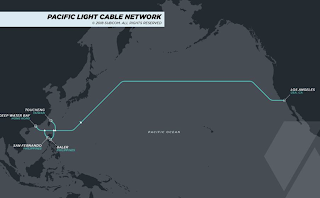
Other subsea cable projects to Hong Kong have also been canceled or been forced to change plans due to ongoing political tension with China, including the Pacific Light project

https://www.wsj.com/articles/facebook-drops-plan-to-run-fiber-cable-to-hong-kong-amid-u-s-pressure-11615400710?


Google gains partial clearance for Pacific Light subsea cable

Google was granted clearance by the FCC to operate the segment of the Pacific Light Cable Network System connecting the United States to Taiwan for the next six months, pending a final disposition of the license application. The temporary authorization does not authorize any commercial traffic on the subsea cable segments to/from the Philippines or Hong Kong. The U.S. Department of Justice, along with the Departments of Homeland Security and Defense,...


Saturday, March 13, 2021

IDC: Server markets grows in revenue, shrinks in shipments

Vendor revenue in the worldwide server market grew 1.5% year over year to $25.8 billion during the fourth quarter of 2020 (4Q20), however, worldwide server shipments declined 3.0% year over year to nearly 3.3 million units, according to IDC's newly updated Worldwide Quarterly Server.

"Global demand for enterprise servers was relatively flat during the fourth quarter of 2020 with the strongest increase to demand coming from China (PRC)," said Paul Maguranis, senior research analyst, Infrastructure Platforms and Technologies at IDC. "From a regional perspective, server revenue within PRC grew 22.7% year over year while the rest of the world declined 4.2%. Blade systems continued to decline, down 18.1% while rack optimized servers grew 10.3% year over year. Similar to the previous quarter, servers running AMD CPUs as well as ARM-based servers continued to grow revenue, increasing 100.9% and 345.0% year over year respectively, albeit on a small but growing base."

https://www.idc.com/getdoc.jsp?containerId=prUS47529021

Friday, March 12, 2021

Coherent receives a higher offer from II-VI

On Friday, March 12, Coherent's board of directors once again determined that a revised acquisition proposal from II-VI Incorporated was a superior acquisition proposal. On Thursday, March 10, Coherent had announced a revised acquisition agreement with Lumentum.  Under the new deal with II-VI, each share of Coherent common stock would be exchanged for $195.00 in cash and 1.0 share of II-VI common stock at the completion of the transaction. ​

Coherent said it has notifed Lumentum that it intends to terminate their amended merger agreement unless Coherent receives a revised proposal from Lumentum by 11:59 p.m. Pacific Time on March 17, 2021.

 Lumentum agreed to acquire Coherent in a cash and stock transaction valued at $5.7 billion, with Coherent stockholders receiving $100.00 per share in cash and 1.1851 shares of Lumentum common stock for each Coherent share they own. The combination will create a leading photonics company with significant positions in the growing market for photonics, an expansive global customer base and a well-diversified revenue mix. The transaction value...


Thursday, March 11, 2021

OIF begins 3.2T Co-Packaged Module Project for data center switching

OIF started a 3.2T Co-Packaged Module project for intra data center switching applications. The 3.2T Co-Packaged Optical Module Implementation Agreement (IA) is the first project initiated under the umbrella of the Co-Packaged Framework Project announced in November 2020. The IA will define a 3.2T co-packaged optical module that targets Ethernet switching applications utilizing 100G electrical lanes. It will include the following interoperability specifications:

  • Optical interface options supporting 400GBASE-FR4 and 400GBASE-DR4 with backwards compatible to 200G interfaces
  • CEI-112G-XSR high speed electrical interfaces
  • Electrical, mechanical, and management interfaces

“This 3.2T Co-Packaging project builds on OIF’s 20+ year successful track record to anticipate and address the industry’s needs,” said Jeff Hutchins, Ranovus and OIF Physical and Link Layer Working Group, Co-Packaging Vice Chair. “With its broad membership from across the eco-system, OIF is well positioned to create unified host, module and control specifications.”

“The industry has clearly articulated the need for a standardized co-packaged solution to address data center power constraints, and further, to enable new network architectures and applications,” said Mark Filer, Microsoft Principal Hardware Engineer and OIF Board Member. “The 3.2T Co-Packaged Optical Module project is a concrete step toward that goal, and OIF is uniquely qualified to rapidly execute on the implementation agreement in order to meet the market needs.”

https://www.oiforum.com/


OIF begins co-packaging framework IA project

OIF has kicked off a Co-Packaging Framework Implementation Agreement (IA) umbrella project to study the application spaces and relevant technology considerations for co-packaging of communication interfaces with one or more ASICs. 


A primary objective of this specification is to identify new opportunities for interoperability standards for possible future work at the OIF or other standards organizations. Upon completion, the work will be summarized in a Framework IA.

“It is critical that the industry be aligned on the solutions needed to move co-packaged interoperability forward,” said Jeff Hutchins, Ranovus and OIF Physical and Link Layer (PLL) Working Group – Co-Packaging Vice Chair. “With its member-driven focus, OIF is the ideal forum to facilitate industry conversation and drive interoperability of co-packaging with ASICs.”

The scope of the Co-Packaging Framework project is to:

  • Identify the key co-packaged applications and their requirements
  • Study and identify key issues associated with co-packaged optics
  • Identify opportunities and develop industry consensus to pursue interoperability standards
  • Document the study in the Framework IA (a technical whitepaper)
  • Launch follow-on standardization activities at the OIF or other appropriate standard bodies

http://www.oiforum.com


EllaLink completes Portugal-Brazil cable, picks Infinera's ICE6 coherent tech

EllaLink completed the marine installation of its trans-Atlantic cable system between Europe and Latin America.

EllaLink has selected Infinera's ICE6 800G coherent technology to light the network, providing a direct single hop transmission path between data centers in each continent. Infinera’s solution will enable EllaLink to offer advanced customer products and services, supporting over 100 Tbps between Portugal and Brazil. Furthermore, the network will support a 30-Tbps link from Portugal to Madeira, with an additional 40-Tbps path between Portugal and Morocco in the future.

Ellalink will use Infinera’s GX Series Compact Modular Platform to provide its customers with low-latency services in a single hop between endpoints. EllaLink also plans to use ICE6 to bolster the capacity on its long-haul terrestrial network between Sines, Lisbon, Madrid, and Marseille. Future network expansions will enable EllaLink to extend its submarine network to French Guiana, Mauritania, the Canary Islands, and Morocco, resulting in the most advanced submarine system connecting Africa, Europe, and Latin America.

Infinera also highlighted the unique innovations in Infinera’s ICE6 technology, such as long-codeword probabilistic constellation shaping (LC-PCS) and intelligent power management. 

“I am proud to announce that we have successfully completed the 6,000 km submarine cable installation, providing EllaLink with the robust system it needs to support the network through its lifetime. Infinera’s ICE6 solution is an ideal fit for us, outperforming other available 800G equipment. Coupled with our differentiated fiber routes, Infinera and ICE6 will provide us the means to offer our customers advanced products and services from day one, in May 2021,” said Diego Matas, Chief Operations Officer at EllaLink.

“Deploying Infinera’s 800G solution on EllaLink’s new network will provide a superior networking experience to their customers when connecting between Europe and Latin America,” said Nick Walden, Senior Vice President, Worldwide Sales, Infinera. “Infinera’s open optical solution will enable EllaLink to offer new and differentiated services, helping to ensure their customers receive the highest level of service.”

https://www.infinera.com/press-release/ellalink-completes-marine-installation-and-turns-to-infinera-for-network-lighting

https://ella.link

EllaLink's transatlantic cable to deploy acoustic sensor tech

EllaLink, which is building a four-pair subsea cable between Portugal and Brazil, will deploy smart sensors on its cable to provide the scientific community with real-time, accurate and relevant data on seabed conditions. This will make EllaLink the first commercial subsea telecom cable system to integrate SMART cable concepts. The EllaLink GeoLab infrastructure, which will be provided by EllaLink in cooperation with EMACOM, will leverage distributed...

EllaLink and Telxius collaborate on Brazil-Portugal subsea cable

The EllaLink Group and Telxius signed a collaboration agreement for international subsea capacity and terrestrial connectivity in Latin America, including cable landing facilities in Fortaleza, Brazil. The complementary infrastructure owned by EllaLink and Telxius will enable European traffic to reach Rio de Janeiro, São Paulo and other key cities in Brazil and across Latin America. EllaLink is an open state-of-the-art 4 fiber pair submarine cable...

New Atlantic Data Center Hub planned in Portugal

The EllaLink Group and aicep Global Parques – Gestão de Áreas Empresariais e Serviços, unveiled plans for a new "Sines Tech – Innovation & Data Center Hub" in Portugal. The new campus is to be built in the Portuguese port city of Sines, in proximity to the landing station for the new Ellalink subsea cable to Latin America. Diego Matas, Chief Operating Officer of EllaLink, added “I am delighted to announce our collaboration with Global Parks...