Tuesday, July 19, 2022

Verizon starts rollout of 100 MHz of C-band spectrum

Verizon has started deploying with 100 MHz of C-band spectrum in many markets across the US – a significant increase from the 60 MHz it has deployed in 5G markets to date.

In the recent trial, using 100 MHz of C-band spectrum, engineers were able to reach 1.4 Gbps peak download speeds near active cell sites and 500 Mbps further away from the towers.


Verizon said the rollout is occurring several months earlier than expected due to agreements with satellite providers to clear C-Band spectrum (which was originally scheduled to be cleared in December 2023).  As more spectrum is cleared in the coming months and years, Verizon customers ultimately will have access to between 140-200 MHz of C Band spectrum across the nation.

“This increase from using 60MHz to 100 MHz of C-band – which we will ultimately have available in many markets across the US  – allows us to support more network traffic, deliver even better performance to our customers and add new products and services on top of the mobile and fixed wireless access solutions we provide today,” said Kyle Malady, EVP and President, Global Networks and Technology.  “Reaching new levels of innovation and digital transformation in our society requires a fundamental transformation of the networks our world runs on. The continued evolution of our network is paving the way for this tremendous growth.”

https://www.verizon.com/about/news/verizon-adds-spectrum-faster-speeds-better-performance-greater-availability-5g-uw 

Openreach rolls out ADVA’s next-gen edge for Ethernet services

Openreach, has deployed ADVA's next generation of edge technology to support Ethernet Access Direct (EAD) services to customers throughout the UK. 

Openreach’s new infrastructure features the ADVA FSP 150-XG100Pro Series, a MEF 3.0-certified, 10Gbit/s programmable demarcation and aggregation platform. It enables Openreach to offer Carrier Ethernet and IP services with a range of bandwidth options from 100Mbit/s to 10Gbit/s. The new technology supports highly precise synchronization with hardware-based SyncE and PTP. It is managed by the Ensemble Controller suite, enabling integration into Openreach’s existing network. Openreach also offers optical spectrum services exceeding 10Gbit/s to allow movement of large amounts of data around the UK.

The rollout extends a longstanding relationship with ADVA. Over 250,000 Openreach circuits are deployed using the ADVA FSP 150.

“We’re continuing our close relationship with ADVA as we roll out the next generation of our Ethernet services. Over the past 10 years, ADVA’s technology has played a major part in the success of our EAD portfolio. It’s enabled service providers across the country to bring new offerings to the market while helping us establish the finest reputation for quality and reliability,” said Mark Logan, director of products at Openreach. “Through working with ADVA, we can enable our customers with flexible high-bandwidth point-to-point connectivity.”

“Openreach has gone from strength to strength in recent years, enabling many service providers to expand their UK networks and bring high-quality connectivity to millions of customers. We’re proud of our close connection with the Openreach team and are excited that they’ve chosen to continue our partnership,” commented Hartmut Müller-Leitloff, SVP of sales EMEA at ADVA. “Even in a time of global supply chain challenges and component shortages, our customers know that no one else does more than ADVA to make sure we deliver. We’ll carry on supporting Openreach every step of the way throughout its next decade of success.”

https://www.adva.com/en/newsroom/press-releases/20220719-openreach-rolls-out-adv-as-next-gen-edge-devices-as-part-of-its-ethernet-services

Augtera unveils its AI/ML-powered NetOps for data centers

 Augtera Networks, a start-up based in Palo Alto, California, unveiled its AI/ML-powered Network Operations platforms for data centers.

“Over the last three years we have partnered with some of the largest Data Center Network Operations teams to refine our solution,” said Rahul Aggarwal, Founder and CEO of Augtera Networks. “Our AI/ML algorithms have been specialized for Data Center networks and customers are seeing dramatic improvement in KPIs such as detection, mitigation, and repair. Most importantly, our technology reduces the total number of incidents that are actioned, resulting in operations teams not just running faster, but running smarter and more effectively.”

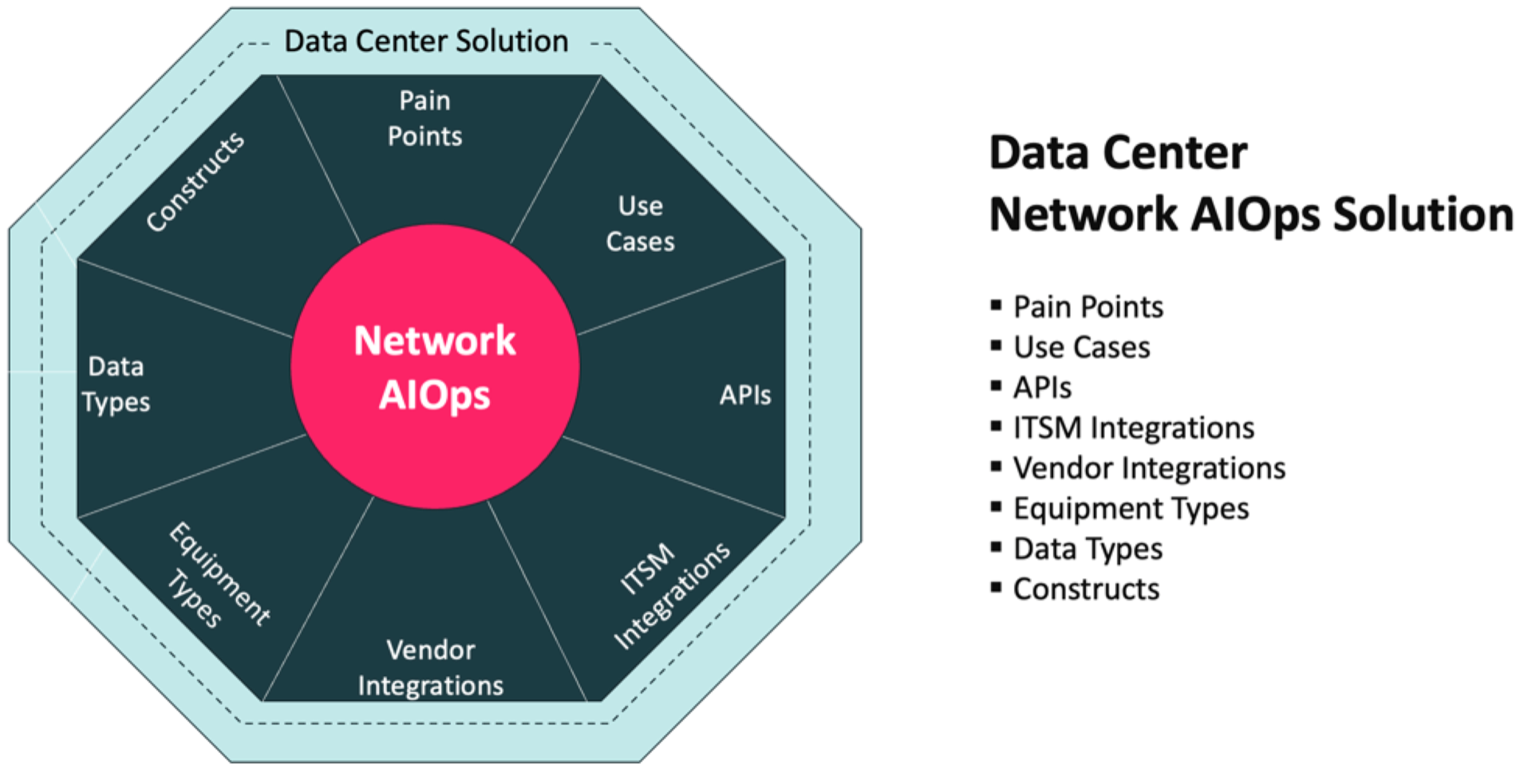
Augtera Networks Data Center Solution:

  • Proactive detection of environmental and optical degradation
  • Anomaly detection for aggregates such as a POD, fabric, or Data Center interconnects
  • Fabric, server, and Hybrid Cloud, latency, and loss anomaly detection
  • Flow analysis including Hybrid Cloud
  • Fabric congestion impact on application sessions
  • VXLAN and EVPN underlay / overlay insights including ECMP analysis
  • Firewall and Load Balancer anomalies
  • Multi-vendor support including Arista Networks, Cisco Systems, Juniper Networks, Dell Enterprise SONiC, F5, Palo Alto Networks, VMWare, and any equipment using industry-standard interfaces
  • Integrations including Amazon Web Services, Azure, Google Cloud Platform, ServiceNow, and Slack.

The solution includes capabilities that come standard with all Augtera Networks solutions including:

  • Holistic data ingestion
  • Automated creation of operationally relevant trouble tickets
  • Policy-driven auto-correlation and noise elimination
  • AI/ML-based anomaly & gray failure detection
  • Topology auto discovery
  • Multi-layer, topology-aware, auto-correlation
  • Topology-mapped “Time-machine” visualization of metrics, events, & anomalies
  • Real-Time Syslog anomaly detection including Zero-Day anomalies
  • DevOps friendly APIs

https://augtera.com/


At the ONUG Spring 2022 event, a key topic of discussion was the critical staff shortages faced by IT departments. Optimizing network operations has become a priority. John Heinz, Director of Sales Engineering at Augtera, discusses how machine learning and automation can reduce time to root cause detection and thus help alleviate the staffing shortage.


Rambus expands its line of DDR5 memory interface chips

Rambus has expanded its DDR5 memory interface chip portfolio with the addition of the Rambus SPD (Serial Presence Detect) Hub and Temperature Sensor, complementing its Registering Clock Driver (RCD), to deliver high-performance, high-capacity memory solutions for DDR5 computing systems. Both the SPD Hub and Temperature Sensor are critical components on a memory module that sense and report important data for system configuration and thermal management. The SPD Hub is used in both server and client modules, including RDIMMs, UDIMMS and SODIMMS, and the temperature sensor is designed for server RDIMMs.

“The new performance levels of DDR5 memory place an increased premium on signal integrity and thermal management for server and client DIMMs,” said Sean Fan, chief operating officer at Rambus. “With over 30 years of memory subsystem design experience, Rambus is ideally positioned to deliver DDR5 chipset solutions which enable breakthrough bandwidth and capacity for advanced computing systems.”

Key features of the SPD Hub (SPD5118) include:
  • I2C and I3C bus serial interface support Advanced reliability features 
  • Expanded NVM space for customer-specific applications 
  • Low latency for fastest I3C bus rates 
  • Integrated temperature sensor 
  • Meets or exceeds all JEDEC DDR5 SPD Hub operational requirements (JESD300-5A) 

Key features of the Temperature Sensor (TS5110) include:
  • Precision thermal sensing I2C and I3C bus serial interface support 
  • Low latency for fastest I3C bus rates 
  • Meets or exceeds all JEDEC DDR5 Temperature Sensor operational requirements (JESD302-1.01)

https://www.rambus.com/rambus-expands-portfolio-of-ddr5-memory-interface-chips-for-data-centers-and-pcs/

Rambus samples 5600 MT/s DDR5 registering clock driver

Rambus has begun sampling its 5600 MT/s 2nd-generation registering clock driver (RCD) chip to the major DDR5 memory module (RDIMM) suppliers. This new level of performance represents a 17% increase in data rate over the first-generation 4800 MT/s Rambus DDR5 RCD. Rambus said it is able to deliver 5600 MT/s performance at lower latency and power while optimizing timing parameters for improved RDIMM margins.“The RCD is a mission-critical...


Verizon lands $400M contract with FBI

The Federal Bureau of Investigation (FBI) has awarded a $400 million Enterprise Infrastructure Solutions (EIS) task order to Verizon Public Sector to help the agency meet increasing demands for data bandwidth around the globe.

Under the contract, Verizon will provide Ethernet access capabilities and a resilient global Virtual Private Network Services (VPNS) with a Verizon 4G LTE and 5G Nationwide cellular fixed wireless access arrangement, enabling the move to wireless connections provisioned on-demand for faster deployment at FBI locations, and support for high-speed connectivity for FBI agents working in the field.

Verizon’s EIS task order with the FBI includes 24/7 direct access to Verizon’s IT development team to address critical problems or discuss potential system enhancements, enabling the FBI to support a wide range of applications, such as cloud computing, video and imaging transmissions, and data applications that drive demand for dynamic bandwidth capacity.

“We understand the critical nature of the work we will do with the FBI to improve network availability, enhance operational efficiency, use tailored approaches to meet individual division needs, and help modernize technology,” said Maggie Hallbach, Senior Vice President, Public Sector at Verizon. “Building on nearly 20 years of partnership with the Bureau, this next phase will provide stable solutions and a modern network that is faster, more scalable and secure that will help the FBI achieve its mission.”

https://www.verizon.com/about/news/verizon-awarded-over-400m-modernization-contract-fbi

Liberty Global names CommScope as DOCSIS 4.0 partner

Liberty Global has selected CommScope to develop and deploy a Remote MACPHY Device (RMD) Node platform for DOCSIS 4.0 (D4.0), accelerating Liberty Global’s progress towards 10G capabilities.  

This project marks the industry’s first D4.0 initiative in Europe and leverages CommScope’s DOCSIS leadership and end-to-end portfolio of solutions to deliver a new custom node and RMD platform specifically for Liberty Global. The RMD Node platform for D4.0 will simplify Liberty Global’s hybrid fiber-coaxial (HFC) network transformation to deliver multi-gigabit services—in turn providing its subscribers with seamless access to new high-bandwidth, low-latency services and enabling Liberty Global to ultimately achieve 10G capabilities on the HFC network cost-effectively.


“Our groundbreaking D4.0 project is an important step forward in our 10G vision for the future,” stated Colin Buechner, Managing Director and Chief Network Officer, Liberty Global. “We selected CommScope to extend the capabilities of our HFC network into the next decade, because of their proven leadership and expertise in DOCSIS and next-generation networks. Together, we are laying the path to tomorrow’s multi-gigabit services and providing our subscribers across Europe with the world’s most advanced and reliable services.”

“We are excited to partner with Liberty Global once again as we demonstrate our worldwide leadership in DOCSIS,” said Guy Sucharczuk, SVP and President, Access Network Solutions, CommScope. “Our long-standing partnership with Liberty Global uniquely positions us to deliver end-to-end D4.0 solutions specific to its HFC network. This is a showcase for the global transformation of HFC into tomorrow’s 10G networks, and we’re excited to deploy this technology in Europe and beyond.”

https://www.commscope.com/press-releases/2022/liberty-global-selects-commscope-as-docsis-4.0-technology-partner/

AT&T announces $13m broadband fiber project in Indiana

AT&T has been selected for a $13 million project with the State of Indiana to bring fiber broadband to nine counties. 


The Next Level Connections Broadband project, which is contingent upon a final contract between the state of Indiana and AT&T, will connect nearly 6,100 homes, businesses and farm.

"It's tremendous seeing how our Next Level Connections efforts are helping Hoosier families and business owners obtain access to high-speed, quality broadband," said Indiana Lt. Gov. Suzanne Crouch, who also serves as Indiana's Secretary of Agriculture and Rural Affairs. "This project would bring fiber-based internet to thousands who couldn't get it before, and we're grateful for AT&T's plans for these communities."

AT&T looks to ramp investment in 5G and fiber

 AT&T is setting its sights on becoming "America's best broadband provider" based on a strategy of owning and operating both fiber and wireless. In light of closing its pending WarnerMedia transaction with Discovery, AT&T updated its financial expectations for 2022 and 2023, saying it will shift Capex to fiber and 5G.“Now that the close of the WarnerMedia deal is approaching, we are near the starting line of a new era for AT&T,”...

DigitalBridge appoints Tae Ahn as MD of Asia Capital Formation

DigitalBridge Group appointed Tae E. Ahn as Managing Director and Head of Asia Capital Formation at DigitalBridge Investment Management. Based in Singapore, he will work alongside DigitalBridge’s existing team with a focus on capital formation, coinvestment and client relationship management across Asia-Pacific.

Prior to joining DigitalBridge, he served as Senior Client Relationship Manager and Head of Korea at global private markets firm Partners Group. In that role, which he held for seven years, Mr. Ahn led fundraising, client relationship management and deal sourcing. Mr. Ahn holds a B.A. from the University of Michigan and a Masters in International Economic Policy from Columbia University.

www.digitalbridge.com

DT to sell 51% stake in towers business to Digital Bridge and Brookfield

Deutsche Telekom will sell 51 percent of GD Towers comprising its tower assets in Germany and Austria, to Digital Bridge and Brookfield at 17.5 billion euros enterprise value on a cash and debt free basis. With around 800 employees, GD Towers operates more than 40,000 sites in Germany and Austria and has a successful track record in delivering new sites for its anchor tenant Telekom Deutschland and securing revenues with third party customers....

Swiss Life-led Consortium to acquire 27% equity Interest in DataBank

DigitalBridge Group will sell an equity stake in its DataBank company to a consortium led by Swiss Life Asset Management AG and EDF Invest.DataBank’s portfolio consists of more than 65 data centers, 20 interconnection hubs in more than 27 markets, on-ramps to an ecosystem of cloud providers, and a modular edge data center platform.Under the terms of the agreement, SLAM and EDF will acquire 27% of the fully diluted equity interests in DataBank for...

DigitalBridge to acquire Switch for $11 billion for its data centers

DigitalBridge Group agreed to acquire Switch, a leading colocation data center operator, for $34.25 per share in an all-cash transaction valued at approximately $11 billion, including the assumption of debt.Switch, which was founded in 2000, operates SuperNAP data center campuses in Las Vegas, Reno, and Grand Rapids, Michigan. The company touts its high-resiliecy and high-security designs for mission critical workloads in its "Class 5" data centers....


Ethernet Alliance offers Power over Ethernet certification testing in Taipei

The Ethernet Alliance announced Power over Ethernet (PoE) Certification Gen 2 testing in Taipei, Taiwan, with UL Solutions. 

Manufacturers of PoE devices can now pursue Gen 1 and Gen 2 certification via third-party testing at labs in both Asia and North America, as well as testing at their own facilities with Ethernet Alliance-approved equipment.

https://ethernetalliance.org/blog/2022/07/19/ul-solutions-approved-for-gen2-poe-certification-testing/


Monday, July 18, 2022

FCC prorates grants under Rip-n-Replace at 39%

 The FCC has begun approving reimbursements for the removal and replacement of equipment from Huawei and ZTE under the Secure and Trusted Communications Networks Reimbursement Program (Reimbursement Program).

The Reimbursement Program is funded by a $1.9 billion congressional appropriation.

In February, FCC Chairwoman Jessica Rosenworcel first notified Congress that providers initially requested approximately $5.6 billion under the program.

Because demand for program support exceeds available funding, the FCC confirmed that it is implementing a prioritization scheme that requires funding to be allocated first to approved applicants that have 2,000,000 or fewer customers (Priority 1).

After review of the submitted applications, the FCC has determined that Priority 1 applicants have submitted approximately $4,640,284,672 in cost estimates that are reasonable and supported. 

Because available funding is substantially less than that amount, the Commission rules require that allocations to Priority 1 applicants be prorated on an equal basis. The pro-rata factor applied to those allocations is approximately 39%.

https://www.fcc.gov/document/fcc-announces-supply-chain-reimbursement-program-approved-applications

FCC sees strong demand for Rip-n-Replace as requests top $5.6 billion

 FCC Chairwoman Jessica Rosenworcel notified Congress that providers have initially requested approximately $5.6 billion from the Secure and Trusted Communications Networks Reimbursement Program to cover the costs of removing, replacing, and disposing of insecure equipment and services in U.S. networks.“Last year Congress created a first-of-its kind program for the FCC to reimburse service providers for their efforts to increase the security...

Biden signs Secure Equipment Act

President Biden signed into law the “Secure Equipment Act of 2021,” which requires the Federal Communications Commission to adopt rules clarifying that it will no longer review or approve any authorization application for equipment that poses an unacceptable risk to national security.The bill would prevent further integration and sales of Huawei, ZTE, Hytera, Hikvision, and Dahua – all Chinese state-backed or directed firms – in the U.S. regardless...


Telefónica and Ericsson demo automated slicing in 5G Standalone

Telefónica and Ericsson have demonstrated end-to-end, automated network slicing in 5G Standalone, including Dynamic Radio Resource Partitioning.

The lab test was carried out at 5TONIC, a Madrid-based open research and innovation laboratory focused on 5G technologies, founded by Telefónica and IMDEA Networks. The proof-of-concept covered different use cases including a 360-video production in motion in collaboration with technology start-up YBVR, remote control of an automated guided vehicle (AGV), and gesture recognition in collaboration with Spanish SME Fivecomm.

The network slicing for enterprise demo was carried out on Android 12 and 13 Beta powered smartphone devices. The demo proved that the onboarding of a network slice, from core to radio, may be configured and deployed in less than 35 minutes thanks to the solution’s automation capabilities. All the use cases executed needed a specific and complex service configuration, therefore full automation is a key success factor to turn network slicing concept into a reality and accelerate time to market.

Telefónica said the most relevant capabilities of network slicing technology that have been validated are:

  • Automation in the provision and life cycle management of end-to-end network slices.
  • Network Slicing service assurance.
  • Definition of different scenarios for the traffic prioritization in a network slice, such as Radio Resource Partitioning (RRP) that enables the sharing of radio resources between use cases with different service requirements.
  • Simultaneous access of a handset to different network slices, having the possibility to select the traffic sent to the different network slices.

Telefonica aims to accelerate the network slicing capabilities across its networks as well as in the industry. Through its program called LIME, Telefonica is collaborating with Ericsson as a key partner to further develop network slicing as a technology that will bring to life a variety of new 5G applications and services

“Ericsson has achieved a key milestone by demonstrating fully-automated deployment of end-to-end network slices (from RAN to Core) in cooperation with Telefónica, at 5TONIC lab. The deployed network slices will secure dedicated resources in the radio access network as well as in the Core for satisfying specific needs of selected use cases, enabling that Telefónica meets new customer demands on a zero-touch operation. Network Slicing is key to accommodating new use cases leveraging 5G, with the promise to provide new capabilities to a variety of users and enterprises with minimal or no manual intervention”, Jorge Navais, Global Account Manager of Telefónica, said.

“Bringing together the end-to-end ecosystem required for network slicing to thrive as a product is key for Telefonica and the rest of the telco industry. We are proud of being one of the first operators to demonstrate the benefits and differentiators of network slicing to our customers thanks to Radio Resource Partitioning and automation for full end-to-end slicing life cycle management. We look forward to continued collaboration with our partners and the rest of the industry to make slicing a commercial success for all”, Cayetano Carbajo, Director of Core & Transport in Telefonica CTIO, said.

https://www.telefonica.com/en/communication-room/telefonica-and-ericsson-pioneer-end-to-end-automated-network-slicing-5g-sa/

Internet2 renews with Indiana University for GlobalNOC

Internet2 awarded a new three-year contract for Indiana University's GlobalNOC to provide customer service desk and break-fix support for the Internet2 national network. The agreement will commence on January 1, 2023. 

“We greatly appreciate the community team that convened to assist with shaping the RFP process, analyzing proposals, and providing instrumental input on this consolidated support approach,” said Rob Vietzke, vice president of network services at Internet2. “Reengaging with the IU GlobalNOC allows a clear path forward for the Internet2 Network Operations Center to continue providing world-class, transparent, and trusted support for our member community. This decision also aligns with Internet2’s strategic priorities for 2022, including the rollout of new tools and services enabled by our Next Generation Infrastructure and the expansion of our senior- and mid-level engineering functions.”

“For nearly a quarter century, the GlobalNOC at Indiana University has been proud to partner with Internet2 to help provide innovative support, services, and technologies to advance research and education networks,” said Rob Lowden, IU vice president for IT and chief information officer. “We are honored that Internet2 chose to continue our partnership after a competitive request for proposal process. Our culture of high expectations, scientific curiosity, and world-renowned expertise make the GlobalNOC an excellent fit to continue working with Internet2 well into the future.”

In addition, Rob Vietzke, Vice President of Network Services at Internet2, is stepping down to pursue other career opportunities. Rob has served the Internet2 community in this role since 2006. As Vice President of Network Services, he led strategic planning, management, and operation of the Internet2 Network, including evolving and transforming its business model, relationships with regional partners, developing and expanding the service portfolio, and assuring the financial model. Vietzke led three major network upgrades during his time at Internet2. Most recently the Next Generation Infrastructure (NGI), completed in 2021, offers a fully automated 400G national infrastructure with new services, new capabilities, and major efficiencies for the R&E community.

https://internet2.edu/internet2-and-indiana-university-agreement-for-network-operations-support/

Internet2 completes migration to its 5th gen optical backbone

Internet2, which serves 323 U.S. universities, 59 government agencies, 46 regional and state education networks, has migrated its research and education (R&E) network traffic to its fifth-generation backbone.The new network’s optical layer now supports up to 32 terabits per segment with a new generation of transponders in increments of 400-800 Gbps. NGI’s new packet layer provides 8-16 petabits per second of port capacity per location. NGI delivers...


IBM cites growth in software and hybrid cloud

IBM reported Q22 2022 revenue of $15.5 billion, up 9 percent, up 16 percent at constant currency (about 5 points from sales to Kyndryl).

"We are a faster-growing, focused, disciplined company with sound business fundamentals," said James Kavanaugh, IBM senior vice president and chief financial officer. "Our recurring revenue stream and solid cash generation position us well to continue to invest in R&D, acquire new companies, and strengthen our talent in every part of the business, while also returning value to shareholders through our dividend."

Some highlights:

Software (includes Hybrid Platform & Solutions, Transaction Processing)— revenues of $6.2 billion, up 6.4 percent, up 11.6 percent at constant currency (about 7 points from sales to Kyndryl):

-Hybrid Platform & Solutions up 4 percent, up 9 percent at constant currency (about 1.5 points from sales to Kyndryl):
 - Red Hat up 12 percent, up 17 percent at constant currency
   -- Automation up 4 percent, up 8 percent at constant currency
   -- Data & AI flat, up 4 percent at constant currency
   -- Security flat, up 5 percent at constant currency
- Transaction Processing up 12 percent, up 19 percent at constant currency (about 22 points from sales to Kyndryl)
- Software segment hybrid cloud revenue up 14 percent, up 18 percent at constant currency 

Consulting (includes Business Transformation, Technology Consulting and Application Operations)— revenues of $4.8 billion, up 9.8 percent, up 17.8 percent at constant currency:

- Business Transformation up 9 percent, up 16 percent at constant currency

- Technology Consulting up 14 percent, up 23 percent at constant currency

- Application Operations up 9 percent, up 17 percent at constant currency

- Consulting segment hybrid cloud revenue up 20 percent, up 29 percent at constant currency

Infrastructure (includes Hybrid Infrastructure, Infrastructure Support)— revenues of $4.2 billion, up 19.0 percent, up 25.4 percent at constant currency (about 7 points from sales to Kyndryl):

- Hybrid Infrastructure up 34 percent, up 41 percent at constant currency (about 7 points from sales to Kyndryl)

   -- IBM z Systems up 69 percent, up 77 percent at constant currency

   -- Distributed Infrastructure up 11 percent, up 17 percent at constant currency

- Infrastructure Support down 2 percent, up 5 percent at constant currency (about 8 points from sales to Kyndryl)

- Infrastructure segment hybrid cloud revenue up 24 percent, up 30 percent at constant currency

Financing (includes client and commercial financing)— revenues of $0.1 billion, down 29.9 percent, down 26.6 percent at constant currency

https://newsroom.ibm.com/2022-07-18-IBM-RELEASES-SECOND-QUARTER-RESULTS


FCC incentivizes to open underutilized spectrum for rural carriers

The FCC voted to create an Enhanced Competition Incentive Program (ECIP) to establish incentives for wireless licensees to make underutilized spectrum available to small carriers, Tribal Nations, and entities serving rural areas. 

The new program encourages licensees to partition, disaggregate, or lease spectrum to better match available spectrum resources with entities that seek to provide needed services to under-connected communities. 


Under this new program, small carriers and Tribal Nations can qualify, as can rural-focused entities. Transactions through the new program must offer at least half of the licensed spectrum from a given Wireless Radio Service license to an unaffiliated eligible entity for long-term use within specific geographic parameters. Under the program, any covered geographic licensee may offer spectrum to an unaffiliated eligible entity through a partition and/or disaggregation, and any covered geographic licensee eligible to lease in an included service may offer spectrum to an unaffiliated eligible entity through a long-term leasing arrangement.

FCC Chairwowan Jessica Rosenworcel states: "I’m excited to see the new deployments this program will foster. I’m also grateful for the creative spark to establish this initiative that was first provided by Senator Klobuchar and Senator Fischer in the MOBILE NOW Act. We’re making their incentive ideas from that legislation a reality today and I think it will help expand wireless deployment in rural and Tribal communities. It’s a terrific tool to use— among others—to make sure we reach 100 percent of us with high-speed service."

https://www.fcc.gov/document/fcc-establishes-enhanced-competition-incentive-program-0

Quantum Machines to head Israel Quantum Computing Center

Quantum Machines, a start-up developing a Quantum Orchestration Platform (QOP), has been selected by the Israel Innovation Authority (IIA) to lead the establishment of the Israel Quantum Computing Center. The center is part of the Israel National Quantum Initiative (INQI) and will host Israel's first fully functioning quantum computer that is available to the commercial and research communities. 

Other consortium partners include:

  • Elbit Systems is a strategic partner in this project and will be part of the center's advisory board. Elbit will lead the design of quantum applications for the government sector and assign dedicated teams to advance their development.
  • QuantWare will provide its superconducting Quantum Processing Units (QPUs)
  • ORCA Computing will provide its scalable quantum photonics computing system
  • ColdQuanta will provide its cold atoms based quantum computing system
  • ParTec will provide a High-Performance Computing (HPC) platform and provide services for the integration of HPC and quantum computing
  • Classiq and Super.tech will provide their state-of-the-art software application layer capabilities, including quantum software development tools and benchmarking software for all of the center's platforms.

"We look forward to working with the Israel Innovation Authority (IIA) to lead the development of the country's first fully functioning quantum computing center," said Itamar Sivan, co-founder and CEO of Quantum Machines. "The open architecture approach that Quantum Machines and our world-leading partners in the consortium enable, will ensure compatibility with the quantum technologies of the future. This will allow the center's quantum computer to scale from tens of qubits today, to hundreds and thousands of qubits in the next few years. Our goal is to give Israeli companies access to the most advanced quantum technologies and services so that they can develop deep quantum expertise across industry and academia. This expertise will allow Israeli companies across a broad range of sectors and industries to gain a leading global position."

https://www.quantum-machines.co


Singtel deploy 5G campus + edge core for Hyundai's Innovation Centre

Singtel will deploy its 5G infrastructure network solutions at the Hyundai Motor Group Innovation Centre in Singapore (HMGICS), which includes an electric vehicle production facility. 

Singtel’s 5G campus network with mobile edge core solution  will provide uninterrupted high-speed connectivity and massive bandwidth to enhance HMGICS’s high-precision quality control in manufacturing operations.

HMGICS is the HMG’s open innovation hub for research and development in advanced mobility ecosystems with the aim of revolutionising the future mobility value chain. Apart from introducing smart mobility solutions in areas such as electric vehicles (EV), autonomous vehicles, and new forms of mobility products and services in Singapore, the HMGICS will also serve as a testbed for human-centred intelligent manufacturing and verification of Industry 4.0 technologies. 

"Singtel’s 5G network and MEC solutions will overcome the performance limitations of WiFi to deliver the promise of digital twins and eventually metaverse for advanced manufacturing operations. With innovation from Hyundai and enablement from our 5G solutions, we are looking at a new concept of manufacturing where the station comes to the cell, unlocking opportunities for hyper-customization and other novel applications. Together, we are paving the way for Singapore to be the centre for Smart Manufacturing in the region."

https://www.singtel.com/about-us/media-centre/news-releases/singtel-partners-hyundai-motor-group-to-develop-advanced-manufac

Telkom Indonesia hosts open networking demo with Edgecore, TIP, OCP

Edgecore Networks, in collaboration with Telkom Indonesia, Telecom Infra Project, Open Compute Project, and IP Infusion, are hosting a demonstration in Indonesia of open disaggregated solutions. 

The demonstration event was launched on July 11 and 12 at Telkom University, Bandung, Indonesia, showcasing Edgecore hardware platforms and IP Infusion networking software platforms for various solutions, including broadband access, 5G access, OpenWiFi access, and data center. After the launch event, the demonstration lab will remain open through the whole of Q3, giving all interested parties plenty of time to visit.

The demo showcased:

  • 5G Access – Edgecore’s Cassini AS7716-24SC optical packet transponder and AS7316-28XB Disaggregated Cell Site Gateway will be the open hardware platforms demonstrated running IP Infusion’s OcNOS. Edgecore’s Cassini is the industry’s first modular open-source packet transponder, offering a high-capacity combination of 100GbE packet switching ports and 100/200 Gbps coherent optical interfaces. The AS7316-28XB is an OCP Accepted switch.
  • Broadband Access – Featuring Edgecore’s ASXvOLT16 virtual Optical Line Terminal (vOLT) and the AS5916-54XKS aggregation router. The ASXvOLT16 is a 16-port 10G XGS-PON vOLT with 4 x 100G/40G QSFP28 fixed ports. The AS5916-54XKS is an aggregation router with 48 x SFP+ switch ports and 6 x 100G QSFP28 ports capable of line-rate Layer 2 and Layer 3 switching.
  • OpenWiFi Access – The demonstration includes a range of Edgecore Wi-Fi 6 access points – EAP101, EAP102, and EAP104 – that all come preinstalled with TIP’s OpenWiFi software, and the wireless LAN controller EWS101. OpenWiFi is a community-developed, disaggregated Wi-Fi software system, which includes both a controller SDK and AP firmware, both designed and validated to work seamlessly together.
  • Data Center – The Edgecore AS5812-54X switch, which provides full line-rate switching across its 48 x 10GbE ports and 6 x 40GbE uplinks. The switch can be deployed either as a Top-of-Rack switch, or as part of a 10GbE or 40GbE distributed spine, forming a non-blocking folded-Clos data center fabric. The AS5812-54X is an OCP Accepted switch.


https://www.edge-core.com

Ericsson partners with Thai university on 5G education

Ericsson announced a partnership with King Mongkut University of Technology Thonburi (KMUTT) on a 5G ICT skills program.

The partnership will provide KMUTT students with access to ‘Ericsson Educate’, Ericsson’s online education initiative that supplements the students’ ongoing technical studies with courses that aim to strengthen their ICT skills and increase their job readiness. Around 2,000 students are expected to benefit from this program in the first year alone.

http://www.ericsson.com

Sunday, July 17, 2022

Rosenworcel proposes minimum of 100/20 and goal of 1,000/500

FCC Chairwoman Jessica Rosenworcel is proposing a new the national standard for minimum broadband speed of 100 Mbps for download and 20 Mbps for upload. She is also proposing for the FCC to set a separate national goal of 1 Gbps/500 Mbps for the future. 

“The needs of internet users long ago surpassed the FCC’s 25/3 speed metric, especially during a global health pandemic that moved so much of life online,” said Chairwoman Rosenworcel.  “The 25/3 metric isn’t just behind the times, it’s a harmful one because it masks the extent to which low-income neighborhoods and rural communities are being left behind and left offline.  That’s why we need to raise the standard for minimum broadband speeds now and while also aiming even higher for the future, because we need to set big goals if we want everyone everywhere to have a fair shot at 21st century success.”

https://www.fcc.gov/document/chairwoman-rosenworcel-proposes-increase-minimum-broadband-speeds

  • In 2015, the FCC set the broadband standard at 25/3 Mbps and has not updated it since.  


SpaceX completes 52nd Starlink mission

On Sunday, July 17 SpaceX launched 53 Starlink satellites from Space Launch Complex 40 (SLC-40) at Cape Canaveral Space Force Station in Florida. 

This was the 13th flight for the Falcon 9 first stage booster supporting this mission, which previously launched Dragon’s first crew demonstration mission, the RADARSAT Constellation Mission, SXM-7, and now 10 Starlink missions.

It was also the 52nd Starlink mission to date and SpaceX's 31st mission in 2022.

https://www.spacex.com