Showing posts with label Silicon Valley. Show all posts

Wednesday, December 14, 2022

PsiQuantum adds ex-Cisco Roland Acra as Chief Business Officer

PsiQuantum named Roland Acra  as Chief Business Officer responsible for the company’s business strategy, including commercial, global market expansion, quantum applications and software development.

Acra previously held the role of Chief Technology Officer at Cisco until earlier in 2022. Prior to that, he was Senior Vice President and General Manager of Cisco’s Data Center Business Group. In this role, he led the development and marketing of several generations of Data Center switching products, blade and rack server products, and introduced several industry-first software platforms for Data Center predictive analytics, assurance, and insights.

In addition to his corporate leadership background, Roland’s experience also extends to building and scaling new companies from inception. He was President and CEO of Arch Rock Corporation, a category leader in IPv6 wireless mesh networks and energy data analysis which, following acquisition, played a significant role in the formation of Cisco’s Smart Grid Business Unit. Roland was also President and CEO of Procket Networks, a leading-edge provider of Internet backbone core and edge routers.

https://www.psiquantum.com

PsiQuantum claims 50X improvement in run-time efficiency

PsiQuantum, a start-up based in Palo Alto, California, has developed a technique it claims to be 50X more efficient in the run-time efficiency of compiled applications in fault-tolerant quantum computers.The company says its technique specifically targets algorithms for error-corrected quantum computers, as opposed to non-error-corrected NISQ systems. ‘Active volume compilation’ reduces the time taken to run a given application, through more efficient...


Saturday, December 3, 2022

PsiQuantum claims 50X improvement in run-time efficiency

PsiQuantum, a start-up based in Palo Alto, California, has developed a technique it claims to be 50X more efficient in the run-time efficiency of compiled applications in fault-tolerant quantum computers.

The company says its technique specifically targets algorithms for error-corrected quantum computers, as opposed to non-error-corrected NISQ systems. ‘Active volume compilation’ reduces the time taken to run a given application, through more efficient use of the available hardware. This is achieved by utilizing long-range connections between different regions in the quantum computer. This technique particularly favors photonic quantum computing, where long-range connections can be achieved using conventional optical fiber.

Pete Shadbolt, Chief Scientific Officer and Co-Founder of PsiQuantum, said: “This is a very significant achievement by our fault-tolerance team. A 50X improvement means that a quantum application which would have previously taken a month to execute on a future photonic quantum computer, would now run in less than a day.”

Naomi Nickerson, VP Quantum Architecture of PsiQuantum: “This development also has implications given the ability of photonic quantum computers to exploit trade-offs between computing resources and computing runtime. The active volume technique reduces the computational time required and this can be translated into reduced hardware resources using techniques like photonic interleaving. This is also likely to be of practical importance in allowing programs to run in the same time using less hardware. Though the advantages of this approach can be realized with any technology able to connect distant qubits, this is challenging for many of the current approaches, and active volume architectures are particularly suited to photonic qubits connected using optical fiber.”

Wednesday, November 16, 2022

ArmorCode secures $14M for its AppSecOps

ArmorCode, a start-up based in Palo Alto, California, secured a $14 million in Series A funding for its AppSecOps.

ArmorCode's AppSecOps platform provides application security posture, vulnerability and compliance management, as well as DevSecOps automation. 

The funding round was led by Ballistic Ventures, the venture capital firm solely focused on backing cybersecurity startups, founded by Kevin Mandia, Barmak Meftah, Ted Schlein, Jake Seid, and Roger Thornton. Other investors include Sierra Ventures, Cervin, and industry luminaries such as John Donovan, the former CEO of AT&T Communications, Oliver Friedrichs, founder and former CEO of Phantom Cyber (acquired by Splunk), John M. Jack, current board member at Contrast Security and Illumio, among others, and Tom Reilly, former CEO of Cloudera and ArcSight. Founded in July 2020, ArmorCode's Series A brings its total funding to $25 million, underscoring its momentum, which includes a seven-figure annual recurring revenue within its first financial year and revenue doubling in consecutive quarters with customers that include Fortune 100 enterprises.

"The need for applications to ship fast, secure, and compliant has become more critical than ever," said Nikhil Gupta, CEO and Co-founder of ArmorCode. "This funding, and being able to close it in only two weeks, provides further evidence of the importance of improving AppSec and breaking down the silos separating development, security, and operations. This funding will help our business scale as we provide the industry leading AppSecOps platform and enable more organizations to secure their AppSec posture."

https://www.armorcode.com

Monday, September 12, 2022

Aalyria envisions satellite-to-surface mesh with free space optics

Aalyria, a start-up based in Livermore, California, with roots in Google's now-disbanded Project Loon, emerged from stealth to unveil its ambitions for satellite communications.

Aalyria will offer a software platform for orchestrating networks of ground stations, aircraft, satellites, ships, and urban meshes. The software optimizes and continually evolves the antenna link scheduling, network traffic routing, and spectrum resources. In addition,  Aalyria will leverage an advanced coherent light free space optics technology for satellite-to-surface communications.

Aalyria is backed by leading Silicon Valley investors including the founders of Accel, J2 Ventures and Housatonic.

https://www.aalyria.com/

Google cancels Project Loon

Google is saying goodbye to Project Loon, its long-running effort to bring broadband connectivity to rural areas via free-floating balloons. The moonshot project launched in 2013 with a mission to deliver Internet access to "all the world's people" including remote locations on every continent." In a blog posting, Alastair Westgarth, CEO of Loon, said the company simply did not find a way "to get the costs low enough to build a long-term, sustainable...

Loon enters commercial service in Kenya 

Alphabet's Loon division began providing broadband service via balloon to subscribers of Telkom Kenya. The service footprint spans nearly 50,000 square kilometers across western and central parts of Kenya, including the areas of Iten, Eldoret, Baringo, Nakuru, Kakamega, Kisumu, Kisii, Bomet, Kericho, and Narok. Loon is using a fleet of around 35 or more separate balloons circulating in the stratosphere. The company is aiming to add balloons over...


Thursday, September 8, 2022

Graphiant shakes up routing with its network edge service

Graphiant, a start-up based in San Jose, California, emerged from stealth to unveil a new network edge service that promises to shake up the established framework of VPNs, including MPLS and SDWAN.

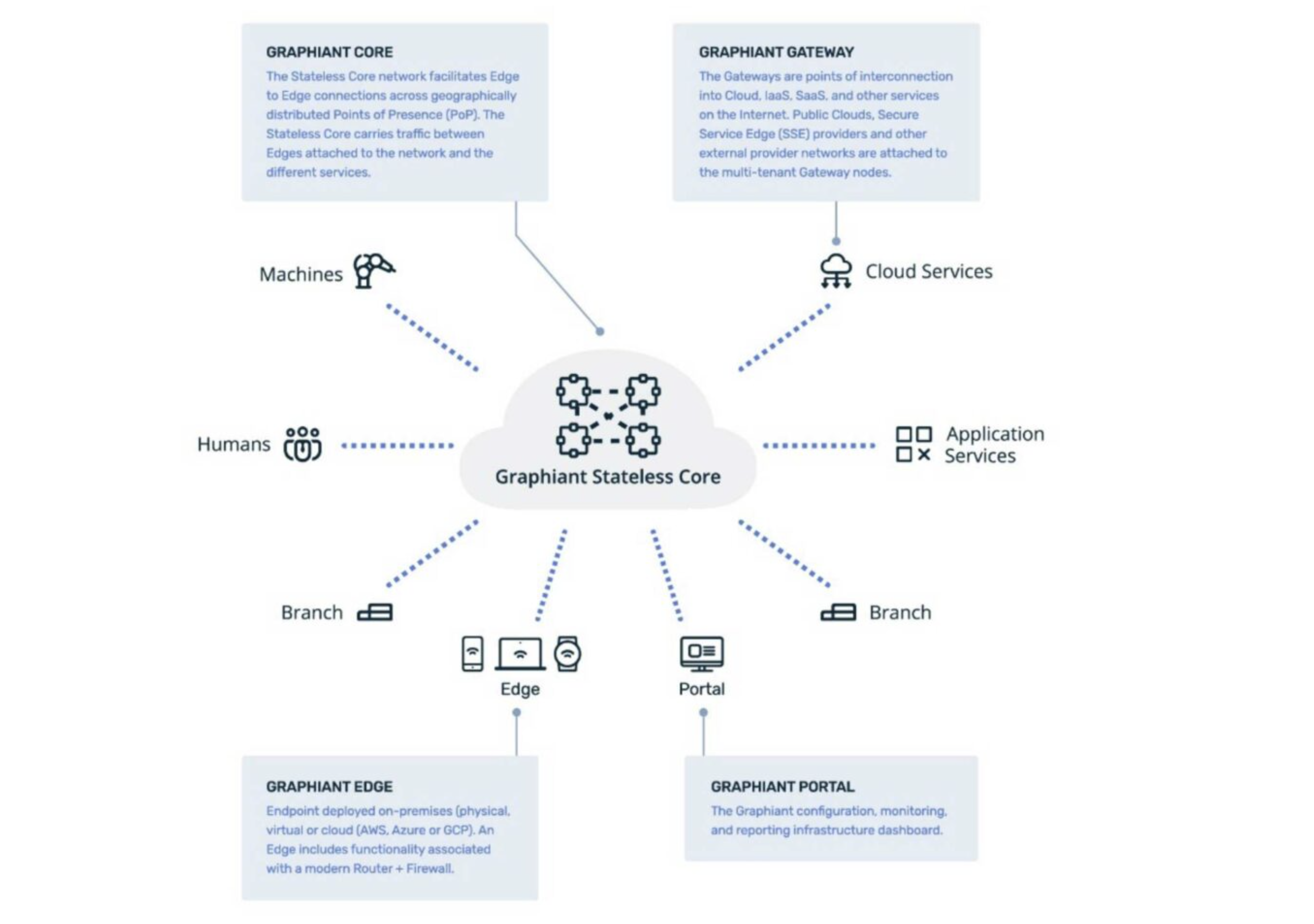
The Graphiant Network Edge provides connectivity between the enterprise WAN, hybrid cloud, network edge, customers and partners. The service promises MPLS-like performance (guaranteed delivery, security and privacy) and Internet-class agility. 


All routing is handled by the Graphiant Stateless Core, which leverages a proprietary routing label system to provision protected paths across an underlay network that is managed by Graphiant. From the enterprise customer perspective, traffic remains encrypted from edge to edge, and SLA-grade performance is guaranteed. The company has its network core deployed in key Equinix data centers serving as its PoPs.

Graphiant's idea is to remove the need for network architects to build bespoke networks between every resource, hybrid cloud, edge network, customer and partner. Instead, they simply connect each resource to the Graphiant Stateless Core. 

“Network architects have to provide connectivity for an impossibly complex world,” says Khalid Raza, CEO of Graphiant. “Connecting business resources, hybrid cloud, edge networks and remote workers, is time-consuming, error-prone and full of security challenges.  We’ve delivered a solution that removes this complexity.”


Thursday, August 25, 2022

ZEDEDA builds its executive team

ZEDEDA, a start-up based in San Jose, California, focused on edge orchestration, announced the following changes to its executive team:

  • Erik Nordmark, a co-founder of the company, has been promoted to Chief Technology Officer.
  • Paul Campaniello has been named Vice President of Marketing.
  • Michael Maxey has been named VP of Business Development. 
  • Raghu Vatte moves into the VP of Product Management and Customer Success role. 

“Edge computing is increasingly important within organizations, and these new executive hires will strongly position us to meet the needs of the biggest customers, helping us to build out our internal teams and provide even more value to our customers and partners,” said Said Ouissal, founder and CEO of ZEDEDA. “Edge computing is accelerating, and our open framework and ecosystem approach is the ideal solution for businesses looking to take advantage of the benefits of edge computing.”

https://www.ZEDEDA.com

ZEDEDA raises $26 million for edge orchestration

ZEDEDA, a start-up based in San Jose, California, raised $26 million in Series B funding for its edge orchestration solution.ZEDEDA provides a unified orchestration experience across hardware, software, networks and cloud that delivers visibility, control and security. The company says revenue is up 7x year-over-year, while at the same time, its number of nodes under management has risen by 4x. The funding round attracted a range of new and...

LF Edge announces Project EVE Seed Code

LF Edge, an umbrella organization within the Linux Foundation that aims to establish an open, interoperable framework for edge computing independent of hardware, silicon, cloud, or operating system, announced Project Edge Virtualization Engine (EVE) seed code contributed by LF Edge founding member ZEDEDA. With Project EVE, edge gateways and devices run a variety of edge workloads simultaneously, decoupling application management from the underlying...


Thursday, July 21, 2022

ZEDEDA raises $26 million for edge orchestration

ZEDEDA, a start-up based in San Jose, California, raised $26 million in Series B funding for its edge orchestration solution.

ZEDEDA provides a unified orchestration experience across hardware, software, networks and cloud that delivers visibility, control and security. The company says revenue is up 7x year-over-year, while at the same time, its number of nodes under management has risen by 4x. 

The funding round attracted a range of new and existing investors — including Coast Range Capital, Lux Capital, Energize Ventures, Almaz Capital, Porsche Ventures, Chevron Technology Ventures, Juniper Networks, Rockwell Automation, Samsung Next and EDF North America Ventures. ZEDEDA has now raised more than $55 million since its inception in 2016.

“All aspects of our business — from a growing base of Global 500 customers to major strategic partnerships and growth in deployed edge nodes — are on a terrific path,” said Said Ouissal, founder and CEO of ZEDEDA. “This latest round of investment validates that our open framework and ecosystem approach to the distributed edge is the ideal choice for the future of connected operations.”

http://www.ZEDEDA.com

Tuesday, July 19, 2022

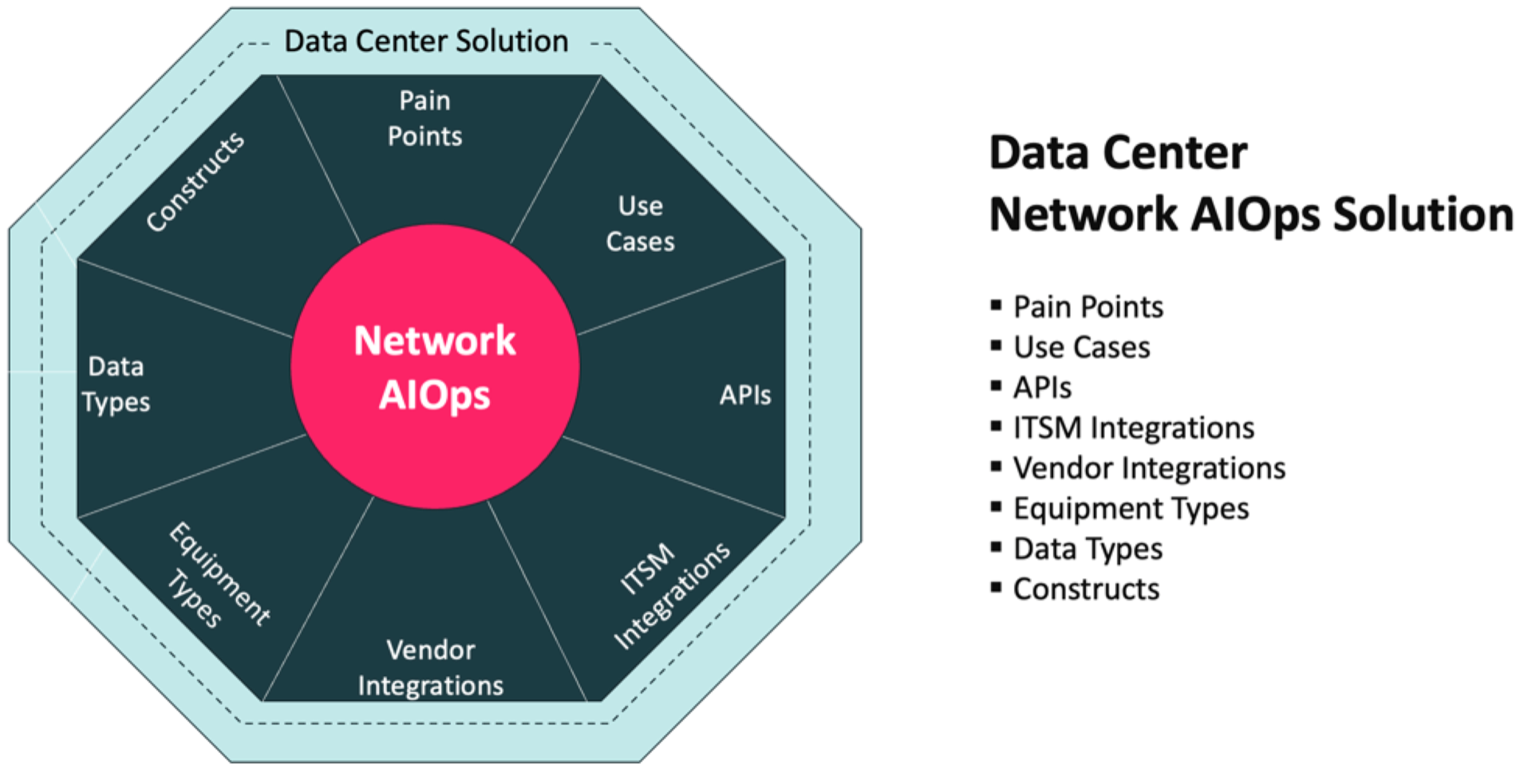
Augtera unveils its AI/ML-powered NetOps for data centers

 Augtera Networks, a start-up based in Palo Alto, California, unveiled its AI/ML-powered Network Operations platforms for data centers.

“Over the last three years we have partnered with some of the largest Data Center Network Operations teams to refine our solution,” said Rahul Aggarwal, Founder and CEO of Augtera Networks. “Our AI/ML algorithms have been specialized for Data Center networks and customers are seeing dramatic improvement in KPIs such as detection, mitigation, and repair. Most importantly, our technology reduces the total number of incidents that are actioned, resulting in operations teams not just running faster, but running smarter and more effectively.”

Augtera Networks Data Center Solution:

  • Proactive detection of environmental and optical degradation
  • Anomaly detection for aggregates such as a POD, fabric, or Data Center interconnects
  • Fabric, server, and Hybrid Cloud, latency, and loss anomaly detection
  • Flow analysis including Hybrid Cloud
  • Fabric congestion impact on application sessions
  • VXLAN and EVPN underlay / overlay insights including ECMP analysis
  • Firewall and Load Balancer anomalies
  • Multi-vendor support including Arista Networks, Cisco Systems, Juniper Networks, Dell Enterprise SONiC, F5, Palo Alto Networks, VMWare, and any equipment using industry-standard interfaces
  • Integrations including Amazon Web Services, Azure, Google Cloud Platform, ServiceNow, and Slack.

The solution includes capabilities that come standard with all Augtera Networks solutions including:

  • Holistic data ingestion
  • Automated creation of operationally relevant trouble tickets
  • Policy-driven auto-correlation and noise elimination
  • AI/ML-based anomaly & gray failure detection
  • Topology auto discovery
  • Multi-layer, topology-aware, auto-correlation
  • Topology-mapped “Time-machine” visualization of metrics, events, & anomalies
  • Real-Time Syslog anomaly detection including Zero-Day anomalies
  • DevOps friendly APIs

https://augtera.com/


At the ONUG Spring 2022 event, a key topic of discussion was the critical staff shortages faced by IT departments. Optimizing network operations has become a priority. John Heinz, Director of Sales Engineering at Augtera, discusses how machine learning and automation can reduce time to root cause detection and thus help alleviate the staffing shortage.


Tuesday, June 21, 2022

Alkira debuts its Cloud Area Networking

Alkira launched Cloud Area Networking, a a full stack, edge-to-cloud enterprise-grade network with built-in routing and network services. Alkira auto-connects clouds, sites, users, and SD-WAN fabrics.

Alkira Cloud Area Networking aims to unify all users, sites, clouds, and vendors into one network with the following capabilities:

  •  Visualization of all network traffic from on-prem to deep in the cloud
  • Traceroute, packet capture, flow capture, and policy inspections from any on-prem network to any cloud network
  •  Enhanced segmentation and micro-segmentation that provide greater compliance across the entire network
  • Automated network address translation that makes it easy to remediate overlapping IP addresses across the Cloud Area Network
  •  Easy connection of partners to the Cloud Area Network with secure resource sharing 

 Alkira’s “Connect Anything” capabilities include: 

  • SecureConnect, which allows users to remotely access anything on their Cloud Area Network from anywhere
  • One-click high availability and disaster recovery setup for critical connections
  • Rapid network service insertion, including enhanced WAF/DDoS protection for internet facing applications

Alkira notes that it has already provided its Cloud Area Networking to Warner Music Group, Koch Industries, Tekion, and others.

Amir Khan, Chief Executive Officer of Alkira, said: “Until now, enterprises had a choice between shoe-horning last-generation technology into the cloud or using orchestration tools to hide the complexity. Enterprises are reaching the limit on how much they can patch their increasingly fragmented network. The Alkira way, the Cloud Area Networking way, is a single, enterprise-grade network infrastructure built for the cloud but grounded in reality. "

https://www.alkira.com

Reinventing networking for multi-cloud, multi-region connectivity

https://youtu.be/kX3L9hQ-ceUAlkira's Amir Khan and Ahmed Datoo discuss the need for better enterprise networking solutions in the era of distributed applications residing in multiple clouds and regions.Four areas of challenge: (1) Geographic expansion of the network footprint (2) Connecting applications to the cloud (3) for customers already in the cloud, there is the challenge of expanding into multiple regions in the same cloud (4) for customer...


Wednesday, June 15, 2022

DataStax secures $115 million led by Goldman Sachs

DataStax, a start-up based in Santa Clara, California, secured $115 million for its real-time data platform.

The funding comes on the heels of strong first quarter company momentum driven by the growing popularity of Astra DB, which is built on the powerful open source Apache Cassandra™ database. Astra DB simplifies cloud-native application development and delivers pay-as-you-go pricing with the freedom and agility of multi-cloud and open source. With the new funding, DataStax will double down on development of Astra DB, with new capabilities including additional integration with Astra Streaming to enable businesses to easily activate all their real-time data — both data “at rest” in a database and streaming data “in motion.”

The new funding round was led by the Growth Equity business within Goldman Sachs Asset Management (Goldman Sachs), with participation from RCM Private Markets fund advised by Rokos Capital Management (US) LP, Singapore-based global investor, EDB Investments Pte. Ltd. and DataStax's existing investors including Crosslink Capital, Meritech Capital Partners, OnePrime Capital and other current investors. DataStax will use the funding to accelerate global expansion and development of its Astra DB multi-cloud database and its Astra Streaming streaming service, which are part of the company’s open data stack for building and running real-time applications on any cloud, at massive scale, anywhere in the world, with zero downtime.

"We see the transformative power of real-time applications across industries on a daily basis and among customers such as The Home Depot, Verizon, and Capital One," said Chet Kapoor, chairman and CEO of DataStax. "What's clear is that we're only in the early stages of what's possible with new data-driven experiences that will serve a wide range of human needs, create virtuous cycles between companies and their customers, and move markets. We appreciate that our investors believe in our vision — even in this economy, we were able to raise significant capital at a substantial premium over the round we completed just a year ago."

https://www.DataStax.com

Monday, June 6, 2022

OpenLight unveils Silicon Photonics platform with integrated InP lasers

OpenLight, a start-up based in Santa Barbara, California, introduced its open silicon photonics platform with integrated lasers.

OpenLight operates under the tagline, "Open. Integrated. Scalable." The open platform includes integrated lasers, optical amplifiers, modulators, photodetectors, and other key photonic components to form a complete solution for low-power, high-performance photonics ICs. In addition, OpenLight offers select PIC designs and design services to accelerate time-to-market. 

The company says it aims to accelerate the development of high-performance photonic integrated circuits (PICs) in applications such as datacom, telecom, LiDAR, healthcare, HPC, AI, and optical computing. The technology has passed qualification and reliability tests on Tower's PH18DA production process. OpenLight expects the first open Multi-Project Wafer (MPW) shuttle run on the PH18DA process as well as 400G and 800G reference designs with integrated lasers to be available in Summer 2022.

By processing the Indium Phosphide (InP) materials directly on the silicon photonics wafer, the PH18DA platform reduces the cost and time of adding lasers, enabling volume scalability and improved power efficiency. In addition, monolithically integrated lasers improve overall reliability and simplify packaging. 

"The rapidly growing silicon photonics market is being driven by the relentless demand for higher bandwidth needed to analyze, store and move complex data," said Dr. Thomas Mader, Chief Operating Officer at OpenLight. "OpenLight's open silicon photonics platform with integrated lasers enables scaling from one laser to hundreds, or even thousands of lasers per PIC, all monolithically integrated at the wafer level. With our platform, companies can enter emerging markets faster, accelerate new applications and completely change the way their teams build photonic systems of tomorrow."

"We strongly believe that OpenLight's technology will transform the silicon photonics industry," said Dr. Marco Racanelli, Senior Vice President and General Manager of Tower Semiconductor's Analog Business Unit. "Providing an open silicon photonics platform with integrated lasers that has been qualified on Tower's process will help mutual customers innovate and fuel the next generation of silicon photonics designs at scale. We are excited to partner with OpenLight in this journey."

http://www.openlightphotonics.com

  • OpenLight is led by Dr. Thomas Mader, Chief Operating Officer, Dr. Daniel Sparacin, VP of Business Development and Strategy, and Dr. Volkan Kaman, VP of Engineering.

Synopsys and Juniper form joint venture for silicon photonics

Synopsys and Juniper Networks are establishing a joint venture company focused on open silicon photonics for applications such as telecom, datacom, LiDAR, healthcare, HPC, AI, and optical computing. The new company's open silicon photonics platform will include integrated lasers, optical amplifiers, and a full suite of photonic components to form a complete solution that will be accessible through a Process Design Kit (PDK). The platform promises...

Tower Semi and Juniper develop silicon photonics process 

Tower Semiconductor and Juniper Networks announced a silicon photonics (SiPho) foundry-ready process with integrated III-V lasers, amplifiers modulators and detectors. Potential applications include optical connectivity in datacenters and telecom networks, as well as AI, LiDAR and other sensors. The new platform co-integrates III-V lasers, semiconductor optical amplifiers (SOA), electro-absorption modulators (EAM) and photodetectors with...

Tuesday, May 17, 2022

Eridan lands $46 million for direct polar transmitter in gallium nitride and silicon

Eridan, a start-up based in Mountain View, California, raised $46 million in financing for its MIRACLE RF Front End Module. 

Eridan has built a direct polar transmitter in gallium nitride and silicon, which promises:

  • 10x less input power to provide the same coverage
  • 60-100x reduction in power consumption in sparsely-populated areas, due to improved spatial efficiency
  • Equipment that’s smaller, lighter, and less expensive to install, and doesn’t require specialized power sources or heavy heat sinks

The funding was led by Capricorn’s Technology Impact Fund and Monta Vista Capital with additional participation from Social Capital, Diamond Edge Ventures and Pilot Grove Management.

The company anticipates initial stages of deployment in late 2023 in small cells and Massive MIMO systems for urban and suburban locations.

"Accessible, efficient and reliable wireless connectivity is critical to our future economic, environment and social well being. Achieving that reality, however, is impossible without a major technology breakthrough to reduce the spectrum and power needed. That’s how Eridan will provide improved and expanded connectivity for everyone, everywhere, using a fraction of the power," stated Doug Kirkpatrick, Eridan CEO and Co-founder.

https://eridan.io

Wednesday, May 4, 2022

Google acquires Raxium for MicroLED display technologies

Google has acquired Raxium, a start-up based in Fremont, California developing single panel MicroLED display technologies. Financial terms were not disclosed.

On its website, Raxium claims to have developed the world’s highest performance ultra-high density
monolithic RGB µLED displays measuring ~3.5 um per pixel, as compared with Super AMOLED displays at ~50 um per pixel.

https://www.raxium.com

https://blog.google/inside-google/company-announcements/google-acquires-raxium/

Monday, March 28, 2022

Celona raises $60 million for private cellular

 Celona, a start-up based in Cupertino, California, closed a $60 million Series C financing round for its solutions aimed at bridging the gap between LTE/5G cellular wireless and enterprise IT infrastructures.


Celona says that since launching its integrated 5G LAN platform in November 2020, it has seen strong demand from a range of enterprises, managed service providers and mobile network operators. The company’s customer base includes Verizon, NTT Ltd, SBA Communications, St. Luke’s Hospital System, Purdue Research Foundation, California State University (CSU) Stanislaus, and many other brand-named enterprises.

The lastest funding round led by DigitalBridge Ventures and included participation from all of Celona’s existing investors:  Lightspeed Venture Partners, Norwest Venture Partners, NTTVC, Qualcomm Ventures and Cervin Ventures. The new financing brings Celona’s total capital investment to $100 million. 

"This latest financing round is a strong endorsement of both our existing accomplishments leading the market in 5G network adoption and the tremendous growth prospects still ahead for Celona,” said Rajeev Shah, Co-Founder and CEO of Celona. “We are proud to have the support of a top-tier group of investors, including DigitalBridge leading this financing round. We believe that Celona has all the right pieces in place to build upon our foundation of disruptive innovation and leadership with our 5G LAN technology, particularly with these additional resources to expand our reach and grow our capabilities.”

https://www.celona.io/

  • In addition, Celona announced the appointment ofr Robert Mustarde as Senior Vice President of Worldwide Sales. Mustarde most recently held leadership positions at Versa Networks and Ruckus Wireless.


Verizon teams with Celona on Private 5G

Verizon Business will integrate Celona's wireless private networking solution.The strategic partnership will focus on leveraging the power of Verizon’s On Site LTE and 5G network with Celona’s c5G LAN products. The joint offer will deliver an enterprise-friendly approach to private networks that is designed to meet growing demand for the reliable wireless performance, coverage and connectivity required by a new era of network-dependent business applications...

2022 Predictions from Thought Leaders

The following media comprises interviews and other content related to 2022 industry predictions. Views expressed are those of the presenting individuals and companies and may not necessarily represent views of Converge! Network Digest or AvidThink.https://ngi.how/jn-bament-pred-2022https://ngi.how/infinera-pred-2022https://ngi.how/aarna-pred-2022https://ngi.how/ocp-rw-pred-2022https://ngi.how/accedian-pred-2022https://ngi.how/aryaka-pred-2022htt...

NTT launches Private 5G Network-as-a-Service

NTT is launching a Private 5G platform (P5G) Network-as-a-Service on a globally-available basis.NTT P5G helps enterprises supplement their Wi-Fi connectivity with an integrated, private 5G network running on a cloud-native architecture. The platform can be delivered via cloud, on-premises, or at the edge. The platform is pre-integrated with leading network and software partners, allowing enterprises to secure, scale and segment their network flexibly....

Celona adds eSIM provisioning for private mobile networks

Celona is supporting enterprise embedded subscriber identity modules (eSIMs) to simplify the provisioning and streamline the management of client devices accessing private mobile networks. By using software-based eSIMs, device provisioning for private mobile networks can be effectively centralized and automated. Enterprise IT staff can now provide users with QR activation codes that once scanned will trigger the secure download and installation...

Celona: Private Cellular in the Enterprise

https://youtu.be/vr2flgmGEykIT professionals, operational technology leader and enterprise innovation teams each have different requirements that can benefit from Private Mobile Networks. In this video, Özer Dondurmacıoğlu, VP of Marketing at Celona, shares practical lessons learned from his enterprise customers and key business drivers.Solution Demo: Celona Platform and MicroSlicing - https://youtu.be/UD7sS7P3wGoCase Study Video: Real world Performance...

Wednesday, March 23, 2022

Spectro Cloud raises $40M for Kubernetes management platform.

Spectro Cloud, a start-up based in Santa Clara, California, announced $40 million in Series B funding for its Kubernetes (K8s) management platform.

Spectro Cloud’s next-generation Palette Kubernetes management platform delivers full-stack lifecycle management. That includes any combination of new and existing Kubernetes clusters, be they virtualized or bare metal data centers, public clouds or edge locations.

Spectro Cloud announced its Real Metal architecture in October, and its extension to add support for edge locations on March 15. The company’s Palette Edge, Palette Bare Metal, Palette Cloud, Palette Standard and Palette Premium products allow organizations to deploy and manage any type of Kubernetes cluster across any location.

The new funding round was led by New York City-based Stripes, a leading investor in software and consumer products. Other investors participating in the round included Sierra Ventures, Boldstart Ventures, WestWave Capital, T-Mobile Ventures and Alter Venture Partners, all of which also participated in the $20 million Series A funding round that Spectro Cloud closed in July. Additionally, TSG has invested in this Series B round.

“This investment validates Spectro Cloud’s vision and accomplishments toward making Kubernetes more accessible and manageable so organizations can speed up adoption in any environment,” said Tenry Fu, Spectro Cloud co-founder and CEO. “Our approach with Palette is simple: to remove the common pitfalls and trade-offs that organizations face when adopting Kubernetes. Spectro Cloud’s recent Palette Edge and Palette Bare Metal announcements demonstrate our ability to extend a unique approach to every environment under management — even the most challenging ones. The fresh capital will enable us to develop more features, and expand our go-to-market plan internationally to address customer demand.”

https://www.spectrocloud.com 


Sunday, February 6, 2022

Celestial AI raises $56M for Photonics Fabric for multi chip systems

Celestial AI, a start-up based in Sunnyvale, California, raised $56 million in Series A funding for its proprietary hardware and software platform for machine learning chipsets.

Celestial AI’s proprietary Photonic Fabric technology platform aims to to fundamentally transform multi-chip processing systems. The Photonic Fabric enables optically addressable memory and compute (within chip and chip-to-chip). The company says uts proprietary architecture enables elegant, low-complexity system software, allowing highly efficient mapping of data and compute without the need for complex optimizations. This software advantage extends to multi-chip exascale systems as the Photonic Fabric democratizes optical access to effectively limitless memory and compute. 

The funding round led by Koch Disruptive Technologies (KDT) with participation from Temasek’s Xora Innovation fund, The Engine, the venture firm spun out of MIT, Tyche Partners, Merck’s corporate venture fund, M-Ventures, IMEC XPand, and venture capital investor in the Princeton University ecosystem, Fitz Gate. 

The new capital will be used for expanding the global engineering team, product development and strategic supplier engagements, including Broadcom, to build the company’s Orion AI accelerator products. 

“We are addressing the problem of our time in computing – efficient data movement,” said Celestial AI founder and CEO David Lazovsky. “Celestial AI’s hybrid photonic-electronic platform allows us to leverage the complementary strengths of electronics for high-performance, high-precision computing and photonics for high-speed, low-power, high-bandwidth data movement. The result is transformational performance advantages relative to electronic-only systems. The ML application benefits extend beyond performance and low power to latency, user friendly software, and low total cost of ownership. Our competitive differentiation will increase with time, as AI model complexity increases, driving increased data movement.”

“Photonics is poised to be the technology to usher in the next era of rapid growth in AI and high-performance computing, and we believe the Celestial AI team has the experience and vision to drive this industry transformation,” said Isaac Sigron, Managing Director of KDT, and newly-appointed Celestial AI Board Member. “It was Celestial AI’s software advantages that ultimately drove our decision to lead this financing. Their system architecture enables unparalleled software simplicity, which translates to ease of use for customers and reduced time to market. Software is the pathway to revenue, and Celestial AI’s solution changes the game in this large and rapidly expanding market.”

https://www.celestial.ai