Wednesday, July 13, 2022

Dell'Oro: RAN expected to surpass $40B by 2026,

The radio access network (RAN) market remains on track for a fifth consecutive year of growth in 2022 and global revenues are projected to stay above $40 billion by 2026, according to a recent report from Dell'Oro Group.

 “Even with the unusual uncertainty surrounding the economy, the war in Ukraine, the supply chains, and China’s zero-Covid-19 policy, the baseline scenario assumes that risks have changed but the underlying fundamentals remain healthy,” said Stefan Pongratz, Vice President and analyst with the Dell’Oro Group. “Consequently, the more optimistic and pessimistic projections have been modified, but we have not made any major adjustments to the baseline scenario with global RAN expanding further over the near term before decelerating in the outer part of the forecast period, resulting in a flat CAGR in nominal USD terms between 2021 and 2026,” continued Pongratz.  

Additional highlights from the Mobile RAN 5-Year July 2022 Forecast Report:

  • Cumulative 2022-2026 RAN Revenue projections have been adjusted upward, partly due to revised 5G projections in China and North America.
  • RAN excluding China is projected to increase while the Chinese RAN market is expected to peak in 2022 before decelerating in the outer part of the forecast period.
  • RAN investments in the North America region are also expected to peak in 2022 and give up some gains in the outer part of the forecast period.
  • Slower mmWave growth in 2021 is not materially impacting the forecast – mmWave is still projected to account for 2 percent to 4 percent of the 2022-2026 RAN market.
  • Global Massive MIMO growth prospects are projected to slow somewhat, reflecting challenging comparisons in some of the advanced Massive MIMO markets.
  • Small cell RAN revenues are projected to grow at a 6 percent CAGR, underpinned by healthy 5G growth.

https://www.delloro.com/news/

Brazil’s Mob Telecom deploys 800G with Ciena

Mob Telecom (Mob), part of Mobwire hub which provides internet and broadband in Brazil and is owned by Alloha Fibra group, has deployed Ciena’s Waveserver 5 platform, powered by WaveLogic 5 Extreme coherent optics. 

This network enhancement delivers high-bandwidth connectivity, scaling up to 800 Gbps per channel, across several data centers and four cable landing stations in Fortaleza, Brazil. The provider is also utilizing Ciena’s 6500 photonic line system leveraging L0 control plane with photonic restoration to significantly improve network resiliency, increase service availability and offer a variety of differentiated services. Additionally, Ciena’s Manage, Control and Plan (MCP) domain controller provides real-time visibility and intelligent network control of the company’s network to simplify lifecycle operations and accelerate service deployment.

“Mob Telecom and Wirelink are taking strategic steps to bring scalable, high-capacity bandwidth to Brazil, meeting the digital needs of its customers,” said Fernando Capella, Country Manager, Ciena Brazil. “With Ciena’s technology, this innovative provider is creating a more adaptive network that can adjust to meet surging customer demands for bandwidth-hungry services like 5G and cloud-based applications.”


Telstra appoints Mundt as VP Enterprise and Tech for the Americas

Telstra has named Steve Mundt as Vice President of Enterprise and Technology for the Americas, responsible for direct sales and new business development across the region.

Mundt most recently was Global Account Director for Media and Technology at Telstra. Prior to joining Telstra in 2017, he held sales and business development roles at global technology and telecommunications companies supporting enterprise, cloud and hybrid infrastructure initiatives.

Mundt takes on his new role during a time when Telstra is investing heavily to grow its network infrastructure and expand its connectivity solutions portfolio in the Americas and in key regions worldwide.

“This is an exciting time to be in the telecommunications industry,” said Mundt. “Demand for global network services remains high across enterprise and technology market verticals. Helping organizations scale and adapt the right solution for their unique needs is a challenge we continue to tackle, and Telstra is well-positioned to remain a major player in this space.”

Telstra appoints Noah Drake as President for the Americas

Telstra has named Noah Drake as President for the Americas, responsible for leading the company’s future direction within the region. Drake will oversee all sales and business operations, playing a key role in further expanding Telstra’s portfolio of technology solutions and continuing to accelerate strategic partnerships. Most recently, Drake led Telstra’s Customer Solutions and Architecture group, directing a specialized team of professionals...


Samsung launches 24Gbps GDDR6 DRAM

Samsung Electronics has begun sampling the industry’s first 16-gigabit (Gb) Graphics Double Data Rate 6 (GDDR6) DRAM featuring 24 Gbps processing speeds. 

Built on Samsung’s third-generation 10-nanometer-class process using extreme ultraviolet (EUV) technology, the new memory is designed to significantly advance the graphics performance for next-generation graphics cards (Video Graphics Arrays), laptops and game consoles, as well as artificial intelligence-based applications and high-performance computing (HPC) systems.

Samsung claims its 24Gbps GDDR6 will deliver 30% faster speeds compared to the previous 18 Gbps product. When integrated into a premium graphics card, the GDDR6 DRAM can transfer up to 1.1-TB of data, or about 275 Full HD movies, in just one second.

"The explosion of data now being driven by AI and the metaverse is pushing the need for greater graphics capabilities that can process massive data sets simultaneously, at extremely high speeds," said Daniel Lee, executive vice president of the Memory Product Planning Team at Samsung Electronics. "With our industry-first 24Gbps GDDR6 now sampling, we look forward to validating the graphics DRAM on next-generation GPU platforms to bring it to market in time to meet an onslaught of new demand."

http://www.samsung.com

AT&T to provide fiber Internet to 750 McDonald’s USA locations

AT&T has been awarded a contract to provide its AT&T Business Fiber to more than 750 McDonald’s restaurants across the U.S. The symmetrical high-speed connectivity of the AT&T fiber network will provide these restaurants with the ability to elevate the customer experience.

“In 5 years, the restaurant experience could be very different than what it is today. High-speed internet is a critical engine for growth and expansion, creativity and innovation, and a reimagined consumer experience in the industry. We’re thrilled to work together with McDonald’s to help shape the future of restaurants.” – Michael Colaneri, Vice President, Retail Enterprise Solutions.


Tuesday, July 12, 2022

Deutsche Telekom to test 5G Standalone with Google Cloud

Deutsche Telekom and Google Cloud  announced an expanded partnership focused on the following areas: 

  • Core Network Services: Deutsche Telekom and Google Cloud will jointly pilot several network services such as 5G Standalone in Austria, as well as remote packet gateway functions, leveraging Google Cloud and Google Distributed Cloud Edge, a fully managed product that brings Google Cloud’s infrastructure and services closer to where data is being generated and consumed. 
  • Network Analytics: Through Google Cloud’s extensive expertise in data analytics, Deutsche Telekom will gain an even-deeper understanding of its networks to achieve accurate planning, optimized operations, and better customer experience management. Deutsche Telekom will pilot several use cases regarding anomaly detection, performance counter, and trace data in a first step in utilizing data-driven operations and automated workflows with open, Kubernetes-based solutions offered by Google Cloud. 
  • Customer Experience Analytics: Deutsche Telekom will trial Google Cloud’s data analytics, artificial intelligence (AI) and machine learning (ML) solutions in a joint proof of concept in order to improve actionable insights and better understanding of customer needs and optimize offerings.

“At Deutsche Telekom we are implementing our Leading Digital Telco strategy by investing in best-in-class network infrastructure and by establishing cloud-based service platforms,” says Claudia Nemat, board member of Deutsche Telekom. “We are excited to expand our partnership with Google Cloud by conducting trials in key areas that will allow us to more rapidly innovate and launch new services and customer experiences.”

“Communication service providers are increasingly looking for cloud-native solutions to advance the deployment of network functions and drive automation, elasticity, and scalability,” said Thomas Kurian, CEO, Google Cloud. “We believe our partnership with Deutsche Telekom will deliver significantly improved experiences for end users that will ultimately raise the standard for the telecommunications industry.” 

https://www.telekom.com/en/media/media-information/archive/telekom-and-google-expand-partnership-1010150

MobiledgeX acquired by Google Cloud

MobiledgeX, the edge computing company founded by Deutsche Telekom, has been acquired by Google Cloud, according to TelecomTV and other sources. Neither company has commented on the transaction, although the MobiledgeX website and social media presence have been taken down. Financial terms have not been disclosed.Deutsche Telekom deploys MobiledgeX Edge-Cloud Tuesday, February 19, 2019  Deutsche Telekom, Edge, MobiledgeX  MobiledgeX,...

DT and Google expand partnership for RCS messaging, cloud and TV

Deutsche Telekom and Google are expanding their partnership in three key areas: enhanced mobile messaging services for businesses through Telekom RCS Business Messaging powered by Google and Jibe Cloud; the new Sovereign Cloud for Germany will be available to German cloud customers ahead of schedule; and Telekom’s premium TV experience, MagentaTV One, powered by Android TV OS available now in Germany and expanding to additional European markets. CEO...

T-Systems teams with Google Cloud on sovereign cloud for Germany

T-Systems announced a strategic, long-term partnership with Google Cloud to provide a sovereign cloud for German enterprises, the public sector, and healthcare organizations. The companies agreed to develop a large spectrum of next-generation sovereign cloud solutions and infrastructure where customers can host their sensitive workloads whilst continuing to leverage the scalability, elasticity and reliability of public cloud services. Service...


Lumen expands its edge network in Europe

Lumen Technologies is expanding its Edge Computing Solutions into Europe, providing the low latency platform businesses need to extend their high-bandwidth, data-intensive applications out to the cloud edge.

Lumen Edge Computing Solutions bring together the company's global fiber network, on-demand networking, integrated security, and managed services, with edge facilities and compute and storage services. The company says it can meet approximately 70% of enterprise demand within 5 milliseconds of latency in the UK, France, Germany, Belgium, and the Netherlands. Additional locations are planned by end of year. As part of the Edge Computing Solutions deployment in Europe, Lumen enabled an additional 100G MPLS and IP network connectivity, as well as increased power and cooling at key edge data center locations.

Customers can procure Lumen Edge Computing Solutions online, and within an hour gain access to high-powered computing infrastructure on the Lumen platform.

Lumen's edge infrastructure and services include:

  • Lumen Edge Bare Metal offers dedicated, pay-as-you-go server hardware hosted in distributed locations and connected to the Lumen global fiber network. Edge Bare Metal delivers enhanced security and connectivity with dedicated, single tenancy servers designed to isolate and protect data and deliver high-performance.
  • Lumen Network Storage enables customers to take advantage of secure, scalable, and fast storage where and when they need it. The service allows enterprises and public sector organizations to ingest and update data at the edge using whatever file storage protocol meets their needs.
  • Lumen Edge Private Cloud provides pre-built infrastructure for high performance private cloud computing connected to the Lumen global fiber network. Lumen Edge Private Cloud is fully managed by Lumen and helps businesses go-to-market quickly with the capacity needed for interaction-intensive applications.
  • Lumen Edge Gateway is a scalable Multi-access Edge Compute (MEC) platform for the premises. The service offers a compute platform for the delivery of virtualized wide area networking (WAN), security, and IT applications from multiple vendors on the premises edge.

"Edge computing is a game-changer. It will drive the next wave of business innovation and growth across virtually all industries," said Annette Murphy, regional president, EMEA and APAC, Lumen Technologies. "Customers in Europe can now tap into the power of the Lumen platform, underpinned by Lumen's extensive fiber footprint, to deploy data-heavy applications and workloads that demand ultra-low latency at the cloud edge. This delivers peak performance and reliability, as well as more capability to drive amazing digital experiences. Customers can focus efforts on developing applications and bringing them to market, rather than on time-consuming infrastructure deployment."

https://news.lumen.com/2022-07-12-Lumen-expands-Edge-Computing-Solutions-into-Europe,1

AWS Cloud WAN connects on-prem data centers, branches, regions

Amazon Web Services introduced AWS Cloud WAN, a new managed wide area network (WAN) service that connects on-premises data centers, colocation facilities, branch offices, and AWS Regions into a single, unified global network with just a few clicks in a central management dashboard.  This removes the need to configure and manage individual networks that use different technologies. Using the central management dashboard, networking teams can have a single view of their global network, apply policies, and automate configuration and security tasks across their entire network. 

For example, with just a few clicks, teams can quickly and easily apply a policy that requires network traffic from branch offices to be routed through a specific network firewall before reaching cloud resources running in an AWS Region. 

AWS Cloud WAN integrates with leading SD-WAN, network appliance, and independent software vendors—including Aruba, Aviatrix, Checkpoint, Cisco Meraki, Cisco Systems, Prosimo, and VMware—making it easier for customers to connect their on-premises SD-WAN devices to AWS. Enterprises can now use AWS Cloud WAN to simplify the way they build, manage, and monitor their networks using a single dashboard with minimal complexity.

“Many wide area networks used by enterprises today consist of a patchwork of connections between branch offices and data centers that were optimized for applications that run on premises,” said David Brown, vice president of Amazon EC2 at AWS. “As the edge of the cloud continues to be pushed outward, and more customers move their applications to AWS to become more agile, reduce complexity, and save money, they need an easier way to evolve their networks to support a modern, distributed model that allows them to reach their customers and end users globally with high performance. With AWS Cloud WAN, enterprises can simplify their operations and leave the time-consuming task of managing complex webs of networks behind.”

AWS Cloud WAN is available in US East (Ohio), US East (N. Virginia), US West (N. California), Africa (Cape Town), Asia Pacific (Mumbai), Asia Pacific (Singapore), Asia Pacific (Sydney), Asia Pacific (Tokyo), Canada (Central), Europe (Frankfurt), Europe (Ireland), Europe (Milan), Europe (Paris), Europe (Stockholm), and Middle East (Bahrain). 

http://www.aws.amazon.com/blogs/aws/new-cloud-wan-a-managed-wan-service

Prosimo raises $30 million for its multicloud networking

Prosimo, a start-up that offers an Application eXperience Infrastructure (AXI) platform for secure application delivery in multi-cloud environments, has secured $30 million in Series B funding.  Prosimo, which is based in San Jose, California, was co-founded by Ramesh Prabagaran (CEO), Pradeep Aragonda (Head of Engineering) and Nehal Bhau (CTO), who were part of the founding team at Viptela that was acquired by Cisco for its SD-WAN solutions....

Video: Simplifying Connectivity at Cloud Scale - Prosimo

https://youtu.be/oT6fNlB1Kj4Enterprises, including major financial institutions, have been struggling to provide connectivity at cloud scale for all of their application workloads, says Faraz Siddiqui, Head of Solutions Architecture, Prosimo.Filmed at ONUG Spring 2022.https://prosimo.ioWho is Prosimo? CTO presentationTuesday, April 06, 2021  Prosimo, SD-WAN, Start-Ups  https://youtu.be/58YMebmBJwMProsimo, a start-up...


NVIDIA unveils Quantum Optimized Device Architecture

NVIDIA outlined a new Quantum Optimized Device Architecture (QODA) for creating a coherent hybrid quantum-classical programming model. 

QODA is an open, unified environment for quantum processors that aims to make it easier to add quantum computing to existing applications, leveraging both today’s quantum processors, as well as simulated future quantum machines using NVIDIA DGX systems and a large installed base of NVIDIA GPUs available in scientific supercomputing centers and public clouds.

Leading quantum organizations are already using NVIDIA GPUs and highly specialized NVIDIA software – NVIDIA cuQuantum – to develop individual quantum circuits. With QODA, developers can build complete quantum applications simulated with NVIDIA cuQuantum on GPU-accelerated supercomputers.

“Scientific breakthroughs can occur in the near term with hybrid solutions combining classical computing and quantum computing,” said Tim Costa, director of HPC and Quantum Computing Products at NVIDIA. “QODA will revolutionize quantum computing by giving developers a powerful and productive programming model.”

In addition, NVIDIA announced QODA collaborations with quantum hardware providers IQM Quantum Computers, Pasqal, Quantinuum, Quantum Brilliance and Xanadu; software providers QC Ware and Zapata Computing; and supercomputing centers Forschungszentrum Jülich, Lawrence Berkeley National Laboratory and Oak Ridge National Laboratory.

“Quantinuum is partnering with NVIDIA to enable users of Quantinuum’s H-series quantum processors, powered by Honeywell, to program and develop the next generation of hybrid quantum-classical applications with QODA,” said Alex Chernoguzov, chief engineer at Quantinuum. “This ties together the best performing classical computers with our world-class quantum processors.”

“The hybrid quantum-classical capabilities developed by NVIDIA will enable HPC developers to accelerate their existing applications by providing an efficient way to program quantum and classical resources in a consolidated environment,” said Yudong Cao, chief technology officer at Zapata. “Near-term applications in chemistry, drug discovery, materials science and more can now be seamlessly integrated with quantum computing, driving new discoveries in these fields as practical quantum advantage emerges.”

https://developer.nvidia.com/qoda

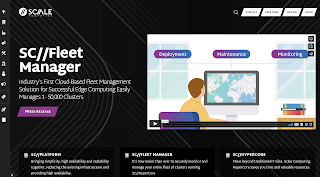
Scale Computing raises $55M for edge computing

Scale Computing announced $55 million in funding for its edge computing, virtualization, and hyperconverged solutions.

The SC//Platform is an autonomous, self-healing platform that enables remote edge management of applications and systems at scale, and keeps applications running even as errors happen, utilizing machine intelligence rather than human administrators. The SC//HyperCore software delivers on-premises edge computing with high availability and disaster recovery to remote locations at an affordable entry-level cost. All SC//Hardware can be deployed quickly, managed locally or remotely, and can self-heal almost instantly. 

The round was led by funds managed by Morgan Stanley Expansion Capital.

“Data is moving to the edge twice as fast as it moved to the cloud,” said Jeff Ready, CEO of Scale Computing. “Management of the edge is an inverted problem from management of the data center. A typical data center deployment represents hundreds or thousands of servers at one or two locations. On the other hand, a typical edge deployment is a handful of servers each at hundreds or thousands of locations. This requires a completely different approach to deployment and management, and Scale Computing has continually met the challenges of this fast growing market. A growing number of enterprises are implementing the tremendous time and cost savings found in SC//Platform for the edge and we are proud to have the support of Morgan Stanley as we continue to expand.”

https://www.scalecomputing.com


Intel releases AI reference kits

Intel released the first set of open source AI reference kits, including AI model code, end-to-end machine learning pipeline instructions, libraries and Intel oneAPI components, for on-prem, cloud and edge environments. 

Intel said its kits enable data scientists and developers to learn how to deploy AI faster and more easily across healthcare, manufacturing, retail and other industries with higher accuracy, better performance and lower total cost of implementation.

Four kits are available:

  • Utility asset health: This predictive analytics model was trained to help utilities deliver higher service reliability. It uses Intel-optimized XGBoost through the Intel oneAPI Data Analytics Library to model the health of utility poles with 34 attributes and more than 10 million data points. 
  • Visual quality control: The AI Visual QC model was trained using Intel AI Analytics Toolkit, including Intel Optimization for PyTorch and Intel Distribution of OpenVINO toolkit, both powered by oneAPI to optimize training and inferencing to be 20% and 55% faster, respectively, compared to stock implementation of Accenture visual quality control kit without Intel optimizations2 for computer vision workloads across CPU, GPU and other accelerator-based architectures. Using computer vision and SqueezeNet classification, the AI Visual QC model used hyperparameter tuning and optimization to detect pharmaceutical pill defects with 95% accuracy.
  • Customer chatbot: Conversational chatbots have become a critical service to support initiatives across the enterprise. AI models that support conversational chatbot interactions are massive and highly complex. This reference kit includes deep learning natural language processing models for intent classification and named-entity recognition using BERT and PyTorch. Intel Extension for PyTorch and Intel Distribution of OpenVINO toolkit optimize the model for better performance – 45% faster inferencing compared to stock implementation of Accenture customer chatbot kit without Intel optimizations3 – across heterogeneous architectures, and allow developers to reuse model development code with minimal code changes for training and inferencing.
  • Intelligent document indexing: Enterprises process and analyze millions of documents every year, and many of the semi-structured and unstructured documents are routed manually. AI can automate the processing and categorizing of these documents for faster routing and lower manual labor costs. Using a support vector classification (SVC) model, this kit was optimized with Intel Distribution of Modin and Intel Extension for Scikit-learn powered by oneAPI.

https://www.intel.com/content/www/us/en/developer/topic-technology/artificial-intelligence/reference-kit.html

Intel to acquire real-time continuous optimization software

Intel agreed to acquire Granulate Cloud Solutions Ltd., an Israel-based developer of real-time continuous optimization software. Financial terms were not disclosed.Granulate’s autonomous optimization service helps reduce CPU utilization and application latencies. It does this by learning the customer’s application and deploying a customized set of continuous optimizations at runtime. This enables deployment on smaller compute clusters and instance...

Intel and Microsoft contribute Scalable I/O Virtualization spec to OCP

 Intel and Microsoft have contributed a Scalable I/O Virtualization (SIOV) specification to the Open Compute Project (OCP), enabling virtualization of PCI Express and Compute Express Link devices in cloud servers. SIOV is hardware-assisted I/O virtualization with the potential to support thousands of virtualized workloads per server. SIOV moves the non-performance-critical virtualization and management logic off the PCIe device and into...


Red Hat names Matt Hicks as CEO

Red Hat named Matt Hicks as its president and chief executive officer, replacing Paul Cormier, who will serve as chairman of Red Hat. 

Hicks previously served as Red Hat’s executive vice president of Products and Technologies, where was responsible for the entirety of Red Hat’s product strategy and engineering. Notably, under Hicks’ leadership, Red Hat’s open hybrid cloud strategy and portfolio have expanded to help customers build, deploy and manage any application, anywhere, from on-premises environment, to multiple clouds, and to the edge. This includes delivering new managed cloud services that help customers speed the development of cloud-native applications, new capabilities to accelerate AI development, product variants enabling edge use cases and new security approaches that span hybrid cloud environments.

https://www.redhat.com/

Monday, July 11, 2022

Zayo activates 192-fiber subsea route between UK and Netherlands

Zayo activated its new Zeus subsea route connecting Lowestoft, UK and Zandvoort, Netherlands. 

At 192 fibres, Zeus contains the highest fibre count connecting the UK and mainland Europe -- the most dense, deeply-buried and robust cable available in the North Sea. Zayo utilized Ultra Low Loss (ULL) optical fibres, so wavelength throughput on a single channel between London and Amsterdam can reach up to 600G. Zeus offers a full C-band capacity of 2.65 petabits per second (Pbps) and C+L Band of 5.2 Pbps. Corning supplied the SMF-28 fiber.

The cable is buried between 2 and 3 metres under the seabed in comparison with half a metre for existing, outdated cables. The cable is guaranteed to be 100% dual-armored – all the way through the joints – to prevent interference. To ensure an optimal customer experience, Zayo continuously monitors Zeus via OTDR devices for rapid fault identification. In addition, Zayo will be leveraging a 24 X 7 guard vessel to monitor any activity along the path.

“Meeting the connectivity needs of tomorrow requires deploying the most advanced network today, and that’s exactly what we’ve built for customers who want a hyper-fast and ultra-reliable connection between the UK and mainland Europe,” said Jesper Aagaard, president of Zayo Europe. “Zeus is now the strongest connection available in the region. We utilized the best cable available, buried it deeper in the seabed than our competitors and made it even more reliable than alternatives. We are confident our customers will benefit from this project for years- and even decades- to come.”

“The North Sea is an extremely challenging body of water for a subsea project like Zeus. Not only are there harsh weather conditions and relentless currents, the seabed is littered with items, some as simple as a discarded aluminum can and some as formidable as unexploded bombs left over from the Second World War,” said Geir Holmer, CEO of JTD Associates and a key consultant on the project. “Not only did we overcome these challenges, we worked tirelessly with Zayo to ensure this route was built to last – making it the most resilient route across the North Sea. I’m proud to have been part of this project, and what it will enable.”

As part of the project, the team worked with the Royal Netherlands Navy to detonate a large, 80- year-old explosive that had been left on the seabed since World War II. The team also put sustainability first, working to limit disruption and preserve the ecology of the sea. 

https://www.zayo.com/resources/welcoming-zeus-the-new-connectivity-titan-of-the-north-sea/

Testing planned for 5G Non-Terrestrial Networks

Ericsson, Thales, and Qualcomm Technologies will conduct smartphone-use-case-focused testing and validation of 5G non-terrestrial networks (5G NTN). The goal of the testing will be to validate various technology components needed to enable 5G non-terrestrial networks, including a 5G smartphone, satellite payload and 5G network pieces on the ground.

The benefits of 5G connectivity via low Earth Orbit (LEO) satellites are expected to include coverage in extreme geographies or remote areas across seas, oceans and other locations where terrestrial coverage is absent.

Ericsson plans to verify a 5G virtual RAN (vRAN) stack, modified to handle radio signals propagating (what happens to 5G radio waves travelling through the vacuum of space and the Earth’s atmosphere) via the fast-moving LEO satellites.

The testing follows the March 2022 go-ahead by 3GPP to support non-terrestrial networks for the first time.

Erik Ekudden, Senior Vice President and Chief Technology Officer, Ericsson, says: “This testing and validation cooperation between Ericsson, Thales and Qualcomm Technologies will be a major milestone in the history of communications as the ultimate result could effectively mean that no matter where you are on Earth – in the middle of an ocean or the remotest forest – high-end, secure and cost-effective connectivity will be available through collaborative 5G satellite and terrestrial connectivity.”

https://www.ericsson.com/en/press-releases/2022/7/ericsson-qualcomm-and-thales-to-take-5g-into-space

Nokia to lead German 6G-ANNA Lighthouse project

Nokia has been selected to lead 6G-ANNA, a German national-funded 6G lighthouse project.

Nokia will collaborate with the 29 partners in 6G-ANNA to lead and drive 6G research and standardization. In particular, Nokia will work closely with the consortium, which includes partners from industry, subject matter experts, start-ups, research institutes and distinguished universities in Germany.

Within 6G-ANNA, Nokia will focus on designing an end-to-end 6G architecture and work with other project partners on three key technology areas: 6G access, network of networks, and automation and simplification. Selected topics such as sub-networks, XR, and real-time digital twinning will be implemented and presented as proof of concepts.

The 6G-ANNA project is funded by the German Federal Ministry of Education and Research (Bundesministerium für Bildung und Forschung, BMBF), with an aim of strengthening and pushing German and European 6G agendas and driving global pre-standardization activities from a German and European perspective. 

6G-ANNA is part of the larger “6G Platform German” national initiative and has a total volume of €38.4 million with a duration of three years.

Peter Merz, Head of Nokia Standards, said: “We are honored to lead 6G-ANNA, the most important government-funded 6G lighthouse project in Germany. While the first 6G networks are not expected to be commercially available before 2030, we are already laying the technical foundation with 5G-Advanced, as well as long-term innovation that will drive 6G developments.”

https://www.nokia.com/about-us/news/releases/2022/07/11/nokia-to-lead-german-6g-lighthouse-project/

Nokia collaborates with DOCOMO on 6G

Nokia announced a partnership with DOCOMO and NTT to jointly define and develop key technologies towards 6G. The collaboration will focus on two proof-of-concepts for emerging 6G technologies: an AI native air interface and sub-THz radio access. These aim to demonstrate a performance gain with an AI based 6G air interface compared to a conventional air interface, and to show that high-data rate beamformed access can be achieved in a high frequency...

Next G Alliance outlines North America's roadmap for 6G

by Benedict Chua, Associate EditorATIS’ Next G Alliance published a Roadmap to 6G report that presents the first 6G vision for North America and describes major steps that industry, government and academia should take to ensure North American wireless leadership for the next decade.ATIS said more than 600 experts from 80 Next G Alliance members representing industry, government and academia came together to create the 43-page report.The following...


ST and GlobalFoundries target 300mm fab in France

STMicroelectronics and GlobalFoundries agreed to create a new, jointly-operated 300mm semiconductor manufacturing facility adjacent to ST’s existing 300mm facility in Crolles, France. This facility is targeted to ramp at full capacity by 2026, with up to 620,000 300mm wafer per year production at full build-out (~42% ST and ~58% GF).

The new facility will support several technologies, in particular FD-SOI-based technologies, and will cover multiple variants. This includes GF’s FDX technology and ST’s comprehensive technology roadmap down to 18nm, which are expected to remain in high demand for Automotive, IoT, and Mobile applications for the next few decades.

FD-SOI technology has origins in the Grenoble (France) area. It has been part of ST technology and product roadmap in its Crolles facility since the early beginnings, and it was later enabled with differentiation and commercialized for manufacturing at GF’s Dresden facility. FD-SOI offers substantial benefits for designers and customers, including ultra-low power consumption as well as easier integration of additional features such as RF connectivity, mmWave and security.

ST and GF will receive significant financial support from the State of France for the new facility. This facility will strongly contribute to the objectives of the European Chips Act, including the goal of Europe reaching 20% of worldwide semiconductor production by 2030. 

“This new manufacturing facility will support our $20 billion+ revenue ambition. Working with GF will allow us to go faster, lower the risk thresholds, and reinforce the European FD-SOI ecosystem. We will have more capacity to support our European and global customers as they transition to digitalization and decarbonization” said Jean-Marc Chery, President and CEO of STMicroelectronics. “ST is transforming its manufacturing base. We already have a unique position in our 300mm wafer fab in Crolles, France which will be further strengthened by today’s announcement. We continue to invest into our new 300mm wafer fab in Agrate (near Milan, Italy), ramping up in H1 2023 with an expected full saturation by end 2025, as well as in our vertically integrated silicon carbide and gallium nitride manufacturing.”

https://www.investors.gf.com


What's hot at OFC22? GlobalFoundries on Co-packaged optics

The proof-point for co-packaged optics are here, says Anthony Yu, VP of Computing and Wired Infrastructure, GlobalFoundries. Yu discusses GlobalFoundries' newly unveiled next generation silicon photonics platform and active design wins with major customers, including collaborations with Broadcom, Cisco Systems, Marvell, NVIDIA, Ayar Labs, Lightmatter, PsiQuantum, Ranovus and Xanadu.The Consortium for Onboard Optics (COBO) has been instrumental...


Broadcom announces executive re-shuffle

Thomas H. Krause, President of the Broadcom Software Group, will step down to pursue another role at a privately held enterprise software company. Hock E. Tan, Broadcom's President and CEO, will immediately assume Krause’s responsibilities, and the position of President of Broadcom Software Group will be eliminated.

In addition, the Broadcom announced that Charlie B. Kawwas, Ph.D., currently Chief Operating Officer of the Company, has been named President of the new Semiconductor Solutions Group, overseeing the company’s broad semiconductor portfolio. Dr. Kawwas remains responsible for the company’s global operations and sales for the Semiconductor and Brocade Storage Networking businesses. 

https://investors.broadcom.com/financial-information/broadcom-inc-sec-filings

Broadcom launches its $61 billion bid for VMware

 Broadcom unveiled plans to acquire all of the outstanding shares of VMware in a cash-and-stock transaction that values VMware at approximately $61 billion, based on the closing price of Broadcom common stock on May 25, 2022. In addition, Broadcom will assume $8 billion of VMware net debt. The deal has the support of VMware's Board of Directors, along with Michael Dell and Silver Lake, which own 40.2% and 10% of VMware shares outstanding,The...