Tuesday, February 8, 2022

U.S. charges Hyterra with stealing Motorola's digital mobile radio tech

The U.S. Department of Justice accused PRC-based Hytera Communications Corp. LTD with conspiracy to commit theft of trade secrets involving  Motorola Solutions' digital mobile radio (DMR) technology from 2007 to 2020.

The 21-count indictment was partially unsealed today in U.S. District Court in Chicago says Hytera recruited and hired Motorola Solutions employees and directed them to take proprietary and trade secret information from Motorola without authorization. The charges allege that, while still employed at Motorola, some of the employees allegedly accessed the trade secret information from Motorola’s internal database and sent multiple emails describing their intentions to use the technology at Hytera. According to the indictment, Hytera paid the recruited employees higher salaries and benefits than what they received at Motorola.

https://www.justice.gov/opa/pr/federal-indictment-charges-prc-based-telecommunications-company-conspiring-former-motorola


Jury awards Motorola Solutions $764.6m in case against Hytera

A jury in the U.S. District Court for the Northern District of Illinois awarded $746.6 million to Motorola Solutions in its trade secret theft and copyright infringement case against Hytera Communications of Shenzhen, China and its U.S.-based subsidiaries.  Motorola is now seeking a worldwide injunction preventing Hytera from further misappropriating its stolen trade secrets and infringing its copyrights.

“Today’s verdict is a tremendous victory for our company,” said Greg Brown, chairman and CEO, Motorola Solutions. “Motorola Solutions has always invested significantly in research and development to bring pioneering and beneficial technology to our customers around the world. In contrast, Hytera was simply profiting off of the hard work and innovation of our world-class engineers. The jury’s verdict validates our global litigation against Hytera by definitively affirming that stealing trade secrets and source code will not be tolerated.”


Biden signs Secure Equipment Act

President Biden signed into law the “Secure Equipment Act of 2021,” which requires the Federal Communications Commission to adopt rules clarifying that it will no longer review or approve any authorization application for equipment that poses an unacceptable risk to national security.The bill would prevent further integration and sales of Huawei, ZTE, Hytera, Hikvision, and Dahua – all Chinese state-backed or directed firms – in the U.S. regardless...

FCC seeks to extend ban on equipment from Huawei, ZTE, Hikvision

 The Federal Communications Commission proposed rules that would prohibit all future authorizations for communications equipment deemed to pose an unacceptable risk to national security.  Specifically, the FCC is would prohibit the authorization of equipment through either the FCC’s Certification or Supplier’s Declaration of Conformity equipment authorization processes.  The proposal also seeks comment on whether to revise rules concerning...

Nokia supplies 4G FWA over CBRS for California school district

Nokia delivered a 4G Fixed Wireless Access (FWA) solution to the Dos Palos Oro Loma (DPOL) school district which encompasses five campuses and serves a population of 5,000 residents in the predominantly rural San Joaquin Valley in California. 

The Nokia solution will provide secure, reliable, high-performance internet access to the homes of 2400 students using Nokia Private 4.9G/LTE Digital Automation Cloud (NDAC) operating in the CBRS/On-Go GAA spectrum, and customer premises equipment (CPE) including Nokia FastMile 4G Gateways and WiFi Beacons. AggreGateway served as Nokia's partner on the project.

The DPOL technology team will operate its new LTE network through the centrally secure Nokia DAC Cloud monitoring application. DPOL will also provision LTE / Wi-Fi hotspots to students to be used with any standard laptop or tablet to access high-speed internet.

Paoze Lee, Technology Systems Director of the Dos Palos-Oro Loma school district, said: “As we put a plan in place for distance learning during the pandemic we found we could only provide coverage for approximately 50% of DPOL students via commercial wireless network providers. Working with Nokia and AggreGateway, we are taking the next steps to level the field and ensure every student has the same access to our learning facilities.”

Matt Young, Head of Enterprise for North America at Nokia, said: “We are pleased to help close the digital divide in the Dos Palos-Oro Loma school district. For many rural areas of the US it’s not commercially viable to build out networks, and often families on the lowest income suffer. Leveraging our DAC and FastMile FWA technologies we can enable the delivery of much needed internet connectivity to students in the area.”

The project’s first phase was completed in November 2021. Nokia and AggreGateway will complete the second phase in 2022.

NCI wins $13.4M Navy contract for fiber network modernization

NCI Information Systems has been awarded a five-year $13.4 million prime contract from the U.S. Naval Air Systems Command Naval Air Warfare Center, Weapons Division. Under the Installation Fiber Optic Networking Support Services contract, NCI, with its partner IntelliBridge, will enable faster, more secure network connections for the Navy by delivering state-of-the-art engineering and implementation fiber optic networking support services.


Under the contract, NCI and IntelliBridge will transform system interoperability and integration for networks supporting NAWCWD and NAVAIR, enabling seamless and secure computer connectivity. The two organizations will provide E&I fiber optic networking support services such as state-of-the-art network designs, fiber builds, infrastructure mapping and networking solutions.

https://www.nciinc.com

Monday, February 7, 2022

IFS makes a splash: $1B fund, Arm & RISC-V support, Open Chiplet Platform

by James E. Carroll

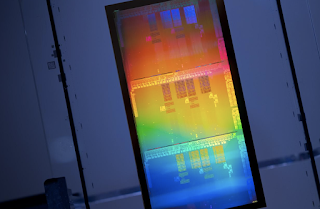
The newly established Intel Foundry Services (IFS) announced several initiatives to accelerate its entrance into the semiconductor fabrication market: a $1 billion investment fund, support for Arm and RISC-V in addition to x86, and pioneering work with chiplet architecture based on 3D packaging technology.

The new $1 billion investment fund has three aims:

  • Equity investments in disruptive startups.
  • Strategic investments to accelerate partner scale-up.
  • Ecosystem investments to develop disruptive capabilities supporting IFS customers.

IFS confirmed that it will support multiple instruction set architectures (ISAs), spanning x86, Arm and RISC-V, making it the only foundry to offer IP optimized for all three of the industry’s leading ISAs.

The company sees strong demand from foundry customers for RISC-V and, to this end, Intel is planning investments and offerings for RISC-V. Partners in the RISC-V ecosystem include Andes Technology, Esperanto Technologies, SiFive and Ventana Micro Systems. IFS plans to offer a range of validated RISC-V IP cores, performance-optimized for different market segments. IFS will optimize IP for Intel process technologies to ensure that RISC-V runs best on IFS silicon across all types of cores, from embedded to high-performance. Three types of RISC-V offerings will be made available:

  • Partner products manufactured on IFS technologies.
  • RISC-V cores licensed as differentiated IP.
  • Chiplet building blocks based on RISC-V, leveraging advanced packaging and high-speed chip-to-chip interfaces.

IFS also plans to sponsor an open-source RISC-V software development platform and s joining RISC-V International, a global nonprofit organization supporting the free and open RISC-V instruction set architecture and extensions.

IFS is making a major push into system-on-package architectures with an Open Chiplet Platform designed to leverage advanced 3D packaging technologies. The idea is to partition complex semiconductors into modular blocks or “chiplets.” Each block is customized for a particular function, providing designers incredible flexibility to mix and match the best IP and process technologies for the product application. Intel believes the data center market will be one of the first to adopt modular architectures. Closely integrating accelerator chiplets in the same package as a data center CPU enables significantly higher performance and reduced power compared to placing accelerator cards near CPU boards. The Open Chiplet Platform is being developed with leading cloud service providers.  Intel is also partnering to develop an open standard for a die-to-die interconnect that allows chiplets to communicate with each other at high speeds. 

In addition,  Intel Foundry Services (IFS) today launched an Accelerator ecosystem to to spur collaboration with electronic design automation (EDA), intellectual property (IP) and design services. The IFS Accelerator provides a comprehensive suite of tools for customers:

The most powerful and validated EDA solutions optimized for Intel’s leadership technology and manufacturing, covering the full spectrum from concept to high-volume silicon production.

A comprehensive, silicon-verified, and Intel process-specific IP portfolio, including standard cell libraries, embedded memories, general purpose I/Os, analog IP and interface IP.

Design services partners that allow customers to focus on creating unique product ideas, assigning implementation tasks to rigorously trained designers well-versed on Intel technology.

The IFS Accelerator includes 17 founding partner companie as well as a broad library of IP offerings from a range of partners.

EDA Alliance: Ansys, Cadence, Siemens EDA, Synopsys 

IP Alliance: Alphawave, Analog Bits, Andes, Arm, Cadence, eMemory, M31, SiFive, Silicon Creations, Synopsys, Vidatronic 

Design Services Alliance: Capgemini, Tech Mahindra, Wipro

“Intel is an innovation powerhouse, but we know that not all good ideas originate from within our four walls,” said Randhir Thakur, president of Intel Foundry Services. “Innovation thrives in open and collaborative environments. This $1 billion fund in partnership with Intel Capital – a recognized leader in venture capital investing – will marshal the full resources of Intel to drive innovation in the foundry ecosystem.”

“Foundry customers are rapidly embracing a modular design approach to differentiate their products and accelerate time to market. Intel Foundry Services is well-positioned to lead this major industry inflection. With our new investment fund and open chiplet platform, we can help drive the ecosystem to develop disruptive technologies across the full spectrum of chip architectures,” said Pat Gelsinger, Intel CEO.

Saf Yeboah, senior vice president and chief strategy officer at Intel, said: “Intel Capital’s history and expertise are rooted in chips. Over the last 30 years, we have invested over $5 billion into 120 companies supporting the semiconductor manufacturing ecosystem, from the materials coming out of the ground to the software tools used to implement a design. Our investments, which range from pathfinding bets into early-stage companies to deeply strategic and collaborative investments, drive innovation across architecture, IP, materials, equipment and design.”

Intel expands its manufacturing plans

Intel will invest more than $20 billion in the construction of two new fabs in Ohio. The initial phase of the project is expected to create 3,000 Intel jobs and 7,000 construction jobs over the course of the build. Air Products, Applied Materials, LAM Research and Ultra Clean Technology will establish a physical presence in the region. Initial production is targetted for 2025.

Today’s investment marks another significant way Intel is leading the effort to restore U.S. semiconductor manufacturing leadership,” said Pat Gelsinger, CEO of Intel. “Intel’s actions will help build a more resilient supply chain and ensure reliable access to advanced semiconductors for years to come. Intel is bringing leading capability and capacity back to the United States to strengthen the global semiconductor industry.

In a press conference, Gelsinger said the new facilities will produced advanced chip designs at 2nm and below.

“The impact of this mega-site investment will be profound,” said Keyvan Esfarjani, Intel senior vice president of Manufacturing, Supply Chain and Operations. “A semiconductor factory is not like other factories. Building this semiconductor mega-site is akin to building a small city, which brings forth a vibrant community of supporting services and suppliers. Ohio is an ideal location for Intel’s U.S. expansion because of its access to top talent, robust existing infrastructure, and long history as a manufacturing powerhouse. The scope and pace of Intel’s expansion in Ohio, however, will depend heavily on funding from the CHIPS Act.”

https://www.intel.com/content/www/us/en/newsroom/resources/global-manufacturing.html#gs.mt8qf9

Intel breaks ground on $20 billion fabs in AZ

Intel broke ground on two new fabs (52 and 62) at the company’s Ocotillo campus in Chandler, Arizona. When fully operational in 2024, the new fabs will manufacture Intel’s most advanced process technologies, including Intel 20A featuring the new RibbonFET and PowerVia innovations. The capacity is expected to be used for Intel's own products as well as for customers of the newly formed Intel Foundry Services.“Today’s celebration marks an important...




Esperanto looks to IFS to fab its RISC-V-based AI accelerator chips

Esperanto Technologies, a start-up based in Mountain View, California, confirmed that it will use Intel Foundry Services silicon and chiplet packaging technologies to advance its RISC-V-based technology and deliver its massively parallel AI acceleration silicon solutions spanning from cloud to edge.

Esperanto Technologies is developing massively-parallel 64-bit RISC-V-based Tensor compute cores currently delivered in the form of a single chip with 1088 ET-Minion compute cores and a high-performance memory system. Designed to meet the high-performance and low-power requirements of large-scale datacenter customers, Esperanto’s existing RISC-V-based inference chip is a general purpose, parallel processing solution that can accelerate many parallelizable workloads. It is designed to run any machine learning (ML) workload well, and to excel at ML recommendation models, one of the most important types of AI workloads in many large datacenters.

“Intel Foundry Services is excited to add Esperanto’s massively-parallel AI accelerators to the IFS ecosystem,” said Bob Brennan, Vice unity are invaluable in helping to advance and proliferate RISC-V solutions from Esperanto and others, ultimately benefiting all end users,” said Art Swift, president and CEO at Esperanto Technologies.

https://www.esperanto.ai/technology/


KT and Savills plan subsea cable linking 6 APAC countries

KT and Savills Korea announced plans for a new 9,000 km submarine cable system linking 6 countries in APAC: South Korea, Japan, Taiwan, Indonesia, Philippines, and Singapore.

Savills Korea and KT held an MOU signing ceremony at KT’s Songpa office building located at Songpa-gu, Seoul.  KT will conduct consulting based on its years of experience in design, construction, and operation of submarine cables. KT will also participate as a strategic investor. Savills Korea will be in charge of Asset Management, services such as business planning and implementation, attracting investors, contracting, and licensing. The partners are seeking support from global cloud operators and telecommunications operators.

KT also participates in the Asia-Pacific Gateway (APG) and New Cross Pacific Cable System (NCP) projects. 

Savills Korea is the South Korean branch of Savills, a global real estate service provider established in 1855, and provides consulting services in commercial real estate businesses, including data centers. Savills Korea was involved in data center transactions with a total of 140WM in the Seoul metropolitan area, including two data centers established and operated by a joint venture between Equinix and GIC, Singapore's sovereign wealth fund.

Crystal Soojeong Lee, CEO of Savills Korea commented “The partnership with KT is a fruit of our consistent effort to broaden the extents of services we provide. Unprecedented synergy effect is expected through Savills’ abundant network and KT’s professional technology.”

Soo-jung Shin, the head of KT Enterprise added “Demand derived from services such as DX-based cloud services and OTT falls upon not only South Korea, but the entire Asian region and submarine cable industry is anticipated to expand even further. We look forward to reinforcing our hegemony in the market in cooperation with Savills Korea.”

https://en.savills.co.kr/insight-and-opinion/savills-news/205201/20220207-savills-kr---kt-mou


Equinix and Singapore's GIC to build 2 hyperscale data centers in Seoul

Equinix and GIC, SINGAPORE'S sovereign wealth fund, agreed to form a US$525 million joint venture to develop and operate two xScale data centers in Seoul, Korea. GIC will own an 80% equity interest in the joint venture, and Equinix will own the remaining 20% equity interest. The two facilities under this joint venture, to be named SL2x and SL3x, are expected to provide more than 45 megawatts (MW) of power capacity to serve the unique core workload...

Digital Realty opens carrier-neutral data center in Seoul

Digital Realty inaugurated its first data center in South Korea. Digital Seoul 1 (ICN10) will serve as a gateway to global expansion for enterprises in Korea to scale their digital business into new markets globally, and vice versa.ICN10 is a multi-story, 12-megawatt facility spanning 22,000 square feet and is strategically located in the northwest region of Seoul within the Sangam Digital Media City, a newly developed urban planning zone populated...


Norway-UK cable achieves 800G line rate with Ciena

The NO-UK submarine cable system between Norway and the United Kingdom achieved a record-breaking 800 Gbps line rate using Ciena’s GeoMesh Extreme powered by its WaveLogic 5 Extreme coherent optical technology.

NO-UK’s open submarine cable system, featuring eight fiber pairs, runs for 700km between Stavanger (Norway) and Newcastle (UK) and is the shortest low-latency direct submarine route between the two nations. The system was developed by Altibox Carrier, which owns and operates fiber-optic cables, and supplied by Xtera, a turnkey provider of subsea systems. The project is managed by specialist consultants SubSea Networks Ltd.

Altibox selected Ciena’s GeoMesh Extreme, leveraging Ciena’s WaveLogic 5 Extreme technology and 6500 Packet-Optical Platforms, supporting up to 35Tb/s per fiber pair—the highest capacity achieved to date across a repeatered submarine network. The design and cable validation exercise was conducted according to the new International Telecoms Union (ITU) submarine cable standard for open cables, known as ITU-T G.977.1.

Svein Arild Ims, Director at Altibox Carrier, said: “NO-UK has been developed to support the evolving requirements of businesses in Norway. We wanted it to deliver the highest bandwidth and capacity available across a submarine network in a sustainable way, and Ciena’s GeoMesh Extreme, combined with Xtera’s unique wide-bandwidth and low-noise repeater design, has achieved exactly that. The network has exceeded our expectations in every way and sets the standard for future connectivity between Norway and the UK.”

Ian Clarke, Vice President of Global Submarine Solutions at Ciena, added: “Ciena continues to push the limits of submarine cable networks, achieving 800Gb/s line rate—another industry first. With more capacity and lower cost-per-bit, lower power consumption and lower ongoing operational costs, the solution provides a modern and environmentally friendly network for Altibox’s NO-UK customers.”

https://www.ciena.com/about/newsroom/press-releases/no-uk-submarine-cable-system-achieves-record-breaking-800gbs-line-rate-with-ciena

Ceragon releases Disaggregated Cell Site Gateway (DCSG)

Ceragon Networks announced generally availability of its IP-50FX Disaggregated Cell Site Gateway (DCSG) solution, which integrates a cell site router and a radio indoor unit.  

The IP-50FX integrates Ceragon's DCSG hardware platform with an advanced network operating system (NOS) software by IP Infusion and Ceragon's own Radio-Aware Open Networking (RAON) software. With RAON the cell site gateway acts as a virtual IDU, with a single IP address offering centralized management capabilities for all connected outdoor radios for easier configuration and monitoring of the entire cluster.

The IP-50FX is now listed on Telecom Infra Project's TIP Exchange. 

Diego Marí Moretón, Meta Connectivity Technologies & Ecosystems Manager and Lead of the TIP Open Optical Packet Transport project group commented: "TIP has assessed and fostered a DCSG ecosystem, working with a shortlist of selected software and hardware vendors. Ceragon's IP-50FX solution met all rigorous requirements defined by the DCSG subgroup, and I am excited to report it has been awarded TIP's Requirements Compliant Ribbon for SW and HW.  I look forward to continuing our collaboration with Ceragon on open networking innovation projects."

Doron Arazi, Ceragon Networks CEO commented: "I am really excited that Ceragon is entering into a new domain of Disaggregated Cell Site Gateways, which holds growth potential for the company. The release of this unique DCSG solution is sure to impact the market by providing a better solution for cell sites at a much lower cost. It eliminates vendor lock-in to support true open networking and brings together the best of two worlds in 5G mobile networking – Routing and Wireless Transport. The business impact for mobile operators and private networks is significant, as it gives them the flexibility to respond quickly to rising capacity demands and makes it significantly easier for them to upgrade and add new services."

https://www.ceragon.com

VMware announces 4 executive appointments

VMware welcome 4 executives to its leadership team:

Laura Heisman has joined the company as chief marketing officer. She brings to the role more than 25 years experience in reaching enterprise, developer, consumer and corporate audiences through her prior leadership roles at GitHub, where she elevated awareness and built developer fans of the largest and most advanced development platform in the world, and Citrix.

Sylvain Cazard will lead the Asia Pacific and Japan (APJ) region as general manager. He has spent more than 12 years at VMware, he is adept at executing go-to-market strategy across multi-product and multi-cloud platforms to enable enterprise digital transformation. Prior to this, Cazard was vice president for the Central Europe, Middle East and Africa (EMEA) region. Sylvain takes over the reins of VMware’s APJ business from Duncan Hewett, who is retiring from his role at the company.

John Sabino will lead the company’s Customer Experience and Success organization, including the Customer Success, Professional Services, Learning, and Global Support team, as Chief Customer Experience Officer, recently joining from Splunk. 

Zia Yusuf serves as senior vice president of Strategic Ecosystem and Industry Solutions. In this role, Yusuf is responsible for building joint horizontal and industry-centric solutions with our ecosystem and alliances across Dell, global cloud providers, telco service providers, global system integrators, and global ISVs. Yusuf joins the company from Boston Consulting Group, where he was a Senior Partner & Managing Director.

http://www.vmware.com

Keysight and LG Electronics collaborate on 6G

Keysight Technologies collaborated with LG Electronics to demonstrate a 6G radio frequency (RF) front-end (RFFE) module at the recent 2021 Korea Science and Technology Exhibition in December.

The demonstration leveraged Keysight’s 6G Sub-Terahertz (THz) R&D Testbed and LG’s 6G radio front-end transceiver to generate terabit data wireless transmissions. Keysight’s 6G testbed supports a scalable number of frequency bands and ultra-wide bandwidths. This enables leading wireless companies to conduct 6G sub-THz channel sounding research and evaluate candidate 6G waveforms.

Keysight’s 6G testbed delivers low residual error vector magnitude (EVM) across ultra-wide modulation bandwidths resulting in accurate EVM performance assessments of sub-THz systems, transceivers and components. This enables researchers to create designs that deliver the high performance required to support future 6G use cases.

Keysight’s 6G sub-THz R&D Testbed enables LG Electronics to develop high-frequency, high bandwidth RFFEs and transceivers. It integrates Keysight’s high-speed multi-channel arbitrary waveform generator, UXR multi-channel high-performance oscilloscope, PathWave vector signal analysis software and PSG analog signal generator with compact upconverters and downconverters from Virginia Diodes Inc. (VDI).

“Keysight’s expertise in test, emulation and optimization, coupled with their ability to create essential linkages between supportive 6G technologies, helps LG Electronics to bring innovations to life – from idea to design, development, manufacturing, deployment and operation,” said Yeongho Je, vice president and head of Communication & Media Standard Lab at LG Electronics. “These innovations support the industry’s 6G vision, which includes creating a more sustainably connected world.”

In early 2021, the two parties initiated a collaboration focused on next generation 6G network technology by signing a memorandum of understanding (MoU) aimed at securing leadership in the standardization and commercialization phase of 6G mobile communication.

Intelsat to provide inflight connectivity to LATAM

 LATAM Airlines Group will install Intelsat’s connectivity service in its fleet of Airbus narrow body aircraft including A320ceo and A320neo variants, based in Chile, Ecuador, Peru and Colombia. The installations will include up to 160 total aircraft and will take three years to complete. 

Approximately 70 new-delivery aircraft are expected to be installed with Intelsat’s 2Ku system by Airbus, prior to delivery to LATAM, at its manufacturing sites in the U.S. and Europe. When completed the entire fleet of LATAM narrow body aircraft will be served by Intelsat’s IFC service.

“We have worked closely with Intelsat to deliver the best connectivity experience on our aircraft based in Brazil, but we know our customers in Spanish-speaking markets want the same onboard experience. Today’s announcement is the first step on that journey, as we aim to deliver the best connectivity service experience in the region using Intelsat’s 2Ku system,” said LATAM’s Vice President of Clients, Paulo Miranda.

“At Intelsat, our mission is to provide quality, reliable connectivity for work and entertainment which is essential for airline partners and passengers alike,” commented Dave Bijur, senior vice president of Commercial for Intelsat Commercial Aviation. “LATAM is an important customer to us and we look forward to providing their passengers across South America with the exceptional customer service not just today and tomorrow but for decades to come.”

Aryaka adds to its exec team

Aryaka announced three executive appointments:

  • Dennis Monner, currently Aryaka’s Managing Director and former CEO of Secucloud, has been promoted to the newly created role of Chief Commercial Officer.
  • Renuka Nadkarni will served in the newly created role of Chief Product Officer. Renuka comes from F5 where she was the CTO and product leader for F5’s security portfolio.
  • DeAndra Jean-Louis has been appointed Chief Customer Officer. She comes from Palo Alto Networks where she was Vice President of Customer Success. 

All three executives will report directly to CEO Matt Carter.

“The next step in Aryaka’s journey is to build upon our founding principles of innovation,” said Matt Carter. “To achieve our next milestone, we will need to be laser focused on building the most technically advanced products and services that exceed customer demands. Today’s announcement will allow us to execute faster, collaborate more readily cross-functionally, prioritize resources, align around a common set of metrics and above all, move forward united as one team with a higher-purpose mission and vision for the company.”

Sunday, February 6, 2022

Telstra plans two major infrastructure projects for Australia

by James E. Carroll

Telstra is raising its CAPEX forecast fy Aus$1.4-1.6 billion over the next 5 years for two newly announced infrastructure projects:

  • Building and managing the ground infrastructure and fibre network in Australia for Viasat, a global communications company. This program will support the new ViaSat-3 terabit-class global satellite system as part of the 16.5 year contract. Each of the three global ViaSat-3 satellites are designed to offer over 1Tbps of total network capacity to deliver data and video streaming speeds of more than 150Mbps. Viasat provides broadband internet services to fixed, mobile and government customers globally.
  • A major new fibre project to build state-of-the-art inter-city dual fibre paths. The investment will add up to 20,000 new route kilometres to increase the capacity of Telstra’s already extensive optical fibre network. It will enable express connectivity between capital cities up to 55Tbps per fibre pair capacity (over six times today’s typical capacity of 8.8Tbps per fibre pair) on routes such as Sydney – Melbourne; Sydney – Brisbane; and Perth – Sydney.  The national fibre network project is a multi-year build which will commence at scale in late FY22 with early trial and test deployments already underway. Discussions with key anchor customers for the national fibre network are progressing, including with global hyperscalers, local telecommunications providers and construction partners.

Telstra expects to invest up to 70 percent of this total commitment across its T25 planning period, or an additional ~$350 million of capex per year over FY23 to FY25. There is no change to FY22 guidance, and Telstra plans to complete its on-market buyback in FY22 as previously advised.

Telstra CEO Andrew Penn said the two projects recognised the strength of Telstra’s network assets and were part of Telstra’s T25 InfraCo ambition to deliver profitable growth and value by improving access, utilisation and scale of its infrastructure. "Investing int these two trul significant nation-building projects will see us continue to have the larges inter-city fibre network in the country, helping to future proof Australia's digital economy and further improving connectivity in regional Australia."

https://www.telstra.com.au/aboutus

FCC sees strong demand for Rip-n-Replace as requests top $5.6 billion

 FCC Chairwoman Jessica Rosenworcel notified Congress that providers have initially requested approximately $5.6 billion from the Secure and Trusted Communications Networks Reimbursement Program to cover the costs of removing, replacing, and disposing of insecure equipment and services in U.S. networks.

“Last year Congress created a first-of-its kind program for the FCC to reimburse service providers for their efforts to increase the security of our nations communications networks,” said Chairwoman Rosenworcel.  “We’ve received over 181 applications from carriers who have developed plans to remove and replace equipment in their networks that pose a national security threat.  While we have more work to do to review these applications, I look forward to working with Congress to ensure that there is enough funding available for this program to advance Congress’s security goals and ensure that the U.S. will continue to lead the way on 5G security.”

The Supply Chain Reimbursement Program will reimburse providers of advanced communications services for costs reasonably incurred for removing, replacing, and disposing of communications equipment and services produced or provided by Huawei Technologies Company and ZTE Corporation.  The Commission opened the filing window for the program on October 29, 2021, and the window closed on January 28, 2022.  

https://www.fcc.gov/document/rosenworcel-notifies-congress-demand-rip-and-replace-program

Biden signs Secure Equipment Act

President Biden signed into law the “Secure Equipment Act of 2021,” which requires the Federal Communications Commission to adopt rules clarifying that it will no longer review or approve any authorization application for equipment that poses an unacceptable risk to national security.The bill would prevent further integration and sales of Huawei, ZTE, Hytera, Hikvision, and Dahua – all Chinese state-backed or directed firms – in the U.S. regardless...

Mavenir supplies O-RAN for Montana's Triangle under Rip-n-Replace

Mavenir has been selected by Triangle Communications, a telecommunications service provider for the state of Montana, to deliver a fully virtualized Open RAN and Evolved Packet Core (EPC) network.Triangle Communications is undergoing a full network transformation, removing untrusted network providers equipment using funding from the FCC provided under the Secure and Trusted Telecommunications act.The Rip and Replace project and will include:Mavenir’s...

U.S. Covid-19 relief bill provides $1.9 billion to rip/replace Huawei

The $900 billion coronavirus relief package approved by the U.S. Congress contains several provisions for telecommunications, including $1.9 billion to fund the rip/replace of Huawei and ZTE equipment, $3.2 billion for Keep Americans Connected programs, $250 million for telehealth initiatives, and requirements for the FCC to begin auctioning the 3.45-3.55 GHz band by the end of 2021."FCC Chairman Ajit Pai:“I applaud Congress for including in the...

U.S. enacts Secure Trusted Telecommunications Network Act

The Telecommunications Industry Association (TIA) applauded the President's signing of the Secure Trusted Telecommunications Network Act. The legislation prohibits federal subsidies from being used to purchase communications equipment or services posing national security risks, and provides for the establishment of a reimbursement program for the replacement of communications equipment or services posing such risks. David Stehlin, TIA’s Chief Executive...


Celestial AI raises $56M for Photonics Fabric for multi chip systems

Celestial AI, a start-up based in Sunnyvale, California, raised $56 million in Series A funding for its proprietary hardware and software platform for machine learning chipsets.

Celestial AI’s proprietary Photonic Fabric technology platform aims to to fundamentally transform multi-chip processing systems. The Photonic Fabric enables optically addressable memory and compute (within chip and chip-to-chip). The company says uts proprietary architecture enables elegant, low-complexity system software, allowing highly efficient mapping of data and compute without the need for complex optimizations. This software advantage extends to multi-chip exascale systems as the Photonic Fabric democratizes optical access to effectively limitless memory and compute. 

The funding round led by Koch Disruptive Technologies (KDT) with participation from Temasek’s Xora Innovation fund, The Engine, the venture firm spun out of MIT, Tyche Partners, Merck’s corporate venture fund, M-Ventures, IMEC XPand, and venture capital investor in the Princeton University ecosystem, Fitz Gate. 

The new capital will be used for expanding the global engineering team, product development and strategic supplier engagements, including Broadcom, to build the company’s Orion AI accelerator products. 

“We are addressing the problem of our time in computing – efficient data movement,” said Celestial AI founder and CEO David Lazovsky. “Celestial AI’s hybrid photonic-electronic platform allows us to leverage the complementary strengths of electronics for high-performance, high-precision computing and photonics for high-speed, low-power, high-bandwidth data movement. The result is transformational performance advantages relative to electronic-only systems. The ML application benefits extend beyond performance and low power to latency, user friendly software, and low total cost of ownership. Our competitive differentiation will increase with time, as AI model complexity increases, driving increased data movement.”

“Photonics is poised to be the technology to usher in the next era of rapid growth in AI and high-performance computing, and we believe the Celestial AI team has the experience and vision to drive this industry transformation,” said Isaac Sigron, Managing Director of KDT, and newly-appointed Celestial AI Board Member. “It was Celestial AI’s software advantages that ultimately drove our decision to lead this financing. Their system architecture enables unparalleled software simplicity, which translates to ease of use for customers and reduced time to market. Software is the pathway to revenue, and Celestial AI’s solution changes the game in this large and rapidly expanding market.”

https://www.celestial.ai

Government of Quebec buys IBM Quantum System

The Government of Quebec and IBM announced a new partnership to further establish Quebec as a leading technology hub in the development of quantum computing, artificial intelligence, semiconductors and high-performance computing through the launch of the Quebec-IBM Discovery Accelerator. The Quebec-IBM Discovery Accelerator plans to make advances using computational technologies such as:

  • Quantum computing: Leveraging an IBM Quantum System One to be deployed at IBM's Bromont facility for the use of the Government of Quebec and its partners, to facilitate the mission of the Government of Quebec's Innovation Zones the Discovery Accelerator will explore complex problems including the modeling of new materials and how quantum computing can be used as part of broader sustainability efforts.
  • AI: Quebec-IBM Discovery Accelerator teams will use a range of artificial intelligence models to explore use cases such as the discovery of new drugs.
  • High performance computing: The Discovery Accelerator will leverage a major base of high-performance computing (HPC) in order to integrate classical and quantum technology to explore various scientific challenges.

"Quebec's potential to innovate in high technology and be a leader in the economy of the future is immense. We have world-class universities, creative entrepreneurs and talented workers. The dedicated IBM quantum computer will pave the way for us to make incredible progress in areas such as artificial intelligence and modeling. Quantum science is the future of computing. With our innovation zone, we're positioning ourselves at the forefront of this future," said François Legault, Premier of Quebec.

IBM reaches Quantum Volume 64 on a 27-qubit system

IBM reached a new milestone on its quantum computing road map, achieving the company's highest Quantum Volume to date: 64, uaing one of its newest 27-qubit client-deployed systems. Quantum Volume measures the length and complexity of circuits – the higher the Quantum Volume, the higher the potential for exploring solutions to real world problems across industry, government, and research. "We are always finding new ways to push the limits of our...


Toshiba plans major expansion of power semiconductor fab

Toshiba Electronic Devices & Storage Corporation  will construct a new 300-milimeter wafer fabrication facility for power semiconductors at its main discrete semiconductor production base, Kaga Toshiba Electronics Corporation, in Ishikawa Prefecture. The project will increase Toshiba's power semiconductor production capacity 2.5 times.

Construction will take place in two phases, allowing the pace of investment to be optimized against market trends, with the production start of Phase 1 scheduled for within fiscal 2024.

The new fab will have a quake absorbing structure; enhanced BCP systems, including dual power supply lines; and the latest energy saving manufacturing equipment to reduce environmental burdens. It will also aim to achieve the “RE100” goal of 100% reliance on renewable energy. Product quality and production efficiency will be improved by introducing artificial intelligence and automated wafer transportation systems.


ADTRAN cites XGS-PON/10G-EPON momentum

ADTRAN reported momentum with its XGS-PON/10G-EPON portfolio as operators upgrade their network capabilities to 10G. The company points to its Combo PON technology and software-defined access (SD-Access) approach as a fiber access game changer for the largest incumbent operators, regional service providers and community broadband providers in North America and Europ.

Recent research reports from Dell’Oro and Omdia highlight ADTRAN’s market impact and growth. Both research firms show ADTRAN as ranking #2 and #3 for XGS-PON OLT shipments in North America and in Europe, the Middle East and Africa (EMEA) respectively on a four-quarter rolling basis. Further, ADTRAN XGS-PON and 10G EPON shipments have reached an inflection point where 50% of its OLT ports deployed in this period were based on its open and disaggregated SD-Access platforms across a mix of large metro central offices, hardened street cabinets and strand-mounted remote OLTs.

“ADTRAN is rapidly becoming the 10G fiber access supplier of choice to an industry that is realizing that 10G PON FTTH technology paired with AI-driven optimization is the best path to realizing its broadband goals,” said Robert Conger, Senior Vice President, Technology and Strategy at ADTRAN. “It is validating to see how the unique benefits of our open, software-defined platform are being adopted at pace by every type of network operator in the U.S. and Europe – from innovative altnets and rural community broadband providers, to many of the world’s largest service providers and MSOs.”

http://www.adtran.com/10G