Sunday, July 12, 2020

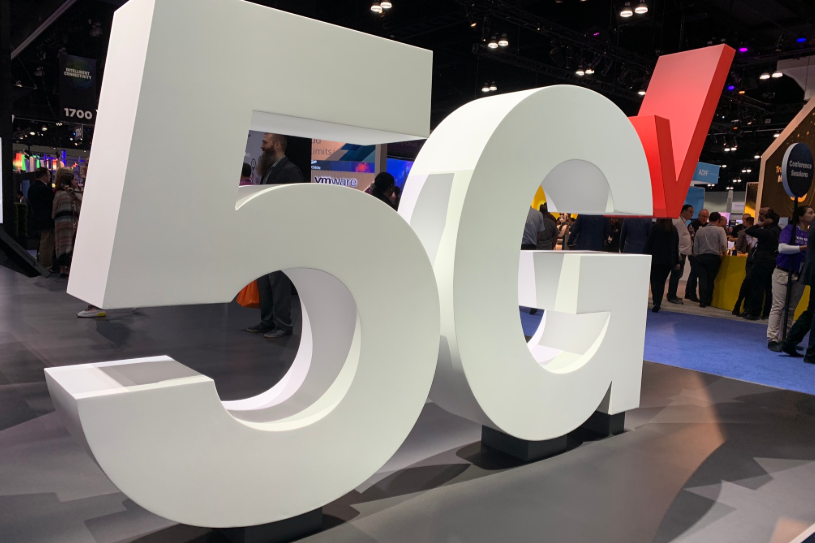
Ericsson's Börje Ekholm: A 5G killer app will emerge

Ericsson President and CEO, Börje Ekholm, said a killer app will emerge once the 5G infrastructure has been established.  Speaking virtually to the recent 2020 GTI Summit, Ekholm said “We do know that the killer app will be clear once the infrastructure has been built out and that will create multiples of value compared to the infrastructure itself.”

Ekholm said early movers in 5G will likely gain the same market advantage as with the 4G rollouts. This means the next three years will be critical in determining the make-up of the 5G landscape. Ericsson research shows that operators who took the lead in launching 4G technology and 4G networks were able to outlast and out-perform those who arrived late to the game.

The latest Ericsson Mobility Report forecasts 190 million 5G subscribers by the end of 2020, with numbers increasing to 2.8 billion by the end of 2025. This will make 5G the fastest scaling technology ever. It also forecasts 160 million fixed wireless access (FWA) connections by the end of 2025, accounting for approximately 25 percent of all traffic.

Another Ericsson study found that most consumers are willing to pay a 20 percent price premium for 5G, but this is dependent on two factors. First, an enhanced consumer experience, in which the differences between 4G and 5G are clear and noticeable. Secondly, new and unique 5G use cases that are bundled with 5G subscriptions.

Ekholm also said that industry digitization will generate an estimated USD 700 billion market opportunity for service providers by 2030, equivalent to approximately 35 percent of current industry revenue.  Moreover, Ericsson found that 70 percent of enterprises are seeking to engage with a non-telecoms service provider, while a third already consider communications service providers as an important partner in their digitization efforts.

https://www.ericsson.com/en/news/2020/7/once-5g-infrastructure-is-established-the-killer-app-will-emerge

Thursday, July 9, 2020

Nokia's Fabric Service Platform was co-developed with Apple

Nokia introduced a new Network Operating System (NOS) and a declarative, intent-based automation and operations toolkit that were co-developed with leading global webscale companies, including Apple, who is deploying the technology at its data centers.

Nokia SR Linux is a microservices-based NOS. It inherits Nokia’s time-proven Internet protocols from the service router operating system (SROS) currently in use by the huge installed base of Nokia carrier-grade routers.  The new NOS is paired with a new SR Linux NDK (NetOps development kit), which exposes programming capabilities. Applications are integrated via gRPC (remote procedure call) and protobuf, with no recompiling, language limitations or dependencies.

The new intent-based automation and operations toolkit, called Nokia Fabric Service Platform (FSP), was designed to build, deploy and monitor the entire data center network with powerful network level constructs. The FSP includes technologies that were only available to the largest cloud builders, such as a real-time state-correct virtual digital twin for validation and troubleshooting.

Nokia describes SR Linux as the industry’s first flexible and open network application development environment.

Basil Alwan, President of IP and Optical Networks at Nokia, said: “With decades of experience serving the world’s telecom operators, we understand the engineering challenges of building and operating business and mission-critical IP networks on a global scale. However, today’s massive data centers have their own unique operational challenges. The SR Linux project was the proverbial ’clean-sheet’ rethink, drawing from our partnership with Apple and others. The resulting design is impressive in its depth and strikes the needed balance for the future.”

Other customers quoted in the NOS announcement include BT, LINX, Equinix, team.blue and Turkcell.

Nokia's data center and cloud networking hardware portfolio includes the Nokia 7250 Interconnect Router (IXR), Nokia 7220 IXR-H series and Nokia 7220 IXR-D series platforms, which offer a broad range of high-performance chassis-based and fixed-form-factor options for data center top of rack (TOR), leaf, spine and super-spine applications. The platforms support 400GE, 100GE, 50GE, 40GE, 25GE, 10GE and 1GE interfaces and deliver a robust and comprehensive set of capabilities spanning IP routing, layer two switching, QoS, scalable telemetry, security and model-driven management.

https://www.nokia.com/networks/dc-fabric/

New H.266/VVC codec improves efficiency by 50%

After devoting several years to its research and standardization, Fraunhofer HHI, together with partners including Apple, Ericsson, Intel, Huawei, Microsoft, Qualcomm, and Sony, announced the release of H.266/Versatile Video Coding (VVC).

The new H.266/VVC global video coding standard reduces bandwidth requirements by around 50% relative to the previous standard H.265/High Efficiency Video Coding (HEVC) without compromising visual quality.

H.266/VVC provides efficient transmission and storage of all video resolutions from SD to HD up to 4K and 8K, while supporting high dynamic range video and omnidirectional 360° video.

Fraunhofer HHI said H.266/VVC represents the pinnacle of (at least) four generations of international standards for video coding. The previous standards H.264/Advanced Video Coding (AVC) and H.265/HEVC, which were produced with substantial contributions from Fraunhofer HHI, remain active in more than 10 billion end devices, processing over 90% of the total global volume of video bits.

As an example of improved efficiency, the previous standard H.265/HEVC requires ca. 10 gigabytes of data to transmit a 90-min UHD video. H.266/VVC requires only 5 gigabytes of data to achieve the same quality. Because H.266/VVC was developed with ultra-high-resolution video content in mind, the new standard is particularly beneficial when streaming 4K or 8K videos.

“After dedicating almost three years toward this standard, we are proud to have been instrumental in developing H.266/VVC," says Benjamin Bross, head of the Video Coding Systems group at Fraunhofer HHI and editor of the +500-page standard specification of H.266/VVC. “Because of the quantum leap in coding efficiency offered by H.266/VVC, the use of video will increase further worldwide. Moreover, the increased versatility of H.266/VVC makes its use more attractive for a broader range of applications related to the transmission and storage of video.”

"If you consider that Fraunhofer HHI already played a key role in the development of the previous video coding standards H.264/AVC and H.265/HEVC, then we are happy with the fact that more than 50% of the bits on the Internet are generated by a Fraunhofer HHI technology,” adds Dr. Detlev Marpe, head of the Video Coding and Analytics department at Fraunhofer HHI.

A uniform and transparent licensing model based on the FRAND principle (i.e., fair, reasonable, and non-discriminatory) is planned to be established for the use of standard essential patents related to H.266/VVC.

Verizon cites progress with 5G Standalone Core

Verizon recently completed the first end-to-end data session over its new 5G network standalone core.

The 5G standalone core integral to enabling dynamic resource allocation through network slicing and Mobile Edge Compute. Verizon said its containerized design uses webscale software architecture that mirrors modern, advanced IP based technologies.

“The 5G standalone core is critical for unleashing the most advanced benefits of 5G technology including remarkable levels of programmability to manage the advanced solutions and exponential traffic that 5G will bring,” said Bill Stone, Vice President of Planning for Verizon. “By building this 5G core with cloud-native containerized architecture, we will be able to achieve new levels of operational automation, flexibility and adaptability.”

Google Cloud activates NVIDIA Ampere GPUs

Google Cloud is now offering Accelerator-Optimized VM (A2) instance featuring the recently launched NVIDIA A100 Tensor Core GPU. Google is the first cloud service provider to offer the new NVIDIA GPU.

For large, demanding workloads, Google Compute Engine offers customers the a2-megagpu-16g instance, which comes with 16 A100 GPUs, offering a total of 640GB of GPU memory and 1.3TB of system memory — all connected through NVSwitch with up to 9.6TB/s of aggregate bandwidth.

For those with smaller workloads, Google Compute Engine is also offering A2 VMs in smaller configurations to match specific applications’ needs.

Google Cloud announced that additional NVIDIA A100 support is coming soon to Google Kubernetes Engine, Cloud AI Platform and other Google Cloud services.

https://blogs.nvidia.com/blog/2020/07/07/nvidia-ampere-gpus-google-cloud/

Liqid develops PCIe 4.0 Fabric with Broadcom

Liqid has collaborated with Broadcom to deliver a PCI-Express (PCIe) Gen 4.0 Fabric Reference Design Kit (RDK). The companies have built a managed-fabric solution powered by Liqid Command Center orchestration software and Broadcom PEX88000 PCIe Gen 4.0 switches.

PCIe Gen 4.0 doubles the throughput over Gen 3.0, achieving bandwidth of up to 256 GT/s per port, substantially reducing transfer time for big data applications.

The PCIe Gen 4.0 Fabric RDK includes all the gear needed to get started with application testing and validation, including:

  • 1x Fabric management node
  • Liqid Command Center fabric and orchestration software
  • 1x 24-Port PCIe Gen 4.0 fabric switch
  • 1x PCIe Gen 4.0 expansion chassis
  • 2x PCIe Gen 4.0 HBAs
  • 17x Mini-SAS HD cables

“To take full advantage of PCIe Gen 4.0 solutions, the industry needs reliable, turnkey platforms on which to effectively and swiftly validate new devices and applications,” said Sumit Puri, CEO & Cofounder, Liqid. “We are pleased to work with the PCIe industry leader Broadcom to deliver a comprehensive RDK platform that can enable new Gen 4.0 products to market quickly and accelerate mission-critical data center operations across public and private sectors.”

https://www.liqid.com/

Seaborn emerges from Chapter 11

Seaborn has emerged from Chapter 11 bankruptcy having reduced total outstanding debt, revised debt maturity arrangements, and restructured its ownership to provide a solid basis for the continued growth of the business going forward.

Coincident with the consolidation and Chapter 11 emergence, Larry Schwartz, former CEO of Seaborn, and Roger Kuebel, former CFO of Seaborn, have left Seaborn and the Seabras Group.

Pete Hayes and Don Shassian, Partners Group-appointed Board members, will serve as Interim CEO and Interim CFO, respectively, of the Seabras Group. Andy Bax, the Chief Operating Officer (“COO”) of Seaborn, will remain in the same role.

"We are excited about the future and sincerely thank all of our employees, customers, providers and other business partners for their continued commitment to the company”, said Andy Bax, Chief Operating Officer of Seaborn. “Our world-class team will continue to work hard to deliver innovative advancements and new, industry-leading solutions for our customers and partners for years to come."

“We believe that Seaborn’s technology-driven, client-first approach and advanced delivery solutions are best-in-class,” says Todd Bright, Partner and Head of Private Infrastructure Americas at Partners Group, a global private markets investment manager and owner of Seaborn on behalf of its clients. “We will continue to work side-by-side with Seaborn as a value-added investor to help the company meet the needs of its customers now and in the future.”

Seaborn is an independent cable operator that fully operates and maintains its submarine and terrestrial cable infrastructure. POPs, terrestrial backhaul, landing stations and subsea cable are all under Seaborn’s control. 

http://www.seabornnetworks.com

Seaborn extends Seabras-1 IP Network to key data centers

Seaborn Networks announced new high capacity connectivity from their Seabras-1 IP Network directly into key global IX locations;

  • Amsterdam - AMS-IX now live (January 6, 2020)
  • Frankfurt - DE-CIX now live (January 6, 2020)
  • London - LINX now live (January 6, 2020)
  • San Jose - Equinix IX (SV1) live by end of January 2020
  • Los Angeles - CoreSite Any2 IX (LA1) live by end January 2020
  • Ashburn - Equinix IX (DC4) live by end January 2020

“We continue to see tremendous growth across our high-quality IP Network as we develop new and innovative connectivity options for our customers through our transit and peering fabric or by enabling direct, high capacity connectivity to our IX partners,” said Seaborn COO Andy Bax. “Through these high capacity IX connections, we want our customers to enjoy remote peering services across an ever-growing number of strategic global exchanges. January is just the start of this exciting expansion of our IP network and we look forward to announcing more global exchanges for Seabras-1 being on-net for Seaborn shortly.”

Seaborn Networks is the developer-owner-operator of submarine fiber optic cable systems, including Seabras-1 between São Paulo and New York.

AT&T expands SD-WAN with Cisco

AT&T introduced a new service offering based on Cisco Secure SD-WAN technology. The service includes natively integrated security capabilities to provide threat protection that is consistently maintained across branch offices and clouds, without compromising performance.

The SD-WAN offering is powered by Cisco’s ISR and ASR routers and Enterprise Network Compute System (ENCS) and managed through a single cloud-based dashboard. Integrated security features include an application-aware enterprise firewall, intrusion prevention, URL filtering and advanced malware protection.

“Successful network and digital transformation requires effective security management,” said Mo Katibeh, Executive Vice President, Chief Product & Platform Officer, AT&T Business. “AT&T SD-WAN with Cisco combines connectivity, SD-WAN and security, which allows businesses to expand and scale without worrying about the security of their branch locations."

https://www.business.att.com/content/attbusiness/en/products/sd-wan.html/

A10 expects improved financials with 5% YoY revenue growth

A10 Networks narrowed its financial guidance for the second quarter ended June 30, 2020 to the following:


  • Revenue in the range of $51.7 million to $52.2 million
  • GAAP operating income in the range of $2.5 million to $3.0 million. Non-GAAP operating income in the range of $5.8 million to $6.3 million
  • GAAP earnings per share in the range $0.03 to $0.04. Non-GAAP earnings per share in the range of $0.07 to $0.08
  • Cash flow from operations of at least $9.0 million


Dhrupad Trivedi, President and Chief Executive Officer of A10 Networks, commented, “Despite a challenging environment, A10’s focus on operational excellence and on providing innovative solutions to customers enabled us to deliver year-over-year organic revenue growth and improving profitability. We believe that the cash flow from operations combined with a robust balance sheet positions us well to navigate these markets.”

South Africa's MTN offers 5G indoor CPE from ZTE

MTN, one of the leading telecommunications operators in South Africa, has begun offering the ZTE 5G Indoor CPE MC801A wireless router.

The  ZTE 5G Indoor CPE MC801A, which boasts Wi-Fi 6 access technology, will enable customers to access 5G in all 5G-enabled areas of South Africa. It also features ZTE's “Smart ANT” algorithm enabling the unit to independently select better signals.  It operates over both NSA & SA 5G Networks.

“ZTE has always been at the forefront of 5G commercialization and our end-to-end solutions have been ready for the market,” said Bob Zhou, Director of Mobile Division at ZTE Corporation South Africa. “ZTE has been committed to developing a series of diversified 5G terminal devices portfolio, to satisfy the diverse requirements of operators, enterprise users, and consumers in multiple service scenarios. Our key objective is to empower the digital life in the near future  and accelerate digital transformation.”

Wednesday, July 8, 2020

Vodafone New Zealand lights up 800G with Ciena

Vodafone New Zealand will deploy 800G between its data centres in Auckland using Ciena’s WaveLogic 5 Extreme (WL5e) coherent optics.

Vodafone is leveraging its existing Ciena 6500 shelves, doubling the data throughput for each hardware module deployed and reducing energy consumption by 50 percent.

“Ciena’s innovative 800G coherent optics enable Vodafone New Zealand to execute on our vision to provide New Zealanders with access to the world’s best digital services. With Ciena’s WL5e, Vodafone will provide increased bandwidth for a plethora of data-hungry applications, especially necessary as we’ve seen both increases and spikes of data used during the past few months, a trend that is only set to continue as remote working becomes more widespread and New Zealand gears up for a more digitally-focused future,” says Tony Baird, Wholesale and Infrastructure Director at Vodafone. “The highly advanced data transport system has been deployed together with Vodafone’s optical partner Ciena and test equipment experts VIAVI.”

“Today’s networks need to adapt and adjust quickly to meet rising connectivity demands. WL5e delivers increased scale, performance and efficiency, transforming Vodafone New Zealand’s network to bring exciting new applications and services to life,” says Rick Seeto, Vice President and General Manager of Asia-Pacific and Japan, Ciena.

https://www.ciena.com/about/newsroom/press-releases/vodafone-new-zealand-rolls-out-800g-technology-with-ciena.html

Windstream deploys Nokia's 7750 core router

Windstream is replacing its legacy core router platform with Nokia's 7750 SR-7s across its core routing network as it prepares for next-generation broadband and 5G services. The full core enhancement encompasses Windstream’s nationwide network, which Nokia and Windstream expect to complete by late 2021. Nokia and Windstream have implemented the first four network sites, located in Dallas, Chicago, Atlanta and most recently in Ashburn, Va. The fifth is scheduled for New York City and is expected to be completed by the end of this year.

Nokia said its advanced routers will provide Windstream scalable system capacity and increased flexibility to optimize any network location for superior performance and a best-in-class subscriber experience. The 7750 SR-7s routers are powered by Nokia's programmable FP4 network processors, which are designed to enable deterministic packet forwarding for consistent performance at full scale. The 7750 SR-7s is a modular system and line card architecture with economic licensing and universal optical connectors. t

Buddy Bayer, Chief Network Officer at Windstream, said: “Windstream is thrilled to work with Nokia for this next-phase national IP core build-out. We continue to see tremendous growth in network traffic and the need to deliver more throughput and higher capacity to our customers is critical. Building out this backbone with Nokia's 400G-capable routers will allow us to stay ahead of our customers’ network needs.”

Ricky Corker, President of Customer Operations, Americas at Nokia, said: “Nokia is excited to enhance our longstanding relationship with Windstream and really put the power of our FP4 chipsets to work. Taking a lead in 400G technologies is paramount to Nokia’s focus, and giving higher levels of connectivity to Windstream’s wholesale customers, especially when so urgently needed throughout COVID-19, is a source of pride for us at Nokia.”

MIT: Scaling up the quantum chip

Researchers at MIT have achieved a breakthrough in the field of scalable quantum processors by developing a process to manufacture and integrate “artificial atoms,” created by atomic-scale defects in microscopically thin slices of diamond, with photonic circuitry.

A team, led by Dirk Englund, an associate professor in MIT’s Department of Electrical Engineering and Computer Science, were able to build a 128-qubit system — the largest integrated artificial atom-photonics chip to date. The hybrid manufacturing approach iused carefully selected “quantum micro chiplets” containing multiple diamond-based qubits placed on an aluminum nitride photonic integrated circuit.

“In the past 20 years of quantum engineering, it has been the ultimate vision to manufacture such artificial qubit systems at volumes comparable to integrated electronics,” Englund says. “Although there has been remarkable progress in this very active area of research, fabrication and materials complications have thus far yielded just two to three emitters per photonic system.”

http://news.mit.edu/2020/scaling-quantum-chip-0708

PacketLight rolls 400G muxponder/transponders

PacketLight Networks introduced its PL-4000 muxponder and transponder product line for DCI, 400G metro, and 200G long haul applications.

The PacketLight PL-4000 product family is an integrated optical solution offering mux/demux, amplifiers, optical switch and embedded Layer-1 optical encryption. It provides the full demarcation point between the service CPE and the DWDM uplink, and is interoperable with any third-party switch or router.

PacketLight's solution supports 400G multi-source agreement (MSA) pluggable coherent optical modules, standard FEC modes and the same management system. Support includes a variety of 400G line optics, such as high-performance CFP2-DCO, QSFP-ZR+ and QSFP-ZR, and different standard FEC modes such as C-FEC as defined by the OIF, O-FEC as defined in the Open ROADM standard, and SD-FEC for high performance demanding links. The CFP2 pluggable module used in the PL-4000 also provides ultra-long-haul connectivity in PacketLight's 200G product line.

“The 400G product line is yet another milestone in PacketLight’s position as a leading system vendor in the optical transport market, answering customer needs for 400G capacity as well as optimized CAPEX and OPEX,” said Koby Reshef, CEO of PacketLight Networks. “The PL-4000 family will bring lower cost per bit, better performance in less space and power consumption, optimizing the link budget.”

http://www.packetlight.com

SUSE to acquire Rancher Labs

SUSE agreed to acquire Rancher Labs, a privately held open source company based in Cupertino, California that offers a Kubernetes management platform. Financial terms were not disclosed.

SUSE is a private company known for its enterprise Linux, edge computing and AI software solutions.

“Rancher and SUSE will help organizations control their cloud native futures,” said Sheng Liang, Rancher CEO. “Our leading Kubernetes platform with SUSE’s broad open source software solutions creates a powerful combination, enabling IT and Operations leaders worldwide to best meet the needs of their customers wherever they are on their digital transformation journey from the data center to cloud to edge.”

SUSE said the acquisition of Rancher is the first step in its inorganic growth strategy since becoming a fully independent software company in March 2019. SUSE recently reported that its ACV (annual contract value) bookings in Q2 2020 increased 30% year over year and global cloud revenue rose 70% year over year.

https://rancher.com/press/suse-to-acquire-rancher/

Rancher raises $40 million for Kubernetes management

Rancher Labs, a start-up based in Cupertino, California, closed a $40 million Series D funding round for its Kubernetes management platform.

Sheng Liang, CEO at Rancher Labs said, “In 2019, we experienced 169% year-on-year revenue growth, and this round of funding is the ultimate validation of the market and our unique technologies. Just as Linux became the standard computing platform for the data center, cloud, and devices in the 2000s, we fundamentally believe Kubernetes is fast becoming the ubiquitous enterprise computing platform for multi-cloud, heterogenous IT environments in the 2020s.”

The round was led by Telstra Ventures. One of its investors, Telstra Corporation, is a Rancher Labs customer and is Australia’s largest telecommunications company. The funding round also included participation from existing investors Mayfield, Nexus Venture Partners, GRC SinoGreen, and F&G Ventures, bringing total funding to date to $95 million.

http://www.rancher.com

Japan-Guam-Australia North Cable ready-for-service

The Japan-Guam-Australia North Cable System (JGA North), which spans approximately 2,700 kilometers from Japan to Guam, is ready for service. The cable has an initial design capacity of 24 Tbps minimum, increasing to 30 Tbps in the coming year.

JGA North seamlessly interconnects with Japan-Guam-Australia South (JGA South) in Guam.

Japan-Guam-Australia North Cable to offer 24 Tbps

Installation is underway on a new Japan-Guam-Australia North Cable System with an initial design capacity of 24 Tbps. Future modulation upgrades will increase capacity further. Commercial activation is expected in Q1 2020.

JGA North’s submersible repeaters were manufactured by NEC Corporation and the submarine cable was manufactured by OCC Corporation. JGA North lands in Minami Boso, Chiba, and is extended by terrestrial dark fibers to two neutral world-class data centers in Tokyo.

JGA North will land at the Gateway Network Connections facility in Guam. Announced in June 2019 through a strategic partnership between RTI and GTA, GNC is Guam’s first combined neutral cable landing station and data center, providing seamless interconnection for both existing and new cables between and among Asia, Australia, and the United States.

https://us15.campaign-archive.com/?u=71b5dcfd024e7017839808268&id=f4f8b14ef3

NEC selected for 96 Tbps SxS cable from Guam to California

NEC has been awarded a turnkey contract to be the system supplier for the SxS Cable System (SxS), a 10,500-kilometer subsea cable system that will directly connect Guam and California. The SxS cable has an initial design capacity of more than 96 terabits per second (Tbps).

The project is commissioned by RTI Connectivity Pte. Ltd. (RTI-C).

Russ Matulich, RTI-C’s CEO, acknowledged this important milestone stating, “The addition of SxS complements our more than $500 million of investments towards ensuring the fastest connectivity between essential neutral POPs in Asia, Australia and the United States. SxS will seamlessly interconnect with our HK-G, JGA North, JGA South and SEA-US cable systems in a new purpose-built, RTI-owned facility in Guam. SxS strongly positions RTI to provide large-scale connectivity for our customers for years to come.”

RTI-C is headquartered in Singapore, and RTI is headquartered in San Francisco, California.

http://www.rticable.com

Intel's Thunderbolt 4 delivers 40 Gbps

Intel revealed new details about Thunderbolt 4, the next generation of its universal cable connectivity solution based on the USB4 specification. Thunderbolt 4 delivers 40 Gbps speeds. Data, video and power are delivered via a USB-c port.

Intel said Thunderbolt 4 will enable docks with up to four Thunderbolt ports and universal cables up to 2 meters in length.

Intel’s upcoming mobile PC processors, code-named “Tiger Lake,” will be the first to integrate Thunderbolt 4.

“Thunderbolt provides consumers with a leading connectivity standard across a range of devices, helping to advance computing experiences and delivering on the promise of USB-C with simplicity, performance and reliability. The arrival of Thunderbolt 4 underscores how Intel is advancing the PC ecosystem toward truly universal connectivity solutions,” statesJason Ziller, Intel general manager of the Client Connectivity Division.

Thunderbolt 4 certification requirements include:

  • Double the minimum video and data requirements of Thunderbolt 3.
  • Video support for two 4K displays or one 8K display.
  • Data - PCIe at 32 Gbps for storage speeds up to 3,000 MBps.
  • Support for docks with up to four Thunderbolt 4 ports.
  • PC charging on at least one computer port.
  • Wake your computer from sleep by touching the keyboard or mouse when connected to a Thunderbolt dock.
  • Required Intel VT-d-based direct memory access (DMA) protection that helps prevent physical DMA attacks. (Read more in the Thunderbolt Security Brief.)


The Optical Society opposes U.S. government restrictions on student visas

The Optical Society (OSA) stands opposed to new restrictions by U.S. Immigration and Customs Enforcement (ICE) on the Student and Exchange Visitor Program. Here is the statement of Elizabeth Rogan, CEO, The Optical Society (OSA):

"The Optical Society (OSA) strongly opposes the decision by U.S. Immigration and Customs Enforcement (ICE) to modify temporary exemptions for current and future nonimmigrant F-1 and M-1 visa students attending schools in the U.S. Under these new rules, nonimmigrant F-1 and M-1 students in the Student and Exchange Visitor Program are prohibited from taking a full online course load while remaining in the U.S. In addition, they will not be allowed to enter the country from abroad. Students who cannot transfer to a school with in-person instruction on such short notice will likely face deportation."


"The decision has serious implications for students as academic institutions across the U.S. and globally transition to online offerings to mitigate the risk of covid-19. Students in STEM and other fields attending U.S. schools will be unable to start or complete their academic work. Their lives will be uprooted, and degrees will be abandoned. The new rules are the latest in a series of increasingly exclusionary and shortsighted immigration proclamations by the Administration.

"OSA supports the civil liberties and human rights of all scientists and engineers and declares its support for the 1948 United Nations Universal Declaration of Human Rights. Scientific progress needs governments to respect basic human rights in order to achieve its full potential. Governments must avoid interference with the human rights of scientists and engineers as they carry out their professional work. The ICE decision restricts the training, education, and work of students and runs counter to OSA’s core value of inclusivity."

"As we search for scientific solutions to global challenges such as the pandemic, there could hardly be a worse time to shut the country off from talented students. We urge U.S. government officials to reverse this destructive decision. Students must be allowed to continue their studies should their institutions maintain online-only courses during the pandemic."

https://www.osa.org/e

Telstra Wholesale deploys ADVA for Ethernet service

Telstra Wholesale is using ADVA's FSP 150 packet edge device with LTE backup to deliver a new Ethernet Access – Mobile Backup service.

Telstra Wholesale’s new Ethernet Access – Mobile Backup service gives customers access to MEF-compliant Carrier Ethernet connectivity with integrated LTE failover capabilities. The offering is built on the ADVA FSP 150-XG304u, a 10Gbps edge hosting platform designed to deliver the capacity and compute power needed for the most demanding applications. The device features simple, unified backup technology that enables Telstra Wholesale to improve service availability to 99.95%.

“Ethernet Access – Mobile Backup uses the strength of the Telstra Wholesale mobile network and one of the largest fiber footprints in Australia to give customers even more confidence in the resilience of their connectivity,” said Glenn Osborne, sales and wholesale segment executive, Telstra. “This truly unique service is integrated into the end user’s Ethernet Access fiber connection, which means there is no need for our Telstra Wholesale customers to build a complex bespoke backup solution using a variety of technologies. Customers can also avoid having to maintain costly under-utilized backhaul or to merge separate bills, and simple fixed monthly pricing with no mobile data overage charges provides much-needed peace of mind for any business.”

https://www.adva.com/en/newsroom/press-releases/20200702-telstra-wholesale-deploys-adva-technology-in-australian-first-ethernet-service

Nokia's CloudBand powers Airtel's VoLTE

Nokia announced that its CloudBand-based software products are powering Bharti Airtel's Voice over LTE (VoLTE) network in India. The cloud-based VoLTE solution, which has been deployed to cover all 22 telecom service areas in India, uses Commercial Off-the-Shelf IT hardware with cloud-based Virtual Network Functions (VNFs), which consumes much less power and space compared to the traditional 2G/3G Circuit Switched legacy core.

Airtel's network supports over 110 million customers, making it the largest cloud-based VoLTE network in India and the largest Nokia-run VoLTE in the world.

Nokia’s VoLTE solution enables Airtel to free up spectrum by ramping down its 3G network, allowing the operator to utilize the freed up spectrum to deploy 4G/LTE services for better speed and capacity.

Randeep Sekhon, CTO of Bharti Airtel, said: “We are delighted to deepen our strategic partnership with Nokia to build a future ready and agile network. The country’s largest open cloud based VoLTE network is a major milestone in Airtel’s journey. Our objective is to reap the benefits of cloud solutions to simplify our architecture and enable faster delivery of innovative services, ultimately delivering an enhanced customer experience.”