Sunday, July 25, 2021

Dell'Oro: Optical transport market reaches $18 billion by 2025

 The Optical Transport market, largely driven by WDM equipment, is forecasted to increase in size annually for the next five years, reaching nearly $18 billion, according to Dell’Oro Group's Optical Transport 5-Year Forecast Report. The top number is unchanged from Dell'Oro's earlier forecast, however, the outlook is lower for  WDM Metro since the coherent 400 Gbps ZR (400ZR) pluggable optics are now available and "interest in using them in an IPoDWDM architecture seems high."


Some highlights:

  • demand for coherent ZR optical pluggables is expected to reach a material amount in 2022, starting with 400ZR. Demand is expected to be high with Internet content providers (ICPs), driving a very high percentage growth rate for the next few years. 
  • 800ZR is expected to enter the market a few years later. 
  • the ZR pluggable optics market will surpass $500 million in annual sales by 2025.
  • Demand for 800 Gbps-capable line cards, first introduced in early 2020, has rapidly increased, demonstrating a strong rate of adoption as well as the market's continued desire for higher performance DWDM transponder cards.
  • The next wavelength speed following 800 Gbps will be 1200 Gbps (1.2 Tbps). 
  • Dell'Oro anticipates that 1.2 Tbps-capable line cards could enter the market before the end of 2023.
  • Dell'Oro forecasts that by 2025 about one-third of all coherent wavelength shipments will be from a line card capable of transmitting a signal at a speed of 800 Gbps or higher.

https://www.delloro.com/5-year-forecast-optical-transport-market-reaches-18-billion-by-2025/
Dell'Oro: Mobile Core Network market to top $50 B from 2021 to 2025

The Mobile Core Network (MCN) to have an overall revenue compound annual growth rate (CAGR) of 3% from 2020 to 2025, according to Dell'Oro Group's updated Mobile Core Network 5-Year Forecast Report which covers the market for Wireless Packet Core, IMS Core, policy, and subscriber management. The report also estimates the 5G portion of the MCN market to have a 33% CAGR. 


Some key highlights:

  • The cumulative investment is expected to be over $50 B from 2021 to 2025, with regional shares in the range for North America – 18 % to 23 %; Europe, Middle East, and Africa – 30 % to 35 %; Asia Pacific – 40 % to 45 %; and Caribbean and Latin America – 5 % to 10 %.
  • By the year 2025, MCN functions associated with 5G are expected to represent over 70 % of the revenue mix between 4G and 5G MCN functions.
  • 5G Core builds by the three incumbent service providers for 5G Standalone (5G SA) networks in China are continuing to exceed our expectations. In addition, in 2021, the new Chinese communications service provider, China Broadcasting Network will be beginning construction of its 5G SA network.
  • Deployments of more 5G SA networks are expected in the latter half of 2021 in Australia, Germany, Japan, South Korea, Switzerland, and the United Kingdom. AT&T and Verizon should begin in earnest in 2022 and 2023 with their 5G SA networks. Geographic coverage is minimal at launch and is expected to grow throughout the forecast period.

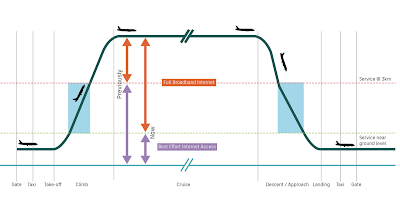
European Aviation Network extends broadband to takeoff/landing

Deutsche Telekom's European Aviation Network (EAN) inflight broadband has been enhanced to enable connectivity for longer periods during commercial flights.

Previously, EAN was only offered to passengers at altitudes above 10,000 feet (3 km), which meant the service was not available during the take-off and landing phases of a flight. 

Deutsche Telecom now has make a number of enhancements to EAN’s onboard Advance Integrated System Manager (AISM) that enables broadband connectivity to passengers during the climb and approach phases. 

The extended availability of inflight broadband is subject to regulatory restrictions and airline policy.

https://www.telekom.com/en/company/details/improving-ean-s-service-availability-631372

Telenor selects Oracle's cloud native converged charging and billing

Telenor selected Oracle Communications Billing and Revenue Management, including Oracle Converged Charging to lay the groundwork for 5G and provide seamless charging and billing interactions in its Asian operations. Telenor serves 175 million subscribers in the region.

Telenor is focused on three key initiatives: digitalizing its technical stack to be ready for 5G, innovating its operating model with more touch-free operations, and transforming how it works internally and with partners to deliver more value while containing capital expenditures.


Oracle's solution supports any payment model (prepaid, postpaid or hybrid) and any business model, including business-to-business or business-to-consumer account structures. 

"Telenor is recognized for its innovation and industry leadership as well as driving standards," said Jason Rutherford, senior vice president and general manager, Oracle Communications, Applications. "Oracle's integrated billing and charging provides a flexible, standards-based platform that will scale to support Telenor's large customer base today and in the upcoming 5G era."


SMART Photonics receives €13M for Indium Phosphide foundry

SMART Photonics, which is based at the High Tech Campus in Eindhoven, recently received a new loan worth up to €13M provided by Rabobank.

The company will use the funding to scale up of production of its photonics chips and to strengthen SMART Photonics’ role in the growing photonics ecosystem. 

SMART Photonics is a foundry offering production services for mainly Indium Phosphide based photonic components.


https://smartphotonics.nl/

FCC officially issues C-Band licenses

The FCC officially issued 5,676 licenses in the 3.7 GHz service (3.7 to 3.98 GHz, also referred to as the C-band) following completion of Auction 107 earlier this year. 

 “These mid-band licenses are the sweet spot for 5G deployment,” said FCC Acting Chairwoman Jessica Rosenworcel. “That’s because they have the right mix of capacity and propagation that will help us reach more people in more places faster. With these licenses in hand, more carriers can deploy mid-band 5G, which means faster speeds over much wider coverage areas and more robust competition. I thank our outstanding wireless, auctions, and international teams for a job very, very well done.”

3.7 GHz spectrum auction tops $80 billion

The FCC's Aution 107 for flexible‐use overlay licenses for spectrum in the 3.7–3.98 GHz band concluded with a record $80.9 billion in bids after 97 rounds.

The auction made available licenses for 280 megahertz of spectrum in the the so-called C-band.  FCC Chairman Ajit Pai made the following statement:

“This historic FCC auction is already a record-breaking success.  Bidders have won all of the 5,684 spectrum blocks that were up for bid.  And gross proceeds have exceeded $80.9 billion, shattering the prior FCC auction record of $44.9 billion.  

“These results represent a strong endorsement by the private sector of the service rules and transition plan put in place by the FCC to quickly make the C-band a critical part of 5G rollout in the United States.  And they vindicate the hard choices the FCC made during the C-band proceeding—and that we made them.  The FCC confronted a host of technical, legal, practical, and political challenges in structuring this auction.  It would have been easy to delay.  But we rightly pushed ahead and overcame every one of those obstacles.  As a result, we significantly advanced United States leadership in 5G and have enabled America’s wireless consumers to more quickly benefit from 5G services.  

Winning bidders will now have the opportunity to bid for frequency-specific licenses in the assignment phase of Auction 107. 

https://www.fcc.gov/document/first-phase-record-breaking-5g-spectrum-auction-concludes

Intel's Q2 PC sales rise, but data center continues to dip

 Citing record Q2 revenue in its PC and Mobileye businesses, on July 2, Intel reported Q2 revenue of $19.6 billion, flat year over year (YoY), and non-GAAP revenue of $18.5 billion, up 2% YoY, which exceeded April guidance by $700 million. EPS) was $1.24. The results exceeded Q2 guidance for revenue, EPS, and gross margin.

“There’s never been a more exciting time to be in the semiconductor industry. The digitization of everything continues to accelerate, creating a vast growth opportunity for us and our customers across core and emerging business areas. With our scale and renewed focus on both innovation and execution, we are uniquely positioned to capitalize on this opportunity, which I believe is merely the beginning of what will be a decade of sustained growth across the industry,” said Pat Gelsinger, Intel CEO. “Our second-quarter results show that our momentum is building, our execution is improving, and customers continue to choose us for leadership products.”

Gelsinger also stated "While I expect the shortages to bottom out in the second half, it will take another 1 to 2 years before the industry is able to completely catch up with demand. IDM 2.0, which combines our internal manufacturing capacity with the use of third-party foundries, best positions us to weather these challenges and work with our ecosystem partners to build a more resilient supply chain."


Thursday, July 22, 2021

Google Cloud launches Cloud IDS with Palo Alto Networks

Google Cloud introduced a Cloud IDS service that delivers cloud-native, managed, network-based threat detection. The service was built with Palo Alto Networks' threat detection technologies.

Google Cloud said customers can leverage Cloud IDS to gain deep insight into network-based threats and to support industry-specific compliance goals that call for the use of an intrusion detection system.  Cloud IDS has visibility into traffic to and from the Internet. It can also monitor east-west traffic, which includes both intra- and inter-VPC communication for suspicious lateral movement. 

Additionally, because Cloud IDS is an end-to-end cloud-native solution, customers can leverage an extensive, continually updated, built-in catalog of attack signatures from Palo Alto Networks’ threat analysis engine to detect the latest threats, as well as anomaly detection for unknown threats. 

https://cloud.google.com/blog/products/identity-security/detect-complex-network-threats-with-cloud-ids

Comcast develops its own local optical spectrum tester

Comcast has built a prototype system called XMF to gain visibility into its local fiber networks. The design purposes mature opto-electronic chips used for long-haul optical analysis, making it economically feasible to install ultra-precise fiber diagnostic tools at many points throughout local fiber networks.

Comcast said its XMF platform is continuously monitoring hundreds of thousands of local broadband optical links every minute, measuring both the optical spectrum and testing the length and quality of the fiber links. The system is able to pinpoint the exact point at which a local fiber network is experiencing an issue, such as a fiber cut, and share the precise geolocation with local technicians. 

Comcast is also rolling out a handheld version of the XMF platform that technicians can use in the field to identify fiber link issues.

https://corporate.comcast.com/stories/10g-network-evolution-using-prisms-and-sonars-to-increase-network-reliability

Samsung expands its SDN ambitions from data center to transport and enterprise

Samsung Electronics is expanding its SDN portfolio, which includes controllers, orchestrators, switches and routers, with the goal of extending its presence from data centers to enterprises in various sectors, including education, retail and energy. This full lineup of SDN will also support mobile access (xHaul), which refers to fronthaul, midhaul and backhaul transport networks.

Samsung highlights its following advantages:

  • “SDN In-a-Box”: Samsung’s SDN solution can serve multiple purposes in a single box, including data center SDN, enterprise SDN and mobile access (xHaul) SDN.
  • User-Friendly: This SDN delivers a user-friendly, award-winning 3D-based UX design.1 With high accessibility and usability, this solution provides a simplified view of an end-to-end network, enabling more unified and consistent management.
  • Openness: The company’s cloud-native, open source-based SDN solutions can integrate seamlessly with third-party switches and routers. Samsung’s SDN is based on the Open Network Operating System (ONOS), supporting various types of open interfaces to enable multi-vendor interoperability.
  • End-to-End Network Slicing: SDN technology can automate network slicing end-to-end, which will help fulfill service-level agreement (SLA) requirements, even at the transport level. Combined with its RAN and Core, Samsung’s SDN solution will enable mobile operators to offer optimal networks for various business models through company’s end-to-end network slicing capability.

“Networks are becoming more agile with SDN technology in the 5G era. Samsung is proud to take part in this network evolution by offering a full lineup of SDN solutions and bringing more operational flexibility to 5G network management,” said Sohyong Chong, Senior Vice President and Head of Software R&D, Networks Business at Samsung Electronics. “Samsung’s SDN will help operators and enterprises rapidly introduce new 5G applications, services and infrastructures, driving faster time to market.”

https://news.samsung.com/global/samsung-expands-its-lineup-of-sdn-solutions 

Akamai hit by DNS disruption

A faulty software configuration update at Akamai triggered a bug in its DNS on Thursday at 15:46 UTC. This led to widespread website outages for many of its customers.

Akamai confirmed via Twitter that the disruption was not caused by a cyber attack.

Once Akamai rolled back the configuration update, the service was restored. The outage lasted for about an hour.


AT&T Fiber: 246,000 net adds in Q2 bring total to 5.4M

Citing higher revenues for its WarnerMedia, Mobility, Mexico, and Consumer Wireline groups, AT&T reported Q2 sales of $44.0 billion versus $41.0 billion in the year-ago quarter, up 7.6% reflecting partial recovery from the prior-year impacts of COVID-19.  The gains were offset by declines in domestic video and Business Wireline, which were $6.1 billion, down 4.0% year over year from lower service revenues. Second-quarter revenues were $28.1 billion, up 6.1% year over year due to increases in Mobility and Consumer Wireline.

Second-quarter net income attributable to common stock was $1.5 billion, or $0.21 per diluted common share, versus $1.2 billion, or $0.17 per diluted common share in the year-ago quarter. Cash from operating activities was $10.9 billion, down $1.1 billion year over year, with capital expenditures of $4.0 billion and content spend of $5.3 billion 

“We’re pleased with our performance and our momentum is strong,” said John Stankey, AT&T CEO. “For the fourth consecutive quarter, we saw good subscriber growth across wireless, fiber and HBO Max. Mobility delivered strong service revenue, EBITDA and postpaid phone growth. Our fiber business, which leads on customer satisfaction, grew subscribers and penetration."

Some highlights

Communications 

Mobility:

  • 789,000 postpaid phone net adds
  • 1,156,000 postpaid net adds
  • 174,000 prepaid phone net adds
  • Postpaid phone churn of 0.69%, equaling lowest churn ever
  • Revenues up 10.4%; service revenues up 5.0%; equipment revenues up 31.9%
  • Operating income of $6.0 billion, up 3.4% year over year; EBITDA4 up 2.7%
  • Operating income margin of 31.7%; EBITDA service margin5 55.9%

Consumer Wireline:

  • 246,000 AT&T Fiber net adds; penetration more than 36%
  • Revenues up 2.9%; broadband revenues up 8.3% with ARPU growth of 6.1%

WarnerMedia 

  • 2.8 million total domestic HBO Max and HBO subscriber6 net adds; total domestic subscribers of 47.0 million, up 10.7 million in past year; and 67.5 million7 globally, up
  • 12.0 million in past year
  • Launched ad-supported HBO Max and international offerings
  • Domestic HBO Max and HBO subscriber ARPU8 of $11.90
  • Total revenues up 30.7% to $8.8 billion
  • Direct-to-Consumer subscription revenues up nearly 40%
  • Now expect 70-73 million global HBO Max/HBO subscribers by end of year

https://investors.att.com/financial-reports/quarterly-earnings/2021


25GS-PON MSA Group cites momentum

 The 25GS-PON MSA Group today announced seventeen new member organizations, including service providers Proximus, OptiComm, and INEA, as well as

CableLabs. In addition to the operators and service provider organizations, new members including ALPHA, Asia Optical, BFW, CZT, DZS, EXFO, EZconn, Gemtek, JPC, MT2, Pegatron, SiFotonics, and WNC.

This brings the 25GS-PON MSA to 34 members.

Proximus, the leading provider of fixed broadband networks in Belgium, deployed the world’s first live 25G network on May 26, 2021.

The 25GS-PON MSA was first announced on October 8, 2020 with the goal of promoting and accelerating the development of 25GS-PON technology. Since its formation, the 25GS-PON MSA Group has published version 1.0 of the 25 Gigabit Symmetrical Passive Optical Network specification, providing the basis for how 25GS-PON should be implemented to ensure basic functionality and interoperability across different vendors.

Previously announced members include AOI, AT&T, Chorus, Chunghwa Telecom, Ciena, Commscope, Cortina Access, Feneck, HiLight Semiconductor, Hisense, MACOM,

MaxLinear, NBN Co., Nokia, Semtech, Sumitomo Electric Industries, Ltd., and Tibit Communications. 

http://www.25gspon-msa.org

New 25GS-PON multisource agreement gets underway

A new 25G symmetric PON multi-source agreement (25GS-PON MSA) is underway with the goal of promoting and accelerating the development of 25GS-PON. 

The MSA Group has defined the 25GS-PON specification needed to address the gap between 10G XGS-PON and 50G PON in the ITU-T. The MSA was created after the ITU-T SG15/Q2 group did not reach consensus to standardize 25GSPON, which is seen as a crucial technology by many of the world’s top operators and vendors.

As a first step, the 25GS-PON MSA Group created a specification for 25GS-PON which includes optical specifications based on the IEEE 802.3ca 25G EPON standard, along with a Transmission Convergence (TC) layer that is an extension of XGS-PON. 

The MSA Group will also promote and catalyze the market development for 25GS-PON.

The founding members of the 25GS-PON MSA Group include: AOI, Chorus, Chunghwa Telecom, Ciena, MACOM, MaxLinear, NBN Co., Nokia, Sumitomo Electric Industries, Ltd, and Tibit Communications.

http://www.25gspon-msa.org


STL acquires Clearcomm for FTTx integration expertise

STL (Sterlite Technologies Ltd) has acquired Clearcomm Group Ltd, a UK-based network integration company. The transaction is structured to acquire 100% of the share capital in 2 tranches. Tranche 1 entails acquisition of 80% of the share capital which will happen immediately (subject to customary pre-closing conditions), and is based on an Enterprise Value of GBP 15.5 million. The balance 20% shareholding will be acquired in 2023.

Clearcomm is a privately held company that provides end-to-end network integration solutions and capabilities in the UK, including for large-scale FTTx projects. The company claims revenues in the range of GBP 20 million and growth rates of over 25% over the past 3 years. 

STL said the deal will enhance the presence of its Network Integration solutions across UK and Europe.

Welcoming Clearcomm on board, Dr Anand Agarwal, Group CEO, STL said, "As digital infrastructure investments are increasing across the globe, STL is globalising its System Integration solutions to help build these advanced networks. With the addition of Clearcomm's network integration expertise to STL's Optical Connectivity and Data Centre integration capabilities, we are uniquely positioned to help our customers deliver the most advanced, deep-fiberised digital networks."

https://www.stl.tech/

NeoPhotonics appoints SVP of Global Sales

NeoPhotonics announced the appointment of Bradford W. Wright as the Company’s Senior Vice President of Global Sales. Most recently, Wright was head of Worldwide Component Sales and Applications at Cisco Systems, following their acquisition of Acacia Communications, where he was Vice President of Sales from January 2018. From January 2016 to January 2018, he served as Director of Sales at Intel Corporation, following their acquisition of Altera Corporation in 2015, where he held a similar role. 


"On behalf of the Management and Board of Directors, I am pleased to welcome Brad to NeoPhotonics," said Tim Jenks, Chairman and CEO of NeoPhotonics. "Brad’s extensive experience in both communications and semiconductors will bring direct benefit to our high speed optical components, modules and semiconductor device solutions for our rapidly expanding high speed markets," concluded Mr. Jenks.


MEF elects 2021-2022 Board of Directors


MEF announced its 2021-2022 Board of Directors

  • Nan Chen, Head of The One Network, Ericsson
  • Frederick Chui, Chief Commercial Officer, PCCW Global
  • Andrew Dugan, Chief Technology Officer, Lumen
  • Shawn Hakl, Vice President, 5G Strategy, Microsoft
  • Aamir Hussain, Chief Product Officer and Senior Vice President, Verizon Business Group
  • Daniele Mancuso, Senior Vice President Chief Product Management, Sparkle
  • Franck Morales, Vice President, Connectivity Services, Orange Business Services
  • Rasesh Patel, Executive Vice President, Chief Product & Platform Officer, AT&T Business
  • Robert “Bob” Victor, Senior Vice President of Product Management, Comcast Business
  • Mirko Voltolini, Vice President, Innovation, Colt Technology Services
  • Jeremy Wubs, Senior Vice President, Product, Marketing and Professional Services for Bell Business Markets, Bell Canada 

MEF Officers

  • Nan Chen, President
  • Aamir Hussain, Chairman
  • Bob Victor, Treasurer
  • Kevin Vachon, Chief Operating Officer
  • Pascal Menezes, Chief Technology Officer
  • Daniel Bar-Lev, Vice President, Strategic Programs

“We are extremely fortunate to have a world-class team of distinguished leaders on the MEF Board of Directors,” said Nan Chen, President, MEF. “For 20 years, MEF has been solving shared business challenges through industry collaboration. Our new Board brings deep industry expertise, insights, and fresh perspectives that will challenge and strengthen MEF’s ability to drive network transformation to power the digital economy. 

“I want to express my appreciation to outgoing board member and MEF Distinguished Fellow Ralph Santitoro, Head of Digital Services, Fujitsu Network Communications, for his important contributions in guiding MEF’s work in key strategic areas.”

https://www.mef.net/


Wednesday, July 21, 2021

Verizon reports increased 5G adoption and record 2Q

 Citing wireless revenue growth, strong Fios and Verizon Media results, and increased wireless equipment revenue, Verizon reported consolidated operating revenues in second-quarter 2021 of $33.8 billion, up 10.9 percent from second-quarter 2020, and an increase of 5.3 percent from second-quarter 2019. Verizon reported EPS of $1.40, compared with $1.13 in second-quarter 2020. 

Capital expenditures in first-half 2021 were $8.7 billion, including more than $160 million for C-band expansion.

“Second quarter results were exceptional, both financially and operationally,” said Verizon Chief Financial Officer Matt Ellis. “Our strong first half performance and the momentum in our business gives us the confidence to raise our total wireless service revenue growth guidance to between 3.5 percent and 4 percent, an update from prior guidance for 2021 total wireless service revenue growth of at least 3 percent. We are also raising our adjusted EPS guidance* to the range of $5.25 to $5.35, an update from prior guidance for 2021 adjusted EPS of $5.00 to $5.15."

Some highlights

Consumer

  • Consumer ended second-quarter 2021 with approximately 20 percent of wireless phone customers having 5G-capable devices.
  • Total Verizon Consumer revenues were $23.5 billion, an increase of 11.2 percent year over year, and an increase of 6.7 percent from second-quarter 2019. 
  • Total wireless retail postpaid churn was 0.83 percent in second-quarter 2021. Wireless retail postpaid phone churn was 0.65 percent, a record-low retail postpaid phone churn outside of second-quarter 2020 and third-quarter 2020, which were heavily impacted by the pandemic. 
  • In second-quarter 2021, Consumer reported 350,000 wireless retail postpaid net additions. This consisted of 197,000 phone net additions and 234,000 other connected device net additions, offset by 81,000 tablet net losses.
  • There were 92,000 Fios Internet net additions in second-quarter 2021. Consumer Fios revenues of $2.9 billion in second-quarter 2021 were the highest since the company's new operating structure was introduced in 2019. The company's trailing 12-month total Fios Internet net addition performance is the highest since 2015. Consumer reported 62,000 Fios Video net losses in second-quarter 2021.

Business

  • Total Verizon Business revenues were $7.8 billion, up 3.7 percent year over year, and relatively flat from second-quarter 2019.
  • Business wireless service revenues were $3.1 billion in second-quarter 2021, an 8.0 percent increase year over year, and an increase of 11.4 percent from second-quarter 2019. This increase was led by Small and Medium Business and Global Enterprise. 
  • Total wireless retail postpaid churn was 1.30 percent in second-quarter 2021, and wireless retail postpaid phone churn was 1.07 percent.
  • Business reported 178,000 wireless retail postpaid net additions in second-quarter 2021, including 78,000 phone net additions.

Fungible appoints Eric Hayes as CEO

 Fungible has appointed Eric Hayes as its new CEO and member of Fungible’s Board of Directors, succeeding Pradeep Sindhu, who has served as Executive Chairman and CEO since Fungible’s inception. Sindhu will continue his role as Executive Chairman and assume the role of Chief Development Officer, where he will lead the engineering teams responsible for the company’s products and solutions.

Hayes most recently served as the Senior Vice President and General Manager of the High-Speed Connectivity business unit at Inphi where he led the company’s multi-hundred-million-dollar PAM4 DSP business. Prior to joining Inphi he held multiple senior leadership positions in marketing and general management at Marvell, Cavium and Broadcom. 


“It has been a great privilege for me to lead this extraordinarily talented group of dedicated individuals to invent the DPU and bring to market industry leading products that exploit its unique capabilities. The DPU is a new category of microprocessor destined to become a key building block of data centers as the industry embraces data-centric computing. My new role allows me to focus on technology: taking the learnings from our first generation of DPUs and applying them to the next and further enhancing our already industry leading products,” said Pradeep Sindhu, Co-Founder, Executive Chairman and Chief Development Officer of Fungible. 

“There are tremendous opportunities for Fungible to radically transform the global data center industry in the coming years, thanks to the great work of Pradeep and the team,” said Eric Hayes, CEO of Fungible. “I can’t express how truly inspired I am to join Fungible at this pivotal time. While many other companies continue to invest in faster CPUs and GPUs, the real bottleneck to achieving performance at scale remains the inability to efficiently disaggregate CPUs, GPUs and storage over a high performance standards-based network. The market is ripe for disruption, and Fungible’s DPU is the only technology capable of solving this problem.”


AT&T offloads Vrio Operations to Grupo Werthein

 AT&T will sell its Vrio Corp. business unit to Grupo Werthein, a private holding company active in telecommunications, finance, insurance, agribusiness and real estate in Latin America.


Vrio is a digital entertainment services company with 10.3 million subscribers across 11 countries in Latin America and the Caribbean. Vrio provides live and on-demand video services via DIRECTV Latin America, SKY Brasil and DIRECTV GO. Vrio’s entertainment includes world-class sporting events, international content and exclusive programming. Vrio offers services in Brazil through the SKY brand and in Argentina, Barbados, Chile, Colombia, Curacao, Ecuador, Peru, Trinidad and Tobago and Uruguay through the DIRECTV brand. DIRECTV GO is an over-the-top (OTT) subscription service that offers online access to a variety of live and on-demand programming in Argentina, Brazil, Chile, Colombia, Ecuador, Mexico, Peru and Uruguay.

Vrio’s infrastructure includes satellites and state-of-the-art broadcast centers that carry 4K video formats. Vrio’s broadband operations, along with other investments, including Torneos y Competencias in Argentina and WIN Sports in Colombia, will transfer to Grupo Werthein at close.

In contemplation of this transaction, AT&T classified Vrio as held-for-sale at June 30, 2021 and reported the asset group at fair value less cost to sell, which resulted in an impairment of $4.6 billion including $2.1 billion related to accumulated foreign currency translation adjustments. The companies expect the transaction to close in early 2022. AT&T plans to announce second-quarter 2021 results on Thursday, July 22, 2021.

“Our vision of the future is to maximize these leading entertainment brands in Latin America, maintaining their leadership and increasing their value proposition by investing in technology and content aligned with the viewing habits of each one of the subscribers, including the next generation of consumers,” said Dario Werthein, shareholder, Grupo Werthein.

“This transaction will further allow us to sharpen our focus on investing in connectivity for customers,” said Lori Lee – CEO AT&T Latin America. “We remain committed to Latin America through our wireless business in Mexico and services for multinational corporations operating in the region.”


Prime plans new 9MW data center in Santa Clara

Prime Data Centers is expanding its presence across Silicon Valley with a new 9MW data center on Martin Avenue in Santa Clara, California.

The new facility will be the second Silicon Valley data center for Prime. Construction on this three-story data center campus is set to begin this year, and completion is targeted for Q2 of 2022. The finished project will include:

  • Approximately 80,000 square feet of purpose-built data center space
  • 9MW of critical capacity with N+1 redundancy
  • World-class connectivity options

"Santa Clara is one of the most desired data center locations globally due to its proximity to the vibrant and structurally important San Francisco Bay Area. In addition, the relatively affordable power rates from Silicon Valley Power (SVP) are very advantageous," says Jeff Barber, EVP Sales and Business Development at Prime. "Yet, it is difficult to find wholesale data center space in this area because of the scarcity and expense of available real estate, and the difficulty of obtaining guarantees that the power is available to service the new capacity. Prime has such assurances from SVP in hand today."

https://primedatacenters.com/