Monday, December 12, 2022

Comcast lights 10G connection powered by DOCSIS 4.0

Comcast activated the first multigigabit, symmetrical Internet connection powered by 10G and full duplex DOCSIS 4.0, connecting a business location in the Philadelphia region to its live network.  The test involves a DOCSIS 4.0-enabled 10G node and multiple cable modem.

Comcast anticipates offering 10G-enabled services to customers in the second half of 2023.

“This live trial combines years of technology innovation and versatility to create a clear path to next-generation speed, reliability and performance for all the homes in our footprint, not just a select few,” said Charlie Herrin, President, Technology, Product, Experience at Comcast Cable. “What excites us most about 10G technology is the ability to continue our longstanding commitment to delivering our best technologies to everyone we serve.”

“We started this year with the announcement of our world-first test of 10G modem technology capable of delivering multi-gig speeds to homes and, as of today, 10G is a reality with the potential to transform and evolve the Internet as we know it,” said Elad Nafshi, EVP and Chief Network Officer at Comcast Cable. “It’s been an incredible year of progress, and we look forward to continuing to refine and harden our 10G technology as we work to make this service—and all its incredible benefits—available to all customers in the years ahead.”


Comcast demos 10G technologies

Comcast reached download speeds faster than 8 Gbps and upload speeds faster than 5 Gbps during a 10G event at CableLabs headquarters.For the demo, Comcast connected a 10G-enabled Virtualized Cable Modem Termination System (vCMTS) linked by more than 80 kilometers of fiber to the demonstration site. The fiber terminated into a production switch, which connected to what is believed to be the world’s first fully functional 10G-enabled Full Duplex DOCSIS...

CableLabs cites 10G milestones

CableLabs cited a number of 10G milestones achieved in 2021:CableLabs recently published its first set of specifications for a new device, called the Coherent Termination Device, that enables operators to take advantage of coherent optics technologies in fiber-limited access networks. Typically used for long-haul, metro and submarine networks, coherent optics technologies enable operators to use their existing fiber assets more efficiently when teamed...


Microsoft acquires Lumenisity, a developer of hollow core fiber

Microsoft has acquired Lumenisity Limited, a start-up based in the UK developing hollow core fiber (HCF). Financial terms were not disclosed.

Lumenisity’s next generation of HCF uses a proprietary design where light propagates in an air core, which has significant advantages over traditional cable built with a solid core of glass, including:

  • Increased overall speed and lower latency as light travels through HCF 47% faster than standard silica glass.
  • Enhanced security and intrusion detection due to Lumenisity’s innovative inner structure.
  • Lower costs, increased bandwidth and enhanced network quality due to elimination of fiber nonlinearities and broader spectrum.
  • Potential for ultra-low signal loss enabling deployment over longer distances without repeaters.


Microsoft said it made the acquisition to optimize its global cloud infrastructure and serve its Cloud Platform and Services customers with strict latency and security requirements. 

https://blogs.microsoft.com/blog/2022/12/09/microsoft-acquires-lumenisity-an-innovator-in-hollow-core-fiber-hcf-cable/

  • Earlier this month, Lumenisity completed the development of the world’s first dedicated HCF manufacturing facility in Romsey, UK. The state-of-the art building spans 40,000 sq ft and will enable scaled up production of HCF technology in the future.

Lumenisity unveils Hollow Core Double Nested Antiresonant Nodeless Fiber 

Lumenisity Limited, a start-up based in Romsey, United Kingdom, announced a new generation of hollowcore fibre with the lowest attenuation of any hollowcore fibre reported to date. The company says its new product surpasses the attenuation of conventional germanium-doped single-mode fibre (SMF) in the O and C bands. Specifically, Lumenisity’s new Hollow Core Double Nested Antiresonant Nodeless Fiber (DNANF) achieves attenuations of <0.22...

Comcast tests Lumenisity's hollowcore fiber

Comcast confirmed its first deployment of advanced hollowcore fiber optics.Comcast connected two locations in Philadelphia, which enables network engineers to continue to test and observe the performance and physical compatibility of hollowcore fiber in a real-world deployment. Comcast successfully tested bidirectional transmission (upstream and downstream traffic traveling on a single fiber), used coherent and direct-detect systems (allowing for...

BT begins testing hollow core fibre

BT kicked off trials of hollow core fibre at the BT Labs in Adastral Park, Ipswich, in a collaborative project with Lumenisity, a Southampton University spin out company, and Mavenir.BT researchers are conducting the trials at BT’s research and engineering campus, using a 10-kilometre-long hollow core fibre cable provided by Lumenisity. The new fibre has a hollow, air filled centre that runs the entire length of the cable. It will be used to test...

euNetworks deploys Lumenisity's hollowcore fibre

euNetworks Fiber UK has deployed a new ultra low latency route between Basildon and London that connects the ICE data centre to Interxion LON1 and LON2 and then onwards to Slough. The new route is over 45km long and includes 14 km of Lumenisity's CoreSmart hollowcore cable, which is compatible with regular single mode fibre.The route is the longest commercial deployment of hollowcore fibre technology to date and its use is exclusive to euNetworks...


Ericsson completes first live 5G data call on Ericsson Cloud RAN

Telstra completed the first Ericsson Cloud RAN 5G data call on its commercial network in Queensland, Australia. 

Ericsson’s Cloud RAN solution virtualizes the RAN baseband as cloud-native network functions for the CU (centralized unit) and DU (distributed unit).

Telstra’s implementation of Ericsson’s Cloud RAN technology employs an architecture in which both the CU and DU baseband functions are centralized versus approaches that only centralize the CU and leave the DU at the base station site. By placing both the CU and DU functions at a central site such as a Telstra local exchange or data center, Telstra will achieve more efficient utilization of compute resources leading to improved cost and capacity outcomes.

The centralized Cloud RAN architecture deployed by Telstra is facilitated by the recently announced world-first commercial network deployment of Ericsson’s packet fronthaul technology based on the Ericsson Router 6673. Packet fronthaul technology allows existing site radios to be connected to the centralized Cloud RAN solution using eCPRI (enhanced CPRI). eCPRI is both more bandwidth efficient and places the radio information in an ethernet-based format that easily connects to cloud infrastructure running the Cloud RAN CU and DU baseband functions. 

Another unique aspect of Telstra’s Cloud RAN commercial network trial is that it is the first deployment of the Cloud RAN solution on Ericsson’s Cloud Native Infrastructure Solution (CNIS), - a bare metal infrastructure that is specifically optimized for hosting cloud-native 5G applications both at central data centers and at the edge. The combination of Ericsson’s Cloud RAN running on CNIS as a system-verified solution reduces Telstra’s deployment and operational risks and ensures the best mobile network performance for Telstra’s customers.

Iskra Nikolova, Telstra’s Network and Infrastructure Executive, says: “Telstra’s ongoing partnership with Ericsson has reached another new milestone this week with the first 5G Cloud RAN data call over our commercial network utilizing Ericsson’s industry-leading Cloud RAN technology. This achievement clears the way for the wider deployment of Ericsson’s Cloud RAN technology, which will enable the full benefits of 5G for Telstra’s customers across Australia.”

Emilio Romeo, Head of Ericsson, Australia and New Zealand, says: “Ericsson’s Cloud RAN technology is a key enabler of 5G-as-a-service-based architecture and supports Telstra’s move towards the widespread virtualization and automation of its network infrastructure. This Australia first Cloud RAN trial further demonstrates the industry leading innovation made possible by Ericsson’s ongoing partnership with Telstra while marking the next step in the transformation of Australia’s largest mobile network.”

https://www.ericsson.com/en/press-releases/7/2022/telstra-makes-its-first-5g-data-call-on-a-commercial-network-with-ericsson-cloud-ran-technology


Orange to provide landing in Marseille for Medusa Mediterranean cable

Orange will offer a high-performance interconnection solution to all partner operators of the new Medusa Submarine Cable System -- the first and longest submarine cable to connect the main Mediterranean countries. 

Medusa is an 8,760 km subsea system linking the North African countries and six EU member states (Portugal, Spain, France, Italy, Greece, and Cyprus). 

Medusa is an open system that includes 16 landing points around the Mediterranean Sea. The cable will have segments withup to 24 fiber pairs with a capacity of 20 Tbps per fiber pair. Its festoon architecture gives it a unique design. 

It is expected Medusa cable reaches Marseille during the last quarter of 2024. The system will be ready for service end of 2024 for the West Med region and first half of 2025 for the East Med region.

Orange is building submarine cable landing infrastructure in Marseille to make France more attractive as a digital gateway for global exchanges.

Construction includes new urban infrastructure to increase the resilience and diversity of access and landing points in Marseille while connecting all the city’s data centers.

Orange will handle all the technical, regulatory, security, and environmental aspects, enabling its partners to enjoy a prime position in Marseille and strengthening France’s attractiveness

"We are particularly pleased to welcome the Medusa cable to Orange's infrastructure in the heart of the Mediterranean hub of Marseille, as part of a strategic and ambitious project. By combining our submarine cable landing stations with our new urban infrastructure, we are strengthening Marseille's attractiveness as a digital gateway to Europe, and beyond that, France's sovereignty," explains Michaël Trabbia, interim CEO of Orange Wholesale & International Networks.

Norman Albi, CEO of Medusa, stresses the importance of this agreement: “Marseille has always been a strategic Mediterranean interconnection point and joining forces with Orange means we can offer a cutting-edge service, against a background of growing needs in the digital economy. With this agreement, all Medusa landings in the western Mediterranean are totally secure and ready to be implemented.” 

https://newsroom.orange.com/medusa-submarine-cable-system-chooses-the-new-orange-infrastructure-in-marseille-to-land-a-new-strategic-route-connecting-southern-europe-and-north-africa/?lang=en

https://medusascs.com/

Coherent partners with Korea's ETRI and KAIST

Coherent Corp. signed a memorandum of understanding with two Korean institutions, the Electronics and Telecommunications Research Institute (ETRI) and the Korea Advanced Institute of Science & Technology (KAIST), to foster collaboration on advanced electronic and photonic devices, with a focus on the Korean market.

The partnership covers a broad range of innovations in devices, leveraging silicon carbide, gallium arsenide, and indium phosphide technology platforms. The collaboration will address applications in power electronics for electric vehicles, industrial applications, and optical and wireless networks.

“Korea continues to be a strategic market for Coherent, and we really look forward to expanding our relationship with such well-respected partners as ETRI and KAIST,” said Dr. Julie Sheridan Eng, Chief Technology Officer, Coherent Corp. “We will begin by reviewing our respective technology roadmaps and identifying areas of synergistic interest where we can advance the state of the art and accelerate technology development in Korea.”

https://www.coherent.com/news/press-releases/coherent-partners-with-etri-and-kaist?utm_campaign=general_news&utm_source=twitter&utm_medium=social&utm_content=coherent_etri_kaist 

Deutsche Telekom selects Juniper for Magenta Business SD-X

Deutsche Telekom has selected Juniper Networks as the first network technology partner for Magenta Business Networks SD-X. 

SD-X is a cloud-based, virtualized and automated platform that will provide a rapid, simplified and cost-effective transition from MPLS to software-defined network services.

Juniper is providing DT with advanced technologies to create a secure, software-driven network fabric that uses AI to provide actionable insights on real-time performance coupled with automated mitigation. 

The Juniper solution provides client-to-cloud service levels with AI-driven intelligence to optimize and maintain the best user experiences. With AI-driven insight, problems are proactively discovered and addressed via recommended actions and/or self-driving network operations. 

“DT has fully embraced the powerful value of intelligent networks with SD-X. This highly-scalable business model is more cost-effective than traditional approaches, while providing the agility and ease of use customers demand. In turn, these customers can use SD-X as the foundation for an experience-driven digital business for their own customers and employees. We look forward to working with DT to roll out more managed services across SD-X to deliver a game-changing networking experience,” states Manoj Leelanivas, Chief Operating Officer, Juniper Networks.

T-Mobile US advances deployment of 1900 MHz mid-band

 T-Mobile has achieved its year-end goal of covering 260 million people with Ultra Capacity 5G weeks ahead of schedule. In addition, T-Mobile has now deployed an additional, new layer of 1900 MHz mid-band Ultra Capacity 5G spectrum nationwide.

The operator has also begun lighting up three-carrier aggregation — combining three channels of mid-band 5G spectrum — which in tests produced peak speeds topping 3 Gbps on T-Mobile’s 5G standalone network. Customers with the Samsung Galaxy S22 are leveraging the capability in parts of the network now. Three-carrier aggregation will expand nationwide, and be accessible by additional devices, in the near future.

"We’re rapidly executing on our vision to deliver the highest capacity network this country has ever seen,” said Neville Ray, President of Technology at T-Mobile. “We’ve led in 5G coverage from the beginning, delivering a massive 5G footprint that continues to grow. And with Ultra Capacity 5G, it’s undeniable that T-Mobile customers have access to the most powerful 5G network around.”

https://www.t-mobile.com/coverage/4g-lte-5g-networks

Sunday, December 11, 2022

Blueprint: Why CSPs need to shift to support root-cause analyses

by Stephanie Sculley, Head of Analytics Practice, Advanced Consulting Services West at Nokia

Today’s networks are complex to say the least. Because of that, it can be difficult to determine the underlying cause of an issue that’s hindering the customer experience. 

For some communications service providers (CSPs), chasing the wrong suspect can result in wasted time and effort while the true criminal runs free continuing to frustrate customers. 

This unproductive cycle is prevented with root-cause analysis, which identifies the actions that are needed to solve problems, minimizes churn and keeps customers happy, or at least happier. Not only does this save time, but it also helps CSPs keep their decisions customer-focused.

Nonetheless, there are three areas where CSPs often get stuck when trying to conduct root-cause analysis to address these problems, but fortunately, switching up one’s mindset can help to mitigate these common errors. Let’s find out how.

You Don’t Know If You Don’t Ask…a Lot: How to Solve the Problem with Meaningful Questions 

A cold has similar symptoms as an allergy, the flu or even a more serious diagnosis. So, if someone says they have a cough or a runny nose, the doctor needs to ask the right questions to come to an accurate diagnosis. This may even involve doing research or even consulting other professionals, who may have experience in other areas.  

While not the exact same scenario, this is a similar situation to what CSPs face when trying to determine the cause of network issues. Performance and service-related issues can originate from various sources from device manufacturers, content or app providers, user behavior, device manufacturers, or even the network itself, making it near impossible to figure out the cause of problems on one’s own.

Thus, it’s critical that CSPs ask the right questions to determine the cause of lagging key performance indicators (KPIs), growing customer complaints and churn.

Finding a true root cause can be like peeling an onion; there are many layers of investigation. With each new layer exposed, it’s vital to analyze and inspect the relevant details as moving too quickly with a possible solution could result in breaking KPIs in other areas. 

To assist in the root-cause analysis process, many turn to artificial intelligence and machine learning (AI/ML). However, while excellent and essential, these tools also require deep, hands-on experience and the correct data to generate conclusive solutions — ultimately bringing back up the importance of asking the right questions. 

Finding a Needle in a Needle Stack: How to Work with Data

Aside from asking the right questions, CSPs looking for the root cause of customer experience issues can also get hung up on vast amounts of data. 

Most CSPs have invested significant time, resources and energy into integrating sensors and devices throughout their operations with the aim to collect meaningful data. But instead, the data often has the opposite effect as CSPs are left with massive amounts of information that area struggle to sort through and generate value and actionable insights off of. 

To truly capitalize on their data and the findings it uncovers, CSPs need specialized tools along with industry expertise and advanced domain insight. Fortunately, telco data consultants who have worked with various CSPs in different industries can utilize the best practices and lessons learned from these experiences to truly investigate the large pool of data and uncover the most meaningful insights to determine the correct root cause and best course of action. 

The Customer Really Comes First: How to Start Making Customer-Centric Decisions

The last area where CSPs get stuck is with their decision-making process. Commonly, CSPs focus on a performance-driven approach to decision-making. This puts additional emphasis on areas such as the quality and capabilities of segments of their network. However, this narrow focus on just the radio access network (RAN) or the core can have a net negative impact on the business’s operations when it does not simultaneously better customer experience.

By focusing on the customer end-to-end in the decision-making process, CSPs can ultimately keep customers happy instead of causing their eyes to wander to competitors. But doing so requires a deep understanding and knowledge of the true cause of service complaints to properly address issues affecting the customer experience.

Take the example of customers complaining about dropped calls. At a surface level, it may seem like a solution to invest in optimizing network performance in their area, even if it may risk increasing consumer costs. However, the customer may still be affected by the end-to-end service path, which means that the isolated optimizations might not even improve their experience. Even worse, these increased costs, which may be portrayed as higher service fees as a result of the optimization, could cause the customer to ultimately choose a different provider. 

As a general principle of end-to-end customer-focused decision-making, an investment isn’t effective if it doesn’t better the customer experience. And as a part of that, it’s crucial to uncover and act on true root causes. 

And if issues continue to be unclear or complicated, it may be worthwhile to collaborate with an external partner, who can provide expertise and perspective when investigating root causes. 

Not only would an external provider supply broad industry insight based on ongoing work with various global CSPs, but they also have the domain knowledge and AI/ML expertise needed to ask the right questions, analyze data and uncover the true root cause of any issue – improving end-to-end customer experience by ensuring the customers’ needs are addressed head-on.


Verizon deploys its first Ericsson VRAN cell site

Verizon activated its first Ericsson virtualized cell site (also referred to as Ericsson Cloud RAN), with support from Intel and RedHat providing the processing and cloud-native orchestration functions. 

Ericsson provided its commercial 5G Cloud RAN solution, consisting of a virtualized Central Unit (vCU), a virtualized Distributed Unit (vDU), and radio units. This software-based 5G Cloud RAN solution spans across all of Verizon’s frequency bands, utilizing both FDD and TDD 5G spectrum assets, including Massive MIMO support for C-band and interconnecting previously deployed equipment to enable Ericsson Spectrum Sharing between LTE and NR carriers. The Ericsson Cloud RAN solution offers Verizon efficiency and in network deployment and operational management transformation.

Intel provided its 3rd Gen Intel Xeon Scalable processor, Intel vRAN Dedicated Accelerator ACC100 and Intel Ethernet Network Adapter E810 to deliver the processing, acceleration and connectivity requirements.

Red Hat provided Red Hat OpenShift and Red Hat Advanced Cluster Management for Kubernetes to manage their fleet at scale in collaboration with Red Hat Consulting. As part of the solution, Red Hat Advanced Cluster Management delivers cloud-scale manageability by configuring the 5G RAN using a Distributed Unit (DU) profile, which deploys real-time OS kernel optimizations to run vRAN and other cloud-native application workloads from a single console. Red Hat OpenShift also incorporates zero-touch provisioning to enable distributed deployment at scale required to operate a large scale RAN.

Verizon said Radio Access Network virtualization enables it to rapidly respond to customers’ varied latency and computing needs. 

Virtualizing the far edge of the RAN – the cell sites closest to the customer - is a function of decoupling the hardware and software associated with a cell tower and transitioning the software so that it’s not just stored in the cloud, but is designed for a cloud-native architecture and operation.

Verizon recently confirmed that irecently it has 8,000 cell sites already virtualized in its network with an eye towards virtualizing 20,000 sites.

https://www.verizon.com/about/news/verizon-expands-vran-leadership-position

Verizon begins C-band rollout with Ericsson and Samsung

Verizon confirmed that the installation of C-band equipment from Ericsson and Samsung Electronics Co. is now underway. Ericsson is providing its Antenna-Integrated Radio (AIR) product, which features a massive Multiple Input Multiple Output (MIMO) architecture with Ericsson Uplink Booster and advanced beamforming technology.  Samsung is also supplying Massive MIMO radios and fully virtualized RAN (vRAN) solutions.Verizon secured an...

Verizon completes fully virtualized 5G data session

Verizon recently completed an end-to-end fully virtualized 5G data session in a live network. Verizon's demonstration of virtualization in the Radio Access Network tested technology from several partners, including: Samsung provided its commercial 5G virtualized RAN solution, consisting of a virtualized Central Unit (vCU), a virtualized Distributed Unit (vDU), and radio units. The solution can provide mobile operators with improved efficiency,...


Dell'Oro: Total PON equipment revenue up 27% Y/Y

Total global revenue for the Broadband Access equipment market increased to $4.7 B in 3Q 2022, up 17 percent year-over-year (Y/Y), according to a new report from Dell'Oro Group. Spending on PON equipment continues to fuel the overall market, with revenue for PON OLTs breaking last quarter’s record of $1.3 B in the quarter.

“Thanks to a robust competitive environment and ongoing subsidization efforts, investments in new fiber broadband networks and equipment continue to grow,” said Jeff Heynen, Vice President with Dell’Oro Group. “It will be interesting to see if this momentum and resilience will carry into the fourth quarter and 2023, given the macroeconomic headwinds,” explained Heynen.

Additional highlights from the 3Q 2022 Broadband Access and Home Networking quarterly report:

  • Total XGS-PON ONT unit shipments exceeded 1 M for the second straight quarter, reaching 1.5 M worldwide.
  • Total cable access concentrator revenue was flat Y/Y at $259 M. Remote PHY devices and remote OLTs both reached record levels in the quarter, as cable operators continue to expand their DAA and fiber initiatives.
  • Total cable CPE units increased 5 percent Y/Y, as vendors were once again able to fulfill orders that had been backlogged for multiple quarters. Total revenue was up 9 percent Y/Y as higher-end DOCSIS 3.1 gateways are the percentage of total unit shipments.

https://www.delloro.com/news/

Dell'Oro: Double-Digit growth in N America’s Service Provider router market

Growth in North America and the Caribbean and Latin America (CALA) regions continued accelerating in 3Q 2022 leading the worldwide Service Provider (SP) Router and Aggregation Switch market 5 percent year-over-year growth, according to Dell'Oro Group.

“North America’s continued upward trend in 3Q22 was driven by SPs upgrading networks to gain the advantages of 400 Gbps technologies and expanding their networks to accommodate growing traffic. Demand for network capacity continues to increase, driven by 5G, IoT, pervasive video, and other technology trends,” said Ivaylo Peev, Senior Analyst at Dell’Oro Group. “From a worldwide perspective, solid revenue growth in the combined SP Edge Router and Aggregation Switch segment was partially offset by flat performance in the SP Core Router segment. The fast-growing adoption of Edge Router and line cards based on the newest ASICs, which support 400 Gbps connections and offer the highest available bandwidth, was the key reason for the Edge Router segment growth in 3Q 2022,” added Peev.

Additional highlights from Dell’Oro Group’s 3Q 2022 Service Provider Router and Switch Report:

  • High (double-digit) revenue growth in North America and CALA was diminished by declines in Europe, Middle East and Africa (EMEA), and Asia Pacific (APAC).
  • Market growth was strong in the SP Edge Router and Aggregation Switch segment, while the Core Router segment trended flat.
  • Supply chain constraints eased somewhat in the quarter, improving access to components and enabling SP Router vendors to work through some of their order backlogs.
  • Among the top five SP Router Suppliers, Cisco and Juniper recorded solid revenue growth, while Huawei and ZTE declined. Nokia had a strong quarter based on revenue reported in Euros (EUR), but the adverse exchange rate from EUR to U.S. dollars (USD) resulted in a revenue decline in USD.

Marvell launches secure 1.6T Ethernet PHY

Marvell Technology has begun sampling a 5nm 1.6T Ethernet PHY with 100G I/O capability, featuring built-in Media Access Control security (MACsec) and full support for Precision Time Protocol (PTP).

MACsec allows data center operators to enable hardware-based link-layer security and PTP enables Ethernet networks to support ultra-reliable timing- critical services. The X9340P and the previously announced Alaska C X93160 PHY together provide a pin-compatible, flexible platform for retiming, gearboxing, encryption and timing applications for speeds up to 800GbE.

Marvell's new "Alaska" X9340P is built on the company's PAM4-based 112 Gbps SerDes technology and delivers 40% lower power-per-bit compared to PHYs using 56Gbps PAM4-based SerDes technology. The Alaska C X9340P PHY incorporates the IEEE 802.1AE 256-bit MACsec capability in the PHY, providing for flexible encryption deployment while eliminating the cost and power burden of including this functionality in the switch ASIC. Marvell is supporting the Switch Abstraction Interface (SAI) driven by the Open Compute Project (OCP) on both the X9340P and X93160 devices to enable the vendor-independent control of networking equipment elements demanded by leading cloud data center customers.  

The new PHY also integrates support for PTP for timing-critical use cases in 5G and telecom applications. The stringent timing requirements of 5G networks and applications served by them are driving the timing accuracy that needs to be delivered by networks supporting these services. The inclusion of Class C PTP timestamping enables the support of sub-microsecond end-to-end clock synchronization accuracy needed for 5G Ultra-Reliable Low-Latency Communications (URLLC) services that enable mission-critical use cases such as industrial automation.

“100G PAM4 I/Os and 800 Gigabit Ethernet are the next leap forward for the industry,” said Venu Balasubramonian, vice president of product marketing, High Speed Connectivity and PHY Business Unit at Marvell. “Our newest 1.6T Alaska C PHY solidifies Marvell’s position as the silicon provider with one of the broadest and most advanced high-speed Ethernet PHY portfolios for cloud data center and carrier markets.

https://www.marvell.com/company/newsroom/marvell-extends-5nm-data-infrastructure-leadership-with-launch-of-secure-16t-ethernet-phy-for-cloud-and-5g-markets.html

Marvell intros 400G/800G PAM4 DSPs for Active Electrical Cables

Marvell introduced its Alaska A PAM4 DSP family for Active Electrical Cables (AECs) designed for data center interconnects by hyperscale customers.The new Alaska 400G/800G DSPs, fabricated in 6nm process, leverages Marvell’s PAM4 DSP technology to improve signal integrity in copper, short reach AECs to address emerging 100G/lane adoption in cloud data center interconnect architectures. The new Alaska 400G/800G DSPs add to Marvell’s comprehensive...

Marvell's Matt Murphy appoint chair of Global Semiconductor Alliance

 The Global Semiconductor Alliance (GSA) Board of Directors appointed Matt Murphy as its new chair.

Matt Murphy is President and Chief Executive Officer of Marvell Technology. He has led the company since joining in July 2016 and also serves as a member of its Board of Directors. Prior to joining Marvell, Matt worked for Maxim Integrated, where he advanced through a series of business leadership roles over two decades. Most recently, he served as Executive Vice President of Business Units and Sales & Marketing, overseeing all product development and go-to-market activities.

“I am honored to become Chair of GSA’s Board of Directors and look forward to partnering with my fellow Board members and other partners to further advance the global semiconductor ecosystem,” said Matt Murphy. “Semiconductors have proven to be an indispensable part of the global economy and there has never been a more important time for the entire ecosystem to come together and collaborate on a global level. The semiconductor industry continues to be a catalyst for technological progress and the world is counting on this group to fuel innovation like never before.”

https://www.gsaglobal.org/


Thursday, December 8, 2022

Joint Warfighting Cloud contracts for AWS, Google, Azure, Oracle

The U.S. Department of Defense awarded Joint Warfighting Cloud Capability (JWCC) contracts to Amazon Web Services (AWS), Google Support Services, Microsoft, and Oracle. 

JWCC is a multiple-award contract vehicle that will provide the DoD the opportunity to acquire commercial cloud capabilities and services directly from the commercial Cloud Service Providers (CSPs) at the speed of mission, at all classification levels, from headquarters to the tactical edge. 

This Indefinite-Delivery, Indefinite-Quantity (IDIQ) contract vehicle offers commercial pricing, or better, and streamlined provisioning of cloud services. With JWCC, warfighters will now have the opportunity to acquire the following capabilities under one contract:

  • global accessibility
  • available and resilient services
  • centralized management and distributed control
  • ease of use
  • commercial parity
  • elastic computing, storage, and network infrastructure
  • advanced data analytics
  • fortified security 
  • tactical edge devices 

https://www.hacc.mil/Blogs/Blog-Display/Article/3240370/joint-warfighting-cloud-capability-jwcc-contract-awarded/

U.S., Australia, Canada and U.K. seek Open RAN diversity

The governments of the United States, Australia, Canada and the United Kingdom issued a joint statement expressing their commitment to ensuring the security and resilience of  telecommunications networks, including by fostering a diverse supply chain and influencing the development of future telecommunications technologies such as 6G. 

The four nations further announced the endorsement of the Open RAN Principles, published by the United Kingdom in April 2022. 

The Open RAN Principles are consistent with the 2021 Prague Proposals and seek to help guide industry towards the characteristics that governments want Open RAN to deliver in order to maximise the benefits that it will bring. The four principles are:

  • Open disaggregation, allowing elements of the RAN to be sourced from different suppliers and implemented in new ways.
  • Standards-based compliance, allowing all suppliers to test solutions against standards in an open, neutral environment.
  • Demonstrated interoperability, ensuring disaggregated elements work together as a fully functional system - at a minimum matching the performance and security of current solutions.
  • Implementation neutrality, allowing suppliers to innovate and differentiate on the features and performance of their products.

The U.S. government plans to invest $1.5 billion to enable carriers to replace Huawei equipment and boost the adoption of Open RAN.

 Kristian Toivo, executive director, Telecom Infra Project, states “Operators and vendors are already deploying Open RAN equipment across the States, and this investment will incentivise wider scale deployments. Open RAN gives carriers more choice, innovation opportunities and improved economics, and will be vital for rural operators as they look to close the digital divide."

 “This funding helps tackle one of the hurdles of ripping out and replacing equipment. The next step is to provide MNOs with blueprints for how Open RAN can be deployed in different scenarios and use cases, to ensure that effective investments are made. TIP is already seeing significant demand and encouraging signs of collaboration within the industry to support MNOs across regions to realise the benefits of Open RAN."

https://www.ntia.doc.gov/press-release/2022/joint-statement-between-united-states-america-australia-canada-and-united

 FCC Chairwoman Jessica Rosenworcel notified Congress that providers have initially requested approximately $5.6 billion from the Secure and Trusted Communications Networks Reimbursement Program to cover the costs of removing, replacing, and disposing of insecure equipment and services in U.S. networks.“Last year Congress created a first-of-its kind program for the FCC to reimburse service providers for their efforts to increase the security...

Key provisions of the CHIPS and Science Act of 2022

The U.S. House of Representatives voted 243-187 to pass the CHIPS and Science Act of 2022. The legislation was approved by the U.S. Senate last week. President Biden is now expected to sign it into law.The principal aim of the CHIPS Act is to onshore domestic manufacturing of semiconductors. It will also substantially increase government funding for science and technology development programs impacting the networking and telecommunications fields. The...


Marvell samples its Spica Gen2 800Gbps PAM4 in 5nm

Marvell Technology has begun sampling its Spica Gen2 800Gbps PAM4 electro-optics platform.

The highly integrated Spica Gen2 platform is built on advanced 5nm process technology with companion transimpedance amplifiers (TIAs) and driver to deliver power savings and advance the transition to 800Gbps networking inside the data center. 

Key features of Spica Gen2 include:

  • Support for 1x800G, 2x400G, 8x100G Ethernet traffic with breakout
  • 25% power savings enabling <12-Watt 800G
  • CMIS compliant with advanced diagnostic features
  • Integration of enhanced optical modulator driver

Spica Gen2 Linear TIAs:

The IN5660TA is a 56GBaud octal channel, linear TIA for PAM4 optical modules. The IN5665TA and IN5669TA are each 56GBaud quad channel, linear TIA offerings. 

Features of the Spica Gen2 linear TIAs include:

  • Wide dynamic range to meet the different link requirements for optical applications
  • Best-in-class linearity, low noise for optimized platform performance
  • Low-power and in bare die form

Spica Gen2 Linear Driver:

The IN5614DV is a 56GBaud quad-channel, linear VCSEL driver for PAM4 optical modules. 

Features include:

  • VCSEL multimode fiber for AOC and transceiver
  • Excellent linearity, high bandwidth, adjustable gain to optimize the PAM4 system performance
  • Low-power driver in bare die form

Marvell said its Spica Gen2 extends the company’s leadership in 800G PAM4 DSPs, building on its Spica DSP announced in 2020 in 7nm as part of the industry’s first 800Gbps PAM4 electro-optics platform. Since that time, the Spica platform has been ramping in artificial intelligence (AI) applications as the demand for higher bandwidth networking infrastructure continues to increase. 

“There is an ever-increasing need for higher bandwidth, lower latencies, and reduced complexities in managing data center infrastructure,” said Xi Wang, vice president of product marketing, Optical Connectivity at Marvell. “With the introduction of the Spica Gen2 5nm optical PAM4 DSP, Marvell is continuing to innovate and enhance the power efficiency with the 800G electro-optics platform while increasing bandwidth in the data center, which is crucial to achieving green and efficient data center architectures. Spica Gen2 enables lower latencies, higher levels of integration, and simplifies switch port management for next-gen cloud data center optical interconnects.”

“Demand for optical technology is expected to grow 14% per year through 2027, primarily driven by the projected sales of 800G and 1.6T transceivers as cloud providers and carriers enhance their infrastructures to meet customer expectations,” said Vlad Kozlov, founder and CEO of Light Counting Market Research. “Spica Gen2 is part of Marvell’s effort to raise the bar in terms of performance, power and TCO to allow clouds to scale.”


Ciena reports sales of $3.63 billion, supply chain improvements

Ciena reported revenue of $971.0 million for its fiscal fourth quarter ended October 29, 2022, as compared to $1.04 billion for the fiscal fourth quarter 2021. Ciena's GAAP net income for the fiscal fourth quarter 2022 was $57.6 million, or $0.39 per diluted common share, which compares to a GAAP net income of $103.5 million, or $0.66 per diluted common share, for the fiscal fourth quarter 2021.

For fiscal year 2022, Ciena reported revenue of $3.63 billion, as compared to $3.62 billion for fiscal year 2021.

"Our strong fiscal fourth quarter financial results were better than expected as we benefited from some favorable supply chain developments in the second half of the quarter," said Gary Smith, president and CEO of Ciena. "Looking ahead, we expect to deliver outsized revenue growth in fiscal 2023 given our significant backlog and continued signs of gradual supply improvement. And, we remain confident that the durability of secular demand drivers and our strategic investments to expand our addressable market position us to deliver strong revenue growth over the next several years."

Some highlights:

  • Non-telco represented 38% of total revenue in fiscal Q4 2022
  • Routing and Switching revenue increased 39% YoY in fiscal Q4 2022, reflecting strong contribution from the recently acquired Vyatta platform and organic portfolio enhancements
  • Platform Software and Services increased 8% YoY in fiscal Q4 2022, representing 7% of total revenue.
  • GAAP R&D investment was approximately 17.2% of total revenue in fiscal Q4 2022
  • There were 776 100G+ total customers, which includes 17 new wins on WaveLogic Ai and 15 new wins on WaveLogic 5 Extreme


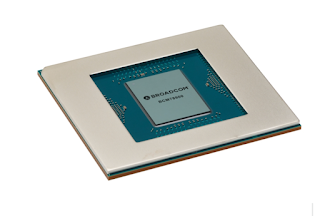
Broadcom reports Q4 revenue of$8.9 billion, infrastructure silicon remains strong

Broadcom reported Q4 revenue of $8.930 billion, up 21% from $7.407 billion for the same period a year earlier. Earnings per common share - diluted amounted to $7.83, compared with $4.45 a year earlier.

  •  Semiconductor solution sales amounted to $7.092 billlion compared with $5.634 billion a year earlier
  • Infrastructure software sales amounted to $1.838 billion compared with $1.773 billion a year earlier

"Broadcom's fiscal year 2022 revenue grew 21% year-over-year to a record $33.2 billion, as a result of strong demand from hyperscale, service providers, and enterprise," said Hock Tan, President and CEO of Broadcom Inc. "This growth was driven by our strong partnerships with customers and accelerated adoption of our next generation technologies. As we look into fiscal 2023, our increased R&D investments during the preceding years position us to extend our leadership in next generation products within the end markets we address."

"In fiscal 2022 we achieved record adjusted EBITDA margin of 63%, generating $16.3 billion in free cash flow or 49% of revenue, demonstrating our stable and focused business model," said Kirsten Spears, CFO of Broadcom Inc. "Consistent with our commitment to return cash to shareholders, we will resume our authorized share repurchase programs for the remaining $13 billion, and we are increasing our quarterly common stock dividend by 12 percent to $4.60 per share for fiscal year 2023. The target fiscal 2023 annual common stock dividend of $18.40 per share is a record, and the twelfth consecutive increase in annual dividends since we initiated dividends in fiscal 2011."

Cash from operations of $4,583 million for the fourth quarter, less capital expenditures of $122 million, resulted in $4,461 million of free cash flow, or 50 percent of revenue.

https://investors.broadcom.com/news-releases/news-release-details/broadcom-inc-announces-fourth-quarter-and-fiscal-year-2022