Wednesday, November 2, 2022

Co-Packaged Optics (CPO) and Pluggable Summit debate

The future of data center network architecture was the key theme at last week's Co-Packaged and Pluggable Optics Industry Summit, an invite-only event presented by Optica and the Consortium for On-Board Optics (COBO) will host the  at the DuPont Silicon Valley Technology and Innovation Center.

Debate centered on the pros/cons of scaling today switching architecture based on pluggable optical transceivers versus future designs designs with co-packaged optics alongside the switching silicon.

Google: The pluggable design factor for hyperscale data center switches is working well and there is a roadmap to scale for several more generations, said Hong Liu, Google Fellow. Her presentation cited the potential of pluggable interfaces as high as 3.2T OSFP-XD and future 102.4T switch designs. Rather than CPO interfaces on switching silicon, future data center networks could scale using Optical Circuit Switching using MEMS mirror arrays. CPO inside pluggable optical transceiver is beneficial, such as integrating DSPs with TIAs.


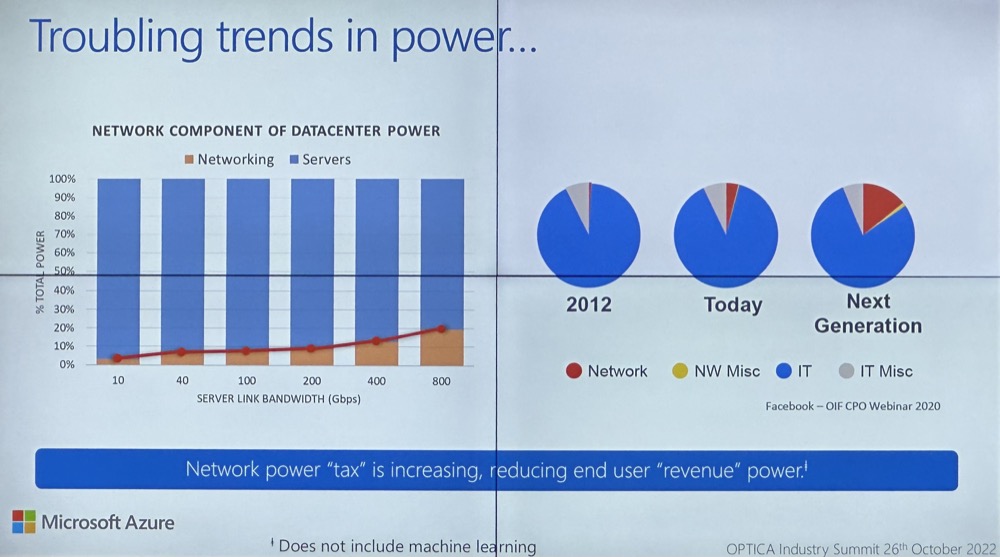
Speaking on behalf of Microsoft, Moray McLauren made the case that package-level optical integration (CPO) is needed to (1) address the rising power requirements in data centers ("network power tax is increasing, reducing end user revenue power"), (2) extend radix reach (3) lower component costs (4) drive AI/ML and HPC applications


Meta's Katharine Schmidtke, Director of ASIC and Custom Silicon Sourcing, also presented the case for optical interconnects in AI/ML hardware. As compute fabrics adopt a cluster architecture, the network fabric has to scale. Compared with existing optical modules, CPO promises to significantly reduce the power demands of the new computing clusters.

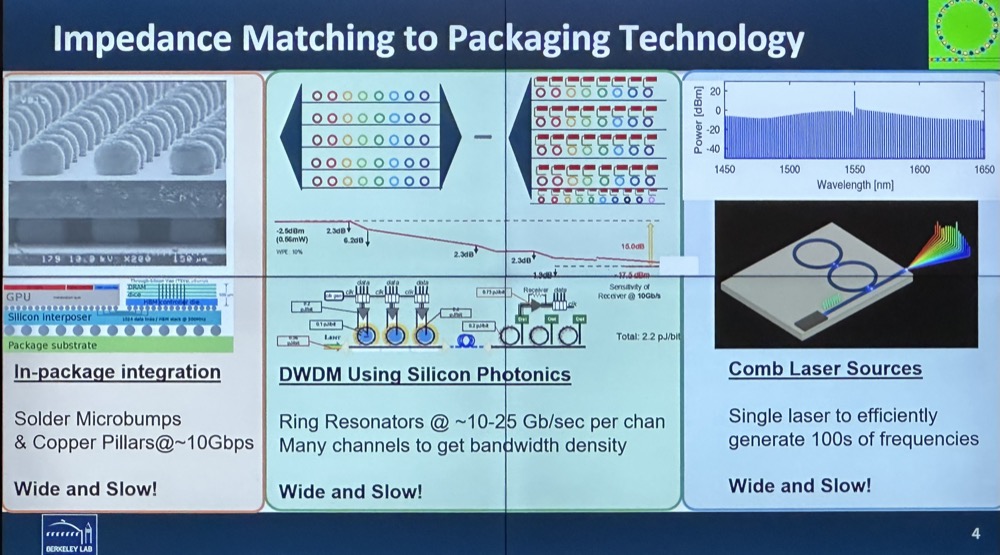
Power savings in the network can be achieved in other ways, said John Shalf, Lawrence Berkeley National Laboratory.  Think wide and slow! This applies to innovations in (1) in-package integration, (2) DWDM using Silicon Photonics (ring resonators) (3) new comb laser sources capable of generating 100s of frequencies
NVIDIA is moving forward with its own NVLink over optics approach to solve the scaling problem, said Craig Thomson. 


Jeff Maki, Distinguished Engineer at Juniper Networks and Board Member of COBO, presented a taxonomy of 400G and 800G interfaces. 

Arista's Andy Bechtolscheim presented the strongest case that pluggables are the best solution for Ethernet data center switching and that CPO switches fall short in time-to-market, standardization, break out connectors and a host of other issues.  Potential applications for CPO might include copackaging with DSPs inside pluggable modules at 224G and non-Ethernet uses cases such as AI chips.


Pluggable optics remains a feasible and dominant use case for the next generation of switching said Cisco's Anthony Torza.

It is all about system level power, said Infinera's Dave Welch. Through its vertical integration, Infinera already offers a 400G ZR+ pluggable module with a 1600km range. For intra data center range, innovations such as the microLED technology developed by Avicena promise very significant power improvements with integration in CMOS.


Marvell's Radha Nagarajan offered some thoughts on heterogeneous integration including improved modulation that puts us on the path to 3.2T. 


Video perspective on the Pluggables and CPO Debate

https://youtu.be/wVAKhSgQX8k

Here is an overview of the first Co-Packaged Optics (CPO) and Pluggables Summit presented by Optica and the Consortium for On-board Optics (COBO). The event was help 26-26-October-2022 at the DuPont Silicon Valley Innovation Center.

Perspectives from:

0:00 Jose Pozo, CTO, Optica

2:00 Jake Joo, Site Leader & Sr. Technology Manager, DuPont Silicon Valley Innovation Center

2:58 Tiger Ninomiya, Sr. Technologist, SENKO Advanced Components

3:46 John Wasserbauer, CEO, MicroGlass

4:50 Jimena Garcia-Romeu, CEO, Alcyon Photonics

5:18 Sanjay Gangadhara, Senior Technologist, Ansys

6:00 Patrick Heissler, Director of Business Development, SUSS Microoptics


Kyocera's on-board optics module offers 16x32Gbps

Kyocera has developed an On-Board Optics Module that achieves an overall bandwidth of 512 Gbps (16 channels of 32 Gbps/channel). 

Kyocera’s prototype module is miniaturized for installation on a printed circuit board near the processor. The company says its module achieves unprecedented improvements in signal-to-noise ratio, virtually eliminating the signal loss caused by conventional electrical conductors. 

Kyocera’s module  uses a Low-Temperature Co-fired Ceramic (LTCC) mounting substrate developed by Kyocera, which offers exceptional material characteristics, such as fine wiring, low dielectric constant, multilayering, and thermal conductivity.

https://global.kyocera.com/newsroom/news/2022/000650.html


Kyocera develops GaN laser chip on silicon substrate

Kyocera has developed a new thin-film process technology for making  silicon (Si) substrates for gallium nitride (GaN)-based micro-light sources, including short-cavity lasers and micro-LEDs.

GaN-based light-source devices, both micro-LED and laser, have typically been fabricated on sapphire and GaN substrates. Conventional processes involve forming a thin GaN device layer for the light source directly onto the sapphire substrate by heating it to a high temperature (1,000 degrees C or more) in a controlled gas atmosphere. The device layer has to be then removed, or "peeled," from the substrate to create a GaN-based micro-light-source device. 

Kyocera plans to offer a range of platform, substrate, and process technologies to bring high-quality, low-cost micro-light sources to market in the near future. 

https://global.kyocera.com/newsroom/news/2022/000652.html

Lumen to sell its EMEA business to Colt for $1.8B

Colt Technology Services (Colt) agreed to acquire Lumen's Europe, Middle East and Africa (EMEA) business for $1.8 billion.  The deal extends Colt's network into additional countries, European cities, and data centers.

The transaction represents a multiple of ~11x for Lumen's EMEA business. Lumen will continue to serve multinational enterprise customers through a strategic partnership with Colt.

"We are continuing to execute on portfolio optimization at Lumen, creating additional value for our shareholders by monetizing non-strategic assets at accretive multiples," said Lumen President and CEO Jeff Storey. "This transaction would enhance our focus so we can invest more efficiently in our most strategic opportunities – our key Enterprise and Quantum Fiber initiatives – and partner with regional leaders like Colt in Europe and Cirion in Latin America to continue serving our multinational enterprise customers."

"This transaction would mark the next chapter in Colt's exciting story of global growth and world-class innovation," said Keri Gilder, CEO, Colt Technology Services. "We're deeply committed to building extraordinary connections for our people, customers and partners across our digital infrastructure. This acquisition would strengthen and extend these connections across existing and new geographies, helping us to accelerate growth and bring the power of the digital universe closer to our customers."

https://www.colt.net/resources/lumen-enters-into-agreement-regarding-divestiture-of-emea-business-to-colt-technology-services-for-1-8b/

Lightpath builds high-fiber-count Miami network

Lightpath disclosed plans to build a high-fiber0count fiber network in Miami. 

Lightpath's entry into Miami will kick off with a 55-mile subterranean network of new, high-count fiber in early 2023. All together, the company is planning 135 route miles.

The Miami Central Business District (CBD) network will be customer-ready in January 2023, while two rings to the north and west of the CBD will come online in April 2023. 

During the initial rollout of the Miami network, customers will have access to area data centers at 15 NE 9th Street and 36 NE 2nd Street, with six additional area data centers coming online throughout the year. These initial data centers will also provide direct connect services to Cloud providers, connections for Lightpath long haul services, as well as connectivity options for Southern Florida cable landing stations. 

https://lightpathfiber.com/

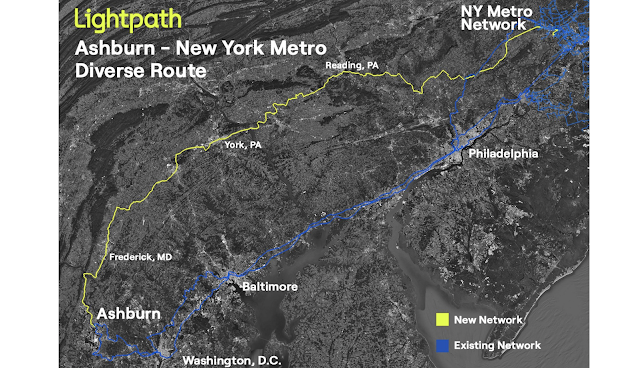
Lightpath activates diverse route between Ashburn and NY Metro

Lightpath announced a new regional long-haul route cbetween the data center epicenter of Ashburn, Virginia, and the New York Metro area. This 300-mile route is geographically diverse from existing Lightpath routes between New York and Ashburn. Lightpath will offer flexible bandwidth options along the route up to 800 Gbps optical transport. In addition, customers can directly connect to major cloud providers in the Ashburn area, as well as critical...

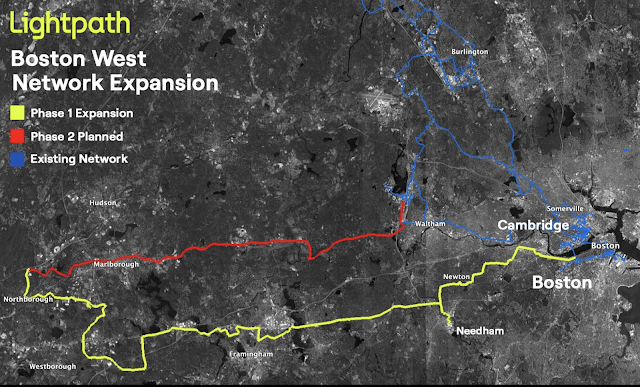
Lightpath expands fiber footprint west of Boston

 Lightpath announced a 75-mile expansion of its all-fiber network west of its Boston metro footprint, bringing the total size of the Lightpath network in the Boston metropolitan area to more than 200 route miles.The Boston West expansion includes over 75 miles of new, high-count fiber along the I-90 corridor between Boston and Marlborough, planned in two phases. Phase 1 of the build (in yellow on map) will be completed later in 2022, while the...

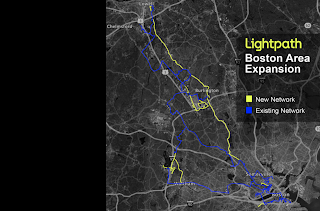
Lightpath expands its fiber footprint across Boston region

Lightpath announced a 50-mile expansion of its all-fiber network in the Boston region, following the company's entrance into the market via multiple acquisitions in June. The additional 50 route miles of network brings the total route miles in the Boston metropolitan area to over 130.The network expansion is focused on the five key areas of Boston, Waltham, Bedford, Burlington, and Lowell, MA, and is designed to enable access to additional, strategic...

Infinera reports Q3 revenue of $390 million, up 9% yoy

Infinera reported Q3 GAAP revenue of $390.4 million compared to $358.0 million in the second quarter of 2022 and $355.8 million in the third quarter of 2021. GAAP gross margin for the quarter was 34.4% compared to 30.5% in the second quarter of 2022 and 33.2% in the third quarter of 2021. Non-GAAP net income for the quarter was $9.9 million, or $0.05 per share, compared to net loss of $(10.1) million, or $(0.05) per share, in the second quarter of 2022, and net loss of $(3.0) million, or $(0.01) per share, in the third quarter of 2021.

Infinera CEO David Heard said, “The third quarter was a strong quarter for us. We once again exceeded consensus expectations for both revenue and non-GAAP operating margin. On a year-over-year basis, we grew product revenue by 17% and total company revenue by 9%, and more than doubled operating profit, while generating free cash flow and strengthening our balance sheet. Further, we set another record in the quarter for ICE6 revenue and achieved additional key milestones with the field performance of our new pluggable products. Our results and progress were made against the backdrop of ongoing supply chain challenges, including the impact of elevated costs on our financial results.”

“Our investment thesis is sound, and we remain focused on the things we can control to grow market share and drive results to our target business model. We look forward to closing out 2022 on a strong note and building on our momentum in 2023 as we continue to deliver on our long-term growth and profitability objectives.”

https://investors.infinera.com/events-and-presentations/default.aspx

Kyndryl's revenues dip to $4.2 billion, focus is on alliances

Kyndryl reported revenues of $4.2 billion, a year-over-year decline of 9%, or growth of 1% in constant currency. Compared to prior-year pro forma revenues, revenues declined 8%, but increased 2% in constant currency. The company reported a pretax loss of $219 million and a net loss of $281 million, or $1.24 per diluted share, in the quarter, compared to a net loss of $690 million in the prior-year period. 

“Our solid execution and enhanced customer engagement drove strong revenue results in the September quarter. Excluding external factors such as currency headwinds and higher energy costs, our adjusted earnings were consistent with our June quarter earnings,” said Kyndryl Chief Financial Officer David Wyshner. “We’re confident we have the right strategy in place, and we’re on track to achieve our medium-term goals, including top-line growth in calendar 2025 and meaningful margin expansion.”

Kyndryl noted that in the first six months of fiscal 2023 itsigned contracts tied to cloud hyperscaler alliances with an aggregate value of more than $425 million, progressing toward its $1 billion hyperscaler signings target for the year. Kyndryl further increased its cloud-related capabilities, with more than 26,000 hyperscaler certifications among its employees at the end of the quarter, a 63% increase since the beginning of the calendar year.

https://investors.kyndryl.com/events-and-presentations/events/

Tuesday, November 1, 2022

FCC considers opening 12.7 GHz band for next-gen wireless

The FCC will launch a proceeding to explore repurposing up to 550 megahertz in the 12.7 to 13.25 GHz band (12.7 GHz band) for next-generation wireless services.  

The FCC expects that this inquiry is the first step in providing for more intensive use of the 12.7 GHz band, unlocking a significant expanse of valuable mid-band frequencies that may play a key role in delivering on the promise of next-generation wireless services, including 5G, 6G, and beyond.  

The 12.7 GHz band is believed to be ideally suited for mobile broadband use as it is already allocated for terrestrial mobile services on a primary basis domestically.

The Notice of Inquiry seeks information on how the Commission could encourage more efficient and intensive use of the 12.7 GHz band.  

Given existing incumbent operations in the band, the FCC is also seeking comment on whether and how to provide opportunities for new uses while protecting the investments made by incumbents and avoiding disruption to their operations.  

FCC adds $791 million in RDOF funding for broadband

The FCC is ready to authorize $791,604,299 through the Rural Digital Opportunity Fund to six providers to fund new broadband deployments to over 350,000 estimated locations in 19 states.  The top three states receiving funding include Illinois, $212 million, Arizona, $140 million, and Iowa, $113 million. “This funding will connect more households throughout the country with high-speed broadband as part of our ongoing work to close the digital...

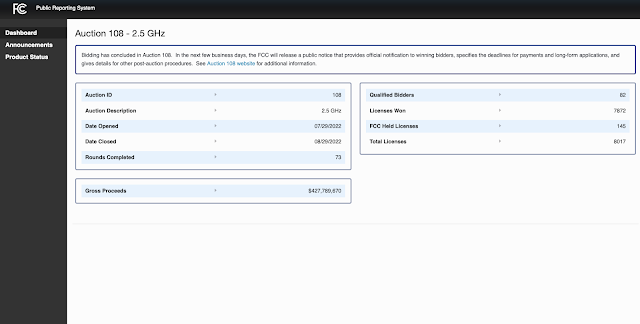
FCC Auction 108 concludes - 2.5 GHz Spectrum

Bidding has concluded in the FCC Auction 108.  Gross proceeds from the bid are expected to amount to $427,789,670.The FCC said it will post full results in the next few days. https://auctiondata.fcc.gov/public/projects/auction108FCC commences 5G mid-band spectrum auctionSunday, July 31, 2022  Auctions, FCC  The FCC opened bidding in its latest mid-band spectrum auction at 10am on Friday, July 29.Auction 108 makes...


Lumen wins $1.5 billion Defense Network contract

The  Defense Information Systems Agency (DISA) awarded a $1.5 billion contract to Lumen to provide essential network transport and communications services in the U.S. Indo-Pacific Command Area of Responsibility.

Lumen will supply the Defense Information Systems Network with high capacity, end-to-end communications services that enable the U.S. Department of Defense to achieve U.S. national security objectives in the 36-nation Asia Pacific region. These crucial services—which include Ethernet, Internet and wavelengths—will help protect America's interests in a diverse, strategically complex region that also includes Alaska. The contract extends over a 10 year period.

"Lumen is extremely proud to serve the U.S. Indo-Pacific Command with essential mission services that help protect and defend U.S. territory, our people and America's national interests," said Zain Ahmed, senior vice president, Lumen public sector. "We're delivering the always-on network infrastructure so the U.S. Department of Defense can focus on its mission to enhance the stability of the Asia Pacific region, promote security cooperation with our allies and partners, respond to emerging situations, deter aggression and if necessary, fight to win."

Dubai looks to Nokia 5G network slicing for smart city use

Nedaa, the security network provider of the Dubai government, will upgrade its telecommunications network across Radio Access Networks (RAN) and core by leveraging 5G technology with Nokia’s technologies. 5G network with end-to-end slicing functionality will help Nedaa deliver improved public safety and smart city services to concerned organizations and citizens, as well as lay the foundations for more advanced services such as metaverse. 

Nedaa’s network already utilizes Nokia’s infrastructure and can support many of the requirements for mission-critical networks. 

The MoU sets a framework for upgrading the existing network capabilities and introducing agile and advanced services to government organizations based on secure and reliable networks. One of the key elements is 5G network slicing which will help Nedaa provide segment-related solutions for different industries, including oil and gas, transport and other government organizations. The MoU also lays the foundation for identifying the most appropriate 5G use cases for capturing new opportunities and monetization. 

Nokia will also carry out a technology competence development program covering training and knowledge transfer to Nedaa employees. Nokia will expand its state-of-the-art Integrated Operations Center (IOC) as the integration and enablement layer for all 5G use cases, including Industry 4.0, smart city and public safety applications with a path to future services such as metaverse and more.

A10 Networks sees Q3 revenue rise 10% yoy, margins at 80%

A10 Networks reported Q3 revenue of $72.1 million, up 10.2% year-over-year. GAAP gross margin was 79.5%; non-GAAP gross margin of 80.2% as a result of better product mix and continued successful navigation of short-term input cost pressures. Non-GAAP net income of $15.9 million, or $0.20 per diluted share, compared with non-GAAP net income of $13.7 million, or $0.17 per diluted share in the third quarter of 2021.

A10 said revenue growth was broad-based, with increases in North America, APJ, EMEA and Latin America, and from both Enterprise and Service Provider customers. Enterprise sales grew 17%, and Service Provider sales grew 6%, demonstrating strong revenue diversification.

“A10 is consistently achieving revenue and EPS targets despite a variety of macro headwinds in all regions,” said Dhrupad Trivedi, President and Chief Executive Officer of A10 Networks. “This demonstrates robust demand for our proprietary security-led solutions, disciplined execution, and a focus on diversification that drives sustainability. We have positioned our business to avoid concentration in any single geography, any specific customer type, or any isolated product offering, and this diversification enables consistent execution despite economic, supply chain, and geopolitical challenges. Customer-centric technical innovation, global commercial execution and focus on driving the business model are bolstering our sustainability and driving continued success.”

https://investors.a10networks.com/overview/default.aspx

A new Internet Exchange opens in Bangkok

HGC Global Communications, AMS-IX (Amsterdam Internet Exchange), and International Gateway Company Limited (IGC), a neutral regional telecommunication and network service provider, collaborated to launch a new IX, AMS-IX Bangkok, in Thailand as part of AMS-IX strategy to implement IX's in various key locations in Asia.

The new Internet Exchange located at Bangkok, which is the hub and gateway of the Greater Mekong Subregion (GMS), will improve the quality of Internet connections of companies such as content providers, gaming, OTTs, cloud service providers and internet service providers and aims to build a thriving digital community.

HGC also partners with AMS-IX in Singapore, Hong Kong, Bay Area and Chicago. HGC will continue to serve as a commercial partner and marketing arm for AMS-IX Bangkok, while IGC provides IX infrastructure, network, and operation in Bangkok. AMS-IX, with their expertise on peering and network monitoring, will give technical support and has operational management of the exchange.

"Being an early entrant into the Thailand market, we feel honored to gain penetration into the Greater Mekong Subregion with our renowned partner - AMS-IX. This is a rite of passage for the enhancement of the HGC edgeX brand to be positioned as a premium leader in engaging the internet exchange business to contribute to a better interconnection ecosystem which is dependent on the fast development of digital transformation. We hope to have promoted access to a digitalized world by localizing traffic in this growing market.", said, Mr. Chirawat Mahawat, Vice President Greater Mekong Subregion of HGC.


New Semiconductor Climate Consortium gets underway

More that 60 companies have come together to form a new Semiconductor Climate Consortium (SCC) to accelerate the ecosystem’s reduction of greenhouse gas emissions.

The consortium’s members are committed to working toward the following pillars and objectives:

  • Collaboration – Align on common approaches, technology innovations and communications channels to continuously reduce greenhouse gas emissions.
  • Transparency – Publicly report progress and Scope 1, 2 and 3 emissions annually.
  • Ambition – Set near- and long-term decarbonization targets with the aim of reaching net zero emissions by 2050.

Founding members have affirmed their support of the Paris Agreement and related accords driving the 1.5⁰C pathway and are aligned on the need to drive climate progress within the semiconductor value chain. The SCC was conceptualized by companies meeting under the SEMI Sustainability Initiative, which will continue to focus on non-climate related Environment, Social and Governance (ESG) issues. 

“I applaud all Semiconductor Climate Consortium founding members for their leadership in this critical initiative and for their continued support of global sustainability efforts,” said Ajit Manocha, SEMI president and CEO. “While individual companies have taken significant steps to decarbonize, the industry must band together to develop green solutions and drive toward net zero. I encourage every company across the value chain to join the SCC and contribute to this crucial mission.”

https://www.semi.org/en/news-media-press-releases/semi-press-releases/semi-announces-semiconductor-climate-consortium-founding-members

Auvik appoints Douglas Murray as CEO

Auvik, a start-up offering cloud-based network management software, has appointed Douglas Murray as Chief Executive Officer. Murray succeeds Marc Morin, who founded Auvik alongside Alex Hoff and David Yach in 2011 and has served as the company’s CEO since inception. Morin will continue to be an active member of Auvik’s Board of Directors.

Murray most recently served as CEO of Valtix, a leading platform for multi-cloud network security.  Murray also brings experience from his seven years as CEO of SDN pioneer Big Switch Networks, which was acquired by Arista Networks in 2020. Additionally, as senior vice president and general manager at Juniper Networks, Murray led its USD $1 billion business across the APJC region — driving customer engagement, sales development, strategic planning and revenue growth.

“I am thrilled to join Auvik during a time with so much opportunity. It is clear that the team is aligned with its 3,500 customers to provide unrivaled, easy to use solutions,” said Murray. “The company has already seen success following its growth investment from Great Hill Partners and, with its most recent acquisitions, Auvik is poised to take the company to the next level. My thanks to Marc for leading Auvik from incubation to scale over the last decade.”

“As a co-founder, I will always be Auvik’s biggest champion and I could not think of a better person than Doug to lead the company through its next phase of explosive growth,” said Morin. “His extensive industry experience, specifically in the multi-cloud Software Defined Networking and network observability space, is exactly what Auvik needs to push forward into its next chapter and become the ultimate network management platform. I have no doubt that Auvik will experience tremendous growth and accelerated innovation with Doug at the helm.”

https://www.auvik.com/

Monday, October 31, 2022

Malaysia's mobile operators agree to share national 5G infrastructure

Four mobile operators – Celcom Axiata Bhd, Digi Telecommunications Sdn Bhd, YTL Communications Sdn Bhd (YES), and Telekom Malaysia Bhd (TM – agreed to take up equity stakes in Malaysials Digital Nasional Berhad (DNB). 

The deal paves the way for DNB to accelerate deployment of the 5G network and infrastructure, with a target of 80% coverage of populated areas by 2024.

Together, the four operators will hold 65% equity in DNB, with their respective stakes as follows: Celcom Axiata (12.5%), Digi Telecommunications (12.5%), YTL Communications (20%), TM (20%). The Government of Malaysia will retain the other 35% and hold a Golden Share, which carries various rights and privileges and covers areas such as ownership, sale, or transfer of shares on the part of the Government. 

The 12.5% shareholding each for Celcom Axiata and Digi Telecommunications is in recognition of their imminent merger. Under the terms of the SSA and the agreed governance structure between the parties, no single MNO can hold more than a 20% shareholding in DNB, and in the event of a merger between the MNOs, the merged entity cannot hold more than a 25% shareholding in DNB.

This marks a positive development following extensive discussions between the MNOs and DNB. It is anticipated that the MNOs will make 5G services available to their end users from October 2022 onwards. 

“I am pleased that the MNOs have taken up the equity offered by the Government and have executed their SSAs with DNB. All parties will now work towards completing the conditions precedent in the SSAs, including executing the Access Agreements as soon as possible. I expect that all parties will make every effort to deliver 5G availability to all their Malaysian and global ‘roaming’ customers. The MNOs, in particular, have a crucial role to play in ensuring the accelerated adoption of 5G among end users. Over the longer term, they will be responsible for bringing to market a host of new 5G-enabled products and services which will have a positive impact on many businesses, be it small, medium or large, as well as Government,” said DNB Chairman, Yang Berbahagia Datuk Seri Asri Hamidon.

"As of today, the 5G network has achieved 33% coverage of populated areas as against a target of approximately 40% by end-2022. The testing and integration of 5G sites by the MNOs have progressed well and I believe they are ready to provide 5G services to end-users located in areas where 5G infrastructure is currently available. In addition, the local 5G ecosystem has grown rapidly, with 12 device brands now offering more than 100 5G-compatible models for use in Malaysia. As such, we are encouraged by the establishment of the infrastructure to facilitate the rapid adoption of 5G by the Rakyat, businesses, and Government,” Datuk Seri Asri added. 

https://www.digital-nasional.com.my/mobile-network-operators-execute-share-subscription-agreements-digital-nasional-berhad-0

Telekom Malaysia to provide fiber to DNB for nationwide 5G

Telekom Malaysia Berhad (TM) signed a Fibre Leasing Service agreement with Digital Nasional Berhad (DNB) to speed up the deployment of the government-owned 5G network nationwide.

DNB will be able to leverage on TM’s extensive fibre and network infrastructure, and subscribe to TM’s 5G RAN-to-Edge Fronthaul and Backhaul solution for the provision of fibre connectivity, enabling DNB to provide 5G network services nationwide.

Under the agreement, TM will provide DNB with 5G fibre leasing services for connectivity between DNB’s 5G mobile sites and nodes, leveraging on TM’s domestic fibre cable network spanning over 640,000 km across Malaysia. Prior to this, TM along with other fibre providers in Malaysia had participated in the 5G Fiber Leasing Request for Quotation (RFQ) exercise conducted by DNB in June 2021.

The term sheet agreement with a total contract value of RM2 billion over 10 years was duly signed by Imri Mokhtar, Group Chief Executive Officer of TM and Amar Huzaimi Md Deris, Executive Vice President, TM Wholesale while DNB was represented by Augustus Ralph Marshall, Chief Executive Officer and Dushyanthan Vaithiyanathan, Chief Operating Officer.

https://www.tm.com.my/Newsroom/Pages/TM-INKS-AGREEMENT-WITH-DNB-TO-PROVIDE-FIBRE-CONNECTIVITY-IN-ACCELERATING-ROLLOUT-OF-5G-NETWORK-SERVICES-NATIONWIDE.aspx

Arista posts record revenue of $1.2 billion, up 57% yoy

Arista Networks reported Q3 revenue of $1.177 billion, an increase of 11.9% compared to the second quarter of 2022, and an increase of 57.2% from the third quarter of 2021. GAAP gross margin was 60.3%, compared to GAAP gross margin of 61.2% in the second quarter of 2022 and 63.9% in the third quarter of 2021. Non-GAAP net income was $391.9 million, or $1.25 per diluted share, compared to non-GAAP net income of $236.9 million, or $0.74 per diluted share in the third quarter of 2021.

“Arista continues to outpace our networking peers with record revenue in Q3 2022,” said Jayshree Ullal, President and CEO of Arista Networks. “Clearly, we are entering the next phase of Arista’s evolution in products, customer intimacy and new market expansion.”

  • Supply chain issues remained a factor.
  • International sales represented of 17% revenue, with Americas at 83%
  • Cloud titans was the largest vertical, followed enterprises.
  • Cloud titan partnerships grew stronger. Microsoft and Meta are continuing with their 400G journeys.


https://investors.arista.com/Events/Events/Event-Details/2022/Arista-Networks-Q3-2022-Earnings-Conference-Call--Webcast/default.aspx

Arista delivers its next-gen Cloud Routing

Arista Networks is releasing the next iteration of its cloud-grade routing platform, which was first introduced six years ago. It is based on cloud principles of scale-out architectures, standards-based protocols, and software-driven control. Highlights of the announcement:For enterprises, Arista advances the enterprise edge by securing data-in-transit over high speed links with "TunnelSec" technology, providing in-line encryption at wire rate from...


Far North Fiber advances plans for arctic cable from Europe to Asia

Far North Fiber, an international consortium consisting of  Finland’s Cinia Oy, Alaska’s Far North Digital and Japan’s ARTERIA Networks Corporation, is moving ahead with plans for a 17,000 km Trans-Arctic Fiber cable connecting Japan, North America, and Ireland and Scandinavia.

Far North Fiber estimates the system will be ready for service by the end of 2026. 

Alcatel Submarine Networks (ASN) has been selected to build and install the submarine cable and equipment required for this project.

“Far North Fiber will be the first multicontinental cable system through the Arctic. It provides a backbone that offers enhanced opportunities for economic development, international security, and a greener footprint for the buildout of global digital infrastructure,” says Ari-Jussi Knaapila, CEO of Cinia.

Koji Kabumoto, Representative Director, President & CEO of ARTERIA, commented: " The FNF is to build a network that directly connects Europe and Asia with low latency through the Northwest Passage, and Japan will serve as the gateway to Asia. It is our pleasure to be involved in this journey, as the project is expected to contribute the development of digital societies in Japan and Asia in a wide range of fields, including industry, academia, and culture."

https://www.cinia.fi/en/news/development-corporation-formed-for-trans-artic-fiber-cable-connecting-europe-to-asia

Cinia and Far North Digital plan subsea cable across Arctic

Finland-based Cinia announced a joint effor with Far North Digital, a start-up based in Anchorage, to build a fiber optic cable system linking Europe and Asia through the Arctic. Alcatel Submarine Networks will take the lead on project design and installation.The planned, 14,000km cable system will run from Japan, via the Northwest Passage, to Europe with landings in Alaska and the Canadian Arctic. European landings are planned in Norway, Finland...

Cinia Plans Terabit-class Cable from Finland to Germany with ALU

Cinia Group (previously Corenet), a Finnish Government-owned venture, has selected Alcatel-Lucent to deploy a terabit-class undersea cable system linking Finland and Germany. The project, named Sea Lion, calls for the deployment of a new 100G system that will span more than 1,100 km from Helsinki in Finland, to the Rostock-Ribnitz area in Germany. It will have a design capacity of 15 Terabits per second (Tbps) and is expected to enter service in...

Arctic Connect cable to link Norway and Japan

A new Arctic Connect Submarine Cable (ACSC) project is being planned to connect Kirkenes, Norway and Tokyo, Japan, through the Arctic Ocean and Northern Pacific Ocean.  The system will have its European cable landing stations in Northern Norway and Finland, with connections further southwards through Finland, Norway, Sweden, and Denmark extending to the rest of Europe. The cable system has options for additional landings in Japan and in North...