Showing posts with label Malaysia. Show all posts

Wednesday, November 30, 2022

Equinix to build data center in Johor, Malaysia

Equinix unveiled plans to invest approximately $40 million in a new data center located in JOHOR, Malaysia.

The new facility, named JH1, is scheduled to begin operations in Q1 2024, providing 500 cabinets and 1,960 square meters of colocation space. 

The two-story facility will be located at Nusajaya Tech Park (NTP) in Iskandar, Johor. It is 15 kilometers from Singapore, allowing the data center to address excess demand from organizations in the city-state in addition to Malaysian domestic demand.

Equinix also has the option of acquiring additional land in NTP to build a second facility, supporting Malaysia's digital growth aspirations. Companies and multinationals doing business in Malaysia will be able to access Platform Equinix to store and distribute large volumes of latency-sensitive data and applications closer to end users and local markets.

When opened, the new IBX data center in Johor will increase Equinix's total global footprint of more than 245 data centers across 71 metros and 32 countries, providing Equinix's 10,000+ customers more ways to securely deploy, directly connect and effectively scale their digital infrastructure in a rapidly growing economy. It is expected to also present opportunities for further expansion into new metros and market segments in Malaysia.

In Asia-Pacific, Equinix currently has 51 data centers across 13 metros across Australia, China, Hong Kong, India, Japan, Korea and Singapore. In addition, Equinix also announced expansions into Chennai in India, and Jakarta in Indonesia in 2022, strengthening its market leadership in the region.

https://www.equinix.com/newsroom/press-releases/2022/11/equinix-enters-malaysia-with-40m-data-center-investment

Tuesday, November 22, 2022

DigitalBridge extends data center strategy in southeast Asia

DigitalBridge Group has acquired an ownership stake in AIMS Group, a leading operator of highly-connected ecosystem-centric data centers based in Malaysia. The company's Kuala Lumpur flagship Menara AIMS facility anchors the Malaysia Internet Exchange (MYIX). AIMS’ facilities provide highly inter-connected environments to a diverse customer base, comprising domestic and international telecommunications carriers, major enterprises, hyperscalers and content distribution networks. AIMS also operates a state-of-the-art purpose-built data center campus in Cyberjaya and a new facility in downtown Bangkok.

The investment stake was acquired from TIME dotCom Berhad by funds affiliated with DigitalBridge Investment Management. The transaction, which is subject to customary closing conditions, is expected to close in 2023.

Digital Bridge also announced the formation of an edge data center platform focused on the high-growth markets of the Southeast Asia region.

“DigitalBridge’s expertise in investing, building, and operating data centers to the highest standards aligns perfectly with AIMS’ next stage of development,” said Justin Chang, Managing Director and Head of Asia for DigitalBridge. “AIMS is a leading operator in the region poised for significant growth, with a strong management team, a robust development pipeline and considerable expansion capacity. This is a terrific platform for DigitalBridge, and we are excited to partner with TDC, which has a long heritage of building connectivity-linked businesses across Southeast Asia.”

https://www.digitalbridge.com/news/2022-11-22-digitalbridge-announces-formation-of-edge-data-center-platform-in-asia-and-acquisition-of-a-stake-in-aims-group

DigitalBridge form Xenith Infrastructure Group for HKG and Singapore

DigitalBridge Group and funds affiliated with Columbia Capital have formed Xenith Infrastructure Group, a new fiber platform serving hyperscalers, data center operators, carriers and enterprises in the Asia-Pacific regionXenith IG’s initial assets comprise conduit and fiber assets in Singapore and Hong Kong, which it acquired from Superloop.Xenith IG will be led by Clement Goh, who was appointed Chief Executive Officer, effective August 1, 2022....

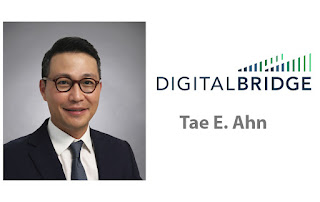
DigitalBridge appoints Tae Ahn as MD of Asia Capital Formation 

DigitalBridge Group appointed Tae E. Ahn as Managing Director and Head of Asia Capital Formation at DigitalBridge Investment Management. Based in Singapore, he will work alongside DigitalBridge’s existing team with a focus on capital formation, coinvestment and client relationship management across Asia-Pacific.Prior to joining DigitalBridge, he served as Senior Client Relationship Manager and Head of Korea at global private markets firm Partners...


Monday, October 31, 2022

Malaysia's mobile operators agree to share national 5G infrastructure

Four mobile operators – Celcom Axiata Bhd, Digi Telecommunications Sdn Bhd, YTL Communications Sdn Bhd (YES), and Telekom Malaysia Bhd (TM – agreed to take up equity stakes in Malaysials Digital Nasional Berhad (DNB). 

The deal paves the way for DNB to accelerate deployment of the 5G network and infrastructure, with a target of 80% coverage of populated areas by 2024.

Together, the four operators will hold 65% equity in DNB, with their respective stakes as follows: Celcom Axiata (12.5%), Digi Telecommunications (12.5%), YTL Communications (20%), TM (20%). The Government of Malaysia will retain the other 35% and hold a Golden Share, which carries various rights and privileges and covers areas such as ownership, sale, or transfer of shares on the part of the Government. 

The 12.5% shareholding each for Celcom Axiata and Digi Telecommunications is in recognition of their imminent merger. Under the terms of the SSA and the agreed governance structure between the parties, no single MNO can hold more than a 20% shareholding in DNB, and in the event of a merger between the MNOs, the merged entity cannot hold more than a 25% shareholding in DNB.

This marks a positive development following extensive discussions between the MNOs and DNB. It is anticipated that the MNOs will make 5G services available to their end users from October 2022 onwards. 

“I am pleased that the MNOs have taken up the equity offered by the Government and have executed their SSAs with DNB. All parties will now work towards completing the conditions precedent in the SSAs, including executing the Access Agreements as soon as possible. I expect that all parties will make every effort to deliver 5G availability to all their Malaysian and global ‘roaming’ customers. The MNOs, in particular, have a crucial role to play in ensuring the accelerated adoption of 5G among end users. Over the longer term, they will be responsible for bringing to market a host of new 5G-enabled products and services which will have a positive impact on many businesses, be it small, medium or large, as well as Government,” said DNB Chairman, Yang Berbahagia Datuk Seri Asri Hamidon.

"As of today, the 5G network has achieved 33% coverage of populated areas as against a target of approximately 40% by end-2022. The testing and integration of 5G sites by the MNOs have progressed well and I believe they are ready to provide 5G services to end-users located in areas where 5G infrastructure is currently available. In addition, the local 5G ecosystem has grown rapidly, with 12 device brands now offering more than 100 5G-compatible models for use in Malaysia. As such, we are encouraged by the establishment of the infrastructure to facilitate the rapid adoption of 5G by the Rakyat, businesses, and Government,” Datuk Seri Asri added. 

https://www.digital-nasional.com.my/mobile-network-operators-execute-share-subscription-agreements-digital-nasional-berhad-0

Telekom Malaysia to provide fiber to DNB for nationwide 5G

Telekom Malaysia Berhad (TM) signed a Fibre Leasing Service agreement with Digital Nasional Berhad (DNB) to speed up the deployment of the government-owned 5G network nationwide.

DNB will be able to leverage on TM’s extensive fibre and network infrastructure, and subscribe to TM’s 5G RAN-to-Edge Fronthaul and Backhaul solution for the provision of fibre connectivity, enabling DNB to provide 5G network services nationwide.

Under the agreement, TM will provide DNB with 5G fibre leasing services for connectivity between DNB’s 5G mobile sites and nodes, leveraging on TM’s domestic fibre cable network spanning over 640,000 km across Malaysia. Prior to this, TM along with other fibre providers in Malaysia had participated in the 5G Fiber Leasing Request for Quotation (RFQ) exercise conducted by DNB in June 2021.

The term sheet agreement with a total contract value of RM2 billion over 10 years was duly signed by Imri Mokhtar, Group Chief Executive Officer of TM and Amar Huzaimi Md Deris, Executive Vice President, TM Wholesale while DNB was represented by Augustus Ralph Marshall, Chief Executive Officer and Dushyanthan Vaithiyanathan, Chief Operating Officer.

https://www.tm.com.my/Newsroom/Pages/TM-INKS-AGREEMENT-WITH-DNB-TO-PROVIDE-FIBRE-CONNECTIVITY-IN-ACCELERATING-ROLLOUT-OF-5G-NETWORK-SERVICES-NATIONWIDE.aspx

Thursday, June 16, 2022

Malaysia's MSAR picks Ciena

MSA Resources Sdn Bhd (MSAR), a telecommunications infrastructure provider based in Peninsular Malaysia will deploy Ciena’s 6500, WaveLogic 5 Extreme (WL5e) coherent optics, and Manage, Control and Plan (MCP) domain controller to reach data transmission speeds of 800 Gbps line rate and total network capacity of 33.6Tb/s per fiber pair.

MSAR is currently building a new fibre optic network from Johor Bahru to Bukit Kayu Hitam with connectivity to all major data centre hubs in Kuala Lumpur, Cyberjaya, Nusajaya and Johor Bahru. This network will complement its existing network which offers connectivity to all major data centres in Singapore. The target RFS for Johor Bahru to Kuala Lumpur and Cyberjaya is August 2022 with connectivity to Bukit Kayu Hitam to follow by end of 2022.

“Ciena’s coherent optical technology will bring unparalleled capacity, enabling the fastest transfer of data across the network. The Digital Super Highway Network will serve as a platform for the adoption of future technologies such as the Internet of Things (IoT), smart highways, 5G and more,” said Saiful Husni Samak, Managing Director, MSAR. “We are very confident in our ability to address the needs of global hyperscalers, when our network can easily scale up to 800 Gbps and beyond with Ciena’s technology. We are set to deliver high quality services to cater to the growing demand, not just in Malaysia but also regionally. This game-changing offering will also be attractive to over-the-top players and international carriers.”

CommVerge Solutions serves as integrator on the project. 


Thursday, March 24, 2022

Nokia to supply optical transport for TIME in Malaysia

Nokia has been selected by TIME dotCom (TIME) to deploy an optical network linking data centers and cable landing stations in Malaysia. 

The deployment leverages Nokia’s 1830 PSS platform, PSE-V chipset and 400G multi-haul pluggable optics. The solutions will also offer Nokia next generation iROADM line system capabilities with flexible grid, contentionless, directionless and colorless (CDC-F) optical add-drop and restoration features, which eliminates the need for on-site visits to change wavelength connectivity and simplifies network planning. Built-in Layer 0 GMPLS capability, combined with CDC-F, enables automated traffic restoration and network re-optimization for maximum network uptime and capacity utilization.

https://www.nokia.com/about-us/news/releases/2022/03/24/nokia-selected-by-time-dotcom-to-build-high-resilience-cross-peninsular-optical-network-in-malaysia/

Sunday, December 19, 2021

​Telekom Malaysia to provide fiber to DNB for nationwide 5G infrastructure

Telekom Malaysia Berhad (TM) signed a Fibre Leasing Service agreement with Digital Nasional Berhad (DNB) to speed up the deployment of the government-owned 5G network nationwide.

DNB will be able to leverage on TM’s extensive fibre and network infrastructure, and subscribe to TM’s 5G RAN-to-Edge Fronthaul and Backhaul solution for the provision of fibre connectivity, enabling DNB to provide 5G network services nationwide.

Under the agreement, TM will provide DNB with 5G fibre leasing services for connectivity between DNB’s 5G mobile sites and nodes, leveraging on TM’s domestic fibre cable network spanning over 640,000 km across Malaysia. Prior to this, TM along with other fibre providers in Malaysia had participated in the 5G Fiber Leasing Request for Quotation (RFQ) exercise conducted by DNB in June 2021.

The term sheet agreement with a total contract value of RM2 billion over 10 years was duly signed by Imri Mokhtar, Group Chief Executive Officer of TM and Amar Huzaimi Md Deris, Executive Vice President, TM Wholesale while DNB was represented by Augustus Ralph Marshall, Chief Executive Officer and Dushyanthan Vaithiyanathan, Chief Operating Officer.

https://www.tm.com.my/Newsroom/Pages/TM-INKS-AGREEMENT-WITH-DNB-TO-PROVIDE-FIBRE-CONNECTIVITY-IN-ACCELERATING-ROLLOUT-OF-5G-NETWORK-SERVICES-NATIONWIDE.aspx

Monday, June 21, 2021

Axiata and Telenor advance their Malaysian venture

Axiata and Telenor successfully completed their previously announced deal to merge Celcom Axiata Berhad (“Celcom”) and Digi (together “MergeCo”).

On a pro forma basis1, MergeCo will serve an estimated 19 million customers with revenue of RM12.4 billion, EBITDA of RM5.7 billion, Profit After Taxation of RM1.9 billion and Free Cash Flow of RM4.0 billion.

Axiata and Telenor will be equal partners with 33.1 percent ownership stake each in MergeCo, and MergeCo will continue to be listed on Bursa Malaysia Securities Berhad (“Bursa”). Targeted to be among the five largest companies listed on Bursa in terms of market capitalisation, MergeCo is valued at a combined pre-synergy equity value of close to RM50 billion3.

The integration planning phase will include further detailed work on synergies and business plan of MergeCo, and initial estimates indicate potential value accretion through cost and capex synergies of around RM8 billion on a net present value basis.

Axiata and Telenor seek to build a new Malaysian Digital Champion

Axiata Group and Telenor Asia are planning to merge the telco operations of Celcom Axiata Berhad (Celcom) and Digi.com Berhad (Digi) into a new Malaysian Digital Champion.

The partners will have equal ownership in the venture estimated at 33.1 percent each. Axiata together with Malaysian institutional funds will own over 51% of the merged company, which will be considered a leading telecommunications service provider in Malaysia in terms of value, revenue and profit, with proforma revenue of about RM12.4 billion, pre-synergy EBITDA of the combined entity at approximately RM5.7 billion, and an estimated 19 million customers. The new company will be named Celcom Digi Berhad and will continue to be listed on Bursa Malaysia.

Chairman of the Axiata Board, Tan Sri Ghazzali Sheikh Abdul Khalid, said: “We are exceedingly pleased to have come this far in discussing the potential merger of our Malaysian operations. The joint creation of a true Malaysian Champion, this merger of Celcom and Digi will see the coming together of the largest mobile operator with the firepower to trigger tremendous opportunities in helping Malaysia leapfrog into the Fourth Industrial Revolution and fulfil our vision of a digitised nation.”

Tuesday, April 20, 2021

Microsoft to build its first datacenter region in Malaysia

Microsoft announced plans to build its data center region in Malaysia to deliver trusted cloud services locally, with world-class data security, privacy, and the ability to store data in-country.

Microsoft's “Bersama Malaysia” (Together with Malaysia) initiative represents "a significant commitment to empowering Malaysia’s inclusive digital economy and advancing the nation’s digital transformation across the private and public sectors." The company aims to deliver training to at least 1 million Malaysians by end of 2023 to help create economic opportunities for people and businesses in the digital era. Finally, Microsoft will help form the MyDigital Alliance Leadership Council to collaborate on cloud-first and digital-native policy recommendations.

YAB Tan Sri Muhyiddin Yassin, Prime Minister of Malaysia said, “As we cement the Microsoft partnership today, I hope this is just the first green shoots of a broader meadow of investments in Malaysia, for Microsoft and other data players. This significant investment from Microsoft further fortifies Malaysia’s position as a potential regional data hub and we stand ever ready to welcome more such partners as we work with our stakeholders to continually improve Malaysia’s value proposition in this big data space.”

“Today’s announcement represents a major milestone for Microsoft in the 28 years we have been operating in Malaysia. We share the Government’s commitment that digital transformation must be inclusive and responsible. As such, we pledge to empower 1 million Malaysians with digital skills, helping them to take advantage of the opportunities this new investment will bring. Building digital infrastructure is fundamental to advancing a nation’s digital economy. The upcoming datacenter region will be a game-changer for Malaysia, enabling the government and businesses to reimagine and transform their operations, to the benefit of all citizens,” said Jean-Philippe Courtois, Executive Vice President and President, Microsoft Global Sales, Marketing and Operations.

https://news.microsoft.com/en-my/2021/04/19/microsoft-announces-plans-to-establish-its-first-datacenter-region-in-malaysia-as-part-of-bersama-malaysia-initiative-to-support-inclusive-economic-growth/

Thursday, April 8, 2021

Axiata and Telenor seek to build a new Malaysian Digital Champion

Axiata Group and Telenor Asia are planning to merge the telco operations of Celcom Axiata Berhad (Celcom) and Digi.com Berhad (Digi) into a new Malaysian Digital Champion.

The partners will have equal ownership in the venture estimated at 33.1 percent each. Axiata together with Malaysian institutional funds will own over 51% of the merged company, which will be considered a leading telecommunications service provider in Malaysia in terms of value, revenue and profit, with proforma revenue of about RM12.4 billion, pre-synergy EBITDA of the combined entity at approximately RM5.7 billion, and an estimated 19 million customers. The new company will be named Celcom Digi Berhad and will continue to be listed on Bursa Malaysia.

Chairman of the Axiata Board, Tan Sri Ghazzali Sheikh Abdul Khalid, said: “We are exceedingly pleased to have come this far in discussing the potential merger of our Malaysian operations. The joint creation of a true Malaysian Champion, this merger of Celcom and Digi will see the coming together of the largest mobile operator with the firepower to trigger tremendous opportunities in helping Malaysia leapfrog into the Fourth Industrial Revolution and fulfil our vision of a digitised nation.”

“As Malaysia charges ahead in new areas of 5G, cybersecurity, Artificial Intelligence and Internet-of-Things, the new entity will be positioned to compete amidst uncertainties and challenges in the post-pandemic world. As we face fierce competition from global internet based services and content providers, our stronger strategic position will allow for better negotiation levers in how we choose to compete and cooperate.”

Axiata’s President & Group Chief Executive Officer, Dato’ Izzaddin Idris, said: “It is no secret that the telecommunications industry continues to face long-term structural headwinds of slower growth, increased operating costs and lower profits. On one hand, we see prices of products and services continue to slide while capital expenditure especially on network, quality coverage and advanced technology continue to rise. Against that, data traffic has doubled every year pre-Covid and expected to accelerate even faster in the new norm. Digital aspirations and the ever-increasing demand for connectivity call for significant investments. In order to stay ahead of the curve, we must strengthen the foundation to offer continuous high-quality broadband, improve 4G connectivity and subsequently, support the acceleration of 5G rollout.”

https://www.axiata.com/investors/ir-presentations/

Tuesday, February 16, 2021

Malaysia's Allo Technology deploys Infinera

Allo Technology Sdn Bhd (Allo), a wholly-owned subsidiary of Tenaga Nasional Berhad (TNB), has deployed Infinera’s GX Series Compact Modular Platform over its nationwide open optical network infrastructure.

Allo’s modernized open optical network enables the advancement of technology and connectivity services in Malaysia by providing the infrastructure needed, including tower fiberization, data center connectivity, and cross-border connectivity to neighboring countries through Allo Carrier Network System (ACNS). Allo supports Malaysia’s digital transformation with its expanded offerings, which include connectivity services for residential and business enterprises.


Infinera said its GX series supports Allo in addressing the coverage and speed gap issues for fixed broadband services in the country. The network deployment delivers terabit capacity on demand in an easy-to-operate, highly compact form factor. The GX Series features coherent 600G technology with a seamlessly upgrade path to 800G capability in the future.

“Allo Carrier Network is the superhighway backbone of Malaysia and we rely on innovative, proven technology and solutions to ensure connectivity across the country,” said Muhammad Mohd Yunos, Chief Technology Officer at Allo. “Infinera’s GX Series is the ideal platform to meet our ICT infrastructure needs in an open optical networking environment.”

“As the industry moves to open networking, operators like Allo are able to seamlessly increase network capacity with deployment of best-of-breed coherent solutions over existing optical infrastructure,” said Nick Walden, Senior Vice President, Worldwide Sales at Infinera. “The GX Series is purpose-built for open optical networks, supporting deployment over virtually any optical line system and boasting a flexible and highly compact form factor for space and power savings.”

https://www.infinera.com/press-release/allo-technologys-nationwide-open-optical-network-leverages-infineras-gx-series

Thursday, February 4, 2021

NTT opens fifth data center in Malaysia

NTT Ltd. inaugurated its fifth data center in Malaysia. The new facility, known as Cyberjaya 5 (CBJ5), is located within NTT Cyberjaya Campus and measures 107,000 square feet. The data center is designed to meet the requirements of hyperscalers and high-end enterprises. It also aims to support the growing digital economy in Malaysia.

CBJ5 has 6.5MW of critical IT load and it boasts a Tier IV1 ready, compact and modular design, to provide clients with a flexible and scalable power, and cooling solution of up to 15kW/rack. In addition, CBJ5 has a cooling wall system that is the first of its kind, offering optimum power efficiency and cost-effective cooling system to support high density hyperscalers as well as heavy corporate users in Malaysia.

“NTT in Malaysia has been successfully operating the Cyberjaya campus data center for over 24 years. Its expansion and growth are testimonies to Malaysia’s success in becoming the regional data center hub in ASEAN. I believe the launch of CBJ5 is timely and it will certainly attract more international investors and enterprises to Malaysia as a business and economic hub due to its strong digitalization efforts and strategic location within Southeast Asia. This will be instrumental in making Malaysia the ‘Heart of Digital ASEAN’ by 2025 as outlined by the Malaysia Digital Economy Corporation (MDEC),” said Hiroshi Oka, Ambassador of Japan to Malaysia.

“NTT places Asia Pacific as a tactical key region, and Malaysia – a strategic hub for the submarine cables operated by NTT such as the new MIST3 cable system, as well as the existing Asia Submarine-cable Express (ASE) and Asia Pacific Gateway (APG). Furthermore, CBJ5 will drive business opportunities in Asia through the upcoming MIST cable system which will link all our large-scale data centers in the region. Our continued commitment to Malaysia will help position NTT as a technologically innovative leader to address the industries of the future,” said Ryuichi Matsuo, Executive Vice President for NTT Ltd.’s Global Data Centers division.

NTT Ltd. said its data center footprint expansion in Malaysia is part of an ongoing growth strategy by NTT’s Global Data Centers division, which operates the third-largest data center platform in the world across 20 countries and regions. Malaysia is one of the prime data center markets in the region due to the abundant availability of resources and favorable government policies concerning data center infrastructure.


Thursday, October 29, 2020

HGC Global Communications signs MoU with CyberSecurity Malaysia

HGC Global Communications Limited (HGC) and CyberSecurity Malaysia, the national cybersecurity specialist and technical agency under the Ministry of Communications and Multimedia Malaysia (KKMM), signed a Memorandum of Understanding (MoU) that provides a framework under which HGC will facilitate its portfolio of critical cybersecurity skillsets to the telecommunications industry whilst fostering increased cybersecurity innovation by enabling CyberSecurity Malaysia to achieve its purpose of overcoming national cyber security challenges and deliver greater ICT benefits to Internet users.

The MoU will cover cybersecurity cooperation in key areas including telecom security, IoT security and threats intelligence. The parties said their exchange of information on telecommunication networks, ICT solutions and cybersecurity can further improve cyberattack readiness and prevention measures.

Ravindran Mahalingam, HGC's SVP of International Business, said: "Cybersecurity is a paramount asset, key to HGC's vision of a connected world. As a global telecommunications service provider, we are committed to promoting sustainable development of technological innovations, keeping cybersecurity at the centre of business solutions. More, cybersecurity is important in a smart city as the infrastructure can be vulnerable and needs to avoid any breaches. HGC is dedicated to support cybersecurity for ICT and network initiatives, ensuring a secure and reliable digital business environment."

Dato' Ts. Dr. Haji Amirudin Bin Abdul Wahab, CyberSecurity Malaysia's Chief Executive Officer, said: "Today, cyber security is a major concern for most industries and the vulnerabilities are rising at an alarming rate; hence IT professionals are in high demand to analyse and overcome these threats. Moreover, these attacks could have been dealt with if those businesses have better cyber resilience. Organizations today are beginning to complement their cybersecurity strategies with cyber resilience. CyberSecurity Malaysia, a national cyber security specialist and technical center under the purview of the Ministry of Communications and Multimedia Malaysia, identifies collaboration as one way to strengthen the cybersecurity ecosystem in Malaysia. "

Thursday, August 20, 2020

NEC to build MIST subsea cable from Singapore to India

Orient Link Pte. Ltd. (OLL) award a contract to NEC to build the MIST Cable System, which will connect Singapore, Malaysia, Myanmar, Thailand and India (Mumbai and Chennai).

MIST will feature a design capacity of more than 216 terabits per second (Tbps). Construction of the nearly 8,100-kilometer optical submarine cable is targeted to be completed by the third quarter of FY2022.

"Globally, India and Southeast Asia are among the world's fastest-growing economies. I am very pleased to announce the launch of MIST, providing a truly connected India to our clients around the world, delivering high-quality, low-latency networks to the people in India as the nation charges forward with its digital transformation roadmap," said Yoshio Sato, CEO, OLL "Not only will MIST respond to the growing demands for inter-DC-connectivity across countries in the Southeast Asia region, but it ultimately allows for OLL to grow its offering and expand into India and beyond. OLL has selected NEC as a supply partner whose extensive experience in expeditiously implementing submarine cable systems will play a key role in our project's success."

"We are honored to be selected as the supplier for MIST together with our local affiliate in India (NEC Technologies India Private Ltd (NECTI)). In recent years, we have been supplying the majority of submarine cables in the region and this project enables NEC to continue contributing to advanced infrastructure for serving growing traffic demands," said Atsushi Kuwahara, General Manager, Submarine Network Division, NEC. "Together with NECTI, we intend to fully capitalize on our regional expertise in Southeast Asia and India to ensure the successful completion of this project."

https://www.nec.com

MIST subsea cable to deliver 240 Tbps from Singapore to India

NTT announced "MIST", a submarine cable between Singapore, Myanmar and India (Mumbai and Chennai) that promises a record 240 Tbps capacity with support for 400 Gbps wavelengths.

MIST will be part of a strategic joint venture for international submarine cables in South East Asia, with Orient Link Pte. Ltd. The cable is expected to be ready for service by June 2022.

MIST will span 11,000 kilometers in length with 12 fiber pairs. Wavelength Selective Switching ROADMs will be used for flexible remote switching of transmission routes to branch units.

NTT Ltd. said it plans to connect the MIST cable landing stations directly to its data centers in Singapore, Myanmar and India using large-capacity fiber which will be owned, built and operated by NTT Ltd. In addition, NTT Ltd. will centrally maintain and operate all the landing stations, aiming to further improve the service quality.


NTT also notes that MIST will connect to other cables in which it holds an interest, including Asia Submarine cable Express (ASE), Asia Pacific Gateway (APG), Pacific Crossing -1(PC-1) and JUPITER cables (under construction).
“Businesses and individuals from all over the world are experiencing the accelerated growth of digital connectivity - and this is especially true within Asia. Globally, India and South East Asia are some of the world’s fastest-growing economies. As digital investment and demand for data capacity continues to increase, providing access to reliable connectivity will remain critical to accelerate economic and social growth. The implementation of MIST will ultimately allow us to work with our clients around the world to build a truly connected future,” states NTT Ltd. Chief Executive Officer, Jason Goodall.

Wednesday, May 22, 2019

Malaysia's U Mobile picks Nokia for Single RAN

U Mobile awarded a three-year contract to Nokia to deploy a Single Radio Access Network (RAN) network as well as microwave and IP-based mobile transport technologies across Malaysia.

U Mobile is a current provider of 3G and 4G mobile services via a combination of its own network and through a RAN sharing agreement.

Specifically, Nokia will deploy a Single RAN Advanced network in greenfield locations across Malaysia, facilitating U Mobile's aggressive network expansion.

The companies will also collaborate on a 5G live network trial later this year.

Woon Ooi Yuen, CTO of U Mobile said: "U Mobile has been aggressively expanding our network across Malaysia in our drive to bring our customers a superior experience. We are delighted to be able to leverage on Nokia's expertise in our network expansion journey. We are of course also looking forward to working with Nokia as part of our Road To 5G Strategy. We have in our plan to conduct several 5G live trials with Nokia later this year for various use cases. Currently, we already have in place Nokia's AirScale base stations which are 5G-ready and hence, ready for trials.''

Thursday, July 26, 2018

Alibaba Cloud opens 2nd availability zone in Malysia

Alibaba Cloud launched its second cloud availability in Malaysia.

The new zone complements Availability Zone A, which was launched last year.

Alibaba Cloud also plans to open the first cloud-based Anti-DDoS Scrubbing Center in Malaysia in August.

“I welcome Alibaba Cloud’s effort to further support and enhance Malaysia’s digital economy. The world moves ever closer towards e-commerce and we see a considerable surge in demand by local industries to participate in this new economy on a global platform. Malaysia is now pushing ahead with efforts to strengthen its infrastructure with a view towards making access to the Internet a basic human right and categorising facilities which enhance access to broadband as a public utility,” said Gobind Singh Deo, Malaysia’s Minister of Communications and Multimedia.

Wednesday, September 20, 2017

NEC Completes "SKR1M" 100Gbps Subsea Cable in Malaysia

NEC completed the construction of the Sistem Kabel Rakyat 1Malaysia (SKR1M) 100 Gbps submarine cable linking Peninsular Malaysia with Sabah and Sarawak.

The project is a Public-Private Partnership (PPP) collaboration between Telekom Malaysia and the Malaysian Government through the Malaysian Communications and Multimedia Commission (MCMC).

The new submarine cable system spans over 3,800 kilometers and has six landings, namely, Kuantan, Mersing, Kuching, Bintulu, Miri, and Kota Kinabalu.

NEC said the system is upgradable to 12.8 Tbps of capacity.

Friday, July 7, 2017

Ncell Axiata selects ZTE network virtualisation

ZTE announced it is strengthening collaboration with Ncell Axiata in the field of network virtualizsation.

Under the agreement, Ncell Axiata in Nepala company of Malaysia's Axiata Group, a major telecoms group serving around 320 million customers in 10 Asian markets, is leveraging ZTE's network virtualisation technologies to develop a virtual subscriber data management (vSDM) platform.

Ncell Axiata's vSDM platform is based on the latest virtualisation technology and features an advanced distributed architecture, hierarchical storage and multi-level protection, as well as cloud capabilities.

Implementation of the new vSDM platform will allow Ncell Axiata to evolve its SDM platform from a traditional Advanced Telecom Computing Architecture (ATCA) to a virtualised architecture. This transition will enable Ncell Axiata to reduce expenditure on hardware and operations and establish a more intelligent, flexible and reliable telecommunications network. The new vSDM platform will also help accelerate deployment and enhance the end user experience.

The companies stated that they plan to continue to expand their collaboration to enable Ncell Axiata to implement network and digital transformation leveraging ZTE's solutions and technologies to help support the further development of Nepal's telecommunications industry.


  • ZTE recently announced that it had implemented a vSDM platform for Banglalink, a digital communications service provider in Bangladesh and indirect subsidiary of VEON. ZTE stated that it had migrated 60 million legacy users and launched what it claimed was the largest vSDM platform implemented.
  • The vSDM platform installed by ZTE uses advanced virtualisation technology to enable hardware and software decoupling and is based on generic commercial off-the-shelf (COTS) hardware to allow flexible on-demand deployment and help reduce investment and operation and maintenance (O&M) costs. The solution is also designed to support network and service evolution for future applications such as 5G and IoT.
  • In April 2017, ZTE and VEON announced a global framework agreement covering network function virtualisation infrastructure (NFVI) and virtual evolved packet core (vEPC), as a part of which they planned to cooperate on the development of virtualisation technology.

Friday, September 2, 2016

Is the Axiata Group of Malaysia just a smaller version of Singtel? - Part 2

 Foreword: -- Is the Axiata Group of Malaysia just a smaller version of Singtel? --Part 2 ------Some further data from the Axiata 2015 AR shows the distribution of revenue by country or group 

In thousands of Malaysian ringgits 

------------------>                    REVENUE.            EBITDA.          PROFIT 
MALAYSIA.                        7,330,177               2,719,163.          1,301,311 
INDONESIA                        6,619,966               2,512,587              (10,932) 
BANGLADESH.                 2,622,844                   944,179.            200,438 
SRI LANKA                        2,081,835.                 684,315.               98,581 
OTHERS.                             1,756,355.                452,831.           1,075,272 
ELIMINATIONS. (527,717). (29,021). (28,602) 
TOTAL 19,883,460. 7,284,054. 2,636,068 

As can be seen Malaysia provides just under 37% of total revenue but almost half total profit; Others are amazingly profitable 
The rest appear in poor shape profit wise. 

Recent news 
--------------------News just in on Axiata merger in Bangladesh 
On September 1st 2016, Axiata Group Bhd and Bharti Airtel Ltd received the approval of Bangladesh's High Court to merge their operations in the country. 

On completion of the merger, Axiata would hold a controlling 68.7% stake in the combined entity, while Bharti would own 25%. The remaining 6.3% would be held by existing shareholder NTT DoCoMo of Japan. Bharti Airtel Bangladesh is reported to have around 17 million mobile customers compared to Axiata Bangladesh's existing 50 million 

However, the merger fee and spectrum charge will come to almost RM320mil in total. Previously the possibility of very high charges had threatened to derail the merger. 

In its statement to the stock exchange on Thursday, Axiata did not say whether it would appeal, or consider to appeal, for a lower amount. 

Axiata had originally targeted to complete the merger transaction in the first half of 2016. In the latest announcement to Bursa Malaysia, it gave the fourth quarter of 2016 as the new deadline. The court in Bangladesh also ruled that spectrums assigned to Robi Axiata and to Airtel Bangladesh respectively prior to the proposed merger would continue to be used by the amalgamated company for the time period stipulated in the letter of assignment or license. 

-------------------Axiata could get control of M1 in Singapore 

In late January 2016, Bloomberg reported that, according to some of its private sources, Temasek Singapore's sovereign wealth fund was considering possible adjustments in their stock holdings by two of Temasek's portfolio companies namely Keppel and Sembcorp Marine, the world's No. 1 and No. 2 maker of oil rigs, of which Temasek owned 21.0% and. 49.5% respectively. 
Orders at Keppel and Sembcorp Marine, had dropped in 2015 to their weakest level in six years as falling crude prices crimped demand for drilling equipment and the two companies also faced cancellation risks from a major client in Brazil. Temasek also did not believe the demand for oil rigs would recover for at least three years. 

According to Bloomberg's informants, Temasek was considering the possibility of Keppel selling its 19.1 percent stake in wireless operator M1 Ltd. and paring its 44.6 percent interest in office landlord Keppel REIT. 
In early March 2016 a report by BMI Research suggested that if Keppel Corporation decided to sell off its 19.08% stake in mobile operator M1, then Temasek and, the Axiata Group which currently held a 28.32%* in M1 would be the most obvious buyers of Keppel’s stake. In Axiata's case acquiring Keppel’s stake would enable Axiata to own a controlling stake in M1, which in turn would give it better control over the telco's business direction and assets. 

Meanwhile, Keppel’s divestment would mean that the Singapore government, which holds stakes in all three operators, would be losing a major stake in the country's smallest operator. 


NB* Shown as 29.12% in Part 1 

----------------------India 

Axiata's subsidiary Idea Cellular has been doing very well in India generally gaining share every month and is definitively the country's third largest operator The company now has a clear 17 % mobile market share only 2.2 pp behind Vodafone 

In early June 2016, Axiata Digital invested $16 million in four years old StoreKing of India which uses modern low-cost technology kiosks equipped with low-cost TV monitors and Android tablets to provide a simple self-service shopping experience to small-town shoppers. 
With presence in over 1,200 towns, StoreKing’s model enables rural retailers to sell over 50,000 products to walk-in customers via the digital kiosks. The retail shop owner helps customers use the mobile kiosk, select products and make cash payment to the retailer. In return, a receipt is given and StoreKing ships the products to the retail store within 24-48 hours. Users then can collect their order from these retail stores. 
Currently, StoreKing operates 16,000 mobile kiosks with a network of local stores across south India. It claims to deliver over 150,000 orders every month from a base of over 1 million. 

--------------------Need to reduce debt in Indonesia 

At the end of March 2016, PT XL Axiata Tbk, signed an agreement to sell 2,500 of its broadcast towers to tower provider PT Professional Telekomunikasi Indonesia (Protelindo) for Rp 3.5 trillion (US$267.2 million) in an effort to pay off some of the company’s debt. 
XL Axiata finance director Mohamed Adlan bin Ahmad Tajudin explained that the sale of the towers was part of the company'€™s strategy to reduce its total debt, which stands at Rp 26.9 trillion and is due in 2020. 

Summary 
Axiata and Singtel do appear to be rather closely competitive in Indonesia, India, Bangladesh and Singapore. Both companies seem to have similar strategies but Axiata does not seem quite big enough to execute well 

Thursday, September 1, 2016

Is the Axiata Group of Malaysia just a smaller version of Singtel? --Part 1


--------- Preamble


Malaysia-based Axiata is an intriguing telecommunications company very similar in its structure and focus to Singtel but about half the size and which seems to fly below the radar in terms of international interest in the company. 

Axiata operates in about ten Asian countries and specifically has controlling interests in mobile operators in Malaysia (Celcom, 100%) , Indonesia (XL, 66.55%), Sri Lanka (Dialog, 83.32%) , Bangladesh (Robi,92.0%), Cambodia, (Smart,100%) and Nepal (60.4%) with significant strategic stakes in India (Idea,19.96%) Singapore (M1,29.12%) and Iran (NB Operating brand and percentage ownership are shown in each case). 

The Group also has stakes in non-mobile telecommunication operations in Thailand and Pakistan (Multinet,89.0%). It employs around 25,000 people and claims to serve around 290 million customers. In 2015, the company reported revenue of about $5.7 billion. The Axiata Group includes “edotco" an infrastructure company which operates in six countries i.e. Malaysia, Bangladesh, Cambodia, Sri Lanka, Pakistan and Myanmar and has amassed a portfolio of over 16,000 towers and 12,000 km of fibre. edotco claims to be the 12th largest tower company in the world. 

Axiata also has a digital services company, Axiata Digital which owns a portfolio of about 24 digital brands, operating in mobile money, mobile adverting, e-commerce, entertainment and education. From a strategic point of view Axiata looks rather more like an investment company than Singtel. On the other hand, Axiata gets a higher percentage of its total revenue from non - domestic sources than Singtel. 

------------------------Recent acquisitions 

------------Axiata enters Nepal market 

On April 12th 2016, Axiata acquired a controlling interest in Ncell Nepal's largest mobile operator by completing the acquisition from TeliaSonera UTA Holdings B.V. and SEA Telecom Investments B.V. of Reynolds Holdings Limited. The acquisition of Reynolds for the purchase price of $1.365 billion plus customary adjustments at closing, effectively secured Axiata an 80% equity interest and controlling stake in Ncell. 

Axiata enters the Nepal market with its local partner, Sunivera Capital Ventures Pte Ltd, holding 20% direct local shareholding in Ncell, as required under local law. Local partner transaction completion was a condition precedent to Axiata’s acquisition of Ncell. 
One special aspect of the acquisition is that there are apparently one million Nepalese workers in Malaysia which means the group gains whichever way calls are made. 

------------------Myanmar Tower business 

On December 4th 2015, it was announced that: Axiata Group Bhd’s telecommunication infrastructure services arm edotco had completed the acquisition of a 75% stake in Digicel Myanmar Tower Company Ltd (MTC) for $221million via MTC’s parent company, Digicel Asian Holdings Pte Ltd. 
Axiata also confirmed that Yoma Strategic Holding Ltd had signed a definitive agreement to retain its 25% effective interest in MTC. 

On January 15th 2016 edotco laid out a $200-million investment roadmap for its operations in Myanmar. The investment, to spread over five years, will include building and owning up to 5,000 towers in the country in partnership with Singapore listed Yoma Strategic. 
Speaking at the time, Suresh Sidhu, CEO of edotco Group Sdn BN said " We believe MTC is fantastic investment opportunity for edotco. We anticipate that by 2024, there could be up to 30,000 towers required in the country,” 

-------------------Other diversification 

In the half year of 2016, Axiata Digital further grew its portfolio with both investments, joint ventures and partnerships bringing the total to 26 digital brands under its management. Axiata Digital made its first investment into India through assisted e-commerce player, StoreKing in April 2016. In the mobile music space, Yonder Music is now live in three markets with over 400,000 users. Recently, WSO2.Telco, an Axiata Digital joint venture, announced that India’s six leading mobile network operators were using the WSO2.Telco digital enablement hub to deliver mobile authentication services for over 800 million consumers.  

In November 2014, Axiata set up the Axiata Digital Innovation Fund for startups and in early December 201 Intres Capital Partners, the manager of the MYR100 million ($23.38 million) Axiata Digital Innovation Fund (ADIF), committed MYR12.5 million ($2.92 million) in its first batch of investments in six digital startups. The venture firm, set up this year to manage ADIF, announced it would be disbursing that first round of investments into six technology companies domiciled in Malaysia, namely Tripfez, Maideasy, Easyparcel, Easyuni, SPOT News and Supahands. The investees were from a variety of sectors like travel, domestic cleaning services, delivery, education, media and virtual assistant services 

---------------------Last five year results (millions of ringgits) 

------------------->.    2015.         2014.          2013.            2012.           2011 
Revenue: -----        19.883         18.712.        18.371.        17,652         16,290 
EBITDA:------         7,284           6,999.          7,271.          7,424.          7,177 
PAT:--------------       2,636.          2,369.          2,739.          2,880.         2,712 
Subscribers mill :---    275.             266.              244.             205.           199 


Monday, May 2, 2016

Saisei's FlowCommand Promises Equal Access for Users

Sunway Digital Wave (SDW), a managed service provider in Malaysia, is using Saisei FlowCommand to guarantee fair and equal access to network services and a superior quality of experience (QoE) to all subscribers.

Saisei, which is a start-up based in Sunnyvale, California, offers a real-time flow-policy control, analytics and security platform that leverages patented flow-engine technology to change the way that TCP/IP network traffic under its control behaves.

Saisei re-engineers how flow control, security and visibility can be realized when using “domesticated” TCP/IP flows. Its FlowCommand runs on x86 processors atop commodity hardware, either as a bump-in-the-wire on a server in the data-forwarding path or as a VM under hypervisor control. The software can monitor up to 5 million concurrent data flows on a 10G link 20 times per second. While examining the flows it can apply any combination of up to 40 bandwidth, business and security policies to each flow and execute those policies in under one second.

Saisei saids its flow-control technology guarantees each user or host has equal access to the network regardless of how many users are on the network or what applications they are running.

In this deployment,Sunway Digital Wave is using Saisei's technology to make links higher performing, more secure, scalable, ordered and more predictable than any traditional packet-based routed IP network.

“One of the big challenges we faced was the first and largest users accessing our network consumed most of the bandwidth, compromising performance for other users and high-priority applications.  We started to get complaints about network performance from customers frustrated by slow applications and Internet access,” said Daniel Soh, Assistant General Manager, Sunway Digital Wave. “Customers get what they pay for and we can deliver the bandwidth needed for a high-quality, reliable user experience.  Customers are much happier with the network performance, we get fair fewer complaints these days,” said Soh.

http://www.SaiseiNetworks.com