Monday, October 17, 2022

25GS-PON momentum: 15 deployments underway

The Broadband Forum (BBF) is initiating work to add 25GS-PON to both its Interoperability Testing and PON Management projects. The 25GS-PON technology continues to mature, with the 25GS-PON Multi-Source Agreement (MSA) Group citing increasing interoperability tests, pilots and deployments. 

“The Broadband Forum has agreed to start work on an interoperability test specification and a YANG data model for 25GS-PON. This is an important development as interoperability testing and YANG data modeling have been critical to the success of every previous generation of PON technology and ensuring that future PON advancements are relevant to multi-service needs beyond current residential services,” said Craig Thomas, Vice-President, Strategic Marketing & Business Development at BBF. BBF is the communications industry’s leading open standards development organization focused on accelerating broadband innovation, standards, and ecosystem development.

To date, more than fifteen leading service providers around the world have publicly announced 25GS-PON trials as broadband operators work to ensure their networks can deliver the bandwidth and service levels required by new applications, increased network usage, and millions of new devices. Included in the list of trials is AT&T which, in June 2022, became the first operator in the world to achieve 20 Gbps symmetric speed in a production PON network. In that trial, AT&T also took advantage of wavelength coexistence which enabled them to combine 25GS-PON with XGS-PON and other point-to-point services on the same fiber.

Other operators that have conducted 25GS-PON trials include AIS (Thailand), Bell (Canada), Chorus (New Zealand), CityFibre (UK), Delta Fiber, Deutsche Telekom AG (Croatia), EPB (USA), Fiberhost (Poland), Frontier Communications (USA), Google Fiber (USA), Hotwire (USA), KPN (The Netherlands), Openreach (UK), Proximus (Belgium), Telecom Armenia (Armenia), TIM Group (Italy), and Türk Telekom (Turkey).

In another world’s first, following its successful trial, EPB launched the first community-wide 25 Gbps internet service with symmetrical upload and download speeds, available to all residential and commercial customers.

The 25GS-PON MSA now has 55 members as the number of operators and vendors supporting the development and deployment of 25GS-PON has continued to grow. New 25GS-PON MSA members include service providers Cox Communications, Dobson Fiber, Interphone, Openreach, Planet Networks, and Telus, and technology companies Accton Technology, Airoha, Azuri Optics, Comtrend, Leeca Technologies, minisilicon, MitraStar Technology, NTT Electronics, Source Photonics, Taclink, TraceSpan, uSenlight, VIAVI, Zaram Technology, and Zyxel Communications.

Previously announced members include ALPHA Networks, AOI, Asia Optical, AT&T, BFW, CableLabs, Chorus, Chunghwa Telecom, Ciena, CommScope, Cortina Access, CZT, DZS, EXFO, EZconn, Feneck, Fiberhost, Gemtek, HiLight Semiconductor, Hisense Broadband, JPC, MACOM, MaxLinear, MT2, NBN Co., Nokia, OptiComm, Pegatron, Proximus, Semtech, SiFotonics, Sumitomo Electric Industries, Ltd, Tibit Communications, and WNC.

https://www.25gspon-msa.org

IP Infusion and Marvell develop Ethernet switching solutions

IP Infusion is collaborating with Marvell Technologyto develop new Ethernet switching solutions to intelligently enable secure and efficient data transport in Service Provider networks.

The new solutions, which include IP Infusion’s OcNOS software and Marvell’s switch silicon, will be built with the flexibility and feature depth needed to fulfill the imminent needs of the radio access and carrier edge networks to support 5G transformation.

The companies said their offerings will bolster the development of open and disaggregated solutions, in line with the principles of Telecom Infra Project, adding new merchant silicon options while reducing deployment CapEx and OpEx, compared to alternatives. Telecom Infra Project is a global community of companies and organizations that are driving infrastructure solutions to advance global connectivity.

“The IP Infusion and Marvell collaboration will help to bring more technological diversity to the telecom ecosystem,” said Kristian Toivo, Executive Director of Telecom Infra Project. “Marvell’s silicon advances integrated with IP Infusion’s robust software will help accelerate the move to disaggregated and open solutions, which are essential for delivering more choice, flexibility and innovation in the way networks are built.”

http://www.IPInfusion.com

Reliance Jio India confirms multi-year 5G contract to Nokia

Reliance Jio signed a new multi-year contract to Nokia to supply 5G Radio Access Network (RAN) equipment across India. Financial terms were not disclosed.

Under the contract, Nokia will supply equipment from its AirScale portfolio, including base stations, high-capacity 5G Massive MIMO antennas, and Remote Radio Heads (RRH) to support different spectrum bands, and self-organizing network software. Reliance Jio plans to deploy a 5G standalone network which will interwork with its 4G network. The network will enable Reliance Jio to deliver advanced 5G services such as massive machine-to-machine communications, network slicing, and ultra-low-latency.

Akash Ambani, Chairman Reliance Jio, commented: “We are pleased to be working with Nokia for our 5G SA deployment in India. Jio is committed to continuously investing in the latest network technologies to enhance the experience of all of its customers. We are confident that our partnership with Nokia will deliver one of the most advanced 5G networks globally.”

Pekka Lundmark, President and CEO at Nokia stated: “This is a significant win for Nokia in an important market and a new customer with one of the largest RAN footprints in the world. This ambitious project will introduce millions of people across India to premium 5G services, enabled by our industry-leading AirScale portfolio. We are proud that Reliance Jio has placed its trust in our technology and we look forward to a long and productive partnership with them.”

Reliance Jio readies for a big 5G rollout

Reliance Jio announced a $25 billion rollout plan for 5G Stand Alone (SA) across India using an end-to-end 5G stack developed in India. This autumn, Jio will launch Jio 5G across multiple key cities, including the metropolises of Delhi, Mumbai, Kolkata, and Chennai. Jio's spectrum licenses include the 3500 MHz mid-band, which is globally earmarked for 5G, and the 26 GHz millimetre-wave band for ultra-high capacity. Jio also has the 700...

Ericsson wins a 5G contract with Bharti Airtel in India

Bharti Airtel awarded its first 5G contract in the country to Ericsson. Airtel will deploy power-efficient 5G Radio Access Network (RAN) products and solutions from the Ericsson Radio System and Ericsson microwave mobile transport solutions. Ericsson will provide 5G connectivity in 12 circles (geographical regions in India) for Bharti Airtel. Deployments are to get underway this month.Gopal Vittal, MD and Chief Executive Officer, Airtel, says:...

Nokia wins 45% share of Bharti Airtel's 5G RAN

Bharti Airtel awarded a multi-year contract to Nokia for 5G radio access network (RAN) deployment.  The companies said the contract represents approximately a 45% share of Bharti's planned 5G RAN rollout.  Nokia has been a supplier to Bharti for the past 18 years.Under this contract, Nokia will provide equipment from itsAirScale portfolio, including modular and scalable baseband as well as high-capacity 5G massive MIMO radios.This multi-year...


Sunday, October 16, 2022

Google Cloud's C3 VMs powered by Intel Xeon + IPU

Google Cloud introduced its Compute Engine C3 VMs powered by the 4th Gen Intel Xeon Scalable processor and Google’s custom Intel Infrastructure Processing Unit (IPU).

C3 machine instances use offload hardware for more predictable and efficient compute, high-performance storage, and a programmable packet processing capability for low latency and accelerated, secure networking.  

The VMs are optimized to work with Hyperdisk, Google Cloud's next-generation block storage. The company says this new architecture decouples compute instance sizing from storage performance to deliver 80% higher IOPS per vCPU than other leading hyperscale cloud provider. Compared with the previous generation C2, C3 VMs with Hyperdisk deliver 4x higher throughput and 10x higher IOPS. 

“We are pleased to have codesigned the first ASIC infrastructure processing unit with Google Cloud, which has now launched in the new C3 machine series. A first of its kind in any public cloud, C3 VMs will run workloads on 4th Gen Intel Xeon Scalable processors while they free up programmable packetprocessing to the IPUs securely at line rates of 200 gigabits per second,” says Nick McKeown, Intel senior vice president, Intel Fellow and general manager of Network and Edge Group. “This Intel and Google collaboration enables customers through infrastructure that is more secure, flexible and performant.”

https://cloud.google.com/blog/products/compute/introducing-c3-machines-with-googles-custom-intel-ipu

https://www.intel.com/content/www/us/en/newsroom/news/boosting-performance-programmable-processing.html#gs.fuhzy9

Intel unveils IPU roadmap with ASIC and FPGA designs

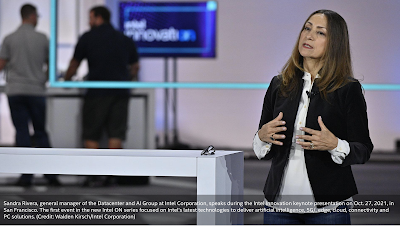
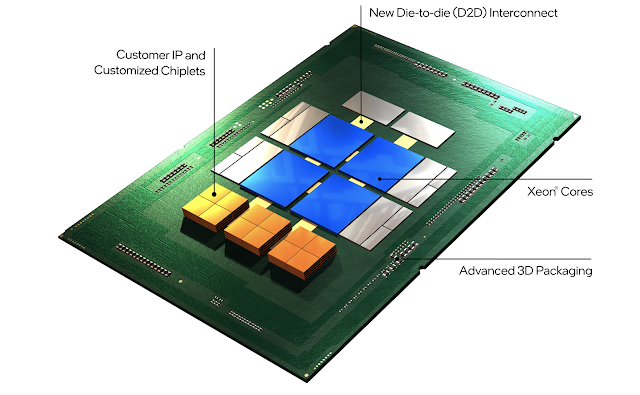
Intel unveiled its IPU roadmap extending through 2026, featuring new FPGA + Intel architecture platforms (code-named Hot Springs Canyon) and the Mount Morgan (MMG) ASIC, as well as next-generation 800GB products. The discussion also a look at Intel's open-source software foundation, including the infrastructure programmer development kit (IPDK), which builds upon SPDK, DPDK and P4.In terms of the timeline, Intel's roadmap includes:2022: Mount Evans,...

Google collaborates on Intel's ASIC-based infrastructure processor

Intel and Google Cloud announced a deep collaboration to develop an ASIC P4-programmable infrastructure processing unit (IPU).Code-named “Mount Evans,” this open solution supports open source standards, including an infrastructure programmer development kit (IPDK) to simplify developer access to the technology in Google Cloud data centers. Machine learning, large-scale data processing and analytics, media processing, and high-performance computing...

Intel rolls FPGA-based Infrastructure Processing Unit (IPU)

Intel outlined its vision for the infrastructure processing unit (IPU), a programmable network device that intelligently manages system-level infrastructure resources by securely accelerating those functions in a data center.In a video, Guido Appenzeller, chief technology officer with Intel's Data Platforms Group says the idea is to cleanly separate the processing of client workloads from workloads of the cloud service provider.Intel cites several...


Intel moves to an internal foundry model

Intel is adopting an internal foundry model for external customers and for its own Intel product lines. The effort will be led by Stuart Pann, Senior Vice President of our Corporate Planning Group (CPG). In addition to his responsibility leading CPG, Stu will take on the role of Chief Business Transformation Officer, reporting to Chief Financial Officer Dave Zinsner and joining the executive leadership team. 

Intel CEO Pat Gelsinger writes: "Implementing an internal foundry model means establishing consistent processes, systems and guardrails between our business unit, design and manufacturing teams. This will allow us to identify and address structural inefficiencies that exist in our current model by driving accountability and costs back to decision-makers in real time. It will also put Intel’s product groups on a similar footing as external Intel Foundry Services customers and vice versa."

For example, our business unit and design teams will be able to consider the potential impact on their margins if they want to run an additional product stepping, while the manufacturing team will be able to assess requests based on actual costs and impact on factory output. This will give teams the tools and transparency they need to find the most effective and cost-efficient solutions before implementation in silicon, ultimately helping us maximize factory output, reduce costs and shorten design cycles."

"We will also create a foundry accounting model that encompasses manufacturing, technology development and Intel Foundry Services. This will give us more transparency into our financial execution and will allow us to fully benchmark and drive ourselves to best-in-class foundry performance."

https://www.intel.com/content/www/us/en/newsroom/news/intel-embraces-internal-foundry-model.html

Intel welcomes investment from Brookfield in Arizona fabs

Intel announced a cost-sharing partnership in which the infrastructure affiliate of Brookfield Asset Management, one of the largest global alternative asset managers, will provide Intel with a new, expanded pool of capital for manufacturing build-outs.Intel describes its new Semiconductor Co-Investment Program (SCIP) as a new funding model that will accelerate its IDM 2.0 foundry strategy. The partnership with Brookfield is expected to enhance Intel's...

EXFO acquires EHVA, a Photonics Integrated Circuit test company

EXFO has acquired EHVA, an innovative Photonics Integrated Circuits (PICs) and system automation company based in Quebec City, Canada. Financial terms were not disclosed.

EHVA, which is a spin-off from the Center for Optics, Photonics, and Lasers (COPL) at Université Laval in Quebec, combines manufacturing intelligence with wafer-to-single device capabilities to deliver scalable solutions for PIC testing and manufacturing. 

EXFO said the acquisition will accelerate its advanced capabilities in PIC testing, enabling delivery of automated, turnkey end-to-end testing of optical components from lab applications to high-volume and high-speed manufacturing.

EHVA’s process software suite  integrates EXFO’s advanced swept continuous laser scanning technology into customer manufacturing settings for exceptional testing reliability and efficiency, delivering a fully-automated solution that helps avoid production bottlenecks. This seamless integration is critical, given the diversity in PIC designs used for varied applications and the lack of standards for PIC technology which poses added challenges for automated testing.

https://www.ehva.ca/

https://www.exfo.com/en/ehva/


NEC charters submarine cable ship under 4 year contract

NEC Corporation signed a charter contract with U.K.-based Global Marine Systems for an optical submarine cable-laying ship for approximately four years. 

The deal is for the submarine cable-laying ship "Normand Clipper", a 127m long vessel capable of carrying approximately 7,000km of spooled cable.

NEC has been a leading global vendor in the submarine cable system business for over 50 years, manufacturing submarine cables, submarine repeaters, and terminal station equipment, in addition to coordinating marine surveys and route design, equipment installation work, cable laying, training and delivery testing. 

Until now, NEC has procured submarine cable-laying ships for each project separately. In order to respond to the growing demand for new submarine cables due to the recent spread of 5G and the increase in data traffic between data centers in various countries, NEC has chartered a long-term dedicated cable-laying ship for the first time. As a result, NEC will provide submarine cable systems more quickly and flexibly than ever before to meet customer demand.

https://www.nec.com/en/press/202210/global_20221017_01.html

NEC to build 24-fiber-pair transatlantic cable for Facebook

NEC has been contracted by Facebook to build an ultra-high performance transatlantic subsea fiber-optic cable connecting the USA and Europe. The project will use NEC’s newly developed 24 fiber pair cable and repeater, enabling the system to deliver a maximum transmission capacity of a half Petabit per second, the highest to date for a long-distance repeatered optical subsea cable system.Facebook confirmed its first-ever transatlantic, 24-fiber-pair...

NEC qualifies subsea repeaters and cables for 24 fiber pairs

 NEC and its subsidiary OCC Corporation have completed full qualification of subsea repeaters and optical cable containing up to 24 fiber pairs (FPs) (48 fibers). The new qualification is a 50% improvement in fiber count over the 16 fiber pair systems generally available today. Only minor modifications were needed to NEC's existing repeater and cable designs. Keeping NEC's quadruple pump redundancy in the repeater (established more than...


Gulf Bridge upgrades its transport backbone with Nokia's PSE-V

Gulf Bridge International (GBI) will upgrade its existing subsea cables and terrestrial links with new network interface cards for its Nokia 1830 Photonic Service Switch (PSS) optical transport platforms. The new cards are powered by Nokia's Photonic Service Engine V (PSE-V) digital signal processors. This will enable upgrade to wavelength connections from 50 Gbps to 200 Gbps over GBI’s existing end-to-end subsea cable and terrestrial links spanning thousands of km and will allow the introduction of 400 Gbps services in the future.

This upgrade will increase GBI’s international network capacity ahead of the World Cup to enable high-speed connectivity between Doha, Qatar and Milan, Italy. The solution maximizes the capacity of two existing subsea cable links by greatly improving the optical spectrum efficiency through advanced techniques such as continuous baud rate adjustment. It also eliminates regeneration of the optical signal over two long-haul terrestrial links. Removing the need to convert between optical and electrical signals to boost the optical signal at intermediate regeneration points increases network efficiency and reduces latency and cost.

Gavin Rea, Chief Technical Officer at GBI, said: “We selected Nokia because its proven PSE technology will enable us to grow the capacity of our subsea cables and terrestrial networks efficiently and cost-effectively. We will be able to meet our customers’ increasing demand for the best connectivity services between the Middle East and Europe while ensuring that we can increase speed and capacity in the future. These routes are critical to our international carrier-grade fiber-optic Smart Network that connects service provider, cloud provider and enterprise customers to important financial and communications hubs across the Middle East, Europe, Africa and Asia.”

Manuel Ortiz Fernandez, Senior Vice President of EMEA Webscale Business, said: “There is a growing need for wholesale services that provide higher speed, reliable connectivity between cloud data centers, co-location facilities and interconnection hubs in the Middle East and Europe. We are delighted that GBI has selected Nokia to upgrade important routes of its Smart Network. GBI’s customers will benefit from the scale, reliability and efficiency of our optical solution while GBI will be able to increase network capacity while reducing network operations costs.”

https://www.nokia.com/about-us/news/releases/2022/10/14/nokia-enhances-gbis-optical-network-capacity-between-middle-east-and-europe-through-capacity-upgrade/

Nokia supplies 7750 Service Routers for ESnet6

Nokia confirmed that it is supplying its 7750 SR-s routers with Nokia-developed FP silicon and Service Router OS software for ESnet6, the U.S. Department of Energy’s (DOE) high performance network dedicated to collaborative scientific research. ESnet has deployed Nokia’s 7750 Service Router (SR) platforms to provide high-speed 100Gbps and 400 Gbps services over an IP/MPLS network designed to support over 46 Tbps of capacity.

Nokia7750 SR-s ssupports segment routing, EVPN-based services and model-driven management. ESnet research activities require petabyte traffic flows made possible through the Nokia FP silicon’s advanced traffic engineering and QoS capabilities combined with deep buffers. ESnet also selected Nokia’s Network Services Platform Path Computation Element, which builds upon the 7750 SR-s deployment, providing visibility of network and link usage and the ability to conduct traffic engineering of Segment Routing tunnels.

Inder Monga, Executive Director at ESnet, said: “ESnet6 represents a transformational change in the way networks are built for research, with improved capacity, resiliency, and flexibility. Together, we are enabling scientists around the world to conduct and collaborate on ground-breaking research in a faster and more efficient way.”

Mike Loomis, General Manager of Nokia Federal, said: “We are delighted to work with ESnet to help the scientific community advance the next generation of science. Our technology has set the foundation by more than tripling ESnet’s WAN from 100G to 400G, and it has been built to provide future-proofed scale and capacity. When ESnet is ready to scale to 800GE, we will be here to help them.”

https://www.nokia.com/about-us/news/releases/2022/10/13/nokia-partners-with-esnet-to-launch-terabit-next-generation-ip-network-with-400-gbps-access/

Kyndryl, Microsoft and Dell partner on a hybrid cloud solution

Kyndryl, Microsoft and Dell Technologies introduced a hybrid cloud solution that combines elements of Microsoft Azure, Kyndryl managed services and Dell Technologies infrastructure.

The new Kyndryl Distributed Cloud for Microsoft Azure Stack hyperconverged infrastructure (HCI) with Azure Arc consists of Dell Integrated System for Azure Stack HCI, based on Dell PowerEdge servers and Microsoft Azure Stack HCI software. Businesses will be able to transform their on-premises and remote workloads through fully managed distributed cloud services, high-performance operations and full-stack lifecycle management.

Customers can deploy Kyndryl Distributed Cloud for Microsoft Azure Stack HCI with Azure Arc in a data center, remote office and branch office (ROBO) locations or even next to an assembly line in a factory to run augmented reality maintenance and repair (ARMAR) in real-time and collect IoT data to derive insights for predictive maintenance and manage operations.

“We are glad to collaborate with Microsoft and Dell Technologies to help customers benefit from cloud automation and centralized management of their IT and operational environments, all while supporting performance and compliance requirements,” said Stephen Leonard, Kyndryl’s Strategic Global Alliances Leader. “Our new HCI offering provides flexibility of data deployments and access with advanced security capabilities, whether workloads are in the cloud, on-premises, or remote locations.”

https://www.kyndryl.com/us/en/about-us/news/2022/10/kyndryl-microsoft-and-dell-technologies-unveil-solution

SpaceX launches EUTELSAT HOTBIRD 13F Satellite

Eutelsat's HOTBIRD 13F satellite was successfully launched into Geostationary Transfer Orbit by SpaceX using a Falcon 9 rocket from Cape Canaveral, Florida.

EUTELSAT HOTBIRD 13F, which is one of two satellites built by manufacturer Airbus Defence and Space, is based on the Eurostar Neo telecommunications satellite platform. Once into orbit and positioned, the satellite EUTELSAT HOTBIRD 13F will, with its twin EUTELSAT HOTBIRD 13G, reinforce and enhance the broadcast of more than a thousand television channels into homes across Europe, Northern Africa and the Middle East. Moreover, the satellites will offer advanced features in terms of uplink signal protection and resilience.

The two satellites will be replacing three older satellites at Eutelsat’s 13° East flagship neighbourhood position.

Pascal Homsy, Eutelsat Chief Technical Officer said: "Our congratulations to the Eutelsat, Airbus and SpaceX teams for successfully launching our EUTELSAT HOTBIRD 13F satellite into geostationary orbit. This satellite brings the latest technology resources of the new Eurostar Neo platform at our leading 13-degree East position and confirms a long-term partnership between Airbus and Eutelsat”.


Thursday, October 13, 2022

Blueprint: The Automation Imperative in 5G Transport Deployments

 by Sally Bament, Vice President, Cloud & Service Provider Marketing, Juniper Networks

5G is poised to make an enormous impact on the global economy, and organizations that can successfully exploit its speed, bandwidth and ultra-low latency have an opportunity to lead their market by delivering new and innovative services. In addition to the highly advertised enhancements of mobile telecommunications for consumers, 5G will be an important play in numerous other vertical markets, all of which represent attractive business opportunities.

For example, handling the volume of data generated by IoT sensors in logistics applications – transportation, warehousing, retail distribution and the like – will require bandwidth that only 5G can provide. 5G speed and low latency will take robotics (and productivity) to new levels on the factory floor. In homes, 5G will elevate immersive gaming and enable virtual reality. These are just a few examples of a market that is projected to reach $1,271 billion by 2025.

To participate in this growth, companies will need to evolve the way they plan, deploy, architect and optimize their transport networks, and this will involve a much higher degree of automation than now exists. Currently, 75% of networking activities[i] are manual, and 85% of CSPs[ii] still use manual or semi-manual processes to manage their network service lifecycle. Handling the increased scale and complexity of a 5G network with this level of manual intervention will not be sustainable. Fortunately, sophisticated, field-proven automation solutions are available to support the transition to 5G from initial deployment to long-term operation.

Eliminate Manual Tasks

Both the familiar mobile consumer services and emerging enterprises rely on edge computing to process the massive amounts of data more efficiently and cost-effectively. Such architectures can involve onboarding hundreds or even thousands of geographically dispersed mini data centers, including those incorporated within cell sites.

It’s hard to imagine deploying those modern distributed architectures manually with onsite engineers, but it’s viable with automation. The process begins with a template that can easily be replicated wherever a new point of presence is required. Templates enable a much faster turn-up process, plus a level of consistency throughout the network that translates into higher reliability and speed. One Tier 1 network provider’s manual cell-site activation process had more than 50 manual steps that took a minimum of 26 hours to set up. By switching to an automated process, the company reduced the activation time to two hours.

While reducing or eliminating manual tasks is often cited as the primary benefit of automation, it is by no means the only one. Automation also plays a vital role in onboarding devices and customers quickly, maintaining optimal network performance, maximizing utilization, accelerating problem identification, automation remediation, improving security and meeting service-level agreements (SLAs).

Measure what matters

Making automation work demands first and foremost a new attitude towards network quality data. In simple terms, instead of focusing on the health of the various elements involved in the end-to-end service delivery chain, operators need to measure what matters most: service quality and end user experience. This can now be achieved easily with active assurance which leverage virtual agents sending synthetic transactions directly on the data plane. Am I delivering the service quality characteristics purchased by my customers? If not, where are the performance degradations in the service delivery chain and what should I do to fix the problem? In a 5G network these are very complex questions, as different slices may need to support diverse services, each with specific requirements, such as an IoT application with a large number of low-throughput devices vs. an MBB where there are fewer devices, but each is transmitting or receiving high bandwidth content. With active assurance continually measuring real service quality, automated systems can make adjustments to routing and bandwidth requirements to optimize performance in real time with no need for human intervention. 

The ultimate goal of any network is to deliver the best possible experience for the user. To do so in a highly complex 5G deployment, automation is no longer a “nice to have” capability. It’s a “must have.” For example, automation can play an important role in the identification and remediation of incidents that affect the user experience. Currently, 60% of network problems are not discovered by NetOps, but by others, notably the users themselves. This is not acceptable, and underlines the fact that manually responding to every incident is no longer a viable option.

Deploy automation one use case at a time 

Although the need for automation is well understood, implementing it is still seen as a daunting task by many organizations. According to a survey conducted by Heavy Reading, 40% of CSPs believe that using a generic automation framework is the first barrier to adopting automation in their transport networks. This is not a necessary first step. The best approach to automation is to apply it to one business problem at a time. Working through a single implementation to a successful conclusion will provide lessons that will help future implementations go smoothly, and will also generate enthusiasm and build momentum for automation within the organization. SaaS-based automation for device onboarding is one good place to start.

Intent-Based Networking

Ultimately, the value of automation is that it enables operators to build intent-based networks. By shifting the focus towards “what to do” as opposed to “how to do it,” intent-based networking increases agility and lets operators respond more rapidly to business needs.

In summary, the arrival of 5G opens up a whole new realm of business opportunities, but success demands new ways of looking at network management.

[i] Gartner®, Market Guide for Network Automation Tools, Andrew Lerner, Ted Corbet, February 22, 2022

[ii] Omdia, Survey of 92 Communication Service Providers, September 2020


Verizon moves commercial traffic onto its 5G core

Verizon has begun moving customer traffic onto its new cloud-native, containerized 5G core.

The Verizon Cloud Platform (VCP), on which the 5G core is built, is based on a Webscale software architecture with advanced technologies designed specifically for telco workloads. VCP is a distributed platform that supports edge services, private cloud services, Network Function Virtualization tools, Cloud Native Functions, Web applications, mapping and spatial analysis tools, orchestration tools, service assurance tools, auto-remediation, and compute offerings. 

In addition to network slicing and dynamic resource allocation, Verizon cites the following benefits for its new 5G core:

  • Real-time resource management of Radio Access Network and core virtual container-based network functions
  • Advanced analytics of network data to improve network performance
  • Optimized services between Verizon's fixed and mobile networks
  • Scalable, more cost-efficient architecture
  • Ability to move workloads to fit use case requirements

Veizon said this architecture will enable it to achieve new levels of operational automation and adaptability to create differentiated customer experiences. This directional technology platform that enables MEC will support stand alone, non-stand alone, and VoNR services.

“Our mission has always been to build and operate the best, most reliable, highest performing, and secure networks in the world,” said Adam Koeppe, Senior Vice President of Network Technology, Strategy, and Planning at Verizon. “The 5G Core is a critical step in achieving our goal. From the densification and virtualization work in the Radio Access Network, to the architectural design changes in the core of the network developed specifically for telco workloads, we are working to ensure customers not only have access to 5G, but have the most advanced, secure, and robust network to support the remarkable new solutions being developed on 5G technology.”

“Bringing traffic onto the newly designed core coincides with the ecosystem development around us. With a critical number of customers now having devices that can access the advanced features of the 5G core and the solutions and applications development – especially for enterprise customers – really taking off, now is the ideal time to move traffic onto the new core,” said Koeppe.

https://www.verizon.com/about/news/verizon-moves-commercial-traffic-5g-core

Verizon has deployed 8,000 virtualized cell sites 

Verizon has now deployed over 8,000 virtualized cell sites with a goal of deploying over 20,000 by the end of 2025. “We are building the network with the most advanced technology available, because we know people rely on our network and we are committed to delivering the variety and quality of services our customers need,” said Adam Koeppe, Senior Vice President of Planning and Technology at Verizon. “Even while driving the most aggressive network...

Verizon upgrades its core network for 400G with Juniper's PTX series

Verizon is refreshing its core network with Juniper Networks' PTX series routers supporting 400G interfaces. Verizon said the new equipment is half the size of the existing equipment, reducing space requirements in core facilities and driving down both power usage per GB and cost per GB to operate. In addition, the new equipment offers an advanced level of automation, allowing for automated interfaces with other network systems.Verizon also...


Google Fiber to launch 5 Gbps and 8 Gbps residential tiers

Google Fiber plans to launch 5 Gig and 8 Gig symmetrical residential service beginning in early 2023. Pricing will $125/month for 5 Gig and $150/month for 8 Gig, including a Wi-Fi 6 router, up to two mesh extenders and professional installation.

Google Fiber believes the new 5 Gig and 8 Gig will appeal to creative professionals, people working in the cloud or with large data, households with large shared internet demands.  

The company also notes that it is currently field testing a 20G service.

https://fiber.google.com/blog/2022/10/ready-for-faster-internet-be-trusted.html

  • Google Fiber is available in Atlanta, Austin, Charlotte, Huntsville, Kansas City, Nashville, Orange County, Provo, Salt Lake City, San Antonio, Raleigh-Durham, and coming to Omaha and West Des Moines.

Alphawave IP acquires Banias Labs, an optical DSP developer

Alphawave IP has acquired Banias Labs, an Israel-based optical Digital Signal Processing ("DSP") chip developer for data centers for approximately US$240 million. 

Alphawave IP said the acquisition strengthens Alphawave's roadmap of optical DSP silicon products for data centers.

Alongside the acquisition of Banias Labs, Alphawave has negotiated a non-binding, multi-year purchasing framework with a leading North American hyperscaler that proposes a multi-year roadmap for Alphawave to develop and sell a portfolio of optical products and DSPs, including coherent DSP technology from Banias Labs, with sales potentially ramping to over US$300 million. 

Tony Pialis, President and Chief Executive Officer of Alphawave said: "Banias Labs optical DSP technology provides a strong strategic advantage for Alphawave, strengthening our roadmap of DSP silicon solutions for data centers. This acquisition enhances our portfolio of electrical and optical solutions in the most advanced process technologies. The multi-year purchasing framework includes coherent optical solutions, and with the Banias acquisition, Alphawave is expanding its total addressable market by delivering next generation coherent optical solutions for the most advanced data centers."

John Lofton Holt, Executive Chairman of Alphawave said: "We are pleased to welcome the talented Banias Labs team to Alphawave. This acquisition aligns with the strategic priorities that we articulated at our IPO, expanding our technology portfolio in high-speed connectivity to support long-term growth. Coherent optics will enable the next level of efficiencies in data center communications, addressing the increasing bandwidth and power efficiency requirements."


BMW looks to AWS for customizable cloud software

Amazon Web Services (AWS) and the BMW Group announced a strategic collaboration to develop customizable cloud software that will simplify the distribution and management of data from millions of connected vehicles. The software collects vehicle signals and fleet intelligence data, then securely processes and routes the data in the cloud. 

BMW plans to use the software for its next-generation, cloud-based vehicle data platform. 

Only the BMW Group’s internal domain experts—vehicle application developers, fleet managers, data scientists, and artificial intelligence, business intelligence, and development engineers—gain access to the data via a self-service mechanism that gathers streaming vehicle data, easily adds new data sources, configures access in accordance with governance policies, and monitors the quality and health of streaming sources. The data is then combined with AWS capabilities, including analytics, machine learning, database, storage, and compute, enabling the BMW Group experts to create new vehicle features and applications.

“We have 20 million connected vehicles on the road today. With the launch of the ‘Neue Klasse,’ BMW’s next generation of vehicles, our offboard cloud platform, powered by AWS, will process roughly triple the volume of vehicle data compared to the current generation of BMW models,” said Nicolai Krämer, vice president of Vehicle Connectivity Platforms at the BMW Group. “Together with AWS, we will continue to create innovative solutions that enable us to develop and deliver new data-driven functions to customers worldwide, even faster.”

https://www.aws.com/automotive

Alaska Communications subsea fiber collects wave activity

Alaska Communications is collaborating with Oregon State University’s College of Engineering to allow wave activity data to be collected from the ocean floor via the company’s subsea fiber optic cable.

Oregon State Assistant Professor of Coastal Engineering, Meagan Wengrove, Ph.D., her Ph.D. student and two post-doctoral researchers traveled to Alaska Communications’ landing station in Florence, Oregon in September to attach a DAS interrogator (distributed acoustic sensing) to the company’s fiber. The instrument measures strain applied to the cable and reports data back to the research team. In addition, the team has radar on the surface of the ocean and two moorings on the ocean floor which contribute to the research.

“The Alaska Communications cable is in an ideal location for our team to monitor the interaction between waves and currents coming out of the Siuslaw River along the Pacific coastline,” said Wengrove. “This project will support continued learning about wave interaction which could potentially improve or provide warnings for coastal communities in the event of dangerous wave activity, like sneaker waves.”

http://www.AlaskaCommunications.com

Juniper names Chris Kaddaras as Chief Revenue Officer

Juniper Networks naemd Chris Kaddaras as Executive Vice President and Chief Revenue Officer, reporting to Chief Executive Officer, Rami Rahim. 

Prior to Juniper, Chris served as Chief Revenue Officer at Transmit Security, a provider of customer identity and access management SaaS solutions. Before that, he held multiple roles at Nutanix from 2016-2021, including Chief Revenue Officer. Prior to joining Nutanix, Chris was with EMC Corporation for 16 years, where he held positions including Vice President of Commercial Sales and Vice President of Sales Engineering across EMEA.

“I've watched Juniper change the networking industry by enabling digital transformation for customers of all shapes and sizes that are increasingly seeking cloud-delivered, AI-driven and secure solutions to power their strategic evolutions. It’s no longer enough for a network to be ‘up;’ it must also be ‘good’, and Juniper is uniquely positioned to deliver on that promise. The opportunity to continue to grow Juniper’s market share in enterprise and continue to serve as a trusted strategic partner with service providers and cloud providers is huge. And as a sales leader, it’s always exciting to have technology that’s not only highly differentiated but can also actually deliver real outcomes for organizations. I couldn’t be more motivated to join this team.” - Chris Kaddaras, executive vice president and chief revenue officer, Juniper Networks


https://www.juniper.net