Wednesday, March 2, 2022

Vertical Systems Group: U.S. Wavelength Services LEADERBOARD

Vertical Systems Group announces that eight companies achieved a position on the year-end 2021 U.S. Wavelength Services LEADERBOARD (in rank order based on circuit share): Lumen, Zayo, Verizon, AT&T, Arelion (formerly Telia Carrier), Windstream, Crown Castle and Cox. 

This new benchmark measures U.S. market presence for wavelength providers selling retail and wholesale services. LEADERBOARD companies each have a one percent (1%) or higher share of U.S. wavelength circuits. A wavelength circuit provides a Layer 1 dedicated bidirectional gigabit-speed optical fiber connection between two sites.

“U.S. demand for wavelength services is rising to support mission-critical applications that require assured performance, deterministic latency and gigabit speed connectivity,” said Rick Malone, principal of Vertical Systems Group. “Our forecasts show double digit growth this year, driven by high demand for 100 Gbps wavelength circuits.”

U.S. Wavelength LEADERBOARD Research Highlights

  • Customer demand for retail wavelength circuits exceeded wholesale deployments in 2021.
  • Revenue for U.S. Wavelength Services is projected to grow at a 13% CAGR between 2021 and 2026. This projection incorporates the effects of the COVID pandemic, including installation disruptions and chip shortages.
  • Six providers on the U.S. Wavelength Services LEADERBOARD also hold a rank position on the latest U.S. Fiber Lit Buildings LEADERBOARD – Lumen, Zayo, Verizon, AT&T, Crown Castle and Cox. Additionally, Windstream achieved a Challenge Tier citation.
  • Five U.S. Wavelength Services LEADERBOARD providers are also top ranked on the Mid-2021 U.S. Ethernet LEADERBOARD – Lumen, Verizon, AT&T, Windstream and Cox. Zayo has a Challenge Tier citation.

https://www.verticalsystems.com/2022/02/23/2021-us-wavelength-leaderboard/

IP Infusion supplies white box OS for NTT's 8K120p video

IP Infusion provided its OcNOS white box network operating system (OS) to NTT for its development of uncompressed 8K120p video transmission technologies using the IOWN All-Photonics Network (APN). 

NTT recently announced its development of the world’s first-ever ultra-low latency video-transmission technology that supports uncompressed 8K120p video. Using a disaggregation configuration, it has succeeded in sending and receiving 8K120p video as SMPTE ST 2110 streams, which is the equivalent of doubling the current standard frame rate of 8K video. This achieves ultra-low latency video transmission with a delay of less than 1 ms between the video input at the transmitting end and video output at the receiving end. 

“IP Infusion supports the IOWN concept proposed by NTT,” said Atsushi Ogata, President and CEO of IP Infusion. “As a technology partner in research, development and implementation, we are helping NTT to realize this IOWN concept. We are very proud to have collaborated on the development of NTT’s world-first ultra-low latency video-transmission technology, which supports uncompressed 8K120p video, by providing our OcNOS white box network OS, which enables flexible setting of network configurations, and eliminates vendor lock-in to reduce costs. Going forward, we will continue working with NTT to develop and commercialize this technology.”

OcNOS is the industry’s first full-featured modular extensible network OS for white box open networking solutions offering advanced L2/L3 features and L1 DWDM/OTN functions that include extensive switching and routing support ranging from MPLS to PTP (Precision Timing Protocol) and APIs/protocols for SDN (Software Defined Networking). OcNOS features hybrid, centralized or distributed network support; scalable, modular high-performance network; and a robust data plane built on merchant silicon.

https://group.ntt/en/newsrelease/2022/02/22/220222a.html

Mitsubishi Electric samples 50Gbps DFB laser diode for 5G base stations

Mitsubishi Electric will begin sampling its 50Gbps distributed-feedback (DFB) laser diode for 5G base stations.

Key features

  • Frequency-response characteristics are compatible with 4-level pulse-amplitude modulation (PAM4) for multilevel signal modulation, supporting transmission rates up to 50Gbps. Also, its industry-leading operating temperature range of -40°C to 90°C eliminates the need for any temperature-control unit, helping to reduce power consumption by mobile base stations.
  • The new diode’s package is compliant with the TO-56 CAN industry standard and is compatible with the SFP56 compact-transceiver standard adopted for Mitsubishi Electric’s 25Gbps DFB laser diode (model ML764AA58T; production discontinued).

http://www.MitsubishiElectric.com/news/

Tuesday, March 1, 2022

Ericsson demos 5G Dynamic Radio Resource Partitioning

Ericsson demonstrated Dynamic Radio Resource Partitioning, a 5G Radio Access Network (RAN) Slicing solution that will enable six mobile network operators (MNOs) to deliver customized 5G services with guaranteed performance.

Each MNO sharing DNB’s network has access to the full spectrum asset to achieve the best possible speed, while simultaneously ensuring the pooled spectrum is efficiently used and maximized among all other MNOs. The Ericsson solution optimally provisions each MNO in order to ensure a good end-user experience. This allows each MNO to offer services that meet the Service Level Agreements (SLA) and provides guaranteed resources as configured.

Dynamic Radio Resource Partitioning is one of the features of Ericsson 5G RAN Slicing, a software solution that dynamically allocates spectrum resources at millisecond scheduling and supports multi-dimensional service differentiation handling across slices. In short, RAN Slicing optimizes radio resources, strengthening end-to-end slicing capabilities for dynamic resource management and orchestration. This ensures fast and efficient delivery of services as well as high-quality user experience required by diverse use cases.

Malaysia’s Digital Nasional Berhad (DNB) will be the first commercial network in the world to deploy the solution.

David Hägerbro, Head of Ericsson Malaysia, Sri Lanka and Bangladesh, says, “Ericsson’s first-in-the-world application of our Dynamic Radio Resource Partitioning technology catering for six MNOs on one 5G network is an example of our commitment to providing a world-class 5G network to Malaysia. This technology solution enables all six MNOs to deliver customized 5G services with guaranteed performance. This innovation also allows each MNO to differentiate its offering to consumers on the shared 5G network.”

https://www.ericsson.com/en/press-releases/2/2022/3/ericsson-demonstrates-worlds-first-5g-dynamic-radio-resource

EVG and Teramount target wafer-level silicon photonics packaging

EV Group (EVG), a leading supplier of wafer bonding and lithography equipment for the MEMS, nanotechnology and semiconductor markets, announced a collaboration with Teramount on implementing wafer-level optics.

The collaboration will leverage EVG's nanoimprint lithography (NIL) technology, expertise and services with Teramount's PhotonicPlug technology.

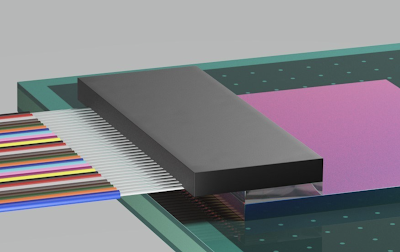
Under this collaboration, standard CMOS wafers that implement silicon photonics chips will be post processed using EVG's NIL technology to implement optical elements such as mirrors and lenses for Teramount's unique "self-aligning optics". This enables flexible beam extraction from the chips and easy connection to a large number of optical fibers. Furthermore, it enables wafer-level optical inspection capabilities for enhancing silicon photonics wafer manufacturing.

The collaboration is being carried out within EVG's NILPhotonics Competence Center at its headquarters in St. Florian, Austria. The NILPhotonics Competence Center provides an open access innovation incubator for customers and partners across the NIL supply chain to collaborate to shorten development cycles and time to market for innovative photonic devices and applications. Through the collaboration with Teramount, EVG provides process development and production services, as well as expertise in both CMOS and photonics manufacturing, thus accelerating the commercialization of Teramount's PhotonicPlug technology.

"Our joint work with EVG has been very successful in producing this innovative synergy between wafer-level optics and silicon photonics wafer manufacturing," said Hesham Taha, CEO of Teramount. "By offering this capability to the industry, Teramount solves one of the major hurdles to further adoption of optical connectivity, which is critical for so many applications that require high-speed data transfers and low power consumption."

"Teramount's PhotonicPlug silicon photonics packaging technology is a truly novel approach to improving optical performance, and we are excited to be a partner in helping to bring it to the market," stated Markus Wimplinger, Corporate Technology Development and IP Director at EV Group. "This is just the latest example of innovative technology developed with the support of EVG's process and equipment know-how through our NILPhotonics Competence Center, where we help our partners and customers turn new ideas into innovative products."

http://www.EVGroup.com

http://www.teramount.com

Nokia and AT&T target 5G uplink with distributed massive MIMO

AT&T is working with Nokia Bell Labs in testing distributed massive MIMO (DmMIMO) to significantly increases uplink capacity and speeds in 5G networks without requiring an overly complex solution. Specifically, Nokia is collaborating with AT&T on the validation of DmMIMO and testing the proof-of-concept technology in the AT&T labs. Bell Labs’s DmMIMO simulations have demonstrated increases in 5G uplink capacity between 60% and 90% compared to similarly configured systems with a single panel. While other techniques come at the expense of downlink capacity, DmMIMO would produce sizable increases in uplink capacity without sacrificing performance.

DmMIMO allows devices to leverage signal propagation to multiple cells or antenna panels in a network when establishing a link, thereby turning noise into a useful signal and increasing the uplink throughput. The data transmission is pieced together from multiple antenna panels and cell sites through distributed baseband processing. The processing load between the cell site radio units and the central processing unit is split in a novel way, reducing the fronthaul capacity to cell sites and hence lowering the cost.

Nishant Batra, Chief Strategy and Technology Officer, Nokia, said: “Addressing uplink speeds is becoming critical as consumers are increasingly becoming content creators as well as content consumers, video conferencing has become a cornerstone of the teleworking era, and many of the applications in the industrial internet of things require higher uplink speeds. When 5G-Advanced networks come online, we will see the network enhanced in multiple dimensions, expanding and extending its capabilities. Even today, with the focus on 5G mid-band spectrum rollouts in the U.S., there are opportunities for technologies like this that can maximize available resources. We feel distributed massive MIMO will be a critical element of networking in the 5G-Advanced era to help meet these demands with significant gains in uplink without a hit to downlink performance. Three decades ago, Bell Labs and AT&T invented MIMO, so it is only fitting that we continue this groundbreaking work together for the next generation of MIMO.”

Andre Fuetsch, Executive Vice President & CTO Network Services, AT&T, said: “AT&T and Nokia have a long history of working together on new network technologies, and I welcome this strategic collaboration for the development of distributed massive MIMO technology. Newer applications in the 5G-Advanced timeframe, such as eXtended Reality (XR), are expected to be more demanding on the uplink compared to regular broadband traffic. Technologies such as distributed massive MIMO show potential to improve uplink capacity in the right scenarios. DmMIMO is also a technology that shows potential for the next generation of wireless networks. Therefore, this strategic technology collaboration with Nokia may help provide learnings with long-term benefits to both companies.”


Nokia adds liquid cooling to AirScale base stations

Nokia has added a Liquid Cooling option to its AirScale base station portfolio. 

The company calculates that liquid cooling can significantly reduce the energy required to cool a base station. Cooling system energy consumption can be reduced up to 90 percent and base station CO2 emissions up to 80 percent compared to traditional active air-cooling systems. 

Commercial products will be available from Q3 2022. Nokia also announced that AT&T is piloting the solution in a live network trial in Philadelphia, U.S.

Joe Taylor, VP Implementation, Provisioning & Optimization at AT&T, said: “AT&T is committed to tackling climate change, enhancing the efficiency of our network, and reducing our operational carbon footprint. We’re pleased to work with Nokia as we take a more sustainable path and to trial its liquid-cooled base station in our network. We firmly believe that sustainability is one of the biggest factors impacting the world right now and is a key differentiator in business. We’re eager to continue aligning with like-minded, innovative companies like Nokia that are developing ground-breaking solutions to combat climate change.”

Tommi Uitto, President of Mobile Networks at Nokia, said: “There is no green without digital and the commercial availability of Nokia’s liquid cooling technology across our AirScale portfolio highlights our commitment to leading the industry to become more sustainable through digitalization. Our innovative, game-changing solution reduces energy consumption, costs, and carbon emissions and helps mobile operators become more environmentally responsible. 5G networks and technologies will play a critical role in making other industries more sustainable and we must all play our part to minimize our footprint and accelerate the use of green electricity.”

Qualcomm integrates 5G AI processor in a modem-RF system

Qualcomm unveiled its 5th generation modem-to-antenna 5G solution featuring 10 Gigabit 5G download performance enhanced with an AI processor.

The Snapdragon X70 5G Modem-RF System introduces the Qualcomm 5G AI Suite, designed for AI-powered optimizations of sub-6 GHz and mmWave 5G links for improved speeds, coverage, latency, mobility, link robustness, and power efficiency.

Key features:

  • 5G modem-RF system family capable of supporting every commercial 5G band from 600 MHz to 41 GHz, offering flexibility to OEMs for designing devices capable of supporting global operator requirements
  • Global band support and spectrum aggregation capabilities including world’s first 4X downlink carrier aggregation across TDD and FDD, mmWave-sub-6 aggregation
  • Standalone mmWave support to allow MNOs and service providers to deploy services such as fixed wireless access and enterprise 5G, without needing sub-6 GHz spectrum
  • Unmatched uplink performance and flexibility with uplink carrier aggregation and switched uplink support across TDD and FDD
  • True global 5G multi-SIM including Dual-SIM Dual-Active (DSDA) and mmWave support
  • Upgradeable architecture allowing rapid commercialization of 5G Release 16 features through software updates


Qualcomm intros 5G M.2 Modules for laptops

Qualcomm introduced its Snapdragon X65 and X62 5G M.2 Modules for laptops and desktop PCs. The modules were developed in collaboration with Foxconn Industrial Internet and Quectel. 

Based off the reference designs announced in May 2021, the modules are powered by the Snapdragon® X65 and X62 5G Modem-RF Systems. These turnkey modules begin with the world’s first 10-gigabit 5G and 3GPP Release 16-compliant modem, delivering high power efficiency, spectrum aggregation, and global 5G with both sub-6 and extended-range mmWave. Sampling is underway. 

“Qualcomm Technologies is making an intelligently connected world possible through our leadership in connectivity and high-performance, low-power computing. This announcement of the Snapdragon X65 and X62 5G M.2 Modules is further evidence that we are committed to enabling the ecosystem and proliferating the 5G opportunity beyond smartphones,” said Gautam Sheoran, vice president, product management, Qualcomm Technologies, Inc. “We’re committed to leading the proliferation of 5G beyond smartphones and remaining at the edge of innovation, providing our customers with premium speed, reliability and deployment time.”

“We believe the birth of Snapdragon X62 and X65 5G M.2 Modules comes from one of our best cooperations,” said Kevin Liu, vice president, Foxconn Industrial Internet. “The 5G-driven future will inspire opportunities far beyond our imagination. Through continuous and substantial R&D investment, we are committed to providing the most comprehensive technologies and solutions to our partner to create more opportunities that make up the connected world smarter, and more, completely changing the experience of the future.”


Dell'Oro: $15B optical transport equipment market dips 2% in 2021

The Optical Transport equipment market declined 2 percent for the full year 2021 due to weaker market conditions across many countries in the Asia Pacific region including China, according to a new report from Dell'Oro Group. The Optical market in other regions—North America, Europe, and Latin America—expanded in the year.

“The Optical Transport market outside of Asia Pacific improved in the year, following a momentary slow down caused by the pandemic in 2020,” said Jimmy Yu, Vice President at Dell’Oro Group. “It was a noticeably strong year for optical systems in all the other regions. In fact, with the exception of Asia Pacific, optical revenue in 2021 surpassed the pre-pandemic levels in each of the regions. The biggest issue facing the industry is the ongoing component shortage and supply chain bottlenecks. Without these issues, the optical market would have grown at a much higher rate,” added Yu.

Additional highlights from the 4Q 2021 Quarterly Report:

  • Optical Transport revenue in Asia Pacific declined 11 percent in the year due to lower sales across the region. China, which contributes two-thirds of the region’s revenue, declined approximately 9 percent in 2021.
  • Optical Transport revenue in North America, Europe, and Latin America grew 12 percent, 6 percent, and 19 percent, respectively.
  • The top equipment manufacturers by revenue share for markets outside the Asia Pacific region were Ciena, Huawei, Nokia, Infinera, and Cisco with a combined share exceeding 80 percent.
https://www.delloro.com/news/15-billion-optical-transport-equipment-market-declined-2-percent-in-2021/

stc tests 1-terabit channel optical transport with Nokia

stc  announced the successful completion of the Middle East and Africa (MEA) region’s first 

stc has condected a trial of a 1-Terabit high-capacity channel using Nokia’s 1830 Photonic Service Interconnect – Modular (PSI-M) solution. The test was conducted over stc's network in Riyadh.As part of the trial, Nokia PSI-M was directly installed in stc’s data center rack and used AC power supply. Nokia’s 1830 PSI-M is a compact, high capacity, modular optical networking platform, optimized for Data Center Interconnect (DCI) applications over metro, regional and long haul. It is designed to address the growing demand for DCI applications and the need to transport new high bandwidth services such as 400GbE and 800GbE from the latest generations of routers.

Badr Al-Lhieb, Infrastructure Sector VP, stc, said: "We are thrilled at the successful completion of this crucial trial. We are committed to providing the best possible network experience to our subscribers. Nokia’s industry-leading solutions will help us address the current capacity requirements and quickly scale as the requirement grows while keeping our costs in control. We look forward to working with them on this initiative."

Khalid Hussain, Head of stc Customer Business Team at Nokia, said: "The growing data consumption across consumers and enterprises is pushing the network capacity limits for service providers. This trial effectively demonstrates how service providers, like stc, can benefit from 1830 PSI-M to quickly scale and enhance the network capacity limit by using the existing infrastructure and without making significant investments.”


FCC seeks comment on BGP vulnerabilities

The FCC is seeking public comment on any steps that the Commission should consider taking to help protect and strengthen the nation’s communications network and other critical infrastructure from vulnerabilities posed by BGP.

The FCC observes that a bad network actor may deliberately falsify BGP reachability information to redirect traffic to itself or through a specific third-party network, and prevent that traffic from reaching its intended recipient. The FCC says Russian network operators have been suspected of exploiting BGP’s vulnerability to hijacking, including instances in which traffic has been redirected through Russia without explanation.

Specifically, the FCC is seeking comment on the extent to which Internet Service Providers, public Internet Exchange Providers, and providers of interconnected VoIP service have deployed BGP routers in their networks.  Do content delivery networks, and providers of cloud services operate BGP routers in their networks as well?  What other types of entities operate BGP routers?  

https://www.fcc.gov/document/fcc-launches-inquiry-internet-routing-vulnerabilities


Ericsson suspends deliveries to Russia

Ericsson is suspending deliveries to Russia.  Reuters cited a memo by Borje Ekholm, Ericsson CEO, confirming the decision and stating the company is studying the impact on its business.

Russia's MTS builds private net based on Ericsson for mining company

 Russian communications service provider Mobile TeleSystems (MTS) is to deploy an Ericsson-powered 5G-ready dedicated network for gold and silver producer Polymetal at the Nezhdaninskoye gold deposit in the Republic of Sakha (Yakutia). This is expected to be the first commercial Private LTE network in Russia for remote monitoring and managing critical processes in difficult geographic and weather conditions.The Ericsson Dedicated Networks solution...

Tele2 deploys 25,000 5G-ready Ericsson base stations in Russia

Tele2 has now deployed 25,000 5G-ready base stations from Ericsson across Russia over the past 18 months. The update, which covers all 27 regions of Russia, has increased capacity and enhanced network performance by a factor of 1.7. The deployment reflects about 50 percent of the five-year network modernization deal reached during MWC 2019 in Barcelona and follows the first 5G zone in the center of Moscow in August 2019. Sebastian Tolstoy,...

MTS Russia selects Ericsson MINI-LINK microwave radios

МТS will deploy Ericsson's MINI-LINK microwave solutions across several regions of Russia as part of the development of its converged transport network. Solutions include the high-speed MINI-LINK 6000 family with distributed architecture, as well as the MINI-LINK 6366 module solution. They will be deployed in the Central, Far Eastern, Siberian and Southern Federal Districts of Russia. Anatoly Iliyaich, Eastern Europe and Central Asia VP Networks,...

Russia's MTS extends contract with Ericsson

MTS, Russia’s largest communications service provider, has extended its long-standing partnership with Ericsson to include a large-scale network modernization of its 2G/3G/4G infrastructure over large parts of central Russia. Specifically, Ericsson will supply MTS with Ericsson Radio System products and solutions for modernization of several thousand sites across 16 districts in central Russia. The project will continue until 2026. Ericsson is now...


Monday, February 28, 2022

Orange names its 5G Stand Alone vendors

Orange has chosen the following industrial partners for its 5G Stand Alone networks across Europe:

  • Ericsson’s 5G SA core network for Belgium, Spain, Luxembourg and Poland
  • Nokia’s 5G SA core network for France and Slovakia, and Nokia’s Subscriber Data Management for all countries
  • Oracle Communications for 5G core signaling and routing in all countries

For other network functions, in particular the radio, a software update of the existing equipment will be carried out.

Orange also announced plans for a Network Integration Factory to test and validate technical chains, the performance of end-to-end services and to conduct tests with users. The carrier expects 5G SA tests and trials in 2022, with commercial launches from 2023.

https://www.orange.com/en/newsroom/press-releases/2022/orange-selects-suppliers-its-5g-stand-alone-5g-sa-networks-europe

Intelsat demos private cellular over satellite using Azure 5G core

Intelsat has demonstrated a private cellular network with Microsoft Azure Private Multi-Access Edge Compute and FlexEnterprise, Intelsat’s satellite-based global connectivity service.

The demonstration creates a private LTE service using Azure Private 5G Core deployed on an Azure Stack Edge device. Connectivity to the internet and Azure services is enabled by Intelsat’s FlexEnterprise. Via the private cellular network, users can access local enterprise resources via SIM-authenticated connections to the Azure Stack Edge and access remote resources through the FlexEnterprise connection, the IntelsatOne global network and Azure. Additionally, the LTE network powers a Wi-Fi access point and IoT applications.

“As enterprises look to private cellular networks to improve the reach, security, and quality-of-service over Wi-Fi-only local networks, the ability to support deployments at any site is crucial to creating a fully connected organization,” said Jean-Philippe Gillet, SVP Global Sales Media & Networks, Intelsat. “The applications demonstrated here with Microsoft highlight the increased automation and standardization of enterprise data processing services that globally-available private cellular networks will enable. Support for high-bandwidth, low-latency networks is central to Intelsat’s vision of an end-to-end ecosystem for a global software-defined 5G network.”

“At Microsoft, we are committed to enabling an ecosystem of satellite operators through collaborations such as this one with Intelsat. As the world continues to move to 5G, Microsoft’s Azure Orbital platform, together with our Azure hyper-scale computing platform, allows operators to deploy and maintain faster, easier, and more cost-effective solutions anytime and anywhere, ” said Tom Keane, corporate vice president, Mission Engineering.

https://www.intelsat.com/newsroom/intelsat-collaborates-with-microsoft-to-demonstrate-private-cellular-network-using-intelsats-global-satellite-and-ground-network/


DISH tests VMware RAN Intelligent Controller

DISH Networks will trial VMware’s RAN Intelligent Controller (RIC) as the platform on top of which RAN applications will run. DISH is already using VMware Telco Cloud Platform to run RAN workloads.

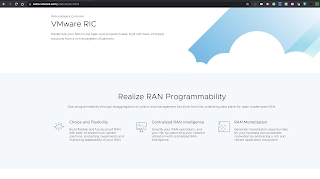
VMware RIC is a multi-RAN, multi-cloud platform that abstracts the underlying RAN infrastructure and can host both near-real-time applications (xApps) and non-real-time applications (rApps). These apps enable new capabilities – automation, optimization and service customization – that fuel innovation across a telco network.

DISH expects a rich ecosystem of xApps and rApps to take shape — almost like an App Store for the RAN. 

Sanjay Uppal, senior vice president and general manager of VMware’s Service Provider and Edge business unit, said, “DISH is building a first-of-its-kind network that will move the entire industry forward. We’re excited to be a part of the journey as we continue to work with DISH and its ecosystem partners to launch the first Open RAN-based 5G network in the United States.”

https://about.dish.com/news-releases?item=123548

VMware builds two RAN Intelligent Controllers (RICs)

VMware announced two RAN Intelligent Controllers (RICs), new capabilities for its Telco Cloud Platform RAN, and several key partnerships aimed at helping service providers smoothly transition to Open RAN.“When it comes to Open RAN, the genie is out of the bottle. The potential benefits of increasing innovation while reducing operational expense are compelling. As such, VMware is pushing to accelerate the transformation of the RAN along with Open...


Open XR Forum builds momentum with Tier 1 carrier support


AT&T, Colt, Crown Castle, Telefónica and ZAYO have joined the Open XR Forum, which is dedicated to the deployment of software-configurable point-to-point and point-to-multipoint coherent optical networks utilizing XR optics pluggable transceiver technology. 

The Forum also released the “Open XR Concept Introductory White Paper,” available for download from the Open XR Forum site. The white paper describes the limitations and shortcomings of today’s point-to-point optical networks and the inherent performance, cost-effectiveness and network agility benefits of point-to-multipoint coherent optical networks utilizing digital subcarriers. The white paper also presents key technical design considerations along with network management and control concepts and highlights a number of important application scenarios.

Open XR Forum membership is expanding to cover a wide range of industry participants and applications and currently includes AT&T, BT, Colt, Crown Castle, Infinera, Liberty Global, Lumen Technologies, Telefónica, Verizon, Windstream and ZAYO. 

http://www.openxrforum.org

Open XR Forum MSA gets underway

A new Open XR Forum has been established to advance the development of XR optics-enabled products and services, accelerate the adoption of coherent point-to-multipoint network architectures, and drive standardization of networking interfaces to ensure ease of multi-vendor interoperability and an open, multi-source solution ecosystem.The Open XR Forum will function as a multi-source agreement (MSA) working group for XR optics, the industry’s first...

Infinera introduces XR Optics-powered coherent pluggables

Infinera introduced a suite of coherent optical pluggables based on its XR optics technology and designed to seamlessly address point-to-point and point-to-multipoint transport applications from the network edge to the core. Infinera’s new suite of vertically integrated ICE-XR pluggables will support a range of transport rates, including 100G, 400G, and 800G, and utilize industry-standard form factors such as QSFP-28, QSFP-DD, and CFP2 to enable...


Cisco enhances IoT Control Center subscription service for operators

Cisco is rolling out advancements to its internet of things (IoT) portfolio for service provider customers.

Cisco IoT Control Center, which is delivered as a subscription service, now offers a new simplified and secure connectivity management package purpose-built for lower complexity IoT devices. Cisco IoT Control Center manages nearly 200 million devices today, across all licensed cellular networks (LPWAN/4G/5G).

Cisco says its new offer reduces connectivity management complexity and costs, enabling service providers to drive new revenue streams and capitalize on new Mass IoT market opportunities.

"We strive to help our service provider customers enable new services and business outcomes for Mass IoT to simplify data collection from millions of devices," said Masum Mir, Vice President and General Manager, Cable, Mobile and IoT, Cisco. "With these enhancements to Cisco IoT Control Center, our customers can expand into the LPWAN market using a proven platform to help a broad range of growing industries realize what the future of mobile IoT can do to transform their business."

Ekinops signs reseller partnership with Fujitsu

Fujitsu will integrate the Ekinops next generation OTN compact modular switches into the Fujitsu 1FINITY open optical networking portfolio.

The Ekinops ETSc, an OTN compact platform optimized for metro and metro-access services, provides greater scaling capacity for optical networks from 1GbE to 200G, while giving service providers more choice in open networking solutions. Virtuora, Fujitsu's multi-layer, multi-vendor control and orchestration software platform, will provide automated and seamless network operations for the Ekinops platform. In addition to scalability and flexibility, the compact form factor delivers operational efficiencies to service providers.

"Fujitsu's partnership with Ekinops is part of our continuous strategy to create an industry-leading, open networking ecosystem for service providers worldwide," said Paul Havala, head of the optical business unit at Fujitsu Network Communications, Inc. "We are proud to offer our customers new solutions that comply with our high performance, quality and reliability standards."

"The combination of our high-performance OTN products integrated with Virtuora® is a best-in-class next-generation solution. North American service providers now have a flexible, scalable, future-proof system using state-of-the-art technology for operation and management," added Kevin Antill, Group VP heading North America at Ekinops.


#MWC22: Using Azure to build private cellular over Satellite

What's hot at #MWC22? Intelsat demonstrated a private cellular network with Microsoft Azure Private Multi-Access Edge Compute and FlexEnterprise, Intelsat’s satellite-based global connectivity service.

“As enterprises look to private cellular networks to improve the reach, security, and quality-of-service over Wi-Fi-only local networks, the ability to support deployments at any site is crucial to creating a fully connected organization,” said Jean-Philippe Gillet, SVP Global Sales Media & Networks, Intelsat.

https://youtu.be/XfA_wT-In44