Tuesday, September 14, 2021

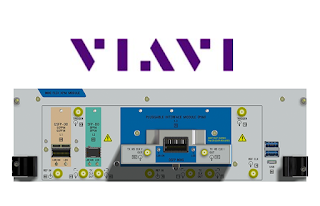
Viavi announces 800G QSFP-DD pluggable module test solution

Viavi Solutions announced support for QSFP-DD800 testing, accelerating the production of 800G network infrastructure. The VIAVI ONT XPM is the first lab validation system to offer support for both OSFP800 and QSFP-DD800 modules.

Viavi said its ONT XPM module is the industry's first fully-integrated test product for pluggable 800G transponders based on 100G electrical lane speed. The solution provides full coverage for both framed and unframed traffic generation and analysis. In addition to support for the Quad Small Form Factor Pluggable Double Density (QSFP-DD) 800G specification, the ONT XPM module also offers unique applications like TraCol, forward error correction (FEC) analysis and dynamic skew, specifically focused on the challenges of debugging the 100G PAM-4 electrical lanes used in 800G equipment and infrastructure.

"The VIAVI ONT Optical Network Tester is the established industry reference for pluggable optical module development, validation and test," said Tom Fawcett, Vice President and General Manager, Lab and Production Business Unit, VIAVI. "With support for QSFP-DD800 modules, we are further solidifying our customers' ability to accelerate their manufacturing operations to ensure they are first to bring new 800G network equipment to market."

https://www.viavisolutions.com/en-us/news-releases/viavi-augments-ont-800-xpm-modules-speed-800g-products-market

Nokia supplies optical transport for NL-ix

NL-ix, Europe’s largest distributed internet exchange, selected Nokia to provide metro access and backbone transport for all NL-ix customer traffic across Europe. 

Specifically, Nokia will supply its optical transport solutions to provide a new optical layer over NL-ix’s meshed interconnection fabric to enable seamless capacity growth link scaling. The new network will support client services from 1 Gbps to 400 Gbps. The deployment includes the Nokia 1830 PSS (Photonic Service Switch) and the Nokia PSI-M (Photonic Service Interconnect – Modular) family of WDM/OTN platforms, powered by its PSE-3s (Photonic Service Engine) coherent DSP technology.


Jan Paul Dekker, CTO at NL-ix, said: “This strategic partnership with Nokia highlights NL-ix’s commitment to delivering even higher capacity pan-European optical links between our POPs in the Netherlands and beyond. The modularity of Nokia’s next-generation optical transport solutions enables us to adapt and respond quickly to market demand and provide an even better quality of service and connectivity experiences for our customers. Nokia is a proven and trusted partner and is our preferred choice to transform our European optical backbone network.”

Mark Vanderhaegen, Director of Webscale Accounts at Nokia, said: “NL-ix is growing fast and attracting new members to become one of the largest internet exchanges in the world. The growth in international interconnection needs of its customers means that NL-ix requires higher capacity links between its European locations. Nokia is proud to have been chosen to provide its market-leading WDM/OTN technology and solutions to upgrade NL-ix’s optical transport network.”

Juniper enhances its AI-driven enterprise portfolio

Juniper Networks announced enhancements to the Juniper Mist cloud and AI engine, which include EVPN-VXLAN campus fabric management and additional Marvis Actions for proactive problem remediation. The new features within the AI-driven enterprise portfolio that enable customers to scale and simplify the rollout of their campus wired and wireless networks while bringing greater insight and automation to network operators.


The latest additions to Juniper’s AI-driven enterprise include:

AI-driven campus fabric management via the Juniper Mist Cloud: By enabling EVPN-VXLAN campus fabric management via the Juniper Mist Wired Assurance cloud service, Juniper offers the ability to simplify wired, wireless and WAN via a common cloud and AIOps engine. Juniper EVPN-VXLAN fabric leverages the same Juniper platform used to manage wired access in the campus, Juniper Mist Wired Assurance and the Marvis Virtual Network Assistant (VNA), bringing IT administrators unparalleled automation, insight and troubleshooting. The Juniper Mist Cloud empowers administrators to choose a topology, define networks of interest, identify required physical connections and apply the correct underlying policies in a seamless fashion. In addition, the Juniper Mist solution enables customers to leverage a common operational schema across LAN, WLAN and WAN environments, a key part of the Juniper client-to-cloud differentiation.

New Marvis Actions that provide deeper insight for faster problem remediation: Marvis Actions takes insight derived from the Mist AI engine, such as the root cause of a problem, and delivers actionable recommendations for IT managers via a simple dashboard. Additional actions have been added to the Marvis VNA software subscription to detect and correct even more wired/wireless/WAN issues, such as persistently failing wired/wireless clients, bad cables, access point (AP) coverage holes, bad WAN links and insufficient RF capacity, among others.

“Juniper is committed to Experience-First Networking, where our enterprise solutions leverage proactive automation, assured user experiences, agile cloud services and connected security to deliver the best end-user and operator experiences from client-to-cloud,” said Jeff Aaron, Vice President of Enterprise Marketing at Juniper. “In the campus and branch, this means leveraging AIOps, driven by Mist AI and the cloud to maximize user productivity and efficiency while minimizing IT costs through simplified operations and prescriptive insights. Today, we are excited to accelerate in these areas – and further distance ourselves from the competition – with new enhancements to our Juniper Mist Wired Assurance, Wireless Assurance and Marvis Virtual Network Assistant (VNA) cloud services that make it even easier to deploy, operate and troubleshoot campus networks at scale.”

DISH picks IBM Global Business Services to automate its 5G architecture

DISH Network Corporation has engaged IBM Global Business Services to help automate its greenfield cloud-native 5G network. 

Specifically, DISH will leverage IBM's AI-powered automation and network orchestration software and services to bring broad 5G network orchestration to DISH's business and operations platforms. Intent-driven orchestration, a software-powered automation process, and artificial intelligence (AI) will be utilized to drive the operations of DISH's cloud-native 5G network architecture.

The IBM Cloud Pak for Network Automation software delivers intent-based orchestration functionality to stitch hardware and software resources. This will help DISH make network slicing possible and accelerate the creation and delivery of new services. Network slices – individual pieces that comprise said network – will be managed by customers to set service levels for each device appropriate to their use of the network. For example, an autonomous vehicle can be supported by very low latency while an HD video camera can be allocated high bandwidth. 

"Our 5G build is unique in that we are truly creating a 'network of networks,' where each enterprise can custom-tailor a network slice or group of slices to achieve their specific business needs. IBM's orchestration solutions leverage AI, automation and machine learning to not only make these slices possible, but to ensure they adapt over time as customer use evolves," said Marc Rouanne, chief network officer, DISH Wireless. "With IBM, DISH is combining the speed and latency advances of 5G with the customization and intelligence of the cloud, and the result will be a paradigm shift for small businesses, large enterprises and the broader wireless industry."

"This is a seminal moment for DISH and the global telecommunications industry," said Steve Canepa, managing director, IBM Global Communications Sector. "By utilizing IBM's AI-powered automation and intent-driven network orchestration software, DISH can develop and deploy network offerings, applying advanced AI with IBM Watson and orchestration capabilities to help optimize network operations and performance. As a result, DISH can accelerate time to market for new innovative services powered by a secured, automated, intelligent and agile 5G network." 

https://www.ibm.com/cloud/cloud-pak-for-network-automation

L-com intros Erbium-Doped Fiber Amplifiers

L-com, an Infinite Electronics brand and a preferred manufacturer of wired and wireless connectivity products, announced today that it has launched a new series of Erbium-Doped Fiber Amplifiers (EDFA) and directly modulated fiber transmitters.

The new EDFA fiber amplifiers feature high-performance erbium-doped fiber with a low noise pump laser, embedded automatic monitoring system, AC power, 78 channels and an FC port. They operate on the 1550nm wavelength.

L-com's new directly modulated fiber transmitters are available in both 1310nm and 1550nm wavelength versions and feature AC Power, one SC/APC connector and a wide automatic gain control (AGC) range in the 1.2 GHz band.

"Our new EDFA amplifiers and fiber transmitters are critical components for distributing and extending optical signals in CATV network applications. By using an erbium-doped design, these new products offer the highest levels of output power, gain and very low insertion loss, resulting in the highest quality output signals," said Paul Hospodar, Product Line Manager.


Gigaphoton to double production of excimer laser light sources


Gigaphoton, a manufacturer of light sources used in semiconductor lithography, announced plans to double its production capacity of excimer laser light sources by 2023. The company is constructing a new facility, with its doors to open in April 2022, in order to establish a more stable supply system. 

Katsumi Uranaka, President & CEO of Gigaphoton said, “With demand for semiconductors on the rise around the world, we will do our utmost to meet the demand from our customers. This fiscal year, we will make full use of our existing resources for production and improve the efficiency of our production planning and lead times. Next year, the new facility will be completed and we will have a more stable supply system in place. As a manufacturer of lithography light sources, which are essential for semiconductor manufacturing, we will continue to contribute to the industrial sector by supporting the supply and operation of our products in a responsible manner.”

https://www.gigaphoton.com/en/


HPE names Fidelma Russo as CTO

Hewlett Packard Enterprise named Fidelma Russo as Chief Technology Officer for the company. In this role, Russo will lead the innovation agenda and technology roadmap for HPE and manage the design and development of the HPE Greenlake edge-to-cloud platform.


Russo most recently served as senior vice president and general manager of the Cloud Services business unit at VMware. She has also held senior leadership positions at Dell EMC, HP, Iron Mountain and Sun Microsystems. She currently serves as a director of SBA Communications and sits on the Audit Committee.

Fidelma holds a bachelor’s of science degree in electrical engineering from University College Cork, a master’s in computer science degree from Boston University, and completed the Internet of Things Executive education program at MIT’s Sloan School of Management.

Monday, September 13, 2021

II‐VI and Lumentum form SmartTuning Optics MSA

II‐VI and Lumentum are founding members of a new SmartTuning Multi-Source Agreement (MSA) that aims to standardize an interoperable self-tuning feature for full-band tunable dense wavelength division multiplexing (DWDM) pluggable optical transceivers. 

The companies say that incorporating a plug-and-play, self-tunable feature adds an extra layer of automation which further simplifies network installation and operation practices. Self-tunable DWDM pluggables eliminate the need for labeling or tracking fibers, reducing the overall operational cost for service providers. Additionally, the self-tuning functionality does not require new integration–within systems, the function can be enabled or disabled. 

"With the SmartTuning MSA, 5G mobile service providers will be able to better optimize their network architectures with easy-to-integrate, cost-effective, and automated optical networking solutions," said Justin Abbott, Lumentum Director of Product Line Management, Telecom Transmission. "This development should also accelerate the expansion of 5G network infrastructure by enabling more network automation, which results in less technician time in the field and lower ongoing network operating costs."

"The algorithms developed by the SmartTunable MSA will improve OpEx and CapEx for our end users by simplifying the deployment of their systems, reducing technician time in the field, and eliminating the need for tuning equipment,” said Dr. Lee Xu, Sr. Vice President, Transceivers Business Unit. “Our customers will greatly appreciate the efficiency and streamlined operations achieved through this standardization effort, as they ramp-up DWDM system deployments to support high speed wireline and 5G wireless broadband services.”

http://www.smarttunable-msa.org/

BT tests Quantum Key Distribution over hollow core fibre

 BT has conducted a trial of Quantum Key Distribution (QKD) over hollow core fibre cable developed by Lumenisity, a spin out from Southampton University.

Testing of Nested Anti-Resonant Nodeless Fibre (NANF) hollow core fibre kicked off this summer at the BT Labs in Ipswich.

BT researchers operated a state-of-the-art QKD system using commercial equipment over a 6-kilometre-long Lumenisity CoreSmart cable with a hollow, air-filled centre, revealing potential benefits such as reduced latency and no appreciable crosstalk – the effect of a transmitted signal interfering with the transmission of another signal.

Professor Andrew Lord, BT’s Head of Optical Network Research, said: “This is an exciting milestone for BT, accelerating the UK’s lead in quantum technologies that will play an important role in future communications systems globally. We’ve proven a range of benefits that can be realised by deploying hollow core fibre for quantum-secure communication. Hollow core fibre’s low latency and ability to send QKD over a single fibre with other signals is a critical advancement for the future of secure communications.”

Tony Pearson, VP Sales and Marketing at Lumenisity, said: “We are excited to be identifying new applications for our field deployable CoreSmart cable solutions and working with the BT team on the first trial in the world of this kind. This milestone further accentuates not just the capability of our hollow core cable solutions, offering low latency and high bandwidth, but also demonstrating the potential CoreSmart has in new applications thanks to ultra low non-linearity and dispersion across a broad spectrum, perfect for networks operated by our Carrier partners.”

https://newsroom.bt.com/bt-conducts-worlds-first-trial-of-quantum-secure-communications-over-hollow-core-fibre-cable/

ADVA brings post-quantum cryptography to optical transport

ADVA announced post-quantum cryptography (PQC) capabilities for its optical transport solution.The FSP 3000 ConnectGuard optical encryption solution relies on a hybrid key exchange system, combining PQC algorithms with classical encryption methods. It utilizes the traditional Diffie-Hellman protocol and combines it with a newly developed algorithm based on the quantum-safe McEliece cryptosystem. This enables it to produce encryption keys that even...

BT begins testing hollow core fibre

BT kicked off trials of hollow core fibre at the BT Labs in Adastral Park, Ipswich, in a collaborative project with Lumenisity, a Southampton University spin out company, and Mavenir.BT researchers are conducting the trials at BT’s research and engineering campus, using a 10-kilometre-long hollow core fibre cable provided by Lumenisity. The new fibre has a hollow, air filled centre that runs the entire length of the cable. It will be used to test...

Planning begins for a European quantum communication network

The European Commission has selected Airbus to lead a consortium of companies and research institutes to study the design of the future European quantum communication network, EuroQCI, to enable ultra-secure communication between critical infrastructures and government institutions across the European Union. The 15-month study will set out the details of the end-to-end system and design. The European Commission's ambition is to run a EuroQCI demonstrator...

Colt tests quantum-based super-encryption with ADVA

Colt Technology Services has successfully conducted a field trial of quantum-secured transport using ADVA's FSP 3000 platform with ConnectGuard Layer 1 encryption technology. The trial, which was conducted over Colt’s deployed metro network in Frankfurt, utilized quantum key distribution (QKD) to super-encrypt live data traffic. ADVA’s partner ID Quantique also played a key role in the trial. Colt harnessed the ADVA FSP 3000, which receives...


Avicena demos multi-Tbps LED interconnect

At this week's European Conference for Optical Communications (ECOC) 2021, Avicena Tech Corp. is demonstrating its LightBundle multi-Tbps LED-based chip-to-chip interconnect technology.

The Avicena LightBundle achieves order-of-magnitude improvements in power dissipation and density over any other interconnect technology up to a reach of 10 meters. LightBundle™ is purpose-built for multi-Tbps chip-to-chip interconnects in distributed computing, processor-to-memory disaggregation, and other advanced computing applications. Avicena is based in Mountain View, California. 

Avicena's LightBundle is based on arrays of novel GaN high-speed micro-emitters with a reach of up to 10m. The technology leverages the microLED display manufacturing ecosystem and is fully compatible with high performance CMOS ICs. The company’s CROMEs are about an order of magnitude faster than the current state-of-the-art LEDs. At 200 parallel lanes this extrapolates to an aggregate link bandwidth of 2Tbps with a bandwidth density of 10Tbps/mm2.

“All of this is changing with the recent progress in optical emitter technology driven by advances in the display industry,” says Bardia Pezeshki, founder and CEO of Avicena. “We have developed super-efficient, high-density optical transmitters based on emitter technology from the display industry. These innovative devices would have been impractical just a few years ago. Our optimized devices and materials support 10Gbps links per lane over -40°C to +125°C temperature with excellent reliability. We refer to our new optical sources as Cavity-Reinforced Optical Micro-Emitters or CROMEs. We connect CROME arrays with CMOS compatible PDs using multi-core fiber bundles to create massively parallel interconnects with 100s of parallel lanes with a density of 10Tbps/mm2 over a reach of up to 10m. We call this new class of optical interconnect the Avicena LightBundle.”

https://avicena.tech/

Cloudflare expands to 250 cities and reaches 100 Tbps capacity

Cloudflare's network now spans more than 250 cities in over 100 countries, including three new locations across Europe: Cork, Ireland; Palermo, Italy; and Ekaterinburg, Russia. In total, Cloudflare has data centers in all of the below 47 cities across 30 countries across Europe.

Over the past 2 years, Cloudflare has more than tripled its overall network capacity to 100Tbps and increased the number of cities in its network by 25%.  Currently, Cloudflare’s network interconnects with over 9,800 networks globally, including major ISPs, cloud services, and enterprises.


“We want to optimize the scale and intelligence of our network so that Cloudflare is not only the most global network on Earth, but also the most local one,” said Matthew Prince, co-founder and CEO of Cloudflare. “We will continue to invest in bringing our network closer to as many people as possible because we believe in providing security, privacy, and reliability for all. On top of expanding our network, we’ll soon share more on how we are creating the fastest modern network.”


https://www.cloudflare.com/

Crosslake Fibre picks Ciena for cable across the English Channel

Crosslake Fibre has selected Ciena for a new submarine cable and terrestrial network between Slough, UK, and Paris, France.  The network, called ‘CrossChannel Fibre,’ is the first fibre cable project of its kind to be built across the busy shipping lanes of the English Channel since 2001. 

Crosslake is deploying Ciena’s 6500 packet-optical platform powered by WaveLogic 5 Extreme. Crosslake is also using Ciena’s Manage, Control and Plan (MCP) with Liquid Spectrum's Channel Margin Gauge app to allocate and scale capacity in real-time, from 600Gbps to 800Gbps, to quickly adapt to changing customer requirements and maximize the value of deployed assets.

“There hasn’t been a new fibre network across the Channel in two decades,” said Mike Cunningham, CEO, Crosslake Fibre. “We saw the need for a modern network infrastructure—one that can handle the rigorous demands of today’s digital world, but also serve generations well into the future. And that’s the vision behind CrossChannel.”

“A lot of online activities, but especially gaming and streaming, call for blazing performance and minimal delays or lag,” said Ian Clarke, Vice President of Global Submarine Solutions, Ciena. “Crosslake’s submarine cable network, with its high reliability and speedy connectivity, plays a pivotal role in elevating experiences like eSports and videoconferencing.”

http://www.crosslakefibre.ca

https://www.ciena.com/

SpaceX launches 51 Starlink satellites into polar orbit from California

SpaceX launched 51 Starlink satellites into polar orbit from Space Launch Complex 4E (SLC-4E) at Vandenberg Space Force Base in California.

The launch used a Falcon 9 booster that previously launched Telstar 18 VANTAGE, Iridium-8, and seven Starlink missions. Following stage separation, the Falcon 9’s first stage landed on the “Of Course I Still Love You” droneship stationed in the Pacific Ocean. One half of Falcon 9’s fairing halves previously supported NROL-108 and the other previously flew on GPS III-3 and Turksat-5A.

This launch was the 32nd Starlink mission.  It is the first launch of upgraded Starlink satellites equipped with space lasers for satellite-to-satellite links.

https://www.spacex.com/


Windstream joins Open ROADM Forum

Windstream has joined Open ROADM, a multi-source agreement forum that defines compatibility standards for optical networking gear. 


Windstream said it continues to be a strong advocate for open standards as demonstrated with its own Intelligent Converged Optical Network (ICON) architecture, which leverages the advantages of a disaggregated network architecture with multi-vendor open line system scalability and alien wave support. Windstream is focused on driving innovation in the disaggregated L0/L1 solutions at the very edge of carrier networks; contributing to transceiver interoperability, in both greenfield and brownfield environments; managing tradeoffs between proprietary performance/efficiency and openness/interoperability; and developing software solutions for managing open networks.

“Windstream is honored to be joining the distinguished group of service providers and vendors that make up Open ROADM,” said Art Nichols, vice president of network architecture and technology. “We share the belief that the best way network providers can drive faster innovation is to introduce openness and programmability into all areas of the network, including the optical arena. Much has already been accomplished by Open ROADM to reduce vendor lock-in and drive multi-vendor efficiencies in the optical domain, but there’s still a great deal of work to do and we look forward to contributing to that important effort.”

“We will continue to demonstrate our leadership position in optical networking, and joining a Forum like Open ROADM will enhance that path forward,” said Buddy Bayer, Windstream’s chief network officer.

http://www.windstreamwholesale.com

Sunday, September 12, 2021

Hughes and OneWeb alliance targets enterprise services

Hughes Network Systems and OneWeb have signed a distribution agreement in the U.S. focused on enterprise services. 

In India, the parties have entered into an MOU for a strategic agreement to distribute services to large enterprises, small and medium businesses, government, telcos and ISPs, including in the rural and remote parts of the country. 

Hughes and OneWeb also stated that thy intend to work together to broaden distribution globally, with Hughes to offer OneWeb's low-latency, high-speed connectivity for markets such as enterprise, government, commercial aviation and maritime, cellular backhaul, and community Wi-Fi hotspots.   

The companies also highlighted a demonstration of multi-orbit connectivity in action. The test, recorded on August 26, featured the successful real-time, seamless switching between the Hughes JUPITER 2 geostationary, high-throughput satellite (HTS) and OneWeb's low latency, high speed LEO constellation. 


Hughes' ActiveTechnologies software instantaneously evaluated the type of traffic and transmitted it over the most efficient path: latency-sensitive activities (like fast-twitch video gaming and a video call) were transmitted via OneWeb; bandwidth-intensive activities like video streaming were transmitted via JUPITER HTS.

Hughes, through its parent company EchoStar, is an investor in OneWeb. It is also an ecosystem partner to OneWeb, developing gateway electronics and the core module that will power every user terminal for the system. And Hughes is the prime contractor on an agreement with the U.S. Air Force Research Lab to integrate and demonstrate managed LEO SATCOM using OneWeb capacity in the Arctic region.

OneWeb's initial constellation will consist of 648 LEO satellites. Services will begin this year to the Arctic region, including Alaska, Canada, and the UK. By late 2022, OneWeb will be offering its high-speed, low latency connectivity services globally. Service testing on the satellites already in orbit is underway, using gateways that Hughes is building for the network. Results are positive, including seamless satellite and beam handovers, high speeds and low latency.

Hughes is developing its next-generation JUPITER 3 Ultra-High Density Satellite, expected to launch in the second half of 2022.

Pradman Kaul, President, Hughes, said: "The future of connectivity depends on a worldwide network of multiple transports, including terrestrial, geostationary and Low Earth Orbit satellite services. OneWeb's system enhances the Hughes portfolio of networking capabilities, introducing a low-latency option with global reach that complements GEO satellite capacity density and capability to meet our customers' needs. As a case in point, in India which has been starved of high-throughput satellite services, the OneWeb services will help us meet the tremendous backhaul and broadband demand."

IDC: Switching revenues rise 11% while routing dip 0.5% in Q2

The worldwide Ethernet switch market recorded revenues of $7.4 billion in the second quarter of 2021 (2Q21), an increase of 10.8% year over year, while worldwide enterprise and service provider (SP) router market revenues declined 0.5% year over year in 2Q21 to $3.9 billion, according to IDC's Worldwide Quarterly Ethernet Switch Tracker and Worldwide Quarterly Router Tracker.

"IDC witnessed a strong start to 2021 for the global Ethernet switch market, as macroeconomic conditions improved and a growing number of organizations worldwide demonstrated perseverance and digital resilience in the face of the rolling challenges presented by the COVID-19 pandemic," said Brad Casemore, research vice president, Datacenter and Multicloud Networks at IDC. "Enterprises made notable investments in their campus networks, while hyperscalers and other providers of cloud services continue to drive growth in high-bandwidth datacenter switching."

Highlights from IDC

Switching

The Ethernet switch market's annualized growth of 10.8% builds upon the 7.6% growth in the first quarter of 2021. For the first half of the year, Ethernet switch revenues are up 9.3% over 2020. Compared to the second quarter of 2019 – before the COVID-19 pandemic – revenues increased 3.8%.

From a geographic perspective, the 2Q21 Ethernet switch market had strong results across most parts the world. In Asia/Pacific, the People's Republic of China revenues grew 11.6% year over year while Japan's market increased 8.3%. More broadly in the Asia/Pacific region, excluding China and Japan, the market rose 20.5% year over year in the quarter, buoyed by the market in Singapore growing 58.2% annually. In Europe, results were mixed: Western Europe's market rose 23.1% year over year with strength from France, which grew 39.3%. Central and Eastern Europe's market was essentially flat at 0.5% growth with Russia declining 4.8%. In the Middle East & Africa, the market increased 2.6% year over year. Across the Americas, revenues in the United States rose 6.2%, Canada's market fell 1.0%, and Latin America's market increased 8.1% year over year with Mexico rising 15.8% compared to a year earlier.

Overall port shipments increased 28.4%, driven by strength in the non-datacenter portion of the Ethernet switch market. Non-datacenter Ethernet switch revenues grew 17.7% in 2Q21 with port shipments increasing 36.1%. The non-datacenter ethernet switch portion of the market makes up 88.6% of port shipments and 58.5% of total market revenues with the balance of revenues and port shipments in the datacenter portion of the market. In the datacenter segment, revenues rose 2.4% year over year, while port shipments declined 10.6%.

The higher-speed segments of the Ethernet switch market continue to see significant growth, driven by hyperscalers and cloud providers. Market revenues for 200/400 GbE switches grew 132.5% from the first quarter to the second quarter of 2021, with port shipments more than tripling (+206.0%) on a sequential basis. 100GbE revenues increased 15.4% on an annualized basis, while port shipments rose 11.4% year over year. 25/50 GbE revenues increased 25.6% year over year while port shipments rose 1.3%.

Lower-speed switches, a more mature part of the market, saw mixed results. 10GbE port shipments rose 3.1% year over year, but revenue declined 8.4%. 10Gb switches make up 23.4% of the market's total revenue. 1GbE switches increased 33.2% annually in port shipments and 14.4% in revenue. 1GbE accounts for 35.9% of the total Ethernet switch market's revenue. 2.5/5GbE revenue increased 25.3% sequentially from 1Q21 to 2Q21, while port shipments rose 26.6% quarter over quarter.

Router Market

The worldwide enterprise and service provider router market declined 0.5% year over year in 2Q20 with the major service provider segment, which accounts for 76.7% of revenues, falling 0.8% and the enterprise segment increasing 0.4%. From a regional perspective, the combined service provider and enterprise router market increased 15.7% in Asia/Pacific (excluding Japan & China). Japan's market increased 4.9% while the People's Republic of China market was down 14.4% year over year. Revenues in Western Europe grew 3.3% year over year, while in Central and Eastern Europe the combined enterprise and service provider market was flat. The Middle East & Africa region grew 4.3%. In the U.S., the enterprise segment was down 4.8%, while service provider revenues increased 7.8%, giving the combined markets a 4.6% increase on an annualized basis. The Latin America market grew 1.0% on an annualized basis and Canada's market increased 2.2% year over year.

Company highlights

  • Cisco finished 2Q21 with a 4.5% increase in overall Ethernet switch revenues and market share of 44.1%. Cisco's combined service provider and enterprise router revenue grew 2.4% year over year with enterprise router revenue decreasing 9.8% and SP revenues increasing 10.1%. Cisco's combined SP and enterprise router market share stands at 34.2% in the quarter.
  • Huawei's Ethernet switch revenue increased 3.5% on an annualized basis, giving the company market share of 11.1%. The company's combined SP and enterprise router revenue declined 8.5% year over year, giving the company a market share of 33.4%.
  • Arista Networks saw Ethernet switch revenues increase 31.6% in 2Q21, bringing its share of the total market to 7.5%.
  • H3C's Ethernet switch revenue increased 10.6% year over year, giving the company market share of 7.0% in the quarter. In the combined service provider and enterprise routing market, H3C's revenues increased 32.6%, giving the company 2.5% market share.
  • HPE's Ethernet switch revenue increased 46.4% year over year, giving the company a market share of 6.7%.
  • Juniper's Ethernet switch revenue increased 23.3% year over year in 2Q21, bringing its Ethernet switch market share to 3.1%. Juniper saw a 3.9% decline in combined enterprise and SP router sales, bringing its market share in the router market to 9.8%.

https://www.idc.com/getdoc.jsp?containerId=prUS48222221

IDC: Worldwide server market revenue dips 2.5% in Q2

Worldwide server market revenue declined 2.5% year over year to $23.6 billion during the second quarter of 2021 (2Q21), while worldwide server shipments surpassed 3.2 million during the quarter, an increase of just 0.1% over the previous year, according to the International Data Corporation (IDC) Worldwide Quarterly Server Tracker.

Volume server revenue was up 5.6% to nearly $20.0 billion. Midrange server revenue declined 30.0% to $2.4 billion, and high-end servers declined by 32.7% to $1.3 billion.

"Broadly speaking, server market performance was muted in the second quarter as the market shifted slightly towards single socket server configurations," said Paul Maguranis, senior research analyst, Infrastructure Platforms and Technologies at IDC. "While servers purchased directly from ODMs declined year over year, some past backlog recovery within the hyperscale datacenter community contributed to a large jump in this segment when compared to the first quarter of this year."

Overall Server Market Standings, by Company

  • HPE/H3C ended the quarter in a statistical tie with Dell Technologies for the top position in the worldwide server market. The revenue shares for the two companies were 15.7% and 15.6% respectively. 
  • Inspur/Inspur Power Systems ranked third with 9.4% revenue share. 
  • Lenovo was in fourth place while IBM came in at fifth, with 7.0% share and 5.0% share respectively. 
  • The ODM Direct group of vendors accounted for 26.7% of total server revenue and declined 8.8% year over year to $6.3 billion while accounting for 32.2% of all units shipped during the quarter.

https://www.idc.com/getdoc.jsp?containerId=prUS48221821

Dell'Oro: Sales of broadband access equipment rise 7% in Q2

Total global revenue for the Broadband Access equipment market increased to $3.6 B in 2Q 2021, up 7 percent year-over-year (Y/Y). Growth came from spending on both Cable and PON infrastructure, according to a new report from Dell'Oro Group.

"Fiber buildouts for residential, business, and mobile transport applications show no signs of slowing," noted Jeff Heynen, Vice President, Broadband Access and Home Networking at Dell'Oro Group. "Despite supply chain constraints and increased costs, operators continue to prioritize spending on their broadband access networks," explained Heynen.


Additional highlights from the 2Q 2021 Broadband Access and Home Networking quarterly report:

  • Total cable access concentrator revenue increased 12 percent Y/Y to $247 M. Node splitting activity continues, resulting in increased DOCSIS licenses as well as new DAA node purchases.
  • Total DSL Access Concentrator revenue was down 51 percent Y/Y, driven by slower port shipments worldwide as more operators shift their spending to fiber.
  • Total PON ONT unit shipments exceeded 35 M for the second time in three quarters.

https://www.delloro.com/news/accelerating-fiber-deployments-fuel-7-percent-y-y-growth-for-broadband-equipment/

Dell'Oro: Campus switch sales surge 15% yoy in Q2

The worldwide Campus Switch market revenue surged in 2Q 2021, growing 15 percent year-over-year, according to a new report from Dell'Oro Group. The last time we saw such a robust performance was back in 4Q 2018 when Cisco initiated its Catalyst 9K refresh cycle.


“Although a favorable comparison with the year-ago period may have played a role in this rebound, it is very encouraging to see a broad-based growth across all major regions; enterprises of all sizes (from large to small); and nearly all industry verticals, including those that have been hit hard by the pandemic such the hospitality sector,” said Sameh Boujelbene, Senior Director at Dell’Oro Group. “This is an improvement from the prior quarter where the recovery has been driven mostly by government stimulus that benefited mainly the public sector,” added Boujelbene.

Additional highlights from the 2Q 2021 Ethernet Switch – Campus Report:

  • The year-over-year growth was broad-based across nearly all vendors, including those with high exposure to the low-end market.
  • Despite the robust growth, supply constraints impacted to some degree certain products and vendors. A more pronounced impact may manifest in the second half of the year.

https://www.delloro.com/news/the-campus-switch-market-roars-back-in-2q-2021/


Slovak Telekom picks Ekinops to upgrade its network access

Slovak Telekom, a Deutsche Telekom Group member, has selected Ekinops' network access solution to upgrade its legacy symmetrical DSL network.

Slovak Telecom is utilizing Ekinops’ ONE521 router, which combines a DSL modem, a Fiber port and LTE as an option. Slovak Telekom can now benefit from this remotely provisioned router based on the Ekinops OneOS6 operating system. The OneOS6 software offers as standard a broad set of network access features, and also supports advanced VPN, SD-WAN and a Microsoft Direct Routing certified session border controller. 


Ekinops says its solution enables Slovak Telekom to easily expand its service portfolio and handle increasing connectivity demands (from DSL to Fiber) without changing hardware.

“We were familiar with Ekinops’ strong technical capabilities and personalized, collaborative approach following its close work with other Deutsche Telekom group members,” commented Jozef Lachkovic, Director of Technology Transformation and Optimization at Slovak Telekom. “These qualities have been central to this project’s success. Highly responsive and agile, Ekinops has delivered a flexible, open and cost-effective solution that aligns with our needs today and in the future.”