Monday, January 30, 2017

25 Gigabit Ethernet Consortium Completes 25G/50G Plugfest

The 25 Gigabit Ethernet Consortium announced record participation in, and successful completion of, the first 25G and 50G Ethernet plugfest.

The plugfest, which was held at the University of New Hampshire InterOperability Laboratory (UNH-IOL) in Durham, New Hampshire, provided a forum where consortium members could collaborate and ensure interoperability of feature sets and configurability between their products. Sixteen companies attended the week-long event with a wide variety of test scenarios including auto-negotiation and stressed conditions. The testing demonstrated a high degree of multi-vendor interoperability and specification conformance.

The plugfest was highlighted by the following activities:

  • Interoperability between vendors including adapters, switches, test and measurement devices, and interconnects
  • Proving advanced infrastructure connectivity
  • Plug and play multi-vendor compatibility
  • Successful auto-negotiation
  • Support for both forward and backward compatibility

“In order to handle the increasing amount of data, server architectures all too often require multiple 10G ports. 25G Ethernet arrives just in time and has started its climb towards dominance as the leading server-to-ToR switch interconnect. As this transition occurs, plugfests assure users that 25G and greater speeds from different vendors will perform as advertised with solid plug-and-play interoperability,” said Vittal Balasubramanian, chair of the 25G/50G Ethernet Interop Committee and Principal Signal Integrity Engineer at Dell.

“Due to the success of this interoperability test event, the steering committee of the consortium has decided to make its specification available to the public,” stated Brad Booth, chair of the 25G Ethernet Consortium. “The consortium is looking forward to future events to evaluate interoperability between the consortium specification and IEEE Std. 802.3by™-2016.”

http://www.25gethernet.org

Keysight to Acquire Ixia for $1.6 Billion

Keysight Technologies (formerly Agilent's test and measurement group) agreed to acquire Ixia for $1.6 billion in cash. Ixia shareholders will receive $19.65 per share in cash, representing a premium of approximately 45 percent to Ixia’s unaffected closing stock price on Dec. 1, 2016, the last trading day prior to media reports that Ixia was considering strategic alternatives, and a premium of approximately 38 percent to the Ixia’s unaffected 52-week high closing stock price for the period ended Dec. 1, 2016.

The companies said their combination brings industry expertise spanning electronic design, device and network validation, and application and security performance. The merged company will offer a unique combination of Layer 1 through 7 end-to-end solutions for assessing performance from the mobile device to the data center and the cloud.

Ixia has a broad IP portfolio that encompasses network communications, visibility, application and security technologies with solutions deeply rooted in software. Additionally, Ixia’s IP includes extensive networking and wireless protocols that will extend Keysight’s position in wireless communications and create a unique combination of Layer 1 through 7 end-to-end solutions that address fast-growing segments of the 5G communications design and test ecosystem.

“The proposed acquisition of Ixia is in direct alignment with our strategy to transform Keysight for growth and is 100 percent complementary to our business,” said Ron Nersesian, Keysight president and CEO. “The combination creates a powerful innovation engine to fuel growth, expands our software-centric solutions and builds new opportunities through sales and technology leverage. Ixia also brings a world-class level of talent, and together, we will provide leading-edge solutions that address the fastest-growing communications and networking trends including 5G, IoT, visibility, security and application performance.”

“We are confident that Keysight is the ideal partner to accelerate our growth initiatives and will continue to build upon our successful 20-year history,” said Bethany Mayer, Ixia president and CEO. “Ixia and Keysight share many of the same values including our dedication to innovation of leading-edge technologies, and commitment to operational excellence and financial discipline, which combine to create value for shareholders. We also have industry leading IP portfolios that are complementary, deep technical prowess and amazing teams. We believe that together, Ixia and Keysight have a tremendous opportunity to further strengthen our market leading positions and create unprecedented value for our customers, partners, employees and shareholders. The transaction also provides Ixia shareholders significant cash value at a substantial premium to market.”

http://www.keysight.com
http://www.ixiacomcom

Intel Promotes Aicha Evans

Intel has promoted Aicha S. Evans from corporate vice president to senior vice president. She is general manager of the Communication and Devices Group at Intel and is responsible for driving wireless communications for all Intel platforms. Evans joined Intel in 2006, was elected to corporate vice president in 2014, and is based in Santa Clara, California.

Intel also announced the promotion of Steven R. Rodgers from senior vice president to executive vice president. He is general counsel of Intel and leads Intel’s Law and Policy Group. Rodgers joined Intel in 2000, was elected senior vice president in 2015, and is based in Santa Clara, Calif.

In addition, Leslie S. Culbertson was promoted from corporate vice president and director of finance to senior vice president and director of human resources. She will oversee all of Intel’s human resource functions and policies. Culbertson joined Intel in 1979, was elected to corporate vice president and director of finance in 2003, and is based in Hillsboro, Oregon.

http://www.intelcom

Second Intelsat Epic Enters Service

Intelsat 33e, the second of the Intelsat EpicNG high throughput satellites (HTS), successfully completed all in-orbit testing and entered service on 29 January 2017.

Intelsat 33e was manufactured by Boeing and is equipped with the most advanced digital payload on a commercial spacecraft.

Intelsat 33e will extend Intelsat’s high throughput capacity in both C- and Ku-band from the Americas to include Europe, the Middle East, Africa, Asia Pacific, the Mediterranean and Indian Ocean regions.

Intelsat said it has a number of customers already committed to Intelsat 33e, some of which include Pakistani Internet service provider SuperNet Limited, African telecommunications providers such as Telkom South Africa, Orange, IP Planet, Vodacom, Dijoubti Telecom, Safarifone and Africell RDC SPRL.; Russian network service providers Romantis and RuSat LLC; and media customers including TV & Radio Broadcasting (formerly Television and Radio Broadcasting of Armenia), and MultiChoice of South Africa.

“The experience of implementing Intelsat EpicNG and bringing it to our customers has affirmed our beliefs about the potential of HTS,” said Stephen Spengler, Chief Executive Officer, Intelsat. “We have a dynamic, open and evolving platform that will increase in capability over time, providing a technology hedge for our customers that need to make investments today on which they can build for a decade of growth. Intelsat is delivering on the promise of HTS, and our design and strategy will advance our vision of unlocking access to new, larger and faster growing sectors for Intelsat and our customers.”

http://www.intelsat.com

Sunday, January 29, 2017

Network Visibility 2017 - Level 3 Communications


Managing the customer experience has to be the highest priority for Service Providers, says Andy Huckridge, Director of Service Provider Solutions at Gigamon.  The next wave of software-defined services has started to roll.

Level 3 is keenly focused on the customer experience, says Adam Saenger, VP Product Development and Management, Level 3. The customer experience extends across a continuum of shop, buy, get, use, pay and renew.  Each step needs to be assessed.

Series produced by Converge! Network Digest and sponsored by Gigamon.


PTC'17: Next-Wave Network Interconnections - DE-CIX


2016 was an eventful year for DE-CIX with the launch of the fastest-growing Internet Exchange in Madrid, the widely-distributed exchange in New York, and a new presence in Istanbul, Marseille, and Palermo, addressing the future traffic exchange requirements for African and Middle Eastern networks.

In this video, Ivo Ivanov discusses the next advances for network interconnection. It's going to be an eventful year as DE-CIX brings to market new classes of network interconnections.

Filmed at PTC'17 in Honolulu, Hawaii.

https://youtu.be/LJptj7FaHWM


Ericsson Announces Support for OpenECOMP

Ericsson announced its supportive of AT&T's OpenECOMP initiative, saying it shares the vision of a modular and model-driven management and orchestration system with analytics and policy-based control. Ericsson wants to accelerate industry alignment in Network Functions Virtualization (NFV) and Software Defined Networking (SDN) management and orchestration. To this end, Ericsson will support service providers who deploy OpenECOMP and work with AT&T to encourage industry alignment.

“Network Functions Virtualization is about developing software that enables the best usage of underlying common hardware platforms, while employing the agility and flexibility of a cloud environment. Ericsson, a global leader in NFV/SDN Infrastructure, Network Applications, and Management and Orchestration, is highly supportive of the open source development in this area, and Ericsson will continue to engage and drive the industry alignment, stated Ulf Ewaldsson, Ericsson’s Chief Strategy and Technology Officer.

Ericsson noted that  will continue to collaborate and contribute toward projects like OpenStack, Linux, OpenDaylight and OPNFV.

https://www.ericsson.com/news/170127-ericsson-supports-openecomp-management-orchestration_244010065_c

Friday, January 27, 2017

Source Photonics Invests in Next Generation FTTx

Source Photonics has expanded investments in its market leading 10G PON OLT and ONU product lines to support the upcoming fixed access network upgrade cycle from EPON and GPON to 10GEPON and XG(S)PON.

The company said its investment at all levels of manufacturing, including laser chips and advanced optical modules, will enable continuing leadership as the highest volume vertically integrated provider in the market. This contrasts with several industry participants who have publicly announced an exit from the FTTx transceiver market due to eroding margins and declining competitiveness.

Leveraging its vertically integrated business model and state-of-the-art LEAN manufacturing facilities, the company’s investments include capacity to support EML laser diode and optical sub-assembly volumes projected by customers and policy regulators.

“Over the last two years, we successfully ramped our 100G product line to world class levels of performance. We are excited to expand this operating infrastructure as we support early deployments of next generation FTTx networks,” stated Doug Wright, CEO of Source Photonics.

10GEPON OLT modules manufactured on the expanded lines are in production and currently available for order. XGPON and XGSPON OLT modules expected to release later this year will leverage the same manufacturing assets.

http://www.sourcephotonics.com

Nokia Builds an Engineering Digital Assistant for Telecom Carriers

Nokia introduced "MIKA" a customized 'digital assistant' for helping the network engineers of telecom operators gain faster access to critical information.

MIKA - or Multi-purpose Intuitive Knowledge Assistant - is powered by the Nokia AVA cognitive services platform and underpinned by Nokia's services expertise. It will provide voice-dictated automated assistance to reduce time spent searching information resources, enabling operators to focus on key business tasks without being distracted by the complexities of multi-technology network environments.

Nokia said its MIKA - is the first digital assistant 'trained' specifically for the telecom industry.

Igor Leprince, head of Global Services at Nokia, said: "Finding the right information is a daily challenge for telco engineers tasked with boosting network quality. MIKA taps into the power of the Nokia AVA platform to provide quick and accurate answers, avoiding time wasted on fruitless searches. MIKA is customized to support the specific needs of telecoms, and can deliver recommendations based on experience from networks around the world."

In addition to launching MIKA, Nokia introduces Predictive Repair, a service that will enable operators to reduce costs and improve network quality by moving away from break-fix approaches to hardware maintenance. This care service can predict hardware failures and recommend replacements up to 14 days in advance, with up to 95 percent accuracy. These recommendations will allow operators to improve efficiency by avoiding unnecessary site visits, wasted operations efforts, excessive inventory, and false 'No Fault Found' returns.

http://www.nokia.com

Nokia Wins EUR 30M Contract with Bangladesh's Teletalk

Bangladesh's Teletalk awarded a contract to Nokia to improve coverage in rural areas not currently covered by 2G and 3G networks and enhance the quality of services in urban areas.

Under the agreement, Nokia's will supply its Single RAN technology to allow 2G, 3G and 4G technologies to run from a single platform.  Teletalk will deploy the Nokia Single Radio Access Network (RAN) platform, extending its service offerings in parts of the capital city, Dhaka, and five divisions including Rajshahi, Mymensingh, Sylhet, Khulna and Barisal, covering 70% of Bangladesh.

At the end of September 2016, Bangladesh had 66.86 million internet subscribers, out of which 62.9 million accessed the Internet on mobile, according to the Bangladesh Telecommunication Regulatory Commission.

http://www.nokia.com

Thursday, January 26, 2017

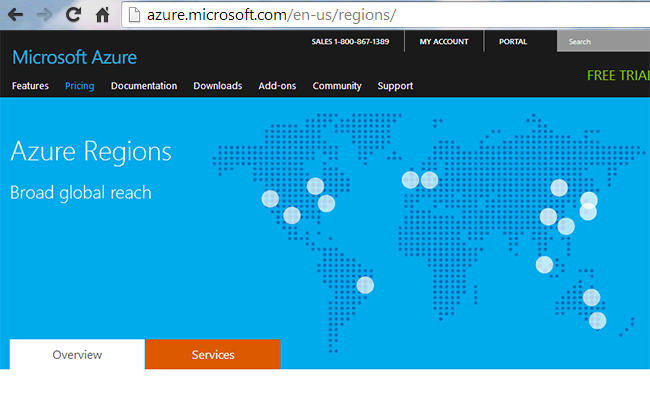
Microsoft Azure Revenue Increases 93% YoY

Microsoft posted revenue of $24.1 billion GAAP and $26.1 billion non-GAAP for its quarter ending 31-Dec-2016. Net income was $5.2 billion GAAP, and $6.5 billion non-GAAP.

“Our customers are seeing greater value and opportunity as we partner with them through their digital transformation,” said Satya Nadella, chief executive officer at Microsoft. “Accelerating advancements in AI across our platforms and services will provide further opportunity to drive growth in the Microsoft Cloud.”

Some cloud highlights:

  • Office commercial products and cloud services revenue increased 5% (up 7% in constant currency) driven by Office 365 commercial revenue growth of 47% (up 49% in constant currency)
  • Office consumer products and cloud services revenue increased 22% (up 21% in constant currency) and Office 365 consumer subscribers increased to 24.9 million
  • Dynamics products and cloud services revenue increased 7% (up 9% in constant currency) driven by Dynamics 365 revenue growth
  • Revenue in Intelligent Cloud was $6.9 billion and increased 8% (up 10% in constant currency), with the following business highlights:
  • Server products and cloud services revenue increased 12% (up 14% in constant currency) driven by double-digit annuity revenue growth
  • Azure revenue increased 93% (up 95% in constant currency) with Azure compute usage more than doubling year-over-year
  • Enterprise Services revenue decreased 4% (down 2% in constant currency) with declines in custom support agreements offset by growth in Premier Support Services and consulting.


http://www.microsoft.com

Ixia Demos 400GbE via Four-Level PAM4

Ixia successfully demonstrated 400 Gigabit Ethernet (GbE) technology by combining eight electrical lanes of 56 Gbps, defined as 400GAUI-8 by IEEE802.3bs, via four-level Pulse Amplitude Modulation (PAM4).

Ixia said currently supports and collaborates with two key multisource agreement (MSA) development groups to help drive the effectiveness and efficiency of 400 GbE technology: double-density quad small-form-factor pluggable (QSFP-DD) MSA, and Octal Small Form Factor Pluggable (OSFP) MSA.

The QSFP-DD MSA Group is addressing the technical challenges of achieving a double-density interface and ensuring mechanical, electrical, thermal, and signal-integrity interoperability for module components produced by different manufacturers. Collaboration through the MSA is intended to enable faster implementation and easier operation of the high-speed, double-density quad small-form-factor pluggable interface in networking equipment. QSFP-DD addresses increasing global bandwidth consumption with its ability to quadruple aggregate switch bandwidth while maintaining port density.

The OSFP MSA is comprised of 49 industry leaders who are tasked with defining the form factor for new 400 GbE transceiver module that will support the full range of 400 GbE optics technologies, from datacenter to metro reach.

http://www.ixiacom.com

Juniper Posts Q4 Revenue of $1.386B, up 5% YoY

Juniper Networks reported preliminary net revenues for the fourth quarter of 2016 of $1,385.6 million, an increase of 5% year-over-year and an increase of 8% sequentially. Juniper's GAAP operating margin for the fourth quarter of 2016 was 21.5%, an increase from 21.2% in the fourth quarter of 2015, and an increase from 19.5% in the third quarter of 2016. GAAP net income was $197.4 million, flat year-over-year, and an increase of 15% sequentially. GAAP diluted earnings per share for the fourth quarter of 2016 was $0.51.

"I am pleased to report year-over-year revenue and non-GAAP earnings growth after a challenging start to 2016," said Rami Rahim, chief executive officer at Juniper Networks. "We believe we are successfully executing on our strategy to diversify our business and capture share in the cloud and cloud-enabled segments of our market. Our innovation pipeline and product portfolio are strong and position us well as we head into 2017."

http://www.juniper.net

T-Mobile Boosts Capacity in Houston Sites 20X Ahead of Super Bowl

T-Mobile has permanently increased 4G LTE capacity nearly 20x in and around Houston’s NRG Stadium and more than 10x at area airports, venues and hotels in the last year in anticipation of the upcoming Super Bowl.

“When carriers get ready for big events, they just bring in a lot of temporary, short-term fixes. That’s not how we roll, so when we souped up T-Mobile’s network in Houston, we did it permanently and all through the city -- not just in one place and not just for the weekend,” said Neville Ray, T-Mobile CTO. “For us, just being the fastest and most advanced LTE network is never enough. We push the limits every day, and I predict T-Mobile’s LTE network will be the fastest at this year’s game, just as we were last year!”

The boost was achieved by using more LTE spectrum, including Extended Range LTE; three carrier aggregation for a total of 35+35 MHz of LTE; new small cells and Distributed Antenna Systems (DAS); 4x4 Multiple Input Multiple Output (MIMO) and 256 Quadrature Amplitude Modulation (QAM).

http://www.t-mobile.com/coverage

Ericsson and Orange Exceed 10G in 5G Testing

Ericsson and Orange have exceed 10 Gbps peak rates in lab testing for 5G technologies in France.

"The significant increase in throughputs, including on the move, is one of the promises of 5G. These ever-increasing speeds will be needed for new use cases such as Virtual Reality, Augmented Reality, or the needs of business environments. Thanks to our 5G partnership with Ericsson, we are preparing the future of networks," says Alain Maloberti, senior vice president of Orange Labs Networks.

A video is posted online.

http://www.orange.com

http://www.dailymotion.com/video/x59jas9_high-speed-5g-experiment-orange-and-ericsson_tech

High-speed 5G experiment - Orange and Ericsson by Orange

MACOM Completes AppliedMicro Acquisition

MACOM completed its previously announced acquisition of AppliedMicro.  MACOM plans to sell off AppliedMicro’s compute business.


John Croteau, MACOM’s President and Chief Executive Officer stated, “I am pleased to announce the completion of this transaction. AppliedMicro’s leadership in MACsec and 100G to 400G single-Lambda PAM4 positions MACOM as a preferred supplier to major Enterprise and Cloud Data Center providers, many of whom are adopting the technologies this year. MACOM will now be able to support customers with all of the requisite semiconductor content for optical networks—analog, photonic and mixed signal PHY—from the switch to fiber for long haul, metro, access, backhaul and data centers.”

http://www.macom.com

MACOM to Acquire AppliedMicro for $770 Million

MACOM Technology Solutions Holdings agreed to acquire Applied Micro Circuits Corporation (AppliedMicro") for approximately $8.36 per share, consisting of $3.25 in cash and 0.1089 MACOM shares per share of AppliedMicro. The deal, which represents a 15.4% premium over AppliedMicro's closing price of $7.25 on November 18th, is valued at approximately $770 million. MACOM plans to divest AppliedMicro's non-strategic Compute business within the first 100 days of closing. The company said it is already talking to interested parties.

MACOM said the deal will accelerate its growth in optical technologies for Cloud Service Providers and Enterprise Network customers.

AppliedMicro, which supplies semiconductors for compute and computing in data centers, has approximately $165 million in TTM revenue (including the Compute business) and $82 million of cash and short-term investments. AppliedMicro's leadership PAM4 solutions based on FinFET technology and custom engagements with top-tier Data Center and service provider customers is expected to strengthen MACOM's competitive position with those customers

MACOM and AppliedMicro's pro forma combined TTM revenue was approximately $709 million including AppliedMicro's Compute business, or approximately $644 million excluding the Compute business
AppliedMicro's Connectivity business is highly complementary to MACOM's product portfolio, through the addition of market-leading OTN framers, MACsec Ethernet networking components and the industry's leading single-lambda PAM4 platform

Apple Plans to Add 200 Megawatts of Solar in Nevada

Apple reached an agreement with NV Energy to build 200 megawatts of additional solar energy in Nevada by early 2019 to support its Reno data center.

"We are proud to play a role in helping Apple meet their energy needs with Nevada's abundant solar resource," said Paul Caudill, president and CEO of NV Energy. "In partnership with our customers, we continue to develop a more balanced fuel mix in a way that benefits the local economy by providing hundreds of jobs for Nevadans, particularly those in the International Brotherhood of Electrical Workers local 357 and 396, and advances the state's policy goals."

"Investing in innovative clean energy sources is vital to Apple's commitment to reaching, and maintaining, 100 percent renewable energy across all our operations," said Apple's vice president for environment, policy and social initiatives Lisa Jackson. "Our partnership with NV Energy helps assure our customers their iMessages, FaceTime video chats and Siri inquiries are powered by clean energy, and supports efforts to offer the choice of green energy to Nevada residents and businesses."

https://www.nvenergy.com/company/mediaroom/newsdetail.cfm?n=136958

Ericsson's Q4 Sales Drop 11% YoY

Ericsson reported Q4 2016 revenue of SEK 65.2 billion (US$7.36 billion), down 11% YoY primarily due to the decrease of SEK -5.5. b in IPR licensing revenues. Full-year IPR licensing revenues were SEK 10.0 (14.4) b. Operating income decreased to SEK -0.3 (11.0) b. in the quarter.

Ericsson said a number of markets, in regions such as Latin America, the Middle East and Africa, were impacted by a weak macroeconomic environment with a negative effect on mobile broadband investments. The underlying market remained weak in the fourth quarter with further weakness in Latin America. However, hardware deliveries previously planned for Q1 2017 were made on customer requests, and had a positive impact on sales in the fourth quarter. In combination with a weakened SEK versus USD, this resulted in a stronger than expected sequential sales growth in mobile broadband.

Global Services sales declined by -4% YoY mainly due to the reduced scope of a managed services contract in North America. Support Solutions sales declined by -39% YoY, mainly due to lower IPR licensing revenues. In addition, TV & Media sales were lower than expected due to a rapid decline in legacy products. Sales in the targeted areas declined by -7% YoY, mainly impacted by lower sales in OSS and BSS following the transition from legacy to new products. We are allocating resources into our digital transformation projects to secure important deliveries in 2017. Full-year sales for targeted areas were flat and accounted for 20% of group sales in 2016.

http://www.ericsson.com

Wednesday, January 25, 2017

Verizon Edgecast CDN Adds Distil Botnet Protection

Verizon Digital Media Services is partnering with Distil Networks to deliver bot protection on the Verizon Edgecast Content Delivery Network (CDN).

The partnership will enhance Verizon Digital Media Services' suite of security features, now incorporating protection against a wide-range of automated threats including: web scraping, application denial of service, account takeover, transaction fraud and digital ad fraud. The service is available immediately to Verizon Digital Media Services customers.

"Malicious bots are more sophisticated than ever and quickly becoming the biggest threat to web applications," said Rami Essaid, CEO of Distil Networks. "By partnering with Distil, Verizon Digital Media Services has added to its layered defense approach to website security, now offering customers protection against a myriad of malicious bot attacks. We are honored to have been selected as a partner by one of the largest IT infrastructure and security providers in the world."

https://www.distilnetworks.com
http://www.verizondigitalmedia.com

SentinelOne Secures $70 Million for Endpoint Security

SentinelOne, a start-up based in Palo Alto, California, raised an additional $70 million in Series C financing for its next generation endpoint security powered by machine learning and dynamic behavior analysis.

SentinelOne unifies endpoint threat prevention, detection and response in a single platform driven by sophisticated machine learning and intelligent automation. SentinelOne said its solution enables organizations to detect malicious behavior across multiple vectors, to rapidly eliminate threats with fully-automated, and to adapt their defenses against the most advanced cyber attacks.

Redpoint Ventures led the round along with new investment from Ashton Kutcher and Guy Oseary’s firm, Sound Ventures. Existing investors Third Point Ventures, Data Collective, Granite Hill Capital Partners, Westly Group, and SineWave Ventures also participated in the round, bringing the total investment in SentinelOne to more than $110 million to date.

“Confidence remains dismally low when it comes to traditional antivirus’ ability to stop anything but the most mundane threats. Even vendors that are now touting machine learning-based file-scanning, and artificial intelligence capabilities are in fact pursuing a very narrow approach, and only an incremental improvement – if any – to a much broader problem,” said Tomer Weingarten, co-founder and CEO of SentinelOne. “The time is now to migrate away from these ineffective technologies that remain focused on only a subset of threats and replace with a next-generation endpoint protection platform that’s been tested and proven to stop even the most advanced cyber threats.”

http://sentinelone.com