Showing posts with label solar. Show all posts

Wednesday, March 21, 2018

Microsoft signs largest corporate solar deal in U.S. at 315 MW

In what is described as the single largest corporate purchase of solar energy ever in the United States, Microsoft agreed to purchase 315 MW of energy from Pleinmont I and II, two new solar projects in the Commonwealth of Virginia.

Microsoft is aiming to power 60% of its operations with renewable energy by 2020.

"Today, we're signing the largest corporate solar agreement in the United States, a 315 megawatt project in Virginia that will move us ahead of schedule in creating a cleaner cloud," said Brad Smith, president, Microsoft. "This project means more than just gigawatts, because our commitment is broader than transforming our own operations; it's also about helping others access more renewable energy."

The project is owned and will be operated by sPower, a leading independent renewable energy power producer based in Salt Lake City, Utah. Once operational, Pleinmont I and II will consist of more than 750,000 solar panels spread across more than 2,000 acres, and produce approximately 715,000 MWh a year. It is the largest solar project in Virginia and the fifth largest solar project in the country.

Sunday, February 11, 2018

Switch backs Gigawatt Nevada -- largest solar project in U.S.

Plans were unveiled for Gigawatt Nevada, an initiative to build the single largest solar project portfolio in the United States, by Switch and Capital Dynamics.

Switch is a leading co-location data center operator with massive facilities in Nevada including its flagship campus in Las Vegas and a new campus in Reno. The company also has a marquee data center in Grand Rapids, Michigan and is building another regional data center in Atlanta.

The Gigawatt 1 assets will be owned and developed by Capital Dynamics, the second largest owner of solar projects in the country.  Gigawatt 1 anchor tenants will include Switch and several of its Switch CORE client. The project is negotiating with multiple private and public sector access customers within Nevada and outside the state.

Gigawatt 1 is projecting energy costs substantially less than the renewable energy from NV Energy (Nevada Power).


“The foundation of Gigawatt Nevada is that Nevada should harness the sun the same way Alaska harnesses its oil to significantly benefit all Nevadans,” Rob Roy said.  “Nevada enjoys the best solar window in the nation and so we Nevadans should not only be using solar for ourselves, but exporting it throughout the Western U.S. to create new jobs, tax revenue, economic diversification, and raise energy independence.”

“Climate scientists have repeatedly warned that we must move to renewable energy as rapidly as possible, but many monopoly utilities continue to hold us back from making this transition,” said Gary Cook, Senior IT Sector Analyst and Energy Campaigner at Greenpeace.  “Gigawatt 1 shows that when Switch and other leading companies don’t take ‘no’ for an answer, they can work together and kick open the door to large-scale sources of renewable energy that are better for the planet, and better for the economy in Nevada.”

Thursday, January 26, 2017

Apple Plans to Add 200 Megawatts of Solar in Nevada

Apple reached an agreement with NV Energy to build 200 megawatts of additional solar energy in Nevada by early 2019 to support its Reno data center.

"We are proud to play a role in helping Apple meet their energy needs with Nevada's abundant solar resource," said Paul Caudill, president and CEO of NV Energy. "In partnership with our customers, we continue to develop a more balanced fuel mix in a way that benefits the local economy by providing hundreds of jobs for Nevadans, particularly those in the International Brotherhood of Electrical Workers local 357 and 396, and advances the state's policy goals."

"Investing in innovative clean energy sources is vital to Apple's commitment to reaching, and maintaining, 100 percent renewable energy across all our operations," said Apple's vice president for environment, policy and social initiatives Lisa Jackson. "Our partnership with NV Energy helps assure our customers their iMessages, FaceTime video chats and Siri inquiries are powered by clean energy, and supports efforts to offer the choice of green energy to Nevada residents and businesses."

https://www.nvenergy.com/company/mediaroom/newsdetail.cfm?n=136958

Wednesday, September 23, 2015

Equinix to Power all its California Data Centers with Solar

Equinix signed a power purchase agreement (PPA) for 105 megawatts (MWAC) of new solar power with SunEdison -- enough energy to offset the consumption of its 11 data centers and headquarters in California.

SunEdison will build a new solar farm near Calexico, California, just north of the U.S.-Mexico border. The project is expected to come online in the second half of 2016. The Mount Signal Solar II project is expected to generate 300,000 MWh per year to offset Equinix's electrical consumption.

Equinix said this power purchase agreement will effectively reduce its carbon footprint by over 180 million lbs of CO2 annually – the equivalent of taking 18,000 passenger cars off of U.S. roads each year. Equinix will also receive Green-e certified renewable energy certificates from SunEdison to bridge the approximately 12 months from contract execution to project completion.


Equinix Commits to 100% Clean and Renewal Data Center Energy

Equinix committed to a long-term goal to use 100% clean and renewable energy to power its global platform, which now includes data centers in over 33 markets on five continents. Equinix aims to deliver carbon-neutral data center and interconnection services.

In 2014, Equinix consumed over 2,200 gigawatt hours of energy across its global data center platform.

In a blog posting, David Rinard is Senior Director of Global Sustainability & Procurement at Equinix, describes the company's newly adopted set of Renewable Energy Principles.

https://blog.equinix.com/2015/04/living-by-our-principles-and-a-commitment-to-100-renewable-energy-use/

Tuesday, June 23, 2015

Cisco Signs Up for 20MW of Solar Energy

Cisco reached a deal with NRG Energy to develop a 20 megawatt (MW) solar energy facility that will generate clean, reliable solar power for Cisco's San Jose headquarters.

NRG Renew LLC will convert its NRG Solar Blythe II location, which is a 153-acre parcel in the Sonoran desert near the Arizona/California border, into a solar installation that will help Cisco reach its goal of using renewable sources for at least 25 percent of its electricity needs by 2017.  The project is scheduled to begin commercial operation by the end of 2016.

"Enabling a diverse energy supply through low-carbon and renewable sources is key to meeting Cisco's energy goals set forth in 2013. We thoroughly vetted potential solutions to help us realize our sustainability goals and are thrilled to collaborate with NRG to source renewable energy and increase our use of solar power. We look forward to exploring new, innovative ways to green the power we use," said Ali Ahmed, Global Energy and Sustainability Leader, Cisco.

http://www.cisco.com

Saturday, March 7, 2015

NTT DOCOMO Base Stations Avoid On-Peak Electricity Consumption

NTT DOCOMO is testing a base station with dual power-source control technology that uses more than 95% reduced-impact (solar and off-peak) electricity.

The idea is to avoid the use of on-peak electricity as much as possible. The proto type base station leverages lithium-ion batteries to store excess solar electricity generated during the daytime and off-peak electricity generated during the nighttime. Stored electricity is used as the primary source between dusk—once solar-electricity generation becomes unavailable—and 11pm, when off-peak electricity becomes available.

https://www.nttdocomo.co.jp/english/info/media_center/pr/2015/0306_01.html


Tuesday, February 10, 2015

Apple Signs $848 million Power Purchase Deal with First Solar

Apple has committed $848 million to purchase clean energy from First Solar's California Flats Solar Project in Monterey County, California.

Under the largest power purchase agreement (PPA) to date for the high-tech industry, Apple will receive 130 megawatts (MW) AC from the new facility over a 25-year commitment. Pacific Gas & Electric will acquire the remaining production capacity of the solar farm. Construction is expected to start this year with completion slated for next year.

"Apple is leading the way in addressing climate change by showing how large companies can serve their operations with 100 percent clean, renewable energy," said Joe Kishkill, Chief Commercial Officer for First Solar.

http://www.firstsolar.com

Monday, February 2, 2015

Apple to Build $2 Billion Data Center in Arizona

Apple plans invest $2 billion to convert a former factory in Mesa, Arizona, into a major data center.

The 1.3 million square foot facility was previously occupied by GT Advanced Technologies, a company that had sought to supply sapphire screens to Apple. The new data center will be 100 percent solar energy.

http://azgovernor.gov/governor/news/governor-doug-ducey-announces-major-apple-expansion-arizona

Tuesday, November 11, 2014

Verizon Installs Solar Panels at Long Island HQ

Verizon is installing 7,000 SunPower solar panels on the roof of its Long Island headquarters complex in Garden City, NY.

The same building already generates 6 million kilowatt hours of green energy annually from a fuel-cell system built in 2005.

Upon completion of the new Long Island solar project, Verizon will operate more than 6.7 megawatts of green energy systems in the state. Other company projects in the state include Fuel cells at five New York City telecommunications-switching locations (one each in Staten Island and Queens, and three in Brooklyn) and at a data center in Elmsford in Westchester County. Altogether, Verizon has invested more than $60 million in green energy in New York.

http://www.verizon.com/about/news/new-solar-project-long-island-verizons-total-green-energy-investments-new-york-exceed-60/

Sunday, May 18, 2014

AT&T Adds Solar Mobile Charging Stations in NY

This summer, AT&T will nearly double the number of solar mobile charging stations available in outdoor locations throughout the five boroughs of New York City.

The charging stations are open to anyone with a mobile phone or tablet to charge their device for free at one of the AT&T Street Charge units in parks, beaches and outdoor gathering spots.

"AT&T Street Charge grew out of a need for a sustainable power source during Superstorm Sandy and took on a life of its own when we deployed more than two dozen solar-powered units around the city last summer. We're excited to expand the program this year to more locations for longer periods of time so that anyone who needs a charge on the go can find one," said Marissa Shorenstein, New York State President, AT&T.

The full list of StreetCharge locations is posted here:

http://www.att.com/attstreetcharge

Monday, August 26, 2013

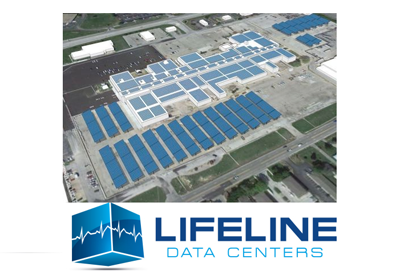
Lifeline Data Centers Builds Four Megawatt Solar Array

Lifeline Data Centers is planning to install a 4 megawatt solar power array at its Eastgate data center campus in Indianapolis, Indiana. Project completion is expected by April 2014.

“I am very proud that Lifeline Data Centers is one of the first large independent data center facilities in the country to be largely powered by solar energy,” stated Lifeline co-owner Alex Carroll.

The company noted that it now joins the likes of Apple, eBay, Facebook, and Cisco in the adoption of solar power as a clean and renewable data center power source that reduces dependence on the commercial power grid.

http://www.lifelinedatacenters.com

Tuesday, July 9, 2013

AT&T Rolls Out Free, Solar-Powered Mobile Charging Stations in NYC

AT&T is rolling out solar-powered mobile charging stations in key spots across New York City.

The AT&T Street Charge Initiative is a pilot program aimed at providing a public convenience.  AT&T said the idea arose after last year's Hurricane Sandy, when many people struggled to charge their devices.  The new charging stations are being placed in high-traffic locations and will remain in place throughout the summer and fall.

The pilot program is now available at the following locations:

  • Coney Island
  • Rockaway Beach
  • Brighton Beach
  • Manhattan Beach
  • Hudson River Park
  • Rumsey Playfield in Central Park
  • Orchard Beach
  • Piers 1 and 5 at Brooklyn Bridge Park
  • Union Square Park
  • Governor's Island

To build the solar charging stations, AT&T partnered with Goal Zero and Brooklyn-based design firm Pensa.

The charging stations are also intended to complement AT&T's Wi-Fi in the Parks program with the City of New York, which is currently providing free Wi-Fi in 28 NYC parks the five boroughs.

http://www.att.com

Saturday, June 15, 2013

Google's Project Loon - Balloon-powered Network in the Sky

Google introduced Project Loon, one of its "moonshot" initiatives to transform the world with breakthrough technology. Project Loon's aim is to deliver Internet access to "all the world's people" including remote locations on every continent. The project is experimental and still in its early days.

Project Loon will use free flying balloons at high altitudes to beam Internet access to the ground at 3G speeds or faster. The concept will require a very large fleet of balloons and complex algorithms to ensure continuous coverage as the balloons drift around the planet.

Some key elements:

  • Project Loon will launch and manage a network of high-altitude balloons operating at about 20,000m elevation.  Balloons communicate with neighboring balloons as well as to stations on the ground.
  • Each balloon will be about 15m in diameter.
  • Google will steer the ballons by using solar power to control the altitude. Bands of balloons will circle around the globe at various latitudes.
  • Google will use specialized antennas on the ground to pick up the signal.
  • Google launched 30 balloons this week from the New Zealand as a test.
  • Google said it can direct the balloons to land and hopes to retrieve and reuse the balloons when possible.
  • Rich DeVaul is Chief Technical Architect of Project Loon. Mike Cassidy is Project Lead.

http://google-africa.blogspot.co.uk/2013/06/introducing-project-loon-balloon.html
https://plus.google.com/u/0/s/%23ProjectLoon


Tuesday, June 4, 2013

Verizon to Deploy Bloom Energy's Fuel Cells

Verizon will to install Bloom Energy fuel cell systems at three of its California-based locations: two call-switching centers in Los Angeles and San Francisco and a data center in San Jose.  The solid oxide fuel cells are expected to generate more than 16 million kilowatt hours of clean electricity for Verizon in California each year.

In April, Verizon announced plans to spend $100 million in a solar and fuel-cell energy projects to help power 19 of its facilities in seven states across the country. Together with this new project, Verizon will be on track to generate more than 90 million kilowatt hours of its own green energy annually.  The project will also eliminate more than 15,000 metric tons of CO2 annually, which is equivalent to the CO2 emissions from more than 1.6 million gallons of gasoline consumed.

“The ability to power our facilities and operations with our own on-site alternative energy sources helps Verizon meet our long-term sustainability goals, while also enhancing the resiliency of our networks and reliability of our services,” said James Gowen, Verizon’s chief sustainability officer. “This is more than the right thing to do for the environment; it is also the right thing to do for our customers and our business.”

http://www.verizon.com
http://www.bloomenergy.com.


Bloom Energy has previously announced data center deployments by AT&T and NTT America.

Tuesday, April 30, 2013

Verizon to Invest $100 Million in Fuel Cells & Solar Power


Verizon plans to spend $100 million in a solar and fuel-cell energy project to help power 19 of its facilities in seven states across the country.

The project aims to generate more than 70 million kilowatt hours per year of green energy.

Specifically, Verizon has selected ClearEdge Power, a manufacturer of scalable, distributed power systems, to install PureCell Model 400 fuel cell systems at Verizon sites in California, New Jersey and New York. The systems will generate more than 60 million kilowatt hours of electricity.

In addition, Verizon has also signed a multiyear agreement with SunPower Corp. for rooftop- and ground-mounted solar photovoltaic systems as well as solar parking canopies at Verizon facilities in California, Maryland, Massachusetts, New Jersey, Arizona and North Carolina. The systems, which will generate approximately 8 million kilowatt hours of electricity annually.

http://newscenter.verizon.com/corporate/news-articles/2013/04-30-green-energy-project/

Sunday, March 24, 2013

Apple Data Centers Now 100% on Renewable Power

Apple's data centers are now 100% powered by renewable energy.

In a blog posting last week, Apple announced that its flagship data center in Maiden, North Carolina, boasts the nation’s largest end user–owned, onsite solar photovoltaic array -- a 100-acre, 20-megawatt (MW) facility with  an annual production capacity of 42 million kWh.  Apple is currently building a second 20-MW solar photovoltaic facility on nearby land that should be operational in late 2013.  Apple has also built an onsite 10-MW fuel cell installation that uses directed biogas and provides more than 83 million kWh of 24/7 baseload renewable energy annually.  In total, Apple will be producing 167 million kWh of onsite renewal energy.  The Maiden data center has earned LEED Platinum certification from the U.S. Green Building Council.

Apple's older data center in Newark, California is now using 100% renewable electricity sourced from wind farms in California.  New data centers under construction in Prineville, Oregon and Reno, Nevada will also use renewable energy.

http://www.apple.com/environment/renewable-energy/

Thursday, March 21, 2013

NTT DOCOMO Tests Solar Base Stations

NTT DOCOMO is launching field tests of three conventional mobile-network base stations that have been installed with solar panels, high capacity rechargeable batteries and green power controllers.

NTT DOCOMO will install 10 green base stations in the Kanto-Koshinetsu region of Japan by late summer, including the first three in Tokyo, Kanagawa and Yamanashi prefectures. The equipment was already by tested at its R&D Center from March 2012 to February 2013. 

The green base stations use solar panels to generate and store solar power during the daytime. If commercial power supply is cut off during a disaster, the station can rely solely on this power to run communication equipment during the day and use high-capacity, rechargeable batteries to store 14-16 hours’ worth of power when solar power is not available.

The solar panels to be used in the field test generate up to 4.19 kW, whereas the maximum power consumption of a base station is 2.0 kW. Remotely controlled green power controllers will manage power used by the base stations, including utility-provided electricity, solar panel-generated electricity, and high-capacity, rechargeable batteries that discharge their energy as required.

The company said its interest in disaster-proof, environmentally friendly base stations was spurred by the Great East Japan Earthquake.  NTT DOCOMO is also considering fuel cell technologies and wind-powered base stations.

Thursday, May 17, 2012

Apple Commits to 100% Renewable Energy in N.C. Data Center

Apple will power its new data center in Maiden, North Carolina, using entirely renewable sources by the end of this year.  About 60% of the capacity will cover from on-site generation using the nation’s largest private solar arrays and the largest non-utility fuel cell installation in the country. The remaining 40 percent of the data center energy needs will be clean, renewable energy generated by local and regional sources.

Tuesday, April 10, 2012

NTT Cites Breakthrough in GaN-based Thin Film Production

Researchers at NTT announced a breakthrough in the development of GaN-based thin-film devices from substrates, where an extremely thin layer of boron nitride (BN) is grown between a sapphire substrate and the GaN-based semiconductor and works as a release layer.


The newly developed MeTRe (Mechanical Transfer using a Release layer) method of production facilitates the transfer of the resulting nitride structures (typically a few μm thick) to more flexible and affordable substrates.


So far, the researchers have demonstrated a very thin LED, in which a detached thin-film device is sandwiched by two laminate films (total thickness is as small as 0.2 mm, Fig. 5 ), indicating that this technology has opened a door for GaN-based flexible devices.


NTT said this innovation helps in the production of very thin LEDs, transparent solar cells sensitive only to UV light, and highly-functional hybrid CMOS devices.
http://www.ntt.co.jp

Tuesday, March 13, 2012

Bharti Airtel Aims for Greener Footprint in Africa

Bharti Airtel announced a commitment to a greener environmental profile including for its operations in Africa. The company said that over last one year, it has reduced the number of telecom sites running solely on diesel by more than 50%. By 2013, the Bharti Airtel aims to completely eradicate the constant use of diesel to power its network. This means no telecom site of the company will rely solely on diesel power 24 hours a day.


Bharti Airtel is leveraging Hybrid Battery Banks to collect the excess energy produced by the diesel powered generator. This stored energy powers the site once the generator in switched off. This has helped reduce the use of diesel by up to 14 hours a day. Close to 60% of Bharti Airtel's telecom sites in Africa are now powered using the Hybrid model.


Mr. Eben Albertyn, Chief Technical Officer, Bharti Airtel, said, "This milestone is the result of significant steps by Airtel taken to ensure that we reduce our fuel consumption and that we play our part in conserving the environment. We will continue to do so as the year progresses. Our first priority is to reduce the number of sites that are completely reliant on diesel generators. We are doing this by connecting these sites to grid electricity in areas where this option is feasible. Where it is not, we are exploring alternative forms of power supply, which include Hybrid Battery Banks and solar/wind power."http://www.bharti.com In June 2010, India's Bharti Airtel acquired Zain's mobile operations in 15 countries across Africa for US$10.7 billion. This included operations in15 countries with a total customer base of over 42 million. The total population base covered is over 450 million with telecom penetration of approximately 32%. The countries in which Bharti has acquired the operations are - Burkina Faso, Chad, Congo Brazzaville, Democratic Republic of Congo, Gabon, Ghana, Kenya, Madagascar, Malawi, Niger, Nigeria, Sierra Leone, Tanzania, Uganda, and Zambia. Zain is the market leader in 10 of the 15 countries and second in 4 countries.