Tuesday, November 1, 2016

Cisco Brings on Roland Acra as SVP/GM, Data Center Business Group

Cisco announced the appointment of Roland Acra as SVP/GM, Data Center Business Group. He will be responsible for defining the next phase of Cisco data center strategy and driving development for its data center portfolio, including all data center switching products – NX2/4/5/6K, NX3K, NX7K, and NX9K, UCS, SAN, and associated products and programs.

As a long-standing industry expert in Internet routing, software engineering and communication protocol development, Roland fits right in – once again. He

Acra is a Cisco veteran having held several general management and executive leadership positions from 1991 – 2003. In 2010, he came back to Cisco as Vice President in the Smart Grid Business Unit, following the acquisition of Arch Rock , a developer of IPv6-based wireless sensor networks where he served as President and CEO. Prior to Arch Rock, he was the President and CEO of Procket Networks.

http://www.cisco.com

Red Hat Enhances Ansible for Containers, Networks and Cloud

Red Hat released Ansible 2.2, the latest version of its agentless open source IT automation framework, bringing performance enhancements, expanded container and Windows automation capabilities, and several new modules, including those for networking, cloud provider platforms, and expanded vault support.

New features include:

  • New docker_network functionality enables users to manage docker machine environments and automate their network layers simultaneously. Combined with the ansible-container project, users can now control more aspects of their container development and deployment pipelines, including how containers communicate over a network.
  • Since the Ansible 2.1 release in May 2016, Ansible’s supported networking platforms grew from ten to 20, and total network module count has more than doubled. Ansible 2.2 adds network device support for several vendors, including Cisco (ASA); Dell; F5 Networks; Nokia SR-OS;Pluribus Networks (Open Netvisor) and VyOS.
  • Expanded and enhanced Cisco NX-OS support provides modules designed to make it easier for customers to operationalize Virtual Extensible LAN (VxLAN) programmable datacenter fabrics through automation.
  • New functionality for cloud providers has been added, including: Amazon Web Services (AWS), Google Cloud Platform and OpenStack providers. Finally, new capabilities for VMware and Amazon Web Services have been added. 
  • Ansible 2.2 features new VMware virtual machine management modules and supports new AWS capabilities, including Amazon Elastic File System (EFS), Amazon Redshift and AWS Lambda.


“We are excited to see the results of the investments in our Ansible Core engineering team, as well as continued community momentum in our module development. Networking growth in Ansible has been exciting, covering more than twenty percent of all our modules. We are pleased to see continued momentum and commitment to building open source automation solutions for a wide variety of customers,” stated Tim Cramer, engineering director, Ansible, Red Hat.

http://www.redhat.com

Sonera Trials Nokia's NB-IoT

Nokia conducted a trial using NB-IoT (Narrowband Internet of Things) technology on Finnish operator Sonera's  commercial 4G network. The trial used Nokia base stations operating in the 800 Mhz band to maximize coverage.

The NB-IoT technology was used to communicate information on temperature, humidity and air pressure over Sonera's 4G network in Helsinki. The companies also connected a roaming device over the commercial network using NB-IoT technology. This world's first demonstration shows how NB-IoT technology will allow companies to track their mobile assets - for example large maintenance firms such as electricians or plumbers with fleets of vehicles or healthcare providers tracking the status of patients outside of a hospital.

NB-IoT is a 3GPP Rel. 13 radio access technology designed especially for enabling cellular connectivity to Internet of Things devices. Nokia said NB-IoT will co-exist with operators' existing networks to benefit from mobile security and privacy features.

http://www.nokia.com

Ixia Posts Q3 Revenue of $123.9 Million

Ixia reported Q3 revenue of $123.9 million, compared with $125.9 million reported for the 2015 third quarter and $120.1 million reported for the 2016 second quarter. On a GAAP basis, the company recorded net income for the 2016 third quarter of $4.8 million, or $0.06 per diluted share, compared with net income of $4.0 million, or $0.05 per diluted share, for the 2015 third quarter, and net income of $1.5 million, or $0.02 per diluted share, for the 2016 second quarter.

"We are pleased with our results in the third quarter, with revenue and EPS exceeding our guidance. Our revenue performance was driven by growing momentum for our network visibility solutions and record revenue from the enterprise market, which offset softness in our NEM markets," said Bethany Mayer, Ixia’s president and chief executive officer. "We are continuing to execute and invest in our strategy and are pleased with the early results we have generated from the changes we made to our sales leadership and organization.”


https://www.ixiacom.com/

Monday, October 31, 2016

Microsoft Announces Project Olympus - OCP Hardware Designs

Microsoft, in collaboration with the Open Compute Project (OCP), announced Project Olympus – a next generation hyperscale cloud hardware design and a new model for open source hardware development with the OCP community.

With Project Olympus, Microsoft said it hopes to foster a model of open source collaboration that has been embraced for software but has historically been at odds with the physical demands of developing hardware. Rather than contributing a fully-completed design to OCP, with this new approach, Microsoft will contribute its next generation cloud hardware designs when they are approximately 50% complete.  This is intended to encourage community involvement in the iterative design process.

“Microsoft is opening the door to a new era of open source hardware development. Project Olympus, the re-imagined collaboration model and the way they’re bringing it to market, is unprecedented in the history of OCP and open source datacenter hardware,” said Bill Carter, Chief Technology Officer, Open Compute Project Foundation.

The building blocks that Project Olympus will contribute consist of a new universal motherboard, high-availability power supply with included batteries, 1U/2U server chassis, high-density storage expansion, a new universal rack power distribution unit (PDU) for global datacenter interoperability, and a standards compliant rack management card.

Microsoft noted that over 90% of the servers it currently purchases are based on OCP contributed specifications.

https://azure.microsoft.com/en-us/blog/microsoft-reimagines-open-source-cloud-hardware/

CenturyLink to Acquire Level 3 for $34 Billion

CenturyLink agreed to acquire Level 3 Communications in a cash and stock transaction valued at approximately $34 billion, including the assumption of debt.

The deal combines CenturyLink's larger enterprise customer base with Level 3's global network footprint. The companies said this scale will enable further investment in the reach and speeds of its broadband infrastructure for small businesses and consumers. After close, CenturyLink's Glen Post will continue to serve as Chief Executive Officer and President of the combined company.  Sunit Patel, Executive Vice President and Chief Financial Officer of Level 3, will serve as Chief Financial Officer of the combined company. The combined company will be headquartered in Monroe, Louisiana and will maintain a significant presence in Colorado and the Denver metropolitan area.

Under terms of the agreement, Level 3 shareholders will receive $26.50 per share in cash and a fixed exchange ratio of 1.4286 shares of CenturyLink stock for each Level 3 share they own, which implies a purchase price of $66.50 per Level 3 share (based on a CenturyLink $28.00 per share reference price) and a premium of approximately 42 percent based on Level 3's unaffected closing share price of $46.92 on October 26, 2016. Upon the closing  CenturyLink shareholders will own approximately 51 percent and Level 3 shareholders will own approximately 49 percent of the combined company.

"The digital economy relies on broadband connectivity, and together with Level 3 we will have one of the most robust fiber network and high-speed data services companies in the world," said Glen Post, CenturyLink Chief Executive Officer and President. "This transaction furthers our commitment to providing our customers with the network to improve their lives and strengthen their businesses. It is this focus on providing fiber connectivity that will continue to distinguish CenturyLink from our competitors. CenturyLink shareholders will benefit from the significant synergies and financial flexibility provided by the combined company's revenue growth and strong cash flow. For employees, this combination will bring together two highly customer-focused organizations and provide employees growth and advancement opportunities the companies could not offer separately."

"This is a compelling transaction for our customers, shareholders and employees," said Jeff Storey, President and Chief Executive Officer of Level 3. "In addition to the substantial value delivered to shareholders, the combined company will be uniquely positioned to meet the evolving and global needs of enterprise customers."

Some highlights:
  • Fiber Network - the Level 3 infrastructure increases CenturyLink's network by 200,000 route miles of fiber, which includes 64,000 route miles in 350 metropolitan areas and 33,000 subsea route miles connecting multiple continents. 
  • On-net buildings - are expected to increase by nearly 75 percent to approximately 75,000, including 10,000 buildings in EMEA and Latin America. 
  • Cost Efficiencies - complementary domestic and international networks will provide cost efficiencies by focusing capital investment on increasing capacity and extending the reach of the combined company's high-bandwidth fiber network.
  • Scale - the deal  creates a world-class enterprise player with approximately $19 billion in pro forma business revenue and $13 billion in business strategic revenue, for the trailing twelve months ended June 30, 2016. Together, CenturyLink's and Level 3's revenue will be 76 percent derived from business customers, and 65 percent of the combined company's core revenue will be from strategic services. 
  • Enhanced Broadband Infrastructure - This transaction will provide the combined company with increased opportunity to invest in its broadband infrastructure and enhance broadband speed for small businesses and consumers.
  • Financial Profile - the combined company is expected to have improved adjusted EBITDA margins, revenue growth and pro forma net leverage of less than 3.7x at close, including run-rate synergies. The combined company will benefit from Level 3's nearly $10 billion of net operating losses ("NOLs"). These NOLs will substantially reduce the combined company's net cash tax expense over the next several years, positioning it to generate substantial free cash flow.
  • Additional debt - CenturyLink intends to finance the cash portion of the transaction and pay related fees and expenses through a combination of cash on hand at CenturyLink and Level 3, and approximately $7 billion of additional indebtedness. In connection therewith, CenturyLink has received financing commitments from BofA Merrill Lynch and Morgan Stanley & Co. LLC totaling approximately $10.2 billion for new secured debt facilities.

http://ir.centurylink.com/CorporateProfile.aspx?iid=4057179
http://www.level3.com
  • Over the past few years, CenturyLink has acquired Qwest Communications, Savvis and Embarq (formerly Sprint's Local Telecommunications Division).
  • The deal to acquire Qwest was valued at $22 billion when it was first announced in 2010. At the time, CenturyLink and Qwest served local markets in 37 states with approximately 5 million broadband customers, 17 million access lines, 1,415,000 video subscribers and 850,000 wireless consumers.  
  • In 2014, Level 3 acquired tw telecom in a $5.7 billion deal that combined its global fiber network and international data centers with tw telecom's extensive metro footprint in major U.S. Time Warner Communications was founded in 1993 as a joint venture between US West and Time Warner Communications. The company completed an IPO in 1999. It acquired Xspedius in 2006. 
  • Level 3's prior acquisitions include WilTel (2005), Progress Telecom (2006), ICG(2006), Telcove (2006), Looking Glass Networks (2006), Broadwing (2007), SAVVIS' content delivery network (2007), Servecast (2007), and Global Crossing (2011).

OpenSwitch Adds Contributions from Dell EMC and SnapRoute

The OpenSwitch Project, which is developing an open source, Linux-based Network Operating System, announced contributions from SnapRoute and Dell EMC.

The enhanced contributions include:

  • SnapRoute’s open source network stack and management services, which enable a fully modular, hardware independent NOS, accessible through a complete set of APIs.
  • Dell EMC’s OS10 Open Edition, which represents a fully open, fully disaggregated base subsystem incorporating hardware and platform abstraction layers for networking switching applications.

Other OpenSwitch project supporting members and participating organizations include Barefoot Networks, Broadcom, Cavium, Inc., Centec Networks, Edgecore Networks, Extreme Networks, Hewlett Packard Enterprise, LinkedIn, Marvell, Mellanox Technologies, Nephos Inc., P4.org, Quattro Networks and Terralogic.

"The OpenSwitch community continues to demonstrate its enthusiastic commitment to the creation of an open source network operating system," said Jim Zemlin, executive director of The Linux Foundation. "It's exciting to see a rapid influx of contributions to OpenSwitch, which are priming the project to support next-generation requirements and features."

https://www.linuxfoundation.org/announcements/snaproute-and-dell-emc-to-help-advance-linux-foundation%E2%80%99s-openswitch-project

Bloomberg: Brocade Contemplates a Sale

Shares in Brocade surged 22% following a report published by Bloomberg that the company is in advanced stages of selling itself.  Broadcom may be interested in acquiring the company, according to Bloomberg, but company commented for the report.

Broadcom, which recently completed its merger with Avago Technologies, sells merchant silicon to many of network equipment vendors, including Brocade and its competitors.


https://www.bloomberg.com/news/articles/2016-10-31/brocade-communications-said-in-advanced-talks-to-sell-itself


Asia Pacific Gateway Cable Enters Service

NTT Communications announced the launch of service on the consortium-backed Asia Pacific Gateway (APG) optical submarine cable network.

APG, which spans a total length of 10,400 km, leverages 100 Gbps optical transmission and digital coherent technology to deliver a capacity of more than 54 Tbps, the highest of any network in Asia.

NTT said the cable routing avoids areas prone to earthquakes and typhoons, and has connectivity points in Mainland China, Hong Kong, Taiwan, Japan, Korea, Malaysia, Singapore, Thailand and Vietnam.

NTT Com has established two diverse landing points, one in the East and the other in the West of Japan for the APG and Pacific Crossing-1 (PC-1) submarine cable which connects between Japan and the U.S. having diverse route such as north and south routes. The company has also implemented diverse landing points in Hong Kong and Singapore for the APG and for the Asia Submarine-Cable Express (ASE), which was launched in August 2012.

http://www.ntt.com/en/about-us/press-releases/news/article/2016/20161031_2.html


  • The Asia Pacific Gateway (APG) project was first proposed in 2009.

Ciena Unveils WaveLogic Ai Programmable Modem

Ciena unveiled its WaveLogic Ai, a programmable coherent modem that is positioned as a foundational technology for future "self-driving" networks.

Ciena said its WaveLogic Ai coherent modem can drive 400G single carrier transmission in metro and DCI applications, while establishing 200G and 300G as the new reference line rates for backbone transmission in regional and long-haul networks. In submarine networks, it provides maximum capacity with ultimate reach at distances up to 14,000 kilometers.

The WaveLogic Ai modem is designed to gather critical networking data, including embedded real-time link measurements, to make intelligent capacity decisions in real time. For instance, WaveLogic Ai helps determine the optimal capacity for any path across the network and can tune to different capacity levels from 100G to 400G in 50G increments. Ciena said its technology will make available massive amounts of optical networking performance data through open interfaces that can be mined to build on-demand, programmable networks. WaveLogic Ai also provides extensive tunability via open software interfaces. Commercial launch is expected in Q2 2017.

http://www.ciena.com/insights/articles/Ciena-unveils-WaveLogic-Ai.html

Kingston Adds 256 GB microSDHC Card

Kingston Digital introduced a 256GB Class 10 UHS-I microSDHC / microSDXC card.

The large capacity and Class 10 UHS-I speed allows users to capture more photos (up to 64,000 12MP images) and HD videos (up to 976 minutes at 1080p 30 frames per second).

The microSDHC / microSDXC Class 10 UHS-I is the smallest form factor SD card available and is the standard expandable storage option for many tablets, smartphones and action cameras.

“We are excited to ship our new higher capacity 256GB microSDXC card for consumers who need more storage for photos, videos and other data,” said Annette Chan, Flash memory business manager, Kingston. “As image quality and 4K content continues to rise, we strive to push storage densities higher to match our customers’ needs for larger capacity and stable products.”

http://www.kingston.com

ADVA Posts Revenue of EUR 159.5 Million

ADVA Optical Networking reported record quarterly revenues of EUR 159.5 million -- at the upper end of the guidance forecast on July 21. Quarterly revenues climbed to a record high of EUR 159.5 million. The figure marks an increase of 30.4% year-on-year (YoY) (Q3 2015: EUR 122.3 million) and is at the upper end of the guidance forecast on July 21.

“Our markets continue to have multiple growth drivers,” said Brian Protiva, CEO, ADVA Optical Networking. “Cloud and mobility are fueling the demand for more bandwidth and reshaping our industry around the data center paradigm. Our focus on open connectivity solutions for data center interconnect (DCI) applications is delivering results. ”

http://www.advaoptical.com/en/newsroom/press-releases-english/20161027-adva-optical-networking-posts-record-q3-revenues-of-eur-159-5-million


Sunday, October 30, 2016

AT&T to Launch 400GbE Business Service

AT&T is planning to launch 400 Gigabit Ethernet business services.  A trial is planned for early 2017 across the company's production network.

The 400 Gigabit Ethernet testing will be performed in 3 phases:

  • Phase 1: Will use optical gear from Coriant to carry a true 400GbE service across a long-distance span of AT&T global backbone from New York to Washington, demonstrating that AT&T’s nationwide software-centric network is 400G-ready.
  • Phase 2: Will trial a 400GbE on a single 400G wavelength across AT&T’s OpenROADM metro network. We’ll use optical gear from Ciena, a developer of next-generation coherent optical solutions, to show the network is ready to transport 400GbE to serve our customers in a metro area.
  • Phase 3: Will test the first instance of a 400GbE open router platform. The “disaggregated router” platform uses merchant silicon and open source software – another industry first.

“Although there have been efforts focused on 400 Gigabit Ethernet viability and industry standards over the past couple of years, we are excited to be the first to implement a pilot,” said Rick Hubbard, senior vice president, AT&T Network Product Management. “400GbE has the potential to transform how our largest retail and wholesale customers manage their networks today.”

AT&T noted that data traffic on the its network grew more than 150,000% between 2007 and 2015.

http://www.att.com

ARM Intros Mali Multi-standard Video Processor for Mobiles

ARM has launched two new products:


  • Mali-V61 -  a video processing unit (VPU) for 4K120 video performance in real-time video applications such as Facebook Live and Periscope.
  • Mali-G51 graphics processing unit (GPU) - ARM’s most area-efficient and energy-efficient GPU to date. Based on ARM’s new Bifrost architecture which has been updated to include a redesigned texturing unit with double the throughput, the Mali-G51 GPU enables these use cases, bringing premium graphics to mainstream mobile devices.


“The cost and visual experience a device delivers are key purchasing factors for Generation Z and mainstream mobile users,” said James McNiven, general manager for CPU and media processing groups, ARM. “Our latest Mali video and graphics IP suite meets this demand by offering immersive VR, gaming and compliance with real-time video standards. This is a system-level media solution that enables developers to balance performance, efficiency and cost control.”

Mali-V61 and Mali-G51 are available to license now and both processors support ARM initiatives such as the new version, v1.2, of ARM Frame Buffer Compression (AFBC), to deliver increased bandwidth savings, and ARM TrustZone technology.


Cloudian Raises $41M for Cloud Object Storage Platform

Cloudian, a start-up based in San Mateo, California, announced $41 million in new venture funding for its hybrid cloud object storage system.

Cloudian's modular, scale-out platform allows a single storage manager to effectively manage hundreds of petabytes of capacity, a level that would require a dozen or more storage managers with conventional systems.

In August, Cloudian announced the availability of Cloudian HyperStore on AWS Marketplace. This enables customers to purchase their on-premises storage on a metered-by-use basis, manage it alongside Amazon S3 storage as a single pool, and then receive a single invoice for both.

In June of this year, Cloudian and Lenovo announced an OEM agreement that enables Lenovo’s worldwide salesforce to offer a Cloudian-based object storage appliance.

“Data center managers need new solutions to help them contend with today’s explosive growth in unstructured data. Across all industries – from media, to medical, to industrial – new applications and technologies are driving 50 percent growth of unstructured data per year, creating a crisis of cost and complexity for storage managers,” said Michael Tso, CEO and co-founder, Cloudian. “Cloudian object storage redefines the enterprise data center with hybrid cloud solutions that bring the flexibility and simplicity of public cloud storage into our customer’s data centers, simplifying management and reducing TCO by 70 percent versus conventional storage systems.”

The funding round includes new investors Lenovo, City National Bank, Epsilon Venture Partners, and DVP Investment. Also participating were all existing investors, including Intel Capital, INCJ, Eight Roads (the proprietary investment arm of FIL, Fidelity International Limited), and Goldman Sachs. The funding brings Cloudian’s total capital raised to date to $79 million.

http://www.cloudian.com

Saturday, October 29, 2016

Fortinet Extends Presence in Azure Government Cloud

Fortinet and Microsoft announced an extension of their partnership to protect the cloud environments of their joint government customers.

Specifically, Fortinet’s Security Fabric solutions for the cloud have been released on the Azure Government Cloud platform to provide comprehensive security, threat intelligence, and the visibility to detect, isolate, and respond to threats in real time for workloads running in the Government Cloud.

This includes virtual security products, such as Fortinet’s enterprise firewall (FortiGate), web application firewall (FortiWeb), mail security (FortiMail), as well as its integrated security management (FortiManager) and analytics (FortiAnalyzer) solutions are now available. Fortinet is also a go-to-market partner with Microsoft’s Azure Security Center.

https://blog.fortinet.com/

Fortinet Posts Q3 Sales of $316.6 million, up 22%, but Missing Target

Fortinet reported Q3 revenue of 316.6 million, an increase of 22% compared to $260.1 million in the same quarter of 2015. GAAP net income was $6.3 million for the third quarter of 2016, compared to GAAP net income of $8.2 million for the same quarter of 2015. GAAP diluted net income per share was $0.04 for the third quarter of 2016. GAAP diluted net income per share was $0.05 in the third quarter of 2015.

"While our third quarter results were impacted by a moderated spending environment, extended sales cycles and sales execution challenges, we continued to outgrow the market, as well as add 9,000 new customers," stated Ken Xie, founder, chairman and chief executive officer. "Fortinet remains in a position to benefit from key secular trends such as security vendor consolidation and next generation cloud architectures. We have a strong technology advantage and visionary roadmap in place to help us continue to grow our market position, address our large opportunity, and make progress towards achieving our long term margin targets."

Total billings were $347.5 million for the third quarter of 2016, an increase of 16% compared to $299.6 million in the same quarter of 2015.
Deferred Revenue: Total deferred revenue was $934.8 million as of September 30, 2016, an increase of 32% compared to $706.9 million in the same quarter of 2015. Total deferred revenue increased by $30.8 million compared to $904.0 million as of June 30, 2016.

http://investor.fortinet.com/releasedetail.cfm?ReleaseID=996021

Friday, October 28, 2016

Vodafone Announces a Deal in Iran

Vodafone announced a deal with HiWEB, a leading Iranian ISP, to assist in rolling out and modernizing network infrastructure in Iran. Fixed and mobile Internet services will be offered under the HiWEB brand/In addition, HiWEB will be able to provide Vodafone’s multinational corporate customers with fixed and mobile services in Iran.

Vodafone will also support HiWEB in marketing, distribution and sales, including the provision of Internet of Things (IoT) services to HiWEB’s customers.

The deal is a new non-equity Partner Market agreement.

Vodafone Partner Markets Chief Executive Diego Massidda said: “I am delighted to reach agreement with HiWEB on a partnership that will benefit both parties in Iran. Vodafone’s corporate customers will get the benefit of quality network services in the country – including in rural areas – and HiWEB will be able to access Vodafone’s global expertise to support the roll out of products, infrastructure and the launch of IoT services in Iran.”

http://www.vodafone.com/content/index/media/vodafone-group-releases/2016/hiweb-iran.html

ZTE Posts Q3 Revenue of US$10.54 Billion, up 4.4% YoY

ZTE reported operating revenue of RMB71,564 million (US$10.54 billion) for Q3 2016, representing a year-on-year growth of 4.44 percent. ZTE’s net profit, attributable to holders of ordinary shares of the listed company, amounted to RMB2,859 million, representing a year-on-year growth of 9.78 percent. Basic earnings per share amounted to RMB0.69.

ZTE attributed the growth primarily to 4G system products and optical transmission products in the domestic and international markets, as well as handset products and family terminal products in the domestic market.

Some highlights:

  • The company’s chip shipments doubled compared with the same period last year, achieving a record high. 
  • Shipments of mobile terminal chips accounted for 80 percent in overseas markets. There has been a rapid development in IoT chips and ZTE was the first company to support all bands of prototype chips in China and to conduct an IoT test at China Mobile, which has helped to gradually establish a strong industry ecosystem.
  • In regards to its wired network business as of the end of the third quarter, ZTE's next-generation passive optical networks (PON) market share, the overall growth of fixed-line market access and digital subscriber line (DSL) market share growth all ranked first in the world and ranked second in optical network market share globally.


http://www.zte.com.cn/global/about/press-center/news/201610ma/1027ma

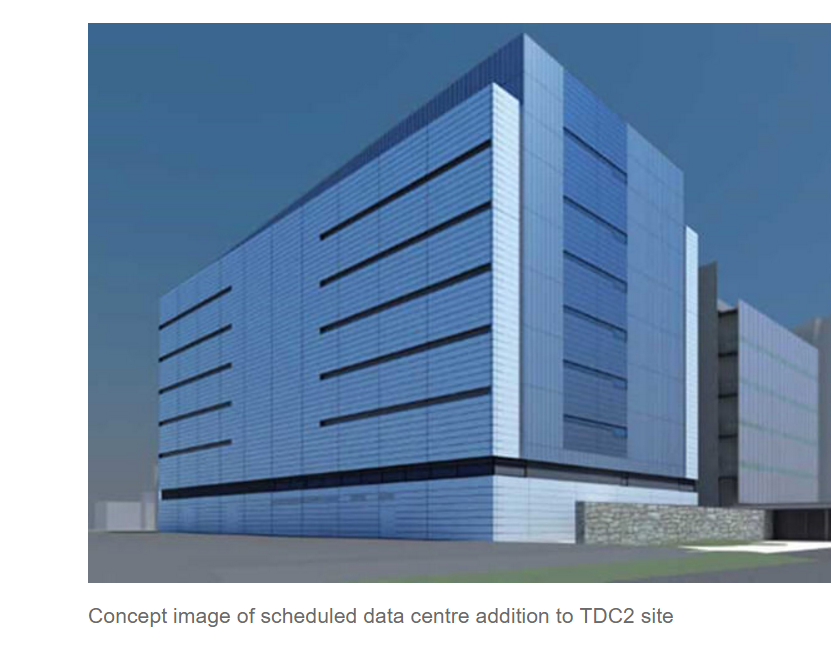
Colt Builds its Second Tokyo Data Center

Colt initiated construction of its second data center in Inzai, located just east of Tokyo.

The building will offer 15MW of critical IT load across 5,000 square meters of server room space and feature state of the art energy efficiency.

This development follows the recently announced additions to Colt’s data centres in London, Berlin and Hamburg.

http://www.colt.net/news/new-tokyo-data-centre/