Monday, December 5, 2022

Webinar: New fiber connectivity options inside the switch chassis

As the next generation of data center switch designs advance, new possibilities for fiber management inside the chassis are emerging. In this one-hour webinar, we will hear from Paul Yip who will discuss an innovative fiber shuffle from Optec for transmitting optical signals from the switching silicon to the front panel. The idea is to facilitate the fiber management and system redundancy from the CPO optical engines. Then we will hear from Fujikura's Teruhiko Omori who will present the various types of fiber suitable for these applications. 

Paul Yip is Product Marketing Manager of Optec Technology Limited. He joined Optec in 2015 and has key roles in product line management, field application engineering, and strategic marketing. 

Teruhiko Omori is a manager at Fiber Optics Components Department, Optical Component Division, Fujikura Ltd. He joined Fujikura in 1990 and engaged in research & development, production engineering and business development of passive optical components and business development of fiber-optic cabling solutions.Manufacturability, reliability, and maintenance issues will be considered.

Date/Time: Dec 12, 2022 04:00 PM in Pacific Time

https://us02web.zoom.us/webinar/register/WN_rnZ64Y1lQa-X_7HNYEfmBA

Verizon's C-band rollout is ahead of schedule

Verizon now covers more than 175 million people with their ultra fast, ultra reliable 5G Ultra Wideband service, and will offer nationwide 5G Ultra Wideband in Q1 2023. 

Verizon confirmed that its ongoing C-Band rollout is a full 13 months ahead of the original schedule.

Less than 21 months after announcing the results of the FCC’s C-band auction and after securing early access to an additional 30 markets this year, Verizon accelerated its build plan and surpassed its goal of reaching 175 million people covered by the end of 2022, a month ahead of schedule.

“Our customers don’t stand still and neither does our network. Today, more than one out of every two Americans now have access to 5G Ultra Wideband. We know our customers rely on our service every day and we work for them – continuously enhancing, expanding and improving our wireless network,” said Hans Vestberg, Chairman and CEO of Verizon. “And as proud as I am to have crossed this milestone, I am equally proud of the way we are building our network – with the most advanced technologies, industry leading security, a robust fiber underpinning and a robust and varied spectrum portfolio. We are building this right. We are building this as a platform for innovation for years to come.”

Verizon’s 5G Ultra Wideband supports download speeds up to 1 Gbps.

In addition to providing greater coverage, especially in rural and suburban areas, Verizon will also enhance capacity by activating 100 MHz of C-Band spectrum in many markets, a significant step up from the 60 MHz of spectrum available when deployment first began. Once all of its licensed spectrum is made available, Verizon will have up to 200 MHz of C-Band spectrum deployed in many markets, which will provide exceptional speed and capacity.

Verizon is continuing to deploy 5G on mmWave spectrum in areas with significantly dense populations such as venues, stadiums, arenas, airports, major metro areas, office complexes, etc. mmWave will also continue to be used for private network deployments.

Verizon also highlighed progress in fully deploying the 5G core with its proprietary cloud platform built specifically for telco workloads, advancing the fiber network to handle exponential increases in data traffic, continuing massive virtualization of the network to add programmability and flexibility into the network, using artificial intelligence to drive reliability and performance, continuing to develop edge computing capabilities to drive down latency, and continuing to advance antenna configurations to drive speed and efficiency.

https://www.verizon.com/about/news/verizon-continues-deploy-5g-ultra-wideband-faster

Ericsson and Verizon sign multi-year $8.3 billion 5G deal

Ericsson confirmed a multi-year 5G supply agreement with Verizon valued at $8.3 billion.Under the agreement, Verizon will deploy Ericsson's 5G MIMO C-band, low-band and millimeter wave (mmWave) solutions to enhance and expand Verizon's 5G Ultra Wideband coverage, network performance and user experience. Ericsson's technology solutions, including Massive MIMO, Ericsson Spectrum Sharing and Ericsson Cloud RAN, complement the high-performing Ericsson...

Verizon begins C-band rollout with Ericsson and Samsung

Verizon confirmed that the installation of C-band equipment from Ericsson and Samsung Electronics Co. is now underway. Ericsson is providing its Antenna-Integrated Radio (AIR) product, which features a massive Multiple Input Multiple Output (MIMO) architecture with Ericsson Uplink Booster and advanced beamforming technology.  Samsung is also supplying Massive MIMO radios and fully virtualized RAN (vRAN) solutions.Verizon secured an...

Verizon activates C-band spectrum

Verizon activated C-band spectrum to boost its 5G Ultra Wideband network, which is now available to more than 100 million people in 1,700-plus cities around the nation.“This massive launch will put incredible speeds, reliability and security in the hands of our customers and amplifies our offering of reliable home and business broadband options to more places around the country, well ahead of the commitment we made last year,” said Hans Vestberg,...

Verizon serves nearly 48% of its cell sites with owned fiber

Verizon now connects nearly 48% of its cell sites with its own deployed fiber optic cables and is on track to reach about 50% by the end of this year.In June Verizon announced that data traffic on its 5G Ultra Wideband network had already increased 249%, and it expects continued increases as more customers adopt the new technology and begin to experience the robust capabilities and performance of 5G Ultra Wideband. Verizon has also announced...


Lattice debuts low-power FPGA platform

Lattice Semiconductor introduced a low-power FPGA platform for communications, computing, industrial and automotive applications.

The new Lattice Avant series offers advanced connectivity with configurable SERDES up to 25 Gbps, PCIe Gen 4, high performance I/O, and memory interface support including LPDDR4 and DDR5.

The company claims up to 2.5X lower power and 2X faster throughput than similar class competitive devices.

“With Lattice Avant, we extend our low power leadership position in the FPGA industry and are poised to continue our rapid pace of innovation, while also doubling the addressable market for our product portfolio,” said Jim Anderson, President and CEO, Lattice Semiconductor. “We created Avant to address our customers’ need for compelling mid-range FPGA solutions, and we’re excited to help them accelerate their designs with new levels of power efficiency and performance.”

https://www.latticesemi.com/about/newsroom/pressreleases/2022/202232-new-lattice-avant-fpga-platform 

FCC issues 2.5 GHz licenses from Auction 108

The FCC’s Wireless Telecommunications Bureau  granted the first batch of new, flexible-use, county-based overlay wireless licenses made available in the 2.5 GHz auction, Auction 108.  With most of the available spectrum in the 2.5 GHz band located in rural areas, this auction provides vital spectrum resources to support wireless services in rural communities.  

In total, the FCC granted 51 of the 68 total long-form applications received from winning bidders in Auction 108, following a thorough review of the applications and a period of public comment.  Of the 51 applications granted, 15 applicants obtained small business bidding credits and 23 obtained rural service provider bidding credits.  Staff review of the remaining Auction 108 long-form applications remains ongoing.  

“This is important spectrum, especially for rural America.  I am grateful to our team for moving forward quickly but carefully in processing these applications,” said FCC Chairwoman Jessica Rosenworcel.  “We continue to focus on ensuring that mid-band spectrum is available for 5G and other next-generation wireless services.”

http://www.fcc.gov

FCC incentivizes to open underutilized spectrum for rural carriers

The FCC voted to create an Enhanced Competition Incentive Program (ECIP) to establish incentives for wireless licensees to make underutilized spectrum available to small carriers, Tribal Nations, and entities serving rural areas. The new program encourages licensees to partition, disaggregate, or lease spectrum to better match available spectrum resources with entities that seek to provide needed services to under-connected communities.  Under...


Samsung and NAVER target semiconductors for hyperscale AI

Samsung Electronics and NAVER Corporation are collaborating on semiconductor solutions tailored for hyperscale artificial intelligence (AI) models. 

The partnership leverages Samsung’s next-generation memory technologies like computational storage, processing-in-memory (PIM) and processing-near-memory (PNM), as well as Compute Express Link (CXL).

NAVER will continue to refine HyperCLOVA, a hyperscale language model with over 200 billion parameters, while improving its compression algorithms to create a more simplified model that significantly increases computation efficiency.

“Through our collaboration with NAVER, we will develop cutting-edge semiconductor solutions to solve the memory bottleneck in large-scale AI systems,” said Jinman Han, Executive Vice President of Memory Global Sales & Marketing at Samsung Electronics. “With tailored solutions that reflect the most pressing needs of AI service providers and users, we are committed to broadening our market-leading memory lineup including computational storage, PIM and more, to fully accommodate the ever-increasing scale of data.”

“Combining our acquired knowledge and know-how from HyperCLOVA with Samsung’s semiconductor manufacturing prowess, we believe we can create an entirely new class of solutions that can better tackle the challenges of today’s AI technologies,” said Suk Geun Chung, Head of NAVER CLOVA CIC. “We look forward to broadening our AI capabilities and bolstering our edge in AI competitiveness through this strategic partnership.”


STACK and ESR to develop data center in Osaka

 STACK Infrastructure and ESR Group announced a joint venture to develop a 72MW data center campus in Osaka, Japan.

STACK and ESR will jointly develop and deliver 72MW of data center capacity in Osaka’s eastern suburb of Keihanna. Construction of the first of three buildings will commence in Q4 2023 and will be ready for service in Q2 2025.

The deal further expands STACK and ESR’s APAC partnership, which currently includes a 48MW data center development in Incheon, Korea.

“Osaka is STACK’s sixth APAC market in 12 months since our entrance into the region, including the expansion of our footprint in both Japan and Australia to over 100MW each,” said Pithambar (Preet) Gona, Chief Executive Officer of STACK APAC. "This campus further deepens our partnership with ESR, allowing us to combine our capabilities to meet our clients’ strategic requirements in existing and emerging Tier 1 data center markets.” 

“ESR’s strong regional development capability in Tier 1 data center markets ensures we are well-positioned to continue to aggressively develop data center facilities across Asia Pacific,” said Diarmid Massey, CEO of ESR Data Centres. “Our partnership with STACK enables us to leverage our respective strengths to target hyperscale customer growth in key markets.”

https://www.stackinfra.com/about/news-events/press-releases/stack-infrastructure-and-esr-expand-their-apac-partnership-into-japan-with-a-72mw-data-center-development-in-osaka/

Redis appoints Rowan Trollope as CEO

Rowan Trollope will become Chief Executive Officer of Regis, effective February 1, 2023, replacing Ofer Bengal, who will become Chairman of the Board. 

Trollope joins Redis from Five9, where he served as CEO for over four years. Before Five9, he was SVP and General Manager of Cisco's Applications Group and an executive leadership team member. Prior to Cisco, at Symantec, he was Group President of sales, marketing, and product development, responsible for cloud security and the SMB market.

Bengal co-founded Redis in 2011 with Yiftach Shoolman and has served as its CEO since its inception.

“People are fed up with slow and unresponsive apps and businesses realize they need to redesign their products or else lose their customers. At the same time AI is revolutionizing how software is built and is being embedded in virtually every app,” stated Trollope. “In response, entrepreneurs have been hard at work inventing the next generation tech stack, from AI tool-chains to front-end frameworks to the database layer, to make it easy for developers to build fast, scalable apps with AI at the core. I’m excited to join Redis because Ofer, Yiftach, and their team alongside the incredible open-source community, have been creating an insanely great platform that is loved by developers like me. Redis is well positioned to continue disrupting the database market and taking data layer performance to the next level.”

Offer Bengal added, “I started this journey with my partner Yiftach almost 12 years ago, with a vision of disrupting the database space and revolutionizing the data layer performance. Together with an exceptionally talented team, we have made our technology a significant building block in the architectures of some of the world's largest and most demanding applications. As a founder, my relationship with the company will always be similar to that of a parent and child. Redis is very dear to me, and I look forward to continuing to contribute to its success and growth through my role as chairman.”

https://redis.com/


Evolutio deploys Ribbon's Virtual C20 for virtualized call control

Evolutio, which specializes in the integration of cloud services and solutions, is upgrading its network with Ribbon's Virtual C20, making it the first European provider to leverage this solution, and gaining a more robust call platform.  

Ribbon's Virtual C20 delivers call control that operates on the newest technology architectures while retaining the best features of its predecessors, dating back more than thirty years to the Nortel DMS family and the CS 2000.

"At Evolutio we are focused on innovation to provide a better service to our customers. This requires moving a lot of our network technology forward, which is resource-intensive both in terms of Opex and staff time. The Virtual C20 allows us to align ourselves with our customers' needs, providing them with the best offering and ensuring the best experience at every touch point, both for them and their users," said Juan Diego Barrado, CIO - CTO of Evolutio. 

"We're proud that Evolutio trusts us to modernize their network and reduce costs," said Steve McCaffery, Ribbon's EVP Sales, APAC & EMEA. "Our highly flexible Virtual C20 solution, along with our professional services teams, create an especially compelling business case to the many service providers around the world still operating legacy switch platforms that are end of life. We believe that the Virtual C20 is unequaled in its ability to cost-effectively transform service provider networks without inherently requiring a massive replacement of last mile / kilometer infrastructure."

Evolutio believes it offers its customers the best option to achieve their goals, accompanying them throughout their journey of improvement and implementation of new technologies. With the Virtual C20, the expert company in service integration continues to improve customer service by increasing the efficiency of its operations.

Sunday, December 4, 2022

KDDI connects mobile tower to Starlink for backhaul

KDDI has deployed the first mobile tower in Japan to use Starlink for backhaul. 

The tower is located in Hatsushima, a remote island in Sagami Bay. The service is now in commercial operation, following a series of tests beginning in 2021.

KDDI said that in order to ensure sufficient quality for cellular service with voice and data, Starlink  met its technical guidelines in latency, jitter and uplink/downlink bandwidth. KDDI has completed its evaluation of Starlink and confirmed the conformance in customer experience that could be comparable to that of optical fiber, which it uses for urban towers.

Starting with this location, KDDI will expand its coverage to 1,200 remote towers in order to pursue its vision to bring an urban mobile experience to its rural customers.

https://news.kddi.com/kddi/corporate/english/newsrelease/2022/12/01/6415.html

FCC clears Starlink for up to 7,500 satellites

The FCC granted SpaceX authority to construct, deploy, and operate up to 7,500 satellites operating at altitudes of 525, 530, and 535 km and inclinations of 53, 43, and 33 degrees, respectively, using frequencies in the Ku- and Ka-band. The FCC defered a decision on the full SpaceX Gen2 Starlink application, which envisions up to 29,988 LEO satellites in its constellation,

The FCC also granted SpaceX’s request for authority to conduct launch and early orbit phase (LEOP) operations and testing during orbit-raising, as well as tracking, telemetry and command (TT&C) during the process of removing its satellites from orbit, consistent with the parameters described in the application and related materials.

In addition, the FCC ruling deferred consideration of SpaceX’s proposed use of E-band frequencies and tracking beacons. 

https://www.fcc.gov/document/fcc-partially-grants-spacex-gen2-broadband-satellite-application

  • In a January 2022 filing with the FCC, SpaceX proposed to operate 29,988 satellites at altitudes ranging from 340 km to 614 km.39 Approximately two thirds of the satellites (19,440) would be deployed in shells centered at altitudes from 340 km to 360 km (below the International Space Station (ISS)), approximately one third (10,080) would be deployed in shells centered at altitudes from 525 km to 535 km (above ISS and below SpaceX’s Gen1 Starlink constellation), and 468 satellites would be deployed into retrograde inclinations in shells centered at altitudes of 604 km and 614 km (above Gen1).


Australia's nbn to deploy Nokia’s new OLT and access controller

Australia's NBN Co has selected Nokia’s next-generation fiber broadband technology to deploy on the nbn network beginning in 2023. Financial terms were not disclosed.

The deal will see nbn deploy Nokia’s latest MF series Optical Line Terminals (MF-14) and the Altiplano Access Controller for delivering higher capacity broadband technologies, such as XGS PON, 25GS PON, 50G PON and beyond. 

nbn will be one of the first in the world – and the first operator in the southern hemisphere – to deploy the Nokia MF-14. 

nbn said deployment of Nokia MF-14 OLTs will bring  multi-gigabit residential speeds across its Fibre to the Premises (FTTP) network.  Nokia's Altiplano Access Controller will bring web-scale software management and control to the nbn network. This will allow nbn to deploy enhanced customer experience tools, incorporate smarter systems and automation to reduce costs and improve operational efficiency.

In November, the nbn network reached a record peak rate of 22.35 terabits per second downstream traffic, and this number is expected to increase up to 100 terabits per second in the next ten years.

Stephen Rue, nbn Chief Executive Officer, said: “Rapid technological advances will play a critical role in driving the economic prosperity of our nation and in enabling our transition to a smarter, digitally enabled economy. By leading the deployment of this next-generation technology, we can help meet our nation’s data demands now and into the future. Together with our network investment that is pushing fibre deeper into communities and extending fixed wireless and satellite coverage and capabilities, we are helping unlock social and economic benefits for households, businesses and communities across Australia. More than 8.5 million households and businesses are connected to services over the nbn network – this equates to approximately 20 million people relying on our network every day."

Ricky Corker, Nokia’s Chief Customer Experience Officer said “Nokia and nbn have been partners for more than 10 years and we’re excited to continue to support nbn in this next technological evolution, deploying more advanced and energy-efficient networking technology. "

https://www.nbnco.com.au/corporate-information/media-centre/media-statements/nbn-selects-nokias-next-generation-fibre-solutions

NTIA awards $73M in high-speed Internet grants for Tribal lands

The  Department of Commerce’s National Telecommunications and Information Administration  (NTIA)  awarded nine grants as part of the Tribal Broadband Connectivity Program (TBCP). These new grants, totaling more than $73 million, bring the total of the program to $1.655 billion awarded to 121 Tribal entities. With funding from the Bipartisan Infrastructure Law, also known as the Infrastructure Investment and Jobs Act, these grants will expand high-speed Internet service network deployment and digital skills training to improve access to education, jobs, and healthcare on Tribal lands.  

Tribes in six states received grants – California, Colorado, Massachusetts, New Mexico, Nevada, and Washington. 

The projects funded by these awards will directly connect 3,107 unserved Native American households that previously had no connectivity to high-speed Internet as well as businesses and anchor institutions. Additionally, the nine grants will create 49 new jobs.  Additional grant awards will be announced on a rolling basis. 

“The Biden administration is committed to fostering meaningful partnerships with Tribal Nations, which have been vital to our goal of connecting everyone in America, including American Indians and Natives, with affordable, reliable, high-speed Internet service,” said Secretary of Commerce Gina Raimondo. “These grants – made possible by the Bipartisan Infrastructure Law – highlight the Biden administration’s unprecedented commitment to closing the digital divide in Native communities.” 

https://www.ntia.doc.gov/press-release/2022/biden-harris-administration-announces-more-73-million-high-speed-internet-grants

Swiss data center operator secures US$512M refinancing

Green, the leading Swiss data center operator, completed a refinancing package valued at CHF 480 million (approximately US$512.3 million) from leading international and Swiss banks. 

Green, which is owned by InfraVia Capital Partners, said the deal will fund the expansion of its current capacity from 33MW to 81MW through the construction of additional capacity in Dielsdorf campus, the expansion of the existing high-performance campus in Lupfig and through opportunities of new campuses in Switzerland.

In the last three years, Green has intensified its cooperation with leading enterprises and public cloud providers (hyperscale companies), invested in sustainable technologies and pioneering innovations and completed new, energy-efficient and high-performance data centers in Zurich and vicinity.

Roger Süess, CEO Green: “With the acceleration of the growth program, Green is responding to the high demand from hyperscale companies who put their trust in Green when it comes to geo-redundant solutions. Green provides space, networks and sustainable growth to the benefit of hyperscale companies, enterprises and Switzerland as a whole.”

https://www.green.ch/en/blog/detail/green-completes-a-chf-480-million-refinancing-and-accelerates-its-investment-programs-in-switzerland

Saturday, December 3, 2022

Freedom Photonics delivers >10 watts amplification at 1550nm

Freedom Photonics announced its "aura" single mode diode laser amplifier achieved >10 watts optical power amplification at 1550nm with nearly perfect beam quality.

Dr. Jenna Campbell, Director of High Power Laser Engineering at Freedom Photonics, gave an invited paper at the 2022 International Semiconductor Laser Conference (ISLC) stating, “Freedom Photonics’ 1550 nm aura diode laser amplifier has achieved an output power of over 10 Watts (pulsed) with nearly diffraction-limited beam quality.” This result doubles the previous milestone announced in January. Compared to the current industry standard, it represents a roughly two order-of-magnitude increase in the saturation power that can be extracted from a semiconductor optical amplifier and is comparable to the output of many fiber amplifier systems.

Dr. Paul Leisher, VP of Research at Freedom Photonics and ISLC 2022 Program Chair said: "The International Semiconductor Laser Conference is likely the most prestigious conference related to the field of semiconductor lasers and amplifiers. All submitted work undergoes a highly rigorous peer review process, and less than half of the submissions are accepted for oral presentation. Elevation of a contributed presentation to invited status, such as in the case of Dr. Campbell's talk was decided by committee in only a handful of submissions. This is a strong indication of the perceived value and acceptance by the scientific community of the significance of the results achieved by Freedom Photonics."

Dr. Milan Mashanovitch, President of Freedom Photonics noted: “Our auraTM product line is capable of achieving nearly perfect diffraction-limited output at power and brightness levels comparable to fiber laser amplifiers. We strongly believe that the introduction of an all-semiconductor solution for optical power generation and amplification will enable for the first time pushing high power photonics products from the industrial, defense, and aerospace segments into the hands of consumers.”

http://www.freedomphotonics.com

PsiQuantum claims 50X improvement in run-time efficiency

PsiQuantum, a start-up based in Palo Alto, California, has developed a technique it claims to be 50X more efficient in the run-time efficiency of compiled applications in fault-tolerant quantum computers.

The company says its technique specifically targets algorithms for error-corrected quantum computers, as opposed to non-error-corrected NISQ systems. ‘Active volume compilation’ reduces the time taken to run a given application, through more efficient use of the available hardware. This is achieved by utilizing long-range connections between different regions in the quantum computer. This technique particularly favors photonic quantum computing, where long-range connections can be achieved using conventional optical fiber.

Pete Shadbolt, Chief Scientific Officer and Co-Founder of PsiQuantum, said: “This is a very significant achievement by our fault-tolerance team. A 50X improvement means that a quantum application which would have previously taken a month to execute on a future photonic quantum computer, would now run in less than a day.”

Naomi Nickerson, VP Quantum Architecture of PsiQuantum: “This development also has implications given the ability of photonic quantum computers to exploit trade-offs between computing resources and computing runtime. The active volume technique reduces the computational time required and this can be translated into reduced hardware resources using techniques like photonic interleaving. This is also likely to be of practical importance in allowing programs to run in the same time using less hardware. Though the advantages of this approach can be realized with any technology able to connect distant qubits, this is challenging for many of the current approaches, and active volume architectures are particularly suited to photonic qubits connected using optical fiber.”

Ribbon appoints Dan Redington as EVP, Sales AMERICAS

Ribbon Communications has appointed Dan Redington as Executive Vice President of Sales for the Americas region, reporting to Ribbon's Chief Executive Officer and President, Bruce McClelland. Dan will succeed Steven Bruny who will retire in early 2023.

Redington has more than 30 years' experience leading sales and technical professionals and working with fixed and mobile operators. The majority of his career has been with Juniper Networks, where he most recently led the North America Service Provider segment. Prior to Juniper, he led the Customer Team focused on AT&T, one of the largest Service Provider accounts for Juniper.

"Dan joins us from Juniper Networks where he had an enviable record of success growing their Service Provider business, working with some of the world's largest fixed and mobile telecom carriers such as AT&T," said Mr. McClelland. "As we execute on our strategy to position Ribbon as global supplier of IP Networking and Optical Transport solutions, Dan's direct experience in IP Routing and Security, and in building high-performance sales organizations, will benefit us at a global level."

https://rbbn.com

Thursday, December 1, 2022

ADVA's Ensemble Cloudlet transforms uCPE into edge clouds

ADVA expanded its uCPE solution with Ensemble Cloudlet, a new software set to help enterprises harness edge computing. The software enables CSPs to offer customers an edge cloud with localized control. ADVA says it Ensemble Cloudlet can manage tens of thousands of edge clouds to host customer IT workloads, opening up a wealth of new revenue streams for CSPs.

Ensemble Cloudlet extends traditional uCPE deployments by clustering multiple nodes together in a single cloud and delivering managed on-premises edge computing. 

“Our Ensemble Cloudlet is a key step in the evolution of the cloud. No longer is it something hosted solely in large, centralized data centers. Now it’s easy to harness the benefits of multi-node clouds right on the customer premises. That means enterprises can utilize applications that require access to compute resources with extremely low latency. It also gives organizations with highly sensitive data the ability to keep all information in a specific area for complete data sovereignty,” said Mike Heffner, GM at Edge Cloud, ADVA. “And for CSPs, our Ensemble Cloudlet opens the door to a world of new opportunities. They already have the infrastructure in place to deliver hybrid workload clouds at the customer edge. Now we’re providing the easy scalability and secure remote management capabilities to make it work. CSPs can start with a single node and then scale up to meet customer demand.”

https://www.adva.com/en/newsroom/press-releases/20221201-adva-answers-on-premises-cloud-demand-with-ensemble-cloudlet


Orange accelerates efforts to reduce energy consumption

Orange will accelerate efforts to reduce energy consumption across its European footprint. IT and networks represent around 85% of the Group’s energy requirements, with the remaining 15% being concentrated on buildings, shops and vehicles.

The company said it is working to deploy the latest generation of equipment, in particular 5G with energy-optimization features, as well as free data center cooling technology.

In addition, mobile network sharing agreements between operators have already been set up in many of Orange’s European countries including Belgium, Poland and Spain. Such projects bring substantial savings in energy use for all partners, while optimizing the use of network equipment by avoiding duplication and reducing maintenance costs.

For the period 2019 to 2022, the program has led to energy savings equivalent to 19% of total IT and network consumption in Europe.

To reduce short-term stress on the national energy grid in France, Orange has also made a commitment to switch part of its network onto battery power during peak periods. Such operations would last around an hour and have no impact on network performance. By doing this, Orange will effectively remove 5-10% of its spot energy usage from the grid, saving up to 20MW or the equivalent of a medium-sized town.

Orange is also taking steps to reduce energy consumption in its shops and office buildings. Electricity used for heating has been cut dramatically by reducing the minimum ambient temperature to 19°C. In addition, in many offices, workspaces have been optimized as staff work more often from home. The Group has also made a Europe-wide commitment to switch off the lights in shop windows earlier. In France, the lights in shop fronts are now switched off 30 minutes after closing time. In Poland, internal and external lighting is switched off outside opening hours, while Orange Belgium is introducing a similar policy.

Finally, the Group is also working to encourage its employees and customers to join in the effort. In Poland for example, Orange has developed a dedicated website to share ideas on how to reduce the energy impact of digital devices and services. Orange’s operations in Moldova and France have also developed similar online tools or apps to help users be conscious of the impact of their digital usages. In France, the Group has signed the Ecowatt charter providing customers with a real-time view of energy consumption enabling them to adapt their own electricity usage responsibly.

Commenting on the Group’s efforts to reduce energy consumption, Marie-Noelle Jégo-Laveissière, Deputy CEO in charge of Orange’s operational activities in Europe (outside France), said: “With a solid baseline in energy efficiency actions, we will reinforce our ambitions in reducing energy consumption while also continuing to provide top connectivity to our customers. In today’s increasingly digital word, our networks and services have become a critical element of our society and economies. However, we also believe that we have a duty to minimize our impact on the planet. We are determined to continue to find creative ways to improve our energy consumption efficiency and encourage sobriety, while ensuring the resilience of our network and sites".

https://newsroom.orange.com/orange-steps-up-efforts-to-reduce-energy-consumption-across-europe/?lang=en

U.S. Team Telecom recommends against ARCOS-1 cable to Cuba

The U.S. Department of Justice's Committee for the Assessment of Foreign Participation in the United States Telecommunications Services Sector, which is informally known as Team Telecom, is advising the FCC to deny a cable-landing license application to modify the ARCOS-1 Cable System to include a new authorized landing point in Cojimar, Cuba. The license would have enabled the only direct, currently operable commercial cable connection between the United States and Cuba.

The Committee said the cable landing in Cuba presents "immitigable risks to the national security and law enforcement interests of the United States" because the landing in Cuba would be owned and controlled by the state-owned telecommunications monopoly.

https://www.justice.gov/opa/press-release/file/1554426/download

  • The Americas Region Caribbean Ring System (ARCOS-1) is a fiber optic submarine communications cable of 8,400 kilometers that extends between the United States, the Bahamas, the Turks and Caicos Islands, the Dominican Republic, Puerto Rico, Curaçao, Venezuela, Colombia, Panama, Costa Rica, Nicaragua, Honduras, Guatemala, Belize, and Mexico. It first entered service in 2001.


STACK breaks ground on 7th Northern Virginia data center campus

STACK Infrastructure commenced construction on its latest hyperscale campus in the center of Prince William County in Northern Virginia. Delivery of the first building on the campus is targeted for Q1 2024. The project is STACK's seventh data center campuses in Northern Virginia.

The new 40-acre site will add nearly 100MW of committed and scalable power from Northern Virginia Electric Cooperative (NOVEC). Construction will begin with a 36MW facility, with plans to grow the campus to multiple data centers supported by a 300MW substation.

“Expanding our presence in the heart of Prince William County represents a strategic approach of continuing to deliver scalable capacity where it matters most,” said Matthew VanderZanden, Chief Operating Officer of STACK Americas. “Powered with 100% renewable energy, STACK’s new campus offers a sustainable solution and allows our clients the ability to grow quickly in the world’s largest data center market.”

STACK noted that it nearly 1GW of current and under-development capacity in Norhtern Virginia. 

https://www.stackinfra.com/about/news-events/press-releases/stack-infrastructure-breaks-ground-on-100mw-data-center-campus-in-northern-virginia/

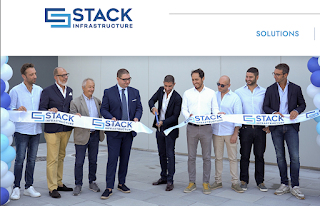
STACK opens 3rd data center in Milan

STACK Infrastructure opened its third data center in Milan (Siziano). The new facility, constructed in less than 12 months on a land parcel it acquired in 2021, brings the company’s live data center capacity in Italy to 120,000 square meters and more than 50MW of power. The new facility runs on 100% renewable energy, utilizes multiple built-in energy-saving features including photovoltaic panels and heat isolation infrastructure, and prequalifies...

STACK Infrastructure builds data center capacity in Australia

STACK Infrastructure announced a partnership with Hickory, a leading Australian commercial real estate developer, to develop data center capacity in three Australian markets: Melbourne, Canberra, and Perth. STACK Australia is currently constructing a 72MW campus in the high growth hyperscale corridor of Truganina in Melbourne’s western suburbs. The facility is expected to be delivered early in 2023 and will include two 36MW buildings (currently...