Wednesday, June 22, 2022

New subsea cable planned between Egypt and Greece

Telecom Egypt and Grid Telecom, a wholly owned subsidiary of the Independent Power Transmission Operator (IPTO) of Greece, signed an agreement to connect Greece and Egypt by extending a branch from a major subsea cable system, which is currently being laid across the Mediterranean Sea. 

Earlier this year, on the 9th of February, Telecom Egypt and Grid Telecom signed a strategic Memorandum of Understanding (MoU) in Athens which had set the ground for the exploration of different connectivity options between Greece and Egypt, as well as the optimal utilization of Telecom Egypt’s and Grid Telecom’s state-of-the-art networks and international reach, through their existing and future optical fiber links to neighboring countries.

The Managing Director and CEO of Telecom Egypt, Adel Hamed, commented “With the increasing demand for connectivity regionally and around the globe, Telecom Egypt is working on improving and extending its international network and continuously investing in new cables. Our collaboration with Grid Telecom will increase our network's resiliency and reach.”

The Chairman and CEO of IPTO, Manos Manousakis, stated "The Southeast Mediterranean incubates major synergies that will contribute to the wider region's emergence as a significant hub for both data and energy. In this context, with the fact that Egypt is a key hub location for all subsea cables from East to West, we are very pleased that the cooperation between IPTO's subsidiary Grid Telecom and Telecom Egypt, will bring a new international route that will enhance the strategic role of Crete island as a neutral open-access node on the intersection of three continents."

https://ir.te.eg/en/CorporateNews/PressRelease/166/Telecom-Egypt-and-GRID-Telecom-sign-a-head-of-agreement-for-a-new-subsea-link-between-Egypt-and-Greece

https://www.grid-telecom.com/συνεργασία-αδμηε-grid-telecom-και-telecom-egypt-για-νέο-τηλ/

Cinturion's Trans Europe Asia System signs landing partner in India

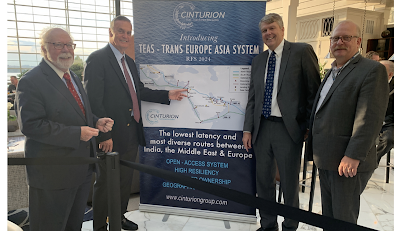
Cinturion's TEAS – Trans Europe Asia System project announced an agreement with Lightstorm as its landing partner in India.As part of the agreement, Cinturion's TEAS, which will be an open-access submarine and terrestrial network, will be hosted by Lightstorm to strengthen connectivity between India, the Middle East and Europe. Lightstorm will use its carrier-neutral and open CLS to herald a new era in the landing of submarine cable systems in India.TEAS...


Nokia launches 5G Innov Lab in France

Nokia launched a 5G Innov Lab platform with the objective of testing and integrating 5G industrial uses, using an open and transversal approach; and brings together various entities, including Airbus Secure Land Communications, Augmented Acoustics, Digital Immersion, IMT, SNEF Lab, Nokia Bell Labs, and Paris-Saclay Hardware Accelerator.

The 5G Innov Lab platform will rely on a 5G private network comprised of  different frequencies  (2.6GHz TDD, 26GHz, and the 3.8 – 4.2GHz band, with three major focus areas:

  • Research and innovation
  • Industrial and vertical use cases
  • 5G experiments on the 26GHz band

The 5G Innov Lab platform is part of the France Recovery plan. 

Pierre-Gaël Chantereau, President of Nokia in France, said: "5G will play a critical role in the transformation of the industry and verticals and this Nokia-led platform will enable the development in France of new use cases, with the support of all partners. France has many assets, supported by both historical and new players, and the cooperation of these actors is essential to accelerate developments and guarantee our competitiveness at the European and global levels.”

https://www.nokia.com/about-us/news/releases/2022/06/21/nokia-launches-in-france-the-5g-innov-lab-platform-to-test-and-integrate-future-5g-use-cases/

Tuesday, June 21, 2022

ADVA and II-VI debut 100ZR pluggable coherent transceiver

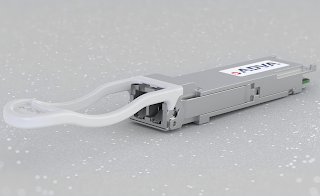
ADVA and II‐VI introduced a jointly-built, 100ZR pluggable coherent transceiver for the optical network edge.

The new Coherent 100ZR, which is rated for both commercial- and industrial-temperature (C-temp and I-temp) operating ranges, features the II-VI Steelerton coherent digital signal processor (DSP). The device plugs directly into existing head-ends, switches, and routers, enabling existing network elements to transmit 100 Gbps signals over links stretching up to several hundred kilometers. 

“With this new application-specific transceiver technology, service providers can now benefit from the simplicity and robustness of coherent technology in the access network and seamlessly upgrade millions of 10Gbit/s Ethernet links to 100Gbit/s,” said Henning Hinderthür, VP of product line management at ADVA. “While this product design is perfectly tailored to this application, it will also achieve economies of scale by leveraging II-VI’s track record of manufacturing transceivers in high volume.”

“We’ve had great feedback from both carriers and OEMs on this product, and are pleased to partner with ADVA on this key milestone for the industry,” said Matthias Berger, VP of coherent technology at II-VI Incorporated. “The transceiver includes the Steelerton™ DSP, a first-of-its-kind and game-changing coherent processor, due to its small size and low power consumption, which are both key to achieving the standard QSFP28 power dissipation requirement of less than 5 watts. What makes this transceiver even more compelling for carriers is the embedded auto-tunable Flextune™ technology, which lowers operational expenses by simplifying network deployments. It’s the ideal combination of cost-effective coherent technology with plug-and-play ease of use.”

https://adva.li/coherent-100zr-slides

https://www.adva.com/en/newsroom/press-releases/20220621-adva-and-ii-vi-incorporated-unveil-industrys-first-100zr-pluggable-coherent-transceiver

II-VI tapes out DSP for 100 Gbps coherent optical access

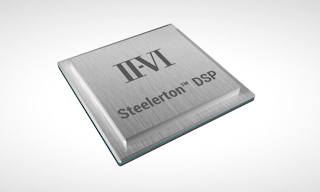
II‐VI announced tape-out of its Steelerton digital signal processor (DSP) for 100 Gbps coherent transmission in optical access and aggregation networks.  

The company says its Steelerton DSP, miniaturized and with ultralow power dissipation, typically of 2 W, was designed specifically to enable 100 Gbps digital coherent optics (DCO) in a pluggable QSFP28 format, one of the most widely deployed 100 Gbps transceiver form factors in access networks.

“The Steelerton DSP promises to bring 100 Gbps QSFP28-DCO transceivers into the mainstream in access networks,” said Matthias Berger, Vice President, Coherent Technology, II-VI Incorporated. “It’s a breakthrough solution that enables wide-scale deployment of full C-band tunable coherent transceivers into QSFP28 ports, of which there are tens of millions in service. The Steelerton DSP is less than one-fifth the size and consumes less than half the power of any other 100 Gbps coherent DSP commercially available.”

https://ii-vi.com/news/ii-vi-incorporated-develops-ultralow-power-dsp-for-100-gbps-coherent-transmission-in-optical-access-networks/

PCIe 7.0 spec doubles data rate to 128 GT/s

The PCI Express (PCIe) 7.0 specification will double the data rate to 128 GT/s (giga transfers per second) and up to 512 GB/s bi-directionally via x16 configuration.

PCI-SIG aims to release the updated spec in 2025.

PCI-SIG technical workgroups will be developing the PCIe 7.0 specification with the following feature goals:

  • Delivering 128 GT/s raw bit rate 
  • Utilizing PAM4 (Pulse Amplitude Modulation with 4 levels) signaling
  • Focusing on the channel parameters and reach
  • Continuing to deliver the low-latency and high-reliability targets
  • Improving power efficiency
  • Maintaining backwards compatibility with all previous generations of PCIe technology


“For 30 years the guiding principle of PCI-SIG has been, ‘If we build it, they will come,’” observed Nathan Brookwood, Research Fellow at Insight 64. “Early parallel versions of PCI technology accommodated speeds of hundreds of megabytes/second, well matched to the graphics, storage and networking demands of the 1990s. In 2003, PCI-SIG evolved to a serial design that supported speeds of gigabytes/second to accommodate faster solid-state disks and 100MbE Ethernet. Almost like clockwork, PCI-SIG has doubled PCIe specification bandwidth every three years to meet the challenges of emerging applications and markets. Today’s announcement of PCI-SIG’s plan to double the channel’s speed to 512 GB/s (bi-directionally) puts it on track to double PCIe specification performance for another 3-year cycle.”

“With the forthcoming PCIe 7.0 specification, PCI-SIG continues our 30-year commitment to delivering industry-leading specifications that push the boundaries of innovation,” said Al Yanes, PCI-SIG President and Chairperson. “As PCIe technology continues to evolve to meet the high bandwidth demands, our workgroups’ focus will be on channel parameters and reach and improving power efficiency.”

https://www.pcisig.com

II-VI milestone: 1,000 WSS modules shipped for subsea

 II-VI announced a significant milestone: more than 1,000 of its LightFlow Flexband wavelength selective switch (WSS) modules shipped for deployment in undersea optical networks. II-VI received its first such commercial orders in 2019.

The WSS modules are used in reconfigurable optical add-drop multiplexers (ROADMs) embedded in branching points on the ocean floor. 

II-VI’s WSS leverages an athermal liquid-crystal technology, which is controlled by very simple circuits and consumes very low power. The LightFlow Flexband WSS is available in 1×1, 1×2, 1×4, 1×8, and 1×9 configurations. II-VI’s broad portfolio of products for undersea networks includes pump lasers, filters, and detectors.

“The market for undersea-qualified WSS continues to grow, leveraging technology that has demonstrated high reliability,” said Dr. Richard Smart, Senior Vice President, ROADM Business Unit. “We are uniquely positioned in the undersea WSS market, thanks to the ultrahigh reliability of our liquid-crystal WSS, which is field-proven with more than 15 years of high-volume deployments. The WSS is the most recent addition to II-VI’s portfolio of undersea-qualified products, built over two decades of innovation and that includes an industry-enabling product line of high-reliability semiconductor lasers and optical components. These products are powering a revolution in undersea capabilities, driving the convergence of communications and computing, enabling new services, and improving global sustainability.”

https://ii-vi.com/news/ii-vi-incorporated-reaches-milestone-of-shipping-more-than-1000-wavelength-selective-switch-modules-for-undersea-optical-networks/


Alkira debuts its Cloud Area Networking

Alkira launched Cloud Area Networking, a a full stack, edge-to-cloud enterprise-grade network with built-in routing and network services. Alkira auto-connects clouds, sites, users, and SD-WAN fabrics.

Alkira Cloud Area Networking aims to unify all users, sites, clouds, and vendors into one network with the following capabilities:

  •  Visualization of all network traffic from on-prem to deep in the cloud
  • Traceroute, packet capture, flow capture, and policy inspections from any on-prem network to any cloud network
  •  Enhanced segmentation and micro-segmentation that provide greater compliance across the entire network
  • Automated network address translation that makes it easy to remediate overlapping IP addresses across the Cloud Area Network
  •  Easy connection of partners to the Cloud Area Network with secure resource sharing 

 Alkira’s “Connect Anything” capabilities include: 

  • SecureConnect, which allows users to remotely access anything on their Cloud Area Network from anywhere
  • One-click high availability and disaster recovery setup for critical connections
  • Rapid network service insertion, including enhanced WAF/DDoS protection for internet facing applications

Alkira notes that it has already provided its Cloud Area Networking to Warner Music Group, Koch Industries, Tekion, and others.

Amir Khan, Chief Executive Officer of Alkira, said: “Until now, enterprises had a choice between shoe-horning last-generation technology into the cloud or using orchestration tools to hide the complexity. Enterprises are reaching the limit on how much they can patch their increasingly fragmented network. The Alkira way, the Cloud Area Networking way, is a single, enterprise-grade network infrastructure built for the cloud but grounded in reality. "

https://www.alkira.com

Reinventing networking for multi-cloud, multi-region connectivity

https://youtu.be/kX3L9hQ-ceUAlkira's Amir Khan and Ahmed Datoo discuss the need for better enterprise networking solutions in the era of distributed applications residing in multiple clouds and regions.Four areas of challenge: (1) Geographic expansion of the network footprint (2) Connecting applications to the cloud (3) for customers already in the cloud, there is the challenge of expanding into multiple regions in the same cloud (4) for customer...


Infinera's XTM packet/optical deployed on the island of Tenerife

Cabildo de Tenerife, the governing body of the island of Tenerife in the Canary Islands, has deployed Infinera’s XTM Series across its regional government network infrastructure to increase broadband connectivity throughout the island. The new network uses the XTM Series range of EMXP packet-optical transport switches and the High-Density Ethernet Aggregator (HDEA) to deliver an architecture optimized for the needs of the island.

Infinera worked closely with Apfutura Telecom S.L. to upgrade Cabildo de Tenerife’s regional government network.

“Investing in a high-speed government-owned and -operated fiber network that serves the needs of our government agencies, technological projects, citizens, and tourists is a critical investment in the development and sustainability of the island,” said Mr. Enrique Arriaga, Vice President of Cabildo de Tenerife. “We are pleased to have deployed Infinera’s XTM solution to meet our present needs and be ready for the future. Not only did we receive exceptional support from the Infinera team, but the solution was also easy to install, and services could be deployed immediately.”

https://www.infinera.com/press-release/infinera-xtm-deployed-to-boost-government-wide-network-in-canary-islands

DISH and T-Mobile expand network services deal

DISH Network and T-Mobile announced an amendment to the 2020 Master Network Services Agreement (MNSA) that provides customers of DISH's retail wireless brands, including Boost Mobile, access to T-Mobile's nationwide 5G network.

The extended deal incorporates financial and operational changes, including improved pricing and enhanced roaming solutions for DISH 5G customers in consideration of an annual minimum revenue commitment through the remaining term of the MNSA.

The term sheet will not be effective unless it is approved by the DOJ by August 14, 2022.

"We are pleased to have reached new terms with T-Mobile that provide DISH with the ability to be more competitive and to meet our customers' evolving needs," said John Swieringa, president and COO, DISH Wireless. "DISH's 5G network now covers more than 20 percent of the U.S. population, and this amendment gives our customers enhanced access to nationwide coverage and in-market roaming while we continue to deploy our own 5G network."

"T-Mobile is building a national, Ultra Capacity 5G network with unprecedented capacity, which has put us in a unique position to support partners like DISH," said Mike Katz, chief marketing officer, T-Mobile. "While DISH customers will benefit from our network, this deal also locks in a multi-billion dollar revenue commitment for our business. It's a win-win."

DISH is committed to providing competition in the wireless market as the nation's fourth facilities-based carrier and the company will continue to expand coverage of DISH's 5G network.

DISH activates 5G network covering 20% of U.S.

Dish began offering 5G broadband service to over 20 percent of the U.S. population. This marks a major milestone for Dish's cloud-native 5G Open RAN network."This is a big moment for DISH as we connect customers across the country with America's first and only cloud-native Open RAN network," said Dave Mayo, executive vice president of network development, DISH Wireless. "This milestone was achieved through the collaboration, ingenuity and hard work...

DISH to resell AT&T Internet services

AT&T and DISH have entered into a distribution agreement that will allow DISH to offer AT&T Internet services, including AT&T Fiber with Hyper-Gig speeds, to prospective, new and existing DISH customers.“At AT&T, we’re constantly thinking of ways we can better serve and provide for our customers. Through this new arrangement with DISH, we’re able to do just that by seamlessly offering our super-fast broadband services to more customers...

New T-Mobile to provide network access to DISH for 7 years

The U.S. Department of Justice (DOJ) approved the merger of T-Mobile US and Sprint with the following conditions: Sprint’s prepaid businesses and Sprint’s 800 MHz spectrum assets be divested to DISH. Sprint and T-Mobile must also provide DISH wireless customers access to the New T-Mobile network for seven years and offer standard transition services arrangements to DISH during a transition period of up to three years. DISH will also have an option to take on leases for certain cell sites and retail locations that are decommissioned by the New T-Mobile, subject to any assignment restrictions.

The T-Mobile + Sprint deal was first announced on 29-April-2019. Deutsche Telekom holds approximately 62% stake in T-Mobile US. Softbank holds an 83% stake in Sprint.

https://www.t-mobile.com/news/t-mobile-sprint-merger-doj-clearance

New T-Mobile and DISH Agreements that become effective upon completion of the T-Mobile+Sprint merger

Agreement to Divest Sprint’s Prepaid Businesses
The New T-Mobile will be committed to divest Sprint’s entire prepaid businesses including Boost Mobile, Virgin Mobile and Sprint-branded prepaid customers (excluding the Assurance brand Lifeline customers and the prepaid wireless customers of Shenandoah Telecommunications Company and Swiftel Communications, Inc.), to DISH for approximately $1.4 billion. These brands serve approximately 9.3 million customers in total.

Agreements Upon Closing of Prepaid Divestiture 

Master Services Agreement for Network Access
Boost Mobile, Virgin Mobile, and Sprint-branded prepaid customers, as well as new DISH wireless customers, will have full access to the legacy Sprint network and the New T-Mobile network in a phased approach. Access to the New T-Mobile network will be through an MVNO arrangement, as well as through an Infrastructure MNO arrangement enabling roaming in certain areas until DISH’s 5G network is built out.

Transition Services Agreement to Support Prepaid Customers

The New T-Mobile will offer standard transition services arrangements to DISH for up to three years following the close of the divestiture transaction. The transition services provided by the New T-Mobile will result in the orderly transfer of prepaid customers to DISH and will also ensure the continued and seamless operation of Boost Mobile, Virgin Mobile, and Sprint-branded prepaid businesses following transition to DISH's ownership.

Agreement to Divest Sprint’s 800 MHz Spectrum Licenses to DISH
DISH has agreed to acquire Sprint’s portfolio of nationwide 800 MHz spectrum for a total value of approximately $3.6 billion in a transaction to be completed, subject to certain additional closing conditions, following an application for FCC approval to be filed three years following the closing of T-Mobile’s merger with Sprint. This will permit the New T-Mobile to continue to serve legacy Sprint customers during network integration, pending later FCC approval of the license transfer. The companies have also entered into an agreement providing the New T-Mobile the option to lease back a portion of the spectrum sold to DISH for an additional two years following closing of the spectrum sale.


Option for DISH to Take Over Decommissioned Cell Sites and Retail Locations
Following the closing of T-Mobile’s merger with Sprint and subsequent integration into the New T-Mobile, DISH will have the option to take on leases for certain cell sites and retail locations that are decommissioned by the New T-Mobile for five years following the closing of the divestiture transaction, subject to any assignment restrictions.

Agreement to Engage in Negotiations Regarding T-Mobile Leasing DISH's 600 MHz Spectrum

The companies have also committed to engage in good faith negotiations regarding the leasing of some or all of DISH’s 600 MHz spectrum to T-Mobile.

Lightwave Logic cites patent for silicon photonics polymer fabrication

 Lightwave Logic announced the publication of a U.S. patent application on a new invention that will enhance polymer modulator manufacturing in high-volume foundries when integrated with silicon photonics.

This patent application – entitled "Hybrid electro-optic polymer modulator with silicon photonics" under publication number 2022/0187637A1 –  details a novel fabrication process that allows Lightwave Logic's proprietary polymers to be fabricated by silicon foundries in a high-volume manufacturing environment.  The published patent application also details a more efficient process that allows for high yielding, high stability poling of polymers in a high-volume foundry manufacturing environment.  The development of the PDK for this new optical hybrid optical modulator design is now in progress with Lightwave Logic's foundry partners.

Dr. Michael Lebby, Chief Executive Officer of Lightwave Logic, commented: "This patent application is incredibly powerful in that it better enables our polymers to be fabricated in high-volumes by our silicon foundry partners, all using their existing equipment. While we already have reliable and stable fabrication processes such as poling, we also need to be comfortable that we can scale these processes for high-volume manufacturing. I see this published patent application as another critical step towards the maturity of polymer technologies both as a photonics integrated platform as well as a volume-scale technology. 

"This patent allows our polymer technology platform to become the engine for pluggable fiber optic transceivers that are being utilized throughout today's internet infrastructure. Enabling foundries to also establish a high-yielding, highly stable fabrication process that includes poling is critical to positively change the internet and enable faster data transfer – thus improving the lives of countless millions who rely on the internet for work and leisure," concluded Lebby.

https://www.lightwavelogic.com


Lightwave Logic cites hybrid polymer-silicon photonics innovation

Lightwave Logic announced the publication of a U.S. patent application on a new invention that will simplify polymer modulator fabrication when integrated with silicon photonics for high-volume foundry manufacturing applications.The company said its patent application - entitled "TFP (thin film polymer) optical transition device and method," - illustrates the design of a simpler to fabricate, lower cost hybrid integrated photonics chip using electro-optic...

Lightwave Logic develops photo-stable organic polymer for optical modulators

Lightwave Logic announced photo-stable organic polymer material for use in the company's next-generation modulators. The technology will be trialed with potential customers under NDA.Lightwave Logic said its materials have shown high tolerance to high-intensity infrared light, common in a fiber optic communications environment and increasingly important as higher density of devices access the network, directly resulting in higher intensity infrared...


Nokia and Elisa achieve over 2 Gbps 5G uplink speeds on mmWave

Nokia, Elisa, and Qualcomm Technologies achieved arecord-breaking 5G uplink speeds of 2.1 Gbps. 

The live demonstration at the Nokia Arena in Tampere in Finland featured Nokia's AirScale base station in 26 GHz mmWave spectrum over Elisa’s commercial 5G network. The network was connected to a 5G device powered by a Snapdragon X65 5G Modem-RF System featuring fourth-generation Qualcomm® QTM545 mmWave antenna modules. Additionally, Nokia deployed its Carrier Aggregation technology to make the best use of the available spectrum assets. The Carrier Aggregation setup included four component carriers of 100 MHz each.

Ari Kynäslahti, Head of Technology and Strategy at Nokia Mobile Networks, said: "5G mmWave stands out as an optimal solution for venues like stadiums, where large capacity and ultra-high data speeds are needed over a short distance for thousands of mobile users at the same time. Carrier Aggregation is the key to fully leveraging spectrum assets in different frequency bands. This successful project is another important milestone in our long-standing and well-established relationship with Elisa and Qualcomm Technologies. We look forward to seeing visitors enjoy innovative 5G experiences at the Nokia Arena soon."

https://www.nokia.com/about-us/news/releases/2022/06/21/nokia-and-elisa-achieve-over-2-gbps-5g-uplink-speeds-on-mmwave-with-qualcomm-solutions/

Aryaka appoints Srini Addepalli as CTO (former Intel)

Aryaka has appointed Srini Addepalli as Chief Technology Officer (CTO), reporting to Renuka Nadkarni, Chief Product Officer.

Prior to joining Aryaka, Srini was a technology strategist and architect at Intel, where he incubated multiple open-source edge computing and security initiatives including Service Mesh, a cloud native secure access service edge (SASE) framework, a distributed hardware security model (HSM), and multi edge/cloud orchestration technologies. Before Intel, he held the Fellow position at Freescale and CTO position at Intoto Inc., which was acquired by Freescale in 2008. At Intoto, Srini was instrumental in leading the development of the company’s gateway and unified threat management (UTM) product lines.

https://www.aryaka.com/

Renesas intros advanced Bluetooth Low Energy SoC

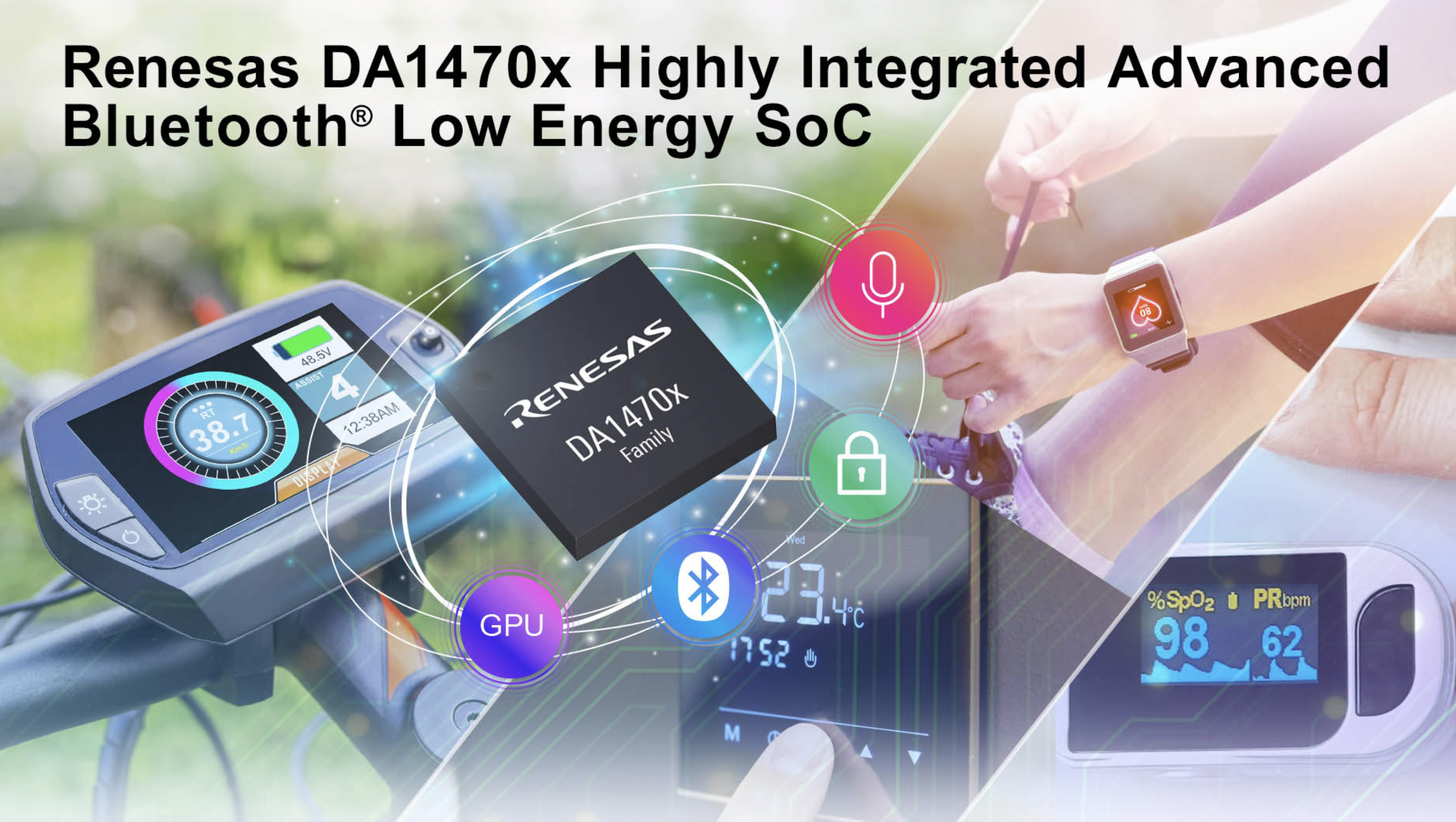
Renesas Electronics introduced its SmartBond DA1470x Bluetooth low energy (LE) system-on-chip (SoC) family for wireless connectivity.

Key features of the DA1470x Wireless SoCs

  • Multi core system – Arm® Cortex-M33 processor as the main application core and Cortex -M0+ as the sensor node controller.
  • Integrated 2D GPU & Display controller supporting DPI, JDI parallel, DBI and Single/Dual/Quad SPI interfaces.
  • Configurable MAC supporting Bluetooth LE 5.2 and proprietary 2.4 GHz protocols.
  • Integrated 720mA JEITA-compliant USB charger supports rechargeable Li-ion/Li-Po batteries.
  • Integrated low quiescent current SIMO DC/DC converter of the PMU efficiently supplies internal system and external components
  • Ultra-low power hardware VAD enables seamless and always on audio processing

“The DA1470x family expands on our successful strategy of integrating more functions, including greater processing power, expanded memory and improved power modules, along with VAD for always-on wake and command word detection,” said Sean McGrath, Vice President of the Connectivity and Audio Business Division in Renesas’ IoT, Industrial and Infrastructure Business Unit. “This feature-packed SoC product family enables developers to push the boundaries of connected consumer and industrial applications and future-proof their IoT products to fit the needs of multiple applications, while optimizing their bill of materials.”

http://www.renesas.com/DA1470x

Monday, June 20, 2022

Vertical Systems: Global Provider Carrier Ethernet LEADERBOARD

Vertical Systems Group announced that seven companies achieved a rank on the 2021 Global Provider Ethernet LEADERBOARD(in order based on retail port share as of year-end 2021): Orange Business Services (France), Colt (U.K.), Verizon (U.S.), AT&T(U.S.), Lumen (U.S.), BT Global Services (U.K.) and NTT (Japan). This industry benchmark for multinational Ethernet network market presence ranks companies that hold a 4% or higher share of billable retail ports at sites outside of their respective home countries.

For the Global Provider Challenge Tier there were no roster changes from the previous year. The following eight companies retain a 2021 Challenge Tier citation (in alphabetical order): Cogent (U.S.), Global Cloud Xchange (India), GTT (U.S.), SingTel (Singapore), T-Systems (Germany), Tata Communications (India), Telefonica (Spain) and Vodafone (U.K.). The Challenge Tier includes companies with share between 2% and 4% of this defined market.

“Global customer demand for Ethernet networks is slowly recovering, however we expect continued volatility ahead due to unstable economic and geopolitical conditions worldwide,” said Rick Malone, principal of Vertical Systems Group. “Latest share results are tight across the top providers competing in this highly specialized global segment of the Ethernet services market.”

Research Highlights:

  • Four of the seven ranked LEADERBOARD companies have changed positions in the past year based on 2021 Global Provider Ethernet port share results.
  • Orange Business Services jumps from third position to rank #1, displacing AT&T which had held the top position since 2018. AT&T moves from first to the #4 position.
  • Colt retains the #2 rank overall. Verizon advances to rank #3, up from fifth position.
  • Lumen shifts from fourth position to rank #5.The Global Provider Ethernet segment port base for share calculations increased marginally in 2021 after pandemic-related declines in the previous two years.
  • Five of the seven Global Provider Ethernet LEADERBOARD companies have attained MEF 3.0 Carrier Ethernet certification as follows: Orange Business Services, Colt, Verizon, Lumen and BT Global Services.
  • Enterprise demand for Ethernet DIA connections is spiking due to new global SD-WAN rollouts. Conversely, Ethernet access to VPN connectivity is declining due to customer migration away from MPLS.

https://www.verticalsystems.com

Swiss Life-led Consortium to acquire 27% equity Interest in DataBank

DigitalBridge Group will sell an equity stake in its DataBank company to a consortium led by Swiss Life Asset Management AG and EDF Invest.

DataBank’s portfolio consists of more than 65 data centers, 20 interconnection hubs in more than 27 markets, on-ramps to an ecosystem of cloud providers, and a modular edge data center platform.

Under the terms of the agreement, SLAM and EDF will acquire 27% of the fully diluted equity interests in DataBank for approximately $1.2 billion in cash from existing investors. Upon completion of this initial phase of the recapitalization and pursuant to the transaction announced in this release, DigitalBridge’s ownership interests in DataBank will be reduced to 15.5% and DigitalBridge will receive cash proceeds of $230 million, implying a pre-transaction net value of $906 million, inclusive of retained net value of $676 million. Subsequent stages of the recapitalization are expected to result in incremental new investors acquiring ownership interests in DataBank from existing investors, including DigitalBridge, prior to the anticipated completion of the recapitalization in the fourth quarter of 2022. 

Marc Ganzi, CEO of DigitalBridge, said, “Since we acquired DataBank in 2016, we have scaled its footprint, capacity and customer base in key metro areas across the United States, transforming DataBank from a business serving three markets with six facilities to the premier edge infrastructure platform serving twenty-seven markets across more than sixty-five facilities. The formation of this new permanent capital vehicle allows DigitalBridge shareholders to maintain significant exposure to the next phase of value creation at DataBank alongside our new co-investors while also freeing up significant capital at an attractive valuation to fuel additional digital M&A.”

Mr. Ganzi added, “This transaction will catalyze the next phase of DataBank’s growth with a new group of marquee investors poised to benefit from the continued powerful infrastructure expansion at the edge and DigitalBridge’s track record and expertise investing across the digital infrastructure ecosystem.”

“This recapitalization allows us to accelerate our expansion efforts and capture the substantial secular growth in edge computing,” said Raul Martynek, DataBank’s CEO. “DataBank is strategically positioned as the leading platform to deliver and enable the network edge ecosystem as a shift from traditional centralized infrastructures continues to evolve to the edge.”

https://www.digitalbridge.com/news/2022-06-16-digitalbridge-announces-recapitalization-of-databank

DataBank to acquire 4 Houston data centers from CyrusOne for $670M

DataBank, a  provider of enterprise-class colocation, interconnection and managed cloud services,  agreed to acquire four existing data centers in the Houston, Texas metro area from CyrusOne for $670 million.The transaction positions DataBank as the largest independent data center provider in Houston, the nation’s fourth-largest metro area. The Houston facilities encompass more than 300,000 square feet of raised-floor data center capacity...

Zayo completes sale of US and UK data centers

Zayo Group Holdings completed the previously announced sale of the its zColo data center assets in the U.S. and U.K. to DataBank. A second closing for zColo’s data centers in France is expected to be completed in the first quarter of 2021.“With the close of the zColo-DataBank transaction, Zayo is able to focus 100% of its attention on its core Network business and customers,” said Steve Smith, CEO of Zayo. “Today, Zayo has an unparalleled depth and...

Aqua Comms signs with Telecom Egypt for EMIC-1 subsea cable

Aqua Comms has signed a crossing and landing agreement with Telecom Egypt for the Europe Middle-East India Connect 1 (EMIC-1) subsea cable, which will connect the key European hubs of Barcelona, Marseille and Genoa with Salalah, Oman and Mumbai, India,.

Telecom Egypt will provide EMIC-1, which is a new intercontinental subsea cable and terrestrial fibre system, a seamless optical path between East Africa, Asia, and Europe. EMIC-1 will land in Ras Ghareb on the Red Sea, and Port Said on the Mediterranean Sea side. The two landing stations are connected over two diverse terrestrial routes, deploying next-generation of fibre optics. The new routes are adjacent to the Suez Canal, between Suez and Port Said. Additionally, this crossing will also include a third new marine path, the Red Sea Festoon, that will link the Ras Ghareb and Suez landing stations with an option of the Suez Canal Route (a.k.a. the Al Morshedeen route), linking Port Said and Suez on the bank of the Suez Canal, offering a new level of resilience and diversity to the crossing solution.

The Managing Director and CEO of Telecom Egypt, Adel Hamed, commented “We are pleased to offer Aqua Comms a seamless trans-Egypt crossing for their new cable. For years, we have established tangible steps to revamp our international infrastructure and increase our assets' geodiversity to keep pace with the rising global demand for large bandwidth and global reach. We believe that EMIC-1 will be a valuable addition to the subsea cables landing in Egypt.”

Nigel Bayliff, CEO of Aqua Comms, said “We are delighted to work with Telecom Egypt to deliver a highly resilient and innovative solution that will be a critical part of our new EMIC-1 system. This new system will connect the key hubs in Europe of Genoa, Marseille and Barcelona with both Salalah, Oman and Mumbai, India serving these high-growth markets with best-in-class connectivity services.”

https://aquacomms.com/latest-news/telecom-egypt-provides-aqua-comms-with-landing-and-crossing-services-for-the-emic-1-subsea-cable/

  • In August 2021, Digital 9 Infrastructure (the owner of Aqua Comms), announced an investment of £50 million, along a leading cloud provider, to develop the EMIC-1 system.

Aqua Comms activates CeltixConnect-2 and North Sea Connect

Aqua Comms confirmed the launch of CeltixConnect-2 (CC-2) and North Sea Connect (NSC) as part of its ownership of the Havhingsten cable system, which links Ireland, the UK and the Nordics.CC-2 is Aqua Comms’ second unrepeated system between the key data hubs of Ireland and the UK, with diverse landings into the Isle of Man (IOM). Together with CC-1 the new system brings resilient, high fibre count, capacity connectivity between these key hubs for...