Thursday, July 23, 2020

Blueprint for the Quantum Internet

The U.S. Department of Energy (DOE) outlined a blueprint strategy for the development of a national Quantum Internet.

The DoE's 17 national laboratories will serve as the first nodes on the Quantum Internet. Also participating will be the National Science Foundation, the Department of Defense, the National Institute for Standards and Technology, the National Security Agency, and NASA. The academic community and industry will also be invited.

At a launch event hosted by the University of Chicago, officals described the initiative as "bringing the United States to the forefront of the global quantum race and ushering in a new era of communications."

“The Department of Energy is proud to play an instrumental role in the development of the national quantum internet,” said U.S. Secretary of Energy Dan Brouillette. “By constructing this new and emerging technology, the United States continues with its commitment to maintain and expand our quantum capabilities.”

In February, scientists from DOE’s Argonne National Laboratory in Lemont, Illinois, and the University of Chicago entangled photons across a 52-mile “quantum loop” in the Chicago suburbs, successfully establishing one of the longest land-based quantum networks in the nation. That network will soon be connected to DOE’s Fermilab in Batavia, Illinois, establishing a three-node, 80-mile testbed.

“The combined intellectual and technological leadership of the University of Chicago, Argonne, and Fermilab has given Chicago a central role in the global competition to develop quantum information technologies,” said Robert J. Zimmer, president of the University of Chicago. “This work entails defining and building entirely new fields of study, and with them, new frontiers for technological applications that can improve the quality of life for many around the world and support the long-term competitiveness of our city, state, and nation.”

 “Argonne, Fermilab, and the University of Chicago have a long history of working together to accelerate technology that drives U.S. prosperity and security,” said Argonne Director Paul Kearns. “We continue that tradition by tackling the challenges of establishing a national quantum internet, expanding our collaboration to tap into the vast power of American scientists and engineers around the country.”

Video of the event
https://www.youtube.com/watch?v=cR0wVCs9DxI

Technical report: From Long-distance Entanglement to Building a Nationwide Quantum Internet
https://www.osti.gov/biblio/1638794/

AT&T announces nationwide coverage for 5G

AT&T announced nationwide coverage status for its 5G network, which now covers a population footprint of 179 million people.

AT&T has enabled dynamic spectrum sharing (DSS) technology in numerous markets.  DSS allows carriers to share the same channel between both 4G and 5G users simultaneously, based on demand.

"Our strategy of deploying 5G in both sub-6  (5G) and mmWave (5G+) spectrum bands will provide the best mix of speeds, latency and coverage that are needed to enable revolutionary new capabilities to fuel 5G experiences for consumers and businesses,” said Chris Sambar, EVP of Technology Operations. “Our competitors are still working to provide that same mix, which for them could take months or even years. What we offer is available to consumers and businesses today, and we’re not slowing down. As we have throughout our 144-year history, we’ll continue to innovate and invest in our network to expand our 5G coverage to more consumers and businesses across the country.”

AT&T: COVID-19 impacted revenues

Citing the impact of COVID-19 across all its business segments, AT&T reported Q2 revenues of $41.0 billion versus $45.0 billion in the year-ago quarter.

The COVID-19 impact included 338,000 mobile accounts which ceased paying their monthly bill and for which the company continues to provide service under the Keep America Connected programs but which are now considered "disconnects" for accounting. AT&T also saw lower content and advertising revenues at WarnerMedia, drops in domestic video and legacy wireline services, and currency exchange pressure in Latin America.

“Our solid execution and focus in a challenging environment delivered significant progress in the quarter, most notably the successful launch of HBO Max, resilient free cash flow and a strengthened balance sheet,” said John Stankey, AT&T chief executive officer. “Our resilient cash from operations continues to support investments in growth areas, dividend payments and debt retirement. We are aggressively working opportunities to sharpen our focus, transform our operations and continue investing in growth areas, with the customer at the center of everything we do.”

Highlights:

  • Mobile service revenues were down 1.1% due to decline in international roaming; equipment revenues up year over year.
  • 17.7 million premium TV subscribers – 886,000 net loss; 91,000 attributed to Keep America Connected programs.
  • 225,000 AT&T Fiber net adds
  • Operating expenses were $37.4 billion versus $37.5 billion in the year-ago quarter, essentially flat. 
  • Operating income was $3.5 billion versus $7.5 billion in the year-ago quarter


https://investors.att.com/~/media/Files/A/ATT-IR/financial-reports/quarterly-earnings/2020/q2-2020/att-2q2020-earnings.pdf

Marvell intros a customizable ASIC program in 5nm

Marvell debuted a cutomizable ASIC targetting applications ranging from next generation 5G carriers, cloud data centers, enterprise and automotive.

Marvell’s new ASIC solution enables a multitude of customization options and a differentiated approach with best-in-class standard product IP including Arm-based processors, embedded memories, high-speed SerDes, networking, security and a wide range of storage controller and accelerators in 5nm and below.

With its legacy as part of IBM, GlobalFoundries and AveraSemi, the Marvell ASIC team brings decades of expertise with the custom ASIC model across 14 leading-process nodes and has produced over 2,000 custom ASICs.

“The future of compute requires scalable and highly optimized solutions that can power the data center all the way to the network edge,” said Mohamed Awad, vice president of Marketing, Infrastructure Line of Business, Arm. “Marvell brings a fresh and differentiated approach to addressing these requirements by uniquely utilizing Arm platforms to improve power, performance, and time-to-market for our mutual partners.”

“Marvell custom ASIC has a rich history in significant customization, advanced interfaces and memory solutions. Our ability to pull optimized components, like the Arm processor subsystem, from across Marvell’s product portfolio adds a whole new dimension to what we can deliver,” said Kevin O’Buckley, general manager of the ASIC BU at Marvell. “The breadth of Marvell’s infrastructure technology portfolio is unique in the industry – and is available in one comprehensive offering. We see this as an opportunity to deliver greater value to our existing customers while opening up possibilities for custom silicon implementations that had not previously been viable.”

Key features of Marvell’s 5nm and beyond ASIC:

  • Leading Arm-based processor technologies
  • Pre-optimized processor IP to improve power, performance, and time-to-market
  • Multiple power-optimized SerDes solutions at 112G and beyond
  • Ability to solve demanding system topologies at reduced system cost
  • Advanced packaging solutions for chiplets, integrated memory and optics
  • Lower board and ASIC costs
  • Simpler system integration
  • Bandwidth scaling and power reduction enabled with world-class SerDes
  • Enhanced security, networking and memory IP for the most demanding applications


https://www.marvell.com/products/custom-asic.html

Intel hits Q2 revenue of $19.7B, Data Center Group up 43% yoy

Citing strong demand for cloud services and work-from-home and study-from-home upgrades, Intel reported Q2 revenue of $19.7 billion, up 20 percent year-over-year (YoY). GAAP earnings-per-share (EPS) was $1.19, up 29 percent YoY. However, the company warned of slower growth in the second half of the year and production delays with its next-gen 7-nm CPU manufacturing, which will be delayed by six months.

“It was an excellent quarter, well above our expectations on the continued strong demand for computing performance to support cloud-delivered services, a work- and learn-at-home environment, and the build-out of 5G networks,” said Bob Swan, Intel CEO. “In our increasingly digital world, Intel technology is essential to nearly every industry on this planet. We have an incredible opportunity to enrich lives and grow this company with a continued focus on innovation and execution."

Data-centric revenue grew 34 percent, accounting for 52 percent of total revenue; PC-centric revenue grew 7 percent YoY.

Some highlights:

  • Data Center Group (DCG) revenue was up 43 percent YoY driven by broad strength including 47 percent YoY growth in cloud service provider revenue. 
  • In Q2, the company introduced its 3rd Gen Intel Xeon Scalable processors and new additions to its hardware and software AI portfolio for data center, network and intelligent-edge environments. 
  • Intel's memory business (NSG) set a new revenue record in the quarter. 
  • Intel's portfolio for 5G network infrastructure gained customer momentum, most notably the 10nm-based Intel Atom P5900 for wireless base stations. 
  • Mobileye continued to win new ADAS designs in a challenging economic environment for automotive, and Intel acquired Moovit, a mobility-as-a-service (MaaS) solutions company.
  • The PC-centric business (CCG) was up 7 percent YoY in the second quarter on notebook strength driven by the continued work- and learn at home dynamics of COVID-19, which also contributed to a volume decline in desktop form factors as demand shifted to notebooks. 
  • Intel's first 10nm-based server CPU “Ice Lake,” which remains planned for the end of this year. In the second half of 2021, Intel expects to deliver a new line of client CPU’s (code-named “Alder Lake”), which willinclude its first 10nm-based desktop CPU, and a new 10nm-based server CPU (code-named “Sapphire Rapids”).
  • Intel said its 7nm-based CPU product timing is shifting approximately six months relative to prior expectations due to the yield of its 7nm process, which based on recent data, is now trending approximately twelve months behind the company's internal target. 

HPE, Orange and Casa demonstrate 5G slicing

Hewlett Packard Enterprise (HPE), Orange, and Casa Systems conducted a technical demonstration of automated 5G network slice orchestration.

The demo, which was illustrated using a kit robot, showed use cases and service agility needed to support 5G business applications, including location-based, telemetry, IoT, and edge computing.

“Our robot demo underscores how a cloud-native, software-defined 5G network will support latency-sensitive business use cases with automatic detection and migration to a dedicated network slice to meet the strictest SLAs for mission-critical applications,” said Emmanuel Bidet, VP, Convergent Networks Control, Orange. “This is a new step forward marking the emergence of the real-time enterprise as companies now expect to use data as soon as it is produced from sensors, cameras, robots and other devices and services to power digital transformation strategies. We are proud to have achieved this project with HPE and Casa Systems, two leading companies in the open 5G solutions market.”

A robot was fitted with a 5G radio and connected to the robot’s management software over an open 5G core network, comprising cloud-native Network Functions from both HPE and Casa Systems.

HPE’s Service Director orchestration software created, configured and deployed network slices for the robot’s service to connect at low latency. The demo shows the service set up and the robot operating normally until additional data traffic and latency are introduced and the robot’s performance is visibly impacted. This triggers an alarm and Service Director works with the 5G core network within seconds to create and deploy a new dedicated network slice with the proper QoS restoring the robot to normal operation.

“This demonstration with Orange and Casa underscores our ability to automate and orchestrate the complete lifecycle of 5G services in cloud-native, multi-vendor environments,” said Domenico Convertino, Vice President Product Management, Communications & Media Solutions, HPE. “An open 5G Core is key for operators to break out of the single vendor lock-in of previous generation networks. The HPE 5G Core Stack, as well as our newly announced HPE 5G Lab, enable an accelerated evolution to 5G networking that is open and interoperable.”

MaxLinear sees Q2 sales rise 5% sequentially but down 21% yoy

MaxLinear, which supplies RF, analog and mixed-signal integrated circuits for the connected home, wired and wireless infrastructure, reported Q2 revenue of $65.2 million, up 5% sequentially, and down 21% year-on-year. GAAP gross margin was 50.2%. GAAP diluted loss per share was $0.30, compared to diluted loss per share of $0.21 in the prior quarter, and diluted loss per share of $0.03 in the year-ago quarter.

“In the second quarter, revenue results were in line with our recent preliminary revenue guidance, gross margin was strong, and operating expenses were tightly managed to below the mid-point of our guidance. Our business showed solid improvements due to stronger-than-expected revenues in broadband driven by demand uptick, as well as analog product sales recovery. The work-from-home environment has strongly benefited our connected home business owing to noticeable inflection in bandwidth demand at home. The infrastructure business also saw meaningful quarterly improvements over previous results, supporting our positive outlook on the new product ramps. Finally, the high-performance analog products selling into our industrial, multi-market segment recovered extremely well in the quarter with impressive results,” commented Kishore Seendripu, Ph.D., Chairman and CEO.

Filtronic ships 50k E-band transceivers for 5G backhaul

UK-based Filtronic plc announced a company milestoneL a total of 50,000 high-performance E-band transceiver modules shipped for the growing 5G backhaul market.

E-band spectrum (in the mmWave frequency ranges 71 – 76GHz and 81 – 86GHz) offers OEMs wide bandwidth, enabling them to provide 5G mobile network operators with high-capacity and high data rate backhaul, midhaul and front-haul (collectively known as XHaul). E-band has been identified as one of the critical wireless technologies required to address the demanding XHaul capacity requirements of 5G networks, and is now experiencing significant growth. Systems containing Filtronic’s core E-band technology have been successfully demonstrated at data rates up to 40Gbps.

“There has been a record demand this year for our flagship E-band transceiver module, Orpheus, which has been delivered in volume to a number of customers for integration into high-capacity mobile backhaul radio solutions,” said Reg Gott, Executive Chairman of Filtronic. “Earlier this year we added the new-generation Morpheus II to our product range, and demand for this module is beginning to take off as well, in particular for the high power option that is desirable for implementing carrier aggregation.”

Sierra Wireless to sell its Automotive Embedded Module business

Sierra Wireless will divest its Shenzhen, China-based automotive embedded module product line for US$165 million in cash. The purchaser, Rolling Wireless (H.K.) Limited, is a consortium led by Fibocom Wireless Inc. of Shenzhen.

The divested product line is part of the company’s Embedded Broadband reporting segment. Sierra Wireless will exit automotive applications but will continue to invest in other product lines in its Embedded Broadband segment, specifically high-speed cellular modules typically used in Enterprise applications.

These retained products include 4G LTE and LTE-Advanced cellular embedded modules that are ordered in large volumes, as well as new industry-leading 5G modules that will be made available to customers from its retained business. Sierra Wireless’s 5G modules and gateways are expected to be available in Q4 2020, extending its broad portfolio of IoT solutions.

“This divestiture enables Sierra Wireless to strengthen our focus and investment in our fully integrated IoT solutions that deliver high-value recurring revenue,” said Kent Thexton, President and CEO of Sierra Wireless. “This transaction will improve our balance sheet and allow us to expand our R&D centre in Richmond, British Columbia to accelerate our innovation in integrated IoT solutions and 5G modules, gateways and routers.”

Wednesday, July 22, 2020

NETGEAR: booming demand for home network upgrades started in March

Consumers in the U.S. rushed to upgrade their home office set-ups beginning in March.

NETGEAR reported Q2 rvenue of $280.1 million, an increase of 21.3% from the comparable prior year quarter. Second quarter 2020 GAAP operating income was $8.9 million, or 3.2% of net revenue, as compared to operating income of $0.3 million, or 0.1% of net revenue, in the comparable prior year quarter.

"Patrick Lo, Chairman and Chief Executive Officer of NETGEAR, commented, “The NETGEAR team navigated challenging conditions to accommodate the robust end demand we saw during the quarter, all while working remotely. Driven by the CHP side of the business, we achieved revenue growth of 21% and more than doubled our operating profit over the prior year. The surge in demand that began in March continued throughout the entire quarter and resulted in strong growth in both the retail and service provider channels for the CHP business. The work-from-home transition taking place worldwide is driving the adoption of high performance WiFi at home as an indispensable necessity and, as the leader in WiFi 6 technology, we stand well positioned to enable this new reality. In conjunction with the increased penetration of high-end WiFi 6 mesh systems and routers into the market, we accelerated the acquisition of new service subscribers, particularly in cybersecurity protection and parental control services, growing our paid subscriber base 28% sequentially and putting us on a trajectory to exceed our goal of doubling our subscriber count in 2020.”

Mr. Lo continued, “As many employees continue to work from home today, companies are growing increasingly confident that their workforce can be productive remotely and are beginning to measure the positive aspects of remote work. This is driving a consensus that remote work will be a larger part of the landscape even as the pandemic eventually eases. As a result, we see strong demand for high performance home WiFi continuing to fuel our revenue growth at least through the rest of this year. While providing an unexpected tailwind for CHP, the pandemic has at the same time created a headwind for SMB."

Microsoft Azure growth rate now at 47%

Microsoft reported Azure revenue growth of 47% (up 50% in constant currency) for the quarter ended June 30th, as cloud usage increased due to shifting work and study patterns during the pandemic.

Overall, Microsoft posted revenue of $38.0 billion, and increase of 13% YoY. Operating income was $13.4 billion and increased 8%. Net income was $11.2 billion and decreased 15% GAAP (up 5% non-GAAP).

“Our commercial cloud surpassed $50 billion in annual revenue for the first time this year. And this quarter our Commercial bookings were better than expected, growing 12% year-over-year,” said Amy Hood, executive vice president and chief financial officer of Microsoft. “As we drive growth across the company, we remain committed to investing in long-term strategic opportunities.”


Highlights:

Revenue in Productivity and Business Processes was $11.8 billion and increased 6% (up 8% in constant currency), with the following business highlights:

  • Office Commercial products and cloud services revenue increased 5% (up 7% in constant currency) driven by Office 365 Commercial revenue growth of 19% (up 22% in constant currency)
  • Office Consumer products and cloud services revenue increased 6% (up 7% in constant currency) and Office 365 Consumer subscribers increased to 42.7 million
  • LinkedIn revenue increased 10% (up 11% in constant currency)
  • Dynamics products and cloud services revenue increased 13% (up 15% in constant currency) driven by Dynamics 365 revenue growth of 38% (up 40% in constant currency)

Revenue in Intelligent Cloud was $13.4 billion and increased 17% (up 19% in constant currency), with the following business highlights:

  • Server products and cloud services revenue increased 19% (up 21% in constant currency) driven by Azure revenue growth of 47% (up 50% in constant currency)
  • Enterprise Services revenue was relatively unchanged (up 2% in constant currency)

Revenue in More Personal Computing was $12.9 billion and increased 14% (up 16% in constant currency), with the following business highlights:

  • Windows OEM revenue increased 7%
  • Windows Commercial products and cloud services revenue increased 9% (up 11% in constant currency)
  • Xbox content and services revenue increased 65% (up 68% in constant currency)
  • Surface revenue increased 28% (up 30% in constant currency)
  • Search advertising revenue excluding traffic acquisition costs decreased 18% (down 17% in constant currency)

ADVA posts Q2 revenue of EUR 145 million, up 9%

ADVA's revenues for Q2 2020 increased by 9.3% to EUR 145.0 million from EUR 132.7 million in Q1 2020 and grew by 8.9% from EUR 133.2 million in the same year-ago period. Net income was EUR 7.6 million in Q2 2020 and overcompensated a net loss of EUR 7.2 million in Q1 2020 and also grew substantially from a net income of EUR 1.3 million in Q2 2019.

"Our results in the second quarter of 2020 were convincing. So far, the demand for our products and services has developed positively during the Covid-19 pandemic. A recession-related slowdown in the second half of the year is still possible, but, in the meantime, we believe that we will have further revenue growth in Q3,” said Brian Protiva, CEO, ADVA. “The pandemic has made our production and supply chains more complex and our transportation costs increased. But our ability to deliver is stable and fundamentally intact. Additionally, we have a global, well-diversified and loyal customer base with which we can expand and improve the digital infrastructure that our society is so increasingly dependent on.”

”Despite the ongoing Covid-19 pandemic, we managed to increase revenues and earnings in the second quarter, both sequentially and year over year,” commented Uli Dopfer, CFO, ADVA. “Our significantly improved profitability is mainly the result of the cost improvement measures that we introduced in 2019. Furthermore, we were able to improve our cash position compared to the first quarter by around EUR 15 million to EUR 67.6 million providing a solid financial basis. Due to the ongoing risks, both on the supply and on the demand side, we have concluded a KfW back-up facility of EUR 40 million for hedging purposes should a further Covid-19-driven crisis occur. With this preventive measure, we feel prepared for all scenarios.”

https://www.adva.com/en/about-us/investors/financial-results

Dell'Oro: RAN investments to surpass $200 billion

Dell'Oro Group is forecasting that the RAN market will grow at a healthy pace over the next three years, before growth tapers off in the outer part of the forecast period, resulting in a mid-single digit CAGR between 2018 and 2022. Cumulative investments over the 2019-2024 period are expected to eclipse $200 billion.

Some highlights of Dell'Oro's 5-Year RAN Forecast:

  • The Millimeter Wave outlook has been revised upward driven by improved momentum in the Asia Pacific region.
  • The pickup in mid-band deployments has propelled the demand for Massive MIMO. In this forecast, 5G NR Massive MIMO is projected to comprise more than half of the cumulative 5G NR capex.
  • The underlying assumptions driving the regional projections remain fairly unchanged, with the APAC region being the main near-term growth vehicle.
  • With more clarity about the 5G rollout plans in the North America region, we have adjusted the near-term outlook upward and now forecast the North American RAN market to continue advancing over the near-term.
  • Global macro base station (BTS) shipments are projected to remain elevated between 2020 and 2022, underpinning projections that 5G activity is set for an upturn. This positive momentum will eventually slow, resulting in some softness in the outer part of the forecast period.
  • The high level small cell vision has not changed. We expect unlicensed WiFi systems to coexist with cellular technologies. For upper mid-band deployments, operators will need to accelerate indoor deployments rapidly while the sub 6 GHz micro adoption phase will be more gradual.
  • Since the last forecast, we have adjusted the outdoor small cell outlook upward, driven primarily by a more favorable Millimeter Wave forecast.
  • Fixed Wireless Access (FWA) Radio Access Network (RAN) investments, including mobile network and dedicated fixed networks, are projected to comprise a growing share of the overall RAN capex envelope over the next five years, reflecting the size of the potential upside, various technology advancements, and improving market sentiment for both basic and high performance connectivity

https://www.delloro.com/news/radio-access-network-investments-to-surpass-0-2-trillion/

Deutsche Telekom awards a 5G RAN contract to Ericsson

Deutsche Telekom AG, the largest telecommunications service provider in Europe by revenue, awarded a new multi-year deal for its 5G Radio Access Network (RAN) across Germany to Ericsson.

Financial terms were not disclosed. Ericsson said the deal covers the upgrade of several mobile sites to 5G using Ericsson Radio System products and solutions. Ericsson Spectrum Sharing solution will also be deployed, allowing Deutsche Telekom to dynamically manage 4G and 5G traffic in its network through efficient use of existing spectrum, enhancing coverage, performance and mobility.

Claudia Nemat, Board Member for Innovation and Technology, Deutsche Telekom AG, says: “We are pleased to have found a leading 5G supplier in Ericsson as a partner, who has also convinced us in the past in the modernization of our mobile access network. After the reliable and on-time modernization, the bar for the 5G roll-out in the antenna network is naturally also high.”

Arun Bansal, President of Europe and Latin America, Ericsson, says: “This 5G deal is a testament to the exceptional long-term partnership we have forged with Deutsche Telekom, both here in Germany and around Europe. With our global experience and leading technology, we’ll deploy a world-class 5G network in Germany with DT and we’re excited about this next chapter in our relationship."


Deutsche Telekom to extend 5G to 50% of Germany this year

Deutsche Telekom announced a commitment to bring 5G coverage to 50% of Germany's population this year. By year-end, customers in all German states will have broad access to Telekom's 5G
network.

"We have big plans for 5G and will bring the latest mobile communications standard to large parts of Germany before the end of the year," says Telekom Deutschland CEO Dirk Wössner. "I am delighted that the network will be even better for our customers. Preparations in the network are in full swing to ensure that as many people as possible get the new technology quickly. In the city and in the countryside."

https://www.telekom.com/en/media/media-information/archive/5g-for-germany-598886

Deutsche Telekom kicks off 5G rollout

Deutsche Telekom has kicked off its 5G rollout in Germany and expects to have 300 5G antennas in more than 100 locations online by the end of the year.

The first six German cities with 5G include Berlin, Bonn, Darmstadt, Hamburg, Leipzig, and Munich. In the upcoming 18 months, the 20 largest cities in Germany will all be connected with 5G.

"We punched our ticket for a 5G future with the spectrum auction. Our goal now is to get 5G to the streets, to our customers, as quickly as possible. Nearly three-quarters of our antenna locations in Germany are connected with optical fiber – we're now building on that," says Dirk Wössner, Member of the Board of Management, Deutsche Telekom, and Managing Director, Telekom Deutschland GmbH. "Our teams are working hard in every area. Whether we're talking about the network, rate plans, or devices and applications – we're speeding up to get 5G started this year. At the same time, we need a clear regulatory framework and pragmatism from the authorities – particularly when it comes to questions regarding regional spectrum, local roaming, allocation of the auction proceeds, and the approval procedures – which takes far too long in Germany."

Manatua One Polynesia Cable is now Ready for Service

The Manatua One Polynesia Cable Project was officially declared “Ready for Service.”

The subsea cable extends 3,600 kilometers from Apia, Samoa to Toahotu, Tahiti, with branching units for landings to Niue; Aitutaki, Cook Island; Raratonga, Cook Island; and Vaitape, Bora Bora. It is the first submarine cable in the Cook Islands and Niue, which until now have relied on satellite connectivity.

The configuration is a two/three fiber pair trunk that connects Apia and Toahotu with a two-fiber pair branch to Avatele, a three-fiber pair branch to Raratonga and one-fiber pair branches to both Aitutaki and Vaitape.

Subcom served as the turnkey supplier for the project.

The Manatua Consortium is composed of: The Office des Postes et Télécommunications (OPT), the telecoms operator of French Polynesia; Avaroa Cables Limited (ACL), the cable operator of Cook Islands, Telecom Niue Limited (TNL), the telecoms operator of Niue; and Samoa Submarine Cable Company (SSCC), the cable operator of the Independent State of Samoa.

India's Airtel renews managed services contract with Ericsson

Bharti Airtel =has renewed its agreement with Ericsson (NASDAQ: ERIC) to provide pan-India managed network operations through Ericsson Operations Engine.

The three-year deal will see Airtel launching Ericsson Operation Engine during 2020. Ericsson will deploy the latest automation, machine learning and artificial intelligence (AI) technologies to enhance Airtel’s mobile network performance and customer experience. Ericsson will also manage Airtel’s network operations center and field maintenance activities across India. Ericsson will also provide Network Optimization Services, combining multi-vendor networks expertise with its state-of-the-art machine learning/AI-enabled Cognitive Software Suite. This will deliver a better customer experience and ensure a superior return from Airtel’s deployed network assets.

The agreement builds on the 25-year collaboration between Ericsson and Airtel in India.

Randeep Sekhon, Chief Technology Officer, Bharti Airtel, says: “We are pleased to strengthen our deep partnership with Ericsson as part of our vision to build a future ready network that enables world-class experience for our customers. We are confident these new technologies will enable us to serve the emerging data requirements of customers in a digitally connected India.”

Deutsche Telekom launches LTE-M in Germany

Deutsche Telekom LTE-M is now commercially available across Germany in both post-paid and pre-paid IoT offerings, including its Business Smart Connect LPWA and M2M tariffs.

Deutsche Telekom already completed first certifications of a handful of LTE-M chipsets and modules, thereby enabling faster user time-to-market and connectivity quality.

“LTE-M gives our customers the opportunity to develop new solutions where previous technologies had their limitations,” says Rami Avidan, CEO of Deutsche Telekom IoT GmbH. “The technology is a firm part of our overall IoT network portfolio. It is 5G-ready and therefore future-proof – ideally positioned to drive innovation for the Internet of Things even further.”

In comparison to NB-IoT, LTE-M offers higher data rates (up to 350 Kbps), lower latency, connected mobility (i.e. the ability of a technology to do handover between cells), and SMS support.

https://www.telekom.com/en/media/media-information/archive/deutsche-telekom-launches-lte-m-in-germany-604370

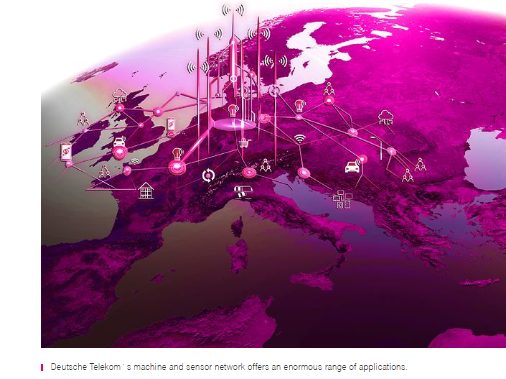
Deutsche Telekom launches NB-IoT in Germany

Deutsche Telekom launched its NarrowBand IoT (NB-IoT) service in Germany. The network currently covers 90 percent of the nation's territory and 90% of its population. The rollout will be completed by the end of 2019.

"Our machine and sensor network offers an enormous range of applications," says Kai-Ulrich Deissner, Head of International Technology & Services Delivery, Deutsche Telekom. "Mobility, security or waste management are just a few areas that the new network revolutionizes. It is an important prerequisite for the development of mobile IoT in the years to come."

Deutsche Telekom is also introducing NB-IoT roaming in Europe. As a first step, the national companies in Germany, Austria, the Netherlands, Hungary, Slovakia and the Czech Republic support roaming among each other. Other countries will follow.
Nine European subsidiaries and the USA have introduced NB-IoT so far. The Netherlands completed their nationwide rollout in mid-2017. Austria and Slovakia have been covered nationwide since 2018.

Quintillion adds former NORAD commander as strategic advisor

Quintillion, which built a submarine and terrestrial high-speed fiber optic cable system that spans the Alaskan Arctic, named General (Ret.) Charles H. Jacoby Jr. as a Senior Strategic Advisor.  Jacoby previously served as the first Army officer to command North American Aerospace Defense Command (NORAD) and the United States Northern Command.

Quintillion has already deployed over 1,600 miles of fiber optic cable off the Alaskan coast. The company says it three-phase subsea cable system will ultimately connect Asia to the American Pacific Northwest, and to Western Europe via the Northwest Passage through the Alaskan and Canadian Arctic.

http://qexpressnet.com/

T-Mobile cuts pricing for post-paid with unlimited data

T-Mobile announced an aggressive new price point for its postpaid service: four lines of unlimited data for $25 each/month. Four 5G phones can be included for $5 more each/month, and all with 5G access included. The offer is for a limited time.

On August 2, the newly merged company begins operations under the flagship T-Mobile brand in retail nationwide, bringing the network of Sprint and T-Mobile stores together and beginning to roll out new  policies nationwide.

Huawei and partners establish 4G/5G FWA Technology Forum

Huawei and 20 industrial partners jointly announced the establishment of the 4G/5G FWA Technology Forum as a platform that convenes industrial and ecosystem partners to jointly promote the rapid development of 4G and 5G FWA technologies.

Participating companies include ASR, Atel, Esound, Fibocom, FROG, GOSUNCN, HAIOT, Lintron, MaxComm, MobiWire, MOBOT, Neoway, NOTION, QUECTEL, Sequans, Tigercel, Tozed Kangwei, UNISOC, and Zmtel.

According to the joint declaration, the forum will serve to help:

  • Share trends in the industry, identify directions in technical development, accumulate successful experiences, and overcome business challenges.
  • Improve the 4G and 5G FWA technologies required to provide wireless broadband connection solutions with increased performance and cost-effectiveness.
  • Enhance the collaboration between FWA solution providers and mobile network operators to improve the industry's ecosystem and ensure business success.
  • Promote the success of the FWA industry to accelerate the provisioning of broadband access to anyone, anywhere, with the goal of "connecting the other half" of the world's population.


Zhang Yiqu, General Manager of WTTx Product Line, said in his speech: "Almost 50% of the world's population is still outside the scope of Internet coverage. This represents both enormous challenges and huge market potentials that require the entire industry to come together to develop solutions. Through the 4G/5G FWA Technology Forum, Huawei is excited to collaborate with partners to accelerate the deployment of 4G and 5G FWA and contribute to "connecting the other half" of the world's population. This will be a great achievement for the FWA industry in the new era of wireless home broadband."