Wednesday, August 29, 2018

Dell’Oro: WLAN market to hit $18.2 billion by 2022

The WLAN market revenue will grow to $18.2 billion by 2022, according to a new report from Dell'Oro Group. Broadband CPE and Mesh routers will fuel growth for SOHO class WLAN.

“We estimate the Enterprise and SOHO markets to maintain modest growth over the next five years,” said Ritesh Patel, Business Analyst at Dell’Oro Group. “Specifically in the SOHO market, the need for better Wi-Fi coverage and in-home management will be driven by the demand for improved network visibility and application mobility, i.e. having the ability from anywhere in the home to experience high bandwidth applications such as FaceTime, Netflix, and YouTube. Broadband CPE and Wi-Fi Router vendors will fulfill this need by integrating new wireless technology, 802.11ax, and by improving visibility into analytics and management controls. Similarly, vendors will address the need for better coverage through Mesh Routers, which will continue to see modest to high growth over the next five years,” added Patel.

The WLAN 5-Year Forecast Report highlights other key trends, including:


  • Enterprise Cloud license revenue will surpass Cloud Managed AP revenue for the first time.
  • Ethernet switch sales to aggregate WLAN are poised to eclipse switch sales lost to WLAN. See our Campus Networks Advanced Research report.
  • China eclipses the largest region, North America, in terms of units by 2020.

Tuesday, August 28, 2018

Huawei intros Universal Transport for electrical grids

Huawei announced the commercial release of its next-generation Universal Transport Solution for smart grids.

Huawei said traditional low-speed connectivity services for the power grid, such as Supervisory Control and Data Acquisition (SCADA) and relay protection, will continue to exist for a long time, providing high levels of security. However, the rapid expansion of the global power grid is driving a spike in the construction of power transmission and transformation networks that have greater requirements for more types of service and higher bandwidth.

Electric power companies also have the possibility to launch connectivity services based on their investment in network resources.

The Huawei Next-Generation Universal Transport Solution integrates OTN, SDH, packet, PCM, and other technologies based on the MS-OTN architecture. It supports single wavelength at 100 Gbps or 200 Gbps.  DWDM enables a pair of optical fibers can achieve an ultra-large bandwidth of 20 TBbps. The platform enables the power transmission bearer networks to carry multiple services including commercial traffic.

https://www.huawei.com/us/press-events/news/2018/8/next-generation-universal-transport-solution

Huawei adapts 4.5G/5G solution for China's power companies

Huawei announced a 4.5G-based and 5G-oriented eLTE-DSA (eLTE Discrete Spectrum Aggregation) solution to help global power companies build a last mile neural network for managing smart grids.

Huawei says traditional VHF (30~300MHz) / UHF (300~3000MHz) narrowband discrete spectrum used in the energy industry cannot meet the requirements for power IoT development because it is commonly based on data radio technology, which causes technical bottlenecks due to long-latency, small capacity, insufficient bandwidth, and high power consumption.

In China, 230MHz of discrete spectrum in VHF narrowband is allocated to the power industry.
The spectrum is aggregated to achieve a minimum latency of 20 ms, with a maximum of 4000 users in a cell, and a transmission rate from Kbps to Mbps for a single user. The minimum static power consumption of the module is 0.15w.

Earlier this month, Huawei conducted a performance and service verification test of its 4.5G-based and 5G-oriented eLTE-DSA solution with the China Electric Power Research Institute (CEPRI). The results showed excellent performance in terms of speed, capacity, security and reliability, and that the solution can fully meet the intelligent control service requirements, such as precise load control and power distribution automation.

Huawei also notes that its 4.5G-based and 5G-oriented eLTE-DSA solution has strong anti-interference capabilities, as it can run stably in a complex radio environment where data transmission stations coexist.

Huawei expects its solution to be widely adopted by the electric power utilities in China for carrying mission-critical services such as precise load control, power distribution automation, and collection of power consumption information.

Open source "Zowe" framework bridges apps to mainframes

The Open Mainframe Project, which is backed by IBM and CA Technologies amongst others, introduced Zowe, a new open source software framework that bridges the divide between modern applications and the mainframe.

Zowe is the first open source project based on z/OS. Its mission is to enable better integration capabilities for z/OS through an extensible open source framework and the creation of an ecosystem of independent Software Vendors (ISVs), System Integrators, clients and end users.

Initial Zowe modules will include:

  • An extensible z/OS framework that provides new APIs and z/OS REST services to transform enterprise tools and DevOps processes that can incorporate new technology, languages and modern workflows.
  • A unifying workspace providing a browser-based desktop app container that can host both traditional and modern user experiences and is extensible via the latest web toolkits.
  • An innovative interactive and scriptable Command Line interface (CLI) allowing new ways to seamlessly integrate z/OS in cloud and distributed environments.  

In addition to this technical milestone, Rocket Software is now part of the Open Mainframe Project as a Platinum Member, joining Platinum members IBM and CA Technologies as key contributors to the Zowe framework.

"The mainframe continues to be a critical platform offering new possibilities for next generation applications. We are excited to participate with the OMP and Zowe community members to streamline the development process for applications leveraging the platform," said Greg Lotko, General Manager, Mainframe, CA Technologies. "We are committed to the Zowe initiative as it provides simplified and familiar infrastructure services for the mainframe benefiting both experienced and newer developers and will help our customers accelerate the time-to-market as they deploy their mission critical digital transformation strategies."

ARM and Facebook join Yocto Project for Linux in embedded devices

The Yocto Project, the open source collaboration project that launched in 2011 to help developers create custom Linux-based systems for embedded products, announced ARM and Facebook as new platinum members, joining its 20 other member companies.

The Yocto Project provides a flexible set of tools and a space where embedded developers worldwide can share technologies, software stacks, configurations, and best practices to create tailored Linux images for embedded and Internet of Things (IOT) devices. An upcoming release is expected this fall.


“The next release will demonstrate Yocto Project’s ability to efficiently build and importantly, test complete Linux software stacks which are reproducible, easily audited and totally customizable in a maintainable way,” said Richard Purdie, Project Architect of the Yocto Project.

Cloudera Data Warehouse handles 50 PB loads

Cloudera Data Warehouse entered general availability status. The service is a modern hybrid cloud data warehouse for storing, analyzing and managing data in public clouds and on-premises. The company said its hybrid, cloud-native architecture routinely handles 50 PB data workloads, delivering sub-microsecond query performance and serving clusters with hundreds of compute nodes.

NYSE is using Cloudera to run over 80,000 queries a day on petabytes of data, while adding 30 TB of fresh data daily.

"Before Cloudera, several data warehouse appliances were necessary to support our complex analytic requirements including market surveillance and member compliance analysis. Because the warehouse appliances could not scale we were forced to silo our data by market," said Steve Hirsch, Chief Data Officer, Intercontinental Exchange / NYSE.

The company also announced the availability of Cloudera Altus Data Warehouse, a data warehouse as-a-service, built with the same Cloudera Data Warehouse hybrid, cloud-native architecture.


Lattice Semiconductor appoints AMD exec as its new CEO

Lattice Semiconductor appointed Jim Anderson as its new President and Chief Executive Officer, and to the company’s Board of Directors. He most recently served as at Advanced Micro Devices (AMD) as the General Manager and Senior Vice President of the Computing and Graphics Business Group.

Jeff Richardson, Chairman of the Board, said, “On behalf of the Board, we are pleased to announce the appointment of Jim Anderson as Lattice’s new President and Chief Executive Officer. Jim brings a strong combination of business and technical leadership with a deep understanding of our target end markets and customers. The transformation he drove of AMD’s Computing and Graphics business over the past few years is just a recent example of his long track record of creating significant shareholder value.

President Trump blocks sale of Lattice Semi citing National Security

President Trump signed an order blocking the sale of Lattice Semiconductor to Canyon Bridge Capital Partners on national security grounds. The issue was referred to the President by the Committee on Foreign Investment in the United States (CFIUS) due to concerns regarding China Venture Capital Fund Corporation Limited and its interest in Canyon Bridge Capital Partners.

Darin G. Billerbeck, CEO of Lattice Semiconductor, issued the following statement:

“The transaction with Canyon Bridge was in the best interests of our shareholders, our customers, our employees and the United States. We also believe our CFIUS mitigation proposal was the single most comprehensive mitigation proposal ever proposed for a foreign transaction in the semiconductor industry and would have maximized United States national security protection while still enabling Lattice to accept Canyon Bridge’s investment and double American jobs. While it is disappointing that we were not able to prevail, the Board and I would like to thank Canyon Bridge for their support during this time.”

https://www.whitehouse.gov/the-press-office/2017/09/13/order-regarding-proposed-acquisition-lattice-semiconductor-corporation

Private Equity Firm Acquires Lattice Semi for $1.3 Billion - FPGAs

Canyon Bridge Capital Partners agreed to acquire all outstanding shares of Lattice Semiconductor Corporation (NASDAQ:LSCC) for approximately $1.3 billion inclusive of Lattice’s net debt, or $8.30 per share in cash. This represents a 30% premium to Lattice’s last trade price on November 2, 2016, the last trading day prior to announcement.

Lattice supplies low power FPGA, video ASSP, 60 GHz millimeter wave, and IP products to the consumer, communications, industrial, computing, and automotive markets worldwide. The company is based in Portland, Oregon.

Dell'Oro: Huawei recaptures microwave transmission market share

The microwave transmission market maintained its positive momentum in 2Q 2018, according to a new report from Dell'Oro Group. Huawei regained the highest market share in the quarter.

“This was a second consecutive quarter of year-over-year growth for the microwave transmission equipment market,” stated Jimmy Yu, Vice President with Dell’Oro Group. “We are increasingly confident that demand for mobile backhaul is improving, and that it will expand this year following two years of revenue contraction,” continued Yu.

Top Four Microwave Transmission Manufacturers in 2Q 2018

Rank                  Revenue Share
1    Huawei         24 %
2    Ericsson       21 %
3    Nokia         11 %
4    NEC         10 %

Additional highlights from the 2Q 2018 Microwave Transmission Quarterly Report:

  • The point-to-point Microwave Transmission market grew six percent year-over-year in the quarter.
  • Huawei regained the highest market share in the quarter after briefly losing this top spot to NEC in 1Q 2018.
  • Ericsson and Nokia grew their revenue in the quarter, giving them the second and third highest market shares, respectively.
  • The country with the largest demand for Microwave Transmission equipment was India. We estimate radio shipments to India grew about 45 percent year-over-year in the first half of 2018.

http://www.delloro.com

Intel brings 802.11ac and LTE to its latest mobile CPUs

New additions to the 8th Gen Intel Core processor family offer integrated Wi-Fi and LTE capabilities

The new U-series (formerly code-named Whiskey Lake) and Y-series (formerly code-named Amber Lake) are optimized for connectivity in thin, light laptops and 2 in 1s.

The U-series processors bring integrated Gigabit Wi-Fi (with 2x2 160MHz channels), while delivering up to 2-times better performance, compared with a 5-year-old PC, and double-digit gains in office productivity for everyday web browsing and light content creation over the previous generation.

The Y-series processors also deliver fast connectivity options, including fast Wi-Fi and LTE capabilities, while offering double-digit gains in performance compared with the previous generation, enabling fresh innovations in sleek and compact form factor designs with extended battery life.

Gremlin offers Failure-as-a-Service for Docker

Gremlin, a start-up based in San Francisco, has developed a "failure injection platform" that allows developers to stress test Docker environments to better prepare for real-world disasters by simulating compounding issues.

The company said its Failure-as-a-Service platform aims to make containerized infrastructure more resilient.

In December of 2017, Gremlin launched the first iteration of its platform alongside a $7.5 Million Series A funding round, recreating common failure states within hybrid cloud infrastructure.

“The concept of purposefully injecting failure into systems is still new for many companies, but chaos engineering has been practiced at places like Netflix and Amazon for over a decade,” said Matthew Fornaciari, CTO and Co-Founder of Gremlin. “We like to use the vaccine analogy: injecting small amounts of harm can build immunity that proactively avoids disasters. With today’s updates to the Gremlin platform, DevOps teams will be able to drastically improve the reliability of Docker in production.”

http://www.gremlin.com


  • The Series A funding came from Index Ventures and Amplify Partners.


Monday, August 27, 2018

VMware positions NSX for multi-cloud, containerized networking

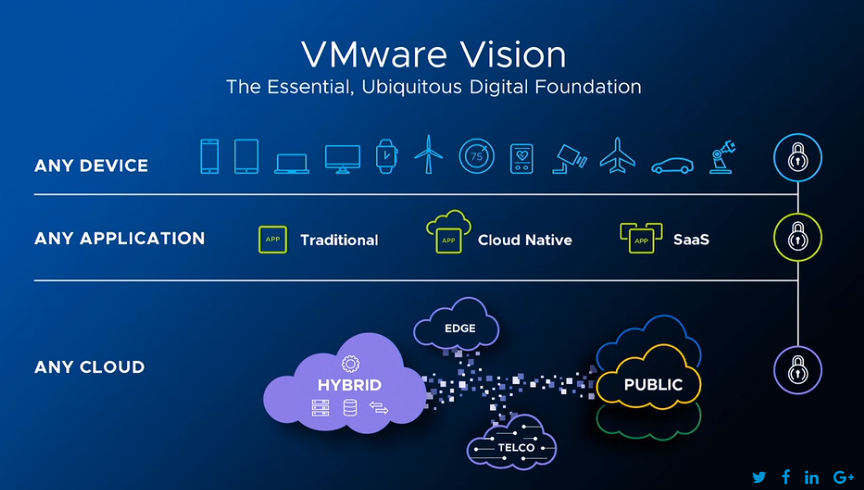
VMware is well positioned at the intersection of major industry trends, including virtualization, containerization cloud, SDN, hyperconverged infrastructure, application security, and AI, said company CEO Pat Gelsinger, kicking off the annual VMworld conference in Las Vegas and marking the 20th anniversary of the Palo Alto, California based firm. The VMware Vision is to become "the essential, ubiquitous digital foundation for any device, any application, and any cloud.

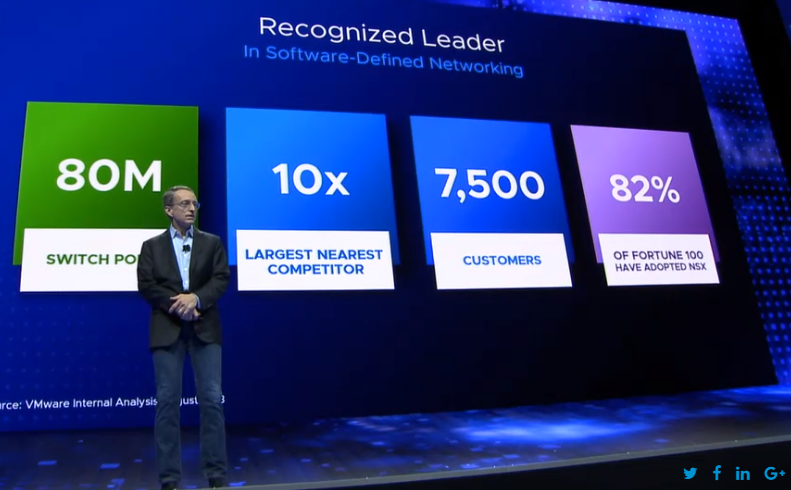
Gelsinger said NSX, which is its SDN network virtualization and security platform, is now enabling 80 million switch ports installed by over 7,500 customers, including 82% of the Fortune 100 with NSX running in their network. VMware estimates this footprint at 10X its largest competitor. Gelsinger argues that this positions NSX as the best platform to address the complexity, security and scale of multi-cloud corporate environments and for containerized networking. The latest version of NSX extends multi-cloud networking and security capabilities to AWS, in addition to Microsoft Azure and on-premises environments. NSX is adding support for bare metal hosts, in addition to hypervisor and container environments, including Linux-based workloads running on bare-metal servers, as well as containers running on bare-metal servers without a hypervisor.

VMware showcased a collaboration with Arista which enables NSX security policies to be enforced natively on Arista switches across a multi-cloud enterprise, extending security policies across both virtual to physical workloads, from mainframes to data center to public clouds. The collaboration also integrates Arista’s Macro-Segmentation Services with VMware NSX micro-segmentation capabilities.

VMware's vSAN, which is a hyper-converged, software-defined storage (SDS) product, is likewise making strong inroads into software-defined data centers. The company claims over 15,000 customers, a 50% presence in Global 2000 enterprises, and a 37% market share.

The partnership with Amazon is growing. Earlier, the company announced that VMware Cloud on AWS is now available in Amazon Web Services’ (AWS) Asia-Pacific (Sydney) region. AWS CEO Andy Jassy appeared on-stage at VMworld to announced that new VMware Cloud + AWS solutions will be arriving soon for GovCloud, the Amazon initiative for secure government cloud infrastructure. AWS and VMware are also developing new NSX + AWS DirectConnect networking connectivity options.

Amazon Web Services and VMware announced Amazon Relational Database Service (Amazon RDS) on VMware. This service will make it easy for customers to set up, operate, and scale databases in VMware-based software-defined data centers and hybrid environments and to migrate them to AWS or VMware Cloud on AWS.

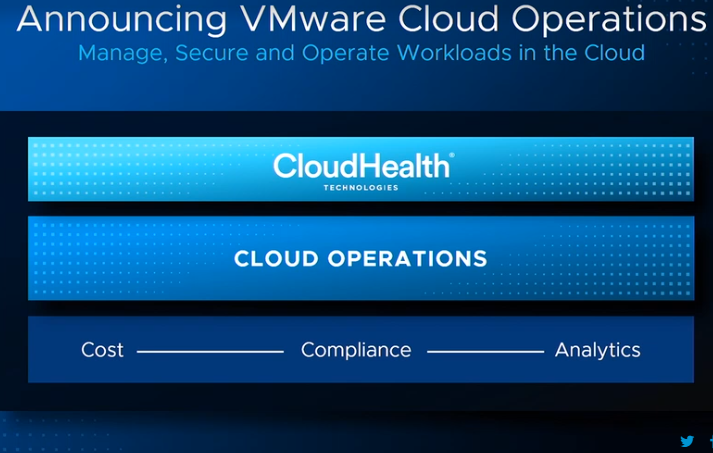
VMware agreed to acquire CloudHealth Technologies, a start-up based in Boston. Financial terms were not disclosed. CloudHealth Technologies delivers a cloud operations platform across AWS, Microsoft Azure and Google Cloud. It claims 1,300 customers.

VMware will now support live migration of virtual machines using Nvidia Quadro vDWS vGPUs. Operators can move a guest to another compatible host while performing maintenance on the original server.

Vodacom launches a commercial 5G FWA service in Lesotho

Vodacom launched a standards-based, commercial 5G service in Lesotho, the landlocked kingdom encircled by South Africa.

Vodacom's 5G service is delivering Fixed-Wireless Access broadband services to two enterprise customers in Lesotho. The service uses 3.5GHz spectrum.

Vodacom said it has deployed the same standards-based 5G technology in South Africa, where it reports speeds in excess of 700 Mbps and latencies of less than 10 milliseconds. The carrier expects to boost the downlink to 1 Gbps or more as new software versions and devices become available. Until such time as 3.5GHz spectrum becomes available to Vodacom South Africa, this network will not be available to its customers.

Shameel Joosub, Vodacom Group Chief Executive Officer, says: “Vodacom prides itself on being a market leader and we are extremely pleased to be first to deliver 5G services to customers in Africa. What we’ve accomplished in Lesotho is an example of what can be achieved in Africa, should the requisite spectrum also be made available. Vodacom South Africa has been granted a temporary spectrum license of 100MHz in the 3.5GHz band to showcase the same standards-based 5G network capabilities in South Africa.

http://www.vodacom.co.ls/ls-personal/offers/voice-and-data-plans/data-plans/5g


Dell EMC boosts its Cloud-enabled platforms

In conjunction with VMworld in Las Vegas, Dell EMC announced several enhancements to its cloud-enabled infrastructure solutions portfolio.

Highlights include:
  • Dell EMC VxRail and VMware VxRack advancements for software-defined data centers and multi-cloud
  • Infrastructure portfolio updates focused on storage, data protection and security 
  • Additional flexible consumption options with public cloud-like economics to align resources with workload requirements
  • Cloud consulting and technology services advance cloud strategy and execution
  • The introduction of a new nDell EMC Cloud Marketplace self-service portal 
  • Improved data storage utilization by way of tight integration with Virtustream Storage Cloud and Dell EMC Elastic Cloud Storage.
  • Dell EMC Data Domain Cloud DR has been enhanced for application-consistent cloud disaster recovery in AWS, as well as recovery to VMware Cloud on AWS. 
  • Dell EMC Cloud Snapshot Manager noe provides backup and recovery for public cloud workloads, and now offers protection for Microsoft Azure. 
  • VMware vCloud Director features a new data protection extension that now enables cloud service providers to offer an integrated VMware and Data Protection self-service solution to customers. 


"As more applications and traditional workloads move into various clouds, the proliferation of cloud siloes will become inevitable, inhibiting organizations' ability to fully exploit business differentiators like data analytics and burgeoning AI initiatives," said Sam Grocott, senior vice president at Dell EMC. "Dell EMC's focused innovation across its cloud-enabled portfolio of platforms, infrastructure, consumption models and services helps organizations evolve more quickly to a cloud operating model for the modern data center."

Nokia secures EUR 500 million loan for 5G research

The European Investment Bank (EIB) will provide an EUR 500 million loan to Nokia for supporting its ongoing 5G research program.

The EIB loan is supported by the European Fund for Strategic Investments (EFSI), a key element of the Investment Plan for Europe, also known as the Juncker Plan.

EIB Vice-President Alexander Stubb, responsible for lending in Northern Europe, said: "5G is happening fast, faster than most people even expected. It's anticipated that it will enable entirely new business cases, while dramatically enhancing existing wireless applications. I think bringing 5G to the market will definitely improve people's lives, as the motto for the EIB's 60th anniversary states."

Nokia CFO Kristian Pullola said: "We are pleased to land this financing commitment from the EIB, who shares our view of the revolutionary nature of 5G - and the realisation that this revolution is already underway. This financing bolsters our 5G research efforts and continues the broader momentum we have already seen this year in terms of customer wins and development firsts, supporting our relentless drive to be a true leader in 5G - end-to-end."

Global Foundries hits the pause button on 7nm FiFET

GLOBALFOUNDRIES announced a strategic shift away from 7nm process technology and toward "clients in high-growth markets."

Specifically, GF's 7nm FinFET program is on hold indefinitely and the company will shift development resources to make its 14/12nm FinFET platform more relevant, with a focus on new features such RF, embedded memory, and low power.

The company announced a workforce reduction in conjunction with this move, although a number of top technologists will be redeployed on 14/12nm FinFET derivatives and other differentiated offerings.

GF also announced plans to establish its ASIC business as a wholly-owned subsidiary, independent from the foundry business.

Tom Caulfield, GF's CEO, stated “Demand for semiconductors has never been higher, and clients are asking us to play an ever-increasing role in enabling tomorrow’s technology innovations. The vast majority of today’s fabless customers are looking to get more value out of each technology generation to leverage the substantial investments required to design into each technology node. Essentially, these nodes are transitioning to design platforms serving multiple waves of applications, giving each node greater longevity. This industry dynamic has resulted in fewer fabless clients designing into the outer limits of Moore’s Law. We are shifting our resources and focus by doubling down on our investments in differentiated technologies across our entire portfolio that are most relevant to our clients in growing market segments.”

https://www.globalfoundries.com

AMD transfers 7nm production to TSMC

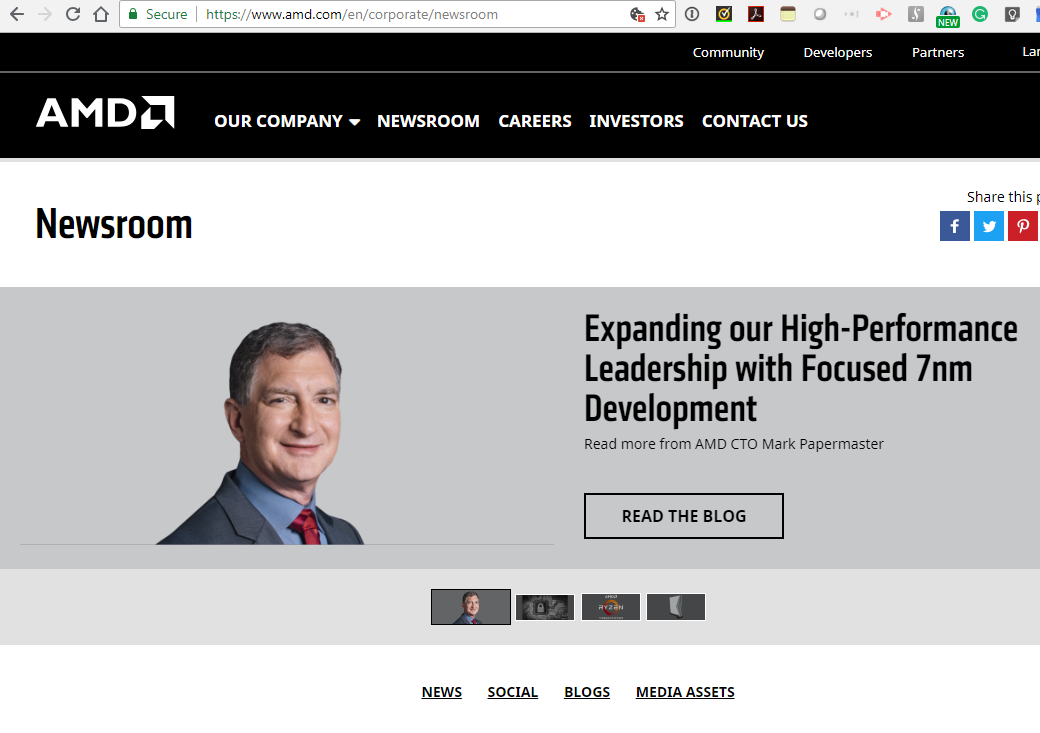
AMD, which is "betting big" on the 7nm process node, confirmed that it will focus the breadth of its upcoming 7nm product portfolio on TSMC’s fabrication facilities.  AMD said it makes sense to align its 7nm development closely with each of its foundry partner’s investments. It will continue to work with Global Foundries with their 14nm and 12nm technologies at their New York fab, which supports the ongoing ramp of AMD Ryzen, AMD Radeon and AMD EPYC processors.

AMD said it has already taped out multiple 7nm products at TSMC, including its first 7nm GPU planned to launch later this year and its first 7nm server CPU, which is expected to launch in 2019.

https://community.amd.com/community/amd-corporate/blog/2018/08/27/expanding-our-high-performance-leadership-with-focused-7nm-development


AT&T Fiber hits 2 million business customer location milestone

AT&T announced a milestone for its expanding national fiber footprint: more than 450,000 U.S. business buildings lit with, enabling high-speed fiber connections to more than 2 million U.S. business customer locations. AT&T is bringing fiber to about 1,000 more business buildings per month. Nationwide, more than 8 million business customer locations are on or within 1,000 feet of AT&T fiber.


TE SubCom to provide secondary NOC for Hawaiki transpacific cable

Hawaiki Submarine Cable has selected TE SubCom to provide backup Network Operations Center (B-NOC) services for its transpacific cable systems. The B-NOC will operate from TE SubCom’s Eatontown, NJ, USA headquarters.

SubCom said its NOC solutions are vendor-neutral and offer global, 24x7x365 monitoring coverage with both high-level and regional visibility into network status.

The Hawaiki Cable System is a 15,000km fiber optic cable connecting Sydney, Australia; Mangawhai Heads, New Zealand; Tafuna, American Samoa; Kapolei, Hawaii, USA; and Pacific City, Oregon, USA. Stubbed branching units have been installed to facilitate future connections into New Caledonia, Fiji, and Tonga.

The Hawaiki system uses TE SubCom's optical add/drop multiplexing (OADM) nodes allows for additional landings in the Pacific region to be added as needed. Hawaiki will provide 43 Tbps of new capacity in the Pacific region. The system was built at a cost of US$300 million. Anchor customers on the new cable include Amazon Web Services, Vodafone, American Samoa Telecommunications Authority (ASTCA) and Research and Education Advanced Network New Zealand (REANNZ).

OVH appoints Michel Paulin as CEO

OVH Group, the largest European hosting provider, appointed Michel Paulin as its new CEO, replacing founder Octave Klaba, who will continue to serve as chairman.

Paulin previously served as CEO of Neuf Cegetel, for which he led the IPO, Méditel (now Orange Maroc) and SFR.

OVH said Paulin's nomination comes as the company embarks on a new “Smart Cloud” strategic plan, which aims to consolidate OVH’s role as an alternative leader in Cloud.

Octave Klaba commented: “With the benefit of his experience and his leadership, Michel Paulin will help us to accelerate the implementation of our new strategic plan - with him as CEO and myself as Chairman of the Board. I am convinced that his personal qualities, combined with the strong corporate culture of our teams, will ensure the group’s development.”

NEC invests in Tascent for its iris biometric system

NEC announced an equity investment in Tascent, a start-up based in Los Gatos, California, that offers a biometric identification based on iris scanning.

Tascent's technologies include optical control technology to remotely capture an accurate, high-quality iris image at high speed, and a user interface (UI) technology that smoothly guides users in support of capturing accurate biometric information. The technology is embedded in security systems used at airports, government agencies and enterprises. The company was founded in 2015.

NEC said its investment and partnership will enable the two companies to jointly enhance the capacity of iris recognition, using Tascent’s optical control and UI technologies and NEC’s advanced biometric engines, and create a next generation iris authentication offering for the public safety market.