Wednesday, November 18, 2015

First LTE Carrier Aggregation (CA) in Licensed and Unlicensed Bands

Ericsson, Vodafone and Qualcomm have conducted the first live testing of advanced LTE Carrier Aggregation (CA) of LTE in licensed and unlicensed bands on a commercial mobile network.

The Vodafone LTE trials with unlicensed spectrum are being conducted over Vodafone's network in the Netherlands.  The latest over the air results were achieved by aggregating 20 MHz of Vodafone spectrum in Band 3 (1800 MHz) with 20 MHz of the unlicensed 5 GHz band U-NII-1 band.  The testing validated LTE performance in the unlicensed band and fair co-existence with other technologies like Wi-Fi within the unlicensed 5 GHz band.  The Ericsson RBS 6402 Indoor Picocell includes a 5GHz LTE enabled radio in addition to multiple LTE radio variants and optional 2.4 GHz Wi-Fi module - all in a sleek, compact package with a tablet-sized footprint.  The user equipment utilized in this trial is a test device powered by the Qualcomm Snapdragon X12 LTE modem. The Snapdragon X12 LTE modem is a product of Qualcomm Technologies.

Matthias Sauder, chief network officer, Vodafone Netherlands:  "Our intent in deploying small cells is always to deliver the best customer experience, and we see the potential for LTE aggregation with unlicensed bands on small cells as one way to make that customer experience even better.  We are already using Ericsson's RBS 6402 indoor picocell in our own shops in the Netherlands, so it's great to see that it will also support advanced LTE CA capabilities with unlicensed spectrum on our network."

Valter D'Avino, Head of Ericsson's Region Western and Central Europe, says: "Vodafone has taken a leadership position in small cells and our LTE trials on unlicensed spectrum with them, together with Qualcomm Technologies, really underscore their continued commitment to improving the performance of indoor networks to ensure better app coverage for their customers.  The unlicensed 5 GHz band is a shared resource and, as we have seen, it can be aggregated with LTE bands to provide a speed boost for users to improve app coverage, when spectrum is available - of course, the user also maintains their connection to Vodafone's highly reliable LTE network, so they have a great connection no matter what."

http://www.ericsson.com

Ericsson Achieves 450 Mbps with LTE-U

Ericsson now has License Assisted Access (LAA), sometimes referred to as LTE-U, running live its labs.  The tests support the aggregation of licensed and unlicensed spectrum for peak rates up to 450 Mbps and enabling fair sharing of spectrum between mobile and Wi-Fi devices. The lab trials of both LAA fair sharing and licensed-unlicensed aggregation - 20 MHz on licensed band and 40 MHz on unlicensed 5 GHz band - were demonstrated from the Ericsson radio development units in Ottawa, Canada and Stockholm, Sweden.

LAA, or LTE-U, extends the benefits of LTE to unlicensed spectrum, providing reliable and predictable performance. The licensed band provides an anchor to ensure a seamless user experience with full mobility while the unlicensed band provides incremental capacity and enables faster data speeds.

The technology milestone has been achieved in cooperation with Qualcomm Technologies.  The companies also confirmed that Verizon, SK Telecom and T-Mobile US are already investigating the performance benefits that LAA can offer to mobile customers on their networks.

Starting in the fourth quarter 2015, Ericsson is adding LAA to its indoor small cell portfolio, including the Ericsson RBS 6402 Indoor Picocell (targeted at smaller buildings under 50,000 square feet) followed by the Ericsson Radio Dot System (for medium and large buildings).

http://www.ericsson.com/news/1893104
Broadcom’s New StrataXGS Drives 2.5G Ethernet for 802.11ac APs

Broadcom announced new enterprise Ethernet switches designed to deliver the faster data rates offered by 802.11ac Wave 2 Wi-Fi.

The two new chips, which are built on Broadcom’s StrataXGS architecture, support 2.5G Ethernet to the access point, thereby unlocking the faster wireless speeds and enabling the higher bandwidth demands without needing to re-cable an entire network.

One of the chips integrates more high speed 10 gigabit interfaces for fiber uplinks and delivers double the stacking bandwidth of previous generation devices. A second desing enables a smaller form factor with low power consumption, providing multi-mode 1GbE/2.5GbE Ethernet interfaces with 10 Gigabit uplinks. Both are currently sampling.
“Broadcom continues to partner with worldwide equipment manufacturers to deliver the most comprehensive
portfolio for Enterprise Networking.” said Nick Kucharewski, Broadcom Vice President, Network Switch Marketing. “Our new switch products enable a converged wired/wireless enterprise and deliver highly optimized 2.5GE solutions for high density wireless deployments.”


Secret Double Octopus Unveils its Network Security Solution

Secret Double Octopus, a start-up based in Israel, emerged from stealth mode with a solution that secures network traffic and authentication beyond the limitations of PKI, SSL and VPN.

Secret Double Octopus helps site-to-site, site-to-cloud, mobile and IoT initiatives overcome the security vulnerabilities of today’s encryption protocols. The approach employs secret sharing, eliminating the need for cryptographic keys and providing protection that information theory has postulated as unbreakable.

Secret Double Octopus said it is the first company to use secret sharing to build a network-focused security solution. This enables organizations to keep network traffic and authentication information-theoretically secure. Data is represented by random bits across multiple routes that only when assembled at its destination can be interpreted, hardening communications as a result.

The intellectual property that powers the company’s solutions is based on research conducted at Ben-Gurion University by Prof. Shlomi Dolev, the company's CSO, and Dr. Shimrit Tzur-David, CTO.

“Well-publicized data breaches and security hacks underscore the need to more effectively secure critical networks,” said Raz Rafaeli, Chief Executive Officer at Secret Double Octopus. “By utilizing secret sharing, we’ve taken a new approach to security that eliminates the encryption key, an exploited single point of failure in today’s security paradigm.”

http://www.doubleoctopus.com

Vapor IO Releases Open Source Platform for Server and Rack Mgt

Vapor IO, a start-up offering a hyper modular data center solution, introduced its Open Data Center Runtime Environment (DCRE) - an open source platform for data center rack and server management.

Vapor IO, which earlier this year introduced its hyper collapsed, disaggregated  data center solution, developed this new OpenDCRE software to simplify data center infrastructure communication. The solution exposes current generation interfaces to data center operators, system and devops administrators, thereby simplifying the programming needed to start automating the physical infrastructure itself.

Vapor IO said OpenDCRE is being released as an open source alternative to proprietary interfaces and custom silicon. This ensures that when a user interacts with their data center, they are communicating over a community owned interface and standard. OpenDCRE is designed to support all data center environments supporting HPE Cloudline and other OCP platforms. OpenDCRE replaces the need for out of band management networks saving users thousands of dollars per rack. Additional features of the product include SSL support, analog sensor and power control support and a simple RESTful API running on Raspberry Pi.

“Data centers have proven to be nothing short of problematic,” said Cole Crawford, founder and CEO of Vapor IO. ”This is primarily due to poorly integrated systems, legacy software and hardware, and the disjointed approach the industry takes to building out data center environments. As IT prepares to support edge based computing, it is imperative we manage and orchestrate our infrastructure as a whole with no prejudice as to where or how many data centers are employed to support our workloads. This is a large feat and we’re thrilled to have support from partners like Future Facilities and Romonet as we move forward.”
OpenDCRE is now available for download and has already generated support from partners such as Future Facilities and Romonet.
 
http://www.vapor.io/products/open-dcre/

Microsemi Revises Offer to Acquire PMC

Microsemi increased its proposal to acquire PMC-Sierra to $9.22 in cash and 0.0771x of a share of Microsemi common stock for each share of PMC common stock. The implied enterprise value is $2.3 billion, net of PMC's net cash balance as of Sept. 27, 2015. Based on the closing stock price of Microsemi on Nov. 17, 2015, the transaction is valued at $12.05 per PMC share.

"The board of PMC chose not to recommend to their shareholders our previous proposal, which was $0.17 per share higher than the existing offer from Skyworks," said James J. Peterson, Microsemi's chairman and CEO. "Our revised offer delivers even more value to shareholders and we have addressed PMC's preference in increasing the cash component of our proposal. Because we are not subject to the same uncertainty regarding regulatory approvals, our unique ability to close this transaction represents the best approach to realizing the value of PMC in a timely manner, consistent with the board's fiduciary responsibility to its shareholders."

http://www.microsemi.com


Microsemi Expands Clock Management Solutions

Microsemi introduced three new products in its portfolio of clock management solutions: ZL30244 and ZL30245 , two dual-channel any-to-any clock multiplier and frequency synthesizer integrated circuits (ICs), and ZL30255 , a dual-channel any-to-any clock multiplier and jitter attenuator. Target applications for the devices include access networks, storage area networks, data center infrastructure, enterprise infrastructure, and video broadcast equipment.

"Our three new clock management solutions build upon the success of Microsemi's single-channel versions, ZL30250/251 and ZL30253, further expanding product capabilities for our customers to reduce design complexity and lower bill of material costs," said Maamoun Seido, vice president and business unit manager of Microsemi's timing products. "Providing the second channel in these devices further simplifies and reduces the cost of designs. For clock trees that require multiple frequency families, the ZL30244, ZL30245 and ZL30255 provide lower chip count and lower cost solutions—all with exceptional jitter performance."

http://www.microsemi.com

VimpelCom to Exit Zimbabwe

VimpelCom will sell its stake in Telecel International Limited to ZARNet (Private) for $40 million. Telecel International owns 60% of Telecel Zimbabwe (Pvt) Ltd.

ZARNet is wholly owned by the Government of the Republic of Zimbabwe through the Ministry of Information & Communication Technology, Postal and Courier Services.

http://www.vimpelcom.com

Tuesday, November 17, 2015

Cisco Brings Hyperscale Cloud Smarts to IOS XR

Cisco is rolling out new capabilities for its IOS XR network operating system that deliver cloud-scale networking for service providers and web companies. The goal is to deliver cloud applications at scale with greater agility, automation and simplicity by enabling traditional and web service providers to converge their data centers and wide area network (WAN) architectures.

Cisco developed the new capabilities with some of the world’s leading web companies (unnamed for competitive reasons) and based on their operational best practices. The rollout includes three additions to the Cisco Network Convergence System (NCS) Series routing portfolio, which
converges IP and optical fabrics.

Cisco IOS XR is currently deployed across over 50,000 live network routers.  The newly announced capabilities include:

  • Software modularity and extensibility
  • Increased service agility with granular software packaging and automated upgrade
  • IT and network automation convergence with third-party application hosting, such as industry standard DevOps tools, Chef or Puppet
  • Open innovation with IOS XR Software Development Kit (SDK) and Cisco DevNet Developer Program
  • Large-scale Automation for Greater Operational Efficiency
  • Predictable network programmability through data-model-driven APIs (YANG/OpenConfig)
  • Extensive flexibility to adapt to customerss’ operational environment (i.e., any data model, any encoding method, and any transport method)
  • Fine-grained visibility and control for simplification and enhanced end-user experiences
  • Actionable and contextual network insight due to data-model-driven access to extensive operational state data (i.e., highly augmented visibility compared to mechanisms such as SNMP)
  • Near real-time network programmability with enhancements to Application Engineered Routing solution – WAN Automation Engine (WAE) support for Telemetry and Segment Routing Traffic Engineering.

Additions to the Cisco NCS portfolio include:

  • Cisco NCS 5000 Series, delivering up to 40-80 10GE ports and 4 100GE ports
  • Cisco NCS 5500 Series, providing up to 288 routed 100GE ports for WAN aggregation
  • Cisco NCS 1000 Series, supporting 100/200/250Gb wavelengths over distances exceeding 3000 km with existing fiber

“Service providers are looking to leverage the operational best practices established in massively scalable computing environments and marry them with their own networking reach to compete and innovate faster,” said Kelly Ahuja, senior vice president of Cisco’s service provider segment.  “With this announcement, Cisco is leading the industry toward cloud-scale networking, converging the data center and WAN and delivering new levels of speed, automation and simplicity. We feel this a real game-changer that will help service providers of all types in their digitization journeys, enabling them to operate their networks in near real-time while dramatically increasing operational efficiency.”

http://www.cisco.com

In September 2013, +Cisco unveiled its flagship Network Convergence System (NCS) core routing fabric designed to bring scalability, open programmability, and IP/Optical integration to power the Internet of Everything.

The Cisco NCS family serves as network fabric and orchestration system uniting the Cisco Carrier Routing System (CRS) and Aggregation Services Router (ASR) product lines.  It can be deployed as part of the Cisco ONE Service Provider Architecture, which embraces and extends SDN/NFV. The NCS family leverages several innovations:

Programmable Silicon: The NCS features the recently announced Cisco nPower X1 integrated network processor, which is also used in the CRS-X.  The nPower X1 packs 336 cores and 4 billion transistors on a single chip.  It also features new memory technology , the nPower X1 implementation achieves
unprecedented levels of performance, functionality, programmability and scale for a network processor.

Intelligent Convergence for Optimization and Simplification: The Cisco NCS converges IP and optical networks and is designed to seamlessly integrate with the Cisco Unified Computing System (Cisco UCS) and the Dynamic Fabric Automation capabilities supported by Cisco's data center innovations. This convergence capability enables the NCS to act as a flexible foundational network fabric for an evolved programmable network, able to shift and redirect data center, core, edge and optical resources spontaneously and in real time, allowing service providers to accelerate service velocity while reducing overall complexity and operating costs.

Advanced Virtualization Capabilities: The NCS's element, system and architectural virtualization capabilities converge to enable the system to orchestrate services and resources across disparate physical, virtual and geographical elements as if they are part of a single unified system using Cisco Prime and Cisco Quantum solutions. The system's advanced virtualization features enable service providers to elastically scale up and down both network and compute resources, utilizing scalable multichassis configurations that can be managed as a single entity. If system scale is exceeded in one part of the network, the NCS moves control plane functions onto UCS servers in the data center, creating virtually unlimited control plane scale by capitalizing on the blade servers' processing.

The Cisco NCS family consists of three key components that can be managed as a single integrated system for business agility and simplified operations:

NCS 6000 -- the flagship router boasts the ability to transport up to 5 Tbps per slot and 1.2 Pbps per system.  By using its 100 Gbps,CMOS-based CPAK transceivers Cisco is delivering the first 1 Tbps line card. Each line card runs up to 1 Tbps throughput, using a mix of 10, 40, or 100 Gbps interfaces per card.  Significantly, the NCS 6000 will run virtualized IOS-XR instances while supporting hardware-enabled true zero-packet, zero-topology loss (ZPL/ZTL) In Service Software Upgrade (ISSU).  This will enable lossless software image updates.  Thanks to the CMOS silicon photonics and new network processor, Cisco said the NCS 6000 will achieve the lowest carbon footprint in service provider routing . The NCS 6000 is currently shipping.

NCS 4000 --  bridges the gap between the IP and optical layers with time division multiplexing (TDM), packet switching, and integrated DWDM functionality. It will support 400 Gbps per slot and 6.4 Terabits per system and be available in single, back-to-back, and multi-chassis configurations.  It will offer full optical channel data unit (ODU-0) level switching, with ports supporting SONET/SDH, Ethernet, and channelized OTN Full IP, MPLS, MPLS-Transport Profile (TP), and Carrier Ethernet switching, supporting 10 Gb, 40 Gb, and 100 Gb Ethernet interfaces with the option of OTN encapsulation. The NCS 4000 will be available in the first half of 2014.

NCS 2000 -- a DWDM transport platform that evolves the Cisco ROADM portfolio by introducing 96-channel nLight ROADM technology.  It offers touchless re-configurability through colorless, omni-directional, and contention-less add/drop, networks.  The NCS 2000 introduces hybrid Raman-EDFA amplifiers known as erbium doped Raman amplifiers (EDRA).  The NCS 2000 is currently shipping.

The three platforms are designed to work as a single, integrated system.

"The Cisco NCS was engineered with the programmability, intelligence and scalability to meet the demands of today and tomorrow.  The NCS delivers an evolved programmable network that will enable service providers to generate new revenue streams and business models, while delivering exciting new experiences to their customers," stated Surya Panditi, SVP and GM, Cisco's Service Provider Networking Group.

Cisco named three early adopters for NCS:  BSkyB (Sky), KDDI and Telstra.

Coriant's Pluggables Disaggregate Optical Layer Functions

Coriant unveiled its Pluggable Optical Layer approach to disaggregating key components needed for high-speed metro optical networks.

Coriant's Pluggable Optical Layer disaggregates the full suite of optical layer components into compact pluggables, including amplifiers, variable optical attenuators, power monitoring, combiners, splitters, WSSs, etc. The company said that by providing the ability to mix and match different functional components, the Pluggable Optical Layer enables operators to customize metro optical network deployments (e.g., fixed DWDM, CWDM, and ROADM) without the need to pay for unwanted or unneeded functionality.

Coriant's vision is to enable new functionality by adding or swapping additional components, while preserving investment in those components that do not need to change. The solution is initially supported on the industry-leading Coriant 7100 Packet Optical Transport Platform, which includes the 7100 Pico and 7100 Nano.

“In today’s dynamic and competitive market for metro services, operators do not want to choose between low cost and flexibility when it comes to building or extending metro optical networks,” said Brian Nagle, Director of Product Line Management, Coriant. “By introducing the first fully pluggable optical layer, they do not have to make this choice and can implement a cost-effective solution today that can easily adapt to meet future service requirements.”

http://www.coriant.com

Three new IEEE 802.3 study groups

The Ethernet Alliance commended the recent formation of three new IEEE 802.3® study groups:

The IEEE 802.3 25Gb/s Ethernet PMD(s) for Single Mode Fiber Study Group is tasked with exploring the development of new 25Gb/s Ethernet single-mode fiber links, as well as evaluating market requirements supporting longer reach 25Gb/s Ethernet interfaces up to 10 kilometers or more. The group’s work complements the fast-tracked efforts of the IEEE P802.3by 25Gb/s Ethernet Task Force to develop a 25GbE specification.

Focusing on two related areas of study, the IEEE 802.3 50Gb/s Ethernet Over A Single Lane Study Group and IEEE 802.3 Next Generation 100Gb/s and 200Gb/s Ethernet Study Group will jointly investigate the market requirements for 50GbE, 100GbE and 200GbE, which include server-to-switch and switch-to-switch applications. The Study Groups will define objectives for the Ethernet specifications leveraging 50Gb/s signaling technology based on market needs.

“Ethernet is beginning the standardization of a new era of speeds based on 50Gb/s signaling technology. The 50Gb/s lanes will enable 50 Gigabit Ethernet (GbE) SFP56 modules, and 200GbE QSFP56 modules and other corresponding technologies as we have shown in the 2015 Ethernet Roadmap,” said Scott Kipp, president, Ethernet Alliance; and principal technologist, Brocade. “The launch of these new study groups will help deliver the next generation of cost-optimized, higher-speed solutions demanded by hyperscale data centers, enterprises, cloud service providers, and more. It’s proof that Ethernet will continue to be optimized for new markets.”

http://www.ethernetalliance.org.

Citrix to Spinoff GoTo Products, Restructure Core Business

Citrix Systems will spinoff its GoTo family of products into a separate public company as part of an organizational restructuring aimed at renewing its focus on core products.

Citrix plans to increase emphasis and resources to core enterprise products for secure and reliable application and data delivery, including XenApp, XenDesktop, XenMobile, ShareFile and NetScaler. The company will end investment in certain other products and programs, in some cases moving technologies into strategic products, in other cases providing an orderly end-of-life to non-core products.

As part of the restructuring, Citrix will eliminate about 1,000 full-time and contract roles, excluding the effect of spinning off the GoTo business.

"We are simplifying our business in all areas - product, marketing, sales, operations and development," said Bob Calderoni, interim CEO and president, and executive chairman. "Focusing on our core strengths and simplifying how we work with customers and partners will help us improve execution, drive higher profit and begin investing for growth in areas in which we provide the greatest customer value."

http://www.citrix.com

ALU Joins the ONOS Project

Alcatel-Lucent has joined the ONOS project, the Open source SDN Network Operating System (ONOS) for service providers and mission critical networks and a Linux Foundation Collaborative Project.

ONOS is a carrier-grade SDN network operating system architected to provide high availability, scalability, performance, and rich northbound and southbound abstractions. Alcatel-Lucent will join leading service providers, vendors, collaborators and individual contributors to accelerate SDN/NFV adoption and drive open innovation.

"Open source object models are becoming the new baseline for multi-vendor interoperability. ONOS provides a carrier-centric forum where these models can be defined and implemented at an accelerated pace to stay ahead of the monumental shift towards SDN and virtualization," said Steve Vogelsang, CTO for Alcatel-Lucent's IP Routing and Transport business. "By committing engineering resources and becoming an active participant of ONOS, we will be in a much better position to contribute our carrier SDN knowledge and experience to open source initiatives, and will benefit from collaboration across the broader network vendor and service provider communities."

http://www.alcatel-lucent.com

Radisys, Octasic and Quortus Partner on Multi-Radio Network-in-a-Box

Radisys, along with Octasic and Quortus, announced a Multi-Radio 4G/3G/2G Network-in-a-Box targeted for the military and public safety organizations. The joint solution enables the rapid deployment of an end-to-end LTE network in a compact, ruggedized form factor.  The idea is to enable military and public safety professionals to rapidly deploy a complete portable network anywhere, whether in a UAV, a vehicle or a backpack. The network can support up to 32 active users by leveraging LTE technology.

The Multi-Radio Network-in-a-Box integrates Radisys’ field-hardened CellEngine TOTALeNodeB LTE small cell software and Femtotality 3G small cell software with Octasic’s OCTBTS platforms and Quortus’ ECX Tactical virtualized EPC (Evolved Packet Core) solution.

“As the leaders in small cell software with more than 80 deployments worldwide, we’re skilled at working with any organization that needs reliable, secure and portable communications technology. We’re excited about this new Multi-Radio Network-in-a-Box that encompasses Octasic’s value proposition to deliver base stations that meet the military’s strict size, weight and power requirements and adds Quortus’ virtualized core for a complete end-to-end LTE network solution,” stated Tom McQuade, general manager, CellEngine and Trillium Software, Radisys.

Ericsson to Offer Subscription VOD for SPs

Ericsson is launching an end-to-end subscription video-on-demand content service called NuVu that will be marketed with service providers. AirTel Nigeria will be first to launch NuVu beginning in Q1 2016.

Subscribers will gain access to around 3,000 local and international TV and film titles for a small monthly fee. They will be able to download content directly to their smartphones or tablets at no additional data cost during off-peak network times, and access the content offline for up to 30 days after downloading.

Ericsson said it is working with a number of leading international distributors to acquire TV and film content for the new service.
NuVu is a complete end-to-end technology and content service. The platform, which has been developed by Ericsson and leverages the company's extensive over-the-top capabilities, will be fully integrated into the operator's customer relationship management and payment systems. A core feature of the service is the built-in ability to distribute content to consumers during off-peak periods. This minimizes data costs for both operator and consumer, addressing the cost challenge that has so far been an obstacle for video-on-demand uptake in Africa.

http://www.ericsson.com

ALU Lands 5-Year Deal with Ooredoo

Ooredoo Group awarded a 5-year frame supply deal to Alcatel-Lucent, extending and reinforcing the existing long-term collaboration between both companies. The agreement covers the technology evolution and latest innovations relating to ultra-broadband IP and transport networks. This contract will extend for five years and will benefit operations across the Ooredoo footprint in Middle East, Africa and Asia Pacific and Southeast Asia. Financial terms were not disclosed.

Alcatel-Lucent will supply state-of-the-art, full packet microwave, high bandwidth optical networking & IP routing platforms which will enhance Ooredoo’s customers’ experience, whether it is for rich communications, watching video entertainment from fixed/mobile devices or accessing cloud-based business applications. Alcatel-Lucent is also providing its professional services expertise including network management services.

http://www.alcatel-lucent.com

Monday, November 16, 2015

SC15: Intel Shows HPC Scalable System Framework and Omni-Path Fabric

At this week's SC15 in Austin, Intel is showcasing several advancements to its Scalable System Framework (Intel SSF) that promise to bring high performance computing (HPC) capabilities and benefits to more industries and new workloads.

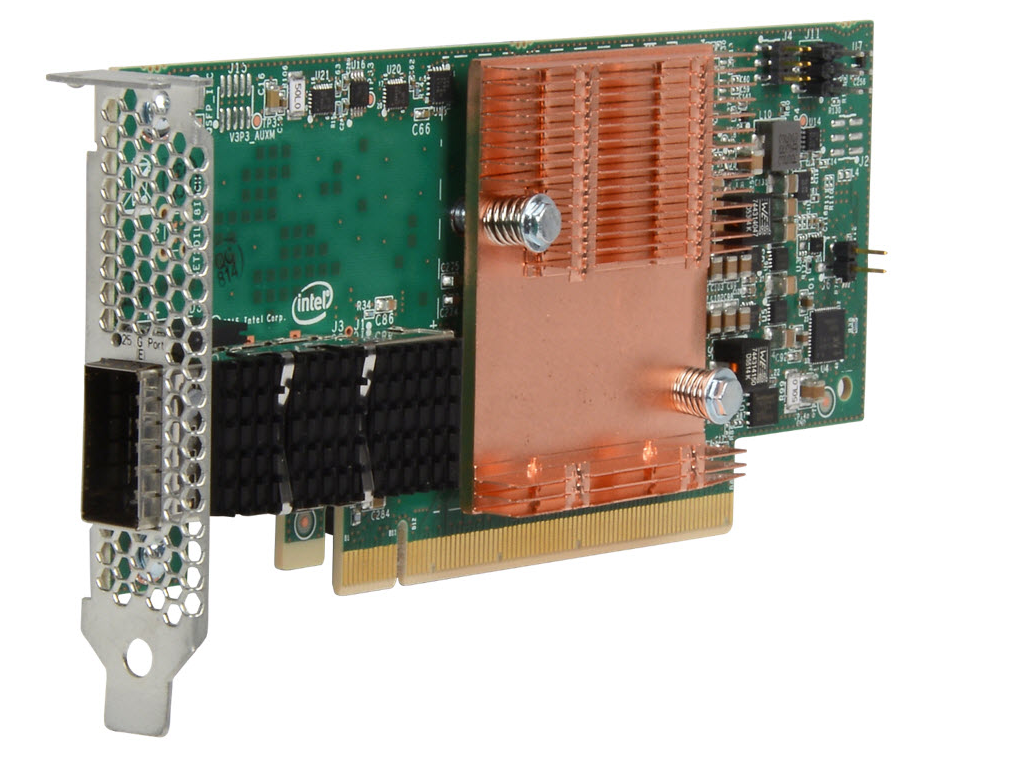
One of the foundational elements of the Intel SSF is its Omni-Path Architecture, a new HPC-optimized fabric technology that makes the performance of HPC clusters more accessible to a broader variety of users.

Some highlights:

  • Intel will provide Intel SSF reference architectures, designs and validation tools. These technical system specifications will include hardware and software bill of materials for Intel SSF validated systems.
  • Companies planning to launch systems based on SSF include Colfax, Cray, Dell, Fujitsu Systems Europe, HPE, Inspur, Lenovo, Penguin Computing, SGI, Sugon and Supermicro
  • Intel OPA’s 48-port switch enables up to 26 percent more servers than InfiniBand EDR within the same budget and up to 60 percent lower power consumption for a more efficient switch and system infrastructure.
  • Intel OPA is currently being used at several large sites, including the Texas Advanced Computing Center and the Pittsburgh Supercomputer Center. Colfax, Cray, Dell, Fujitsu Systems Europe, Hitachi*, Huawei*, HPE, Inspur, Lenovo, NEC, SGI, Sugon, Supermicro and other system vendors starting to announce Intel OPA-based switches and server platforms, with volume shipments ramping in the first quarter of next year.
  • Intel announced that preproduction Intel Xeon Phi processors (code-named Knights Landing) are running in several supercomputing-class systems. Cray has a system currently running multiple customer applications in preparation for the supercomputer deployments at Los Alamos (Trinity system) and NERSC (Cori system). Systems are also installed at CEA (the French Alternative Energies and Atomic Energy Commission) by Atos and Sandia National Laboratories by Penguin Computing. Intel expects more than 50 system providers to have Intel Xeon Phi product family-based systems in the market at launch.
  • Intel is among more than 30 founding members of the OpenHPC Collaborative Project, a new community-led organization focused on developing a comprehensive and cohesive open source HPC system software stack to drive broader adoption. Intel-supported versions of the open source HPC system software stack are expected to be available next year.
  • Intel expands HPC ecosystem support and investments with the creation of five new Intel Parallel Computing Centers focused on Lustre software development; through a new long-term strategic partnership with the Alan Turing Institute to further the role of high performance computing and data sciences in the U.K.; and with an expanded collaboration with the Barcelona Supercomputing Center, focused on advancing the exascale capabilities of the Intel SSF.
  • Intel announced a multiyear, multimillion-dollar program to increase diversity within the HPC ecosystem consisting of a new scholarship program designed to attract women and underrepresented minorities to pursue graduate degrees in computational and data science programs, as well as a new internship program to increase the diversity of Intel’s HPC workforce.

“We’re entering a new era in which supercomputing is being transformed from a tool for a specific problem to a general tool for many,” said Charlie Wuischpard, vice president and general manager of HPC Platform Group at Intel. “System-level innovations in processing, memory, software and fabric technologies are enabling system capabilities to be designed and optimized for different usages, from traditional HPC to the emerging world of big data analytics and everything in between. We believe the Intel Scalable System Framework is the path forward for designing and delivering the next generation of systems for the ‘HPC everywhere’ era.”

http://supercomputing_intel.tri-digital.com

Intel Unveils Knights Landing Processor and Omni Scale I/O Fabric

Intel announced microarchitecture and memory details of its next-generation Intel Xeon Phi processor (code-named Knights Landing) and an end-to-end interconnect fabric optimized for fast data transfers, both aimed at powering High-Performance Computing (HPC) systems.

Knights Landing, which is expected to debut in the second half of 2015, will include up to16GB high-bandwidth, on-package memory at launch – designed in partnership with Micron – to deliver five times better bandwidth compared to DDR4 memory, five times better energy efficiency and three times more density than current GDDR-based memory. Knights Landing will be available in a PCIe-based card option, or mounted directly on the motherboard socket to remove the bandwidth bottlenecks of data transfer over PCIe, common in GPU and accelerator solutions.

Powered by more than 60 HPC-enhanced Silvermont architecture-based cores, Knights Landing is expected to deliver more than 3 TFLOPS of double-precision performance and three times the single-threaded performance compared with the current generation.

Intel's new Omni Scale fabric, which is built upon a combination of enhanced acquired IP from Cray and QLogic along with tis own in-house innovations, addresses the I/O requirements of the HPC sector.  Intel Omni Scale Fabric is an end-to-end I/O solution encompassing adapters, edge switches, director switch systems, cables and management software. Intel intends to replace traditional electrical transceivers in the director switches with silicon photonics, enabling increased port density, simplified cabling and reduced costs. Intel Silicon Photonics-based cabling and transceiver solutions may also be used with Intel Omni Scale-based processors, adapter cards and edge switches.

Intel noted continued market gains in powering the HPC sector.  The company said its current generation of Xeon processors and Xeon Phi coprocessors powers the top-rated system in the world – the 35 PFLOPS "Milky Way 2" in China, and its designs account for 85 percent of all supercomputers on the 43rd edition of the TOP500 list.

http://newsroom.intel.com/community/intel_newsroom/blog/2014/06/23/intel-re-architects-the-fundamental-building-block-for-high-performance-computing

SC15: CenturyLink and Infinera Deliver 1.5 Tbps of Super-Channel DWDM

CenturyLink is delivering 1.5 terabits per second (Tbps) of super-channel transmission capacity to support SCinet at this week's International Conference for High Performance Computing, Networking, Storage and Analysis (SC15)p in Austin.

The 1.5 Tb/s of line-side capacity will connect the Austin Convention Center to CenturyLink's global fiber optic network, utilizing the Infinera DTN-X platform.

The terabit deployment will demonstrate CenturyLink's rapid provisioning of 100 Gigabit Ethernet (GbE) services from the conference to CenturyLink's point of presence in Austin and to six major U.S. cities across the country.

"This deployment demonstrates the power of CenturyLink's network and its ability to scale and quickly provide super-channel transmission capacity for real-time high-performance computing," said Pieter Poll, senior vice president of national and international network planning at CenturyLink. "Providing SCinet with 1.5 terabit of transmission complements the work we are doing to transform our network and keep up with increasing bandwidth demands now and into the future."

http://www.infinera.com
http://www centurylink.com

Nokia Networks joins Open Compute Project

Nokia Networks has joined the Open Compute Project (OCP), demonstrating its commitment to openness and collaboration in offering leading cloud-based solutions.

Nokia Networks said it will work with the OCP Foundation to build an OCP variant of the Nokia AirFrame Data Center Solution.

The vision is to deliver modular and flexible cloud architectures and delivering low latency and telco-grade reliability for all types of workloads.
 
Nokia plans to support the full range of its own Virtual Network Functions (VNFs), as well as third-party VNFs. A variety of configurations, from hyperscale to smaller and distributed data centers needed to support specific services, will begin to be supported. Added enhancements made available through OCP will include improved cooling as well as greater Power Usage Effectiveness (PUE), one of the key metrics for all data center deployments.

http://www.nokianetworks.com


http://networks.nokia.com/Nokia Expands its Telco Cloud Portfolio
Nokia Networks announced a number of improvements and enhancements in its telco cloud portfolio, including the new Nokia OSS Office for Telco Cloud, the Nokia AirFrame Data Center Solution (now also available in a container), the intelligent Nokia Service Chaining and Nokia cloud wise Care Services.

Some highlights:

  • The Nokia OSS Office for Telco Cloudsolution is a service to help operators plan their best path for transforming their network and service operation centers for the telco cloud.  This includes planning from high level strategy to processes, tools and use cases. 
  • The Nokia AirFrame Data Center Solution is now available as a containerized solution with an efficient power and cooling system built-in. It can simply be dropped into place to cater for peak demand or to provide localized telco and IT services. A software-defined storage (SDS) module has also been introduced to provide flexible data storage pools within the data center environment.
  • Nokia Service Chaining provides greater efficiency and management through a virtualized service environment for the delivery of network services. Dynamic service functions, such as firewalls and media optimizers, can easily address peak loads and intelligently steer traffic. These scalable and best-of-breed functions can be implemented within the telco cloud at a fraction of the cost required for conventional networks. Nokia also launched third party appliance certification as well as implementation and integration services for service chaining.
  • Nokia cloud wise Care Services: two new service packages to help operators run and maintain their deployed telco cloud networks. Nokia Resolution Prime Services provides operators with a single point of contact and service management for resolving VNF faults within a complex multivendor telco cloud network. Nokia TotalCare for VMWare, a newly launched care package, supports operators’ VMWare deployments with an extended SLA covered by the company.

http://networks.nokia.com/news-events/press-room/press-releases/nokia-networks-launches-help-operators-execute-strategic-decisions-in-cloud-transformation

NEC's UNIVERGE BLUE Delivers UC

NEC Corporation of America (NEC) introduced its UNIVERGE BLUE Business Cloud Services (UNIVERGE BLUE) for cloud unified communication (UC) services. UNIVERGE BLUE delivers business-class voice, mobility, messaging, presence, web conferencing and contact centers.

The solution consists of NEC Fault Tolerance servers, software-defined networking (SDN), software, and data centers.

Some highlights:

  • Architected for high availability, 99.999 percent
  • Multi-tenant, enterprise-grade security and encryption in the cloud
  • 24/7 support and system monitoring
  • Mission-critical UC applications: voice, mobility, messaging, presence, conferencing and contact center
  • Supports private, hybrid and public cloud UC deployments


“If an enterprise is building a private, hybrid or public cloud service, the underlying architecture has a big impact on what can be done,” said Jay Krauser, director, Business Development Cloud Services, NEC Corporation of America. “Not all cloud solutions are built the same, so it’s also important for businesses to examine the bottom line of their cloud investments and to understand the underlying technology. UNIVERGE BLUE is built from the same reliable software foundation as UNIVERGE 3C™, ensuring mission-critical communications.”

http://www.necam.com
http://www.univergeblue.com

Procera Intros Virtual Probe for Subscriber Intelligence

Procera Networks is launching a Virtual Experience Probe designed to deliver intelligence to real-time analytics systems.

Procera's "eVolution" is an all-virtual data enablement solution that empowers fixed, cable, mobile and WiFi operators to enhance the subscriber experience, by providing contextual intelligence they can act upon immediately. The eVolution data probe runs in VMware or KVM virtualization environments on COTS hardware. Procera said eVolution is differentiated by:

  • Infrastructure and Vendor agnostic data acquisition
  • Real-time virtualized software with highly optimized performance on COTS hardware
  • Deployment flexibility for a broad ecosystem of customers: carriers, enterprises, system integrators, OEMs, channel partners, and third party big data providers
  • Flexible data and KPI formats for use by big data repositories
  • Best cost per subscriber value designed to augment or displace cumbersome and expensive passive probing solutions

As NFV orchestration is deployed, eVolution instances will be able to be created, sized, and deployed in real time, and relocated as needed through the network by the operator using ETSI NFV specifications.  The base eVolution probe delivers access to real-time network forensics leveraging Procera's unique Dynamic LiveView. Software license add-ons deliver real-time data feeds to Big Data systems using IPFix or historical data through ODBC database integration, enabling integration into a wide variety of Real-time and Big Data ecosystems that leverage Hadoop and other standard database technologies.

"Network operators need a turnkey virtual probing solution that provides better real-time data to feed their analytics and customer relationship systems in order to deliver a high quality broadband experience to their subscribers," said Lyn Cantor, President and CEO of Procera Networks. "eVolution from Procera represents a game-changer; the most economical cost per bit data enablement solution for subscriber-based analytics on the market today, and we look forward to the market place unlocking new value from this disruptive solution."

http://www.proceranetworks.com