Tuesday, February 13, 2024

FirstNet targets $8 billion in upgrades for next phase

The FirstNet Authority and AT&T have unveiled a 10-year, $8 billion investment initiative to advance and widen FirstNet, America's dedicated public safety network. This strategic move aims to ensure that FirstNet remains at the cutting edge of technology, providing first responders with the tools they need to save lives and protect communities.

A substantial portion of this investment, $6.3 billion, will be allocated through the network contract with AT&T, with an additional $2 billion expected to further enhance coverage based on discussions between the parties. These enhancements are pivotal for expanding FirstNet's reach and evolving the network with the latest in lifesaving technologies.

Since its inception, FirstNet, the only network crafted specifically for America's first responders and the broader public safety community, has seen remarkable growth under AT&T's stewardship. It now boasts over 5.5 million connections and serves approximately 27,500 public safety agencies nationwide, offering unparalleled reliability for communication during routine operations, large-scale events, and emergencies.

Highlights

  • $8 billion investment in FirstNet over 10 years;
  • $6.3 billion will be spent on immediate upgrades, including always-on priority and preemption on AT&T's 5G spectrum, thousands of new cell sites, and a dedicated 5G core. 
  • An additional $2 billion is in discussion for further coverage enhancements.

AT&T says the transition to a full 5G network will enable FirstNet to keep pace with current evolutions in technology and 3GPP standards-based mission critical advancements. The planned 5G network upgrades will generate faster speeds, increase capacity, enhance the quality of service for FirstNet users, and drive innovations in 5G mission critical services. 

“We are dedicated to the future of public safety communications, and that starts with expanding and evolving FirstNet to meet first responders’ needs. With this investment, we are ensuring FirstNet remains at the forefront of technology so that public safety can respond smarter, safer, and more effectively. I look forward to our continued partnership with the public safety community and AT&T to deliver the most reliable, innovative communications network for public safety,” states Joe Wassel, Executive Director and CEO, FirstNet Authority.

"Our partnership with the federal government has given us the distinct privilege of delivering America's public safety network. FirstNet is critical infrastructure that is reliably connecting those who tirelessly protect and serve. With 5G, public safety will unlock new and innovative tools to keep them mission ready — and we aren't stopping there. Together with the FirstNet Authority, we will continue to expand and enhance public safety’s network based on their feedback, giving them the solutions and connectivity they need, both now and in the future. That's the FirstNet promise — continually prioritizing first responders and the communities they serve,” states Jim Bugel,President—FirstNet, AT&T.

https://about.att.com/story/2024/firstnet-investment.html

Meter attracts Silicon Valley investors for its NaaS

Meter, a start-up based in San Francisco, announced a $35 million round of funding, for its Network as a Service (NaaS).

Meter's Network as a Service offering is delivered as a full stack solution, including its own hardware, software, and operations. Using its cloud-managed dashboard, which serves as a digital counterpart for routing, switching, wireless, security, DNS security, VPN, and SD-WAN, customers can easily schedule maintenance, adjust configurations precisely, and gain a comprehensive overview of their network. 

The company says its footprint under management has expanded to support millions of square feet in over 125 cities across 31 states and provinces in the US and Canada, covering nearly every industry sector (including education, logistics, life sciences, manufacturing, retail, technology) and various types of commercial spaces (such as labs, offices, schools, retail stores, warehouses).

The funding round was led by Sam Altman (CEO, OpenAI) and Lachy Groom (Stripe), with participation from existing investors, who have included Meraki co-founders John Bicket and Sanjit Biswas, Diane Greene(Founder, VMware), Tobi Lütke (CEO, Shopify) , WndrCo, Scott Belsky, Patrick & John Collison (Stripe), Sam Hinkie, Reid Hoffman, Claire Thielke, Allen & Company, and Tishman Speyer.

Meter was founded in 2015 by brothers Anil and Sunil Varanasi.

Watch Anil Varanasi, Co-founder and CEO from Meter, share lessons from his recent funding round. He touches on: 

 - The importance of selecting investors who bring specific skills that can help your company grow. 

 - The value of having a diverse group of investors who represent different parts of the industry. 

- Meter's ethos around investors, focusing on what the company needs and identifying the best people in the world who have done it before and connecting with them.

https://youtu.be/q1pjORYvYlQ

“Over the past decade, we set out to build a modern utility, and we’ve been making incredible progress towards that in the past year. Businesses are moving into spaces where Meter is already installed–they simply need to turn it on,” shared Anil Varanasi, CEO and Co-Founder of Meter. “We’ve also made significant progress in terms of customer growth and product development. Our progress is a result of our dedication to making a better product and experience for our customers.”

https://www.meter.com/blog/announcing-35-million-in-new-funding


Samsung tests Open RAN radio interoperability on Verizon

Samsung Electronics completed the Open RAN conformance and interoperability testing for its commercial-grade LTE and 5G NR radios on Verizon's network. 

The testing, conducted in Samsung's Dallas, Texas laboratory, featured a range of Samsung's leading radios that adhere to O-RAN standards. This included CAT-A radios 4T4R for 700/850 MHz and AWS/PCS bands, CAT-B 64T64R Massive MIMO C-Band radios, and a 16T16R dual-band radio for C-band and CBRS frequencies.

Samsung says the testing reflects its prowess in Massive MIMO technology, particularly through its 64T64R Massive MIMO radio, which has been extensively deployed by Verizon in its nationwide commercial vRAN networks. The integration of these advanced Massive MIMO radios—especially the more complex 64T64R Massive MIMO radios compared to the simpler CAT-A radios—demonstrates Samsung's advanced capabilities in managing sophisticated network technologies.

The testing used Keysight Technologies’ Open RAN distributed unit (O-DU) emulator.

"We’re excited to achieve Open RAN conformance across five key radios in our portfolio compliant with the latest O-RAN and 3GPP standards,” said Jisha Hall, Vice President, Operations, Networks Business at Samsung Electronics America. “This joint work shows how Samsung is empowering forerunning operators like Verizon to deploy virtualized Open RAN, backed by our strong ecosystem and proven expertise in commercial networks for Tier 1 operators in North America, Europe and Asia.”

“O-RAN is a very important component of our network evolution strategy,” said Steven Rice, Vice President of Network Planning at Verizon. By leveraging O-RAN radios and software-driven infrastructure with industry-leading partners like Samsung and Keysight, we continue to drive the industry towards a more open, interoperable environment which will provide greater flexibility, greater innovation and better performance for our customers.”

https://news.samsung.com/us/samsung-verizon-keysight-advance-commercial-open-ran-with-extensive-conformance-and-interoperability-testing/

Samsung and Vodafone demo Open RAN on AMD processors

Samsung Networks and Vodafone, in collaboration with AMD, demonstrated an end-to-end call with the latest AMD processors enabling Open RAN.

 The demo was conducted in Samsung’s R&D lab in Korea.  Key components included:

  • Samsung's vRAN software: This versatile and O-RAN-compliant software virtualizes the RAN, providing flexibility and scalability.
  • AMD EPYC 8004 Series processors: These powerful processors from AMD delivered the performance needed for the demanding network environment.
  • Supermicro's Telco/Edge servers: These specialized servers optimized for telecom and edge computing provided the robust hardware foundation.
  • Wind River Studio CaaS platform: This containerization platform supported the efficient deployment and management of the software components.

The companies will demonstrate its test result exceeding 1Gbps throughput for multi UE on multi-cell configuration at #MWC24.

Samsung and Vodafone said the demo reflects their ongoing commitment to the Open RAN market.

"Open RAN represents the forthcoming major transformation in advancing mobile networks for the future. Reaching this milestone with top industry partners like Samsung and AMD shows Vodafone’s dedication to delivering on the promise of Open RAN innovation," said Nadia Benabdallah, Network Strategy and Engineering Director at Vodafone Group. "Vodafone is continually looking to innovate its network by exploring the potential and diversity of the ecosystem."

"This collective effort marks a key milestone for the mobile network industry to steer Open RAN forward, by embracing multiple providers at every layer of the network stack. The demo illustrates Samsung’s commitment to delivering the full potential of mobile networks by embracing openness,” said June Moon, Executive Vice President & Head of R&D, Networks Business at Samsung Electronics. "Samsung is constantly working with other technology frontrunners to offer operators the means to transform their networks and capitalize on the diversity of the Open RAN ecosystem."

https://www.samsung.com/global/business/networks/insights/press-release/0213-samsung-and-vodafone-complete-first-data-call-with-amd-processors-on-an-open-ran-network/

Vertical Systems: 2023 U.S. Carrier Ethernet LEADERBOARD

For the second consecutive year, AT&T retains the #1 rank on Vertical Systems Group's U.S. Ethernet LEADERBOARD, which ranks six companies based on retail port share as of December 31, 2023): AT&T, Lumen, Spectrum Enterprise, Verizon, Comcast Business and Cox Business. These network providers each have four percent (4%) or more of the U.S. retail Ethernet services market to qualify for a rank on this LEADERBOARD.

  • 2023 U.S. Ethernet Market Analysis:
  • Lumen remains in second position based on port share that accounts for its spinoff of U.S. assets to Brightspeed, European assets to COLT, and South American assets to Stonepeak.
  • Shares are tightening between several LEADERBOARD companies, which may impact mid-2024 rank positions.
  • Rank positions changed for several companies cited in the Challenge Tier.
  • DIA (Dedicated Internet/Cloud Access) is the top U.S. Ethernet service, outpacing Ethernet Private Lines, Ethernet Virtual Private Lines, E-Access to VPN, Metro LAN, and WAN VPLS.
  • Ethernet pricing has stabilized for lower speed services, while price compression persists for gigabit speed offerings.
  • AT&T, Lumen, and Verizon are the three LEADERBOARD companies with MEF 3.0 Carrier Ethernet (CE) certification.

“The U.S. Ethernet market rose 2.4% overall, driven by substantial growth in the DIA segment, offset by continued declining demand for switched services,” said Rick Malone, principal of Vertical Systems Group. “2023 was a challenging year for most Ethernet providers as they contended with the ongoing transition from legacy wireline data services to SD-WAN/SASE architectures.”

https://www.verticalsystems.com/

Video: Integrating Chiplets into Complete Systems

What are the workflows for integrating chiplets into complete systems? David Ratchkov, Founder of Thrace Systems, explains:

- The comprehensive nature of the Open Compute Project's newly completed white paper, which delves into the workflows for integrating chiplets, contributed by industry experts and leaders.

- The various aspects covered in the white paper, including chiplet partitioning, architectural exploration, power thermals, signal integrity, power integrity, and testing of 3D ICs and chiplet-based systems.

- The focus of their previous white paper, which was on chiplet design kit and what vendors need to provide for chiplet integrators to integrate 3D ICs. 

https://youtu.be/BFfYgoQ1yxc

Stay tuned for the release of this insightful white paper on the Open Compute Project's website.

Want to be involved our video series? Contact info@nextgeninfra.io

Keysight intros Wi-Fi 7 test emulation platform

Keysight Technologies introduced its E7515W UXM Wireless Connectivity Test Platform for Wi-Fi, a network emulation solution delivering signaling radio frequency (RF) and throughput testing for devices using Wi-Fi 7, including 4x4 MIMO 320 MHz bandwidth.

 The newest Keysight UXM Wireless Connectivity Test Solution simplifies Wi-Fi 7 testing and provides physical (PHY) layer and media access control (MAC) layer insights.

It supports client and access point (AP) test setup, interworking testing, functional testing, load testing, and FWA testing from a turnkey, integrated, compact solution.

Built on the same hardware architecture as Keysight's E7515B UXM 5G wireless test platform the E7515W can perform extensive RF parameterized testing, IEEE conformance, with full rate throughput and introduces a unique Rate vs. Range test, enhanced Rx Sensitivity, and a Wi-Fi 6/6E/7 DUT OFDMA analysis sweeping through every possible RU allocation. 

For Clients, it will characterize device mobility, with extensive metrics including throughput, packet loss, retransmissions, aggregation, jitter, etc. It will support Wi-Fi Cellular Interworking like Wi-Fi Offload and VoWiFi Calling, running both the Cellular and Wi-Fi simultaneously.

https://www.keysight.com/us/en/home.html

Astound Business Solutions deploys 400G with Ciena


Astound Business Solutions, a nationwide provider of high-capacity and secure connectivity for business customers, has launched 400G Wavelength, a commercial service that leverages Ciena’s WaveLogic 5 Extreme (WL5e) 800G and WaveLogic 5 Nano (WL5n) 400G coherent optics.

Astound’s nationwide fiber-optic network covers more than 41,000 route miles and provides connectivity for over 75,000 business customers, as well as to more than 100 data centers across the U.S.

“One of the main drivers of 400G wavelength service adoption is the need for greater connectivity speeds between multiple locations and meeting the demand of these higher-speed requirements in sites like data centers,” said Patrick Knorr, Chief Commercial Officer, Astound Business Solutions. “With 400G Wavelength, powered by Ciena’s best-in-class optical technology, we provide dedicated low-latency, point-to-point bandwidth to common carrier points-of-presence and hyperscaler locations.”

https://www.ciena.com

  • Astound Business Solutions was formed through the merger of three established cable companies: RCN Corporation (eastern U.S.), Grande Communications (Texas and New Mexico), and Wave Broadband (California, Oregon, and Washington). These three companies were acquired by private equity firm TPG Capital in 2017 and subsequently merged to form Astound Broadband, the parent company of Astound Business Solutions. 


Edgecore intros Layer 3 switches with 25G uplinks

Edgecore Networks unveiled its new ECS4650 Layer 3 Gigabit Ethernet Switch series with 25G uplinks to help SMBs, enterprises, and campus networks keep up with the growing demands placed on their networks. The ECS4650 Series includes two different models. 

The ECS4650-54T supports six 25G SFP28 uplinks, providing further extensibility and resilience for network expansion. It is an ideal for Gigabit access/aggregation, enterprise core, and cloud edge access/aggregation applications.

The ECS4650-54P can supply up to 90W to a wide range of PoE devices that require high power, such as wireless access points, VoIP phones, surveillance cameras, and IoT devices. Both models support IPv6, advanced QoS, and a CLI, offering ease of use, network visibility, and readiness for the future of networking.

Highlights:

  • Best price-performance Gigabit Ethernet access/aggregation switch with 25G uplinks
  • ITU-T G.8032 ERPS L2 Ring protection with <50 ms convergence time
  • Comprehensive and field-proven software features for ISPs/carriers, providing broadband access, IPTV services
  • Full L3 features with commonly-used unicast and multicast routing protocols, redundant routing protocols, and DHCP relay and server.
  • Enhanced security, IPv6, and multicast features
  • Simple management (CLI, SNMP, Web)
  • Complete Private MIB to fully control and monitor the switch via a customer’s EMS

https://www.edge-core.com


Monday, February 12, 2024

Video: Advancing the Open Chiplet Economy

Chiplets offer significant promise in light of the slowing down of Moore's Law. But what will it take to establish an open chiplet economy? 

Cliff Grossner, VP Market Intelligence and Innovation from Open Compute Project (OCP) explains: 

- The progress made in the open chiplet economy over the past 12 months, including the development of a new supply chain and the need for standardization.

- The advancements in creating a standard way for companies to build a chiplet and create an electronic data sheet for other companies to use in their design tools.

- The future plans for the open chiplet economy, including further standardization, the creation of a marketplace for chiplets, and the introduction of commercially viable chiplets. 

https://youtu.be/ZS3KpEIi_Gc

Want to be involved our video series? Contact info@nextgeninfra.io

Check out AI and Cloud Data Center Networking videos here: https://ngi.fyi/aidcnet23yt


Video: Scaling High-Speed I/O Jitter and Eye Diagram testing

How significant is jitter in high-speed communication interfaces? Kees Propstra, VP of Marketing from Quantifi Photonics, explains:

  • The importance of jitter in maintaining signal quality in high throughput, multi-channel signaling, and low latency interfaces.
  • Quantifi Photonic's new QCA Series High-Speed Communication Analyzer for testing high speed ICs.
  • Testing strategies for scaling Photonic ICs as part of the larger ecosystem. The inflection point to high volume manufacturing is near and the ecosystem is preparing for this transition. 


https://youtu.be/1O-mnnSygiY

 Check out other Tech Updates on our YouTube Channel (subscribe today): https://www.youtube.com/@NextGenInfra and check out our latest reports at: https://nextgeninfra.io/


Have a tech update that you want to brief us on? Contact info@nextgeninfra.io!

NTIA awards $42M for ACCoRD Open RAN

 The National Telecommunications and Information Administration (NTIA) awarded $42 million to fund the Acceleration of Compatibility and Commercialization for Open RAN Deployments (ACCoRD) project.

ACCoRD is a project by a consortium of U.S. carriers, foreign carriers, universities and equipment suppliers that will operate a testing, evaluation and R&D center in the Dallas Technology Corridor and a satellite facility in the Washington, D.C area. The new center will focus testing on network performance, interoperability, security, and facilitate research into new testing methods.

  • Leadership of ACCoRD Project:
    • AT&T and Verizon.
  • Unfunded Founding Members:
    • NTT DOCOMO (Japan)
    • Reliance Jio (India).
  • Support for Dallas-area Center:
    • The University of Texas at Dallas.
  • Neutral Laboratory Support:
    • Virginia Tech
    • Northeastern University
    • Iowa State University
    • Rutgers University.
  • Suppliers for ACCoRD:
    • Microsoft, Nokia, Radisys, Airspan, Ericsson, Fujitsu, Rakuten, Samsung, Mavenir, VMWare, RedHat, Wind River, Ciena, Cisco, Dell, Intel, Amdocs, Keysight, VIAVI.

“Spurring innovation and competition in wireless technologies is vital to U.S. economic and national security,” said U.S. Secretary of Commerce Gina Raimondo. “This $42 million award marks $140 million in investments through the Wireless Innovation Fund, underscoring the impact of President Biden’s Investing in America Agenda in action. These grants are supporting facilities and advancing research that will unlock new opportunities for America to lead in the global telecommunications market, strengthen our supply chains and drive down costs.”

https://www.ntia.gov/press-release/2024/biden-harris-administration-awards-42m-wireless-innovation

https://about.att.com/blogs/2024/open-ran.html

Cisco transmits 800Gbps wavelength across Amitié transatlantic cable

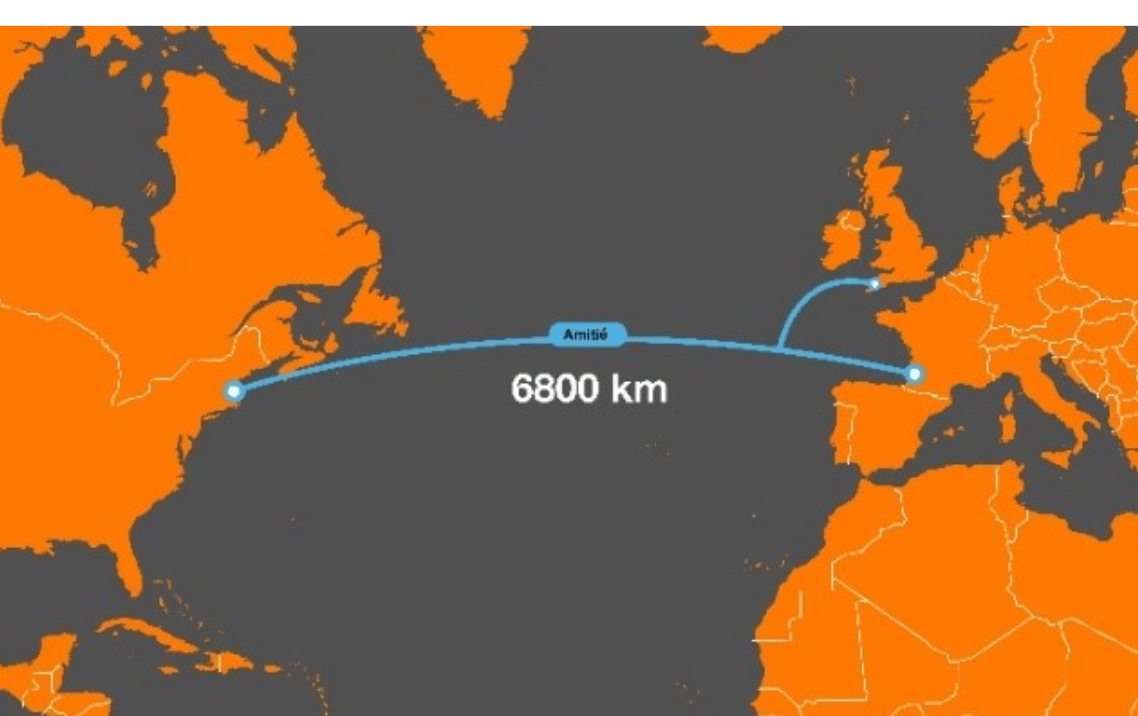
Cisco transmitted 800Gbps on the Amitié transatlantic communications cable, which runs 6,234 kilometers from Boston, Massachusetts to Bordeaux, France, and which now supportsMicrosoft’s global network.  

The Amitié submarine cable incorporates Space Division Multiplexing (SDM) technology, utilizing 16 fiber pairs, which is higher than what is typically found in underwater cables. This design allows for the distribution of repeater power among the fiber pairs, resulting in the maximum capacity for the cable.

Cisco said the field trial carried an 800G wavelength in a 150GHz channel spacing, equivalent to a spectrum efficiency of 5.33bit/s/Hz and a maximum spectral efficiency of 5.6bit/s/Hz. In addition, 600G was transmitted over 12,469 kilometers for a trans-Atlantic loopback configuration. This is the first time a 140Gbaud single carrier signal was demonstrated live, and is the longest distance ever reported at single carrier 600G DWDM transmission on an SDM cable. The trial was performed with the Cisco NCS 1014 platform enabled by Acacia’s Coherent Interconnect Module 8 (CIM 8), which is powered by its Jannu digital signal processor and advanced silicon photonics.  Both products are available today and actively deployed in multiple networks. 

“In the era of AI, reliable and fast network connections are more important than ever,” said Bill Gartner, SVP Optical Systems and Optics, Cisco. “Working with Microsoft on the Amitié cable to demonstrate the potential for improved overall network capacity with 800G at these distances is a significant milestone for an SDM cable, and we’re proud to drive the innovations that pave the way for ever increasing network capacity needs.”   

“The transmission of 800G over 6,234 kilometers is a milestone that demonstrates SDM cables can deliver increased capacity over traditional subsea cables,” said Jamie Gaudette, GM of Cloud Network Engineering, Microsoft. “This field trial demonstrates what is now a commercial technology for subsea routes, and we can improve the network capacity to help drive digital transformation for people, organizations, and industries around the world.” 

https://newsroom.cisco.com/c/r/newsroom/en/us/a/y2024/m02/cisco-delivers-800gbps-on-amitie-transatlantic-cable-in-collaboration-with-microsoft-to-support-exponential-growth-of-cloud-and-ai-services.html

  • In July 2023, Aqua Comms, Meta, Microsoft, and Vodafone announced the commissioning of the Amitié subsea cable system, a 6,783 km (4,215 miles) trans-Atlantic system connecting North America and Europe and boasting 16 fiber pairs and up to 400 Tbps capacity -- the highest to date.
  • The Amitié cable, which was built by Alcatel Submarine Networks, has landings in Lynn, Massachusetts; Widemouth Bay, England; and Le Porge, France. 
  • The design of the system brings all users additional connectivity options in the United States, the UK, and in France. Boston will have direct connection all the way to London and a new Carrier Neutral Data Center constructed in Bordeaux. This delivers improved reliability in terms of protected capacity on multiple diverse routes.

  • The system includes an innovative branching unit 860 km from France and 650 km from the UK. This device allows the owners to switch either individual optical wavelengths between different landings or the full fiber capacity via two different types of switching technologies.
  • Space Division Multiplexing (SDM) is a technology used in optical fiber communication to increase the amount of data that can be transmitted over a single fiber. It involves the use of multiple spatial channels within a single fiber optic cable to carry separate data streams. This is achieved by either using multiple cores within a single fiber (multi-core fiber) or by exploiting different modes in a single core fiber (few-mode fiber).
  • In traditional fiber optic communication, the capacity of a fiber is mainly increased by using techniques like Wavelength Division Multiplexing (WDM), where different wavelengths (colors) of light carry different data streams. However, as the demand for data capacity grows, WDM alone may not suffice due to physical and technical limitations.
    SDM offers a way to further expand the data-carrying capacity by multiplying the number of available channels. This is done by creating physical or modal separations within the fiber, allowing for parallel data transmission paths that can significantly increase overall throughput.
    The application of SDM in submarine cables, like the Amitié mentioned previously, represents a significant advancement in undersea communication infrastructure. By using SDM, these cables can handle more data simultaneously, making them more efficient and capable of supporting the growing demand for internet bandwidth and connectivity across continents.

Arista posts strong Q4 as sales rise 21% yoy

 For its fourth quarter ended December 31, 2023, Arista Networks reported revenue of $1,540.4 million, an increase of 2.1% compared to the third quarter of 2023, and an increase of 20.8% from the fourth quarter of 2022. GAAP gross margin was 64.9%, compared to GAAP gross margin of 62.4% in the third quarter of 2023 and 60.3% in the fourth quarter of 2022. Non-GAAP net income amounted to $664.3 million, or $2.08 per diluted share, compared to non-GAAP net income of $445.1 million, or $1.41 per diluted share, in the fourth quarter of 2022.

The results were ahead of market expectations.

For full fiscal year 2023, Arista reported revenue of $5,860.2 million, an increase of 33.8% compared to fiscal year 2022. GAAP gross margin was 61.9%, compared to GAAP gross margin of 61.1% in fiscal year 2022. Non-GAAP net income amounted to $2,199.4 million or $6.94 per diluted share, compared to non-GAAP net income of $1,448.3 million or $4.58 per diluted share, in fiscal year 2022.

Commenting on the company's financial results, Ita Brennan, Arista’s outgoing CFO said, "Our outstanding performance for 2023 epitomizes our focus on profitable revenue growth, expanding our enterprise and campus footprint while leveraging R&D and go-to-market investments across the business."

Rwgarding its expectations for the first quarter of 2024, Arista expects:

  • Revenue between $1.52 billion to $1.56 billion;
  • Non-GAAP gross margin of approximately 62%; and
  • Non-GAAP operating margin of approximately 42%.


https://investors.arista.com/Events/Events/Event-Details/2024/Arista-Networks-Q4-2023-Earnings-Conference-Call--Webcast/default.aspx

Telia Lithuania deploys 800G wavelength service with Ciena

Telia Lithuania is upgrading its national telecom network with Ciena's WaveLogic 5 Extreme (WL5e) technology. 

This upgrade enables the introduction of Lithuania's first 800G wavelength service between major cities, supporting 400G services and up.

The network's capabilities are further extended through additional Ciena solutions, including the 6500 packet-optical platform with WL5e and WaveLogic Ai optics for increased capacity and power efficiency, faster wavelength restoration, and improved service deployment and network operations facilitated by Ciena's Navigator Network Control Suite.

Andrius Šemeškevičius, Head of Technology at Telia Lithuania, emphasized the company's commitment to innovation, particularly in data transmission, choosing Ciena for their leading optical technology. Virginie Hollebecque, Ciena's Vice President of EMEA, highlighted the network's resilience as crucial for the digitally dependent Baltic region, ensuring quick recovery from disruptions and continuous service.

https://www.ciena.com/about/newsroom/press-releases/telia-lithuania-deploys-cienas-wavelogic-5-extreme-for-country-wide-800gbs-wavelength-service

Telstra begins LEO Backhaul in Australia via Eutelsat OneWeb

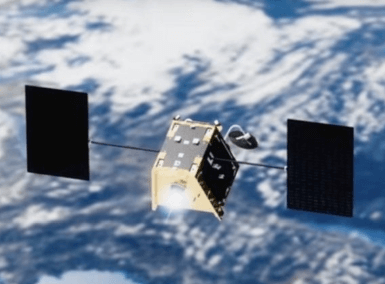
 Telstra has begun largest rollout of Eutelsat OneWeb Low Earth Orbit (LEO) backhaul. More than 300 remote mobile base station sites currently using satellite backhaul will be connected to Eutelsat OneWeb’s LEO solution over the next 18 months. The capability will allow Telstra to expand mobile coverage as it supports new site deployments.

The launch follows the signing of a strategic multi-year agreement last year that will enable LEO capacity delivered to Telstra’s most remote mobile customers across Australia to enhance their experience when using real-time applications such as voice and video calling.

It follows a successful voice call on-air using Eutelsat OneWeb’s LEO solution, the first time a satellite backhaul call has been conducted on a commercial mobile network with a guaranteed quality level of services in Australia.

“We are delighted to support Telstra in delivering consistent, leading-edge connectivity to its customers in Australia, regardless of location. We are honoured to count Telstra among our most trusted partners, with whom we will continue to collaborate to test and deploy current and future technology.”

Cyril Dujardin, Co-General Manager of Eutelsat Group’s Connectivity Business Unit said: “We are delighted to support Telstra in delivering consistent, leading-edge connectivity to its customers in Australia, regardless of location. We are honoured to count Telstra among our most trusted partners, with whom we will continue to collaborate to test and deploy current and future technology.”

www.eutelsat.com

Alphawave Semi hires Charlie Roach as Chief Revenue Officer

Alphawave IP Group appointed Charlie Roach as Chief Revenue Officer (CRO).

Previously, Roach was Senior VP of Worldwide Sales and Corporate Marketing at Inphi, leading the company’s expansion into new markets such as hyperscaler data centers and networking, and achieving more than 10X growth in revenue and stock price when Inphi was acquired by Marvell. Before Inphi, Charlie was at IDT (acquired by Renesas) and AMCC/Applied Micro (acquired by MACOM).

Tony Pialis, Co-Founder, President, and Chief Executive Officer of Alphawave Semi said: “I am thrilled to welcome Charlie, a highly accomplished sales and technology executive to our executive leadership team. Charlie comes with an impressive track record at Inphi, building strong partnerships and driving strategic wins with more than 10X revenue growth among its hyperscaler customers. His expertise is invaluable as we continue to lead in delivering connectivity and compute silicon solutions, shaping the future of next-generation AI infrastructure.”

https://awavesemi.com

Sunday, February 11, 2024

Video: What's Next for Chiplets

Is the future more about chiplets rather than monolithic chips? Yervant Zorian, Fellow & Chief Architect from Synopsys, explains:

  • The limitations of monolithic chips: As technology advances, we're reaching the limit of how much knowledge we can squeeze into a single chip. Chiplets, on the other hand, are smaller, more cost-effective, and yield better results.
  • The evolution of the chiplet industry: The real breakthrough will come when different vendors start offering their chiplets to the market, much like IPs. This will lead to a new ecosystem of chiplet providers and users, with 'supermarkets' of chiplets available for innovative designs.
  • The importance of interoperability: For this new chiplet industry to thrive, there needs to be interoperability not just functionally, but also in terms of the health of the overall system. This includes the reliability and availability of individual chiplets, as well as their communication with each other over their lifecycle.

https://youtu.be/4mOTXfjPDX0

Want to be involved our video series? Contact info@nextgeninfra.io

U.S. forms National Semiconductor Technology Center Consortium

A new National Semiconductor Technology Center will convene government, industry, customers, suppliers, educational institutions, entrepreneurs, and investors as a public-private consortium to innovate, connect, and solve problems.

The Department of Commerce expects to invest over $5 billion in the program. Deirdre Hanford, a semiconductor industry leader with 30 years of experience at Synopsys, has been selected as the first Chief Executive Officer of Natcast.org, the organization that will operate the NSTC consortium. 

The NSTC will also prioritize launching a Workforce Center of Excellence, which will be a hub for workforce development for semiconductor companies doing business in America. 

“Semiconductors are at the heart of the economy, impacting every aspect of our lives,” said Deirdre Hanford. “My amazing years at Synopsys have given me a broad and deep view of the semiconductor landscape. I am honored and humbled to take on the role of Natcast CEO. I look forward to fulfilling the CHIPS NSTC mission of fostering semiconductor innovation and growing a talented workforce.”

https://natcast.org/about

https://www.youtube.com/live/sE6hxDNJQqg?feature=shared

BT, Ericsson and Qualcomm advance network slicing

 BT, Ericsson and Qualcomm demonstrated advanced 5G slicing for differentiated consumer and enterprise connectivity.

The trial, which took place at BT's Adastral Park research facilities, established network slices for Gaming, Enterprise and Enhanced Mobile Broadband (eMBB), and showed how, by allocating a portion of the 5G SA network to provide dynamic partitions for specific use-cases, optimal performance can be maintained for bandwidth-heavy activities including mobile gaming and video conferencing even during peak times.

The tests featured Ericsson’s 5G Core and Radio Access Network technology with devices powered by the Snapdragon 8 Gen 2 for Galaxy Mobile Platform.

Some key points:

  • Mobile gaming traffic on EE, the UK's leading network, has nearly doubled since early 2023, exceeding two petabytes per month.
  • Network slicing is anticipated to significantly enhance performance and growth in the 5G SA era by providing low-latency, jitter-free, and immersive gaming experiences.
  • BT Group, Ericsson, and Qualcomm Technologies showcased superior mobile cloud gaming on Nvidia’s GeForce Now, achieving over 25 Mbps throughput at 1080p, even under additional network load, using network slicing.
  • A gaming session on Fortnite with the Samsung S23 Ultra, powered by Snapdragon 8 Gen 2, demonstrated smooth performance through Ericsson’s network slicing and Radio Resource Partitioning, compared to a congested non-optimized eMBB RAN partition.
  • The trial also highlighted network slicing's benefits for enterprise applications, showing stable 4K video streaming and efficient enterprise communications on the Samsung S23 Ultra device.
  • Ericsson's 5G RAN Slicing and Radio Resource Partitioning ensured optimal experiences for both gaming and enterprise use-cases by allowing devices to connect to multiple network slices based on the application's needs.

Greg McCall, Chief Networks Officer, BT Group, said: “Network slicing will enable us to deliver new and improved capabilities for customers in the 5G SA era. As we work diligently towards the launch of our own 5G SA network, today’s successful demonstration of how slicing enables us to differentiate Quality of Service to guarantee performance for different segments is a significant milestone, and illustrative of the new services that will be enabled by 5G SA.”

https://newsroom.bt.com/bt-group-ericsson-and-qualcomm-technologies-inc-network-slicing-trial-promises-new-consumer-and-enterprise-capabilities-in-5g-sa-era-including-enhanced-mobile-gaming/