Thursday, May 4, 2023

What's next for private wireless?

https://youtu.be/pMR3xm5aNgs

Will it become as easy to add a cellular node to an enterprise network as it is to plug an access point into an Ethernet port? 

In this video, Stuart Strickland, Wireless CTO and Fellow, HPE Aruba Networking, discusses what's next for private networks and the vision for seamless connectivity between 5G, 6G, WiFi 6, 7, and 8.

 Recorded at this year's atmposhere'23 conference in Las Vegas.

Also, check out our New Middle Mile (#nmm2023) video showcase here: https://ngi.fyi/nmm23yt

Want to be in one of NextGenInfra.io videos? Contact us at info@nextgeninfra.io.

Raytheon develops tactical free-space optical comms

Raytheon Technologies introduced a tactical Free-Space Optical Communications system for high-speed, secure data transfer in challenging environments. The company said its laser-driven system provides greater bandwidths in a form factor that is smaller, weighs less, uses less power and costs less than conventional optical systems. The system is optimized for peer and near-peer operational environments and has been tested and approved during U.S. government exercises.

NexGen Optix was developed by Raytheon Blackbird Technologies. 

"NexGen Optix represents a significant advancement in secure communication and shared networking technology," said Troy Smith, director of Raytheon Blackbird Technologies. "We've developed a solution that enables organizations to communicate effectively in challenging environments where traditional communication systems may not be reliable."

https://www.rtx.com/


NSF establishes 7 AI research insititutes

The U.S. National Science Foundation (NSF) will spend $140 million to establish seven new National Artificial Intelligence Research Institutes (AI Institutes) with the goal of promoting ethical and trustworthy AI systems and technologies, developing novel approaches to cybersecurity, contributing to innovative solutions to climate change, expanding our understanding of the brain, and leveraging AI capabilities to enhance education and public health. 

“The National AI Research Institutes are a critical component of our Nation’s AI innovation, infrastructure, technology, education, and partnerships ecosystem,” said NSF Director Sethuraman Panchanathan. “These institutes are driving discoveries that will ensure our country is at the forefront of the global AI revolution.”

The new AI Institutes:

NSF Institute for Trustworthy AI in Law & Society (TRAILS)

Led by the University of Maryland, TRAILS aims to transform the practice of AI from one driven primarily by technological innovation to one driven with attention to ethics, human rights, and support for communities whose voices have been marginalized into mainstream AI. 

AI Institute for Agent-based Cyber Threat Intelligence and Operation (ACTION)

Led by the University of California, Santa Barbara, this Institute will develop novel approaches that leverage AI to anticipate and take corrective actions against cyberthreats that target the security and privacy of computer networks and their users. The team of researchers will work with experts in security operations to develop a revolutionary approach to cybersecurity, in which AI-enabled intelligent security agents cooperate with humans across the cyber-defense life cycle to jointly improve the resilience of security of computer systems over time. ACTION is funded by a partnership between NSF, DHS S&T, and IBM.

AI Institute for Climate-Land Interactions, Mitigation, Adaptation, Tradeoffs and Economy (AI-CLIMATE)

Led by the University of Minnesota Twin Cities, this Institute aims to advance foundational AI by incorporating knowledge from agriculture and forestry sciences and leveraging these unique, new AI methods to curb climate effects while lifting rural economies. 

AI Institute for Artificial and Natural Intelligence (ARNI)

Led by Columbia University, this Institute will draw together top researchers across the country to focus on a national priority: connecting the major progress made in AI systems to the revolution in our understanding of the brain. ARNI will meet the urgent need for new paradigms of interdisciplinary research between neuroscience, cognitive science, and AI. 

AI-Institute for Societal Decision Making (AI-SDM)

Led by Carnegie Mellon University, this Institute seeks to create human-centric AI for decision making to bolster effective response in uncertain, dynamic, and resource-constrained scenarios like disaster management and public health. 

AI Institute for Inclusive Intelligent Technologies for Education (INVITE)

Led by the University of Illinois, Urbana-Champaign, this Institute seeks to fundamentally reframe how educational technologies interact with learners by developing AI tools and approaches to support three crucial noncognitive skills known to underlie effective learning: persistence, academic resilience, and collaboration. 

AI Institute for Exceptional Education (AI4ExceptionalEd)

Led by the University at Buffalo, this Institute will work toward universal speech and language screening for children. The framework, the AI screener, will analyze video and audio streams of children during classroom interactions and assess the need for evidence-based interventions tailored to individual needs of students. 

https://new.nsf.gov/news/nsf-announces-seven-new-national-artificial

Cyxtera enters restructuring and considers strategic options

Cyxtera, which offers data center colocation and interconnection services, received $50 million in new financing from certain of its lenders holding over two-thirds of its outstanding term loan.

The company has entered into a Restructuring Support Agreement (RSA) with the lenders as it continues to operate its global platform of highly interconnected data centers. The company is undertaking a process to pursue a potential sale of the business or a significant investment from a new investor. If this process does not result in an acceptable transaction with a third party, as defined by the RSA, the Company would implement a comprehensive financial restructuring and transition majority ownership of the business to the Lenders through an expedited, voluntary court-supervised process under Chapter 11 of the U.S. Bankruptcy Code.

Cyxtera today also shared key financial highlights for the quarter ended March 31, 2023, as follows:

  • Total revenue increased by $14.3 million, or 7.8% year over year, to $196.7 million in the first quarter.
  • Recurring revenue increased by $14.7 million, or 8.5% year over year, to $188.4 million in the first quarter.
  • Core revenue increased by $18.1 million, or 10.9% year over year, to $184.0 million in the first quarter.
  • Net Loss of $325.4 million in the quarter, including a non-cash Goodwill impairment charge of $278.2 million; Transaction Adjusted EBITDA1 increased by $4.7 million, or 8.0%, to $63.3 million in the first quarter.

“We have strong momentum in our business, and demand for our global data center platform remains high,” said Nelson Fonseca, Cyxtera’s Chief Executive Officer. “With the support of our Lenders, we are taking steps to strengthen our financial position and ensure that our business is best positioned for the long term. We are confident in our ability to continue growing our business and creating value for the customers and communities we serve as we work to implement the transactions contemplated by the agreement.”

http://ir.cyxtera.com/

Edgecore to offer Wedge Networks’ cloud-managed security

Edgecore Networks will offer Wedge Networks’ Wedge Cloud Network Defense cloud-managed security service as an add-on for the Edgecore’s Wi-Fi 6 series access points and ecCLOUD cloud controller. 

WedgeCND is a cloud-managed security service designed to protect cloud-managed computing devices. With the activation of WedgeCND’s security add-on on the ecCLOUD, all hosts and endpoints accessing the Internet through Edgecore Wi-Fi 6 access points registered to ecCLOUD will be automatically protected against all types of threats, including malware, ransomware, phishing, and malicious websites.

"We are thrilled to partner with Wedge Networks and offer WedgeCND to our ecCLOUD add-on family,” said TengTai Hsu, VP of Edgecore Networks. “With the growing use of intelligent endpoints, customers require a simple, fast, and effective network security solution. This integration provides a seamless and comprehensive security solution for Edgecore's customers, making network security protection simple and affordable for everyone.”

“ecCLOUD is one of the largest managed Wi-Fi network platforms in the world. The activation of WedgeCND represents an important milestone in Wedge’s collaboration with Edgecore, providing large scale, cost effective cyber security solutions for ecCLOUD customers,” said Dr. Hongwen Zhang, CEO & CTO (Co-founder) of Wedge. Furthermore, “As a leader in the global open networking ecosystem, Edgecore plays a crucial role in facilitating current and future digital transformation use cases. We are honored to work alongside Edgecore to safeguard the security and integrity of these critical applications.”

Roary Stasko appointed CEO of Telstra’s International business

Roary Stasko has been appointed as the new CEO of Telstra’s International business, starting 1 July, replacing Oliver Camplin-Warner, who will be moving to head up the Telstra Purple business in the new financial year. 

Stasko currently serves as Telstra’s Finance and Strategy Executive Director. Stasko will continue to hold his position on the Digicel Pacific Board, and will be based out of San Francisco.

“Roary is a proven leader within Telstra, having spent more than five years at the business in a variety of different roles including Head of Corporate Strategy as well as Head of Finance for Telstra’s Consumer and Small Business function,” states Telstra Enterprise Group Executive David Burns. 


Wednesday, May 3, 2023

NEO Semiconductor unveils its 3D NAND flash and DRAM

NEO Semiconductor, a start-up based in San Jose, California, unveiled its "3D X-DRAM", described at the world's first 3D NAND-like DRAM cell array. Relevant patent applications were published with the United States Patent Application Publication on April 6, 2023.

NEO Semiconductor said its cell array structure is based on capacitor-less floating body cell technology. It can be manufactured using today's 3D NAND-like process and only needs one mask to define the bit line holes and form the cell structure inside the holes. This cell structure simplifies the process steps and provides a high-speed, high-density, low-cost, and high-yield solution. Based on Neo's estimates, 3D X-DRAM technology can achieve 128 Gb density with 230 layers, which is 8 times today's DRAM density.

"3D X-DRAM will be the absolute future growth driver for the Semiconductor industry," said Andy Hsu, Founder and CEO of NEO Semiconductor and an accomplished technology inventor with more than 120 U.S. patents. "Today I can say with confidence that Neo is becoming a clear leader in the 3D DRAM market. Our invention, compared to the other solutions in the market today, is very simple and less expensive to manufacture and scale. The industry can expect to achieve 8X density and capacity improvements per decade with our 3D X-DRAM."

"Evolving from 2D to 3D architectures has introduced compelling and extremely valuable benefits to NAND flash, so achieving a similar evolution for DRAM is highly desirable industry-wide," said Jay Kramer, President of Network Storage Advisors. "NEO Semiconductor's innovative 3D X-DRAM™ allows the memory industry to leverage current technologies, nodes and processes for enhancing DRAM products with NAND-like 3D architectures."

https://neosemic.com

Arelion adds to its U.S. network

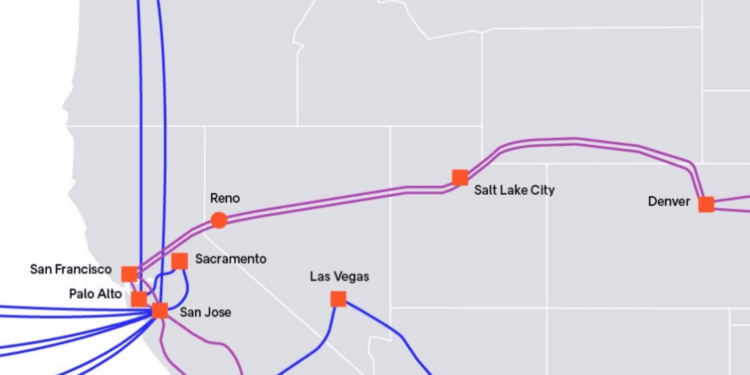
Arelion announced a new route from Denver to the San Francisco Bay Area, connecting through Salt Lake City and Reno. The new route leverages the latest open optical line systems and supports multi-vendor transponders and coherent pluggable components to deliver multi-terabit scale capacity, enabling 10G, 100G and 400G Wavelengths deliveries with aggressive lead times for the global carrier's customers.

Arelion said its network now provides enhanced resilience and flexibility, offering seamless edge connectivity through its fourth cross-country east-to-west coast U.S. route.

"This network investment in Denver, Salt Lake City, Reno and the San Francisco Bay Area is in direct response to our customers' growing technology demands," said Wes Cantrall, Head of Sales in North America, Arelion. "We bring additional choices for diversity and high capacity to these regions, enabling us to meet companies' terabit-scale needs in these evolving markets. Our ongoing commitment to connect growing edge markets across the country is a testament to our dedication to delivering best-in-class services that enable tech business growth in previously underserved regions."

The new route will go live in late Q2. Further insights into Arelion's North American network expansion:

  • Routing west, Arelion's new diverse network connects to Denver (Flexential – Centennial and CoreSite – DE1) and Aurora (Flexential).
  • The route connects to Flexential sites in Fair Park and Salt Lake City. Additional Salt Lake City sites include EdgeConneX – SLC01 and DataBank – SLC1 and SLC2 in Bluffdale.
  • The network continues to Tahoe Reno (Switch – Citadel).
  • Additional connectivity is provided to key Bay Area cities, including San Francisco (Digital Realty – SFO10), San Jose (Equinix – SV1), Palo Alto (Equinix – SV8), Santa Clara (CoreSite – SV4) and other colocation sites in the Bay Area.

With its fourth North American east-to-west coast route, Arelion provides enhanced access to its number one ranked Internet backbone, AS1299, as well as the global carrier's portfolio of leading IP and optical technology services, including high-speed IP Transit, Cloud Connect, Ethernet and IPX services for service providers, content providers and enterprises.  

https://www.arelion.com/about-us/press-releases/new-route-denver-bay-area


Qualcomm's revenue dips 17% to $9.2B due to inventory and macroeconomics

 Citing challenges in the macroeconomic environment and elevated channel inventory, Qualcomm reported quarterly revenues of $9.275 billion, down 17% compared to the same period a year ago. Diluted earnings per share (EPS) amounted to $1.52, down 41% compared to a year ago.

“As we navigate this challenging environment, we remain focused on the critical factors we can control to emerge stronger from this downturn – our leading technology roadmap, best-in-class product portfolio, strong customer relationships and operational efficiencies,” said Cristiano Amon, President and CEO of Qualcomm Incorporated. “Our top priority remains to execute our diversification strategy and invest in areas that drive long-term value.”

Regarding it outlook for the current quarter, Qualcomm said it expcts "continued impact of the macroeconomic headwinds, weaker global handset units, and channel inventory drawdown. In addition, we estimate a larger-than-normal sequential decline in QCT revenues, primarily due to the timing of purchases by a modem-only handset customer."

https://d1io3yog0oux5.cloudfront.net/_061d72816a5a32a6796fb8868f5b27a9/qualcomm/db/773/7286/file/FY+2023+2nd+Quarter+Earnings+Release.pdf

Infinera posts Q1 revenue of $392 million, up 16% yoy

Infinera reported Q1 GAAP revenue of $392.1 million compared to $485.9 million in the fourth quarter of 2022 and $338.9 million in the first quarter of 2022.

GAAP gross margin for the quarter was 37.5% compared to 37.1% in the fourth quarter of 2022 and 32.9% in the first quarter of 2022. GAAP operating margin for the quarter was (2.4)% compared to 5.2% in the fourth quarter of 2022 and (10.8)% in the first quarter of 2022. Non-GAAP gross margin for the quarter was 38.8% compared to 38.7% in the fourth quarter of 2022 and 36.2% in the first quarter of 2022. Non-GAAP operating margin for the quarter was 3.5% compared to 10.5% in the fourth quarter of 2022 and (1.0)% in the first quarter of 2022. Non-GAAP net income for the quarter was $5.7 million, or $0.02 per diluted share, compared to non-GAAP net income of $40.3 million, or $0.16 per diluted share, in the fourth quarter of 2022, and non-GAAP net loss of $(14.0) million, or $(0.07) per diluted share, in the first quarter of 2022.

Infinera CEO David Heard said, “I am pleased with our solid start to 2023 with revenue, margins, and earnings per share all coming in above the mid-point of our outlook range. Compared to the year-ago quarter, we grew revenue by 16%, above our annual target of 8% for 2023, and expanded gross margin by more than 250bps.”

“As we look ahead to the second quarter, we are planning to achieve continued year-over-year revenue growth and margin expansion and to deliver approximately 10% revenue growth in the first half of 2023. We remain focused on the six milestones we laid out at our investor day in March, which includes launching our subsystems products and driving to at least a $1 per share in earnings by 2025-2026.”

https://www.infinera.com/press-release/infinera-corporation-reports-first-quarter-2023-financial-results

Equinix posts sales of $2.0 billion, up 15% yoy

 Equinix posted quarterly revenue of approximately $2.0 billion, a record quarter-over-quarter step up of $127 million and up 15% over the same quarter last year. Net income amounted to $259 million, a 101% increase over the previous quarter, primarily due to higher income from operations and lower net interest expense.

Charles Meyers, President and CEO, Equinix, states: "We had a strong start to the year, delivering nearly $2 billion of revenue for the quarter, as our outlook remains positive with the overall demand for digital transformation fueling our conviction around the long-term secular drivers of our business. We look forward to our upcoming analyst day next month, where we plan to continue the discussion of the significant opportunity ahead and our strongly differentiated position in capturing this opportunity as we enable our customers to access all the right places, partners and possibilities."

Some highlights:

  • Equinix surpassed a new milestone of 30 terabits per second (TB/s) of peak traffic across its global Internet Exchanges—a 50% increase in approximately 18 months. 
  • Equinix closed five cloud on-ramp wins in Q1 bringing Equinix's portfolio to 210 on-ramps across 46 markets. More than half of the metros in which Equinix operates now offer two or more on-ramps to the largest cloud players.
  • Equinix achieved 96% renewable energy coverage of its operational load for 2022, marking the fifth consecutive year with over 90% renewable energy coverage. This reflects a 10% year-over-year increase in procurement of renewable energy on a GWh basis. 
  • Closed approximately 4,000 deals across more than 3,000 customers
  • Customer deployments across multiple regions increased to 76% of total recurring revenue, an increase of 1% quarter over quarter, demonstrating the value of the Equinix global platform.

https://www.equinix.com/newsroom/press-releases/2023/05/equinix-reports-first-quarter-2023-results

Matt Murphy appointed Chair of Marvell's Board

Marvell Technology announced the appointment of Matt Murphy as Chair of its Board of Directors, replacing Rick Hill, who has served as Chair of the Board since 2016 and who will be retiring from the Board at the end of his current term to focus on philanthropic activity in Latin America. The Board has also appointed Michael Strachan, a Marvell Director since 2016, to become Lead Independent Director. Murphy currently serves as President and CEO of Marvell.

Hill has played an essential role in Marvell's multi-year transformation. He initially served as Chair and Interim Principle Executive Officer and was instrumental in assembling a strong and experienced Board of Directors, as well as hiring key members of the current management team including Murphy as CEO. His deep insights and decades of experience in the semiconductor industry have been invaluable to the company as Marvell pursues its long-term growth opportunities in cloud, 5G, automotive and enterprise end markets.

"Rick has been instrumental in shaping the direction of the company that Marvell has become today, not only in his role as Board Chair, but as a mentor to me and the management team," said Murphy. "I'm proud of the accomplishments the Marvell team has achieved, and I'm thankful for Rick's support since I took on the CEO role in 2016. I'm grateful for his outstanding leadership and dedication to Marvell's success and I'm honored to succeed him as Chair. I'm also pleased that Mike has agreed to take on the role of Lead Independent Director and look forward to working with him and the rest of the Marvell Board as we continue to execute on our vision for the company."

https://investor.marvell.com/2023-05-03-Marvell-Announces-Changes-to-its-Board-of-Directors

Tuesday, May 2, 2023

ONUG preview: Rethinking the Public Cloud Journey


https://youtu.be/iOg8QsFyuO8

Over the last 5 years, many companies have been on a public cloud journey, but now they're starting to assess the real cost of it and whether they're getting the operational and agility benefits associated with it. 

The upcoming ONUG Spring event in Dallas brings together enterprise cloud enablement solutions around connectivity, security, automation and most importantly, control. In this video, Nick Lippi shares a preview of some of the major themes.

While you are here - if you had 2-minutes to deliver an elevator pitch to all the CXOs and influencers at ONUG Spring 2023 (and beyond), what would you say? We'll be sharing key insights from the event in a showcase of short videos.  

Book your on-camera spot here: https://nextgeninfra-onug.as.me/schedule.php

Fiber Broadband Association sees supply chain improvements

The Fiber Broadband Association (FBA) reports significant improvements in industry supply chain lead times in several key fiber broadband component categories:

  • 92% decrease in minimum lead times for fiber optic cables (from 52-60 weeks in Summer 2022 to 4-10 weeks as of March 2023)
  • 60% decrease in minimum lead times for fiber cabinets and splitters (from 10-20 weeks in Summer 2022 to 4-8 weeks as of March 2023)
  • 80% decrease in minimum lead times for fiber multiport terminals (from 20-35 weeks in Summer 2022 to 4-8 weeks as of March 2023)
  • 80% decrease in minimum lead times for conduit (from 15-20 weeks in Summer 2022 to 3-7 weeks as of March 2023)
  • 64% decrease in minimum lead times for hand holes (from 22-26 weeks in Summer 2022 to 8-14 weeks as of March 2023)
  • 67% decrease in minimum lead times for home equipment (from 12-24 weeks in Summer 2022 to 4-10 weeks as of March 2023)

FBA’s updated Supply Chain white paper, titled “Strategies to Mitigate Bottlenecks in the Current Fiber Broadband Supply Chain,” helps companies carefully plan to overcome supply chain challenges and build more robust systems and processes to buffer them from future challenges and keep fiber projects on target. The paper provides vital statistics on fiber broadband supply chain fluctuations and examples of how to protect fiber-related projects from the negative effects of supply chain stressors.

“This latest supply chain information is encouraging for fiber broadband providers today that are building reliable, high-speed fiber broadband networks to connect their communities and close the digital equity gap,” said Gary Bolton, President and CEO of the Fiber Broadband Association. “However, our Supply Chain Working Group does caution that while it is reporting current relief in the supply chain, it expects to see an uptick in demand going forward. Therefore, it encourages companies to continue to put a hard focus on long-range planning and to follow FBA mitigation strategies presented in the white paper.”

“Our supply chain white paper serves as an important resource for FBA members to mitigate supply chain challenges and accelerate fiber broadband deployments, so it is crucial that we provide the most up-to-date information and strategies,” said Scott Jackson, National Broadband Market Manager at Graybar, Fiber Broadband Association Board Member and Chair of the Supply Chain Working Group. “Beyond statistics, it also provides recommendations on how to pursue stronger partnerships, long-range planning, high-level design optimization, changing how companies recruit and train their labor force, and smarter technology options to plan and maintain stocking levels.”

https://youtu.be/oJbrUGAJISA

Mavenir bulks up with $100M capital raise

Mavenir announced the closing of a $100 million capital raise, adding to its $250 million capital raise in 2022. The fundraising round was anchored by Siris, a leading technology focused private equity firm and Mavenir’s largest equity holder, along with investment from two highly strategic ecosystem partners.

The company said the new financing supports its mission to enable the digitization of telco networks with cloud-native applications that include IMS, Converged Packet Core and Open RAN.

Pardeep Kohli, President and CEO of Mavenir, commented: “This new capital will allow us to accelerate our capabilities in automation, sustainability, and use of AI as we enable our customers to efficiently deploy and operate Open RAN based end-to-end cloud-native networks. Our unique strategy incorporates best practices from the hyperscale, cloud and IT industries, to transform how the world connects and builds the future of networks.”

“Importantly, this investment enables Mavenir to further scale its business and maintain its leadership in Open RAN and 5G transformation,” said Hubert de Pesquidoux, a Siris Executive Partner and Executive Chairman of Mavenir. “We firmly believe in the automated networks of the future that are cloud-native, AI-native and Green-native, and we are confident that Mavenir’s innovations are essential in driving that evolution.”

Box integrates OpenAI’s ChatGPT API into its content cloud

Box will natively integrate advanced AI models into its Box Content Cloud, enabling organizations to securely run ChatGPT functions on their enterprise data. 

Box currently has more than 115,000 customers storing files on their cloud.

Possibilities with the new  Box AI:

  • Sales teams will be able to use Box AI to get answers to questions in complex contracts to speed up the sales cycle.
  • Analysts will be able to have Box AI summarize lengthy financial reports to inform their rating recommendations.
  • Legal teams will be able to ask Box AI to identify key clauses, terms, and obligations from a contract to speed up review cycles.
  • Operations teams will be able to tell Box AI to extract key takeaways from a budget to update corporate strategy decks without waiting on a co-worker from the finance team for the right piece of information.
  • Customer service teams will be able to use Box AI to surface insights from hundreds of customer feedback surveys to identify key areas for improvement.

In the future, Box plans to embed Box AI across the Box product suite and power more complex use cases. For example, customers will be able to leverage Box AI to automate workflows and tasks to drive faster business outcomes, power security at scale by automatically classifying files, and enhance the developer ecosystem with access to custom APIs.

“We are at the start of a platform shift in enterprise software driven by recent advancements in generative AI, and nowhere is the potential impact greater than in enterprise content,” said Aaron Levie, Co-Founder and CEO of Box. “We’ve seen a step function improvement in our ability to analyze and synthesize the massive amounts of data contained within an organization’s unique documents, videos, presentations, spreadsheets, and more. When combined with AI, we will be able to unlock the value of this content and make every person in a company smarter and more productive. Content is an organization’s most important data, and with Box AI we’re just getting started with how we’ll transform the way work gets done.”


AMD's Q1 revenue dips 9% to $5.4 billion

AMD reported Q1 revenue of $5.4 billion, gross margin of 44%, operating loss of $145 million, net loss of $139 million and diluted loss per share of $0.09. On a non-GAAP basis, gross margin was 50%, operating income was $1.1 billion, net income was $970 million and diluted earnings per share was $0.60.

“We executed very well in the first quarter as we delivered better than expected revenue and earnings in a mixed demand environment,” said AMD Chair and CEO Dr. Lisa Su. “We launched multiple leadership products and made significant progress accelerating our AI roadmap and customer engagements in the quarter. Longer-term, we see significant growth opportunities as we successfully deliver our roadmaps, execute our strategic data center and embedded priorities and accelerate adoption of our AI portfolio.”

“Our strategically important Data Center and Embedded segments contributed more than 50 percent of revenue in the first quarter," said AMD EVP, CFO and Treasurer Jean Hu. "For the second quarter we expect sequential growth in our Data Center and Client segments offset by modest declines in our Gaming and Embedded segments. We remain confident in our growth in the second half of the year as the PC and server markets strengthen and our new products ramp.”


https://ir.amd.com/news-events/press-releases/detail/1128/amd-reports-first-quarter-2023-financial-results

VIAVI's sales drop 21.5% yoy to $248 million

 Citing lower than expected NEMs and semiconductor R&D spending, VIAVI reported quarterly net revenue was $247.8 million, down $67.7 million or 21.5% year-over-year. GAAP net loss was $(15.4) million, or $(0.07) per share. Non-GAAP net income was $18.0 million, or $0.08 per share.

"Fiscal Q3 2023 revenue and non-GAAP operating margin came in within our revised guidance range.  As we mentioned in early April, lower than expected NEMs and semiconductor R&D spend during the March quarter adversely impacted our initial NSE revenue expectations," said Oleg Khaykin, VIAVI's President and Chief Executive Officer. 

Khaykin added, "On a positive side, we saw the beginning of stabilization of demand for our field instruments during the March quarter.  In the current quarter, we are seeing the signs of recovery in our Field Instruments and stabilization in the Lab & Production business. We expect the stabilization and recovery momentum to continue into the second half of calendar 2023."

  • Americas, Asia-Pacific and EMEA customers represented 40.5%, 30.5% and 29.0%, respectively, of total net revenue for the quarter ended April 1, 2023.
  • As of April 1, 2023, the company held $586.6 million in total cash, short-term restricted cash and short-term investments.

https://investor.viavisolutions.com/overview/default.aspx

From 17-April-2023: "The pullback in R&D spend at network equipment manufacturers (NEMs) and semiconductor companies was much higher than anticipated leading to revenue and non-GAAP operating margin coming in below the lower end of our guidance" said Oleg Khaykin, VIAVI's President and Chief Executive Officer. "The spending conservatism and rapid slowdown that we saw in the Service Provider and Data Center spend at the end of fiscal first quarter is now percolating down to the system and component suppliers."

Consortium aims for European satellite constellation

A partnership has been formed by a group of European space and telecommunications players in response to the European Commission's call for tender related to the future European satellite constellation IRIS² (Infrastructure for Resilience, Interconnectivity and Security by Satellite).

Airbus Defence and Space, Eutelsat, Hispasat, SES, and Thales Alenia Space will govern the open consortium. The core team of Deutsche Telekom, OHB, Orange, Hisdesat, Telespazio, and Thales will also be involved. Together, they aim to create a cutting-edge satellite constellation that uses a multi-orbit architecture and is interoperable with the terrestrial ecosystem.

IRIS² is the EU's new flagship space programm with a mission to deliver resilient and secure connectivity  to governments to protect European citizens and will provide commercial services in the interest of European economies and societies.

https://defence-industry-space.ec.europa.eu/eu-space-policy/eu-space-programme/iriss_en

IOWN Global Forum adds to its Board

The IOWN Global Forum announced five new members to its Board of Directors:

  • Ciena, Steve Alexander, Chief Technology Officer
  • Orange, Gilles Bourdon, Vice President, Wireline Networks and Infrastructure
  • Fujitsu, Shingo Mizuno, Corporate Executive Officer, Vice Head of System Platform Business
  • KDDI, Dr. Tomohiro Otani, General Manager
  • Accenture, Jefferson Wang, Senior Managing Director and Global Network Practice Lead

In addition, the IOWN Global Forum posted highlights from its recent third Annual Member Meeting, which welcomed nearly 400 registrants from 78 organizations. A

Dr. Katsuhiko Kawazoe, President and Chairperson of IOWN Global Forum, opened the meeting sharing that “Vision to Reality” was the goal for this eighth member meeting. To do so, the focus of the meeting was to define the next stage of work items needed to deliver Vision 2030 supporting defined use cases, technologies, and architectures while also solving these challenges for a sustainable world. Using a growing list of Proof of Concepts (PoC), members shared their progress in a variety of keynotes, sessions, and workshops for bringing the Vision 2030 into reality.

Chris Wright, Senior Vice President and Chief Technology Officer, Red Hat, Inc., presented on “IOWN and LINUX for the Environment Sustainability” where he described how IOWN technologies together with open source communities will be the shortest path for our connected world to deliver data-centric communication and computing infrastructure that support environmental sustainability.

Caroline Chan, the Vice President of the Network and Edge Solutions Group at Intel Corporation, shared a keynote titled “Digital Life Enhanced by Rich Compute and Connectivity.” The talk highlighted technology trends of future digital world experiences and how Intel and the ecosystem are best positioned to deliver the network and edge solutions that solve industry challenges. In addition, the discussion underscored why the work of the Forum is essential for developing next-generation global infrastructure, including the 6G system.

https://iowngf.org