Monday, August 5, 2024

The European AI Act: A Landmark Regulation Enters into Force

In a historic move, the European Artificial Intelligence Act (AI Act), the world’s first comprehensive regulation on artificial intelligence, has officially entered into force. Designed to ensure that AI developed and used within the European Union is trustworthy and aligned with the protection of fundamental rights, the AI Act aims to establish a harmonized internal market for AI. This regulation is expected to encourage the adoption of AI technology while fostering a supportive environment for innovation and investment across the EU.

The AI Act introduces a forward-looking definition of AI based on a product safety and risk-based approach. It categorizes AI systems into several risk levels, each with specific obligations. Minimal risk AI systems, such as AI-enabled recommender systems and spam filters, face no obligations under the Act. Specific transparency risk AI systems, including chatbots and deep fakes, must disclose their nature to users. High-risk AI systems, like those used in recruitment or loan assessments, are required to meet stringent requirements, including risk mitigation and human oversight. Finally, AI systems deemed to pose an unacceptable risk, such as those enabling social scoring or predictive policing, will be banned outright.

The regulation also addresses general-purpose AI models, which are versatile AI systems capable of performing a wide range of tasks. The AI Act ensures transparency throughout the value chain and addresses potential systemic risks associated with these advanced models. Member States have until August 2, 2025, to designate national competent authorities responsible for overseeing the application of AI rules. The Commission’s AI Office will play a central role in implementing and enforcing the Act, supported by advisory bodies to ensure uniform application and provide technical advice.

Key Points of the AI Act:

  • Minimal Risk: AI systems like recommender systems and spam filters face no obligations but can adopt voluntary codes of conduct.
  • Specific Transparency Risk: AI systems such as chatbots and deep fakes must clearly disclose their nature to users, with content marked as artificially generated.
  • High Risk: AI systems used in critical areas like recruitment and loan assessments must comply with strict requirements, including human oversight and high data quality standards.
  • Unacceptable Risk: AI applications posing clear threats to fundamental rights, such as social scoring and certain uses of biometric systems, will be banned.
  • General-Purpose AI Models: Transparency and systemic risk management are mandated for versatile AI models used across various applications.

Application and Enforcement:

  • Designation of Authorities: Member States must appoint national competent authorities by August 2, 2025.
  • AI Office: The central body for implementation and enforcement at the EU level.
  • Advisory Bodies: The European Artificial Intelligence Board, a scientific panel of independent experts, and an advisory forum will support implementation and enforcement.
  • Penalties: Companies can face fines of up to 7% of global annual turnover for violating banned AI applications, with lower fines for other violations.

Next Steps:

  • Implementation Timeline: The majority of rules will apply from August 2, 2026, with some prohibitions taking effect after six months, and rules for General-Purpose AI models applying after 12 months.
  • AI Pact: A voluntary initiative for early adoption of key obligations.
  • Guidelines and Standards: The Commission is developing guidelines and co-regulatory instruments to facilitate implementation, with a call for participation in drawing up the first general-purpose AI Code of Practice.

Background:

  • Political Agreement: Reached on December 9, 2023.
  • Support for Startups and SMEs: Measures launched on January 24, 2024.
  • AI Office Unveiled: On May 29, 2024.
  • EuroHPC JU Regulation: Amended on July 9, 2024, to enable AI-supercomputers for training General Purpose AI models.
  • Ongoing Research: Conducted by the Joint Research Centre (JRC) to shape and implement EU AI policies effectively.


https://ec.europa.eu/commission/presscorner/detail/en/ip_24_4123

Deutsche Telekom Advances AI Workflows with 5G APIs in AutoLog Project

Deutsche Telekom is driving innovation in the port of Emden through the “AutoLog” project, aimed at automating and enhancing workflows at automotive terminals. In collaboration with Volkswagen Group Logistics, the Bremer Institut für Produktion und Logistik (BIBA), and software specialist Unikie, Deutsche Telekom is deploying its 5G network and edge data centers to develop new storage and logistics solutions with automated driving at the Volkswagen plant in Emden. These advancements are expected to significantly improve efficiency and address challenges such as limited terminal space and a shortage of skilled workers.

The Emden terminal, a critical logistics hub for Volkswagen, handles the movement of over 1 million vehicles annually. Deutsche Telekom’s 5G network and edge computing capabilities are integral to the project’s success, enabling fast, reliable data processing and communication. This infrastructure will support the Unikie Marshalling Solution (UMS), which automates vehicle control, and a digital twin of the terminal created using LiDAR sensors for precise, real-time data. This setup ensures that both manually and automatically driven vehicles can operate safely and efficiently, even in densely populated areas.

  • 5G Network Integration: Deutsche Telekom’s 5G network and Quality on Demand Network API ensure stable, reliable communication for automated vehicle control.
  • Edge Data Centers: Localized data processing for fast and secure communication between marshalling systems and vehicles.
  • Digital Twin Technology: LiDAR sensors create a digital replica of the terminal for accurate, real-time monitoring.
  • Project Goals: Improve efficiency, safety, and sustainability in automotive terminal operations by integrating automated and manual vehicle control.

The “AutoLog” project is funded by the Federal Ministry of Digital and Transport’s IHATEC II program, with a budget of 5.8 million euros, and aims to demonstrate the benefits of automated port logistics, including increased efficiency, reduced CO2 emissions, and enhanced workplace safety.

https://www.telekom.com/en/media/media-information/archive/automated-driving-in-port-logistics-1071752

Nokia’s Network as Code platform adds a partner

Bounteous x Accolite, a global digital transformation services consultancy, has announced a new agreement to utilize Nokia’s Network as Code platform, complete with a developer portal. This partnership aims to create innovative use cases in sectors such as healthcare and gaming that take full advantage of 5G network capabilities.

This collaboration further enhances Nokia’s growing API ecosystem, which includes operators, systems integrators, software developers, and hyperscalers worldwide. The goal is to tap into network capabilities and monetize network assets by developing new use cases for consumer, enterprise, and industrial customers. The Network as Code platform unifies these parties, simplifying network complexities and providing developer-friendly interfaces for seamless application deployment across multiple public and private networks.

  • Unified Ecosystem: The platform simplifies network complexities and provides developer-friendly interfaces.
  • Developer Tools: Access to operator networks via SDKs, API documentation, a sandbox for testing, and code snippets.
  • Initial Focus: Enabling healthcare applications to improve emergency response times by tracking ambulance locations.
  • Broad Industry Reach: Bounteous x Accolite serves telecommunications, healthcare, financial services, and media sectors.

Since its launch nearly a year ago, Nokia has signed collaboration agreements with 17 network operators and ecosystem partners across Europe, North and South America, and Asia to utilize the Network as Code platform. This partnership with Bounteous x Accolite marks a significant step in leveraging 5G capabilities to enhance customer experiences and service delivery across various industries.

Thailand's Advanced Info Service (AIS) Picks Oracle Alloy for Hyperscale Cloud

Advanced Info Service (AIS), one of Thailand’s largest mobile network operators, has announced its plans to deploy Oracle Alloy and launch AIS Cloud, the country’s first locally owned and operated hyperscale cloud. This strategic move will provide AIS customers, including public sector enterprises, access to over 100 Oracle Cloud Infrastructure (OCI) services, featuring advanced artificial intelligence (AI) capabilities. AIS Cloud aims to address local data residency and sovereignty requirements, such as Thailand’s Personal Data Protection Act (PDPA) and the Cybersecurity Act, while ensuring business resilience through in-country disaster recovery capabilities.

AIS Cloud, operated from two AIS data centers in Thailand, will offer local support and ensure customer information remains within the country, complying with regulatory standards across various industries. The deployment of Oracle Alloy will enable AIS to extend OCI services to public and private sector organizations, as well as its managed service partners. This initiative will allow businesses to repatriate their existing cloud environments from overseas or transition from on-premises to AIS Cloud within Thailand, significantly enhancing operational resiliency and compliance.

  • Hyperscale Cloud Launch: AIS to deploy Oracle Alloy, creating Thailand’s first locally owned and operated hyperscale cloud.
  • Oracle Services: Access to over 100 OCI services, including advanced AI capabilities, for AIS customers and public sector enterprises.
  • Regulatory Compliance: AIS Cloud will meet local data residency and sovereignty requirements under PDPA and the Cybersecurity Act.
  • Operational Resiliency: In-country disaster recovery capabilities to ensure business continuity.
  • Local Operation: AIS Cloud will be managed from two AIS data centers in Thailand, providing localized support and regulatory compliance.
  • Repatriation and Modernization: Businesses can repatriate cloud environments from abroad or move on-premises systems to AIS Cloud in Thailand.

Milestone: ESnet marks 25 years of IPv6

Twenty-five years ago, on August 3, 1999, ESnet made history by receiving the first production IPv6 netblock in North America, marking a significant milestone in internet development. Assigned by the American Registry for Internet Numbers (ARIN), this allocation, known as 2001:400::/32, remains in use today and represents a foundational moment in the deployment of IPv6 technology.

  • ESnet was issued the first production IPv6 netblock on August 3, 1999.
  • Pioneering IPv6: This allocation by ARIN was the first of its kind in North America and potentially the world.
  • IPv6, developed by the IETF in the 1990s, was designed to expand the addressing scheme to support the growing internet.
  • Ongoing Impact: ESnet continues to drive IPv6 adoption, co-leading the Department of Energy’s IPv6-only Implementation Team and promoting IPv6 in research and education networks globally.

For more on this historic milestone, read the blog post “25 Years of Production IPv6 in ESnet” by network engineer and IPv6 expert Michael Sinatra.

https://lightbytes.es.net/2024/08/02/25-years-of-production-ipv6-in-esnet/

Infinera posts Q2 revenue of $342.7 million

 On August 2nd, Infinera reported GAAP revenue of $342.7 million for the second quarter ended June 29, 2024, an increase from $306.9 million in the first quarter of 2024, but a decrease from $376.2 million in the second quarter of 2023. The GAAP gross margin improved to 39.6%, up from 36.0% in the previous quarter and 38.0% in the same period last year. The GAAP operating margin was recorded at -8.7%, a notable improvement from -14.0% in the first quarter of 2024, though down from -3.8% in the second quarter of 2023. The GAAP net loss for the quarter was $48.3 million, or $0.21 per diluted share, showing improvement from a net loss of $61.4 million, or $0.27 per diluted share, in the previous quarter, but worse compared to a net loss of $20.3 million, or $0.09 per diluted share, in the same period last year.

  • GAAP Revenue: $342.7 million, up from $306.9 million in Q1 2024, down from $376.2 million in Q2 2023.
  • GAAP Gross Margin: 39.6%, up from 36.0% in Q1 2024, up from 38.0% in Q2 2023.
  • GAAP Operating Margin: -8.7%, improved from -14.0% in Q1 2024, down from -3.8% in Q2 2023.
  • GAAP Net Loss: $48.3 million, or $0.21 per diluted share, improved from $61.4 million, or $0.27 per diluted share in Q1 2024, worse than $20.3 million, or $0.09 per diluted share in Q2 2023.
  • Non-GAAP Gross Margin: 40.3%, up from 36.6% in Q1 2024, up from 39.3% in Q2 2023.
  • Non-GAAP Operating Margin: -1.3%, improved from -8.4% in Q1 2024, down from 2.8% in Q2 2023.
  • Non-GAAP Net Loss: $14.0 million, or $0.06 per diluted share, improved from $38.3 million, or $0.17 per diluted share in Q1 2024, worse than $0.7 million, or $0.00 per diluted share in Q2 2023.
  • Cash and Equivalents: $115.7 million at the end of Q2 2024.

Infinera CEO, David Heard, stated, "I am pleased with our second quarter results with revenue, gross margin and operating margin all above the midpoint of our outlook range. While the timing and pace of customer demand recovery remain uncertain, we continued our design-win momentum across our optical networking product portfolio in the quarter, with bookings up both sequentially and on a year-over-year basis. We ended Q2 with a book-to-bill ratio above 1." He also expressed excitement about the pending merger with Nokia, emphasizing the combined benefits of enhanced innovation and a broadened portfolio to meet high-bandwidth application demands such as AI.

https://www.infinera.com/press-release/infinera-corporation-reports-second-quarter-2024-financial-results/

undefined

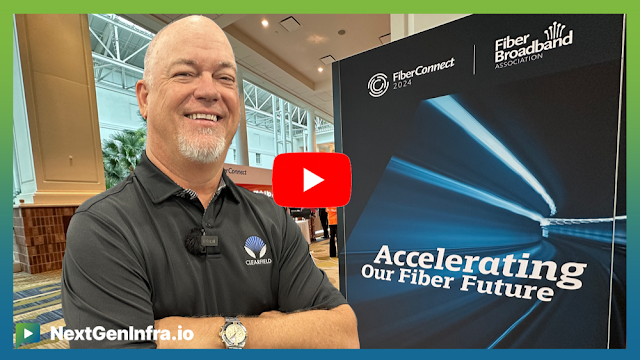
#FiberConnect24: Accelerating Fiber Installer Productivity by 50%

How is Clearfield accelerating the future of fiber?

Kevin Morgan, Chief Marketing Officer from Clearfield explains:

- Field engineering products with input from experienced craft workers to create user-friendly solutions

- Developing a comprehensive product portfolio covering central office to outside plant and home connections

- Introducing innovations like the Deploy Reel TAP box to reduce installation time by 30 minutes per home, increasing productivity

https://youtu.be/pMumyGKgU6A

Want to be involved our video series? Contact info@nextgeninfra.io

 Check out the rest of Fiber Connect 2024 showcase here: https://ngi.fyi/fiberconnect24yt


undefined

#FiberConnect24: AI-Powered Home Wi-Fi Support - RouteThis - Jason Moore

How can fiber providers leverage AI to ensure a great in-home experience?

Jason Moore, Co-founder and CEO from RouteThis explains:

- Extending the fiber experience to all devices inside the consumer's home

- Using generative AI to enable frontline teams to support more customer needs efficiently

- Automating diagnosis and understanding of home Wi-Fi environments for better network deployment


https://youtu.be/ifx7LbTzolk

Want to be involved our video series? Contact info@nextgeninfra.io

Check out the rest of Fiber Connect 2024 showcase here: https://ngi.fyi/fiberconnect24yt


undefined

#FiberConnect24: AI-Powered Broadband Sales - Actifai

How is AI transforming the broadband industry?

Joel Silverman, Chief Customer Officer from Actifai explains:

- AI helps fiber companies improve sales transactions and customer experiences

- Actifai's technology compares customer information to previous buyers to recommend right-sized products and services

- This approach leads to better outcomes for companies through improved ARPU and term profiles, while ensuring customers get optimal solutions for their families

https://youtu.be/l_1bMz3Dlsg

Want to be involved our video series? Contact info@nextgeninfra.io

Check out the rest of Fiber Connect 2024 showcase here: https://ngi.fyi/fiberconnect24yt


undefined

Sunday, August 4, 2024

Tilson to Design and Build Nevada's Middle Mile Network for Zayo

Tilson, which specializes in network development and information infrastructure services, has been selected by Zayo, a leading global communications infrastructure provider, to design and build Nevada's Middle Mile Network. This project, spanning more than 800 miles through Reno and Nevada, is funded by a $153 million grant from the National Telecommunications and Information Administration (NTIA), Nevada Department of Transportation (NDoT), and the Nevada Governor's Office of Science, Innovation, and Technology (OSIT). The initiative aims to expand open-access fiber optic network coverage across the state, connecting over 40,000 previously underserved locations.

  • Scope: Design and construction of over 800 miles of middle mile network through Reno and Nevada.
  • Funding: $153 million grant from NTIA, NDoT, and OSIT.
  • Coverage: Connecting over 40,000 previously underserved locations.
  • Infrastructure: Fiber optic based broadband along major highways, including I-80 and US-93.
  • Goals: Enhance broadband access for rural communities and support economic development in Reno and Las Vegas.
  • Start Date: Construction begins in 2025.
  • Tilson's Role: Design and deployment, expanding beyond its existing footprint in Las Vegas.
"We are thrilled to see the Nevada Middle Mile Network taking shape, led by the expertise of Zayo and constructed by Tilson," said Brian Mitchell, Director of the Office of Science, Innovation and Technology (OSIT) in Nevada. "OSIT is dedicated to building a statewide open-access middle mile network to enhance connectivity for underserved communities across Nevada. The Nevada Middle Mile network will advance the State's goal of ensuring every Nevadan has access to an affordable and reliable high-speed internet connection."

Nevada Middle Mile Network
https://osit.nv.gov/Broadband/Middle_Mile/

Zayo selected for Nevada's Middle Mile project

The State of Nevada has awarded $153 million grant to Zayo to build, operate, maintain, and commercialize the state’s new Middle Mile Network project. Zayo will construct over 800 miles of the open-access, fiber optic network backed by funding from the National Telecommunications and Information Administration (NTIA) and the Office of Science, Innovation, and Technology (OSIT) to provide robust broadband access to unserved and underserved communities...


Friday, August 2, 2024

Supermicro's Latest SuperClusters for NVIDIA AI Workflows

Supermicro has unveiled a significant addition to its SuperCluster portfolio, specifically designed for the NVIDIA Omniverse platform, to support high-performance generative AI-enhanced 3D workflows at an enterprise scale. This latest SuperCluster incorporates the newest Supermicro NVIDIA OVX systems, enabling enterprises to seamlessly scale their infrastructure as workloads grow. By broadening its application-optimized AI rack solutions, Supermicro aims to simplify the deployment of scale-out infrastructure for the diverse needs of 3D and AI workloads, catering to professionals across various industries, from product design to industrial digital twins.


The Supermicro NVIDIA OVX systems form the backbone of this new SuperCluster, offering exceptional 3D and generative AI performance. Each system node houses up to 8 of the latest NVIDIA PCIe GPUs, supported by 4x 2700W Titanium Level PSUs in a high-airflow chassis for stability. These systems are fully NVIDIA-certified for Omniverse, ensuring reliability, scalability, and security. With up to four BlueField-3 SuperNICs or four NVIDIA ConnectX-7 NICs per system, enterprises can achieve 400Gb/s network speeds. This robust infrastructure supports the demanding needs of AI and 3D workflows, providing seamless access to virtual GPUs or bare-metal system nodes.


Key Features of the New Supermicro SuperCluster:


High Performance: Features Supermicro NVIDIA OVX systems with up to 8 NVIDIA PCIe GPUs per node for top-tier 3D and AI performance.

Scalability: Configurable from a single rack with 4 systems to an enterprise-scale unit with 32 systems in 5 racks.

Certification: Fully NVIDIA-certified for the Omniverse platform, ensuring high performance, reliability, and security.

Networking: Equipped with 400Gb/s network speeds through BlueField®-3 SuperNICs or NVIDIA ConnectX®-7 NICs.

Power: Powered by 4x 2700W Titanium Level PSUs within a high-airflow chassis to maintain stability under high utilization.

Flexible Deployment: Available in configurations as small as a single rack to scalable units that can be incremented to fit enterprises of any size.


DOCOMO Launches 6.6Gbps 5G Service using NR-Dual Connectivity

NTT DOCOMO announced the commercial deployment of New Radio-Dual Connectivity (NR-DC) technology, utilizing three frequency bands—Sub-6 (3.7GHz and 4.5GHz bands) and millimeter-wave (28GHz band)—for high-speed transmissions. This advancement allows the simultaneous transmission and reception across multiple frequencies supported by two 5G base stations. Starting August 1, 2024, this technology will offer Japan’s fastest download speeds of up to 6.6Gbps using 5G Standalone (SA) architecture, initially available in select zones within the 5G SA coverage areas in Tokyo and Kanagawa Prefecture, with plans for gradual expansion.

Standalone (SA) mode is an optional 5G service available for certain smartphones and mobile devices under a 5G service contract. The utilization of this service requires a 5G SA subscription, a compatible device, and a SIM card. DOCOMO first launched 5G SA services in December 2021, and since August 2022, has combined Sub-6 frequencies with the millimeter-wave band to achieve download speeds of 4.9Gbps and upload speeds of 1.1Gbps. This new deployment aims to combine both Sub-6 frequencies with the millimeter-wave band for even higher transmission speeds.

Supported Devices and Download Speeds:

  • Xperia 1 VI SO-51E: Max. Download Speed - 6.6Gbps, Available from August 1, 2024
  • Galaxy S24 Ultra SC-52E: Max. Download Speed - 6.6Gbps, Available from November 2024
  • Galaxy Z Fold6 SC-55E: Max. Download Speed - 6.6Gbps, Available from November 2024

Going forward, DOCOMO plans to expand its range of millimeter-wave band-compatible devices and extend service coverage to enhance customer convenience and quality of life.

Canada's TELUS Sees 6.9% YoY Increase in Subscribers in Q2

TELUS reported consolidated operating revenues and other income of $5.0 billion for Q2 2024, marking a 0.6% increase over the same period last year. This growth was driven by higher service revenue in the TELUS technology solutions (TTech) segment, while the TELUS digital experience segment (TELUS Digital) saw a decline. The TTech segment saw increases in mobile network, residential internet, and security services due to subscriber growth, though these were partially offset by declines in TV and fixed legacy voice services.

President and CEO Darren Entwistle highlighted the company’s robust network infrastructure and its role in driving customer growth. TELUS achieved total customer net additions of 332,000, up 13% year-over-year, with significant gains in mobile phones, connected devices, internet, TV, and security services. The TELUS Digital segment, despite facing macroeconomic challenges, continues to leverage AI solutions to support future growth. TELUS Health also showed solid performance, contributing to the company’s overall growth.

CFO Doug French emphasized TELUS’ strong financial position and strategic focus on efficiency and cost management. The company reported a 5.6% increase in consolidated EBITDA and expanded its margin to 36.1%. TELUS expects continued EBITDA growth and free cash flow expansion, supported by ongoing investments in network infrastructure.

Key Network Infrastructure Metrics:

Total Telecom Subscriber Connections: 19.5 million, up 6.9% year-over-year

Mobile Phone Subscribers: Over 9.9 million, up 4.5% year-over-year

Connected Device Subscribers: Approximately 3.4 million, up 24% year-over-year

Internet Subscribers: Approximately 2.7 million, up 5.3% year-over-year

TV Subscribers: Over 1.3 million, with 25,000 net additions in Q2

Security Subscribers: Approximately 1.1 million, up 8.2% year-over-year

Residential Voice Subscribers: More than 1.0 million, down 2.9% year-over-year

Mobile Phone Net Additions: 101,000 in Q2

Connected Device Net Additions: 161,000 in Q2

Internet Net Additions: 33,000 in Q2

TV Net Additions: 25,000 in Q2

Security Net Additions: 20,000 in Q2

Residential Voice Net Losses: 8,000 in Q2

Virtual Care Members: 6.3 million, up 19% year-over-year

Healthcare Lives Covered: 75.1 million, up 10% year-over-year

Digital Health Transactions: 163.3 million in Q2, up 6.8% year-over-year

AMD Reports Strong Q2 with 30% Growth in Data Center Segment

On July 30th, AMD reported a revenue of $5.8 billion, marking a 9% year-over-year increase. The company’s gross margin was 49%, with an operating income of $269 million and a net income of $265 million, resulting in diluted earnings per share of $0.16. On a non-GAAP basis, AMD’s gross margin stood at 53%, with an operating income of $1.3 billion and a net income of $1.1 billion, translating to a diluted earnings per share of $0.69.

The company attributed its robust performance to record Data Center segment revenue, driven by strong demand for Instinct, EPYC, and Ryzen processors. AMD’s AI business also showed significant acceleration, positioning the company for strong revenue growth in the second half of the year. The Data Center segment saw revenue of $2.8 billion, up 115% year-over-year, primarily due to a steep increase in AMD Instinct™ GPU shipments and 4th Gen AMD EPYC™ CPU sales.

Jean Hu, AMD EVP, CFO, and Treasurer, highlighted that the company exceeded the midpoint of its revenue guidance for Q2, driven by strong growth in both the Data Center and Client segments. Additionally, AMD expanded its gross margin and delivered solid earnings growth, while increasing strategic AI investments to build the foundation for future growth.


Key Metrics:

Revenue: $5.8 billion, up 9% year-over-year and 7% sequentially.

Gross Profit: $2.9 billion, with a gross margin of 49%, up 17% year-over-year.

Operating Income: $269 million, a significant increase from $(20) million in Q2 2023.

Net Income: $265 million, up 881% year-over-year.

Non-GAAP Financial Results:


Gross Margin: 53%

Operating Income: $1.3 billion, up 18% year-over-year.

Net Income: $1.1 billion, up 19% year-over-year.

Diluted Earnings Per Share: $0.69, up 19% year-over-year.

AMD also provided an optimistic outlook for the third quarter of 2024, expecting revenue to be approximately $6.7 billion, reflecting a year-over-year growth of about 16% and a sequential growth of around 15%.

AMD President Victor Peng steps down

AMD President Victor Peng has announced his retirement effective August 30, 2024. He will remain on the AMD executive team in an advisory role to support the transition until his retirement date. Peng played a crucial role in integrating and scaling AMD’s embedded business and leading the company’s AI strategy following the acquisition of Xilinx.

  • Victor Peng re-joined AMD in 2022 after the acquisition of Xilinx, where he served as president and CEO.
  • Under Peng’s leadership, AMD became the top provider of FPGA and adaptive computing solutions.
  • Senior Vice President Vamsi Boppana will expand his responsibilities to include the AMD Instinct data center AI accelerator business.
  • Senior Vice President and General Manager Salil Raje will continue to lead the AMD embedded business, with both Boppana and Raje reporting to CEO Dr. Lisa Su.

ATIS and O-RAN ALLIANCE Unite on Open RAN in North America

The Alliance for Telecommunications Industry Solutions (ATIS) and the O-RAN ALLIANCE have announced a new Memorandum of Understanding (MoU) that will enable the transposition of O-RAN ALLIANCE specifications into ATIS standards. This partnership is a significant move towards the broader adoption of Open Radio Access Network (RAN) technology in North America, giving O-RAN specifications the recognition and endorsement of ATIS, an accredited standards body with extensive North American industry representation. This collaboration aims to foster the development of more intelligent, open, virtualized, and globally compliant mobile networks.

Building on a previous MoU that focused on Open RAN security and stakeholder requirements, this agreement highlights ATIS’s dedication to advancing mobile network standards. ATIS President and CEO Susan Miller emphasized the alignment between industry and government sectors on the importance of Open RAN for creating a trusted supplier ecosystem. Similarly, O-RAN ALLIANCE Chair Abdurazak Mudesir welcomed the transposition, noting it ensures technical alignment and supports efforts for a truly open RAN ecosystem.

  • MoU Signing: ATIS and O-RAN ALLIANCE agree to transpose O-RAN specifications to ATIS standards.
  • Objective: Enhance the adoption of Open RAN in North America.
  • ATIS Role: Accredited standards body with a broad membership from the North American industry.
  • O-RAN Specifications: Provide a foundation for open, intelligent, virtualized, and interoperable RANs.
  • Mutual Goals: Advance the industry towards intelligent, open, and globally compliant mobile networks.
  • Previous Collaboration: Builds on prior agreements addressing Open RAN security and requirements.


#FiberConnect24: Accelerating Fiber Rollouts - Tak Communications' Heather Gold

How can we accelerate the fiber future?

Heather B. Gold, VP, External Affairs from Tak Communications offers three key observations:

- Simplify regulations to make them more understandable for ISPs

- Address match and letter of credit requirements to encourage smaller players to enter the market

- Urge ISPs to carefully choose experienced partners with proven track records in building networks

https://youtu.be/pHZ6AIcoupo

Want to be involved our video series? Contact info@nextgeninfra.io

undefined

MACOM posts 28.3% Revenue Growth, Driven by Portfolio Expansion

MACOM announced its financial results for the fiscal third quarter ending June 28, 2024. The company reported strong growth, driven by its portfolio expansion strategy, which continues to create new business opportunities across Industrial, Defense, Telecom, and Data Center sectors.

Revenue for the third quarter reached $190.5 million, a significant increase of 28.3% compared to the previous year’s third quarter and a 5.1% rise from the prior fiscal quarter. Despite a slight decrease in gross margin to 53.2%, income from operations improved to $19.7 million. Net income also saw a notable rise to $19.9 million, or $0.27 per diluted share.


Revenue: $190.5 million, up 28.3% year-over-year

Gross Margin: 53.2%, down from 58.0% year-over-year

Income from Operations: $19.7 million, or 10.4% of revenue

Net Income: $19.9 million, or $0.27 per diluted share

Adjusted Gross Margin: 57.5%

Adjusted Income from Operations: $45.6 million, or 24.0% of revenue

Adjusted Net Income: $48.9 million, or $0.66 per diluted share


Looking ahead, MACOM expects fourth-quarter revenue to be between $197 million and $203 million, with an adjusted gross margin of 57% to 59%. Adjusted earnings per diluted share are anticipated to be between $0.70 and $0.76, reflecting the company’s continued focus on financial performance and execution.

Thursday, August 1, 2024

Disappointing Q2 Drives Intel to Cut Workforce by 15% and Restructure

Intel reported disappointing financial results for the second quarter of 2024, prompting the tech giant to announce comprehensive job cuts and restructuring measures. The company revealed a 1% year-over-year decline in revenue to $12.8 billion, alongside a GAAP loss per share of $0.38. Non-GAAP earnings per share were reported at $0.02. The lackluster performance has led to a decision to implement a more than 15% reduction in headcount to resize and refocus the company.

Restructuring Efforts

Intel’s restructuring plan includes several key elements aimed at creating a sustainable financial engine that will support long-term growth and innovation. The company has outlined a structural and operating realignment across its divisions, targeting more than $10 billion in operating expense and capital expenditure reductions by 2025. Key priorities of the plan include:

  1. Reducing Operating Expenses: Streamlining operations with a significant cut in R&D and marketing, general and administrative expenses, aiming for $20 billion in 2024 and $17.5 billion in 2025.
  2. Reducing Capital Expenditures: Aligning capital investments with market requirements, projecting a 20% reduction in gross capital expenditures for 2024, targeting $25-$27 billion.
  3. Reducing Cost of Sales: Generating $1 billion in savings in non-variable cost of sales by 2025.
  4. Maintaining Core Investments: Continuing to invest in long-term innovation and technology leadership, with a focus on building a resilient semiconductor supply chain.

Additionally, Intel has decided to suspend its dividend starting in the fourth quarter of 2024 to prioritize liquidity and support strategic investments. Despite this, the company remains committed to reinstating a competitive dividend as cash flows improve.

Q2 2024 Financial Performance by Business Unit

  • Client Computing Group (CCG): Revenue of $7.4 billion, up 9% year-over-year.
  • Data Center and AI (DCAI): Revenue of $3.0 billion, down 3% year-over-year.
  • Network and Edge (NEX): Revenue of $1.3 billion, down 1% year-over-year.
  • Total Intel Products Revenue: $11.8 billion, up 4% year-over-year.
  • Intel Foundry: Revenue of $4.3 billion, up 4% year-over-year.
  • Altera: Revenue of $361 million, down 57% year-over-year.
  • Mobileye: Revenue of $440 million, down 3% year-over-year.

Q2 2024 Financial Highlights

  • Revenue: $12.8 billion, down 1% YoY.
  • GAAP EPS: $(0.38); Non-GAAP EPS: $0.02.
  • Forecast for Q3 2024: Revenue between $12.5 billion to $13.5 billion; GAAP EPS: $(0.24); Non-GAAP EPS: $(0.03).

Key Points:

  • Second-quarter revenue of $12.8 billion, down 1% YoY.
  • Second-quarter GAAP earnings (loss) per share (EPS) attributable to Intel was $(0.38); non-GAAP EPS attributable to Intel was $0.02.
  • Forecasting third-quarter 2024 revenue of $12.5 billion to $13.5 billion; expecting third-quarter GAAP EPS attributable to Intel of $(0.24); non-GAAP EPS attributable to Intel of $(0.03).
  • Implementing comprehensive reduction in spending, including a more than 15% headcount reduction, to resize and refocus.
  • Suspending dividend starting in the fourth quarter of 2024. The company reiterates its long-term commitment to a competitive dividend as cash flows improve to sustainably higher levels.
  • Achieved key milestones on Intel 18A with the 1.0 Process Design Kit (PDK) released and key power-on of first client and server products on Intel 18A, Panther Lake and Clearwater Forest.

Intel CEO Pat Gelsinger and CFO David Zinsner’s Statements

Intel CEO Pat Gelsinger emphasized the company’s commitment to improving operational efficiency and accelerating its IDM 2.0 transformation despite the disappointing Q2 results. CFO David Zinsner highlighted the steps being taken to strengthen Intel’s financial position through spending reductions and strategic investments.

“Our Q2 financial performance was disappointing, even as we hit key product and process technology milestones. Second-half trends are more challenging than we previously expected, and we are leveraging our new operating model to take decisive actions that will improve operating and capital efficiencies while accelerating our IDM 2.0 transformation,” said Pat Gelsinger, Intel CEO. “These actions, combined with the launch of Intel 18A next year to regain process technology leadership, will strengthen our position in the market, improve our profitability and create shareholder value.”

“Second-quarter results were impacted by gross margin headwinds from the accelerated ramp of our AI PC product, higher than typical charges related to non-core businesses and the impact from unused capacity,” said David Zinsner, Intel CFO. “By implementing our spending reductions, we are taking proactive steps to improve our profits and strengthen our balance sheet. We expect these actions to meaningfully improve liquidity and reduce our debt balance while enabling us to make the right investments to drive long-term value for shareholders.”

Fiber Connect 2024: Panel Discussion on Federal Broadband Policy

At the Fiber Connect 2024 conference in Nashville, TN, telecom industry leaders gathered to discuss the implementation of the $42 billion Broadband Equity, Access and Deployment (BEAD) program. The panel, featuring executives from AT&T, Lumen Technologies, Altice USA, and C Spire, highlighted both the opportunities and challenges presented by this unprecedented federal investment in broadband infrastructure.

Participants

Rhonda Johnson, Executive Vice President of Federal Regulatory Relations, AT&T

Melissa Mann, Senior Vice President of Public Policy and Government Affairs, Lumen Technologies

Christina Chou, Vice President of Federal Affairs, Altice USA

Chris Champion, Vice President of Government Relations, C Spire

Moderator: Marissa Mitrovich, Vice President of Public Policy, Fiber Broadband Association

Key takeaways from the discussion include:

Economic Challenges: Panelists emphasized that BEAD-targeted areas are inherently difficult to serve economically. They stressed the importance of ensuring that program requirements and pricing structures are grounded in the actual costs of serving these communities.

Regulatory Complexity: Each state has different criteria for BEAD implementation, creating a complex landscape for providers operating across multiple states. Companies are dedicating significant resources to evaluating each state's program.

Compliance Burden: The BEAD program introduces new compliance requirements, including procurement rules and long-term reporting obligations. This creates additional operational complexity for providers.

Affordable Connectivity Program (ACP) Concerns: With the recent end of the ACP, providers expressed concern about maintaining affordable access for low-income customers. They called for a long-term, sustainable funding solution for broadband affordability programs.

Legacy Network Challenges: Panelists highlighted the need to align BEAD goals with existing regulations on legacy copper networks. They argued that requirements to maintain older technologies divert resources from fiber deployments.

Fiber First Strategy: While acknowledging the role of other technologies, most panelists emphasized a fiber-first approach in their deployment strategies, citing its superior performance and future-proof nature.

Coordination with State and Local Authorities: Executives stressed the importance of early and frequent communication with state broadband offices and local authorities to address permitting, right-of-way, and other deployment challenges.

Education on Fiber Benefits: While progress has been made, panelists noted the ongoing need to educate policymakers and the public about the benefits of fiber broadband across various sectors, including healthcare and education.

The panel concluded by urging state broadband offices to maintain flexibility, transparency, and a long-term view as BEAD funding begins to flow. They emphasized that while securing funding is a milestone, the real work of expanding broadband access is just beginning.

Special thanks to Doug Mohney for gathering material for this summary.

https://fiberconnect2024.eventscribe.net/agenda.asp?startdate=7/31/2024&enddate=7/31/2024&BCFO=EXT|G|M|P&pfp=FullAgenda&mode=&fa=&fb=&fc=&fd=