Tuesday, September 19, 2023

Intel demos multi-chiplet package using UCIe interconnects

Intel demonstrated the first multi-chiplet package using Universal Chiplet Interconnect Express (UCIe) interconnects.

Universal Chiplet Interconnect Express (UCIe) is an open industry standard for a die-to-die interconnect and serial bus between chiplets. It is co-developed by AMD, Arm, ASE Group, Google Cloud, Intel, Meta, Microsoft, Qualcomm, Samsung, and TSMC. In August 2022, Alibaba Group and Nvidia joined as board members. The open specification is now supported by more than 120 companies.

Intel's test chip combined an Intel UCIe IP chiplet fabricated on Intel 3 and a Synopsys UCIe IP chiplet fabricated on TSMC N3E process node. The chiplets are connected using embedded multi-die interconnect bridge (EMIB) advanced packaging technology. The demonstration highlights the commitment of TSMC, Synopsys and Intel Foundry Services to support an open standard-based chiplet ecosystem with UCIe.

Additional highlights of the first day of Intel Innovation 2023 event in San Jose

  • Intel confirmed its five-nodes-in-four-years process technology plan remains on track. Intel 7 already in high-volume manufacturing, Intel 4 manufacturing-ready and Intel 3 on track for the end of this year. An Intel 20A wafer was displayed showing the first test chips for Intel’s Arrow Lake processor, which is destined for the client computing market in 2024. Intel 20A will be the first process node to include PowerVia, Intel’s backside power delivery technology, and the new gate-all-around transistor design called RibbonFET. Intel 18A, which also leverages PowerVia and RibbonFET, remains on track to be manufacturing-ready in the second half of 2024.
  • The company revealed new details on next-generation Intel Xeon processors, including major advances in power efficiency and performance, and an E-core processor with 288 cores. 5th Gen Intel Xeon processors will launch Dec. 14. Sierra Forest, with E-core efficiency and arriving in the first half of 2024, will deliver 2.5x better rack density and 2.4x higher performance per watt over 4th Gen Xeon and will include a version with 288 cores2. And Granite Rapids, with P-core performance, will closely follow the launch of Sierra Forest, offering 2x to 3x better AI performance compared to 4th Gen Xeon. Looking ahead to 2025, the next-gen E-core Xeon, code-named Clearwater Forest, will arrive on the Intel 18A process node.
  • The AI PC arrives with the launch of Intel Core Ultra processors on Dec. 14. With Intel’s first integrated neural processing unit, Core Ultra will deliver power-efficient AI acceleration and local inference on the PC.
  • A large AI supercomputer will be built on Intel Xeon processors and Intel® Gaudi 2 AI hardware accelerators, with Stability AI as the anchor customer.

“AI represents a generational shift, giving rise to a new era of global expansion where computing is even more foundational to a better future for all,” said Intel CEO Pat Gelsinger. “For developers, this creates massive societal and business opportunities to push the boundaries of what’s possible, to create solutions to the world’s biggest challenges and to improve the life of every person on the planet.”

SiTime delivers MEMS-based ultra-stable clock for precision timing

SiTime introduced a MEMS-based, oven-controlled oscillator (OCXO) that delivers an ultra-stable clock to datacenter and network infrastructure equipment

In order to maintain optimal network performance and reliability, precision timing plays a crucial role. All nodes within a network must be synchronized in time with a high degree of accuracy. For instance, in a 5G network, synchronization between all nodes must be maintained within a few hundred nanoseconds, which is tenfold more stringent compared to 4G. It is imperative to ensure such consistent synchronization despite the occurrence of any network outages.

To maintain uninterrupted functionality, a synchronized network leverages multiple backup timing resources, among which an ultra-stable local oscillator, usually an OCXO, plays a key role in holding over the network in the event of any timing source failure.

The SiTime Epoch Platform breaks through limitations of quartz OCXOs, which are prone to performance degradation in the presence of environmental stressors such as temperature changes and vibration. The company says its Epoch OCXO delivers 2X longer holdover, even under environmental stressors, enabling telecom and cloud service providers to deliver service continuity in real-world conditions.

The company expects to extend its Epoch technology to other high-growth electronics markets, such as aerospace and defense, industrial controls, etc.

“The release of the Epoch Platform is a pivotal moment for SiTime and the electronics industry,” said Rajesh Vashist, CEO and chairman of SiTime. “For many years, customers lived with the shortcomings of existing timing technologies because there were no viable alternatives. They compromised on real-world performance, reliability and power, to name just a few. SiTime’s Epoch Platform changes the game, delivering higher performance and reliability with lower power that was unavailable until now. These benefits are the result of a half-decade of engineering investment and a systems-based development approach that combines MEMS, analog, packaging and algorithms. "


https://www.sitime.com


Ericsson Receives Funding for European 6G Research

Ericsson has been awarded a five-year funding from the German government for its European Microelectronics and Communication Technologies for 6G (EMCT) project. This project aims to develop energy-efficient and sustainable microelectronics and communication technologies for 6G Massive MIMO radios, in cooperation with European partners. It marks a significant investment in the development of 6G technologies in Europe.

The EMCT project is part of the European Union's Important Project of Common European Interest (IPCEI) initiative on Microelectronics and Communication Technologies. This initiative is designed to support research and development projects across the whole ecosystem of microelectronics and communication technologies, from materials and tools to chip design and manufacturing processes.

Ericsson's project scope is to extend the current radio microelectronics development by establishing early technology development of 6G radio microelectronics. This will strengthen the European semiconductor ecosystem and help complete a European value chain in this vital field.

Freddie Södergren, Head of Technology and Strategy, Ericsson Networks, says: “The introduction of the 5G mobile communications standard already opened up a multitude of new applications beyond voice and mobile data. Upcoming 6G mobile networks need to meet the ever-increasing demand for communication in the areas of human-to-human, human-to-machine, and machine-to-machine in a highly energy-efficient way.”

“We’re excited to gain this opportunity, which allows us to pave the way for developing world-leading, highly efficient Massive MIMO radios by completing the value chain in microelectronics and communication technologies,” adds Södergren. “Ericsson’s R&D site in Rosenheim plays an important role in building competencies in microelectronics for Massive MIMO radios and the semiconductor industry in Germany.”

https://www.ericsson.com/en/news/3/2023/ericsson-to-establish-early-technology-development-of-6g-radio-microelectronics

Intelsat connectivity to expand to all Airbus aircraft

Intelsat announced that its inflight connectivity (IFC), which uses its LEO and GEO satellites, will be available to airlines and aircraft lessors through Airbus’ Airspace Link (HBCplus) solution. Intelsat will be the largest service provider in the manufacturer’s flexible IFC service catalogue.

Airbus offers airlines the option of choosing their Ku-band ESA terminal, specifically designed to enable simultaneous connections to Intelsat's GEO and LEO networks such as OneWeb, commencing with aircraft deliveries aimed at the first half of 2026. This approach to data routing delivers superior In-Flight Connectivity (IFC) service with exceptional global resilience, low-latency, and high throughput, a feature exclusive to Intelsat. Under the terms of the agreement, Airbus will oversee the installation and maintenance of the HBCplus system in alignment with both retrofitting and retrofit programs.


Dell'Oro: Data center physical infrastructure market up 15% in Q2

 Data Center Physical Infrastructure (DCPI) market revenue growth slowed for the first time in six quarters to 15 percent year-over-year (Y/Y) in 2Q 2023, according to a new report from Dell'Oro Group. The deceleration in revenue growth was expected, primarily due to normalizing supply chain constraints and price realization beginning to wane. However, vendor backlogs have defied expectations and continued to grow in 2Q 2023, prompting another quarter of upward revisions from DCPI vendors and to our 2023 DCPI forecast.

“The DCPI market has blown past our already elevated expectations in 1H 2023. Sales growth has been notably strong, but what has been most surprising is the strength in new orders which pushed vendor backlogs to record highs at the end of 2Q 2023,” said Lucas Beran, Research Director at Dell’Oro Group. “This isn’t isolated to a select group of vendors, as nearly every public vendor has touted continued backlog growth while raising their 2023 guidance.

“This unprecedented rate of growth in 1H 2023 raises questions about a potential digestion cycle in the near term. However, existing backlog levels, record low data center vacancy rates and the emergence of generative AI applications are continuing to drive demand over the medium term. Any potential near-term weakness would be more a factor of tough Y/Y comparisons than weakening demand,” added Beran.

Additional highlights from the 2Q 2023 Data Center Physical Infrastructure Quarterly Report:

  • Vertiv significantly outpaced market growth and gained over 3 percent of market share in 2Q 2023.
  • North America, Asia Pacific (excluding China), Europe, and the Middle East and Africa (EMEA) were the fastest-growing regions in 2Q 2023, maintaining double-digit growth rates. Caribbean and Latin American (CALA) revenue growth slowed to a low single-digit rate, while China revenue growth was relatively flat Y/Y.
  • Product growth was broad-based, but thermal management and cabinet PDU and busway grew at the fastest rates as a result of easing supply chain constraints and realizing the highest ASP increases of any product category.
  • We raised the worldwide DCPI revenue growth forecast for 2023 to over 13 percent. This upward revision was due to multiple DCPI vendors raising full year guidance as supply chain constraints ease and vendor backlogs continue to grow.

https://www.delloro.com/news/data-center-physical-infrastructure-market-up-15-percent-in-2q-2023-as-vendor-backlogs-continue-to-grow/

Virgin Media Ireland deploys Ciena's Blue Planet

Virgin Media Ireland selected Blue Planet’s intelligent automation platform to modernize its Operational Support Systems (OSS) stack.

Prodapt, a telecommunications-focused company that serves as a partner to Blue Orbit and Virgin Media network OSS implementation, implemented and deployed the Blue Planet platform. This platform has enabled Virgin Media to rapidly introduce 2GB Full Fibre Broadband to both households and businesses throughout Ireland. Furthermore, the Blue Planet platform serves as a reliable and singular source of truth for both network and IT users, providing accurate information on the current state of the network. 

“Blue Planet is supporting Virgin Media Ireland with an adaptable, automated end-to-end order to service lifecycle, reducing delays and human errors often associated with legacy manual operations. By embracing intelligent automation, Virgin Media is in a better position to meet its goal of bringing faster connectivity across Ireland,” said Joe Cumello, Senior Vice President and General Manager, Blue Planet.

Monday, September 18, 2023

Intel announces glass substrates for next-generation advanced packaging

Intel announced glass substrates for next-generation advanced packaging 

The new material offers ultra-low flatness and better thermal and mechanical stability, resulting in much higher interconnect density in a substrate.

Compared to organic substrates in use today, Intel's glass substrates possess superior mechanical, physical and optical properties that allow for more transistors to be connected in a package, providing better scaling and enabling assembly of larger chiplet complexes. This allows more chiplests in a smaller footprint on one package. The ability of glass substrates to withstand high temperatures is also expected to provide chip architects with the flexibility to determine the design rules for power delivery and signal routing. This attribute enables the seamless integration of optical interconnects and embedding of inductors and capacitors into the glass during high-temperature processing.

Intel said it is on track to deliver complete glass substrate solutions to the market in the second half of this decade, allowing the industry to continue advancing Moore’s Law beyond 2030.

"After a decade of research, Intel has achieved industry-leading glass substrates for advanced packaging. We look forward to delivering these cutting-edge technologies that will benefit our key players and foundry customers for decades to come,” stated Babak Sabi, Intel senior vice president and general manager of Assembly and Test Development.

https://www.intel.com/content/www/us/en/newsroom/news/intel-unveils-industry-leading-glass-substrates.html#gs.5vishn

Intel broadens FPGA portfolio

Intel expanded its Agilex FPGA portfolio and broadened its Programmable Solutions Group (PSG) offerings to handle the increased demand for customized workloads, including enhanced AI capabilities, and to provide lower total cost of ownership (TCO) and more complete solutions.

Intel is also officially releasing Open FPGA Stack (OFS) to open source, the first production adapter based on Intel’s F2000X infrastructure processing unit (IPU) platform and a new Nios® V processor.

Highlights of the announcement

Intel Agilex 3 devices are power and cost-optimized FPGAs in compact form factors for system/board monitoring and management, video and vision, protocol expansion, portable imaging and displays, sensor fusion, drives, robotics I/O expansion and others. New devices include

  • B-Series FPGAs have higher I/O density in smaller form factors at lower power than Intel MAX 10 FPGAs . B-Series FPGAs are targeted for board and system management, including server platform management (PFM) applications.
  • C-Series FPGAs offer added capabilities for a range of complex programmable logic devices (CPLD) and FPGA applications across vertical markets.

Intel Agilex 5 FPGA E-Series deliver up to 1.6 times better performance per watt compared to 16nm node competitors. Power capabilities are accomplished using the second-generation Intel Hyperflex™ FPGA architecture combined with Intel 7 process technology, where transistors are optimized for performance per watt. Intel Agilex 5 FPGAs and SoCs take the industry’s first AI tensor block from Intel’s previous generation high-end offerings and bring them to mid-range FPGAs in Agilex 5 FPGAs, making them an ideal choice for edge AI applications.

Intel Agilex 7 FPGAs with R-Tile are now shipping CXL IP with 2.0 features in volume: Launched in May 2023, the Intel Agilex 7 FPGAs with the R-Tile chiplet deliver leading technology capabilities with 2 times faster PCIe 5.0 bandwidth as well as 4 times higher CXL bandwidth per port when compared to other competitive FPGA products.

Open FPGA Stack (OFS) open source launch: Developers now have full access to the open source Open FPGA Stack (OFS) hardware code, software code and technical documentation for platform and workload development. The open source OFS offering supports Intel Agilex FPGAs and Intel® Stratix® 10 FPGAs, enabling hardware and software developers to harness their capabilities for their solution development.

First F2000X IPU-based production adapters launch. Napatech’s F2070X IPU production adapters enable TCO improvements for cloud and networking applications.

Nios V/c compact microcontroller is a free, soft-core IP, based on the RISC-V architecture, an open source industry standard. It will initially target all devices supported in Intel Quartus Prime Pro software with a roadmap to many devices supported in Quartus Prime Standard software. Quartus Prime is a programmable logic device design software. 


AMD releases Siena CPUs for intelligent edge, data centers

AMD announced the availability of its EPYC 8004 Series processors featuring the "Zen 4c" core, which is optimized for energy efficiency and performance in space-constrained environments from the intelligent edge to the data center.

Cited benefits for the AMD EPYC 8004 Series processors:

  • * High performance per watt: The AMD EPYC 8004 Series processors deliver up to 2x better SPECpower performance per system watt advantage compared to the competition's top networking model. 
  • * In a video encoding workload, the EPYC 8534P provides up to 2.4x the aggregate frames/hour/system watt against the competition’s comparable networking productii. In an IoT Edge gateway workload an eight core EPYC 8024P powered server can provide ~1.8x the total throughput performance per 8kW rack, compared to the competition’s eight core processor.
  • * Balanced performance: The AMD EPYC 8004 Series processors provide a balanced mix of performance and energy efficiency, making them ideal for space-constrained environments.
  • * Wide range of applications: The AMD EPYC 8004 Series processors are well-suited for a wide range of applications, from the intelligent edge to the data center.


“The new EPYC 8004 Series processors extend AMD leadership in single socket platforms by offering excellent CPU energy efficiency in a package tuned to meet the needs of space and power-constrained infrastructure,” said Dan McNamara, senior vice president and general manager, Server Business, AMD. “AMD has delivered multiple generations of data center processors that provide outstanding efficiency, performance, and innovative features. Now with our 4th Gen EPYC CPU portfolio complete, that leadership continues across a broad set of workloads – from enterprise and cloud, to intelligent edge, technical computing and more.”


Thunderbolt 5 delivers 80 Gbps bi-directionally

Intel announced Thunderbolt 5, promising 80 Gbps of bi-directional bandwidth, and with Bandwidth Boost up to 120 Gbps for displays. 

Thunderbolt 5,  will provide up to three times more bandwidth than the best existing connectivity solution, is based on industry standards – including USB4 V2 – and will be broadly compatible with previous versions of Thunderbolt and USB.  

Thunderbolt 5 builds upon Thunderbolt 4 in several ways, including:

  • Two times the total bi-directional bandwidth; Bandwidth Boost provides up to three times the throughput for video-intensive usage, up to 120 Gbps.
  • Double the PCI Express data throughput for faster storage and external graphics.
  • Built on industry standards including USB4 V2, DisplayPort 2.1 and PCI Express Gen 4; fully compatible with previous versions.
  • Double the bandwidth of Thunderbolt Networking for high-speed PC-to-PC connections.
  • Utilizes a new signaling technology, PAM-3, to deliver these significant increases in performance with today’s printed circuit boards, connectors and passive cables up to 1 meter.
  •  Computers and accessories based on Intel's Thunderbolt 5 controller, code-named Barlow Ridge, are expected to be available starting in 2024.


https://www.intel.com/content/www/us/en/newsroom/news/intel-introduces-thunderbolt-5-standard.html#gs.5w6rnc

indie Semi acquires EXALOS for optical

indie Semiconductor has acquired privately held EXALOS AG, a Swiss photonics company, specializing in the design of high-performance optical semiconductors. indie paid approximately $45 million to EXALOS equity holders comprised of 6.6 million indie Class A common shares. In addition, if certain revenue-based performance targets are exceeded over a 24-month post-closing period, there is an opportunity for such holders to earn up to $20 million more in cash or indie Class A common shares, at indie’s election. 

Founded in 2003 and based in Zürich, EXALOS has developed and launched several products, including its field-proven SLEDs for fiber optic gyroscope and Semiconductor Optical Amplifiers (SOAs). The company holds 59 global patents.

"EXALOS’ differentiated solutions immediately expand indie’s ADAS and User Experience product and technology offering to our global tier one and automotive OEM customer base," said Donald McClymont, indie’s co-founder and CEO. "Specifically, indie can now leverage EXALOS’ core Super luminescent LED, and SOA technologies to enable Head Up Display (HUD), high brightness visible lighting and Inertial Measurement Unit (IMU)-based navigational applications and, importantly, to extend our FMCW LiDAR portfolio. We are gaining a well-established team of 17 world class engineers, including the industry’s leading expertise in bright light sources based on a proprietary Gallium Nitride process. At a higher level, our acquisition of EXALOS represents another step in our quest to build a broadline Autotech powerhouse.”

“We are excited to join forces with indie at this key juncture of EXALOS’ evolution," said Christian Velez, CEO and founder of EXALOS. "Given indie’s global sales channels and demonstrated scalability, I am confident that together we can take our business to the next level, capitalizing on clear product synergies between us and extending our customer reach while preserving the EXALOS innovation engine."


Sunday, September 17, 2023

STL opens optical manufacturing facility in South Carolina

STL inaugurated a state-of-the-art manufacturing facility in Lugoff, South Carolina - The Palmetto Plant. 

The new facility, spanning over 168,000 sq. ft will specialize in future-ready optical solutions, including high fiber count cables with smaller diameters. The emphasis will also extend to pioneering designs, notably high-capacity ribbonized cables and ruggedized designs for rural deployments. 

The company said this strategic investment reinforces its commitment to the Make in America vision. 

The Palmetto Plant will also serve as STL's North American Headquarters.

Paul Atkinson,  CEO, Optical Networking Business at STL, said: "Our new cable plant in Lugoff, South Carolina, is a testament to our commitment to the US market and our customers in North America. This facility mirrors our ethos and  STL's larger purpose - of Transforming Billions of Lives by Connecting the World. I am excited to see its impact on America's rural connectivity and digital landscape." 

  • In August, Nokia confirmed that its fiber-optic broadband network electronics and optical modules manufactured in the U.S. will meet the current Buy America guidelines announced by the Department of Commerce. Nokia expects to become the first Buy America compliant technology vendor eligible for use in the Department of Commerce Broadband Equity, Access and Deployment (BEAD) program.
  • In May, Corning inaugurated its newest optical cable manufacturing campus in Hickory, North Carolina. Corning has manufactured optical fiber and cable in North Carolina for more than 40 years. With the opening of the Trivium campus, Corning will manufacture optical cable at two sites in Hickory and at sites in Newton and Winston-Salem. The company manufactures optical fiber in Concord and Wilmington. 

KKR to acquire 20% in Singtel’s data centre business

A fund managed by KKR will commit up to S$1.1 billion (~US$800 million) for a 20% stake in Singtel’s regional data centre business. 

Singtel’s regional data centre business is part of the Digital InfraCo unit which was formed in June 2023. Singtel has been growing this business anchored by its expertise in Singapore where it is one of the largest operators. In addition to 62MW of existing capacity in Singapore, Singtel is building a new 58MW DC Tuas in Singapore and has also partnered Telkom and Medco Power in Indonesia and GULF and AIS in Thailand to develop data centres in Batam and Bangkok respectively. The data centre portfolio will deliver a total combined capacity of over 155MW once the three new projects are operational in 2025, with room to scale up to more than 200MW.

This investment puts the enterprise value of Singtel’s overall regional data centre business at S$5.5 billion. KKR will have the option to increase its stake to 25% by 2027 at the pre-agreed valuation.

Mr Bill Chang, CEO of Singtel's Digital InfraCo, said, “KKR's investment underscores the quality of our data centre portfolio and confidence in our plans to scale the business by capitalising on the digitalisation and rapid AI adoption that is transforming this region. Our expertise in designing, building and operating data centres, and our connectivity leadership in the region, together with KKR's strong track record in supporting digital infrastructure assets and its platform-building expertise makes for a powerful combination. We look forward to building on the strong momentum we have achieved to grow the business into one of the region's leading green and sustainable data centre platforms with rich hyper-connectivity services.”

Mr David Luboff, Partner and Head of Asia Pacific Infrastructure, KKR, said, “We are pleased to provide this tailored solution to support the regional data centre platform of Singtel, one of the most longstanding and distinguished corporations in Singapore and a leading digital infrastructure provider in Asia Pacific. Robust digital infrastructure, including high-quality data centres, will play a crucial role in enabling Southeast Asia’s flourishing digital economy, and Singapore is well-placed to serve as a central hub for the region. We look forward to working closely with Bill, Arthur and Singtel’s talented team to meet this tremendous demand, and sharing our global expertise and network to accelerate the platform’s growth across the region.”


Colt Data Centre Services launches Mumbai data center

Colt Data Centre Services (DCS) launched its Navi Mumbai data centre located on a land parcel of 15 acres capable of supporting 120MW of IT power capacity. The data centre boasts a highly resilient 220kV GIS substation onsite with LILO configuration. The data centre also provides multi-layered security with combination of hardened physical parameters, access control and 24x7 surveillance. The site has undergone a comprehensive TVRA assessment and has been categorized as a low risk site. Colt DCS has over 25 years of experience supporting mission-critical workloads based on its award-winning Operations and Service Management capabilities.

Navi Mumbai is the first DCS data centre in India. 

https://www.coltdatacentres.net/en-GB/press-releases/data-centres/2023/09/mumbai-launch


Microsoft to host Oracle Cloud Infrastructure Database Services

Microsoft Azure data centers will host Oracle database services running on Oracle Cloud Infrastructure (OCI).

As a result of this expanded partnership, customers will have the choice to deploy their Azure services with their fully managed Oracle Database services all within a single datacenter, including support for Oracle Exadata Database services, Oracle Autonomous Database services, and Oracle Real Application Clusters (RAC). Oracle and Microsoft have also developed a joint support model to provide rapid response and resolution for mission-critical workloads.

Additionally, Oracle and Microsoft have significantly simplified the purchasing and contracting process.

“We have a real opportunity to help organizations bring their mission-critical applications to the cloud so they can transform every part of their business with this next generation of AI,” said Satya Nadella, Chairman and CEO, Microsoft. “Our expanded partnership with Oracle will make Microsoft Azure the only other cloud provider to run Oracle’s database services and help our customers unlock a new wave of cloud-powered innovation.”

“Most customers already use multiple clouds,” said Larry Ellison, Oracle Chairman and CTO. “Microsoft and Oracle have been working together to make it easy for those customers to seamlessly connect Azure Services with the very latest Oracle Database technology. By collocating Oracle Exadata hardware in Azure datacenters, customers will experience the best possible database and network performance. We are proud to partner with Microsoft to deliver this best-in-class capability to customers.”

https://www.oracle.com/news/announcement/oracle-database-at-azure-2023-09-14/

UK offers £88 million in R&D grants for O-RAN projects

The UK government is offering £88 million in R&D grants.

The 19 successful projects in the Open Networks Ecosystem (ONE) Competition will demonstrate the reliability and feasibility of Open Radio Access Network (RAN) technologies and showcase their role in delivering resilient and future-proofed connectivity to UK citizens and businesses. 

The projects will initiate trials of open 5G networks across the country, in: 

  • major urban centres in Glasgow, Cambridge, Liverpool, Bath, and the City of London 
  • iconic sports and entertainment venues including Cardiff’s Principality Stadium, Sunderland’s Stadium of Light, the National eSport Arena, Cambridge Corn Exchange, and Shelsley Walsh motorsport venue 
  • the historic seaside resorts of Blackpool and Worthing 

https://www.gov.uk/government/news/88-million-research-and-development-boost-for-innovative-connectivity-to-future-proof-uk-mobile-network 

Skyloom to integrate its optical terminal with Satellogic satellites

Skyloom Global Corp. announced plans to integrate Skyloom’s Optical Communications Terminal with Satellogic satellites, which designs, manufactures, and operates its own constellation of submeter EO satellites.

Utilizing Skyloom’s OCT, Satellogic will test new methods of high-resolution EO data delivery through both SkyCompass-1, the geostationary-based (GEO) lasercom network infrastructure Skyloom developed with its partner, Space Compass, and direct downlink to a gateway within view of the low altitude image area, significantly decreasing latency. 

As a first step in its commissioning, the Satellogic spacecraft will conduct a low earth orbit (LEO)-to-ground link by handshaking with Skyloom’s optical ground station in Broomfield, Colorado. The Satellogic-Skyloom agreement follows a feasibility study on the ability of Satellogic’s Mark-V platform to establish lasercom links.

Thursday, September 14, 2023

NTT pioneers power transmission over optical fiber

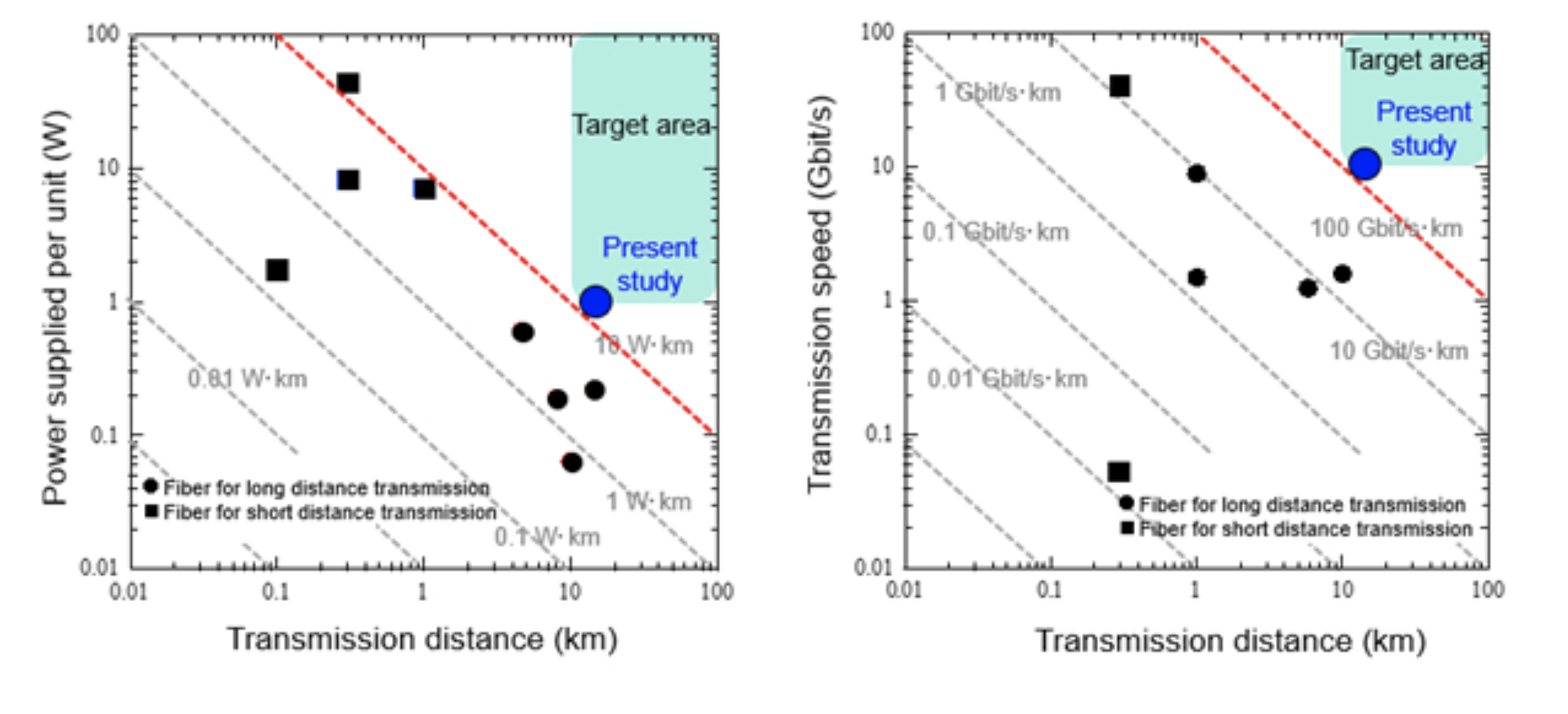
NTT has successfully delivered electric power exceeding 1W to a remote location over more than 10 km using a single optical fiber. This achievement, which marks the world's first instance of maintaining high-speed and high-quality communication while transmitting power through an optical fiber, was accomplished in partnership with Kitami Institute of Technology, part of the National University Corporation Hokkaido Higher Education and Research System (KIT).

NTT says the breakthrough paves the way for extending high-speed optical communication to underserved regions, including areas without electrical power, and establishing emergency communication methods through optical fiber in disaster-stricken situations. Traditional technology limited the distance over which power could be supplied to drive optical communication devices to under 10 km due to optical fiber input light intensity constraints. 

In this experiment, NTT used multi-core optical fiber (MCF) with four optical paths (cores) with the same diameter as the commonly used optical fiber..

The MCF employed in this research matches the thinness of existing optical fibers, with each core exhibiting transmission characteristics identical to those of standard optical fibers.  Each core can function independently, avoiding optical signal interference between cores, allowing for core allocation to power supply, communication or both.


In this study, to maximize optical power supply, a 1550 nm wavelength light source was introduced into four cores. Additionally, two of the four cores were allocated both up and down signals with a wavelength of 1310 nm, facilitating bidirectional optical communication. The configuration allowed for two sets of two-core combinations, creating two separate communication systems.

The capacity of optical power supply can be expressed as the product of transmission distance and supplied power. In this research, MCF was leveraged to maximize power supply per unit cross-sectional area and mitigate return light, which can degrade power supply efficiency. As a result, after transmitting MCF over a distance of 14 km, approximately 1W of power was obtained. This achievement translates to an optical power supply capacity of 14 watt/km, setting a world record.

NTT will present details of its research on October 4, 2023, at the 49th European Conference on Optical Communications (ECOC) in Scotland. 

https://group.ntt/en/newsrelease/2023/08/29/230829a.html

BT tests liquid cooled network switches and servers

BT is trialling "precision liquid cooled" network switches using a solution provided by Iceotope and Juniper Networks QFX Series Switches, which are widely used in existing network cloud architectures. 

In addition to its trial with Iceotope and Juniper, BT will test the following liquid cooling systems, which were also demonstrated at BT Group’s Sustainability Festival:

  • Precision Liquid Cooled networking servers and data centre equipment, with Iceotope and Juniper
  • Full immersion of networking servers in an immersion tank, with Immersion4
  • Liquid-cooled cold plates of networking equipment in a cooling enclosure, with Nexalus
  • Cooling using sprayed-on partial immersion of data centre equipment, with Airsys.

BT Group expects that several different cooling solutions could eventually be deployed, depending on specific location and operational requirements. The trials will aim to establish which solutions are optimal for each scenario, and the extent of potential energy savings.

Maria Cuevas, Networks Research Director, BT Group said, “As the UK’s largest provider of fixed-line broadband and mobile services in the UK, it isn’t a surprise that over 90% of our overall energy consumption – and nearly 95% of our electricity - comes from our networks. In a world of advancing technology and growing data demands, it’s critical that we continue to innovate for energy efficiency solutions. Liquid cooling for network and IT infrastructure is one part of a much bigger jigsaw but is an area we’re very excited to explore with our technology partners.”

https://newsroom.bt.com/bt-takes-the-plunge-with-new-liquid-cooling-trials/

Napatech debuts IPU powered by Intel Xeon + Agilex 7 FPGA

Napatech introduced a 200 Gbps IPU (infrastructure processing unit) based on the Intel IPU Platform F2000X-PL, which leverages an an Intel Xeon D SoC and Intel Agilex 7 FPGA.

Napatech’s F2070XTM IPU is engineered for cloud, enterprise, and telecom data centers that are optimized for hybrid multi-cloud and edge-computing architectures, supporting applications that may be virtualized (virtual machines), cloud-native (containers), bare-metal and microservices-based.

The Napatech F2070X IPU is a 200 Gbps card that includes two ports configurable for 10, 25, and 100 gigabit Ethernet. Multiple versions are
available in various SoC, FPGA, and memory configurations, and are supported in standard, high-volume servers from multiple manufacturers.

The F2070X IPU is powered by Napatech’s feature-rich software and high-velocity roadmap that deliver NIC functionality, while offloading and accelerating networking (OVS), Storage (NVMe/TCP), Security (TLS), and other workloads.

Key benefits of IPUs: 

  • Performance: hardware-based, line-rate forwarding with sophisticated packet processing.
  • Efficiency: offloading of infrastructure processes, reclaiming valuable host CPU resources for applications and services.
  • Customization: software and hardware programmable, delivering hardware performance at the speed of software
    innovation.
  • Security: Hard isolation between tenant applications and services, and operator infrastructure processes.
  • Sustainability: tenant and service scalability per server, reducing cost, power, and cooling per rack.
  • Ease of Use: The Intel Xeon D processor simplifies moving the networking and storage stacks from the host to the
    IPU.

“Napatech is pleased to have reached this important milepost in our collaboration with Intel,” said Henrik Brill Jensen, CEO of Napatech. “Our joint efforts to bring IPU hardware and software solutions to IT organizations of every size unlock new high-growth markets for our products, and underpin our aim for transformational growth of our business.”

“Our collaboration with Napatech is an indication of our commitment to expanding our leadership in infrastructure processing in data center networks,” said Jim Dworkin, Vice President and General Manager of the Cloud & Enterprise Acceleration Division at Intel. “We are pleased to collaborate with Napatech to combine the high performance of Intel Agilex 7 FPGAs with Napatech’s production-grade hardware and software expertise. Napatech’s upcoming F2070X IPU isa high-performance data center infrastructure server on a PCIe card that can help deliver the scalable and high-performance products, solutions, and services customers require to make their cloud and enterprise data centers moreefficient and cost-effective with high feature velocity.”

https://www.napatech.com