Wednesday, May 17, 2023

NTT demos 1.4Tbps wireless in the sub-THz band

Marking a major step toward 6G, NTT achieved the world’s first “orbital angular momentum (OAM) multiplexing high-capacity wireless transmission—at 1.44 Tbps—using an ultra-wide bandwidth of 32 GHz.  This is the equivalent of approximately 35,000 ultra-high-definition 4K videos (at about 40 Mbps).

The demonstration used the sub-THz band within the range from 135 GHz to 170 GHz.

NTT said its approach used an analog circuit called a “Butler matrix” to increase the spatial multiplexing order by multiplexing multiple OAM waves. This approach reduces the enormous amount of digital signal processing required to eliminate interference between multiplexed data streams in high-capacity communications exceeding one terabit.

NTT succeeded in developing an antenna-integrated Butler matrix that operates with a wide bandwidth and low loss. The antenna-integrated Butler matrix is designed to simultaneously generate and separate eight different OAM waves over a very wide bandwidth, i.e., 135 to 170 GHz, which can be used to multiplex and transmit eight data signals. Moreover, by performing OAM multiplexing transmission with two different polarizations, it is possible to multiplex and transmit twice as many data signals simultaneously without them interfering. 

This technology is expected to enable (i) broadband and high-speed wireless transmission comparable to optical transmission systems and (ii) seamless connection between wireless and optical transmission systems without the need for a complex digital signal-processing system for spatial multiplexing, since the analog circuit (i.e., the Butler matrix) handles the multiplexing of OAM waves. The next step in this development is to conduct demonstrations over longer distances (exceeding 100 m) while envisioning various applications of this technology in the real world, including wireless backhaul/fronthaul between base stations and relay transmission.

CableLabs issues 100G Coherent PON specification

Earlier this month, CableLabs issued an Architecture Specification for Coherent Passive Optical Networks (CPON) 100 Gbps (100G) Single Wavelength PON. 

Promising increased capacity per wavelength, extended reach and higher port density, the new spec brings coherent detect to PON access networks. Existing PON standards rely on Intensity-Modulation Direct-Detect (IM-DD) technology, which is approaching limits in terms of capacity and network reach.

With coherent detection, 100G CPON extends the reach of PON over fiber networks up to 80 kilometers. Current PON implementations typically are 25 km or less.

In addition, CPON offers a split ratio up to 512:1, providing 100 Gbps to support up to 512 end users on a single OLT port while maintaining a typical reach of 25 kilometers.

https://www.cablelabs.com/specifications/CPON-SP-ARCH

Cisco’s revenues rise 14% on strong quarter

Cisco reported third quarter revenue for the period ended April 29, 2023 of $14.6 billion, up 14% year-over-year. Net income (GAAP) was $3.2 billion or $0.78 per share, and non-GAAP net income of $4.1 billion or $1.00 per share, up 15% year-over-year.

"We once again delivered a strong quarter in a dynamic environment," said Chuck Robbins, chair and CEO of Cisco. "In Q3, we delivered record revenue and double-digit growth in both software and subscription revenue. As key technologies like cloud, AI and security continue to scale, Cisco's long-established leadership in networking, and the breadth of our portfolio position us well for the future."

"Our operational discipline and focused execution resulted in strong top and bottom-line growth, margin expansion and record operating cash flow," said Scott Herren, CFO of Cisco. "Our healthy backlog, recurring revenue streams and RPO, as well as the improving availability of supply, underpin our confidence to increase full year guidance."

Some highlights:

  • Total revenue was up 14% at $14.6 billion, with product revenue up 17% and service revenue was up 3%. 
  • Revenue by geographic segment was: Americas up 13%, EMEA up 16%, and APJC was up 11%. 
  • Product revenue performance was led by growth in Secure, Agile Networks up 29%, Internet for the Future up 5%, End-to-End Security up 2%, and Optimized Application Experiences up 12%. Collaboration was down 13%.
  • On a non-GAAP basis, total gross margin, product gross margin, and service gross margin were 65.2%, 64.5%, and 67.3%, respectively, as compared with 65.3%, 64.1%, and 68.9%, respectively, in the third quarter of fiscal 2022.
  • Total gross margins by geographic segment were: 64.2% for the Americas, 66.6% for EMEA and 66.4% for APJC.


Medusa cable to connect 11 countries across Mediterranean

Orange Tunisia and Medusa Submarine Cable System signed an agreement to deploy a submarine cable stretching from Lisbon to the Egyptian city of Port Said, passing various Mediterranean countries en route. It will have 16 landing points in different countries including Portugal, Morocco, Spain, Algeria, France, Tunisia, Italy, Greece, Cyprus and Egypt.

At more than 8,000 km in length, the system is believed to be the longest in the Mediterranean. Implementation is scheduled for the end of 2025.

Juniper integrates ChatGPT into Marvis AI

Juniper Networks is integrating ChatGPT with Marvis, its virtual network assistant (VNA) driven by Mist AI. This enables Juniper customers and partners to access public-facing knowledgebase information using Large Language Models (LLM). In addition, new Marvis integrations with Zoom enable superior video conferencing experiences while significantly reducing troubleshooting costs. 

Juniper says ChatGPT brings more human-like conversational capabilities, particularly with respect to documentation and support issues. Specifically, Marvis now leverages a LLM API to respond to user queries for technical documentation and other publicly available historical knowledge base information. For example, customers can ask Marvis “What do the Access Point LED lights mean?” or “List steps to configure Juniper campus fabric” and receive an accurate and direct response in the typical ChatGPT style in addition to a list of relevant documents. 

“AI is the next step in automating tasks that typically require a human IT domain expert, improving how IT teams operate the network with AI-driven tools like Marvis and its conversational interface,” said Bob Friday, Chief AI Officer at Juniper Networks. “Juniper Mist has always been a pioneer in utilizing proven AIOps to deliver assured user experiences from client to cloud, and with these latest LLM enhancements, Marvis will provide even more actionable knowledge and be an even more valuable member of the IT team.” 

In addition, Juniper introduced a new AP24 Access Point. This 2.4 GHz/5 GHz/6 GHz tri-band capable device (dual band concurrent) supports up to 3.6Gbps throughput. It also features the standard Juniper Mist dedicated scanning radio for data collection and intelligent Radio Resource Management (RRM) capabilities to intelligently choose the best band to use. 

The AP24 complements other Wi-Fi 6E access points recently announced by Juniper, which include the AP45 (2.4 GHz/5 GHz/6 GHz quad-radio, 4x4:4SS, vBLE array) and AP34 (2.4 GHz/5 GHz/6 GHz quad-radio, 2x2:2SS, omni BLE).


ServiceNow commits $1 billion in software ventures

ServiceNow will deploy $1 billion in investment capital by 2026 to ServiceNow Ventures, its global strategic investment arm.

The company aims to grow and scale the next generation of enterprise technology companies in combination with its ServiceNow Platform. Core investment areas include AI, ML, hyper automation, distributed cloud, total experience, and data intelligence. In addition to investing capital, ServiceNow Ventures advises companies at all stages of growth, from validating product strategy to helping scale go‑to‑market programs.

“Net‑new innovation is the only way forward. With our multi‑faceted investment strategy, ServiceNow Ventures is seeking out visionary founders and their game‑changing ideas to bring greater value to the ServiceNow Platform, our broader ecosystem, and the industry as a whole,” said Philip Kirk, senior vice president of corporate business development at ServiceNow. “With a steadfast commitment to transform the future of work, we are excited to deepen our investments, collaboration, and mentorship with companies that share in our purpose and mission to revolutionize the way work gets done.”

"There is a significant opportunity to accelerate growth with both new and emerging go‑to‑market partners in targeted regions across the world,” said David Parsons, senior vice president of ecosystem ventures at ServiceNow. “The goal of our Ecosystem Ventures initiative is to make strategic investments that can close specific go‑to‑market capability, competency, and capacity gaps.”


Tuesday, May 16, 2023

EllaLink and EXA Infrastructure offer diverse transatlantic capacity

EllaLink and EXA Infrastructure announced a joint transatlantic service connecting South America with the heart of Europe’s main business centres

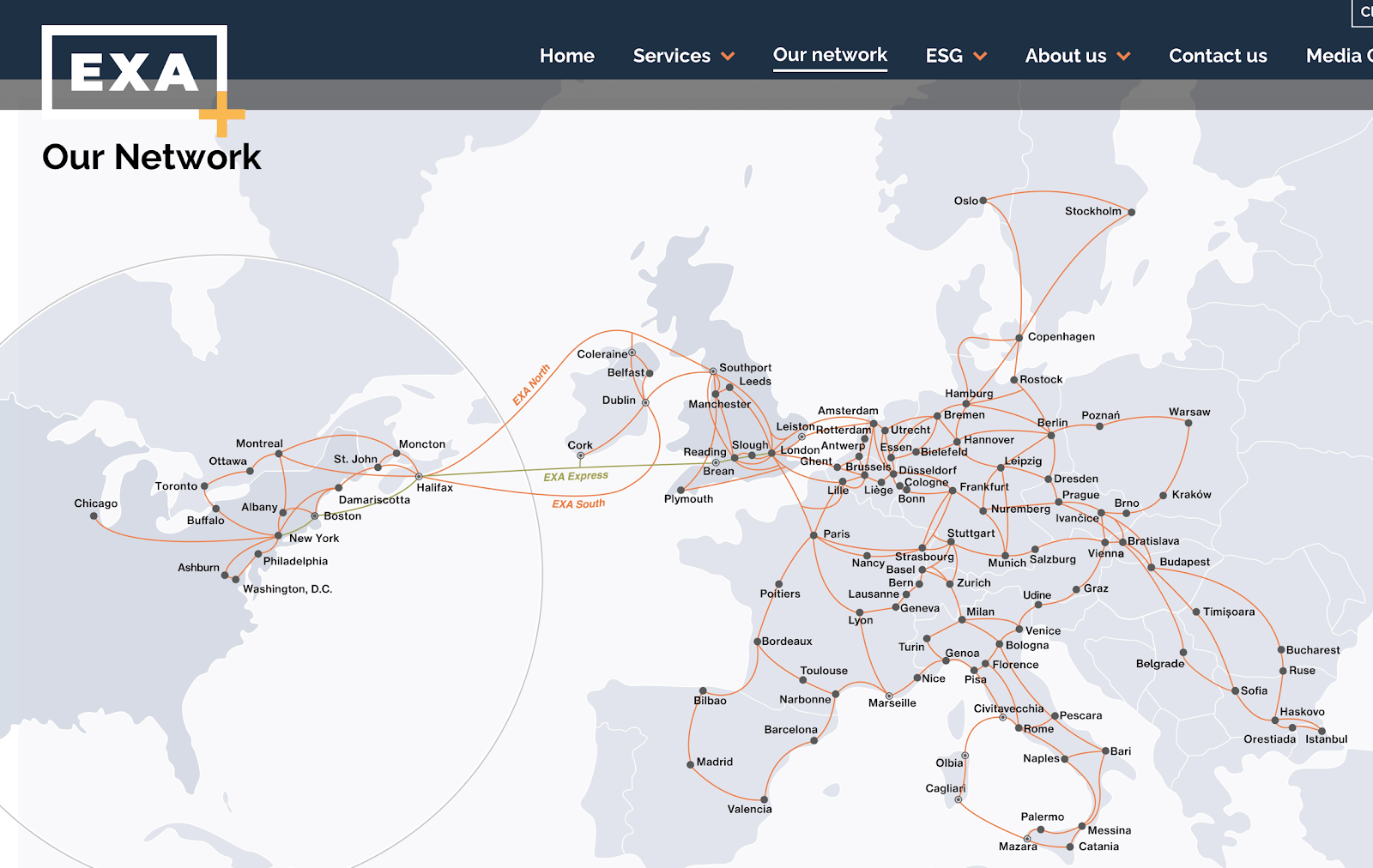
EllaLink operates a high-capacity fibre-optic submarine cable directly connecting Europe with South America. EXA Infrastructure owns 125,000 kilometres of fibre network across 34 countries. EXA’s network connects 300 cities and offers 13Tier 3-equivalent data centres, with sub-sea routes that include three transatlantic cables, one the lowest latency link between Europe and North America. EXA is wholly owned by I Squared Capital.

The 9,120 kilometres route, which will enable Internet traffic to bypass North America, will deliver a 50 per cent increase in network performance between data centres in Brazil, Portugal, and Spain. Once landed, EllaLink’s customers will also benefit from optical connectivity to and from Sines in Portugal, thanks to the direct interconnect with EXA’s extensive pan-European network.

Nick Collins, CCO at EXA Infrastructure, statesÑ “The partnership with EllaLink testifies to EXA’s ambition to become the leading data centre to data centre connectivity provider in Europe and beyond. We have committed €39 million of network investments to date in Portugal and Spain and this partnership enables us to interconnect with South America, closing the connectivity gap for companies in this fast-growing, bandwidth-demanding environment.”

EllaLink and EXA are also collaborating on the Olisipo project, a unique cable system connecting the main data centres and all the landing stations in Portugal. 

“We understand the importance of securing diversity as an alternative to the north transatlantic routes. Combining EllaLink’s low latency network with EXA Infrastructure’s extensive and advanced footprint enhances both our portfolios and the value proposition we can offer to the market. This is a strong partnership for EllaLink, that will significantly benefit our customers,” says Vincent Gatineau, CSMO at EllaLink. 

http://www.exainfra.net


Vantage eyes massive, US$3 billion, 256MW data center in Cyberjaya

Vantage Data centers, which already operates an existing campus in Malaysias Cyberjaya, unveiled plans for a massive, hyperscale data center complex on an adjacent 35 acre plot of land. The vision is to build up 10 facilities across 256,000 square meters (2.75 million square feet). 

Cyberjaya is geographically positioned to deliver low-latency connectivity to major cities in the region, including Singapore, Bangkok and Jakarta, the state-of-the-art mega campus could open its first facility in the fourth quarter of 2025. 

In addition, Vantage is expanding its KUL1 campus with a fourth 16MW facility that is currently under development. Combined, both campuses will deliver a total of 287MW of IT capacity to meet the demands of hyperscalers, cloud providers and large enterprises. 

"Vantage has been expanding our footprint in Malaysia since we entered the dynamic Asia-Pacific market. Our positive experience in Cyberjaya has encouraged us to take further steps to advance the city's digital infrastructure by building our largest hyperscale campus in the region," said Giles Proctor, chief operating officer of Vantage's APAC business. 

Vantage has signed an agreement with Cyberview, the tech hub developer of Cyberjaya, to move towards implementation of this investment. The event took place at the Cyberview Hari Raya Open House and Cyberjaya 26th Anniversary Celebration, officiated by YB Fahmi Fadzil, Minister for Communications and Digital of Malaysia and Brian D. McFeeters, U.S. Ambassador to Malaysia. 

"With Vantage Data Centers' investment in Malaysia, we are one step closer towards our goal of firmly establishing Malaysia as the digital hub of ASEAN. The Malaysia Digital (MD) national strategic initiative aims to transform the nation's digital capabilities, enhancing our value proposition to attract digital investments and boost the digital economy," said Mahadhir Aziz, chief executive officer of Malaysia Digital Economy Corporation (MDEC). "We are committed to supporting Vantage's presence here and the growth of the nation's data center industry via various PEMANGKIN initiatives. Vantage's new data center campus not only strengthens Malaysia's digital infrastructure but also accelerates our ongoing digital transformation. This move signifies continued confidence in Malaysia's robust and enabling data center ecosystem, digitally skilled talent and world-class infrastructure." 

Vantage Data Centers currently has seven campuses across the region that are either operational or under development. 

https://vantage-dc.com/data-center-locations/apac/

Liberty Networks deploys Infinera’s ICE6 800G on Florida routes

Liberty Networks is using Infinera’s ICE6 800G coherent solution to upgrade and expand the capacity of its Florida Transport Network (FTN). This network enhancement enables Liberty Networks to offer new and efficient high-speed 400 GbE client services to its end-user customers.

Infinera said its ICE6 technology will also provide Liberty Networks with C+L-band capabilities, enabling Liberty Networks to increase its initial design capacity, offering an extremely scalable and robust network.

A longtime Infinera customer, Liberty Networks owns and operates the largest state-of-the-art subsea multi-ring fiber optic network in Latin America and the Caribbean, with nearly 50,000 kilometers. Coupled with its 17,000 kilometers of terrestrial fiber, Liberty Networks connects approximately 40 countries. The upgrade with Infinera’s industry leading ICE6 technology enables Liberty Networks to provide consumers, businesses, and wholesale operators with faster speed, more capacity, and innovative products and services.

“Liberty Networks’ selection of ICE6 will lay the foundation for upgrading its entire Latin American and Caribbean networks to meet growing customer demand and expectations,” said Nick Walden, Senior Vice President of Worldwide Sales at Infinera. “Infinera is proud to be a longstanding partner and the go-to solution for Liberty Networks, giving them a competitive advantage in this rapidly evolving industry.”

https://www.infinera.com

ETSI develops Reconfigurable Intelligent Surface for 5G-6G

ETSI is developing Reconfigurable Intelligent Surfaces for 5G Advanced and 6G.

RIS is a new wireless technology for the control of the radio signals between a transmitter and a receiver in a dynamic and goal-oriented way. RIS can serve as a new low-cost energy-efficient deployment solution for enhancing coverage performance in 5G-Adv and future 6G systems, by intently reflecting signals to and from the end users. 

RIS corresponds to a planar surface composed of a certain arrangement of unit-cells, whose properties can be dynamically controlled to change its response in the electromagnetic domain. RIS can be controlled dynamically and/or semi-statically through control signalling such to tune the incident wireless signals through reflection, refraction, focusing, collimation, modulation, absorption or any combination of these.

RIS can be implemented using mostly passive components without requiring high-cost active components such as power amplifiers, resulting in low implementation cost and energy consumption. This allows flexible deployment of RIS, with the possibility of RIS taking any shape and to be integrated onto objects (e.g. walls, buildings, lamp posts, etc.).

https://www.etsi.org/deliver/etsi_gr/RIS/001_099/001/01.01.01_60/gr_RIS001v010101p.pdf

Keysight posts strong Q2 drive by defense, satellite, 6G

 Keysight Technologies posted Q2 revenue of $1.39 billion, up 3% compared with $1.35 billion last year, or 5 percent on a core basis, which excludes the impact of foreign currency changes and revenue associated with businesses acquired or divested within the last twelve months. Non-GAAP net income was $380 million, or $2.12 per share, compared with $334 million, or $1.83 per share in the second quarter of 2022.

“Keysight delivered a strong quarter with record second quarter revenue, record gross margin, record free cash flow, and above guidance earnings per share demonstrating the resilience of our increasingly diversified business,” said Satish Dhanasekaran, Keysight’s President and CEO. “While navigating near-term macro dynamics, we continue to capitalize on growth opportunities and customer investments across multiple markets.”

  • Communications Solutions Group (CSG) revenue ws $937 million in the second quarter, down 3 percent over last year, reflecting a 7 percent decline in commercial communications, while aerospace, defense, and government increased 7 percent driven by radar, spectrum operations, space and satellite, and research in 5G and 6G technologies.
  • Electronic Industrial Solutions Group (EISG) revenue was $453 million in the second quarter, up 17 percent over last year, driven by growth across general electronics, semiconductor solutions, and next-generation automotive and energy technologies.


Adtran expands Oscilloquartz PNT platform

Adtran launched a major upgrade of its Oscilloquartz aPNT+ technology suite for network infrastructure that relies on position, navigation and timing (PNT) services. 

Adtran’s timing technology now leverages more sources of accurate and reliable timing and features new capabilities to detect disturbances and assure vital PNT services. Enhancements include improved jamming and spoofing detection using a unique, highly advanced, dedicated algorithm to ensure maximum resilience against any intentional or unintentional interference.

Adtran’s OSA 5401 and 5405 access network synchronization solutions now feature the same advanced jamming and spoofing detection capabilities as its core and edge products. Additionally, the OSA 5405-MB, a compact and integrated outdoor multi-band GNSS receiver and PTP grandmaster, has been upgraded with improved multi-band capabilities. As well as satellite constellations, including GPS, GLONASS, BeiDou and GALILEO, it now supports the Indian Regional Navigation Satellite System (IRNSS). This is critical for mobile network operators in the subcontinent, as the Indian government has ruled that smartphones must be compatible with the country’s home-grown GNSS system. Furthermore, the solution now utilizes a combination of L1 and L5 band signals to better mitigate disruption caused by environmental factors.

“Enhanced NTP functionality is another feature that makes our upgraded aPNT+ platform even more powerful. Our standalone NTP servers can now support up to 500,000 transactions per second, providing unique NTP performance. This level of transaction handling is a significant advantage against DDoS attacks,” commented Gil Biran, GM of Oscilloquartz, Adtran. 

www.adtran.com

Infineon acquires Tiny Machine Learning for embedded AI

Infineon has acquired Imagimob AB, a start-up based in Stockholm specializing in machine learning for edge devices. Financial terms were not disclosed.

Imagimob provides an end-to-end machine learning toolchain that is highly flexible and easy to use with a strong focus on delivering production-grade ML-models.  Imagimob’s platform enables a wide range of use cases, such as audio event detection, voice control, predictive maintenance, gesture recognition, signal classification as well as material detection, and will extend Infineon’s hardware/software ecosystem even further. 

“Artificial Intelligence and Machine Learning respectively are about to largely enter every embedded application and thus enable new functionalities. With Imagimob’s outstanding platform and its expertise in developing robust machine learning solutions for edge devices, we further strengthen our ability to enable new levels of control and energy efficiency on our products while preserving privacy,” said Thomas Rosteck, President of Infineon's Connected Secure Systems division. “We enable our customers to leverage the advantages from AI/ML and bring their products to market quickly by building on our advanced sensors and IoT solutions portfolio”.


Monday, May 15, 2023

MEF: Standardized APIs drive automation between service providers

Service Providers are increasingly looking to standardized APIs as the most efficient means of automated inter-carrier business functions, according to a newly published report from MEF. 

MEF has developed standards-based Lifecycle Service Orchestration (LSO) business process APIs and operational APIs that uniquely provide the high fidelity (tightly defined context), plug-and-play interoperability, and extensibility. The report primarily focuses on  MEF LSO Sonata APIs that automate business processes between service providers.

MEF’s proprietary research reveals 122+ service providers worldwide are now in some stage of the LSO Sonata adoption lifecycle, with at least 63 companies already in commit, plan, development, test, or production stages.

“Increasingly next-generation services like Network-as-a-Service (NaaS) solutions will be delivered across an ecosystem of many providers, from retail and wholesale service providers, to hyperscalers, to technology solution providers, and so on, and the networks supporting these services will be fully API-driven,” said Pascal Menezes, CTO, MEF. “For this to happen, standards-based automation is required throughout the entire supply chain where all parties adopt a common, standardized set of APIs at both the business process and operational levels.”

MEF’s inaugural State of the Industry report provides in-depth analysis of the current state of service delivery, and explores adoption trends, challenges, and integration with additional new technologies such as blockchain and intent-based networking. The report draws attention to the paradigm shift taking place in the communications industry as more companies embrace automation to streamline their business functions, improve operational efficiency, and accelerate time to revenue. Areas where automation can provide significant benefits are identified within the report, including customer service, billing and settlement, and supply chain management.

Key findings show that service providers implementing standardized business APIs can:

  • realize an average 25% reduction in order cycle times,
  • speed time to revenue for each MEF Lifecycle Service Orchestration (LSO) API-enabled order,
  • boost revenue opportunities by becoming a preferred partner,
  • implement multiple LSO APIs in as little as 3-5 months with the help of LSO solution providers.

“Enterprise requirements for cloud-like experiences are driving industry transformation to secure dynamic services across a global ecosystem of automated networks. Secure NaaS platforms, for example, are particularly reflective of this trend as they combine on-demand connectivity, application assurance, cybersecurity, and multi-cloud-based services,” said Stan Hubbard, Principal Analyst, MEF. “MEF research reveals that over 122 service providers worldwide are now in some stage of the LSO adoption lifecycle. With LSO Sonata APIs service providers can transition from manual processes and isolated islands of customized APIs to an open, interoperable standards model that enables plug-and-play reuse of APIs with any partner and service with minimal additional cost and effort.”

https://www.mef.net/news/new-mef-research-finds-plug-and-play-business-apis-transforming-dynamic-services-landscape/


2Africa cable reaches Port Said, Egypt

Telecom Egypt announed that the 2Africa subsea cable has landed in Port Said, on the Mediterranean coast approximately 250 km of Alexandria. This comes five months after the first landing in the Red Sea city of Ras Ghareb, located 100km south of the Zafarana cable landing station. 

The landing in Port Said also marks the completion of 2Africa installations on Egyptian territory. It is worth mentioning that Telecom Egypt completed 2Africa's terrestrial crossing in Egypt ahead of schedule in 2020; meanwhile, in October 2022, it concluded the third marine path connecting the Ras Ghareb and Suez landing stations. 

Mohamed Nasr, Managing Director and Chief Executive Officer at Telecom Egypt, commented: 

“I’m pleased to be working with a team of top-notch professionals to pursue Telecom Egypt’s relentless efforts to strengthen its international infrastructure. Today, we are thrilled to announce that 2Africa has been connected to the Port Said station, our latest and final milestone in linking the world’s longest subsea cable to Egypt. Our contribution to the international submarine infrastructure demonstrates our commitment to offering state-of-the-art solutions to partners and customers both locally and internationally. In the coming phase, we aim to realize more of our potential as we work on new initiatives and roll out cutting-edge products that will take the ICT industry to the next level.” 

Upon completion in 2024, 2Africa will be one of the world’s largest subsea cable projects interconnecting Europe, Asia, and Africa. The 45,000km system will deliver more than the total combined capacity of all subsea cables serving Africa today. With its 16 fibre-pairs’ count and a design capacity of up to 180Tbps, 2Africa will connect 33 countries through 46 landings, ultimately enhancing global connectivity, and facilitating communications for over 3 billion people over fast, secure, cost-efficient routes.

https://ir.te.eg/en/CorporateNews/PressRelease/181/2Africa-Subsea-Cable-Segment-in-Egypt-Completed-with-Port-Said-Landing

C&W Networks and C&W Business rebrand as Liberty Networks

C&W Networks and C&W Business, which trace their heritage back to Cable & Wireless, the British telecommunications company founded in 1869, unveiled a new name and brand: Liberty Networks. 

As part of Liberty Latin America (LLA), Liberty Networks will focus on the continued development of its critical infrastructure platform serving carriers, hyper-scalers, and enterprise segments in Latin America and the Caribbean.

Liberty Networks plans to invest a minimum of $250 million in the region over the next five years as it executes its strategy of extending and upgrading its terrestrial and subsea reach and increasing the capacity of its cloud and security offerings. The operations provide the backbone for connectivity across the region through an extensive footprint connecting approximately 40 countries with nearly 50,000 kilometers of submarine fiber optic cable and 17,000 kilometers of terrestrial networks.

Ray Collins, Liberty Latin America’s SVP, Infrastructure and Corporate Strategy, leads the operation. Commenting on the rebrand, he said, “Today is an important moment for our employees and our customers. We are unveiling our new brand to reflect who we are, a customer-focused connectivity provider that enables growth across the region. The new brand is another step in our journey as we continually build momentum for this business by investing in our infrastructure and enterprise solutions to meet our customers' digital and connectivity needs, small and large. We are very excited about the opportunities ahead and see exponential demand for capacity and solutions across this fast growing region.”

www.libertynet.com

KDDI and Ericsson place 5G base stations in underground vaults

KDDI is working with Ericsson on the deployment of 5G base stations in underground vaults. The idea is to save precious space in Japan's crowded cities to installing 5G base stations in “manhole-shaped” vaults. Power infrastructure would remain below ground with fiber connected to antennas on the ground level. This allows for fast permit process and deployment, while ensuring no visual impact on street environments.

KDDI is the first communications service provider in Japan to begin operating vault 5G base stations.  

In Japan, many base stations have been installed on steel towers and building rooftops to achieve high-speed and reliable mobile communication over wide areas. However, there have been challenges, such as restrictions on the installation of base stations in scenic areas due to landscape considerations. In July 2021, the Ministry of Internal Affairs and Communications (MIC) enacted a new system of radio wave protection guidelines for vault base stations, making their construction and operation possible in Japan.  

Ericsson has developed sub-terrain antennas that can deliver robust connectivity in a confined space, like manholes, where fiber and power already exists and where the installation of standard sites is not possible. Being installed underground, the antenna provides optimal radiating characteristics (MIMO) upward in built-up environments while being less susceptible to wind load.

https://www.ericsson.com/en/press-releases/2023/5/ericsson-and-kddi-deploy-sub-terrain-antennas-for-japans-first-underground-5g-base-stations

Ethernovia raises $64 million for automotive connectivity

Ethernovia, a start-up based in San Jose, California, raised $64 million in Series A funding for its work in connectivity for software-defined vehicles (SDVs).

Ethernovia, which was founded in 2018 by RaminShirani and a team of experienced semiconductor innovators, is developing a seamless, holistic and streamlined hardware and software system with advanced networking features. The team includes Roy Myers, senior vice president of engineering; Hossein Sederat, chief technology officer; and Darren Engelkemier, vice president of silicon engineering; Christopher Mash, vice president of business development, and Klaas Bult, vice president of data acquisition. 

 Investors include Porsche Automobile Holding SE (Porsche SE), Qualcomm Ventures, VentureTech Alliance, AMD Ventures, Western Digital Capital, Fall Line Capital, Taiwania Capital, ENEA Capital and others.

“We are extremely grateful for the vote of confidence this group of industry-leading investors has given Ethernovia’s technology and vision for the future of the connected car,” said Ramin Shirani, Ethernovia co-founder and CEO. “We take great pride in developing the cutting-edge network architecture to power the car of the future. These innovations set a new industry expectation in what can be achieved in meeting the cost, power and flexibility that car manufacturers and consumers demand in new vehicles.”

 “The trends towards electrification and connectivity in the automotive industry as well as developments in the field of automated driving result in ever increasing requirements on fast and secure data transmission from a wide variety of sources in vehicles and to the cloud,” said Lutz Meschke, Porsche SE board of management member responsible for investment management. “To address these central challenges of automotive transformation, Ethernovia offers technologically leading, integrated Ethernet chips with high bandwidth and advanced security solutions for the energy-efficient processing of large amounts of data. With our investment in Ethernovia, we are excited to support the world-leading experts in bringing the latest Ethernet technologies to vehicles around the world.”

http://www.ethernovia.com

Construction advances on Quantum Loophole's hyperscale fiber ring

Quantum Loophole, which is building a 43-mile fiber ring connecting the company’s 2,100+ acre Quantum Frederick data center campus in Maryland to the Ashburn, Virginia ecosystem, completed its North Potomac River Bore crossing, the second of two Potomac River crossings for the QLoop network conduit system. 

QLoop is designed to hold 34 conduits with full capacity of more than 235,000 strands of fiber. When complete, the system is designed to be capable of connecting Quantum Frederick to the Ashburn internet ecosystem in under one half millisecond Round Trip Time (RTT). 

“This has been by far one of the most challenging projects I have done in my entire career, with each river crossing taking about six-months to complete,” comments Josh Snowhorn, Founder and CEO of Quantum Loophole. “Now we continue with the terrestrial conduit built deep underground, placing our color coded 34x2” ducts, designed to hold 6,912 fiber trunks for a total capacity of over 235,000 strands of fiber. When complete, QLoop will be one of the largest capacity systems ever installed on a middle-mile metro network.”

In parallel developments, civil construction at the Quantum Frederick site is underway. At the 2100+ acre site, construction of roads, water, sewer and grading for a number of areas including the first substation are in motion. The substation site, taking up to 20 acres on the campus, is being graded for the first phase of power which will offer up to 240 MW. Power at the development site is scheduled to become available in April 2024. Soon thereafter, the second phase of power will be underway bringing an additional 336 MW of power to the site with additional tranches of power to follow in short order.

“We could not have done this project without the incredible dedication of the Quantum Loophole team,” Snowhorn continues. “We continue toward completion of our QLoop system with hundreds of feet of conduit a day being deployed. With the bores under the Potomac completed, it’s smooth sailing from here.”

https://www.quantumloophole.com

AMS-IX Bangkok goes live

AMS-IX, together with HGC Global Communications Limited (HGC) and International Gateway Company Limited (IGC), celebrated the launch of a major new Internet Exchange in the capital of Thailand.

Under the terms of the partnership, HGC will serve as a commercial partner and marketing arm for AMS-IX Bangkok, while IGC provides IX infrastructure, network, and operation in Bangkok. AMS-IX, with their expertise on peering and network monitoring, will give technical support and has operational management of the exchange.

Bangkok is strategically located at the heart of Southeast Asia which makes it ideal as an international hub for exchanging Internet traffic and a perfect location as a gateway to the Greater Mekong Subregion (GMS). It is one of the prime locations where Internet companies exchange Internet traffic besides Singapore and Hong Kong. Nearly 250 million eyeballs in Southeast Asia can now enjoy an uplifted online experience.