Wednesday, April 19, 2023

Marvell advances its high-speed interconnects on TSMC's 3nm node

Marvell demonstrated high-speed, ultra-high bandwidth silicon interconnects produced on TSMC's 3-nanometer (3nm) process. This includes Marvell's 112G XSR SerDes (serializer/de-serializer), Long Reach SerDes, PCIe Gen 6 / CXL 3.0 SerDes, and a 240 Tbps parallel die-to-die interconnect.

SerDes and parallel interconnects serve as high-speed pathways for exchanging data between chips or silicon components inside chiplets. Together with 2.5D and 3D packaging, these technologies will eliminate system-level bottlenecks to advance the most complex semiconductor designs. SerDes also help reduce pins, traces and circuit board space to reduce cost. A rack in a hyperscale data center might contain tens of thousands of SerDes links.

The new parallel die-to-die interconnect, for example, enables aggregate data transfers up to 240 Tbps, 45% faster than available alternatives for multichip packaging applications. 

Marvell incorporates its SerDes and interconnect technologies into its flagship silicon solutions including Teralynx switches, PAM4 and coherent DSPs, Alaska Ethernet physical layer (PHY) devices, OCTEON processors, Bravera storage controllers, Brightlane™ automotive Ethernet chipsets, and custom ASICs. Moving to a 3nm process enables engineers to lower the cost and power consumption of chips and computing systems while maintaining signal integrity and performance.

"Interconnects are taking on heightened importance as clouds and other computing systems grow in size, complexity and capability. Our advanced SerDes and parallel interfaces will play a significant role in providing a platform for developing chips with best-in-class bandwidth, latency, bit error rate, and power efficiency for meeting the demands of AI and other complex workloads," said Raghib Hussain, president of products and technologies at Marvell. "We are proud to be able to deliver such advances on TSMC's 3nm technology and take semiconductor designs to the next level for our customers around the world."


  • Marvell was also the first data infrastructure silicon supplier to respectively sample and commercially release the 112G SerDes and has been a leader in data infrastructure products based on TSMC's 5nm process.

https://www.marvell.com/company/newsroom/marvell-demonstrates-industrys-first-3nm-data-infrastructure-silicon.html

New Middle Mile: Hyperscaler and cloud trends drive middle mile enhancements

In this video, Jason Taylor, VP of Large Enterprise Sales of Zayo explains why they are positioned for fiber success in 2023. The following are Jason's key talking points:

- Zayo has 16 million fiber miles and is connected to 44,000 buildings and 1,400 data centers, making them prepared to execute in the fiber space.

- Zayo is upgrading their fiber to 400Gbps and will likely need to upgrade to 800Gbps in the near future to keep up with the growing demand for usage.

- Zayo partners with multiple cloud providers and  launched an API developer portal in 2022 to help customers explore, onboard, and test their existing APIs, offering design best software integration strategies, network discovery, quote and order capability, and service management.

Check out the rest of the New Middle Mile (#nmm2023) video showcase here: https://ngi.fyi/nmm23yt

Want to be in one of NextGenInfra.io videos? Contact us at info@nextgeninfra.io


SK hynix samples 12-layer HBM3 chip with 24 GB capacity

SK hynix announced sampling of the first 12-layer HBM3 product with a 24 GB memory capacity -- the largest in the industry to date. 

HBM (High Bandwidth Memory) vertically interconnects multiple DRAM chips and dramatically increases data processing speed in comparison to traditional DRAM products. HBM3 is the 4th generation product, succeeding the previous generations HBM, HBM2 and HBM2E.

"The company succeeded in developing the 24GB package product that increased the memory capacity by 50% from the previous product, following the mass production of the world's first HBM3 in June last year," SK hynix said. "We will be able to supply the new products to the market from the second half of the year, in line with growing demand for premium memory products driven by the AI-powered chatbot industry."

SK hynix said the gains in process efficiency and performance stability were achieved by applying Advanced Mass Reflow Molded Underfill (MR-MUF) technology to the latest product, while Through Silicon Via (TSV) technology reduced the thickness of a single DRAM chip by 40%, achieving the same stack height level as the 16GB product.

OCP Switch Abstraction Interface moves under LF's DENT Project

The Linux Foundation (LF) announced the incorporation of the Open Compute Switch Abstraction Interface (SAI) into the open source DENT Network Operating System (NOS) project.

The DENT project, a Linux-based network operating system (NOS), has been designed to empower disaggregated networking solutions for enterprises and data centers. 

The Linux Foundation said that by incorporating OCP's SAI, an open-source Hardware Abstraction Layer (HAL) for network switches, DENT has taken a significant step forward in enabling seamless support for a wide range of Ethernet switch ASICs, thereby expanding its compatibility and fostering greater innovation in the networking space.

The move is driven by the need to widen standardized interfaces for programming network switch ASICs, enabling hardware vendors to develop and maintain their device drivers independently from the Linux kernel. SAI offers several advantages:

  • Hardware Abstraction: SAI provides a hardware-agnostic API, enabling developers to work on a consistent interface across different switch ASICs, thus reducing development time and effort.
  • Vendor Independence: By separating the switch ASIC drivers from the Linux kernel, SAI enables hardware vendors to maintain their drivers independently, ensuring timely updates and support for the latest hardware features.
  • Ecosystem Support: SAI is backed by a thriving community of developers and vendors, ensuring continuous improvements and ongoing support for new features and hardware platforms.

Lumen launches 400G IP transit ports across its Tier 1 Internet backbone

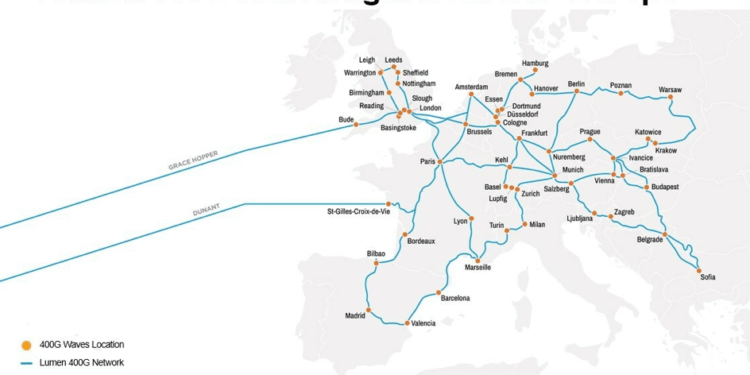
Lumen launched 400G IP transit ports across its Tier 1 Internet backbone network in the U.S. and EMEA. The service is targetted at businesses, hyperscalers and content providers needing ultra-high bandwidth connections to efficiently support massive IP transit traffic. The service is now available in 8 markets and will be expanded across the footprint throughout the year.

Lumen's AS3356 network is the number one peered network in the world based on data from CAIDA.org. Traffic on this network grew 38% year-over-year (YoY) in 2021 and 16% YoY in 2022.

"We continue to capitalize on our network strength and deliver the services that are so important to our customers," said Andrew Dugan, Lumen Chief Technology Officer. "Businesses that need IP transit are looking for efficient global internet routes connecting where data is and where it needs to go. Lumen's highly peered AS3356 network can connect internet traffic sources and destinations with minimal network hops. Combining Lumen's 400G transit ports with our 400G wavelengths well positions us in the IP transit market for delivering ultra-high bandwidth connections."

https://www.lumen.com/en-us/home.html

F5's quarterly revenue of 11% yoy, cites macro economics for 9% job cuts

F5 reported revenue of $703 million for its second quarter of fiscal year 2023 revenue, up 11% from $634 million in fiscal year 2022. Global services revenue grew 8% from the year-ago period while product revenue grew 14%, reflecting 43% systems revenue growth and software revenue that was down 13% from the year-ago period.

GAAP net income for the second quarter of fiscal year 2023 was $81 million, or $1.34 per diluted share compared to $56 million, or $0.92 per diluted share, in the second quarter of fiscal year 2022.

“We delivered 11% revenue growth in our second quarter as a result of stronger than expected systems shipments and strong global services performance,” said François Locoh-Donou, F5’s President and CEO. “While customer spending remains pressured by macro-economic uncertainty near term, we are differentiated in our ability to help customers tackle the significant challenges ahead, including simplifying their hybrid and multi cloud application environments.”

“Given the persistent macro uncertainty and its impact on customer spending, we now expect low-to-mid single-digit revenue growth in fiscal year 2023 with non-GAAP operating margins of approximately 30% and non-GAAP earnings growth of 7% to 11%,” continued Locoh-Donou.

“Our portfolio and roadmap are squarely aligned with our customers’ hybrid and multi-cloud realities and their desire to simplify operations and lower total cost of ownership,” said Locoh-Donou. “Given the current demand environment however, we are taking action to reduce our operating costs while prioritizing initiatives and innovations that will deliver the most benefit to our customers.”

F5 announced today that it is reducing its global headcount by approximately 620 employees, or approximately 9% of its total workforce. These workforce-related actions are expected to be completed by April 21, 2023 with the exception of the Company’s EMEA and parts of its APAC regions where employees will continue the consultation process over the coming weeks, as required by local laws.

https://investors.f5.com/

Seagate agrees $300 Million penalty for selling hard disks to Huawei

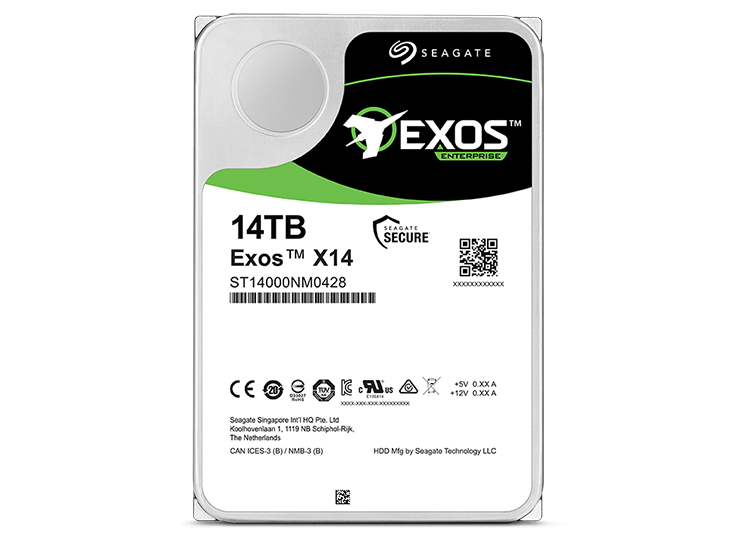
Seagate Technology Holdings announced a settlement agreement with the U.S. Department of Commerce’s Bureau of Industry and Security that resolves allegations that Seagate’s sales of hard disk drives to Huawei between August 17, 2020 and September 29, 2021 did not comply with the U.S. Export Administration Regulations.

Under the terms of the settlement agreement, Seagate has agreed to pay $300 million to the U.S. Department of Commerce, to be paid in installments of $15 million per quarter over the course of five years, with the first installment due in October 2023. Additional information regarding the terms of the agreement is included in the Form 8-K that will be filed today with the Securities and Exchange Commission.

“We believe entering this agreement with BIS and resolving this matter is in the best interest of Seagate, our customers and our shareholders,” said Dave Mosley, the Company’s chief executive officer. “Integrity is one of our core values, and we have a strong commitment to compliance as evidenced by our global team of international trade compliance and legal professionals – complemented by external experts and outside counsel. While we believed we complied with all relevant export control laws at the time we made the hard disk drive sales at issue, we determined that engaging with BIS and settling this matter was the best course of action. We are now moving forward fully focused on executing our strong technology roadmap to support the growing demand for mass data storage solutions.”

https://www.seagate.com/news/news-archive/seagate-reaches-resolution-with-the-u-s-department-of-commerces-bureau-of-industry-and-security-pr/

Rambus GDDR6 PHY hits 24 Gbps performance benchmark

The Rambus GDDR6 PHY delivers a market-leading data rate of up to 24 Gigabits per second (Gbps), providing 96 Gigabytes per second (GB/s) of bandwidth per GDDR6 memory device. 

GDDR6 offering enables cost-efficient, high-bandwidth memory performance for AI/ML, graphics and networking applications.

“With the new level of performance achieved by our GDDR6 PHY, designers can deliver the bandwidth needed by the most demanding workloads,” said Sean Fan, chief operating officer at Rambus. “As with our industry-leading HBM3 memory interface, this latest achievement demonstrates our continued commitment to advancing state-of-the-art memory performance to meet the needs of advanced computing applications such as generative AI.”

The Rambus GDDR6 PHY can be combined with Rambus GDDR6 digital controller IP to provide a complete GDDR6 memory interface subsystem solution.

https://www.rambus.com/rambus-accelerates-ai-performance-with-industry-leading-24-gb-s-gddr6-phy/

Tuesday, April 18, 2023

European Chips Act promises billions for semiconductor fabs

The European Parliament and the Council reached agreement to proceed with a European Chips Act aimed at strengthening European competitiveness and resilience in this strategic sector.

The European Union aims to to double its current global market share of semiconductor manufacturing to 20% in 2030.

There are three pillars to the European Chips Act.

  1. A Chips for Europe Initiative will combine investments from the Union, Member States and the private sector. The Initiative will be supported by €6.2 billion of public funds, of which €3.3 billion from the EU budget agreed today for the period until 2027, the end of the current multi-annual financial framework. This support will come in addition to €2.6 billion public funding already foreseen for semiconductor technologies. The €6.2 billion will support activities, such as the development of a design platform and setting up of pilot lines to accelerate innovation and production. The Initiative will also help the establishment of competence centres, located across Europe, which will provide access to technical expertise and experimentation, helping companies, SMEs in particular, to improve design capabilities and developing skills.
  2. Spur an estimated €43 billion in public and private investments in manufacturing facilities for chipmakers and their suppliers. European Chips Act createsframework for Integrated Production Facilities and Open EU Foundries that are “first-of-a-kind” in the Union and contribute to the security of supply and to a resilient ecosystem in the Union interest.
  3. Establish a coordination mechanism between the Member States and the Commission for strengthening collaboration with and across Member States, monitoring the supply of semiconductors, estimating demand, anticipating shortages, and, if necessary, triggering the activation of a crisis stage. To address such situations, the European Chips Act establishes a dedicated toolbox of measures that can be undertaken.

https://commission.europa.eu/strategy-and-policy/priorities-2019-2024/europe-fit-digital-age/european-chips-act_en


Vodafone offers preferential supply chain financing rates for ESG goals

Vodafone will offer preferential supply chain financing rates to telecom equipment suppliers that score highly against environmental performance criteria.

CDP, a global not-for-profit organisation that runs the global environmental disclosure system helping financial institutions, companies, cities, states and regions to measure and manage their environmental impact, has joined forces with Vodafone by developing a framework to encourage suppliers to reduce their own carbon emissions.  

Vodafone already asks suppliers to agree to achieving various environmental, social and governance (ESG) targets across areas like health and safety, diversity and the environment as part of its responsible supply chain commitments. In addition, some suppliers also complete an annual CDP survey that scores them on environmental performance. 

CDP and Vodafone have jointly developed a framework consisting of 12 criteria from that survey – relating specifically to greenhouse gas emissions in the supply chain – as the basis for a new environmentally-linked supply chain finance programme. 

https://www.vodafone.com/news/corporate-and-financial/cdp-vodafone-join-forces-incentivise-supplier-sustainability

France joins Quantum Communication Infrastructure project

FranceQCI, which is part of the European Quantum Communication Infrastructure (EuroQCI) initiative, is garnering support from industry, quantum startups, academic and institutional players, including Airbus, CNRS, Cryptonext Security, Direction Générale de l’Aviation Civile, Orange, Sorbonne Université, Telecom Paris, Thales, Thales Alenia Space, Université Côte d’Azur, Veriqloud and Welinq. he French civil aviation authority that provides air traffic control service (Direction des Services de la Navigation Aérienne - DSNA), joins the project as a public institution to allow the consortium to test realistic use-cases. Orange has been appointed coordinator of FranceQCI consortium.

FranceQCI’s will test quantum communication technologies and integrate them into existing communication networks in France. FranceQCI will capitalize on existing infrastructures in the Paris (ParisRegionQCI) and Nice (Quantum@UCA/Nice) areas to progress towards operational Quantum Key Distribution (so called QKD) services and contribute to the development of the European technological autonomy.  A quantum network will also be implemented in Toulouse (in DGAC/DSNA/DTI lab) to test a real end-user service for the French Civil Aviation Authority. It will consist of exchanging simulated operational air traffic control data secured by QKD. 

"The FranceQCI consortium’s objective is to drive a significant impulse towards a European quantum communication infrastructure that will be able to safeguard sensitive data and critical communications for governmental institutions, data centers, hospitals, energy grids, and more. We are delighted to benefit from fundings from the European Union through the Digital Europe Program to contribute to one of the main pillars of the EU’s cybersecurity strategy.” says Michaël Trabbia, EVP, CEO Orange Wholesale, and interim Orange Group Chief Technology and Innovation Officer, representing all members of the France QCI consortium.

https://newsroom.orange.com/frances-industry-quantum-startups-academic-and-institutional-players-join-forces-to-build-the-future-of-the-french-quantum-internet-communication-system/?lang=en

Microsoft adds Azure Container Networking Interface overlays

Microsoft has developed a new networking solution called "Azure CNI Overlay" to push beyond the scale and performance boundaries of the existing networking solutions in Azure Kubernetes Service (AKS). 

Azure Container Networking Interface (CNI) Overlay assigns IP addresses from the user-defined overlay address space instead of using IP addresses from the VNET. It uses the routing of these private address spaces as a native virtual network feature. This means that cluster nodes do not need to perform any extra encapsulation to make the overlay container network work. 

https://azure.microsoft.com/en-us/blog/announcing-the-general-availability-of-azure-cni-overlay-in-azure-kubernetes-service/

CoreSite offers direct-to-cloud to Oracle Cloud Infrastructure

CoreSite has enhanced its Open Cloud Exchange (OCX) with automated provisioning functionality within Oracle Cloud Infrastructure (OCI) and direct cloud-to-cloud communication capabilities on CoreSite’s fully managed virtual routers. OCX enables secure, low latency connectivity among the company’s data centers, cloud providers and digital ecosystem needed to reach new markets, rapidly scale on-demand, reduce total cost of operation (TCO) and accelerate IT modernization.

The new Layer 3 connection to OCI, available through the OCX, provides 1 Gbps bandwidth for customers, with 10 Gbps to follow in future releases. 

CoreSite customers can now access Oracle Cloud Regions in Chicago, Ashburn and Phoenix from all CoreSite data centers. In addition, CoreSite’s Chicago campus serves as a key interconnection point for the Oracle Cloud Chicago Region with FastConnect.

“Since introducing the Open Cloud Exchange® over a decade ago, CoreSite has continually invested in building out the platform to support modern use cases in the age of digitization,” said Matt Senderhauf, VP of Interconnection Strategy at CoreSite. “The OCX makes it easy for customers to deploy a high-performance hybrid architecture and meet their ever-changing, critical IT infrastructure requirements.”

https://www.coresite.com

Deutsche Telekom teams with AWS on Private 5G

Deutsche Telekom is launching a new program called Integrated Private Wireless on AWS. 

Enterprise customers from Germany and Austria can select Telekom Campus Network packages from an AWS portal. After a customer makes their selection from the portal, Deutsche Telekom is responsible for planning, deploying, and operating the customized private wireless solution. Additionally, with just a few clicks, customers can combine their campus network with AWS services, as well as AWS’s dynamic community of more than 100,000 partners from over 150 countries, offering additional validated solutions that run on AWS.

"Deutsche Telekom is focused on driving innovation and developing new solutions to better serve our enterprise customers. Working with AWS gives us the opportunity to further scale our campus network solutions and deliver even more value to business customers", says Antje Williams, Senior Vice President, 5G Campus Networks, Deutsche Telekom. "We see the cooperation as a promising sales approach where we combine AWS services and our campus networks for the benefit of our customers."

Combination of campus network solutions and digital AWS services.

https://www.telekom.com/en/media/media-information/archive/new-aws-portal-for-5g-campus-networks-1033264


TOTEM deploys 5G DAS at Orange Vélodrome

TOTEM, which is Orange’s European TowerCo with over 27,000 sites in France and Spain, has deployed a DAS (Distributed Antenna System) infrastructure with next-generation antennas at Orange Vélodrome, a multi-purpose stadium in Marseille with a capacity of 67,000.

The four French operators, Bouygues Télécom, Free Mobile, Orange and SFR, connected today their equipment to the antenna infrastructure deployed by TOTEM and can now offer 5G to their end customers within the Orange Vélodrome. As a Tower Company, TOTEM ensures that all its operator customers have access to the infrastructure, allowing them to operate their respective networks in the best conditions.

“Connecting an indoor environment to the latest generation of 5G, which can be used by almost 68,000 people at the same time, is a real technical challenge. To connect the Orange Vélodrome, TOTEM has built the first network of its kind in France, capable of meeting the connectivity needs of the biggest sports events. The equipment deployed by TOTEM is the same successfully deployed solution at major competitions in the US and will make the Orange Vélodrome the first stadium in France to have such advanced 5G connectivity,” says Thierry Papin, CEO of TOTEM France.


stc expands coverage in Makkah for pilgrimage

stc provided the King Abdulaziz Endowment with seven communication towers covering an area of 1.5 million square meters – one of the largest coverage areas in Saudi Arabia, more than 18,600 antennas, more than 800 small picocells to cover nearby frequencies, and 92 broadcast stations with 4 LTE network operators. The upgrade includes 92 broadcast stations installed in the Masjid Al Haram (the Holy Mosque) to serve millions of Umrah performers and visitors during the Umrah season.. 

stc said it also installed the first CDD digitally distributed antenna system in the Middle East in preparation for deploying the fifth-generation network service in the coming months. It will also develop an endowment fund to establish a sustainable digital infrastructure and promote the development of digital products and solutions in Saudi Arabia to strengthen the nation’s position as a digital hub in the Middle East and North Africa region.

https://www.stc.com.sa/content/stcgroupwebsite/sa/en/media-center/press-release/press-release-detail.html?id=stc-largest-coverage-solutions-king-abdulaziz-endowment-makkah

Rapid Silicon develops CXL 3.0 dual mode controller IP with Elastics.cloud

Rapid Silicon is collaborating with Elastics.cloud on CXL 3.0 dual mode controller IP. The companies will offer an IP ecosystem for FPGA customers by providing access to specialized IP blocks that can be used to build more complex systems.

CXL 3.0 also supports CXL 2.0, 1.1, and 1.0 specifications and is compliant with PCIe 6.0, offering backward compatibility with PCIe 5.0, 4.0, 3.1, 2.0, and 1.1. It features a highly configurable and scalable architecture that can be tailored to the specific needs of customers, such as the number of lanes, datapath width, and power consumption.

The CXL 3.0 dual mode IP is expected to be available in the third quarter of 2023.

“CXL 3.0 technology provides significantly enhanced functionality which will revolutionize system architectures and performance while enabling greater flexibility and utilization of resources,” said George Apostol, Founder and CEO of Elastics.cloud. “As the ecosystem expands, compatibility is essential, and it is strategically important to collaborate with industry partners, such as Rapid Silicon, to deliver leading-edge solutions to our customers.”

"We are excited to partner with Elastics.cloud, the world leader in CXL switch technology, and proud to be at the forefront of cutting-edge solutions that address customer needs in the FPGA market,” said Naveed Sherwani, CEO of Rapid Silicon. “We are committed to providing our customers a world-class custom FPGA solution with CXL 3.0 as one of the peripheral interface protocols. Our in-house fabric and IP portfolio reduces the overall design cost for our FPGAs, accelerates customer designs, and enhances design compatibility for an unparalleled level of performance and flexibility.”

www.rapidsilicon.com

Monday, April 17, 2023

Nokia extends its OLT portfolio with pizza-box for low-density areas

Nokia introduced its second ‘pizza-box’ form optical line terminal (OLT). 

The new Quillion-powered Lightspan DF-32GM extends Nokia’s OLT portfolio for multi-gig deployments in low density areas by communication service providers and cable operators. DF-32 will fit into Nokia’s existing multi-gig portfolio which ranges from the very small size unit, the DF-16, to the large MF-14 fit for massive delivery of 25G PON and beyond.

Nokia-designed Quillion chip supports three PON technologies (GPON, XGS-PON, 25G PON) in a single solution.

Geert Heyninck, VP Broadband Networks at Nokia, said: “Operators need complete scale of solutions for any service and any deployment type. One size doesn’t fit all. We are seeing growing interest in small OLT solutions to go further with fiber: rural; other new areas; enterprises; cell site connectivity. Our goal is to bring these different form factors with future proof capacity, high reliability and SDN capabilities.”

Nokia also noted that it now has 250 customers worldwide for its Quillion-based fiber broadband solutions.

Ericsson posts flat sales in Q1

Ericsson reported flat organic sales in Q1 of SEK 62.6 billion (approximately US$6.05 billion), as sales for its Networks business unit declined by 2% driven by lower operator capex and inventory optimization among multiple customers. The decline was offset by growth in other business segments, including a 19% organic growth in Enterprise. EBITA excluding restructuring charges was SEK 4.8 (5.0) b.

Some highlights from the prepared remarks of Ericsson CEO Börje Ekholm:

"As expected, customers in early 5G markets have slowed the deployment pace somewhat. Our effect on sales is bigger as some customers have also lowered the elevated inventory levels built up in a tight supply environment. We expect this inventory adjustment to be mostly completed during Q2 but may spill into Q3. Significant growth from large roll-out projects did not fully offset the sales impact from early 5G markets. As expected, the increased share of large roll-out projects pressured the gross margin in Networks, however it positions us well for future growth. In Cloud Software and Services, we continued to execute on our turnaround strategy and reduced our loss slightly more than plan. With this progress, we are on track to reaching the important milestone of break-even in 2023."

"Following the strong cash flow in Q4, the first quarter cash flow was negative. Compared to last year working capital grew related to the changed business mix with the two components: increased customer financing for large roll-out projects in new 5G markets and reduced trade payables. As usual, Q1 cash flow was seasonally impacted by pay-out of accrued employee-related expenses."

"Cost efficiency is crucial for our long-term competitiveness. We have accelerated our cost-out execution and have identified additional savings opportunities of SEK 2 b. and now plan to reduce cost run rate by SEK 11 b. by year-end. Our early estimate, given the increased scope and more costly programs in Europe, indicates that restructuring charges may amount to around SEK 7 b. for the full year, of which more than half is likely to be booked in Q2. For 2024, we expect restructuring charges to normalize to about 0.5% of sales."

"We continue to see a choppy environment during 2023 with poor visibility. In Q2, we expect operators to remain cautious with capex investments and continue to adjust inventories. We expect this dynamic to largely be offset by growth from large roll-out projects which, as noted earlier, will be dilutive to gross margin in the short term. In the Enterprise segment, we remain confident of the long-term growth trajectory, and we expect the slower growth we saw in Q1, caused by the slower global economy, to continue in Q2. For Q2, we expect Group EBITA[2] margin to reach mid-single-digit level. We expect a gradual recovery in the second half of 2023, primarily as we expect the inventory adjustments to be completed and our cost reduction activities to start flowing through the P&L. Long-term, previous experience tells us that when operators are seeing underlying traffic growth, this leads to investments in networks in order to avoid deteriorating quality."

https://www.ericsson.com/en/press-releases/2023/4/ericsson-reports-first-quarter-results-2023

Indonesia Global Gateway subsea cable tests Nokia's PSE-V optics

Nokia’s next-generation PSE-V super coherent optics have been tested successfully on PT Telekomunikasi Indonesia International (Telin)’s Indonesia Global Gateway’s (IGG) submarine live network. The trial was conducted last year over a 3,551 km subsea cable between Jurong in Singapore to Manado in Indonesia.

The trial utilized Nokia’s 1830 Photonic Service Switch (PSS) for Wavelength Division Multiplexing (WDM) and repeater loading the 1830 Photonic Services Interconnect – Modular (PSI-M) compact modular platform for PSE-Vs transponder cards, enabling Telin to further improve spectral efficiency on its subsea cable systems, including repeaters.

Telin, which is the international arm of Telkom Indonesia, expects the solution will increase capacity by around 31% while lowering the total cost of ownership.

The trial exceeded the quality benchmark set by Telin and recorded a fiber capacity of 11Tb/s in the 2.2THz of optical fiber spectrum. Nokia and Telin recorded a capacity of 500 Gbps per channel compared to 400 Gbps per channel of the existing equipment. 

Nokia PSE-V super coherent chipset ensures optimal use of spectrum by leveraging second-generation Probabilistic Constellation Shaping (PCS) technology with continuous baud rate adjustment.

Ozgur Erzincan, President Director at Nokia Indonesia, said: “Our innovative PSE-V super coherent optic solution is helping service providers improve spectral efficiency and considerably increase capacity. We are thrilled that our solution surpassed the quality standards set by Telin before the trial. We look forward to continue supporting Telin as it addresses the growing demand for capacity and improves network performance while keeping costs under control.”