Tuesday, March 19, 2024

Nile implements AI Copilot across its full networking stack

Nile, a start-up offering next-gen enterprise network-as-a-service (NaaS), introduced an AI-driven  architecture for its Nile Access Service. 

Components of the architecture include Nile Service Blocks, Nile Services Cloud, and two categories of AI applications: Nile Copilot and Nile Autopilot. 

The company says its network architecture for enterprise campus and branch locations represents the final frontier for enabling automated operational and service-centric innovation models. Key to this transformation are delivering network connectivity using an as-a-service model, AI for automation and observability, and integrated security. The aim is to go beyond AI-generated report summaries to completely automate the traditionally manual lifecycle of enterprise networks, from design to implementation to ongoing operations.

“Nile was created with a vision to change the way enterprise networks are designed, consumed, and operated. Our mission is to give IT leaders a bridge over the growing innovation gap between their goals and the resources required to achieve them,” said Pankaj Patel, CEO and co-founder, Nile. “The first step in that journey was building the industry’s first service architecture to deliver connectivity with guaranteed performance outcomes. Today, we’re building on that by ushering in a new era powered by AI networking.”
Three core elements enable these comprehensive capabilities: 

Nile Service Blocks - each block represents a collection of physical Wi-Fi sensors, Wi-Fi access points, access switches, or distribution switches. Different sizes of service blocks for different sites are designed automatically and delivered to enable secure connectivity at campus and branch locations given site survey requirements. Instead of requiring manual configuration and separate software release management for different network elements, service blocks are supported with cloud native delivery principles and a microservices-based architecture. Nile Service Blocks vertically integrate more than ten traditionally separate products and are purpose-built to be delivered as a service.

As part of the Nile Service Blocks, the Nile networking hardware is purpose-built for AI, and the software is deeply instrumented across all layers, utilizing deterministic system design and the continuous collection of 1000+ data points across all aspects of the edge infrastructure. Nile Service Blocks integrates zero-trust networking principles and enforces L3-only isolation for all connected devices on hardened hardware elements.

Nile Services Cloud - powered by an integrated data model, Nile Services Cloud enables real-time observability and continuous optimization of Nile Service Blocks by utilizing both model-centric and data-centric AI technologies. It drives the following unique innovations for AI networking:

  • Design Pipeline: Automated day -1/0 operations, including survey, design, and installation.
  • Digital Twins: Virtual replica of the service blocks, helping simulate network operations.
  • Defense Hub: Edge-to-cloud zero-trust security is built into all service blocks.
  • Smart Agents: Real-time data collection from the service blocks at high efficiency.
  • Cognitive Decisions: Closed loop automation to maintain the best state for the network.

Nile AI Apps -these categories of applications radically improve how system installers, IT admins, end users, and Nile’s own customer success and production engineering teams gain visibility and control across the tenants of the Nile Access Service.

  • Nile Copilot applications offer one-touch installation and intent-based provisioning of Nile Service Blocks and enable IT admins and their end users to monitor service outcomes and securely onboard user and IoT devices.
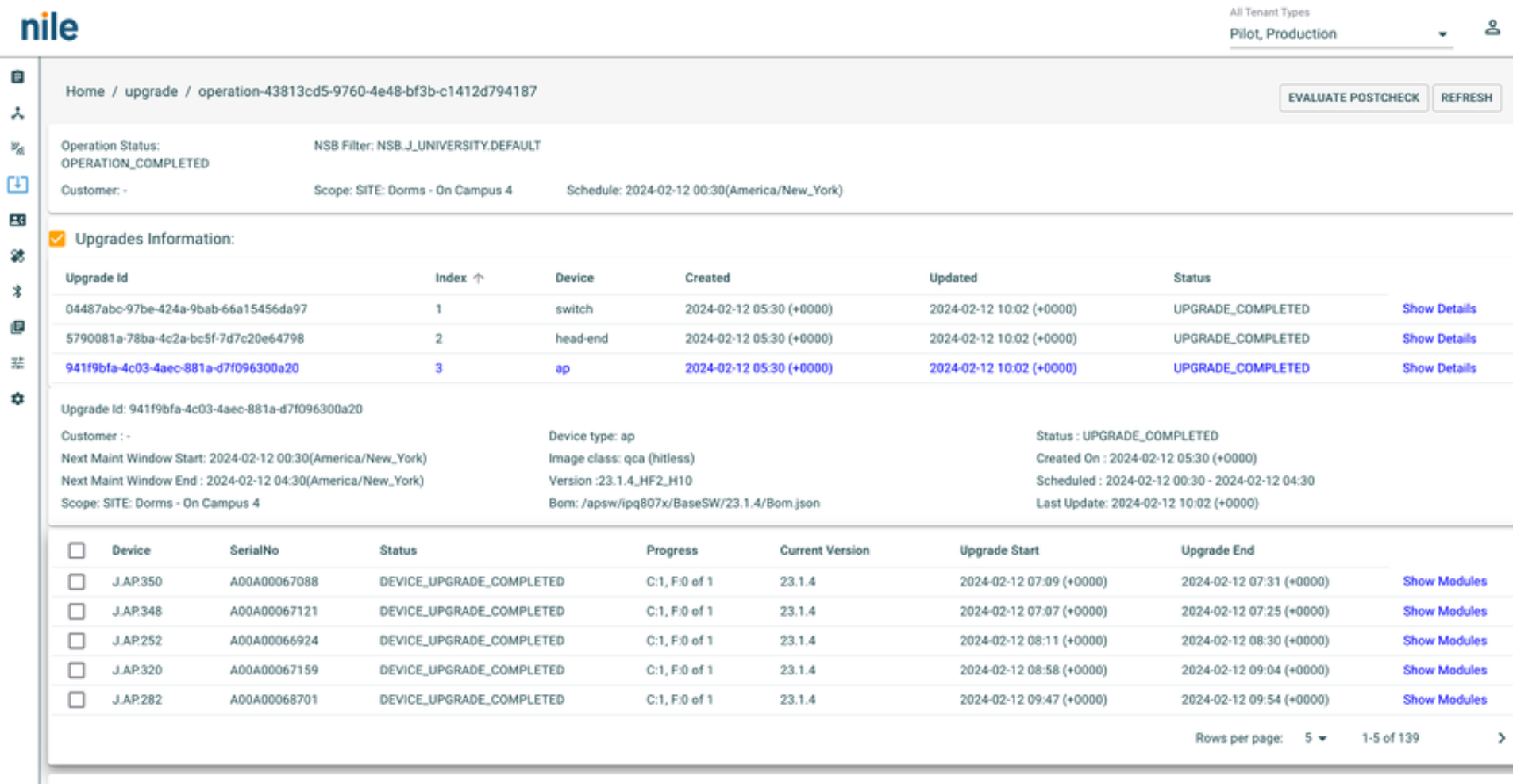
  • Nile Autopilot applications offload traditionally manual network operations center (NOC) functions such as software maintenance and eliminate manual workflows for infrastructure performance monitoring and troubleshooting.

Tech Update: AI Copilots for the Full Network Architecture

 Is network automation ready to take the next big leap? Austin Hawthorne, VP Worldwide Solutions Architecture from Nile, explains:

- How Nile's Close Loop automation, a cloud-native system with a vertically integrated stack, automates everything from Day Zero to ensure predictable outcomes at scale.

- The concept of a 'digital twin' and how it helps in identifying and solving any deviations that could lead to performance issues before they become a problem.

- Real-life scenarios where Nile's automation has detected potential issues, implemented remediation actions, and reduced productivity issues from days and weeks down to seconds and minutes.

https://youtu.be/finZ5jhi6Po

Cloud-based NaaS solutions promise  faster scalability, cost efficiency, security, and streamlined management. We invite you to join our Campus NaaS 2024 Showcase, where we will delve into these questions and more. Reach us at info@nextgeninfra.io

Have a tech update that you want to brief us on? Contact info@nextgeninfra.io!

false

Cisco and Ribbon demo interoperability at 1.2 Gbps

Cisco and Ribbon Communications confirmed interoperability of their optical transmission systems at 1.2 Tbps.

At the upcoming #OFC24, the companies will demonstrate interoperability between the Ribbon Apollo 9408 and the Cisco NCS 1014, which both incorporate Acacia's CIM 8 140Gbaud transceiver.  The demo will also show conformance to the OpenROADM bookended model for transponder interoperability while uniquely extending this model for multiple vendors.

"We're launching a new era with this demonstration and showcasing a proven interoperable multivendor ecosystem for high performance optical transmission that is a new direction from what has previously been the industry's focus," said Sam Bucci, Chief Operating Officer, Ribbon. "We're proud to collaborate with Cisco on this critical update, giving operators the confidence to access and deliver 1.2 T transmission speeds without resorting to a single closed solution."

"With the growth of AI and other emerging technologies, network operators are challenged with the complexity of managing multi-vendor networks to keep up with the growing demand for faster speeds," said Bill Gartner, SVP/GM Optical Systems and Optics from Cisco. "Together with Ribbon, we are demonstrating that now our customers can take advantage of interoperability at the transmission level before standards have been put forth, enabling them to stay on the cutting-edge without being locked into proprietary solutions."


Keysight and Credo demo full line rate 1.6 Terabit Ethernet

Keysight Technologies and Credo Semiconductor developed a joint testbed that demonstrates the first IEEE P802.3dj draft specification compliant 1.6 terabit Ethernet measurement system running full line rate layer 2 Ethernet traffic on a real world hardware development platform. 

The demonstration proves that 1.6T Ethernet speed is possible and that its performance can be measured.

Highlights of the Keysight and Credo testbed demonstration include:

  • Operational 1.6T Layer 2 engine – The engine operates on an interface of 16 electrical lanes running at 106.25 gigabits per second (Gbps) per lane with Pulse Amplitude Modulation 4 (PAM4) signaling and Forward Error Correction (FEC). This is also called 16 x 100G SERDES.
  • Keysight hardware development test platform –With OSFP-XD front panel ports that can send and receive full line rate 1.6T layer 2 bi-directional traffic over a Credo provided 2-meter HiWire Active Electrical Cable (AEC). The 1.6T measurement system measures the performance of the link and the AEC.
  • Reliability with FEC – The Layer 2 engine running at full 1.6T line rate provides packet and FEC measurements, plus counters, and other related statistics. FEC enhances data reliability by detecting and correcting errors that occur during data transmission.

Bill Brennan, Chief Executive Officer, Credo, said: “Credo launched the 1.6T HiWire AEC in support of our key customers’ product roadmaps in 2023 and it’s generated a great deal of industry interest. We’re excited to work with Keysight to support the buildout of a robust test and measurement ecosystem for this developing networking standard.”

Ram Periakaruppan, Vice President and General Manager, Network Test & Security Solutions, Keysight, said: “1.6T Ethernet is the next generation of Ethernet that addresses the demand for more network bandwidth and data throughput, driven in part, by ever-increasing AI workloads within the network infrastructure. The 1.6T Ethernet Layer 2 traffic generation and analysis demonstration moves the needle forward to enable development of 1.6T devices and the entire networking equipment ecosystem. Keysight’s Layer 2 and FEC test and measurement systems are also vital to the success of the eventual deployment of 1.6T capable networking devices and equipment.”


Credo debuts 400G Active Electrical Cables series

Credo Technology is sampling a new family of HiWire Active Electrical Cables (AECs) specifically targeted for 400G AI/ML Backend Network Connections to Top of Rack (TOR) Switches.

The new family of HiWire AECs includes:

  • 400G OSFP-RHS (4x112) to 400G QSFP-DD (8x56) for 12.8T TORs
  • 400G QSFP112 (4x112) to 400G QSFP-DD (8x56) for 12.8T TORs
  • 800G 2xOSFP-RHS (4x112) to 800G OSFP (8x112) for 25.6Tb and 51.2Tb TORs
  • 800G 2xQSFP112 (4x112) to 800G OSFP (8x112) for 25.6Tb and 51.2Tb TORs
  • 800G 2xOSFP-RHS (4x112) to 800G QSFP-DD (8x112) for 25.6Tb and 51.2Tb TORs
  • 800G 2xQSFP112 (4x112) to 800G QSFP-DD (8x112) for 25.6Tb and 51.2Tb TORs
  • 800G 2xQSFP-DD (4x112) to 800G QSFP-DD (8x112) for 25.6Tb and 51.2Tb TORs

“400G AI/ML backend networks have proliferated in the past year and have migrated 112G/lane connectivity to Network Interface Cards (NICs) ahead of many customers’ networking plans,” said Don Barnetson, Vice President of Product at Credo. “Credo’s innovative HiWire AECs can help bridge this gap with in-cable speed shifting to enable use of legacy 12.8T TORs and Y cable configurations for 25 and 51Tb TORs.”


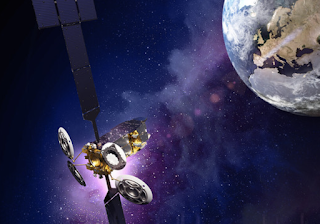
Eutelsat signs with Intelsat's OneWeb LEO constellation

 Eutelsat Group has announced a multimillion-dollar deal with Intelsat for its OneWeb Low Earth Orbit (LEO) Constellation. The agreement, set to commence in mid-2024, is valued at up to $500 million over a span of seven years, with a guaranteed commitment of $250 million. This includes a previously signed deal worth $45 million in early 2023, with the potential for an additional $250 million investment by the end of the agreement period.

The partnership aims leverages Intelsat’s expertise in Geostationary Orbit (GEO) and terrestrial networks alongside OneWeb’s LEO Network, enabling the delivery of advanced, multi-orbit satellite communication solutions tailored to the needs of various sectors including networks, government, and mobility.

“Over the past couple of years, Intelsat has leveraged our partnership with the Eutelsat Group to initiate our strategy of enabling multi-orbit solutions in the commercial aviation and government markets. Today’s announcement takes that partnership to a new level, enhancing our ability to offer new, true multi-orbit services and solutions across our portfolio of customers and business segments,” said Dave Wajsgras, Chief Executive Officer of Intelsat.

Eva Berneke, Chief Executive Officer of Eutelsat Group added: “This expanded partnership with Intelsat represents a strong vote of confidence in the capabilities of the OneWeb satellite constellation, today and well into the future, as well as showcasing the necessity in today’s world for major satellite operators to be able to offer multi-orbit solutions to their customers. We are also delighted to further deepen our collaborative approach with Intelsat going forward, leveraging its unparalleled experience in the key verticals of Aviation and Government.”


Keysight aligns with NVIDIA 6G Research Cloud Platform

 Keysight Technologies is collaborating on the new NVIDIA 6G Research Cloud Platform, which includes the NVIDIA Aerial Omniverse Digital Twin, an open, flexible, and interconnected framework of network emulation resources offering researchers a comprehensive tool suite on which to develop new adaptations of artificial intelligence (AI) for radio access networks (RAN). 

Keysight has committed to add its network emulation and testing solutions covering the network from end-to-end to the NVIDIA 6G Research Cloud. Keysight is creating cloud-based versions of these solutions and making them available on the research platform in a flexible and scalable manner. This will provide 6G researchers access to Keysight solutions in network realistic conditions thanks to the NVIDIA 6G Research Cloud. As cloud-based solutions, the Keysight network emulations will now also be faster and more scalable thanks to access to NVIDIA’s seamless GPU-acceleration network.

The addition of Keysight’s portfolio of network emulation solutions will enable researchers to develop and validate new approaches to optimize wireless communications access using Keysight’s full suite of end-to-end network emulation capabilities.

https://www.keysight.com

Monday, March 18, 2024

NVIDIA Blackwell and 5th gen NVlink advance AI

 NVIDIA unveiled its Blackwell platform, named in honor of David Harold Blackwell, a mathematician who specialized in game theory and statistics, succeeding the NVIDIA Hopper architecture launched two years ago.

Blackwell leverages six new technologies to enable AI training and real-time LLM inference for models scaling up to 10 trillion parameters.

Blackwell Highlights

  • 208 billion transistors 
  • Manufactured using a custom-built 4NP TSMC process with two-reticle limit 
  • GPU dies are connected by 10 TB/second chip-to-chip link into a single, unified GPU
  • Blackwell introduces a 2nd gen  Transformer Engine with new micro-tensor scaling support and NVIDIA’s advanced dynamic range management algorithms
  • Blackwell will support double the compute and model sizes with new 4-bit floating point AI inference capabilities.
  • 5th gen NVLink delivers 1.8TB/s bidirectional throughput per GPU, ensuring seamless high-speed communication among up to 576 GPUs for the most complex LLMs
  • Blackwell-powered GPUs include a dedicated engine for reliability, availability and serviceability.
  • Support for new native interface encryption protocols
  • A dedicated decompression engine supports the latest formats
  • The NVIDIA GB200 Grace Blackwell Superchip connects two NVIDIA B200 Tensor Core GPUs to the NVIDIA Grace CPU over a 900GB/s ultra-low-power NVLink chip-to-chip interconnect.

Building Bigger Systems

For the highest AI performance, GB200-powered systems can be connected with the NVIDIA Quantum-X800 InfiniBand and Spectrum-X800 Ethernet platforms, also announced today, which deliver advanced networking at speeds up to 800 GbPs. The GB200 is a key component of the NVIDIA GB200 NVL72, a multi-node, liquid-cooled, rack-scale system for the most compute-intensive workloads. It combines 36 Grace Blackwell Superchips, which include 72 Blackwell GPUs and 36 Grace CPUs interconnected by fifth-generation NVLink. Additionally, GB200 NVL72 includes NVIDIA BlueField-3 data processing units to enable cloud network acceleration, composable storage, zero-trust security and GPU compute elasticity in hyperscale AI clouds. The GB200 NVL72 provides up to a 30x performance increase compared to the same number of NVIDIA H100 Tensor Core GPUs for LLM inference workloads, and reduces cost and energy consumption by up to 25x. The platform acts as a single GPU with 1.4 exaflops of AI performance and 30TB of fast memory, and is a building block for the newest DGX SuperPOD.

NVIDIA will also offer the HGX B200, a server board that links eight B200 GPUs through NVLink to support x86-based generative AI platforms. HGX B200 supports networking speeds up to 400Gb/s through the NVIDIA Quantum-2 InfiniBand and Spectrum-X Ethernet networking platforms.

Global Network of Blackwell Partners

AWS, Google Cloud, Microsoft Azure and Oracle Cloud Infrastructure will be among the first cloud service providers to offer Blackwell-powered instances, as will NVIDIA Cloud Partner program companies Applied Digital, CoreWeave, Crusoe, IBM Cloud and Lambda. 

Sovereign AI clouds will also provide Blackwell-based cloud services and infrastructure, including Indosat Ooredoo Hutchinson, Nebius, Nexgen Cloud, Oracle EU Sovereign Cloud, the Oracle US, UK, and Australian Government Clouds, Scaleway, Singtel, Northern Data Group's Taiga Cloud, Yotta Data Services’ Shakti Cloud and YTL Power International.

Cisco, Dell, Hewlett Packard Enterprise, Lenovo and Supermicro are expected to deliver a wide range of servers based on Blackwell products, as are Aivres, ASRock Rack, ASUS, Eviden, Foxconn, GIGABYTE, Inventec, Pegatron, QCT, Wistron, Wiwynn and ZT Systems.

Additionally, a growing network of software makers, including Ansys, Cadence and Synopsys — global leaders in engineering simulation — will use Blackwell-based processors to accelerate their software for designing.

https://nvidianews.nvidia.com/news/nvidia-blackwell-platform-arrives-to-power-a-new-era-of-computing 

NVIDIA rolls out 800G Networking Switches

NVIDIA introduced its X800 series of 800G Infiniband and Ethernet networking switches designed to cater to massive-scale AI workloads, including those utilizing NVIDIA's newly unveiled Blackwell architecture-based products.

Quantum-X800 Platform: Features the NVIDIA Quantum Q3400 switch and the NVIDIA ConnectX-8 SuperNIC, delivering 5 times higher bandwidth and a 9 times increase in In-Network Computing capabilities compared to previous generations. Advanced features include:

  • The Q3400-RA 4U switch—the first to utilize 200 Gbps-per-lane serializer/deserializer (SerDes) technology. It offers 144 ports of 800 Gbps distributed over 72 OSFP cages and a dedicated management port for NVIDIA UFM (Unified Fabric Manager) connectivity
  • With this very high radix, a two-level fat tree topology can connect up to 10,368 network interface cards (NICs)
  • NVIDIA SHARP v4, Message Passing Interface (MPI) tag matching, MPI_Alltoall, and programmable cores boost NVIDIA In-Network Computing
  • Adaptive routing: The switch and ConnectX-8 SuperNIC, working together, maximize bandwidth and ensure network resilience for AI fabrics
  • Telemetry-based congestion control: These techniques provide noise isolation for multi-tenant AI workloads.
  • The Q3400 is air-cooled and compatible with standard 19-inch rack cabinets. A parallel liquid-cooled system, Q3400-LD, fitting an Open Compute Project (OCP) 21-inch rack, is offered as well.

The NVIDIA ConnectX-8 SuperNIC delivers 800 Gbps networking with performance isolation for multi-tenant generative AI clouds. It provides 800 Gbps data throughput with PCI Express (PCIe) Gen6, offering up to 48 lanes for various use cases such as PCIe switching inside NVIDIA GPU systems. It also supports advanced NVIDIA In-Network Computing, MPI_Alltoall, and MPI tag-matching hardware engines, as well as fabric enhancement features like quality ofservice and congestion control. The ConnectX-8 SuperNIC, featuring single-port OSFP224 and dual-port quad small form-factor pluggable (QSFP) 112 connectors for the adapters, is compatible with various form factors, including OCP 3.0 and Card Electromechanical (CEM) PCIe x16. ConnectX-8 SuperNIC also supports NVIDIA Socket Direct 16-lane auxiliary card expansion


Spectrum-X800 Platform: Tailored for AI cloud and enterprise infrastructure, offering optimized performance for faster processing and analysis of AI workloads. It includes the Spectrum SN5600 800 Gbps switch and the NVIDIA BlueField-3 SuperNIC. Highlights:

  • The Spectrum-X800 SN5600 ASIC boasts 64 ports of 800G OSFP and 51.2 terabits per second (Tbps) of switching capacity. 
  • Support Remote direct-memory access (RDMA) over converged Ethernet (RoCE) adaptive routing: Spectrum-X800 features adaptive routing for lossless networks, closely integrating the switch and SuperNIC to boost bandwidth and resilience in AI fabrics. 
  • Programmable congestion control: Spectrum-X800 uses advanced congestion control techniques to enhance noise isolation in multi-tenant AI environments
  • Software Support: NVIDIA provides a suite of network acceleration libraries and software to enhance the performance of trillion-parameter AI models, including the NVIDIA Collective Communications Library (NCCL) for extending GPU computing tasks to the Quantum-X800 network.

“NVIDIA Networking is central to the scalability of our AI supercomputing infrastructure,” said Gilad Shainer, senior vice president of Networking at NVIDIA. “NVIDIA X800 switches are end-to-end networking platforms that enable us to achieve trillion-parameter-scale generative AI essential for new AI infrastructures.”

Initial adopters of Quantum InfiniBand and Spectrum-X Ethernet include Microsoft Azure and Oracle Cloud Infrastructure.

“AI is a powerful tool to turn data into knowledge. Behind this transformation is the evolution of data centers into high-performance AI engines with increased demands for networking infrastructure,” said Nidhi Chappell, Vice President of AI Infrastructure at Microsoft Azure. “With new integrations of NVIDIA networking solutions, Microsoft Azure will continue to build the infrastructure that pushes the boundaries of cloud AI.

https://www.nvidia.com

Big Clouds endorse NVIDIA Blackwell platform

AWS will offer NVIDIA Grace Blackwell GPU-based Amazon EC2 instances and NVIDIA DGX Cloud to accelerate performance of building and running inference on multi-trillion-parameter LLMs. Plans also include the integration of  AWS Nitro System, Elastic Fabric Adapter encryption, and AWS Key Management Service with Blackwell encryption to provides end-to-end control of raining data and model weights.  Specifically, AWS will offer the NVIDIA Blackwell platform, featuring GB200 NVL72, with 72 Blackwell GPUs and 36 Grace CPUs interconnected by fifth-generation NVIDIA NVLink. When connected with Amazon’s networking (EFA), and supported by advanced virtualization (AWS Nitro System) and hyper-scale clustering (Amazon EC2 UltraClusters), customers can scale to thousands of GB200 Superchips.

In addition, Project Ceiba, which is a collaboration between NVIDIA and AWS to build one of the world’s fastest AI supercomputers h-osted exclusively on AWS, is available for NVIDIA’s own research and development. This first-of-its-kind supercomputer with 20,736 B200 GPUs is being built using the new NVIDIA GB200 NVL72, a system featuring fifth-generation NVLink, that scales to 20,736 B200 GPUs connected to 10,368 NVIDIA Grace CPUs.

“The deep collaboration between our two organizations goes back more than 13 years, when together we launched the world’s first GPU cloud instance on AWS, and today we offer the widest range of NVIDIA GPU solutions for customers,” said Adam Selipsky, CEO at AWS. “NVIDIA’s next-generation Grace Blackwell processor marks a significant step forward in generative AI and GPU computing. When combined with AWS’s powerful Elastic Fabric Adapter Networking, Amazon EC2 UltraClusters’ hyper-scale clustering, and our unique Nitro system’s advanced virtualization and security capabilities, we make it possible for customers to build and run multi-trillion parameter large language models faster, at massive scale, and more securely than anywhere else. Together, we continue to innovate to make AWS the best place to run NVIDIA GPUs in the cloud.”

Google Cloud confirmed plans to adopt the new NVIDIA Grace Blackwell AI computing platform, as well as the NVIDIA DGX Cloud service on Google Cloud. Additionally, the NVIDIA H100-powered DGX Cloud platform is now generally available on Google Cloud. 

Microsoft will be one of the first organizations to deploy NVIDIA Grace Blackwell GB200 and advanced NVIDIA Quantum-X800 InfiniBand networking to Azure.

Microsoft is also announcing the general availability of its Azure NC H100 v5 VM virtual machine (VM) based on the NVIDIA H100 NVL platform, which is aimed at midrange training and inferencing. The NC series of virtual machines offers customers two classes of VMs from one to two NVIDIA H100 94GB PCIe Tensor Core GPUs and supports NVIDIA Multi-Instance GPU (MIG) technology, which allows customers to partition each GPU into up to seven instances, providing flexibility and scalability for diverse AI workloads.

In addition, NVIDIA GPUs and NVIDIA Triton Inference Server™ help serve AI inference predictions in Microsoft Copilot for Microsoft 365. 

“Together with NVIDIA, we are making the promise of AI real, helping drive new benefits and productivity gains for people and organizations everywhere,” said Satya Nadella, chairman and CEO, Microsoft. “From bringing the GB200 Grace Blackwell processor to Azure, to new integrations between DGX Cloud and Microsoft Fabric, the announcements we are making today will ensure customers have the most comprehensive platforms and tools across every layer of the Copilot stack, from silicon to software, to build their own breakthrough AI capability.”

“AI is transforming our daily lives — opening up a world of new opportunities,” said Jensen Huang, founder and CEO of NVIDIA. “Through our collaboration with Microsoft, we’re building a future that unlocks the promise of AI for customers, helping them deliver innovative solutions to the world.”

Oracle has expanded collaboration with NVIDIA to deliver sovereign AI solutions to customers around the world. Oracle’s distributed cloud, AI infrastructure, and generative AI services, combined with NVIDIA’s accelerated computing and generative AI software, are enabling governments and enterprises to deploy "AI factories." Oracle’s cloud services leverage a range of NVIDIA’s stack, including NVIDIA accelerated computing infrastructure and the NVIDIA AI Enterprise software platform, including newly announced NVIDIA NIM™ inference microservices, which are built on the foundation of NVIDIA inference software such as NVIDIA TensorRT, NVIDIA TensorRT-LLM, and NVIDIA Triton Inference Server.


NVIDIA launches 6G Research Cloud AI platform

NVIDIA unveiled its 6G Research Cloud platform, which aims to advance AI in radio access networks.

The NVIDIA 6G Research Cloud platform consists of three foundational elements:

  • NVIDIA Aerial Omniverse Digital Twin for 6G: A reference application and developer sample that enables physically accurate simulations of complete 6G systems, from a single tower to city scale. It incorporates software-defined RAN and user-equipment simulators, along with realistic terrain and object properties. Using the Omniverse Aerial Digital Twin, researchers will be able to simulate and build base-station algorithms based on site-specific data and to train models in real time to improve transmission efficiency.
  • NVIDIA Aerial CUDA-Accelerated RAN: A software-defined, full-RAN stack that offers significant flexibility for researchers to customize, program and test 6G networks in real time.
  • NVIDIA Sionna Neural Radio Framework: A framework that provides seamless integration with popular frameworks like PyTorch and TensorFlow, leveraging NVIDIA GPUs for generating and capturing data and training AI and machine learning models at scale. This also includes NVIDIA Sionna, the leading link-level research tool for AI/ML-based wireless simulations.

Key adopters and ecosystem partners of this platform include industry leaders like Ansys, Arm, ETH Zurich, Fujitsu, Keysight, Nokia, Northeastern University, Rohde & Schwarz, Samsung, SoftBank Corp., and Viavi, showcasing broad support for NVIDIA's vision.

https://nvidianews.nvidia.com/news/nvidia-unveils-6g-research-cloud-platform-to-advance-wireless-communications-with-ai

Orange picks Infinera’s GX Series for international network

Orange has selected Infinera’s GX Series compact modular networking platform to optimize its network infrastructure across Europe.

The network deployment project will leverage Infinera’s latest generation of coherent engines and optical line system. Orange and Infinera recently completed a network in the U.S., and will now connect Paris, Marseille, and Bordeaux in France. Spanning 3,000 kilometers (km), this network includes multiple hub cities for international connectivity via submarine landing stations on France’s Atlantic and Mediterranean coasts and connection points for European data centers and additional Orange affiliates.

“We are excited about this new partnership with Infinera,” said Aurélien Vigano, VP of International Transmission Networks at Orange. “By partnering with Infinera, we are glad to add another key supplier to our network in order to reinforce our core backbone infrastructure across France to double our route between three strategic connectivity hubs, adding resilience and capacity to our network. With Infinera’s flexible GX platform, we will be able to seamlessly reinforce our network as new technologies become available, enabling us to keep pace with rapidly growing customer demands, while providing the best customer experience.”

“Infinera looks forward to our long-term partnership with Orange to deliver our GX Series solution on Orange’s new and existing optical transport routes, expanding Orange’s offerings to network operators and wholesale carriers, with resilient and reliable global connectivity capability,” said Nick Walden, Senior Vice President, Worldwide Sales, Infinera.

https://www.infinera.com/press-release/infinera-and-orange-establish-long-term-partnership/

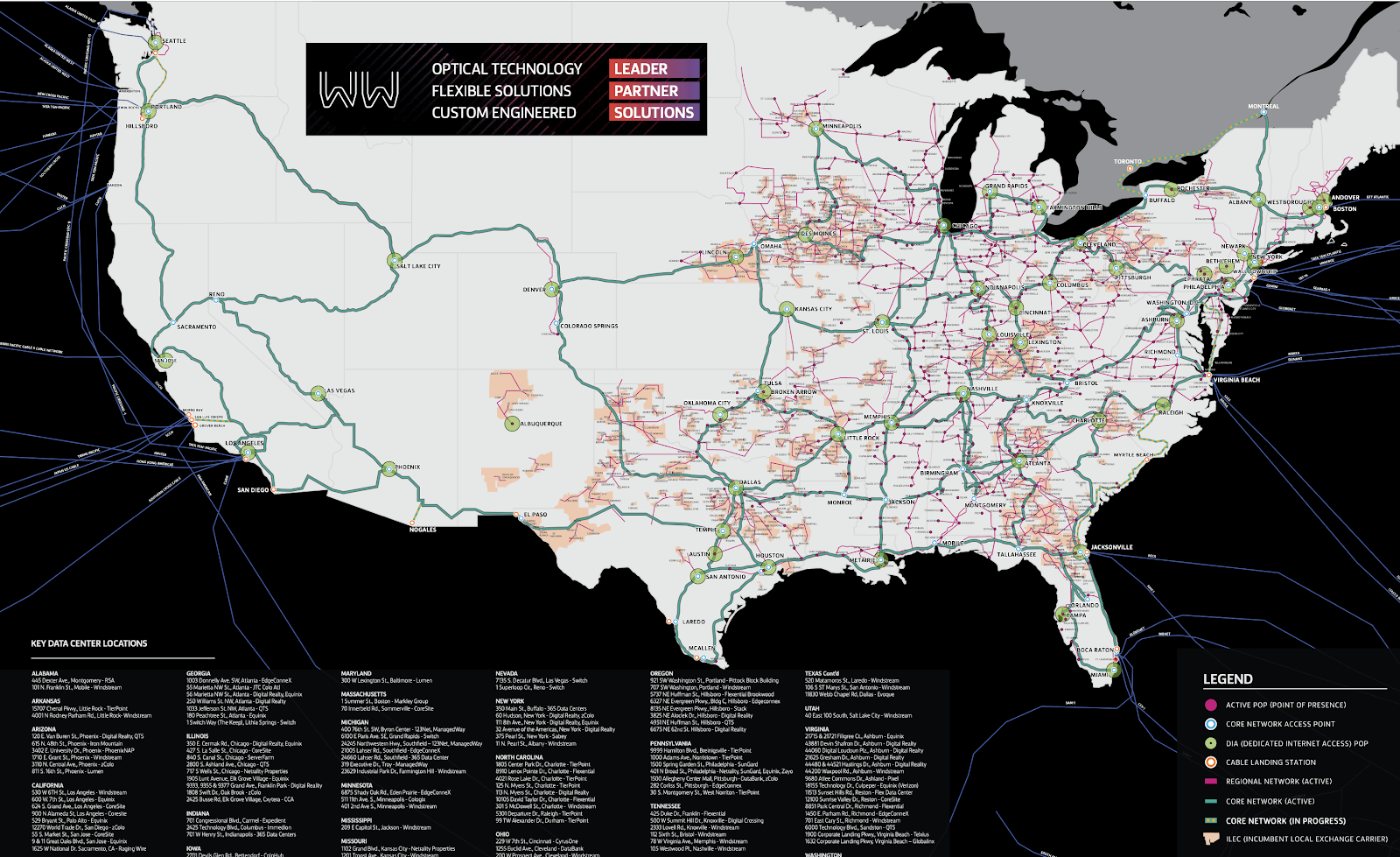
Windstream Wholesale upgrades key routes in Virginia

Windstream Wholesale completed two pivotal route enhancement projects across Virginia using FLEX DWDM (FLEX) technology.

The FLEX upgrade extends across Windstream’s ICON network from Ashburn through Richmond, Virginia, and into the Virginia Beach cable landing station (CLS).  The route segment from Ashburn to Richmond serves as a vital connection between key data centers while the extension from Richmond to the Virginia Beach subsea CLS opens new avenues for international connectivity.

The upgrades leverage Ciena’s 6500 Reconfigurable Line System (RLS).

Windstream Wholesale’s FLEX/ICON upgrades and expansions enable 400G wave service, Managed Spectrum service, and greater visibility into network health and performance with technologies like inline optical time-domain reflectometer (OTDR) engineered into the route. Inline OTDR dramatically reduces mean time to repair (MTTR) in the event of a network interference or fiber cut, providing the ability to locate the interference without physically deploying resources. FLEX also provides cost benefits, enabling the direct connection of key data centers to core long-haul network nodes and eliminating the need to bookend equipment to jump between long-haul and regional networks.

“We are proud to announce the completion of these two crucial route initiatives,” said John Nishimoto, Windstream Wholesale senior vice president of product, marketing, and strategy. “These enhancements represent our steadfast commitment to technology leadership and exceeding customer expectations as we continue to drive innovation to meet today’s connectivity demands.”

Windstream Wholesale understands the critical role connectivity plays in today’s digital landscape. By investing in infrastructure expansion and leveraging state-of-the-art technologies like FLEX, the company remains at the forefront of delivering reliable, high-performance network solutions.

https://www.windstreamwholesale.com/network-map/

Dell'Oro: Broadband Access Equipment Sales Dipped 9% in 2023

The total global revenue for the Broadband Access equipment market decreased to $17.5 B in 2023, down 9 percent year-over-year (Y/Y), according to a new report from Dell'Oro Group. Spending on Cable equipment dropped 3 percent overall, though spending on Remote PHY Devices (RPDs) jumped 21 percent, following a 99 percent Y/Y increase in 2022.

"Cable operators continue to modernize their networks through the deployment of Distributed Access Architectures," said Jeff Heynen, Vice President with Dell'Oro Group. "Though macroeconomic and supply chain issues continue to cloud the short-term horizon, there is no question that the goals of delivering more bandwidth and pushing edge processing and automation closer to subscribers are driving cable operator spending," explained Heynen.

Additional highlights from the 4Q 2023 Broadband Access and Home Networking quarterly report:

  • Total PON equipment spending was down 7 percent from 2022, driven by a 10 percent decline in spending on PON OLTs.
  • Spending on Fixed Wireless CPE increased 7 percent in 2023, driven once again by 5G Sub-6 GHz unit shipments in North America.
  • Total Wi-Fi 6E and Wi-Fi 7 Router and Broadband CPE unit shipments reached 10 M in 2023, with a significant ramp expected for Wi-Fi 7 units in 2024.

https://www.delloro.com/news/broadband-equipment-spending-drops-9-percent-in-2023/

Sunday, March 17, 2024

FCC advances Mobile- Satellite collaboration

 The FCC adopted a new regulatory framework that aims to advance collaborations between satellite operators and terrestrial service providers to offer ubiquitous connectivity directly to consumer handsets using spectrum previously allocated only to terrestrial service. The new regulations bolster supplemental coverage from space, or SCS, which will enable consumers in areas not covered by terrestrial networks to be connected using their existing devices via satellite-based communications. 

Specifically, the FCC has updated the United States Table of Frequency Allocations to enable satellite communications in frequencies previously dedicated solely to terrestrial services. This change permits two-way, secondary mobile-satellite service operations in specific spectrum bands lacking primary, rigid-use legacy holders, whether federal or non-federal. For these selected bands, satellite communication services (SCS) are approved only in instances where all terrestrial license holders within a distinct geographical area collectively agree to lease their spectrum rights to a satellite operator. This operator's part 25 license will then include these frequencies and outline the specific geographical area where the SCS will be provided.

The FCC also highlighted the importance of the work carried out by the 3rd Generation Partnership Project (3GPP) in developing wireless standards, especially concerning the partnership between satellite operators and terrestrial service providers. While earlier solutions adhered to 3GPP standards from before Release 17, it was Release 17 that first introduced features aimed at efficiently facilitating operations of non-terrestrial networks (NTN), incorporating feedback from industry stakeholders. This was a significant step in incorporating satellite technology into the global development of 5G systems. These standards provided for satellite access via New Radio (NR) in Frequency Range 1, targeting handsets and Very Small Aperture Terminals, alongside access for the narrowband Internet of Things and Long-Term Evolution Machine-Type Communication for satellite-based enhanced machine-type communication. Furthermore, 3GPP Release 18 expanded NTN support into Frequency Range 2, including operations in the Ku-band and introducing improvements for better coverage, seamless service continuity, and smoother mobility between non-terrestrial and terrestrial networks. More recently, 3GPP has decided to propose a 5G NR satellite access Radio Interface Terminal to the International Mobile Telecommunications-2020 (IMT-2020), marking another advance in integrating satellite capabilities into next-generation wireless systems.

FCC Chairwoman Jessica Rosenworcel writes: "We are fast heading to a world where next-generation wireless networks will connect everyone and everything around us. They will open up possibilities for communications that we cannot even fully imagine today. But we will not be successful in our effort to make this always-on connectivity available everywhere if we limit ourselves to using only one technology. We are going to need it all—fiber networks, licensed terrestrial wireless systems, next-generation unlicensed technology, and satellite broadband. But if we do this right, these networks will seamlessly interact in a way that is invisible to the user. We won’t need to think about what network, where, and what services are available. Connections will just work everywhere, all the time."


https://www.fcc.gov/document/fcc-advances-supplemental-coverage-space-framework-0

Dell'Oro: AI Investments to Lift Hyperscale Cloud Capex

Accelerated computing is forecast to lift hyperscale cloud capex to 17 percent growth in 2024, according to a new report from Dell'Oro Group, which also found that AI infrastructure investments in the enterprise are also gaining momentum.

“After growing just 4 percent in 2023, worldwide data center capex is projected to rebound to double-digit growth this year,” said Baron Fung, Sr. Research Director at Dell’Oro Group. “While accelerated computing for generative AI applications will be the front-runner in data center investments, we expect a modest recovery in general-purpose servers and storage demand following a period of steep correction. Until last year, the hyperscalers led the way for AI-related investments. This year, we expect accelerated systems to account for an increasing part of server OEM sales and carry a significant backlog as enterprise customers deploy AI workloads,” explained Fung.

Additional highlights from the 4Q 2023 Data Center IT Capex Quarterly Report:

  • Dell led all OEMs in server revenue in 2023, followed by HPE and IEIT Systems. The revenue share of the white box server vendors surpassed that of the top 3 server OEMs in 2023.
  • Server and storage systems revenue is forecast to grow by 18 percent in 2024, as the product mix shifts to AI-optimized servers and to server platforms with the latest x86 CPUs from Intel and AMD, as well as ARM CPUs.
  • Dell'Oro projects that the top 4 US hyperscalers—Amazon, Google, Meta, and Microsoft—will each increase their data center capex by double digits in 2024.

https://www.delloro.com/news/ai-investments-to-lift-hyperscale-cloud-capex17-percent-in-2024/

Swisscom to acquire Vodafone Italia, creating nation's 2nd competitor

In a significant move to bolster its presence in the Italian telecommunications market, Swisscom has announced the acquisition of Vodafone Italia for EUR 8 billion, aiming to merge it with its Italian subsidiary, Fastweb. This strategic merger is expected to create a powerful converged operator in Italy, enhancing both mobile and fixed connectivity services across the country. Here are the key points related to the network operations, size, and footprint of this merger:

Combined Strengths and Synergies:

The merger brings together Vodafone Italia's premium mobile network with Fastweb's robust fixed connectivity infrastructure.

Expected annual synergies of approximately EUR 600 million will improve cost efficiency and scale, facilitating significant investments in Italy's telecommunication sector.

This convergence aims to deliver innovative, competitively priced services, enhancing user experience for both private and business customers across all market segments.

Enhanced Customer Benefits:

Mobile users will enjoy improved connectivity and service quality through a fully controlled end-to-end managed wireless network.

Broadband customers will benefit from enhanced service quality, leveraging Fastweb’s wireline network and Vodafone’s 5G Fixed Wireless Access (FWA).

The merger promises high-performance combined fibre and mobile solutions, offering greater service convergence at competitive prices.

Business and Public Administration Value:

Access to complementary assets such as Fastweb's cloud infrastructure and Vodafone Italia's mobile assets will offer a broader range of IT and communication services.

The merger facilitates a one-stop-shop experience for B2B customers, promoting faster digitalization for enterprises and public administrations in Italy.

National Impact and Competitive Landscape:

By creating a commercially resilient entity, the merger aims to ensure sustained investment in top-tier network infrastructure and innovation.

The combined operation will help close the digital divide and accelerate Italy's digital transformation, increasing competition in the telecommunications market.

Financial and Strategic Benefits:

The transaction, valued at attractive multiples, is expected to be cash flow neutral to Swisscom in the first year and accretive from the second year onwards.

Swisscom plans to increase its dividend post-merger, supported by synergy realization and free cash flow growth, while retaining its strong corporate credit rating.

Regulatory Approvals and Closing Timeline:

Subject to regulatory and customary approvals, the transaction is expected to close in Q1 2025.

Post-closing, the combined entity and Vodafone Group will enter into transitional and long-term service agreements, including a brand license agreement.

Swisscom CEO, Christoph Aeschlimann, and Vodafone Group CEO, Margherita Della Valle, have both highlighted the merger's strategic rationale, emphasizing the enhanced value proposition for customers and the strengthened competitive position in the Italian market. This move underscores Swisscom's commitment to growth and investment in both the Swiss and Italian telecommunication sectors, promising a new era of connectivity and digital services in Italy.


https://www.swisscom.ch/en/about/investors/acquisitionvodafoneitalia.html

  • In November 2023. KKR and TIM reached a €22 billion agreement for KKR to acquire a key part of TIM's infrastructure: its fixed-line network. This network forms the backbone of TIM's landline and internet services in Italy. By acquiring this asset, KKR gains a foothold in the Italian telecom market and the potential to reshape the industry. The deal received a critical boost in January 2024 when the Italian government approved it under its "golden power rule," granting oversight but also requiring a security task force to monitor the network's operations. However, a potential roadblock remains. 
  • Vivendi, the largest shareholder in TIM, is unhappy with the sale price and has challenged the deal in court. This legal battle could delay or even prevent the acquisition from finalizing. 
  • It's important to note that this deal excludes Sparkle, TIM's undersea cable unit, which boasts a vast network of fiber optic cables that connect Italy to other parts of the world. TIM received a separate non-binding offer for Sparkle, but it was ultimately rejected. For TIM, the sale of the fixed-line network would provide significant funds to invest in the business and reduce its debt burden. It would also allow them to focus on their mobile network operations and potentially their remaining international assets like Sparkle.

Private investors acquire Verne data centers in UK, Iceland, Finland

Ardian, a private investment house, has acquired Verne (formerly Verne Global), a leading data center platform headquartered in the UK and diversified across Northern Europe, from Digital 9 Infrastructure plc (D9). Financial terms were not disclosed.

Verne, established in 2012, operates data centers in central London, Iceland and Finland. The company specializes in high-performance computing (HPC) workloads, including AI, Machine Learning, and Large Language Models (LLM), providing a competitive total cost of ownership, strong green credentials, and exceptional availability. Sustainability is central to Verne's mission, operating with 100% renewable energy in Iceland and 100% decarbonized energy in Finland and the UK.

“Having identified the company through our systemic matrix sourcing approach, looking through both a digital infrastructure and country specific lens, we identified Verne as a truly green data center compared with its peers globally. 
This investment is fully aligned with our approach at Ardian of investing into platforms and delivering strong returns through major industrial strategy backed by an accelerated capex plan.  Ardian will support Verne’s top tier management team to match the incredible and fascinating customer AI-driven demand. With this investment, Ardian Infrastructure is now exposed to the whole digital infrastructure value chain capitalizing on global digitalization trends.” Gonzague Boutry, Managing Director - Digital Infrastructure, Ardian.

“This is an exciting day for Verne as we become part of the Ardian platform. We have ambitious plans to continue growing the company and delivering sustainable data center solutions. We want to enable organizations to cost-effectively scale their digital infrastructure while reducing their environmental impact. We are hugely excited to be working with Ardian to help power our future.” Dominic Ward, CEO, Verne.

https://verneglobal.com/


IP Infusion reports 61% growth spurt in 2023

IP Infusion, a privately-held supplier of carrier-grade networking software systems, reported a significant 61% year-over-year sales jump in 2023, marking the highest revenue in the company’s history.

  • Ninety-five new customers turned to IP Infusion’s  solutions in 2023, and 41 new partners joined the company’s extensively curated open networking ecosystem that now boasts 127 partners. 

  • IP Infusion had 351 repeat orders from existing OcNOS customer orders, solidifying the company’s role as the leading disaggregated alternative to legacy vendors such as Cisco, Juniper, and Arista.
  • To date, more than 42,000 total OcNOS licenses have been sold and two million ports shipped globally. IP Infusion’s reputation for carrier-grade products that provide flexibility, reliability, and low Total Cost of Ownership undergird its growing market position.
  • IP Infusion publicly announced 15 new OcNOS customer wins for 2023, including Africell Sierra Leone, Amplex Internet, BroadStar, DojoNetworks, EXATEL, Haefele Connect, Kinetix Networks, MetaLINK Technologies, Multinet, Netplus, Pine Networks, Scott Data, Telcom, Targo, and Vyve Broadband. As customers expand their networks and move toward open network deployments, the OcNOS Aggregation Router, Data Center, and Cell Site Router use cases continue to lead overall sales.
  • A key industry event in 2023 was IP Infusion’s strategic partnership with NTT DATA (part of NTT Group) in which NTT DATA and IP Infusion announced collaboration for go-to-market open networking solutions. IP Infusion also announced that it had provided technical support for the development of Beluganos — a new network operating system (NOS) for white box solutions to realize NTT Corporation (NTT)’s IOWN concept — and is providing sales and support for global markets with NTT and NTT Advanced Technology Corporation (NTT-AT), the core technology company of NTT Group.

“We are extremely gratified to see IP Infusion’s momentum continue to increase substantially throughout 2023 due to robust demand for our software and open, disaggregated network solutions,” said Atsushi Ogata, President and CEO of IP Infusion. “Today’s volatile global economy requires mature, cost-effective end-to-end open solutions for secure, reliable networks. We are confident that our OcNOS-based products offer the highest-rated solutions that meet complex use cases.”

Quintessent raises $11.5M for quantum dot lasers

Quintessent, a start-up based in Santa Barbara, California, closed $11.5 million in venture funding for its workin in heterogeneous silicon photonics and quantum dot laser technology.

The seed round was oversubscribed and included was led by Osage University Partners (OUP) with new investors including M Ventures, and joining existing investors Sierra Ventures, Foothill Ventures, and Entrada Ventures.

“We are grateful for the support from our new and existing investors who all recognize the need for foundational innovations to catalyze sustainable and reliable interconnect scaling for the era of accelerated computing,” said Alan Liu, CEO and co-founder of Quintessent. 

Liu was previously an Associate at Booz Allen Hamilton and advised on various photonics R&D programs for clients at DARPA and ARPA-E. Alan obtained his PhD from Professor John Bowers’ group at UCSB where he performed research that is now part of Quintessent’s core technology.  

https://www.quintessent.com/post/quintessent-raises-11-5m-in-seed-funding-to-future-proof-optical-connectivity

  • Last year, Quintessent and  Tower Semiconductor demonstrated a world first in heterogeneously integrating O-band GaAs quantum dot (QD) lasers with a commercial foundry silicon photonics process. Tower's PH18DB platform is targeted for optical transceiver modules in datacenters and telecom networks, as well as new emerging applications in artificial intelligence (AI), machine learning, LiDAR and other sensors. 
  • The companies, which are collaborating under the DARPA LUMOS program, cited benefits of semiconductor quantum dot lasers and amplifiers over traditional quantum well materials:
  • Lower relative intensity noise (RIN) in multiwavelength lasers
  • Optical amplifiers with near ideal noise figure
  • Improved optical feedback tolerance for isolator-free, on chip lasers
  • The ability to operate efficiently at high ambient temperatures
  • Significantly improved component reliability and lifetimes 

  • Heterogeneous integration of lasers/amplifier functionality and other silicon photonic elements on common substrate presents significant benefits such as: 
  • New product architectures and functionalities otherwise not achievable using external lasers, for example complete self-test at the chip level, or on-chip amplification
  • Reduced cost
  • Reduced power consumption and improved link margin
  • Improved system reliability