Tuesday, February 20, 2024

AT&T Dynamic Defense brings new network capabilities

AT&T will begin offering new security features embedded directly into the network without the need for extra equipment. The capabilities are derived from cyber threats detected across the AT&T network backbone, which carries more than 680 petabytes of data every day.

AT&T Dynamic Defense is offered to new and existing AT&T Dedicated Internet business customers in the following areas with a broader rollout expected later this year: Washington, D.C., Dallas, TX, Atlanta, GA, Houston, TX, Ft. Lauderdale, FL, Chicago, IL, New York, NY, Cleveland, OH, Los Angeles, CA, San Francisco, CA. The offering includes three package options to suit a variety of business needs, which are:

  • Standard, priced at $20/month, but is now being offered at no cost for the life of your AT&T Dedicated Internet Service.
  • Advanced, $175/month, includes the first two months at no charge, if you start your service before the end of 2024.
  • The Premium plan is set at $275/month.

“Cybersecurity is a core strength at AT&T, and we’re setting a new standard of connectivity, with security that starts at the network level,” said Rick Welday, Head of AT&T Business. “Our customers deserve our best effort when it comes to protecting their businesses and this innovative product offers a robust shield against cyber threats, enabling them to do more than they ever could before.” 

https://about.att.com/story/2024/dynamic-defense.html?source=EC00EM0000000000E&wtExtndSource=02202024&lctg=12632034

false

Cadence to offer optimized design flows for Intel Foundry Services

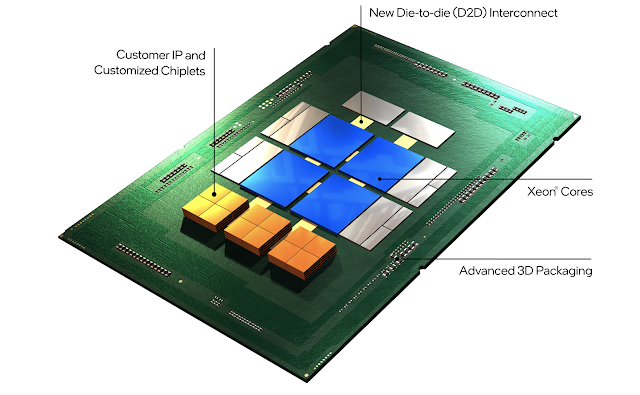
Intel Foundry Services (IFS) and Cadence Design Systems entered into a multiyear strategic agreement to jointly develop a portfolio of key customized IP, optimized design flows and techniques for Intel 18A technology featuring RibbonFET gate-all-around transistors and PowerVia backside power delivery. 

This will enable joint customers to accelerate their SoC project schedules on process nodes from Intel 18A and beyond while optimizing for performance, power, area, bandwidth and latency for demanding AI, HPC and premium mobile applications.

Fast-growing market segments, such as AI/ML, HPC and premium mobile computing, require the latest standards in IP to take advantage of advanced packaging and silicon process technologies. Cadence’s leading-edge implementations of trailblazing standards, such as advanced memory protocols, PCI Express, UCI Express and others for these key segments, enable joint customers to achieve scalable, high-performance designs that accelerate their time to market in IFS’ most advanced silicon technologies and 3D-IC packaging capabilities.

“We furthered our partnership with Intel Foundry Services through a significant strategic multiyear agreement to provide design software and leading IP at multiple Intel advanced nodes, thereby advancing Intel’s IDM 2.0 strategy and accelerating mutual customer success,” said Anirudh Devgan, president and chief executive officer at Cadence.

“We’re very excited to expand our partnership with Cadence to grow the IP ecosystem for IFS and provide choice for customers,” said Stuart Pann, Intel senior vice president and general manager of IFS. “We will leverage Cadence’s world-class portfolio of leading IP and advanced design solutions to enable our customers to deliver high-volume, high-performance and power-efficient SoCs on Intel’s leading-edge process technologies.”


Samsung Foundry’s Gate-All-Around supports Arm Cortex-X

Samsung Electronics Co. will deliver the next generation Arm Cortex-X CPU optimized on Samsung Foundry’s latest Gate-All-Around (GAA) process technology. 

The companies have bold plans to reinvent 2-nanometer (nm) GAA for next-generation data center and infrastructure custom silicon, as well as a groundbreaking AI chiplet solution that will revolutionize the future generative artificial intelligence (AI) mobile computing market.

“As we continue into the Gen AI era, we are excited to extend our partnership with Arm to deliver the next generation Cortex-X CPU, enabling our mutual customers to create innovative products,” said Jongwook Kye, executive vice president and head of Foundry Design Platform Development at Samsung Electronics. “Both Samsung and Arm have built a solid foundation from many years of collaboration. This unprecedented level of deep design technology co-optimization has resulted in a ground-breaking accomplishment, providing access to the newest Cortex-CPU on the latest GAA process node.”

“Our longstanding collaboration with Samsung has delivered multi-generation, leading-edge innovation,” said Chris Bergey, SVP and GM of the Client Business of Arm Inc. “Optimizing Cortex-X and Cortex-A processors on the latest Samsung process node underscores our shared vision to redefine what’s possible in mobile computing, and we look forward to continuing to push boundaries to meet the relentless performance and efficiency demands of the AI era.”

Samsung announced its initial production of 3nm Multi-Bridge-Channel FET (MBCFET™), based on Samsung’s GAA technology in 2022. GAA technology allows further device scaling beyond the FinFET generation, improving power efficiency with reduced supply voltage level, and enhanced performance with higher drive current capability. The GAA implementation approach with nanosheets structure delivers maximum design flexibility and scalability.


European Commission approves Orange + MASMOVIL in Spain

The European Commission gave permission to Orange and MASMOVIL to combine their operations in Spain in the form of a 50-50 joint venture. As part of its proposed package of remedies, the parties have agreed to divest to Digi as remedy taker 60MHz of spectrum assets (pending approval from the Spanish Government) and to propose an optional national roaming agreement at market conditions.  

This Joint Venture between MASMOVIL and Orange will create a leading operator of the Spanish market in terms of customers, user experience, talent, fiber and mobile coverage and a sustainable player with the financial capacity to continue investing in the development of a leading telecom infrastructure in Spain.

Both parties would convert into a leading operator, bringing together the assets, capabilities and teams of the two companies in Spain to serve +7.3M fixed customers, +30M mobile services and +2.2M TV customers. The Joint Venture would manage important network and IT assets to assure a nationwide coverage both in FTTH as well as 4G/5G. In financial terms, the combined entity would become a stronger and solid market player with estimated revenues of above €7.4 billion and EBITDAaL of over €2.3 billion, with an enterprise value of €18.6 billion and expected synergies of more than €450m per year (from year four post-closing).

Christel Heydemann, CEO of Orange, commented: “Today’s announcement is a crucial moment for the future development of the Group in Europe. Our proposed Joint Venture with MASMOVIL will create a single, stronger, and more sustainable player in Spain. By joining forces, we can scale, we can innovate, and we can drive investment in Spain for the benefit of consumers and businesses.” 

https://newsroom.orange.com/la-commission-europeenne-donne-son-feu-vert-au-projet-de-co-entreprise-dorange-et-de-masmovil-ouvrant-ainsi-la-voie-a-la-creation-dun-operateur-unique-de-premier-plan-en-espagne/?lang=en

false

Zayo adds Nicola Palmer to Board

Zayo announced the addition of Nicola Palmer to its Board of Directors.

Palmer previously was CTO of Verizon Wireless, she played a pivotal role in the strategy, deployment, and operation of 4G and 5G networks. She holds a BS in industrial engineering from The Pennsylvania State University and an MBA from the University of Pennsylvania’s Wharton School.

“Nicola’s addition to Zayo’s Board of Directors brings another top-tier advisor with proven leadership credentials and experience, directly related to our business strategies, and core products and services,” said Steve Smith, Chief Executive Officer of Zayo. “Looking ahead to Zayo’s future, we eagerly tap into Nicola’s extensive expertise to shape our strategy, benefiting from her decades of experience in driving innovation across the telecommunications and digital infrastructure sectors.”

https://www.zayo.com


Monday, February 19, 2024

GlobalFoundries lands $1.5B in CHIPS Act funding for new fabs

GlobalFoundries is set to receive $1.5 billion in planned direct funding as part of the U.S. CHIPS and Science Act.

The money will be used to expanding existing fabrication facilities as well as to build new capacity, including:

  • Expanding GF’s existing fab in Malta, New York, by adding critical technologies already in production in GF’s Singapore and Germany facilities. These added capabilities are geared towards enabling the U.S. auto industry. As vehicles transition from mechanical to electronic systems, the number of semiconductor chips in each car or truck continues to soar. This expansion is key to ensuring supply chain resilience for the growing demand and to delivering for GF’s automotive customers including General Motors. This will continue to diversify GF’s flagship Malta fab into new technologies and end markets.
  • Construction of a new state-of-art fab on the Malta campus to meet expected customer demand for U.S.-made essential chips across a broad range of markets and applications including automotive, aerospace, defense and AI. The new fab, which has already been granted some necessary permitting, will leverage the site’s existing infrastructure and ecosystem, enabling a fast and efficient path from construction to production. GF’s said the new fab will be uniquely positioned to capture the feature-rich mature, essential chip segment which is expected to continue to represent more than 60% of the semiconductor market. Construction of this new fab combined with expansion of GF’s existing site is expected to triple the existing capacity of the Malta campus over the next 10+ years. 

These two projects are expected to increase wafer production to 1 million per year once all phases are complete.

  • Modernization of GF’s longest continuously operated fab and the nation’s first and largest Trusted 200mm facility in Essex Junction, Vermont. The project will upgrade existing facilities, expand capacity as well as create the first U.S. facility capable of high-volume manufacturing of next-generation gallium nitride (GaN) semiconductors for use in electric vehicles, power grids, data centers, 5G and 6G smartphones and other critical technologies.

GF plans to invest more than $12 billion over the next 10 plus years across its two U.S. sites through public-private partnerships with support from the federal and state governments as well as from its ecosystem partners, including key strategic customers.

New York Governor Hochul unveiled a $575 million funding proposal for the New York State Green CHIPS initiative, aimed at backing two projects in Malta, New York. Additionally, a planned allocation of $15 million for workforce development activities at GlobalFoundries and $30 million for infrastructure enhancements and energy incentives, facilitated by the New York Power Authority (NYPA), were also announced.

“GF is proud to announce this proposed funding from the Department of Commerce and New York State and appreciates the collaboration of the CHIPS Office and the Empire State Development Corporation throughout this process. These proposed investments, along with the investment tax credit (ITC) for semiconductor manufacturing, are central to the next chapter of the GlobalFoundries story and our industry. They will also play an important role in making the U.S. semiconductor ecosystem more globally competitive and resilient and cements the New York Capital Region as a global semiconductor hub,” said Dr. Thomas Caulfield, president and CEO of GF. “With new onshore capacity and technology on the horizon, as an industry we now need to turn our attention to increasing the demand for U.S.-made chips, and to growing our talented U.S. semiconductor workforce.”

“Semiconductors are in everything from our cellphones, to refrigerators, to cars, and our most advanced weapons systems, and access to them carries important economic and national security implications. It was the shortages of semiconductors during the COVID-19 pandemic that raised prices for consumers and led to the shutdown of automobile manufacturing sites across the country,” said Secretary of Commerce Gina Raimondo. “Thanks to the CHIPS and Science Act, we’re working to onshore these critical technologies in order to bolster the supply of domestic chips that are essential to manufacturing cars, electronics, and national defense systems in New York, Vermont, and states across the country.”

Customers expressing support for the GF announcements included: AMD, General Motors, Lockheed Martin, and Qualcomm.

https://gf.com/gf-press-release/globalfoundries-and-biden-harris-administration-announce-chips-and-science-act-funding-for-essential-chip-manufacturing/

  • GlobalFoundries was established in 2009 through the merger of AMD's manufacturing arm and the Advanced Technology Investment Company. In 2010, GlobalFoundries acquired Chartered Semiconductor in 2010, significantly boosting its manufacturing capabilities and global footprint. 
  • The Malta, New York, facility, Fab 8, was announced in 2009, shortly after GlobalFoundries was created from the divestiture of AMD's manufacturing arm. The site was chosen for its strategic location and the incentives offered by the state of New York. 
  • In 2015, GlobalFoundries acquired IBM's microelectronics division, which included semiconductor manufacturing facilities, technology, and intellectual property. This acquisition was part of a strategic move by GlobalFoundries to expand its technology portfolio and manufacturing capabilities. As part of the deal, IBM paid GlobalFoundries $1.5 billion to take over its semiconductor operations, which included several manufacturing plants and a significant number of IBM employees transitioning to GlobalFoundries. 

Plans to create a competing national fixed NetCo in the UK

Virgin Media O2, together with its shareholders Liberty Global and Telefónica, unveiled plans to create a distinct national fixed network company (NetCo) that will underpin full fibre take up and roll out across the UK. The goal is to establish the biggest dedicated fixed network challenger in the country, offering clear wholesale choice at scale for other providers as a major alternative to BT’s Openreach. 

Key Highlights:

  • NetCo, a fully consolidated subsidiary of Virgin Media O2, will have a neutral impact on the company's leverage and credit structure.
  • It will encompass Virgin Media O2's cable and fibre network assets, currently covering 16.2 million premises across the UK, all of which will be upgraded to full fibre in the near future.
  • Aligned with Virgin Media O2's existing network strategy, NetCo will prioritize completing the ongoing fibre upgrade program, which involves overlaying the existing cable network with full fibre.
  • The structure of NetCo allows for flexibility in terms of financing, potential altnet consolidation, and pursuing wholesale opportunities as a scaled network alternative.
  • Virgin Media O2's consumer and B2B units, along with its mobile network, will continue to serve millions of customers with evolving connectivity services.
  • Through a wholesale agreement, NetCo will connect Virgin Media O2's entire fixed customer base, generating revenue and cash flow from day one of operation.
  • Virgin Media O2's mobile assets will remain separate from NetCo, while nexfibre, an independent fibre joint venture, will continue expanding fibre networks into greenfield areas.
  • Upon completion of all planned fibre builds, NetCo and nexfibre networks combined will reach up to 23 million homes, facilitating substantial fibre network competition covering around 75% of the UK.
  • The development of NetCo is in progress, with teams from Virgin Media O2 and its shareholders actively involved. Further details and operational timelines will be disclosed in due course, subject to regulatory approvals.

Lutz Schüler, CEO of Virgin Media O2, said: “This is a logical evolution of our fibre strategy that creates a clear, focused and scaled network entity within the Virgin Media O2 family which underpins our shift to a fully fibre network and reinforces our position as the leading challenger to Openreach in the market. Working closely with our shareholders, this network business will provide a platform for potential altnet consolidation and wholesale opportunities in future, offering widescale network choice for other providers, as well as giving financing optionality. While nothing changes today work is well underway and you’ll hear more from us later in the year.” 

https://news.virginmediao2.co.uk/

Windstream Wholesale builds 864-count dark fiber route

Windstream Wholesale cited progress in the construction of its dark fiber "Beach Route," which stretches 651 route miles across a unique path down the East Coast of the United States and consists of 864-count buried fiber. 

The northern section, covering 459 miles from Raleigh, North Carolina, to Savannah, Georgia, is now complete, equipped, and ready for immediate service. This unlocks expansive dark fiber connectivity options across major East Coast cities including from Raleigh, North Carolina, to Myrtle Beach, South Carolina, and from Myrtle Beach to Savannah, Georgia. The route connects to the new DC BLOX cable landing station in Myrtle Beach, providing access to the Firmina, Nuveum, and Anjana sub-sea cables.

The Beach Route also provides dark fiber access to over 12 data centers and 14 government and military locations. Extensive broadband expansion opportunities include partnerships with municipalities, utilities, and cooperatives. Partnering with adjacent providers extends connectivity to Atlanta, Miami, and Charlotte, enhancing dark fiber network expansion opportunities. \


The company also noted progress on the southern portion and final segment of the Beach Route, adding 192 route miles of new conduit extending from Savannah into the Jacksonville Beach Network Access Point. Scheduled for service by the second quarter of 2024, this segment will provide access to two key sub-sea cables, AMX-1 and PCCS.

Joe Scattareggia, Windstream Wholesale president, states: “We’re not just expanding infrastructure; we’re redefining connectivity standards and empowering our customers on a monumental scale.”

https://www.windstreamwholesale.com/network-expansion/

Video: Zero Gap AI - Vapor.io, SuperMicro, NVIDIA

 What's next for the network edge? High-performance, GPU-driven AI services could shake things up. Cole Crawford, CEO, and Matt Trifiro, CMO from Vapor, explain:

  • The introduction of Zero Gap AI, a service designed to bridge the complexities of deploying both the wireless stack and the AI stack. This service is offered in combination with Super Micro, leveraging the Grace Hopper super chip and the Nvidia mgx platform as an end-to-end solution.
  • The unique positioning of Vapor in the 'middle mile', providing a network that is so fast and close it feels like it's on your premises. This service is different from the edges of hyperscale clouds, offering a private network that reduces reliance on multiple network hops and internet routing.
  • The foundational network and data centers deployed around the United States, offering AI access points. Vapor partners with SuperMicro and Nvidia to make GPUs available as a product, providing a solution for enterprises struggling to get their hands on GPUs.

https://youtu.be/hknHLY46Vz8

Want to be involved our video series? Contact info@nextgeninfra.io

Arm seeks common frameworks to accelerate chiplet market

Arm is proposing a common framework to enable the next generation of chiplets. The company recently provided updates on two new initiatives that will help to deliver this framework:


Arm Chiplet System Architecture (CSA): Arm and a group of more than 20 partners are developing an Arm Chiplet System Architecture (CSA), which will enable greater reuse of components (physical design IP, soft IP etc) between multiple suppliers. The group is seeking to standardize around system design choices for different chiplet types, such as how to partition an Arm-based system across multiple chiplets, or their high-level properties (e.g. requirements for system memory or a Root of Trust).


Updating AMBA to standardize protocols for chiplets: For more than 27 years, AMBA has been a foundational open industry standard and AMBA specifications like AXI and CHI have been used in billions of devices.    


AMBA CHI is high speed, credited, and packetized, which makes it ideal for chiplets. The previously announced AMBA CHI C2C specification leverages the existing on-chip CHI protocol and defines how it is packetized, enabling it to be transported chip(let)-to-chip(let). The open specification is now formally released, after collaboration with a diverse set of partners across the industry.

There are several existing AXI-based designs and Arm is committed to deliver an open AXI C2C specification that can be adopted by silicon vendors currently enjoying the benefits of AXI in their single chip designs.


The company says its investments in AMBA and CSA will enable partners to decompose an Arm-based system across multiple chiplets, in the same way a monolithic chip is composed of IP blocks. 


Arm also intends to collaborate in the following areas:

  • Physical layer: Industry standards. such as UCIe, are needed to define the physical layer for transporting data between chiplets within a package (for AMBA, PCIe and other protocols) and other non-differentiating aspects of system aggregation from chiplets.
  • Protocols: Industry standard protocols, such as PCIe and CXL, alongside on-SoC interconnect protocols like AMBA, will enable the market to aggregate well-defined peripherals from across a motherboard into a package.
  • High-level properties and partitioning: For Arm-based systems using AMBA protocols, there is an infinite flexibility to disaggregate the SoC into chiplets. CSA will help the Arm-ecosystem to reach consensus around the most valuable partitioning schemes to reduce fragmentation.

Here is a blog posting by Richard Grisenthwaite, EVP, Chief Architect & Fellow, 

Arm:


Verizon commits to Open APIs

Verizon has committed to opening network Application Programming Interfaces (APIs)to developers globally through a variety of API aggregators, hyperscalers and through Verizon’s own API portal. The carrier is collaborating directly with multiple industry standards bodies to ensure adherence to global standards for its APIs, including CAMARA, GSMA OpenGateway, 5GFF, and TM Forum, among others.

The Verizon API portfolio represents a broad array of functional areas, including network authenticated security, SIM and device management, network traffic prediction, quality management, edge site selection and routing,etc 

Verizon says these APIs unlock the power of its 5G network to add value and functionality across multiple industry verticals. For instance, using a combination of these APIs, developers can bolster multifactor-based fraud prevention by allowing an agent to authenticate a mobile number, SIM authorization, and other network-determined characteristics within a mobile application. This verifies user identity and device ownership, providing an application with a higher confidence score for critical apps. These capabilities can add valuable customer authentication, onboarding and fraud prevention services for multiple industries, including mobile banking and digital retailing.

“The breadth and richness of the services and data insights that can be leveraged from Verizon’s award winning 5G network is immeasurable,” said Srini Kalapala, Senior Vice President of Technology and Product Development at Verizon. “Verizon has been on the cutting-edge of developing a number of network APIs to help developers access and mobilize network data and services in a way that improves customer security, eases pain points in customers’ interactions or allows for the creation of new experiences. We are now working with global partners to make those available on a wider scale.”

https://www.verizon.com/about/news/verizon-unleashes-power-its-5g-network-developers-through-apis

Tarana Wireless gains FCC certification for unlicensed 6 GHz band

Tarana Wireless announced Federal Communication Commission’s certification for Gigabit 1 fixed wireless access (ngFWA) broadband platform to operate in the new unlicensed 6 GHz spectrum. Tarana is the first manufacturer to receive an Equipment Authorization Grant from the FCC in 6 GHz.

Tarana announced G1’s 6 GHz capability in October of 2023 and began shipping the new equipment for customer pilots. This grant now allows those internet service providers to operate commercially in the 6 GHz UNII-5 and UNII-7 bands with 4W EIRP power, managed by the automated frequency coordination (AFC) system.

More than 200 ISPs in 21 countries have adopted Tarana ngFWA technology, in CBRS and unlicensed 5 GHz, to better reach underserved communities with high-speed broadband. Known for its unprecedented ability to cancel radio interference, the G1 platform is an essential tool for operators planning to leverage unlicensed 6 GHz.

The company notes that its platform bring an important capability to operation in 6 GHz spectrum: flexible sub-carrier channel configuration. In contrast to systems based on Wi–Fi standards that require operation in 160 MHz wide channels, G1 can operate in multiple independent sub-channels, allowing the system to achieve full gigabit performance even when the presence of incumbent radio links and competing ISPs in the 6 GHz band limit the availability of clean, contiguous 160 MHz channels.

“We’re excited to see 6 GHz outdoor shared spectrum access becoming a reality,” said Ilkka Niva, Tarana’s Director of Regulatory Compliance. “We also recognize and appreciate the work that the FCC, WinnForum, and the Wi-Fi Alliance have done to pioneer this effort and enable prompt regulatory approvals. This new spectrum will help us — and our customers — in our joint mission to increase availability of reliable, affordable internet and close the digital divide.”


Mavenir demos Narrowband IoT on Ligado SkyTerra Satellite

Mavenir completed a 3GPP Rel.17 Narrowband IoT (NB-IoT) Non-Terrestrial Network (NTN) data connection over the Ligado SkyTerra satellite network.

The Mavenir NTN service platform was integrated with the Ligado Ground-Based Beam Former (GBBF) over a digital interface, providing an adaptable, high-directivity connection to specific user equipment (UE) on the ground via the satellite link. The team successfully demonstrated a UE connected to the satellite beam on a narrow 200kHz carrier within 3GPP-standardized band n255, i.e., L-band spectrum already designated and fully licensed for MSS operations.

The companies say the adoption of 3GPP-compliant NTN technology enables satellite networks to support devices using mainstream, low-cost chipsets that can also operate on terrestrial IoT networks. This demonstration paves the way towards the delivery of seamless integration of satellite technology with the mobile networks of the future, extending coverage to remote regions and challenging geographies while supporting a variety of innovative IoT applications, including vehicle diagnostics, environmental monitoring, first responder connectivity, and smart metering.


Thursday, February 15, 2024

Ericsson adds Explainable AI

Ericsson introduced new capabilities leveraging Explainable AI (XAI) within its Cognitive Software portfolio for communications service providers (CSPs) to significantly improve time-to-value from AI adoption in network design and optimization.

The new capabilities add "full explainability" on actions recommended by the AI-powered solution that identifies the root causes of events affecting network performance and end user experience. This gives optimization teams visibility on the highest contributing factors to the issue, the impact on network performance, and recommended actions.

Ericsson said its solutions rely on AI models trained on the largest, most diverse global data sets in the market, which can also be retrained locally for fast and flexible use case deployment. 

In addition to the new XAI capabilities, an intuitive and adaptable user interface is also being introduced to enable CSPs to boost productivity.

Jean-Christophe Laneri, Vice President & Head of Cognitive Network Solutions at Ericsson: “The complexity and sophistication of AI-powered systems is evolving at a fast pace, and facilitating the easiest and most agile adoption of these capabilities for CSPs is key to minimize time to value. Explainable AI provides methods and techniques to understand AI models, which brings transparency to otherwise opaque decision-making processes. We are very excited with making these capabilities available in our Cognitive Software applications and consider this a fundamental step in the automation journey.”

https://www.ericsson.com/en/news/2024/2/ericsson-launches-explainable-ai-cognitive-software-accelerate-ai-adoption

TELUS to deploy virtualized Open RAN with Samsung

TELUS will build Canada’s first commercial virtualized and open radio access network (RAN) with Samsung, which has been a 5G network supplier to TELUS since 2020.

For this expanded collaboration, Samsung will deliver its versatile vRAN software and proven Open RAN compliant solutions, including its 64T64R Massive MIMO radios, as well as the support for third-party radio integration. Samsung’s solutions include its latest vRAN 3.0 for 4G and 5G, which features enhanced capabilities for improved energy savings, optimized performance and intelligent automation via Samsung’s Service Management and Orchestration (SMO). Samsung’s AI-based SMO will help TELUS accelerate vRAN rollouts at scale by enabling automated deployment of thousands of network sites simultaneously. It will also provide TELUS with a comprehensive set of capabilities for end-to-end automation for multi-party solutions, enabling easier deployment, operation and optimization of their network.

Cloud infrastructure will be provided by Wind River, tapping the company’s experience in real-time operating systems and cloud-native, distributed edge platforms. Additionally, Hewlett Packard Enterprise will deliver HPE ProLiant DL110 Gen11 servers featuring 4th Gen Intel Xeon Scalable processor with Intel vRAN Boost, that are workload optimized for Open RAN while being open and flexible, providing the foundation for a Distributed Unit (DU).

“This is a very exciting milestone for TELUS and the industry overall, as we now have the most flexible way to offer a diversified set of services to Canadians, unlocking new levels of mobile experiences,” said Nazim Benhadid, Chief Technology Officer at TELUS. “We are proud to be the first Canadian telecommunications company to integrate this cutting-edge technology, together with Samsung and our other partners.”

 “Innovation is not a result, but a continuous process that transforms our daily lives,” said Junehee Lee, Executive Vice President, Head of Global Sales & Marketing, Networks Business at Samsung Electronics. “TELUS and Samsung have been spearheading a meaningful transformation in mobile communications and we look forward to continuing to unleash the full benefits of software-centric innovation, by advancing our industry-leading vRAN and Open RAN.”

https://news.samsung.com/global/telus-partners-with-samsung-to-build-canadas-first-5g-virtualized-ran-open-ran-network

Digital Realty: AI will lift data center demand

Digital Realty reported revenues of $1.4 billion in the fourth quarter of 2023, a 2% decrease from the previous quarter and an 11% increase from the same quarter last year. 

The company delivered net income of $20 million in the fourth quarter of 2023, and net income available to common stockholders of $18 million, or $0.08 per diluted share, compared to $2.33 per diluted share in the previous quarter and ($0.02) per diluted share in the same quarter last year. 

Some highlights

  • Digital Realty signed total bookings that are expected to generate $110 million of annualized GAAP rental revenue, including a $39 million contribution from the 0–1 megawatt category and a $13 million contribution from interconnection.
  • The weighted-average lag between new leases signed during the fourth quarter of 2023 and the contractual commencement date was 16 months.
  • In addition to new leases signed, Digital Realty also signed renewal leases representing $210 million of annualized rental revenue during the quarter. Rental rates on renewal leases signed during the fourth quarter of 2023 increased 8.2% on a cash basis and 10.6% on a GAAP basis.
  • During the quarter, Brookfield agreed to acquire Digital Realty's interest in four data centers for approximately $275 million, Digital Realty would redeploy $55 million to buy out Cyxtera's leases in three Digital Realty data centers in Singapore and Frankfurt, Brookfield would grant Digital Realty a purchase option to acquire a data center outside of London, UK, Brookfield would assume the leases in three data centers previously leased to Cyxtera, and Brookfield would amend the leases in these three data centers in New Jersey and Los Angeles, accelerating the expiration date to September 2024.

https://investor.digitalrealty.com/overview/default.aspx


T-Mobile US hits 345 Mbps uplink with UL Tx switching

T-Mobile US achieved record-breaking uplink speeds of 345 Mbps on its 5G standalone (SA) network in a recent test leveraging a new feature called UL Tx switching. 

The achievement marks a new speed record in North America using sub-6 GHz spectrum.

UL Tx switching enables seamless switching and a combination of different frequencies, effectively creating more uplink capacity and higher uplink speed.

This test combined the power of carrier aggregation (combining different channels of spectrum for more capacity and speed) and SU-MIMO (single user multiple input, multiple output – which means it gives your phone the ability to send multiple data streams at the same time) to deliver uplink speeds 25% faster than T-Mobile’s previous record of 275 Mbps. The test used equipment from Nokia’s AirScale portfolio and a mobile test smartphone powered by a flagship Snapdragon Modem-RF system from Qualcomm Technologies.

“This achievement is a testament to our relentless pursuit of innovation and our commitment to delivering an even better network experience to our customers,” said Ulf Ewaldsson, President of Technology at T-Mobile. “Uplink transmit switching has the potential to significantly boost upload speeds and capacity, and we implore our partners around the globe to build the capability into the 5G ecosystem moving forward.”

“We are proud to work with our long-term partner, T-Mobile on this important and significant achievement that will enhance the uplink speed and capacity of their 5G network - the largest and fastest in the U.S. - and deliver an even better experience for customers,” said Tommi Uitto, President of Mobile Networks at Nokia. “By working closely and collaboratively with our partners we can push the boundaries of what is possible with 5G.”

Lambda secures $320M funding to forge AI-optimized GPU cloud

Lambda, a GPU cloud company established by AI engineers and powered by NVIDIA GPUs, has announced the completion of a $320 million Series C funding round. 

Founded in 2012, Lambda brings over a decade of experience in building AI infrastructure at scale. With over 100,000 customer sign-ups on Lambda Cloud, the company has established itself as an early provider of NVIDIA H100 Tensor Core GPUs, attracting AI developers seeking rapid access to the latest architectures for various AI tasks, including training, fine-tuning, and inferencing of generative AI, large language models, and foundation models.

Lambda said it will focus the new investment on cloud infrastructure tailored specifically for AI workloads. 

The investment was led by Thomas Tull’s US Innovative Technology, with contributions from new investors B Capital, SK Telecom, funds and accounts advised by T. Rowe Price Associates, Inc., as well as existing investors Crescent Cove, Mercato Partners, 1517 Fund, Bloomberg Beta, and Gradient Ventures, among others. The company intends to utilize this new funding to expand its AI cloud business, which includes both Lambda’s popular on-demand and reserved cloud offerings.

https://lambdalabs.com/


Telstra advances 5G network slicing with Ericsson

Telstra will harness the power of the new Ericsson Dynamic Network Slicing solution to fully operationalize and monetize network slicing. The partners have completed the first phase of work in their journey to enable slice-based use cases like Fixed Wireless Access (FWA), broadcasting, automotive connectivity, stadium or precinct services, and more on Telstra’s 5G network.

The companies have finalized the build of the initial wireless capabilities for this project. The two main features of this phase are the orchestration of Telstra’s Radio Access Network (RAN) Rate Controlled Scheduling (RCS) which enables network slices to support efficient utilization of radio resources, and creating the ability to automate discovery of the entire Telstra 5G RAN topology by integrating Ericsson’s Common Topology Service and RAN management layer via the Ericsson Discovery and Reconciliation Framework.

Over the course of 2024, the partners will finalize the next phase of this work – the development and deployment of more advanced, open architecture supported features. This involves the two companies developing a network abstraction layer to provide open integration to the Telstra IT system via a Network as a Service reusable model for handling of service order management of the entire customer journey including service feasibility check, to site survey, to order to activate and network slice conditioning, antenna install and network assurance use cases.

Emilio Romeo, Head of Ericsson Australia and New Zealand, says: “We’re proud to have such a deep and successful partnership with Telstra in this mission to ensure 5G network slicing is as accessible as possible to those who can use it as a platform for innovation and evolution. Building these systems with automation as a key feature to reduce complexity and enhanced efficiency is the true path forward to achieve superior service experience, seamless operational excellence, and assured revenue with new business models.”

Shailin Sehgal, Telstra Executive Network Applications and Cloud, says: “The true opportunity of 5G is to be found in its ability to deliver premium, dependable and differentiated service experiences, beyond standard mobile broadband, through network slicing. With Ericsson’s Dynamic Network Slicing capability we are able to design experiences and deliver a service to meet the needs of specific customer use cases. As we continue to invest in and develop advanced 5G connectivity for Australia, the opportunity to extend this capability across a broad range of customer use cases expands and allows us to deliver incredible value for the biggest enterprise customers, all the way across to our individual subscribers.”

Aryaka appoints Shailesh Shukla as CEO and Chairman

Aryaka, which offers fully managed SD-WAN and Unified SASE solutions, appointed Shailesh Shukla as CEO and chairman, effective immediately. Mr. Shukla had earlier joined Aryaka as an independent board member and has served as Aryaka's Executive Chairman of the Board since September 2023.

Shukla joins Aryaka after helping build the multi-billion-dollar Networking and Security business at Google Cloud as the Vice President and General Manager. His prior roles include Chief Operating Officer at Instart and VP/GM of several routing and software businesses at Cisco.

"Working closely with Aryaka and its customers over the last five months, I've been extremely impressed with the capability and innovations from the team, as well as the recent customer wins such as Cathay Pacific's global SASE deployment," said Shukla. "It's an honor for me to lead Aryaka, with its incredible group of people and technical assets, and propel the company to its next phase of growth. Aryaka has already reached the $100M ARR milestone that 98% of venture-backed companies never do. Now that the markets for networking and security are converging, we have an opportunity for Aryaka to become the next billion-dollar security industry player."

https://www.aryaka.com