Thursday, July 27, 2023

Juniper posts sales of $1.43B, better than expected results

 Juniper Networks reported quarterly net revenues of $1,430.1 million, an increase of 13% year-over-year and an increase of 4% sequentially. Non-GAAP operating margin was 16.9%, an increase from 13.9% in the second quarter of 2022, and an increase from 14.8% in the first quarter of 2023. Non-GAAP net income was $189.0 million, an increase of 39% year-over-year, and an increase of 21% sequentially, resulting in non-GAAP diluted net income per share of $0.58.

“We delivered better than expected results during the June quarter as our teams continued to execute well and we benefited from improved supply,” said Juniper’s CEO, Rami Rahim. “We were particularly encouraged by the momentum we experienced in our Enterprise business, which not only had a record quarter, but also represented both our largest and fastest growing vertical for a third consecutive quarter. Our Mist AI platform continues to win in the market, driving record revenue for our wireless, wired switching and SD-WAN offerings, along with a record number of full-stack wins, in the Q2 period. While we are currently facing some near-term order weakness from our Cloud and to a lesser degree our Service Provider customers, we remain confident in our ability to deliver long-term growth based on continued Enterprise momentum and our expectations for an eventual recovery in our Cloud business.”

“We delivered another quarter of improved profitability in Q2, as non-GAAP gross and operating margin both exceeded the mid-point of our guidance, which enabled us to achieve non-GAAP EPS toward the high-end of our outlook,” said Juniper’s CFO, Ken Miller. “While we expect revenue to be challenged over the next few quarters, we remain committed to delivering greater than 100 basis points of non-GAAP operating margin expansion in 2023.”

Global Telco AI Alliance gets underway

A new Global Telco AI Alliance backed by SK Telecom, Deutsche Telekom, e& and Singtel aims to transform the existing telco business and create new business opportunities with AI services.

Under a Memorandum of Understanding (MOU) signed in Seoul, the four carriers agreed to jointly develop a Telco AI Platform to serve as the core foundation for new AI services, including those designed to improve the existing telco services, digital assistants, and super apps that offer a wide range of services.  The four telcos also plan to support each other in operating AI services and apps in their respective markets and cooperate to build an ecosystem. 

"In order to make the most of the possibilities of generative AI for our customers and our industry, we want to develop industry-specific applications in the Global Telco AI Alliance. I am particularly pleased that this alliance also stands for bridging the gap between Europe and Asia and that we are jointly pursuing an open-vendor approach. Depending on the application, we can use the best technology. The founding of this alliance is an important milestone for our industry,” said Claudia Nemat, Board Member Technology and Innovation at Deutsche Telekom. 

https://www.telekom.com/en/media/media-information/archive/global-telco-ai-alliance-founded-1045156


Wednesday, July 26, 2023

AT&T sets sights on profitable 5G and fiber customers, cost cutting

 AT&T posted Q2 revenues of $29.9 billion, up 0.9% year over year, and operating income of $6.4 billion, up 29.3% year over year. Communications Q2  revenues were $28.8 billion, up 0.5% year over year due to increases in Mobility and Consumer Wireline, which more than offset a decline in Business Wireline. Operating income was $7.2 billion, up 7.4% year over year, with operating income margin of 24.9%.

“The direction we set three years ago is sound, and we’re on the right trajectory. Compared to last year, Mobility service and broadband revenues are up, Adjusted EBITDA is up, free cash flow is up, Mobility and Consumer Wireline margins are up and customer lifetime values are up,” said John Stankey, AT&T CEO. “We’re focused on growing the right way, adding profitable 5G and fiber customers. We are also committing to an incremental $2 billion-plus in cost savings beyond the $6 billion we have accomplished over this period, reflecting our continued march to operating the company in a more focused and streamlined fashion. Our results give us full confidence in delivering our full-year financial guidance.”

Some highlights

  • Mobility revenues were up 2.0% year over year to $20.3 billion due to higher service revenues, partially offset by lower equipment revenues. Service revenues were $15.7 billion, up 4.9% year over year, primarily driven by subscriber and postpaid ARPU growth. Equipment revenues were $4.6 billion, down 7.2% year over year, driven by lower volumes.
  • Delivered 326,000 postpaid phone net adds with continued strong ARPU growth and historically low levels of churn
  • Consumer wireline revenues were $3.3 billion, up 2.4% year over year due to gains in broadband more than offsetting declines in legacy voice and data and other services. Broadband revenues increased 7.0% due to fiber growth of 28.0%, partly offset by a 13.7% decline in non-fiber revenues.
  • Total broadband net losses, excluding DSL, were 35,000, reflecting AT&T Fiber net adds of 251,000, more than offset by losses in non-fiber services. AT&T Fiber now has the ability to serve 20.2 million customer locations and offers symmetrical, multi-gig speeds across parts of its entire footprint of more than 100 metro areas.
  • Latin America - Mexico revenues were $967 million, up 19.7% year over year due to growth in both service and equipment revenues. Service revenues were $635 million, up 18.9% year over year, driven by favorable foreign exchange, higher wholesale revenues and growth in subscribers. Equipment revenues were $332 million, up 21.2% year over year due to favorable foreign exchange and higher sales.

Verizon posts Q2 wireless service revenue growth and cash flow

Verizon reported total operating revenue of $32.6 billion, a decrease of 3.5 percent from second-quarter 2022, however, total wireless service revenue grew 3.8 percent to $19.1 billion. Net income was $4.8 billion, a decrease of 10.3 percent from second-quarter 2022, and consolidated adjusted EBITDA of $12.0 billion, up 0.8 percent year over year.

Some highlights

Total Broadband:

  • Total broadband net additions of 418,000, reflecting a strong demand for fixed wireless and Fios products. This result included 384,000 fixed wireless net additions, an increase from 256,000 fixed wireless net additions in second-quarter 2022. This is the third consecutive quarter that Verizon reported more than 400,000 broadband net additions. Verizon now has nearly 2.3 million subscribers on its fixed wireless service. 
  • 54,000 Fios Internet net additions, an increase from 36,000 Fios Internet net additions in second-quarter 2022. 

Total Wireless: 

  • Total wireless service revenue3 of $19.1 billion, a 3.8 percent increase year over year.
  • Postpaid phone net additions of 8,000, and retail postpaid net additions of 612,000. Total wireless postpaid phone gross additions increased 2.0 percent year over year, primarily driven by a 6.9 percent year over year growth in Consumer postpaid phone gross additions.
  • Total retail postpaid churn of 1.07 percent, and retail postpaid phone churn of 0.83 percent.


"In the second quarter, we showed progress in our key priorities of growing wireless service revenue, delivering healthy consolidated adjusted EBITDA, and increasing free cash flow," said Chairman and CEO Hans Vestberg. "We look forward to extending our network leadership in the second half of the year by continuing our rapid C-Band deployment as we are laser focused on providing value to our customers. The steps that we have taken to improve our operational performance are working, and we are confident that we will achieve our financial targets for the full year."

  • Total Verizon Business revenue was $7.5 billion in second-quarter 2023, a decrease of 1.9 percent year over year. Growth in wireless service revenue was more than offset by lower wireline revenue and lower wireless equipment revenue.
  • Business wireless service revenue was $3.4 billion, an increase of 5.3 percent year over year. This growth was driven by continued strong net additions and pricing actions implemented in recent quarters. 
  • Business reported 308,000 wireless retail postpaid net additions in second-quarter 2023, including 144,000 postpaid phone net additions. This was the eighth consecutive quarter that Business reported more than 125,000 postpaid phone net additions. 

https://www.verizon.com/about/news/strong-wireless-service-revenue-growth-and-cash-flow-highlight-verizons-2q-results

Orange group revenues climbed 2.6% in Q2

Orange Group revenues in Q2 reached EUR 10,926 billion, up 2.6% over a year earlier.

Some highlights:

  • Accelerated revenue growth in the quarter was driven by the performance of retail services[3], which benefited from price increases. Retail services rose 4.3% in 2Q (+3.6% in 1H) and more than offset the continued decline in revenues from wholesale services, which fell 4.1% in 2Q (-5.9% in 1H). Equipment sales again recorded strong growth in 2Q with an 8% increase (+8.8% in 1H).
  • France decreased 1.3% in 2Q (-1.5% in 1H), with the accelerated growth in retail services of 3.4% excluding PSTN unable to offset the anticipated decline in wholesale services revenues. Recent price increases will, however, yield results in the second half of the year.
  • Europe grew 2.7% in 2Q (+3.3% in 1H), driven by Spain, which confirmed its recovery with an increase of 2.1%, and solid performances from Poland (+5.5%) and Belgium & Luxembourg (+3.0%).
  • Africa & Middle East continued to post very strong growth rising 12.0% in 2Q (+10.5% in 1H) with double-digit increases across all growth engines (mobile data, fixed broadband, Orange Money, B2B).
  • The Enterprise sector grew 2.4% in 2Q (+0.8% in 1H) as a result of revenues from IT & Integration services and Mobile, which more than offset the structural decline in the Voice and Data legacy businesses.

“Our first-half results are in line with our objectives for 2023. They confirm the relevance of the implementation process initiated in the context of our 'Lead the Future' strategic plan and provide confidence for the achievement of our 2025 objectives. In Europe and in France, our quarterly results in retail services show the positive momentum of our value strategy, underpinned by price increases the benefits of which in France will be fully visible in the second half of the year. We can also confirm the continuing recovery in Spain, where EBITDAaL rose by 11% in this first half. The excellent performance in Africa and the Middle East is down to our investments in the network, the satisfaction of our customers and the very strong rebound of Orange Money. These results offset those of Orange Business, whose EBITDAaL was still sharply lower despite a 2.4% increase in revenues in the second quarter. Our teams are fully focused on executing our transformation plan there,” stated Christel Heydemann, Chief Executive Officer of the Orange group.


https://newsroom.orange.com/accelerating/?lang=en

Ribbon posts Q2 revenue of $211 million, rising IP Optical sales

Ribbon Communications Inc. reported revenue for the second quarter of 2023 of $211 million, compared to $206 million for the second quarter of 2022 and $186 million for the first quarter of 2023.

  • International represented 53% of sales
  • Enterprise represented 32% of product sales

"Ribbon delivered solid results in the second quarter with sequential and year-over-year growth in both revenue and earnings. IP Optical Networks continued to build momentum with sales increasing 24% versus the same period in 2022, extending the trend of double-digit growth for the fourth consecutive quarter. Shipments to India continued to grow, and our cross-sell strategy resulted in strong growth in North America and Japan. Sales of our Cloud & Edge communications products to Enterprise customers grew 94% year over year, including a new strategic U.S. Federal agency win supporting modernization of critical voice communications," stated Bruce McClelland, President and Chief Executive Officer of Ribbon Communications. "We continue to anticipate a stronger second half and are maintaining our full year guidance range for 2023, but, due to the overall projected mix, Adjusted EBITDA is expected to be towards the lower half of our $95-110M range, a significant 50% improvement vs. 2022."

For the third quarter of 2023, the company projects revenue of $215 million to $225 million, Non-GAAP gross margin is projected in a range of 51.5% to 52.5%, and Adjusted EBITDA is projected in a range of $26 million to $32 million.


https://investors.ribboncommunications.com/static-files/d8e7d833-7d41-4feb-a215-67af3b90432a

MaxLinear posts sales of $183.9 million in Q2, cancels Silicon Motion merger

MaxLinear reported Q2 net revenue of $183.9 million, down 26% sequentially and down 34% year-over-year.

GAAP gross margin was 55.9%, compared to 56.5% in the prior quarter, and 58.7% in the year-ago quarter.  GAAP diluted loss per share was $0.05, compared to diluted earnings per share of $0.12 in the prior quarter, and diluted earnings per share of $0.40 in the year-ago quarter. Non-GAAP diluted earnings per share was $0.34, compared to $0.74 in the prior quarter, and $1.11 in the year-ago quarter.

“Even as we navigate a challenging demand environment with fiscal discipline and operational efficiency, our solid execution and innovative product offerings are enabling us to maximize strategic business opportunities across all our end markets. In 2023, we continue to lay important groundwork in Wi-Fi, fiber broadband access gateways, and wireless and optical datacenter network infrastructure, which will be the foundation for our growth throughout 2024,” commented Kishore Seendripu, Ph.D., Chairman and CEO.

In addition, MaxLinear announced its decision to terminate its pending merger agreement with Silicon Motion. 

https://investors.maxlinear.com/news-events

NETGEAR posts Q2 net revenue of $173.4 million, looks forward to WiFi 7

NETGEAR posted second quarter 2023 net revenue of $173.4 million, a decrease of 22.3% from the comparable prior-year quarter, however the company says the results are above the high end of previously issued guidance. There was a second quarter 2023 non-GAAP net loss per diluted share of $0.16, as compared to net loss per diluted share of $0.19 in the comparable prior-year quarter.

Patrick Lo, Chairman and Chief Executive Officer of NETGEAR, commented, “In the second quarter, NETGEAR delivered revenue of $173.4 million, above the high end of our guidance, and non-GAAP operating margin at the high end of our guidance. Sales to our service provider partners outperformed our original expectations and appear to be stabilizing due to increased demand as well as improved inventory carrying levels held by our largest partner. More importantly, momentum behind our premium CHP products, represented by our Orbi 8 and Orbi 9 and 5G mobile hotspots, again materially outperformed the broader market. As expected, CHP retail partners continued to reduce their inventory levels, but we believe the market is starting to stabilize. In the SMB business, while we continue to be challenged by channel inventory compression to historically low levels as partners navigate through the uncertain macroeconomic environment, overall end user demand growth for our SMB products remained strong. Our ProAV managed switch products continued to impress, with end user sales growing 44% year over year.”

Mr. Lo continued, “We are excited about the imminent launch of WiFi 7 and stand ready with a number of compelling new product introductions, across both the Orbi and Nighthawk brands. The innovation is just as robust in the SMB business – as we are adding support for video broadcasting protocol SMPTE 2110 with the introduction of our M4350 line of our Pro AV managed switch products. Demand is also growing for our comprehensive Armor security service as we reached 804,000 total paid subscribers in the quarter and we are on track to reach 875,000 paid subscribers by year’s end.” 

https://www.netgear.com

A10 Networks reports s of $65.8M, encouraging signs for 2H2023

A10 Networks reported Q2 revenue of $65.8 million, up 14.1% sequentially from Q1 and in-line with expectations. Non-GAAP net income was $14.5 million, or $0.19 per diluted share (non-GAAP EPS), compared with non-GAAP net income of $13.4 million, or $0.17 per diluted share in the second quarter of 2022.

The second quarter results demonstrated sequential improvements consistent with our expectations and our continued focus on our business model,” said Dhrupad Trivedi, President and Chief Executive Officer of A10 Networks. “Spending from large enterprises and tier-one service providers in North America remains volatile, but we are seeing encouraging signs, particularly for security solutions, that support our confidence for continuing improvements in the second half of the year.”

“A10 remains solidly profitable, with earnings per share exceeding last year’s levels even on slightly lower revenue, demonstrating our systemic profitability and the focus on our business model,” continued Trivedi. “For the first six months of 2023, our Adjusted EBITDA margin increased by 248 basis points to a record 26.6%, compared to 24.1% last year. We continue to balance profitability and growth as we navigate headwinds.”


Rakuten Mobile Selects Oracle Policy and Charging

Rakuten Mobile has chosen Oracle Communications' cloud native converged policy and charging solutions to support its4G and 5G services, with plans to onboard to Rakuten Symphony's Symworld™ Marketplace. 

These solutions will run on Rakuten Symphony's Symcloud Cloud Native Platform (CNP) and will help execute on the operator's vision for an automated, high-performance architecture that easily scales to support consumer and business use cases across industries.

"Partnering with Oracle ensures that we are delivering on Rakuten Mobile's top priorities of maintaining the highest service quality levels and customer experience on our fully virtualized, cloud native, mobile network. Oracle's policy and charging solutions position us to rapidly launch innovative offerings to meet new customer demands, including new data and voice service plans for enterprise and individual customers," said Tareq Amin, Co-CEO of Rakuten Mobile and CEO of Rakuten Symphony. "The new collaboration is in-line with our commitment to extend our Symcloud validation and support for the BSS/OSS ecosystem players. It also allows us to easily onboard the Oracle solutions on Symcloud Cloud Native Platform (CNP) as a first step to potentially offering rapid and simplified deployment of these industry-leading services to global telco customers in the future."

"In five short years, Rakuten Mobile has earned the well-deserved reputation of global technology disruptor with its bold vision to embrace a fully cloud native network, a common cloud platform, and autonomous operations," said Jason Rutherford, senior vice president and general manager, Oracle Communications, Applications. "Deploying Oracle's converged policy and charging technologies will help empower more intelligent policy decisions and shorten the runway to quickly test, launch, and monetize new services."

https://corp.mobile.rakuten.co.jp/english/


Tuesday, July 25, 2023

Broadband Forum enables containerized apps on CPE

Broadband Forum is launching significant upgrades to USP 1.3 and TR-181 Device 2.16. 

The new features establish a standardized, interoperable method for deploying and supporting value-added applications in a containerized framework. 

The features can be used on all broadband subscriber connected devices, including Wi-Fi routers, set-top boxes, and smart home hubs.

Potentially, ISPs could use the capabilities to manage individual smart home applications separately and without the need for complicated firmware updates.

"With these upgrades, we are reimagining the potential of broadband services, paving the way for service providers to introduce next-generation applications and services with unparalleled ease, without the need for monolithic firmware upgrades," said John Blackford, Broadband Forum Chairman and Broadband User Services (BUS) Work Area Co-Director. "Our commitment is to provide an ecosystem that delivers the enhanced and diversified services that end-users now expect."

Previously, a device software upgrade would have been needed for services to be installed. But in a container framework, applications can be separated from the device’s operating system and managed dynamically within secure and trusted software containers. In turn, this means that the lifecycle of the application can be managed by the service provider using the remote device management protocol USP 1.3.

“These latest publications from Broadband Forum will open up an array of possibilities for service providers, enabling them to unlock the full potential of their infrastructure and deliver groundbreaking value-added services,” said prpl Foundation President Len Dauphinee. “Service providers will now have improved capacity to control and manage connected devices in the customer premises, allowing increased customer engagement and service personalization.”

Developed by the Broadband Forum, USP has transformed device management and customer support in the broadband industry, offering real-time device data and control for service providers.

Microsoft post 26% growth in Azure and other cloud services

Microsoft reported revenue of $56.2 billion for the quarter ending 30-June-2023, up 8% (up 10% in constant currency) compared to a year earlier. Net income was $20.1 billion, up increased 20% (up 23% in constant currency).

“Organizations are asking not only how – but how fast – they can apply this next generation of AI to address the biggest opportunities and challenges they face – safely and responsibly,” said Satya Nadella, chairman and chief executive officer of Microsoft. “We remain focused on leading the new AI platform shift, helping customers use the Microsoft Cloud to get the most value out of their digital spend, and driving operating leverage.”

“We delivered a solid close to the fiscal year driven by Microsoft Cloud quarterly revenue of $30.3 billion, up 21% (up 23% in constant currency) year-over-year,” said Amy Hood, executive vice president and chief financial officer of Microsoft.

Highlights

Revenue in Productivity and Business Processes was $18.3 billion and increased 10% (up 12% in constant currency), with the following business highlights:

  • Office Commercial products and cloud services revenue increased 12% (up 14% in constant currency) driven by Office 365 Commercial revenue growth of 15% (up 17% in constant currency)
  • Office Consumer products and cloud services revenue increased 3% (up 6% in constant currency) and Microsoft 365 Consumer subscribers grew to 67.0 million
  • LinkedIn revenue increased 5% (up 7% in constant currency)
  • Dynamics products and cloud services revenue increased 19% (up 21% in constant currency) driven by Dynamics 365 revenue growth of 26% (up 28% in constant currency)

Revenue in Intelligent Cloud was $24.0 billion and increased 15% (up 17% in constant currency), with the following business highlights:

  • ·Server products and cloud services revenue increased 17% (up 18% in constant currency) driven by Azure and other cloud services revenue growth of 26% (up 27% in constant currency)

Revenue in More Personal Computing was $13.9 billion and decreased 4% (down 3% in constant currency), with the following business highlights:

  • Windows OEM revenue decreased 12%
  • Devices revenue decreased 20% (down 18% in constant currency)
  • Windows Commercial products and cloud services revenue increased 2% (up 3% in constant currency)
  • Xbox content and services revenue increased 5% (up 6% in constant currency)
  • Search and news advertising revenue excluding traffic acquisition costs increased 8%


Google Cloud revenue rises 28% to $8.03 billion

In its quarterly report, Alphabet reported that Google Cloud generated revenue of $8.031 billion for the quarter, up 28% compared to $6.276 billion a year ago.

The company also noted that it has completed an assessment of the useful lives of its servers and network equipment and adjusted the estimated useful life of this equipment from four years to six years and the estimated useful life of certain network equipment from five years to six years. This change in accounting estimate was effective beginning in fiscal year 2023, and the effect was a reduction in depreciation expense of $966 million and $2.0 billion and an increase in net income of $752 million and $1.5 billion, or $0.06 and $0.12 per basic and $0.06 and $0.12 per diluted share for the three and six months ended June 30, 2023, respectively.

Corning reports lower Q2 optical sales due to near-term dip

Corning reported Q2 GAAP sales of $3.2 billion, up 2% sequentially. Core sales were $3.5 billion, up 3% sequentially, driven by Display Technologies. GAAP and core sales were down year over year, reflecting continued lower demand in several markets.  Second-quarter GAAP EPS was $0.33, up 65% sequentially. 

In Optical Communications, sales were $1.07 billion, down 5% sequentially and 19% year over year, due to lower volume. The company said near-term demand for passive optical network products remains weak. Net income for Optical Communications was $140 million, down 12% sequentially and 23% year over year; the impact of lower volume was moderated by productivity improvements.

Wendell P. Weeks, chairman and chief executive officer, said, “Corning’s second-quarter results reflect progress on our comprehensive plan to improve profitability and cash flow – even in the current weak end-market environment. As expected, core gross margin expanded 1 percentage point sequentially, and has grown more than 2 percentage points since the beginning of the year. We also improved free cash flow to $310 million.”

Ed Schlesinger, executive vice president and chief financial officer, said, “In the second quarter, sales grew 3% sequentially as higher sales in Display Technologies more than offset a decline in Optical Communications. We executed well on our comprehensive plan to improve profitability and cash flow. Core operating income increased 16% sequentially, and free cash flow grew to $310 million.

https://investor.corning.com/investor-relations/default.aspx


Intel to manufacture 5G SoC for Ericsson on 18A process

Ericsson has selected Intel’s 18A process and foundry service for its next-generation optimized 5G silicon.

18A is Intel's most advanced node on the company's five-nodes-in-four-years roadmap. After new gate-all-around transistor architecture – known as RibbonFET – and backside power delivery – called PowerVia – appear first in Intel 20A, Intel will deliver ribbon architecture innovation and increased performance along with continued metal linewidth reduction in 18A.

Under the agreement, Intel will manufacture custom 5G SoCs (system-on-chip) for Ericsson to create highly differentiated leadership products for future 5G infrastructure. Additionally, the companies will expand their collaboration to optimize 4th Gen Intel® Xeon® Scalable processors with Intel® vRAN Boost for Ericsson’s Cloud RAN (radio access network) solutions to help communications service providers increase network capacity and energy efficiency while gaining greater flexibility and scalability.

“As our work together evolves, this is a significant milestone with Ericsson to partner broadly on their next-generation optimized 5G infrastructure. This agreement exemplifies our shared vision to innovate and transform network connectivity, and it reinforces the growing customer confidence in our process and manufacturing technology,” said Sachin Katti, senior vice president and general manager of the Network and Edge group at Intel. “We look forward to working together with Ericsson, an industry leader, to build networks that are open, reliable and ready for the future.”

“Ericsson has a long history of close collaboration with Intel, and we are pleased to expand this further as we utilize Intel to manufacture our future custom 5G SoCs on their 18A process node, which is in line with Ericsson’s long-term strategy for a more resilient and sustainable supply chain,” said Fredrik Jejdling, executive vice president and head of Networks at Ericsson. “In addition, we will be expanding our collaboration that we announced at MWC 2023 to work together with the ecosystem to accelerate industry-scale open RAN utilizing standard Intel Xeon-based platforms.”


Dell’Oro: Microwave transmission equipment sales continue to grow

The cumulative revenue for Microwave Transmission equipment in the next five years is forecast to be $18 billion, which is 12 percent higher than the revenue achieved in the last five years, according to a recent report from Dell’Oro Group.

“Demand for Microwave Transmission gear is on the upswing,” said Jimmy Yu, Vice President of Dell’Oro Group. “The growing number of 5G rollouts occurring globally is feeding the need for more wireless mobile backhaul. This is especially true for E-band systems since they were designed to efficiently transmit multiple gigabits of bandwidth. Hence, we are projecting shipments of E-band radios to grow at a 22 percent CAGR for the next five years,” added Yu.

Additional highlights from the Microwave Transmission & Mobile Backhaul 5-Year Forecast July 2023 Report:

  • Demand for mobile backhaul equipment, consisting of both wireless and fiber systems, to be used in 5G networks is forecast to grow at a five-year compounded annual growth rate (CAGR) of nearly 20 percent.
  • The Microwave Transmission market is projected to peak in 2025 as the rate of growth in 5G deployments begins to slow the following year. Annual shipments are expected to reach a height of 1.8 million at that time.
  • We increased our forecast for Packet Microwave and the Asia Pacific region due to greater demand in India.

https://www.delloro.com/news/18-billion-microwave-transmission-equipment-revenue-over-next-five-years/

Dell’Oro: Campus Switch Sales to Exceed $100B for 2023-2027

More than $100 billion will be spent on campus switches over the next five years, according to Dell’Oro Group, which is raising its outlook for the 2023 revenue growth while, at the same time, revising its forecast for 2024 to show a steeper decline than projected in its prior forecast.

“Given the sustained high level of backlog combined with the unexpectedly rapid improvement in supply, we have raised our revenue forecast for 2023 to show a high-single digit growth in this market. It is worth noting that this projection comes despite a tough comparison with 2022 during which the market experienced a robust double-digit growth,” said Sameh Boujelbene, Vice President at Dell’Oro Group. “As we head into 2024, however, the top-of-mind question is whether we should expect a correction in the market following two extraordinary years in sales performance and, if so, how steep that correction might be. We examined historical trends and interviewed various system vendors, Value-Added Resellers and System Integrators and are currently forecasting a high-single digit decline in the campus switch market in 2024.

“While challenges such as backlog normalization, capacity digestion, and spending optimization may temporarily impact market growth in 2024, we expect a fast recovery and long-term growth in the following years. This growth trajectory will be propelled by several tailwinds, including an accelerated pace of digital transformation, a greater portion of high-priced Power-Over-Ethernet (PoE) devices, and the need for faster network speeds,” added Boujelbene.

Additional highlights from the Ethernet Switch – Campus 5-Year July 2023 Forecast Report:

  • 2.5/5.0 Gbps is expected to drive 15 percent of the campus switch sales by 2027.
  • PoE ports are forecast to comprise more than half of the total campus switch port shipments by 2027.
  • Despite some short-term headwinds, China is expected to gain three points of revenue share over our forecast period.
  • The IT/OT convergence is expected to increase over our forecast horizon, but adoption may take time given the very long 10-30 year lifecycle of industrial networking equipment.
  • The introduction of Artificial Intelligence capabilities will continue to play a key role in vendors’ competitive positioning in the market.

Xcel Energy deploys Nokia private LTE

U.S.-based Xcel Energy will deploy a Nokia private LTE network to help modernize grid operations to better serve customers across the company’s eight-state service area. T

Nokia will design and integrate the network leveraging Xcel Energy’s choice of Anterix 900 MHz spectrum based on the Nokia Modular Private Wireless (MPW) solution combined with Nokia Operational Support Systems (OSS). The solution will leverage Xcel Energy’s existing high-performance Nokia IP/MPLS infrastructure.

The advanced grid will enable an enhanced user experience for Xcel Energy’s 3.7 million electricity customers in Colorado, Michigan, Minnesota, New Mexico, North and South Dakota, Texas and Wisconsin. Customers will have greater transparency and control over their energy use leveraging smart meters and online tools.

Nokia notes that it has now has deployed mission-critical networks to over 2,600 enterprise customers across industry sectors including energy utilities, ports, mines, manufacturers and logistics companies.

https://www.nokia.com/about-us/news/releases/2023/07/25/nokia-deploys-private-lte-for-xcel-energys-grid-modernization-in-the-united-states/

ZEDEDA adds remote access services to its edge orchestration

ZEDEDA, which offers an edge orchestration solution, introduced a suite of Edge Application services providing remote access, inventory and configuration management, and Kubernetes management.

The first service in the suite, ZEDEDA Edge Access, enables IT administrators and platform operations teams to access any remote device from any location. It provides secure access, control and audit tracing for edge deployments.

ZEDEDA Edge Access offers access controls that provide full encryption of user sessions. It also provides granular user control and access, enabling customers to provide third parties secure access to their edge infrastructure. 

https://www.ZEDEDA.com

Padtec joins Fiber Broadband Association

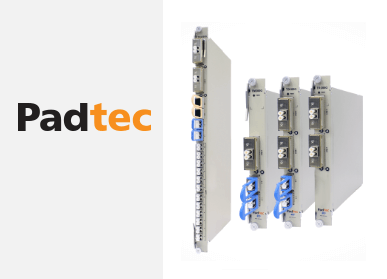
Padtec S.A. has joined the Fiber Broadband Association (FBA), an association that brings together operators and companies from several countries that operate in the telecommunications sector – specifically, in the optical fiber segment. The entity's objective is to promote the adoption and advancement of optical transmission technologies in Latin and North America, stimulating technological innovation, as well as new business models and applications.

“The FBA performs an important role in promoting fiber optics as the preferred technology for broadband infrastructure, with a view to improving connectivity around the world based on the advancement of communication networks”, assesses Carlos Raimar Schoeninger, Padtec’s CEO. “For us, networking is essential for fostering cooperation that results in technological advances. This is very much in line with our purpose of contributing to the evolution of the infrastructure of next generation communication networks in Brazil, in the Americas and in the world,” he adds.

https://www.padtec.com.br