NTT Research is expanding its OneVision facility in Sunnyvale, California.
Kazuhiro Gomi, CEO of NTT Research, discusses optical research underway at the lab and potential applications in the quantum realm.


NTT Research is expanding its OneVision facility in Sunnyvale, California.
Kazuhiro Gomi, CEO of NTT Research, discusses optical research underway at the lab and potential applications in the quantum realm.
Lumen Technologies launched 400 Gbps (400G) wavelength services on key routes across Europe. The company reports significant demand for 400G wavelength services from enterprises, government agencies, hyperscalers and wholesale customers seeking high-bandwidth interconnections between their data centres and public cloud.
Lumen has deployed its intercity 400G wavelength network in Europe across 50 markets. In EMEA, the Lumen network spans approximately 42,000 (67,000 kilometres) route miles of fibre and seamlessly connects to more than 2,500 on-net buildings and 540 public and private third-party data centres.

Currently, Lumen has enabled more than half of its intercity network footprint in Europe to support 400G wavelength services, as well as 70 data centres and two transatlantic routes on subsea cable systems Grace Hopper and Dunant.The intercity expansion will continue throughout 2023 and beyond, extending this network and pushing it deeper into the metro edge.
Globally, the Lumen network spans approximately 400,000 (643,000 kilometres) global route miles of fibre.
"We are continually innovating our network infrastructure solutions to support our customers' business growth," said Annette Murphy, President, Lumen EMEA and APAC. "In an era of digital acceleration, our next-generation wavelength network supports businesses' rapidly increasing high-bandwidth needs. This enhanced capacity helps customers scale quickly and securely, to enable a digital journey that can take them well into the future."
MEF announced its first annual Global Network-as-a-Service Event (GNE) designed to showcase the latest developments and roadmaps for secure network-as-a-service (NaaS) offerings for enterprises and businesses. The event will attract senior executives and decision makers from retail, wholesale, and mobile service providers, data center providers, cloud service providers, enterprises, technology solution providers and the press and analyst community. GNE takes place October 2-4, 2023, in Dallas, Texas.


STACK Infrastructure, a leading global developer and operator of data centers, announced the issuance of $250 million in securitized notes priced at a fixed rate coupon of 5.900%.
Cumulatively, STACK has raised a total of $2.1 billion in Notes, rated “A-” by Standard & Poor’s, via its master trust program.
STACK’s growth continues to outpace the industry with a portfolio of more than 1GW of built and under development capacity, 2+GW of future development capacity planned across the Americas, Asia Pacific, and EMEA, and has more than 4 million square feet currently under development. STACK most recently announced the expansion of a Northern Virginia campus to 250MW, the groundbreaking for another 100MW campus in NoVA’s Prince William County, the expansion of the 200MW flagship Portland campus, a 72MW data center campus in Osaka, an 80MW hyperscale data center campus in Frankfurt, and the continued expansion of the Milan campus to over 50MW. STACK’s rapidly growing offerings and expanding global footprint make it one of the largest global private data center operators worldwide.

Global data center capex grew 15 percent to $241 billion in 2022, according to a recent report from Dell'Oro Group. However, Dell'Oro is forecasting that cloud and enterprise data center spending will decelerate to single-digit growth in 2023.

“The hyperscale cloud service providers have undergone a robust expansion cycle for three straight years while navigating through a supply constraint environment,” said Baron Fung, Senior Research Director at Dell’Oro Group. “Enterprises also increased their IT spending from digital transformation initiatives. However, the market is due for a pullback as the hyperscalers are at the end of their expansion cycle and seek to improve efficiencies, and the enterprises will scrutinize expenditures more carefully in an uncertain economic environment. Thus, shifting from a supply-constrained environment to one that is oversupplied as demand softens in certain sectors,” explained Fung.
Additional highlights from the 4Q 2022 Data Center IT Capex Quarterly Report:
https://www.delloro.com/news/global-data-center-capex-grew-15-percent-to-241-billion-in-2022/
Ericsson and MediaTek have successfully merged four channels – one FDD (frequency division duplex) and three TDD (time division duplex)– to deliver a downlink speed of 4.36 Gbps, the highest known speed based on this band combination. This four-component carrier (4CC) aggregation combination will increase the 5G deployment options for communications service providers by blending different frequency bands.
Sibel Tombaz, Head of Product Line 5G RAN at Ericsson Networks, says: “Carrier Aggregation is crucial to getting the best possible 5G performance out of scattered spectrum assets. At Ericsson, we are persistently exploring all possible frequency band combinations to boost capacity and coverage. We have also shown that Carrier Aggregation is a game changer when it comes to optimizing the combined bandwidth of allocated spectrum assets to deliver higher date rates for a greater number of users.”
Cisco and the Telenor agreed to explore an everything as-a-service (XaaS) flexible and scalable model to reach a broader partner ecosystem and customer base.
The companies seek to accelerate the flexibility, scalability, and availability of cybersecurity solutions as-a-service for both business and consumer customers. The companies will also work to design and demonstrate how multi-cloud as-a-service can help business customers use multiple clouds more effectively and efficiently through end-to-end orchestration, maximized observability and cybersecurity, cloud cost efficiency, and cloud resource optimization.

“We made this collaboration extension with Cisco almost a tradition,” said Sigve Brekke, President CEO, Telenor. “That is because we did great things together in the past, and we are continuously able to raise the bar of our collaboration. I am excited we are jointly transforming offerings to an as-a-service model that will enable the broadest base of our customers by using the most advanced, flexible, and simple-to-use cybersecurity and multi-cloud as-a-service.”
“As Cisco and Telenor continue our work together, we can truly power an inclusive future for all by leveraging our shared values and innovation to accomplish even more in the markets we jointly serve,” said Chuck Robbins, Chair and CEO, Cisco.
Broadcom has begun volume shipments of its Tomahawk 5 family of Ethernet switch/router chips.
Tomahawk 5 offers 51.2 Tbps of switching capacity, twice that of any other switch on the market. The high radix of Tomahawk 5 enables single-hop connectivity between 256 high-performance AI/ML accelerators, each having 200Gbps of network bandwidth.

Broadcom says Tomahawk 5’s advanced Cognitive Routing ensures high network utilization even under the most demanding workloads. The Cognitive Routing suite includes innovative features such as Global Load Balancing which uses distributed inter-switch communication of congestion information to choose the best global path for packets through the network. Cognitive Routing also provides high network resiliency with extremely fast link-failover by detecting a failed link and re-directing traffic in less than 500ns.
“Taking Tomahawk 5 to production in a mere seven months after the product was initially sampled is a testament to Broadcom’s execution quality at scale,” said Ram Velaga, senior vice president and general manager, Core Switching Group, Broadcom. “Innovation and consistent execution enables us to be the trusted technology partner for our customers’ demanding networking needs.”
Broadcom has begun customer shipments of its StrataXG Tomahawk 5 switch series, providing 51.2 Tbps of Ethernet switching capacity in a single, monolithic chip.
“Delivering the world’s first 51.2 Tbps switch two years after we released Tomahawk 4, the industry’s first 25 Tbps switch, is a testament to the outstanding execution and innovation by the Broadcom team,” said Ram Velaga, senior vice president and general manager, Core Switching Group, Broadcom. “Since the introduction of Tomahawk 1 in 2014, Broadcom has consistently executed on doubling the bandwidth approximately every two years. With today’s introduction of the fifth generation Tomahawk family, we are proud to say that a single Tomahawk 5 replaces forty-eight Tomahawk 1 switches in the network, resulting in over 95 percent reduction in power requirements. We applaud our customers, partners, and engineers for making this possible.”
StrataXGS Tomahawk 5 highlights:
StrataXGS Tomahawk 5 Series Key Features for AI/ML:
Broadcom said it is targetting the Tomahawk 5 family at the massively shared infrastructure in large data centers, Tomahawk 5 provides AI/ML workload virtualization with features such as single-pass VxLAN routing and bridging. Critical to minimizing job completion time (JCT) for AI/ML workloads, Tomahawk 5 offers features such as Broadcom Cognitive Routing, advanced shared packet buffering, programmable inband telemetry, and hardware-based link failover.
Tomahawk 5’s Cognitive Routing improves network link utilization by automatically and dynamically selecting the most lightly loaded links in the system for every flow that transverses the switch. This is especially important for AI/ML workloads which often have a combination of short-lived mice flows and long-lived, high bandwidth elephant flows with low entropy.
Tomahawk 5 includes real-time dynamic load balancing that tracks the utilization of all links, both at the switch and downstream in the network, to determine the optimal path for each flow. It also monitors the health of links in hardware and automatically steers traffic away from failed links. These features provide dramatically improved network utilization and reduced congestion, resulting in shortened JCT.
Tomahawk 5 also features extensive programmable inband telemetry on both live traffic and network probes. Real-time metadata can be inserted into traffic at line rate as it traverses the network to collect telemetry on queue size, packet latency, switch utilization, and a variety of other customer-selectable metrics. This metadata can be used for precise end-to-end network congestion control.
To enable the lowest power and lowest cost for physical connectivity, Tomahawk 5 enables a direct 100G PAM4 interface to direct attach copper (DAC), front panel pluggable optics, and co-packaged optics. The flexible, long reach Tomahawk 5 SerDes provides DAC connectivity to all devices within a rack, and even between racks, without the need for retimers or other active components. It can also interface directly to a broad ecosystem of standard front-panel pluggable optical modules.
Tomahawk 5 will be made available with co-packaged optics using Broadcom’s Silicon Photonics Chiplets in Package (SCIP) platform, providing more than 50 percent decrease in the power needed for optical connectivity. Since the same switch silicon provides all these options, customers can choose the optimal I/O for each part of their intra-cluster, inter-cluster, and inter-DC networks with no software porting required.
NTT Electronics announced commercial shipments of a 140 Gbaud high-performance coherent DSP (ExaSPEED GAIA)for enabling 1.2 Tbps per wavelength modules. The new DSP offers a programmable baud rate of up to 140 Gbaud powered by a flexible coded modulation scheme and advanced 5nm FinFET CMOS process.
The programmable baud rate can support very fine granularity that enables ExaSPEED GAIA to adapt to a range of links while maximizing spectral efficiency. These include short-reach data center interconnects (DCI), terrestrial metro links with cascaded ROADMs, and ultra-long-haul sub-sea links. Customers can use a wide range of 400G interfaces in 1.2T (3x400GbE) for DCI, 800G (2x400GbE) for metro and 400G (1x400GbE) for sub-sea applications. This capability helps simplify interfaces and optimize Capital/Operational expenditure. Moreover, ExaSPEED GAIA also offers fine capacity tuning in 50G increments to respond to various customer requirements.

Flexible coded modulation is the newly-developed coding scheme to efficiently implement advanced constellation shaping, forward error correction (FEC), and high-order modulation format with high performance and low power. This enables ExaSPEED GAIA to support thousands of operational modes that cover a multitude of customer's transmission links with high energy efficiency. To enhance the performance, ExaSPEED GAIA employs a number of novel compensation algorithms including nonlinear distortion compensation, adaptive fast state of polarization (SOP) tracking, fast device and transmission characteristics estimation, and ultra-long CD compensation for high-baud rate systems*. The performance of ExaSPEED GAIA can be further optimized by combining it with NTT Electronics’ industry-leading high speed coherent driver module (UHB-CDM).
“We are excited to add the ExaSPEED GAIA DSP to our product portfolio which cuts the power consumption per bit to half while doubling the baud rate over earlier product offering,” said Satoshi Shigematsu, NTT Electronics General Manager of Broadband System & Device Business Unit. “We believe this high-performance DSP will help our customers offer highly differentiated optical transmission equipment and systems”, he added.
“We are very impressed with the performance of NTT Electronics’ latest ExaSPEED GAIA DSP”, commented Hideki Matsui, Vice Head of Photonics System Business Unit, Fujitsu Limited. “This revolutionary DSP makes our products more competitive in the market and enables us to offer innovative solutions. It opens up a new ‘terabit era’, which will be a game changer in our industry”, he added.
Hawaiki Submarine Cable achieved recrod subsea spectral efficiency of more than 4.5 bits per second per hertz (b/s/Hz) on an uncompensated cable spanning 15,000 km and connecting Australia and the United States in a trial of Infinera's ICE6 solution.
Conducted with Infinera’s GX Series Compact Modular Platform, featuring the ICE6 optical engine, the trial underscored the value of its unique features, including ultra-high baud rates, long-codeword probabilistic constellation shaping (LC-PCS), second-generation Nyquist subcarriers, and SD-FEC gain sharing.
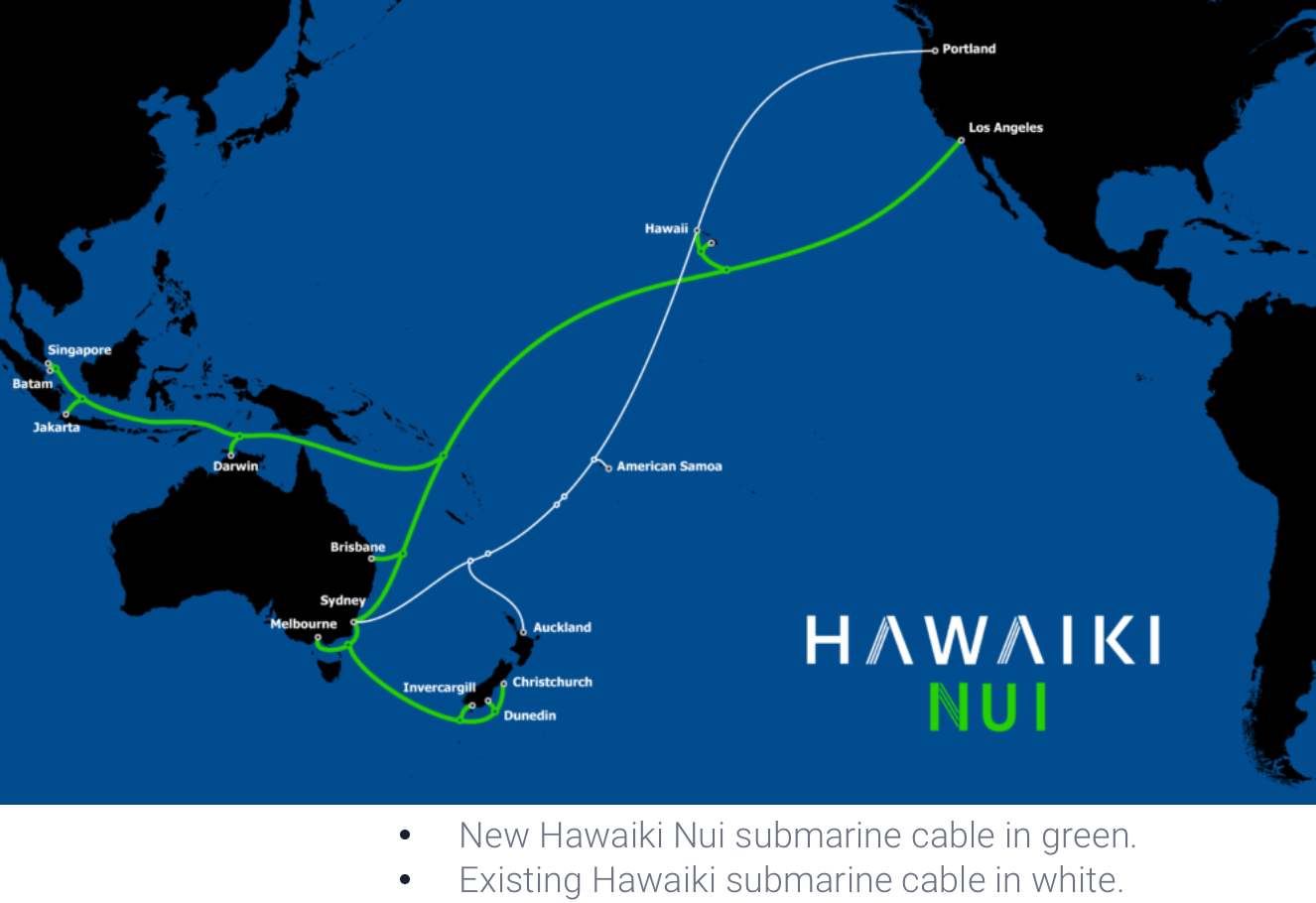
Hawaiki also tested the integration of Infinera’s suite of software automation tools, including Intelligent Power Management (IPM) and Instant Bandwidth 2.0, which enable important capabilities such as smart cable automation, embedded spectrum sharing, and rapid service activation.
“As a carrier and vendor-neutral operator, we are consistently looking for the best technology to upgrade our network. This trial leveraging Infinera’s latest coherent optical solution proved that the Hawaiki cable system has been optimally designed and is capable of achieving record-breaking performance to deliver more capacity and open spectrum sharing capabilities, essential to meet our customers’ needs,” said Anaël Greiveldinger, Hawaiki’s Director of Engineering.
“Extending the capital life of important subsea assets for our customers remains a key goal of Infinera,” said Nick Walden, Senior Vice President, Worldwide Sales, Infinera. “We are excited about the results of this trial proving how ICE6 can significantly increase the number of services that can be delivered over long submarine infrastructure.”
The O-RAN Alliance and OpenAirInterface Software Alliance (OAI) agreed to co-operate on open Radio Access Network issues, open source software development, and 5G as well as next generation platforms for demonstrating O-RAN technology.
The O-RAN Alliance also announced two new Open Testing and Integration Centres (OTIC) in Asia & Pacific. OTICs are vendor-independent, open, and qualified labs approved by the O-RAN ALLIANCE that issue awards in the O-RAN Certification and Badging Program. These include the Asia & Pacific OTIC by ritt7layers and Asia & Pacific OTIC in Singapore.
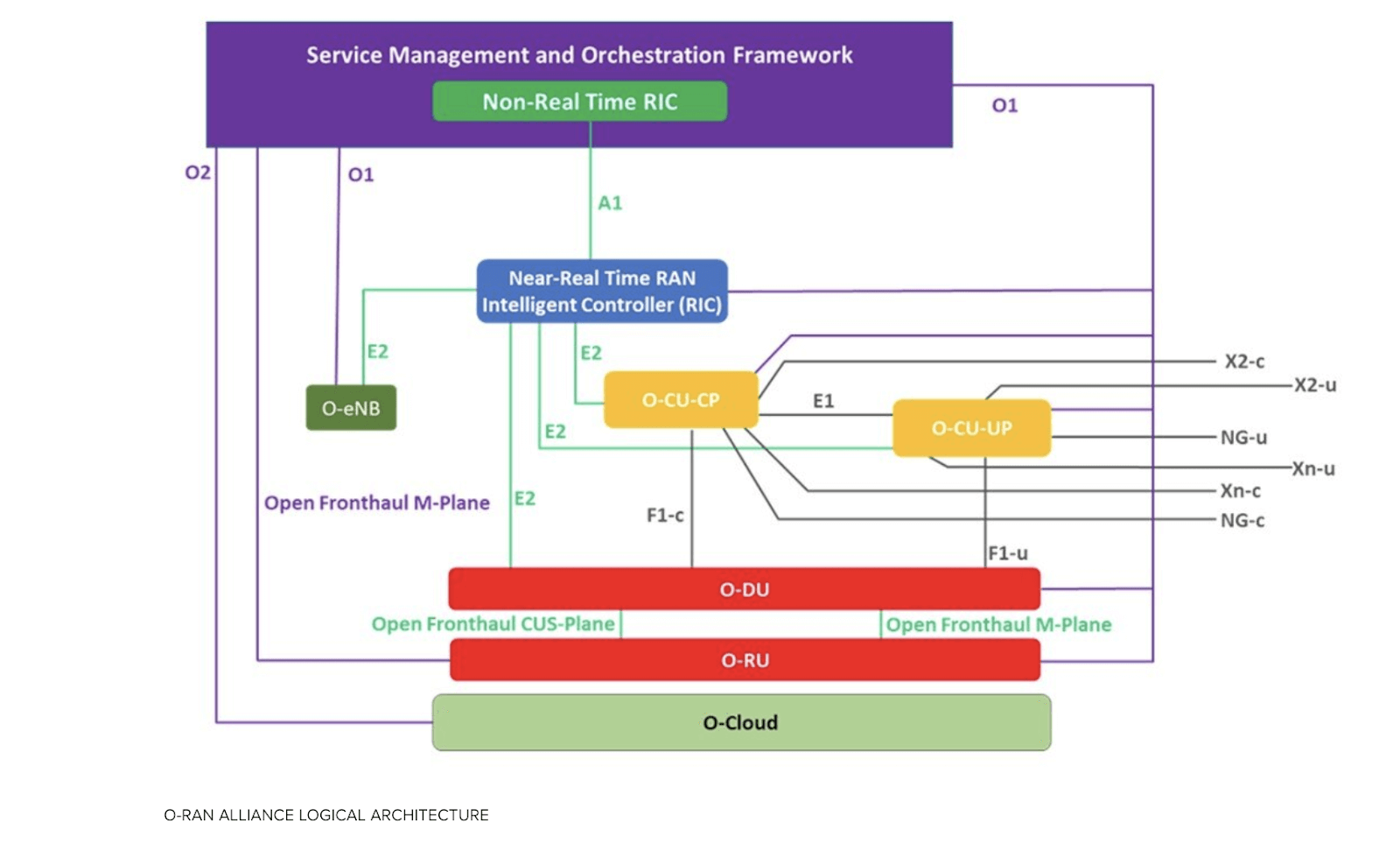
O-RAN Release 003 includes enhancements to RAN Slicing and SMO features. It also introduces new features:

Australia Japan Cable (AJC) is the first to trial Infinera’s advanced coherent algorithms for next-generation optical engines.
The trial was conducted over a 7,289-km segment of the AJC cable system between Paddington, New South Wales, Australia and Tumon Bay, Guam. The trial delivered a 17% increase in total fiber pair capacity compared to the current generation of optical engine deployed in AJC’s network. This trial leveraged Infinera’s advanced development testbed used for comparative algorithm testing, which included a high-performance arbitrary waveform generator-based transmitter, a receiver based on high-performance photodiodes, and a real-time oscilloscope. The trial tested advanced modulation, forward error correction (FEC), and nonlinear compensation algorithms.
The AJC cable system was brought into service in 2001 with a design life of greater than 25 years. Its design predates the introduction of coherent transponders by almost a decade. Capacity growth in the Pacific region is around 35-40% per year, making the increase of capacity on submarine cables more critical than ever.
“With the enormous cost and the delay of several years to gain approval permits for new cable systems, it is important to find ways to extend the economic life of existing cables like ours,” said David Crofts, CEO, Australia Japan Cable. “Older submarine cables tend to exhibit higher optical penalties compared to newer cables, but by deploying advanced modulation and compensation techniques, it is still possible to squeeze additional capacity from these valuable assets, as this trial demonstrates.”
“Collaboration with key network operators, like AJC, helps us to bring our innovative concepts from the lab to real-world environments and is a critical part of Infinera’s continuous drive to increase the value delivered by optical transmission solutions,” said Robert Maher, Infinera CTO, Optical Modules & Coherent Solutions. “The more capacity we can squeeze out of deployed fiber optic cables using advanced transponder designs and innovative signal processing algorithms, the more we can help to extend the economic life of mature cables like AJC.”
Total global revenue for the Broadband Access equipment market increased to $19 B in 2022, up 17 percent year-over-year (Y/Y), according to a new repor from Dell'Oro Group. Spending on PON equipment continues to fuel the overall market, with revenue for PON OLTs and ONTs reaching $11.7 B for the year.
"The focus on upgrading and expanding broadband access networks was a clear focus for operators around the world in 2022," said Jeff Heynen, Vice President with Dell'Oro Group. "We expect broadband to remain a critical area of investment in 2023, as operators expand their footprint and increase the speeds and services they offer subscribers," explained Heynen.
Additional highlights from the 4Q 2022 Broadband Access and Home Networking quarterly report:
T-Mobile US agreed to acquire Ka’ena Corporation and its subsidiaries and brands: Mint Mobile, a successful direct-to-consumer (D2C) prepaid wireless brand in the U.S.; Ultra Mobile, a unique wireless service offering international calling options to communities across the country; and wholesaler Plum.
T-Mobile will pay up to a maximum of $1.35 billion in a combination of 39% cash and 61% stock to acquire Ka’ena. The final price depends on Ka'ena's performance.
Ka'ena has been using T-Mobile's 5G network exclusively.

“Mint has built an incredibly successful digital direct-to-consumer business that continues to deliver for customers on the Un-carrier’s leading 5G network and now we are excited to use our scale and owners' economics to help supercharge it - and Ultra Mobile - into the future,” said Mike Sievert, CEO of T-Mobile. “Over the long-term, we’ll also benefit from applying the marketing formula Mint has become famous for across more parts of T-Mobile. We think customers are really going to win with a more competitive and expansive Mint and Ultra.”
“Our brands have thrived on the T-Mobile network, and we are thrilled that this agreement will take them even further, bringing the many benefits of 5G to even more Americans,” said David Glickman, founder and CEO of Mint, Ultra and Plum. “This transaction validates our meteoric success and will unite two proven industry innovators committed to doing things differently in the wireless industry.”
“Mint Mobile is the best deal in wireless and today’s news only enhances our ability to deliver for our customers. We are so happy T-Mobile beat out an aggressive last-minute bid from my mom Tammy Reynolds as we believe the excellence of their 5G network will provide a better strategic fit than my mom’s slightly-above-average mahjong skills. I am so proud of the entire Mint team and so excited for what’s to come,” said Ryan Reynolds.
Amazon’s Project Kuiper is promising to low-cost connectivity at rates from 100 Mbps for consumers to up to 1 Gbps for enterprise, government, and telecom applications when its constellation of LEO satellites enter service.
Project Kuiper’s ground infrastructure will include gateway antennas that securely send and receive customer data to and from satellites, along with telemetry, tracking, and control (TT&C) antennas. A global network will connect those gateway antennas to the internet, public cloud, or private networks.
Some highlights detailed in an Amazon blog:

https://www.aboutamazon.com/news/innovation-at-amazon/what-is-amazon-project-kuiper
Telefónica has begun offering free access to its Open Gateway’s pre-commercial APIs. Three such APIs are currently available:

Telefónica said developers will be able to test and validate selected use cases to generate end-to-end services for end customers (B2B and B2C). They will be able to experiment with high-performance network capabilities, including high-response and low-latency computing, to create applications of use to end users.
NETGEAR launched the first WiFi 7 router.
Highlights of the NETGEAR Nighthawk RS700 Router.
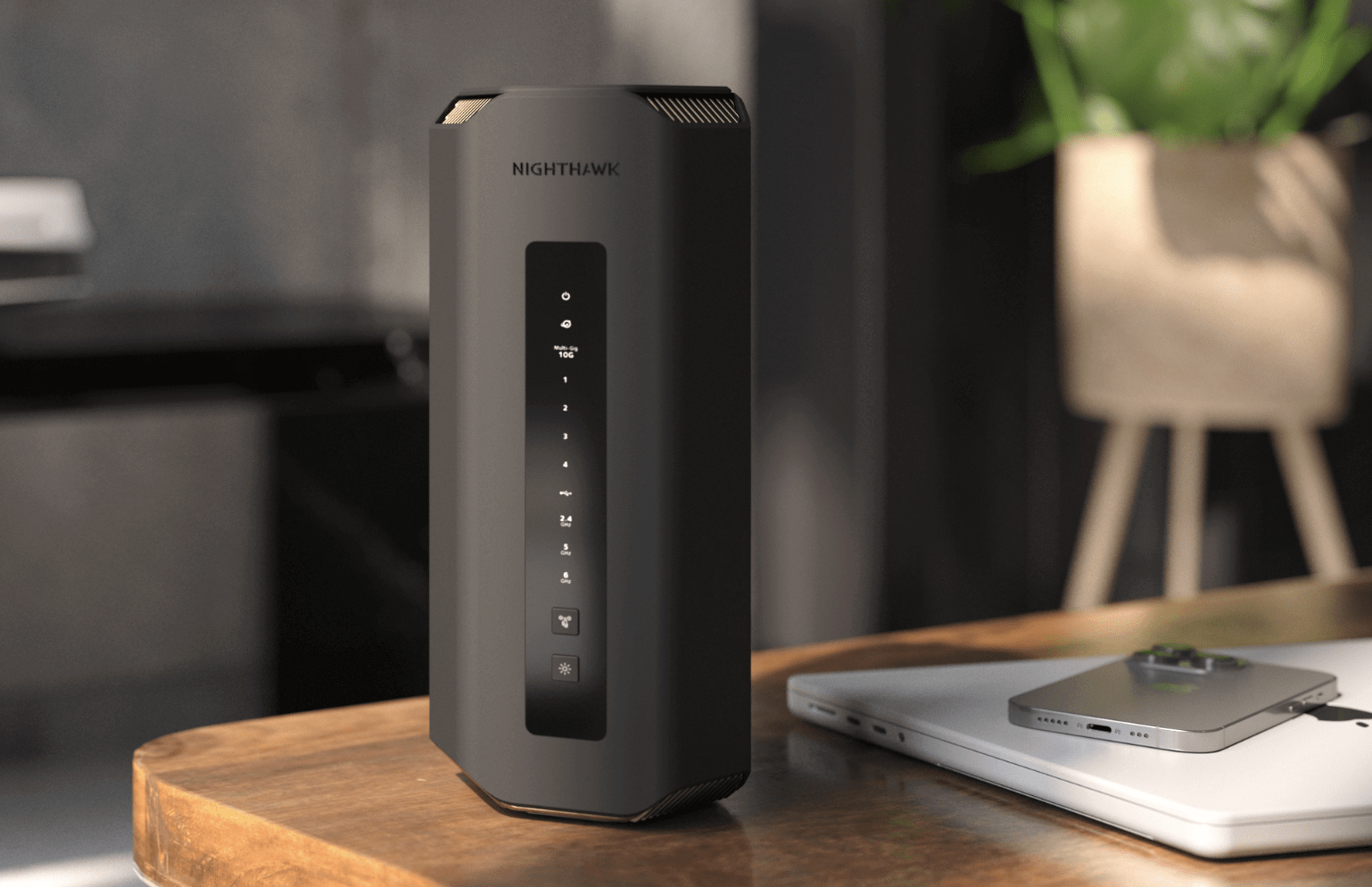
"With the launch of our Nighthawk RS700 Router, we’re setting the pace for adoption of the next generation WiFi,” said David Henry, president & GM of Connected Home Products and Services at NETGEAR. “The RS700 is purposefully constructed for the highest possible performance. We’ve deployed our decades of RF expertise to maximize antenna range within a compact design that minimizes interference while fitting flawlessly into any home environment.”
https://convergedigest.com/netgear-unveils-first-wi-fi-7-router/
Adtran has formed a partnership with Satelles, a supplier of secure time and location technology using low-earth orbit (LEO) satellites, to enable operators of critical infrastructure to safeguard their timing networks with Satellite Time and Location (STL) technology.
Adtran will integrate Satelles’ STL into its Oscilloquartz network synchronization products. This can serve as an alternative to GNSS systems or a way to augment them with enhanced reliability and security.

STL provides augmented and secure backup for GPS or other GNSS by harnessing encrypted signals transmitted via LEO satellites. It ensures timing and location information that is highly precise, robustly secure, and accessible worldwide. STL is effectively impervious to cyberattacks and is far less susceptible to GNSS vulnerabilities such as signal disruption and manipulation. And because STL signals are up to 1,000 times stronger than GNSS, they can easily reach into buildings and other hard-to-reach locations. Through its partnership with Satelles, Adtran’s Oscilloquartz division will incorporate these benefits into its end-to-end timing toolkit. What’s more, as well as integrating STL into its grandmaster clocks, it will develop miniature M.2 form factor STL receiver modules for third-party product integration.
“We’re pleased to be working with Adtran’s Oscilloquartz division to integrate STL into its portfolio of PTP network timing devices. Together, we’re enabling even more customers to benefit from their game-changing aPNT+™ technology,” said Christina Riley, VP and GM of commercial enterprise solutions at Satelles. “Leveraging LEO signals that are 1,000 times stronger than GNSS, our STL solution is transforming the PNT industry. It’s ideal for providing accurate, reliable timing where GNSS can’t reach, such as indoor locations. "
“We’re excited to offer Satelles’ innovative STL technology as the perfect addition to our portfolio. Reliable, precise and secure, STL is an excellent source of alternative PNT services that’s ideal for use in situations where distributed PTP is unavailable. It also creates new market opportunities for indoor 5G and data center use cases. By incorporating it into our solutions, we’ll empower operators of mission-critical networks to bring robust timing to the most challenging environments and remove the expense of installing outdoor antennas and coring through concrete,” commented Gil Biran, GM of Oscilloquartz, Adtran.
Colt Technology Services has more than doubled its long-haul network capacity in Japan using Ciena's 6500 Reconfigurable Line System, Waveserver 5 compact interconnect platform and Manage, Control and Plan domain controller.

“Throughout Japan, there is a growing ask to support the connectivity needs required to run cloud-based applications and bandwidth-heavy video content. Designed with programmability, performance, and scalability in mind, Ciena’s 6500 RLS enables Colt to deploy C&L-band optimized equipment with no service interruptions, empowering Colt to bring the digital universe to its customers faster than ever before despite the distance,” said Kazuyasu Takahashi, Vice President and General Manager, Ciena Japan.
AST SpaceMobile, which is planning to deploy a space-based cellular broadband network accessible directly by standard mobile phones, signed a non-binding memorandum of understanding with Saudi Arabia's stc.
"We are thrilled to announce our commitment to expanding our digital services and communications, with a goal to provide a truly inclusive ecosystem that connects every corner of Saudi Arabia with unparalleled service quality and reliability,” said stc VP of Products & Solutions, Saud Alsheraihi. “As we forge ahead in our quest for a more connected and sustainable world, we are excited to collaborate with AST SpaceMobile to potentially revolutionize the telecom industry through Space in the Kingdom.”

“Our collaboration with AST SpaceMobile aims to help us achieve our goal of providing the highest quality and reliable communication services in Saudi Arabia. Our commitment to expanding our digital services and communications is unwavering, and this relationship is a testament to our dedication to innovation and excellence.'”
AST SpaceMobile’s mission is to eliminate the connectivity gaps faced by today’s five billion mobile subscribers and finally bring broadband to the billions who remain unconnected. The company has entered into agreements and understandings with mobile network operators, who collectively have over 2 billion mobile subscribers.


