Wednesday, August 7, 2024

Singtel pioneers National Quantum-Safe Network

 Singtel has unveiled Southeast Asia’s first National Quantum-Safe Network Plus (NQSN+), designed to shield enterprises from emerging quantum threats. Singtel's pioneering initiative offers a customized program for businesses to trial the technology before full-scale adoption. Singtel’s Quantum-Safe Network (QSN) supports a wide array of network and security devices, enabling seamless integration and enhanced connectivity for enterprises looking to secure their communications.

Appointed by the Infocomm Media Development Authority last year, Singtel has developed Singapore’s first NQSN+ to bolster the nation's resilience against quantum threats over the next decade. The advanced network extends quantum-safe security to various new use cases, including identity, mobility, and authentication services, providing comprehensive protection for business-critical data.

Singtel is also launching a three-phase pilot program to support enterprises in adopting quantum-safe technologies. This program includes workshops to build awareness, integration testbeds to validate interoperability, and live trials to assess network behavior and operational aspects. Singtel will collaborate closely with enterprises to develop tailored quantum-safe use cases, ensuring a risk-free and smooth integration of these advanced technologies.

Key Points:

  • Quantum-Safe Network Launch: Southeast Asia’s first NQSN+ to protect enterprises from quantum threats.
  • Custom Trial Program: Singtel offers a program for enterprises to trial quantum-safe technology before adoption.
  • Enhanced Security: The network supports various devices and extends security to new applications like identity and authentication.
  • Three-Phase Pilot Program: Includes awareness workshops, integration testbeds, and live trials for seamless technology adoption.
  • Tailored Use Cases: Singtel will develop industry-specific quantum-safe use cases in collaboration with enterprises.

Mr Ng Tian Chong, Chief Executive Officer, Singtel Singapore said, “Singtel has always played a central role in our nation’s security. Though quantum computing may be in its nascent stages, it’s fast gaining velocity across critical information sectors, especially banking, healthcare and government services, and we want to ensure Singapore is ready for it. That’s why we specially-curated this programme to equip enterprises with the relevant skills and knowledge so they can take the necessary steps to future-proof their critical networks against potential quantum threats. We encourage all enterprises who are keen to bolster their digital resilience to reach out to us so they can be prepared for the quantum age.”

https://www.singtel.com/business/campaign/quantumsafenetwork.

undefined

Verizon Leverages AI to Prevent Fiber Cuts

Verizon has introduced an innovative program to safeguard its extensive fiber infrastructure from accidental cuts during construction and excavation activities. Each year, thousands of fiber lines are damaged, leading to significant connectivity disruptions for customers. To address this, Verizon is deploying proprietary technology that uses artificial intelligence (AI) and machine learning to proactively identify and prevent potential fiber damage. This marks an industry first in leveraging advanced tech to reduce the risks associated with digging activities.

Verizon’s AI-driven solution processes over ten million 811 dig requests annually, identifying high-risk excavations based on historical data, current activity at the site, and the track record of the excavator involved. By taking preventive measures, such as enhancing communication with excavators, Verizon aims to significantly reduce the number of fiber cuts each year. Integrated with Verizon’s 811 system, this initiative has the potential to prevent hundreds of fiber cuts annually, maintaining uninterrupted connectivity for customers and minimizing costly repairs.

  • AI Deployment: Verizon uses AI and machine learning to assess over 10 million dig requests annually for potential fiber cut risks.
  • Proactive Prevention: The system identifies high-risk excavations and implements preventive measures to protect underground fiber.
  • Impact: The initiative could prevent hundreds of fiber cuts annually, reducing connectivity disruptions.
  • National Call Before You Dig Day: Verizon emphasizes the importance of calling 811 before any digging project to avoid damaging underground utilities.

https://www.verizon.com/about/news/verizon-uses-ai-machine-learning-prevent-fiber-cuts


undefined

Cogent Sees Lingering Covid Impact in Central Business Districts

Cogent Communications reported mixed results for Q2 2024, with service revenue rising to $260.4 million, an 8.6% increase compared to the same period in 2023, but a 2.2% decline from the previous quarter. The company’s performance was influenced by the ongoing effects of the COVID-19 pandemic on its corporate network operations, particularly in central business districts where remote work policies have led to decreased office occupancy and slower new sales to corporate clients. Despite some positive trends in certain areas of the U.S., Cogent continues to face challenges in fully recovering its corporate revenue growth.

Cogent's acquisition of Sprint has also played a significant role in its recent financial outcomes. The company incurred $12.4 million in costs related to the acquisition during Q2 2024, affecting its EBITDA, which adjusted for these costs, was $106.2 million—down from $115.0 million in Q1 2024. Additionally, the company’s EBITDA margin improved slightly to 10.4% in Q2 2024 from 6.9% in Q1 2024, signaling some operational efficiency gains despite the ongoing integration of Sprint’s assets.

The pandemic's residual effects continue to linger, particularly in terms of corporate customer turnover and fewer new tenant opportunities. However, Cogent is cautiously optimistic about the future, as the gradual return to office spaces and the integration of new applications that support remote work environments could eventually boost its service revenues and corporate sales.

Key Points:

  • Service Revenue: $260.4 million in Q2 2024, up 8.6% YoY but down 2.2% QoQ.
  • EBITDA: Adjusted EBITDA was $106.2 million in Q2 2024, down from $115.0 million in Q1 2024.
  • Pandemic Impact: Continued slow recovery in corporate network sales due to lingering effects of remote work policies.
  • Sprint Acquisition Costs: $12.4 million in Q2 2024, impacting overall profitability.
  • Dividend Increase: Quarterly dividend increased to $0.985 per share, marking the 48th consecutive increase.

Cogent acquires the legacy Sprint fiber network

Cogent Communications completed its previously announced acquisition of T-Mobile's Wireline Business, which is the legacy Sprint U.S. long-haul network. The deal greatly expands Cogent's network footprint and enables it enter the U.S. market for dark fiber and wavelength services.Cogent paid $1 as the purchase price, subject to customary adjustments for net debt and net working capital. In addition, Cogent will provide T-Mobile with IP transit services...


undefined

Swisscom Broadcast develops Drones-as-a-Service with Nokia

 Nokia and Swisscom Broadcast have announced the deployment of the largest Drones-as-a-Service network in Switzerland. This project will utilize 300 Nokia Drone-in-a-Box units to enhance public safety and industrial operations, demonstrating Nokia's capabilities in digital infrastructure and mission-critical edge computing.

  • Deployment Scale: Nationwide network with 300 Drone-in-a-Box units.
  • Safety and Efficiency: Enhances safety and operational efficiency for public safety and industrial use cases.
  • Advanced Use Cases: Supports drone automation, BVLOS operations, and 3GPP technologies.
  • Public Safety: Optimizes emergency response and infrastructure inspection, improving first responders' situational awareness.
  • Industry Applications: Facilitates inspections of hard-to-reach infrastructure, enhancing worker safety.
  • Seamless Integration: Easy onboarding for industrial applications with edge computing needs.
  • Service Portfolio: Includes expertise, compliance, data collection, and analysis from Nokia and Swisscom Broadcast.
  • Regulatory Compliance: Operations will adhere to spectrum and aviation safety regulations.

undefined

Dell'Oro: AI Data Centers Drive Ethernet Adapter and Smart NIC Market

A new report from Dell'Oro Group projects the Ethernet Adapter and Smart NIC market to exceed $16 billion by 2028. We raised our market outlook significantly because of strong requirements for back-end Ethernet server connectivity to support the scale out of AI server clusters.


“The advent of generative AI applications is driving the demand to interconnect accelerated servers with a back-end Ethernet network necessary for the training of large language models. This is a new market opportunity for Ethernet adapters, with significantly higher growth compared to the traditional front-end Ethernet adapter market”, said Baron Fung, Senior Research Director at Dell’Oro Group. “While the back-end network market today is predominantly InfiniBand-based today, Ethernet-based solutions are forecast for broad adoption as customers seek a multi-vendor solution,” added Fung.

Additional highlights from the Ethernet Adapter and Smart NIC 5-Year July 2024 Forecast Report:

  • The total Ethernet Adapter and Smart NIC market, which includes server connectivity for both front-end and back-end networks, is projected to grow at a 27 percent compound annual growth rate by 2028.
  • Server access speed for back-end networks will be at least one generation ahead compared to that of front-end networks to maintain pace with compressed GPU accelerator roadmaps.
  • Smart NICs, which include DPUs and IPUs, are positioned for high growth to support the strong demands of back-end Ethernet-based networks.

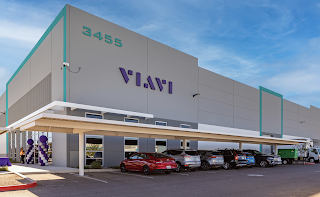
Viavi Reports Fiscal 2024 Revenue Decline and Restructuring Efforts

Viavi Solutions reported a notable dip in performance for the fourth quarter and fiscal year 2024, highlighting the challenging market conditions and the company's ongoing restructuring efforts. The company experienced a 4.4% year-over-year decrease in fourth-quarter net revenue, totaling $252.0 million, and a 9.6% drop in fiscal year revenue, reaching $1.0 billion. GAAP operating margins were also significantly impacted, declining by 680 basis points year-over-year in Q4 and 530 basis points for the full year. Additionally, GAAP earnings per share fell to $(0.10) in Q4 and $(0.12) for the fiscal year, indicating substantial financial pressure.

In response to these challenges, Viavi has initiated a restructuring and workforce reduction plan, expected to affect approximately 6% of its global workforce. This plan aims to improve operational efficiencies and align the company's workforce with current business needs. Viavi estimates this will result in $25 million in annualized cost savings by the end of fiscal 2025. Despite the difficult year, CEO Oleg Khaykin expressed optimism about a gradual recovery in the second half of fiscal 2025, particularly in the Network and Service Enablement (NSE) segment.

Fourth Quarter Performance:

  • Net revenue: $252.0 million, down 4.4% YoY
  • GAAP operating margin: (2.3)%, down 680 bps YoY
  • GAAP EPS: $(0.10), down $0.10 YoY
  • Fiscal Year 2024 Performance:
  • Net revenue: $1.0 billion, down 9.6% YoY
  • GAAP operating margin: 2.1%, down 530 bps YoY
  • GAAP EPS: $(0.12), down 209.1% YoY

Restructuring Efforts:

  • Workforce reduction plan affecting 6% of global workforce
  • Estimated $25 million in annualized cost savings by fiscal 2025
  • Business Outlook:
  • Q1 fiscal 2025 net revenue expected between $235 million and $245 million
  • Non-GAAP EPS expected between $0.05 and $0.07

undefined

Nokia Self-Certifies Fiber Product for Buy America Build America

Nokia has announced that it is the first technology vendor to self-certify its U.S.-manufactured fiber products, ensuring they meet the requirements outlined in the newly established Buy America Build America (BABA) compliance and self-certification guidelines for the Broadband Equity, Access, and Deployment (BEAD) program. With this certification, BEAD applicants can now obtain a Certification Letter from Nokia to demonstrate BABA compliance, facilitating their access to the program's $42.45 billion in available funding.

To participate in the BEAD program, operators and infrastructure players must use U.S.-manufactured fiber broadband equipment, as mandated by federal regulations. The National Telecommunications and Information Administration (NTIA) has created a self-certification framework to help manufacturers prove their compliance, adding them to a Department of Commerce-managed list. This process is designed to prevent fraudulent claims, requiring company officers to certify their products under penalty of fine or imprisonment and provide BABA certification letters for audit purposes. Nokia's certified products include:

  • Nokia FX and MF OLT modular product lines
  • Nokia SF-8M sealed OLT
  • XS-220X-A ONT

undefined

ADTRAN's Q2 Highlights Growth in Fiber Networking

ADTRAN has announced its financial results for the second quarter of 2024, reporting revenue of $226.0 million. The company experienced growth in its customer base across the U.S. and Europe, driven by increased adoption of its latest fiber networking solutions. While the company saw improvements in key operating metrics, challenges remained in profitability. The GAAP gross margin stood at 36.1%, while the non-GAAP gross margin was higher at 41.9%. However, the company reported a GAAP net loss of $49.9 million, translating to a GAAP diluted loss per share of $0.63.

Looking ahead, ADTRAN Holdings provided guidance for the third quarter of 2024, with expected revenue ranging between $215 million and $235 million. The company anticipates a non-GAAP operating margin between -1% and +3%, reflecting ongoing efforts to improve profitability despite a challenging market environment.

  • Revenue: $226.0 million in Q2 2024.
  • Gross Margin: 36.1% GAAP, 41.9% Non-GAAP.
  • Operating Margin: -17.0% GAAP, 0.7% Non-GAAP.
  • Net Loss: $49.9 million GAAP, $18.8 million Non-GAAP.
  • Earnings Per Share: GAAP loss of $0.63 per share, Non-GAAP loss of $0.24 per share.
  • Q3 2024 Outlook: Revenue expected between $215 million and $235 million; Non-GAAP operating margin projected between -1% and +3%.
ADTRAN Holdings’ Chairman and Chief Executive Officer Tom Stanton stated, "We had a solid second quarter, during which we saw improvements across all our major operating metrics, including profitability and working capital. During the quarter, we saw growth in our customer base across the U.S. and Europe as customers continue to adopt our latest fiber networking solutions”.


undefined

Tuesday, August 6, 2024

Lumen Highlights Fiber Boom for AI Connectivity, Q2 Improvements

Lumen Technologies announced it has secured $5 billion in new business driven by major demand for connectivity fueled by AI, alongside reporting its second-quarter 2024 financial results. Lumen said large companies across industry sectors are seeking to secure fiber capacity quickly, as this resource becomes increasingly valuable and potentially limited due to booming AI needs. Additionally, Lumen is in active discussions with customers to secure another $7 billion in sales opportunities to meet the increased demand.

To address this tremendous demand, which includes the recent announcement under which it will provide additional fiber capacity to Microsoft, Lumen disclosed plans to more than double its intercity network miles over the next five years, while also providing access to a significant amount of installed dark fiber. Lumen has secured an agreement with Corning to be its preferred partner for its next-generation fiber-dense cable, which will help accommodate the increased data processing that AI requires.

"The AI economy is changing business operations, and companies are recognizing they need powerful network infrastructure to manage the unprecedented data flows today and the demand in the future," said Kate Johnson, president and CEO, Lumen Technologies. "Our partners are turning to us because of our AI-ready infrastructure and expansive network. This is just the beginning of a significant opportunity for Lumen, one that will lead to one of the largest expansions of the internet ever."

Lumen has created a new Custom Networks division to manage its portfolio of Private Connectivity Fabric℠ solutions and address additional interest from hyperscalers and other large organizations. The division will provide customized network solutions that include dark fiber, custom fiber routes, and digital services that securely connect companies' data centers to protect data and support AI-intensive workloads. Lumen may also operate and maintain the network as part of its services.


In its Q2 2024 financial results, Lumen Technologies reported growth in North American large and mid-market enterprise sales, with a year-over-year increase in net total contract value across all channels. Improved customer satisfaction is expected to reduce churn and boost revenue growth. A notable partnership with Microsoft positions Lumen to capitalize on the increasing demand for high-bandwidth infrastructure supporting AI ventures.

Financially, Lumen reported a net loss of $49 million for Q2 2024, a significant improvement from the $8.736 billion loss in Q2 2023, which included a substantial non-cash goodwill impairment charge. The company’s adjusted EBITDA was $1.011 billion, down from $1.229 billion in the same period last year. Despite a negative free cash flow of $156 million, Lumen generated $511 million in net cash from operating activities. The updated full-year 2024 financial outlook projects adjusted EBITDA between $3.9 to $4.0 billion, with capital expenditures expected to range from $3.1 to $3.3 billion.

Key Metrics:

Net Loss: $(49) million, compared to $(8.736) billion in Q2 2023

Adjusted EBITDA: $1.011 billion, down from $1.229 billion in Q2 2023

Free Cash Flow: Negative $(156) million, compared to negative $(896) million in Q2 2023

Total Revenue: $3.268 billion, down from $3.661 billion in Q2 2023

Future Outlook:

Adjusted EBITDA: $3.9 to $4.0 billion

Free Cash Flow: $1.0 to $1.2 billion

Capital Expenditures: $3.1 to $3.3 billion


undefined

Deutsche Telekom Reports Strong Q2, Raises Full-Year Guidance

 Deutsche Telekom continues to demonstrate robust financial performance, posting significant gains for the second quarter of 2024. Service revenues rose by 4.9% year-on-year to €24.1 billion, while adjusted EBITDA AL increased by 7.8% to €10.8 billion. On an organic basis, service revenue growth stood at 4.0%, and adjusted EBITDA AL grew by 6.6%. Free cash flow AL surged by 48.5% to €5.2 billion. CEO Tim Höttges praised the company’s consistent execution of its strategy, reflected in a net profit of €2.1 billion, up 35.6% from the previous year, and an adjusted net profit increase of 31.3% to €2.5 billion. Adjusted earnings per share for the first half of 2024 reached €0.95.

Key achievements across group businesses include:

  • Germany: Fiber-optic customers grew by 113,000, bringing the total to over 1.2 million. TV net adds were 114,000, boosted by the UEFA European Championship and regulatory changes. Mobile service revenues increased by 3.7%, with the branded contract customer base growing by 311,000. Revenue reached €6.4 billion, up 3.6%, with adjusted EBITDA AL slightly increasing by 1.0% to €2.6 billion.
  • United States: T-Mobile US surpassed 100 million postpaid customers, adding 1.3 million postpaid net customers in Q2. Service revenues grew by 4.4% to $16.4 billion, and adjusted EBITDA AL rose by 9.1% to $7.8 billion.
  • Europe: Adjusted EBITDA AL increased by 8.9% to €1.1 billion, with revenue growing by 6.8% to €3.1 billion. The segment added 183,000 mobile contract customers, 53,000 broadband customers, and 23,000 TV customers.
  • Systems Solutions: T-Systems saw order entry rise by 28.3% to €957 million. Revenue increased by 2.1% to €981 million, driven by cloud services and digitalization solutions. Adjusted EBITDA AL grew by 1.4% to €87 million.

Deutsche Telekom has raised its full-year guidance for free cash flow AL to around €19.0 billion, while maintaining its adjusted EBITDA AL guidance at around €42.9 billion and recurring adjusted earnings per share at more than €1.75.


HPE adds AI-Behavioral Analytics-based Network Detection

Hewlett Packard Enterprise bolstered its AI-driven networking portfolio with new behavioral analytics-based network detection and response (NDR) capabilities and expanded Zero Trust Network Access (ZTNA) to campus networks. Delivered through HPE Aruba Networking Central, these solutions enhance threat detection, response, and security policy enforcement across both cloud and local networks.

  • AI-Powered NDR: Leverages telemetry data to train AI models for detecting unusual activities in IoT devices.
  • Extended ZTNA: Brings cloud-defined access control policies to campus networks for consistent security enforcement.
  • Threat Response: Combines attack detection with policy recommendations, allowing preview of changes before implementation.


These advancements follow HPE Aruba Networking’s recent innovations, including AI security observability tools and the first SSE firewall-as-a-service, recognized at the RSA Conference 2024. HPE’s latest solutions will be showcased at Black Hat USA 2024.

undefined

Equinix Q2: Revenue and Income Surge Amid Data Center Investments

Equinix reported strong second-quarter 2024 results, highlighting significant infrastructure developments and solid operating metrics. Revenues reached $2.16 billion, marking a 2% increase over the previous quarter despite a $6 million negative foreign currency impact. Operating income surged by 20% to $436 million, driven by robust performance and a gain from the sale of a Silicon Valley asset. Net income saw a 30% rise to $301 million, translating to $3.16 per share. Adjusted EBITDA climbed 4% to $1.036 billion, with a margin of 48%. AFFO also grew by 4%, totaling $877 million, or $9.22 per share.

Looking ahead, Equinix provided optimistic annual guidance, projecting revenues between $8.692 and $8.772 billion, a 6-7% increase over the previous year. Adjusted EBITDA is expected to range from $4.066 to $4.126 billion, maintaining a 47% margin. AFFO is anticipated to be between $3.310 and $3.370 billion, an increase of 10-12%, with AFFO per share ranging from $34.67 to $35.30. This guidance accounts for foreign currency impacts and integration costs, underscoring Equinix's continued investment in expanding its digital infrastructure footprint globally.

Infrastructure Updates:

  • 54 major projects in 36 markets across 24 countries, including 15 xScale projects.
  • Recent entry into the Philippines with the acquisition of three data centers from Total Information Management.
  • Substantial increase in global xScale portfolio demand, with notable leasing activity in Silicon Valley and Paris.
  • Development of a multi-hundred-megawatt xScale campus in the Atlanta metro area.

Operating Metrics:

  • Revenue: $2.16 billion, 2% increase Q/Q.
  • Operating Income: $436 million, 20% increase Q/Q.
  • Net Income: $301 million, 30% increase Q/Q.
  • Adjusted EBITDA: $1.036 billion, 4% increase Q/Q.
  • AFFO: $877 million, 4% increase Q/Q.

Future Projections:

  • Full-year 2024 revenue guidance: $8.692 - $8.772 billion.
  • Adjusted EBITDA guidance: $4.066 - $4.126 billion.
  • AFFO guidance: $3.310 - $3.370 billion.
  • AFFO per share guidance: $34.67 - $35.30.


undefined

Alabama Fiber Network picks Arista and Ciena for Middle Mile

Alabama Fiber Network (AFN), a consortium of eight electric cooperatives, has chosen Arista as its provider of routing and switching equipment for a significant middle-mile network project. This initiative aims to deliver affordable, high-capacity, and reliable internet access to last-mile providers and large enterprises in underserved rural areas across Alabama. Supported by the State of Alabama through Governor Ivey’s Be Linked Alabama initiative and the Alabama Department of Economic and Community Affairs, the project will establish a 6,600-mile open-access, middle-mile network covering all 67 counties. This critical infrastructure will help bridge the digital divide by supporting communication service providers and community anchor institutions.

As part of the over $340 million investment, AFN has selected Arista's 7280SR3 platform, Ciena’s WaveLogic 5 Nano (WL5n) 400G ZR+ pluggable transceivers, and Reconfigurable Line System (RLS). The Arista 7280R3 routing platforms offer a scalable and adaptable architecture, providing robust automation, routing, and switching capabilities to handle the network's demands. Additionally, AFN will utilize Arista's CloudVision® platform for streamlined network management, Arista Professional Services for implementation and validation, and enterprise solutions to support customer acquisition. The joint certification of Ciena's WL5n QSFP-DD coherent pluggable transceivers solution with Arista's platforms will optimize cost and power efficiency, enabling high-bandwidth 400Gb/s rates across distances of up to 1,000km and future-proofing the photonic infrastructure for emerging technologies.

  • Project Scope: 6,600-mile open-access, middle-mile network covering all 67 counties in Alabama.
  • Investment: Over $340 million.
  • Equipment: Arista 7280SR3 platform, Ciena’s WL5n 400G ZR+ pluggable transceivers, and RLS.
  • Benefits: Enhanced connectivity, robust automation, and future-proofing for emerging technologies.
  • Support: Governor Ivey’s Be Linked Alabama initiative and the Alabama Department of Economic and Community Affairs.

  • AFN, the DBA for the Fiber Utility Network, was established to address the lack of middle-mile connectivity in rural Alabama. Eight electric cooperatives and their subsidiaries: Central Alabama Electric Cooperative, Coosa Valley Electric Cooperative, Covington Electric Cooperative, Cooperative Connection LLC (a subsidiary of Cullman Electric Cooperative), JWEMC Communications LLC (a subsidiary of Joe Wheeler Electric Membership Cooperative), North Alabama Electric Cooperative, Tombigbee Electric Cooperative, and PowerSouth Energy Cooperative collaborated with fiber lease partner Alabama Power Company to deliver middle-mile network.


undefined

Dell'Oro: Data Center CAPEX Forecast Raised to 24% CAGR

Dell'Oro Group raised it data center capex forecast  to a 24 percent compound annual growth rate (CAGR) by 2028 as a result of surging demand in AI-related data center infrastructure.

“AI has the potential to generate more than a trillion dollars in AI-related infrastructure spending in cloud and enterprise data centers over the next five years,” said Baron Fung, Senior Research Director at Dell’Oro Group. “AI infrastructure, which includes servers with GPU or custom accelerators, along with dedicated networking, storage, and facilities, are highly capital-intensive. While the industry continues to assess the potential return on AI-related investments, major efforts have been underway in the ecosystem in achieving long-term sustainable capex growth,” explained Fung.

Additional highlights from the Data Center IT Capex 5-Year July 2024 Forecast Report:

  • Worldwide server revenue is forecast to reach nearly $0.5 trillion by 2028.
  • Accelerated servers may account for more than half of the total server revenues by 2028.
  • Top 4 US-based Cloud SPs—Amazon, Google, Meta, and Microsoft—will account for half of global data center capex as early as 2026.

https://www.delloro.com/news/ai-infrastructure-spending-forecast-to-be-over-a-trillion-dollars-over-the-next-five-years/

Sparkle Pioneers Network-as-a-Service (NaaS) with Quantum-Safe

Sparkle completed a Network-as-a-Service (NaaS) Proof of Concept (PoC) focusing on a quantum-safe Internet use case. This milestone was achieved in collaboration with Adtran, Arqit Quantum Inc., Intel, and Telsy, a cybersecurity company under the TIM Group. The trial, conducted on Sparkle’s metropolitan fiber optic network in Athens, demonstrated the agile and fully automated implementation of an on-demand MEF Internet Access Service secured by post-quantum cryptography. This achievement builds on a prior successful trial of an International VPN between Italy and Germany, showcasing Sparkle's commitment to pioneering secure and adaptable network solutions.

The PoC integrated connectivity functions with Arqit’s quantum-safe encryption into an Intel-powered NetSec accelerator card, used as Universal Customer Premises Equipment (uCPE). The solution was orchestrated through Adtran’s Ensemble cloud-based orchestration and automation software, enabling on-demand networking and security capabilities. 

  • PoC Completion: Successful Network-as-a-Service Proof of Concept on quantum-safe Internet.
  • Collaborative Effort: Partnered with Adtran, Arqit Quantum Inc., Intel, and Telsy.
  • Location: Conducted on Sparkle’s fiber optic network in Athens.
  • Technological Integration: Combined Arqit quantum-safe encryption with Intel-powered uCPE and Adtran’s orchestration software.
  • Future Plans: Commercial launch of NaaS/Quantum-Safe Internet (NaaS/QSI) planned for later this year, with more use cases to follow.


“Our NaaS vision is rooted in the belief that connectivity should be seamless, ubiquitous, secure and adaptable” said Daniele Mancuso, Chief Marketing & Product Management at Sparkle. “We envision a world where businesses can effortlessly scale their Wide Area Networks, adapting to changing demands with agility and precision. NaaS enables this by offering flexible, on-demand network services that are easily customizable to meet the unique needs of each customer. Whether it’s expanding bandwidth during peak times, ensuring low latency for critical applications, or providing secure connections for sensitive data, Sparkle’s NaaS solutions are designed to deliver unparalleled performance and reliability”. 


Universal Chiplet Interconnect Express 2.0 Spec

The Universal Chiplet Interconnect Express (UCIe) Consortium has unveiled its 2.0 Specification, marking a significant advancement in the standardization of system architecture for chiplet manageability. The new specification addresses key design challenges in testability, manageability, and debugging (DFx) throughout the System-in-Package (SiP) lifecycle, from initial sorting to field management. With the introduction of optional manageability features and the UCIe DFx Architecture (UDA), a management fabric within each chiplet facilitates vendor-agnostic interoperability, offering a flexible and unified approach to SiP management and DFx operations.

The 2.0 Specification also enhances support for 3D packaging, providing higher bandwidth density and improved power efficiency compared to 2D and 2.5D architectures. UCIe-3D is optimized for hybrid bonding with functional bump pitches ranging from 10-25 microns down to as small as 1 micron, offering both flexibility and scalability. Additionally, the specification includes optimized package designs for interoperability and compliance testing, establishing an initial framework for physical, adapter, and protocol compliance. According to Cheolmin Park, UCIe Consortium President and Corporate VP at Samsung Electronics, the 2.0 Specification aims to meet the diverse needs of the rapidly evolving semiconductor industry, fostering a robust open chiplet ecosystem.

Highlights of the UCIe 2.0 Specification:

  • Holistic support for manageability, debug, and testing for any SiP construction with multiple chiplets.
  • Support for 3D packaging to significantly enhance bandwidth density and power efficiency.
  • Improved system-level solutions with manageability defined as part of the chiplet stack.
  • Optimized package designs for interoperability and compliance testing.
  • Fully backward compatible with UCIe 1.1 and UCIe 1.0.

https://www.uciexpress.org/specifications

undefined

Kioxia Showcases Data Center SSD with Optical Interface

 Kioxia is showcasing a prototype SSD with an optical interface at the "FMS: the Future of Memory and Storage" conference in Santa Clara, CA, from August 6 to August 8. The optical interface not only reduces wiring complexity but also maintains energy efficiency and high signal quality, offering enhanced flexibility for data center system design and applications.

Adopting an optical interface allows for the aggregation and seamless interconnection of individual components such as SSDs and CPUs, promoting the development of "disaggregated computing systems" that optimize resource utilization based on specific workloads. The high signal integrity of the optical interface is expected to benefit high-performance computing environments, including applications in outer space. This advancement is part of the Japanese "Next Generation Green Data Center Technology Development" project, subsidized by the New Energy and Industrial Technology Development Organization (NEDO). The project aims to achieve over 40% energy savings in future data centers, with Kioxia’s broadband SSDs playing a crucial role in this green innovation effort.

Key Points:

  • Technology Showcase: Broadband SSD with optical interface at "FMS: the Future of Memory and Storage" conference.
  • Benefits: Extended physical distance between compute and storage, reduced wiring, maintained energy efficiency, and high signal quality.
  • Applications: Enhanced flexibility for data center design, optimized resource utilization in disaggregated computing systems, potential use in outer space environments.
  • Development Project: Part of Japan's "Next Generation Green Data Center Technology Development" project, aiming for over 40% energy savings.
  • Support: Subsidized by the New Energy and Industrial Technology Development Organization (NEDO) under the "Green Innovation Fund Project."

Purdue to to Host SK hynix’s Memory Packaging Fab with $450M from CHIPS Act

The U.S. Department of Commerce and SK hynix have signed a non-binding preliminary memorandum of terms (PMT) to provide up to $450 million in proposed federal incentives under the CHIPS and Science Act. This funding aims to establish a high-bandwidth memory (HBM) advanced packaging fabrication and research and development (R&D) facility in West Lafayette, Indiana. This project is part of SK hynix's broader $3.87 billion investment to build a memory packaging plant for AI products and an advanced packaging R&D facility, creating approximately 1,000 new jobs and filling a critical gap in the U.S. semiconductor supply chain.

The proposed investment by the U.S. Department of Commerce is a significant step in enhancing the security of the U.S. AI supply chain. This initiative will enable the mass production of next-generation HBM chips, which are essential components for AI systems. The West Lafayette facility, located at Purdue University Research Park, will support the production of high-performance memory chips that significantly enhance the processing power of graphics processing units (GPUs). Mass production at this facility is expected to begin in the second half of 2028.

This partnership with Purdue University will establish a research hub in Indiana, advancing HBM and packaging R&D in the U.S. The collaboration will involve advanced packaging and heterogeneous integration projects, workforce development programs, and support for local community development initiatives. Additionally, SK hynix plans to claim the Department of the Treasury’s Investment Tax Credit and utilize up to $500 million in proposed loans under the CHIPS Program Office.

  • Funding: Up to $450 million in federal incentives under the CHIPS and Science Act.
  • Investment: SK hynix's $3.87 billion investment in West Lafayette, Indiana.
  • Jobs Created: Approximately 1,000 new jobs.
  • Facility: Advanced packaging fabrication and R&D at Purdue University Research Park.
  • Production Start: Mass production expected in the second half of 2028.
  • Tax Credit: SK hynix plans to claim up to 25% of qualified capital expenditures.
  • Proposed Loans: Up to $500 million in loans from the CHIPS Program Office.

“We deeply appreciate the U.S. Department of Commerce’s support and are excited to collaborate in seeing this transformational project fully realized,” said SK hynix CEO Kwak Noh-Jung. “We are moving forward with the construction of the Indiana production base, working with the State of Indiana, Purdue University and our U.S. business partners to ultimately supply leading-edge AI memory products from West Lafayette. We look forward to establishing a new hub for AI technology, creating skilled jobs for Indiana and helping build a more robust, resilient supply chain for the global semiconductor industry.”

https://www.commerce.gov/news/press-releases/2024/08/us-department-commerce-announces-preliminary-terms-sk-hynix-advance-us

CHIPS R&D Office offer $1.6 Billion for Advanced Packaging

The CHIPS Research and Development Office has unveiled plans for a major funding initiative aimed at revolutionizing semiconductor advanced packaging in the United States. With up to $1.6 billion in cooperative agreements and other transaction agreements, this program seeks to establish domestic capacity for cutting-edge packaging technologies crucial for next-generation computing, AI, and low-power electronics.This funding is part of the broader...

RVM lands CHIPs Act funding for MEMS foundry 

The U.S. Department of Commerce has signed a preliminary memorandum of terms (PMT) with Rogue Valley Microdevices (RVM) to provide up to $6.7 million in proposed funding under the CHIPS and Science Act. This investment will support the construction of RVM’s microelectromechanical systems (MEMS) and sensor foundry facility in Palm Bay, Florida. This facility is expected to nearly triple RVM’s manufacturing capacity, enhancing the U.S. supply chain...


undefined

STACK adds $3 billion in new financing to its data center expansions

 STACK Infrastructure has announced an additional $3 billion in green financing for four key projects in the U.S. These projects, located on campuses either active or under development, collectively total 900MW. This funding follows recent global financing announcements of $3.3 billion and $1.3 billion, highlighting STACK's commitment to environmental responsibility and innovation. With this latest funding, STACK has now secured over $15 billion to support the development of its global portfolio of scalable campuses. 

 The financing will support campuses in Prince William County, Virginia; Phoenix, Arizona; and Atlanta, Georgia. These projects aim to reduce environmental impact through water conservation, responsible resource utilization, and energy efficiency. 

Key sustainability features include zero potable water usage for cooling, construction with low-carbon materials, including recycled content in concrete, and high-performance design features for optimal Power Usage Effectiveness (PUE).

"Our clients prioritize minimizing environmental impacts, which parallels our mission to advance a sustainable digital future," stated Brian Cox, CEO, STACK Americas. “Securing this financing is an added example of STACK’s efforts to combine sustainable development with responsible growth."

Additional global developments for STACK include:

  • A 300MW south Dallas campus, spanning 100 acres strategically engineered to accommodate both shell and turnkey deployments.
  • A 48MW Santa Clara data center featuring immediately available space, 12MW of turnkey capacity, and rare committed power from SVP.
  • A 56MW Toronto campus, spanning 19 acres, includes an existing 8MW data center and 48MW expansion capacity, all supported by committed power.
  • A 200MW campus in Portland spanning 55 acres with 24MW of available capacity with committed power.
  • A 48MW build-to-suit opportunity in the Dallas/Fort Worth area, boasting abundant power and connectivity options.
  • A 58MW data center campus in New Albany, Ohio with build-to-suit expansion opportunities.
  • A 250MW campus in Central Phoenix with a dedicated on-site substation.
  • A 72MW campus in Osaka, Japan with capacity across three planned buildings.
  • A 48MW Seoul data center with power secured and onsite, available for pre-lease.
  • A 30MW data center campus in Stockholm with 18MW under development.


undefined

Microsoft Integrates Marvell's FIPS 140-3 Security Modules

Microsoft will integrate Marvell's NIST FIPS 140-3 Level-3 compliant LiquidSecurity hardware security modules (HSMs) into its Azure Key Vault and Managed HSM services. This update will enhance Microsoft's security posture and its portfolio of security services. Marvell's LiquidSecurity HSMs, which achieved the FIPS 140-3 Level-3 certification in June, are designed to meet the stringent security requirements of financial institutions and government organizations. The collaboration aims to offer Azure customers the most secure and compliant key management services available in public, sovereign, or government clouds.

  • Integration: Marvell LiquidSecurity HSMs to be integrated into Microsoft's Azure Key Vault and Managed HSM services.
  • Certification: Marvell LiquidSecurity 1 and 2 HSMs achieved NIST FIPS 140-3 Level-3 certification.
  • Security Enhancement: Meets stringent security requirements for financial and government organizations.
  • High Performance: A single LiquidSecurity2 card can manage 100,000 encryption key pairs and process over one million operations per second.
  • Cloud Adoption: Six of the ten largest cloud service providers use LiquidSecurity HSMs.
  • Market Growth: Revenue from cloud-based HSMs expected to grow from under 15% to over 40% by 2028.

https://www.marvell.com

undefined