Tuesday, August 22, 2023

VMware introduces Edge Cloud Orchestrator

VMware introduced new and enhanced orchestration capabilities for the edge. 

VMware Edge Cloud Orchestrator (formerly VMware SASE Orchestrator) will provide unified management for VMware SASE and the VMware Edge Compute Stack—to bridge the gap between edge networking and edge compute. Enhancements to the orchestrator will help customers plan, deploy, run, visualize, and manage their edge environments in a friction-free manner—allowing them to run edge-native applications focused on business outcomes. The VMware Edge Cloud Orchestrator (VECO) will deliver holistic edge management by providing a single console to manage edge compute infrastructure, networking, and security.

VMware defines the software-defined edge as a distributed digital Infrastructure that runs workloads across a number of locations, close to endpoints that are producing and consuming data. It extends to where the users and devices are—whether they are in the office, on the road or on the factory floor. Enterprises need solutions to connect these elements more securely and reliably to the larger enterprise network in a scalable manner. VMware Edge Cloud Orchestrator is key to enabling a software-defined edge approach. VMware’s approach to the software-defined edge features right-sized infrastructure (shrinking the stack to the smallest possible footprint); pull-based orchestration (security and administrative updates are “pulled” by the workload); and network programmability (defined by APIs and code).

VMware also unveiled new orchestration capabilities for VMware Edge Compute Stack based on Project Keswick. 

Keswick allows edge administrators to work with VMware to develop use cases. Customers will benefit from simplified lifecycle management of virtual machine (VM)- and containers-based applications and infrastructure. The technology offers pull-based configuration with zero touch provisioning and supports GitOps principles for desired state management.
https://ir.vmware.com/websites/vmware/English/2120/us-press-release.html?airportNewsID=f87067e0-3801-4de3-a91b-10368ceee6fb

CoreSite Boston data center hosts Aqua Comms' Amitié cable

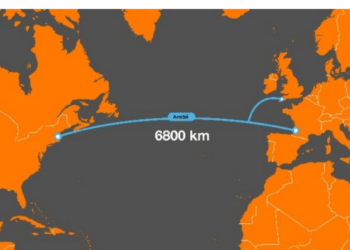
Earlier this summer, Aqua Comms  activated its Amitié (AEC-3) transatlantic subsea cable system.  CoreSite confirmed that Amitié is leveraging native colocation and connectivity services at the CoreSite Boston data center campus (BO1). 

The Amitié cable, which was built by Alcatel Submarine Networks, spans 6,783 km (4,215 miles) and has landings in Lynn, Massachusetts; Widemouth Bay, England; and Le Porge, France. 

It is the third high-capacity system added to Aqua Comms’ transatlantic footprint and offers enhanced diversity in both the United States and Europe. 

As one of the most interconnected buildings in New England, CoreSite’s BO1 data center provides Aqua Comms access to leading network, cloud and IT providers. Aqua Comm’s deployment in BO1 includes a secure colocation environment as well as diverse connectivity options through the  CoreSite ecosystem. The CoreSite Boston facility offers Aqua Comms 100% SLA uptime, options to grow its data center footprint and the power capabilities needed for the effective operation of the trans-Atlantic system.

“CoreSite values our partnership with Aqua Comms and the critical role our IT infrastructure plays in helping their organization deliver global subsea connectivity services as well as improving transmission capacity in North America and Europe,” said Juan Font, President and CEO of CoreSite and SVP of U.S. Tower. “As demand for reliable, diverse and secure connectivity continues to rise, purpose-built data centers like CoreSite’s Boston facility will serve as the central digital platform where cloud and network providers along with enterprises meet to conduct business and provide optimal customer solutions.”

https://www.coresite.com/newsroom/aqua-comms-announces-its-aec-3-trans-atlantic-subsea-cable-system-is-now-live-leveraging-coresite-it-infrastructure

Nokia packs 25G PON starter kit

Nokia introduced a 25G PON starter kit solution that can help operators harness 10Gbs+ opportunities. 

The 25G PON starter kit bundles in one solution all of the fiber broadband technology needed to deliver 1, 10 and 25G PON services to end-users including line cards, optics and Optical Network Terminals (ONTs).

Nokia said each 25G PON kit has the capability to connect up to 10 businesses and is available for immediate shipment.

Geert Heyninck, General Manager Broadband Networks at Nokia, said: “With the 25G PON starter program, we help operators seize the lucrative opportunities presented by 10G+ connectivity. The 25G PON kits are available immediately and provide operators with the tools needed to quickly deploy and capitalize on the growing number of multi-gig broadband services consumers and enterprises seek – all on their existing fiber network.”

NTT opens IP PoP in Denver

NTT activated a new Point-of-Presence (PoP) in Denver, Colorado, at CoreSite’s DE1 data center facility.

NTT said the new PoP helps it to scale their portfolio of global IP solutions to Internet, cloud, hosting, CDN and IT service providers and content-oriented companies in this strategic market. The PoP will also support the growing demand for high-quality IP services from global companies and organizations that have established headquarters and/or operational centers in the Denver area. Additionally, the energy, transportation, media, financial services and industrial sectors, all key drivers of Denver’s vibrant economy, will benefit from more global connectivity and networking options.

“The new PoP in Denver takes our global backbone into one of North America’s largest technology and communications hubs,” said Michael Wheeler, Executive Vice President of the Global IP Network division at NTT. “Internet-centric businesses and organizations operating in the area will have direct access to our tier-1 network and the high-performance IP solutions they need for their content, data, hosting, cloud and other bandwidth-intensive applications.”


Nokia on track to be first Buy America compliant vendor

Nokia confirmed that its fiber-optic broadband network electronics and optical modules manufactured in the U.S. will meet the current Buy America guidelines announced by the Department of Commerce. 

Nokia expects to become the first Buy America compliant technology vendor eligible for use in the Department of Commerce Broadband Equity, Access and Deployment (BEAD) program. By becoming Buy America compliant, Nokia will be eligible to supply its products and services to these critical projects focused on closing the digital divide.

Sandy Motley, President of Fixed Networks at Nokia, said: “We fully support the guidelines issued by the NTIA and Department of Commerce which provide a realistic and reasonable approach to manufacturing broadband technology in compliance with the Build America, Buy America (BABA) mandates. Working alongside the Department of Commerce, we will continue to take the necessary steps required and plan to become the first broadband technology vendor to be listed as Buy America compliant – eliminating the guess work for any states or infrastructure builders participating in the BEAD program.”

Render Networks launches real-time data and analytics platform

Render Networks introduced its new real-time data and analytics platform offering geospatial data and interactive visualizations for network operators.

Render Insights integrates data from construction to operations and all connected business-critical systems to deliver a real-time, multi-project view of performance to all stakeholders, across all levels of the organization. Identify contractor or crew performance trends, completion timelines or labor and material utilization to assess project risk and proactively keep teams moving.

“Render has redefined the role of geospatial data to drive more efficient, higher quality network deployments. With the confidence of accurate, real-time data and in-platform analytics enabled by Render Insights, network operators and builders can now harness the power of that data to inform all stakeholders, make better decisions faster and ultimately improve deployment outcomes,” said Sam Pratt, CEO at Render Networks.

“Render Insights delivers a new level of intelligence that is at the fingertips of everyone from field teams to C-level executives from day 1. The product of significant investment in real-time data infrastructure and a proprietary analytics engine, Render customers now have access to world-class analytics that showcases the unique depth and quality of Render’s data and enables communities to get connected faster. We could not be more excited to launch this next-generation capability for the benefit of our customers and the industry here at Fiber Connect 2023.”

https://www.rendernetworks.com/?_ga=2.226455386.1523424236.1692677296-869370363.1692677296

Northrop Grumman to supply 36 satellites for Space Development Agency

Northrop Grumman will design and build 36 LEO data transport satellites for the Space Development Agency (SDA) supporting Proliferated Warfighter Space Architecture (PWSA). 

The satellites will integrate with, and expand the PWSA mesh network, utilizing high-data-capacity optical crosslinks to deliver accessible, near-real time communications to U.S. warfighters and defensive platforms operating around the globe. The design for this latest iteration, known as Tranche 2 Transport Layer Beta (T2TL Beta), builds on the 42 Tranche 1 Transport Layer (T1TL) and 14 Tranche 1 Tracking Layer (T1TRK) satellites that SDA previously announced it had awarded Northrop Grumman. The T2TL Beta space vehicles add new broadcast and tactical waveforms improving the capabilities of the overall PWSA.

“Creating a low-Earth orbit communications architecture that meets the needs of the warfighter is complex,” said Blake Bullock, vice president, communication systems, Northrop Grumman. “With Northrop Grumman's extensive military satellite communication experience and deep mission understanding, we are helping SDA make its vision a reality. Northrop Grumman said it is on track to launch its first plane of 21 space vehicles in Q4 2024. ”

https://news.northropgrumman.com/news/releases/northrop-grumman-selected-to-build-tranche-2-transport-layer-beta-data-transport-satellites


Dell'Oro: RAN Declines at the Fastest Pace in Seven Years

Preliminary findings show that the expansion phase of the Radio Access Network (RAN) has now faded, according to a new report from Dell'Oro Group. Following the intense ramp-up from 2017 through 2021, RAN revenues stabilized in 2022 and 1Q23. Market conditions worsened in the second quarter, resulting in RAN declining at the fastest pace in nearly seven years. The decline was not unexpected, yet the magnitude of the reversal was much steeper than anticipated.

"It is tempting to point the finger at data traffic patterns, 5G monetization challenges, and the odds stacked against an economy struggling with persistent levels of elevated inflation," said Stefan Pongratz, Vice President at Dell'Oro Group. "Although these are, of course, important factors, we attribute the poor performance in the quarter to the clouds forming in North America. Alongside challenging 5G comparisons, the decline was amplified by the extra inventory accumulated over the past couple of years to mitigate supply chain risks," Pongratz continued

Additional highlights from the 2Q 2023 RAN report:

  • Top 5 RAN suppliers for 1H23 include Huawei, Ericsson, Nokia, ZTE, and Samsung.
  • Nokia recorded the largest RAN revenue share gains between 2022 and 1H23.
  • Huawei's quarterly RAN share reached the highest level in three years. Huawei's 2Q23 RAN revenue share outside of North America was as large as Ericsson and Nokia combined.
  • Ericsson and Samsung's RAN revenue shares declined between 2022 and 1H23.  
  • Regional projections are mostly unchanged; however, the short-term outlook has been revised upward in    APAC excluding China and downward in the North American region.
  • Global RAN revenues are expected to decline in 2023.

MACOM to acquire the RF business of Wolfspeed

MACOM agreed to acquire the radio frequency business (the RF business) of Wolfspeed for $125 million, including $75 million cash paid at closing and $50 million of MACOM common stock issued with certain restrictions.

The RF Business includes a portfolio of Gallium Nitride (GaN) on Silicon Carbide (“SiC”) products used in high performance RF and microwave applications. The business services a broad customer base of leading aerospace, defense, industrial and telecommunications customers and most recently generated annualized revenues of approximately $150 million. The acquisition is expected to be immediately accretive to MACOM’s non-GAAP earnings.

The acquisition includes a 100mm GaN wafer fabrication facility in Research Triangle Park, North Carolina (the “RTP Fab”) with operations conveying to MACOM approximately two years following the closing and Wolfspeed’s relocation of certain production equipment. The acquisition also includes design teams and associated product development assets in Arizona, California and North Carolina, as well as back-end production capabilities in California and Malaysia. In addition, MACOM will be assigned or licensed a robust intellectual property portfolio including over 1,400 patents associated with the RF Business. A workforce of approximately 280 employees is expected to join MACOM at closing, with additional employees joining when the RTP Fab conveys.

“We are excited to acquire Wolfspeed’s RF Business and look forward to welcoming its employees to MACOM,” stated Stephen G. Daly, President and Chief Executive Officer, MACOM. “The RF team’s engineering capabilities, technology and products are a perfect fit with MACOM and our strategy.”

https://ir.macom.com/news-releases/news-release-details/macom-announces-definitive-agreement-acquire-rf-business

Monday, August 21, 2023

U.S. consumers strongly prefer fiber broadband

Fiber broadband is considered the best internet service delivery method in terms of speed and reliability among 63% of all U.S. consumers, including 54% of cable users, according to an annual consumer research report conducted by RVA LLC Market Research & Consulting (RVA) on behalf of the Fiber Broadband Association.

The NTIA’s $42.45 billion BEAD program prioritizes fiber projects because of fiber’s ability to replace aging copper and coax wiring and provide vital, scalable telecommunications infrastructure for generations to come. The consumer research study demonstrates the importance and preference for fiber by consumers as well.

The study found that the underlying demand for high-quality broadband remains strong, as it was rated the second most important amenity in a home, only after a laundry room. Consumers show high interest in many future broadband applications which will increasingly require faster and more symmetrical internet, especially applications to support telehealth, senior independence, and home security. When all respondents were asked what type of internet service was the very best in terms of speed and reliability, fiber broadband won by a large majority with scores 2.5 times higher than the second candidate (cable).

The Fiber Broadband Association expects nearly as much fiber will be deployed during the next five years as has been deployed throughout history. 

“These results underscore the fact that high-speed broadband is no longer a luxury—it is a necessity for any person to successfully participate in today’s society,” said Deborah Kish, Vice President of Research and Workforce Development at the Fiber Broadband Association. “We’ve known how important broadband is to the U.S., and every year this study reveals that the preference for fiber broadband is growing wildly. Connecting every community to fiber will enable digital equality and raise the quality of life for generations to come.”

https://fiberbroadband.org/research-and-resources

FBA publishes BEAD funding resources for state broadband offices

The Fiber Broadband Association (FBA) and Cartesian unveiled their BEAD Threshold Financial Model that helps states calculate their Extremely High Cost Per Location Threshold (EHCT) for fiber broadband deployments using Broadband Equity, Access, and Deployment (BEAD).

The sophisticated tool leverages geospatial analysis to build a financial model that states can use to develop their own cost thresholds for fiber deployments. 

The BEAD Threshold Financial Model allows states to test various inputs and visualize the implications of different thresholds. It considers the extent of fiber coverage, the extent of alternative broadband technology coverage, and whether any funds remain. As a starting reference point for states to leverage, FBA and Cartesian ran the model using realistic but general assumptions, leveraging national average build costs and simple provider contribution estimates, to develop a reasonable, directionally-accurate threshold for each state.

“The NTIA has just allocated $40 billion to the states, and now it is the states’ turn to use this funding to maximize fiber deployments by setting the correct EHCT. Everyone recognizes this task is critical, but also challenging. Our BEAD Threshold Financial Model addresses that challenge head-on,” said Gary Bolton, President and CEO of the Fiber Broadband Association. “Now that we’ve created this tool we’re making it available to all states and we’re willing to work directly with each state to use the model with different variables and look forward to that opportunity. At the end of the day, setting a reasonable threshold is essential to the success of the BEAD program and our ability to connect every American to fiber broadband service.”

https://fiberbroadband.org/research-and-resources


USA offers nearly $700M in grants for rural broadband

The U.S. Department of Agriculture (USDA) is offering nearly $700 million in grants and loans to connect thousands of rural residents, farmers and business owners in 22 states and the Marshall Islands.

The new funding is part of the fourth funding round of the ReConnect Program, which is designed to fund the most difficult high-speed internet projects in the nation in the most rural, remote and unserved communities.

Examples of projects in this announcement include:

  • In North Carolina, Star Telephone Membership Corporation is receiving a $24.9 million grant to benefit 2,674 people, 84 businesses, 117 farms and four educational facilities in Bladen, Columbus and Sampson counties. Bladen and Columbus are part of an RPN community.
  • In Oregon, Pioneer Telephone Cooperative is receiving a $24.9 million grant to benefit 2,239 people, 50 businesses, 205 farms and one educational facility in Lincoln, Lane and Benton counties.
  • In New Mexico, SWC Telesolutions Inc. is receiving a $9.2 million grant to benefit 4,962 people, 106 businesses, 11 farms and 17 educational facilities in Doña Ana and Sierra counties. Doña Ana County is part of an RPN community.

Cignal AI: WDM transport spending weakens during 2Q23

Worldwide spending on optical transport hardware declined by 2% YoY during 2Q23, according to the most recent preliminary Transport Hardware Report from research firm Cignal AI. 

“The optical market is clearly showing signs of weakness, India is the only bright spot.” said Kyle Hollasch, Lead Analyst for Transport Hardware at Cignal AI. “Large network operators are absorbing inventory accumulated during the supply chain uncertainties of 2022, and hyperscalers are reverting to just-in-time ordering as lead times come down.”

Additional 2Q23 Transport Hardware Report Findings:

  • Optical sales to Service Providers and Cloud & Colo operators fell -2% and -3%, respectively.
  • The worldwide routing market grew 16% during its seventh straight quarter of growth. This growth came despite sharp spending pullbacks in western 5G networks.
  • North American 2Q23 optical revenue flattened following 18 months of rapid growth. Ciena and Infinera grew revenue, lifted by strong sales to hyperscalers and shipments against their large backlogs.
  • EMEA’s optical sales were flat, but routing sales leaped 27% led by Huawei and Nokia. Huawei’s optical revenue declined for the fourth straight quarter, while Nokia’s has grown for the last three.
  • RoAPAC spending surged on as Indian operators continued to build, with Nokia and Ciena benefitting most.


https://cignal.ai/2023/08/2q23-preliminary-transport-hardware-markets-report/#livepresentation

Adtran tool helps to manage and monetize residential Wi-Fi

Adtran expanded its Mosaic One subscriber solutions with the launch of Intellifi, a cloud-managed Wi-Fi solution for helping communication service providers (CSPs) monitor, manage and monetize residential Wi-Fi networks. 

Highlights of the solution:

  • Intellifi MeshView is a cloud-hosted portal that enables CSPs to manage and optimize in-home Wi-Fi experiences. From self-identifying issues to remotely resolving them, Intellifi MeshView empowers frontline customer support representatives and technical support staff. 
  • The Intellifi mobile app is an intuitive end-user tool that enables subscriber self-installs and offers enhanced controls for personalized in-home Wi-Fi. These include access to detailed network status, parental controls and device management, all in an easy-to-use and intuitive format that helps build a loyal subscriber base. 
  • The final element is Adtran’s multigigabit service delivery gateways (SDGs) and mesh satellites. 

https://www.adtran.com/en/newsroom/press-releases/20230821-adtran-expands-mosaic-one-subscriber-solutions-with-intellifi

Broadcom gains UK clearance for VMware acquisition

Broadcom received final transaction approval from the United Kingdom's Competition and Markets Authority. 

Broadcom has already received legal merger clearance in the European Union, as well as in Australia, Brazil, Canada, Israel, South Africa, and Taiwan, and foreign investment control clearance in all necessary jurisdictions. 

In the U.S., the Hart-Scott-Rodino pre-merger waiting periods have expired, and there is no legal impediment to closing under U.S. merger regulations.

The company says it is in the advanced stages of the process toward obtaining the remaining required regulatory approvals, which Broadcom believes will be received before October 30, 2023. 

Accordingly, together with VMware, Broadcom has agreed to further extend the Outside Date as contemplated in the transaction agreement.

Arm files for IPO

Arm Holdings Limited filed a registration statement with the U.S. Securities and Exchange Commission relating to the proposed initial public offering of American depositary shares.

Arm has applied to list the ADSs on the Nasdaq Global Select Market under the symbol “ARM”. 


https://www.arm.com/company/news/2023/08/arm-announces-public-filing-of-registration-statement-for-proposed-initial-public-offering


Sunday, August 20, 2023

Nokia: CSPs look to AI

 New research commissioned by Nokia and conducted by Analysys Mason finds that 87 percent of communications service providers (CSPs) have started to implement AI into their network operations, either as proof of concepts or into production; with 57 percent saying they have deployed telco AI use cases to the point of production.

While CSP respondents said they believe AI will help improve network service quality, top-line growth, customer experience, and energy optimisation to meet their sustainability goals, it is also evident that major obstacles remain.

“CSPs are unable to access high-quality data sets (which will enable them to make more accurate decisions) because they are using legacy systems with proprietary interfaces. This will restrict how quickly they can integrate AI into their networks,” according to the research, which is based on responses from 84 CSPs surveyed globally. Almost 50 percent of Tier-1 CSPs ranked data collection as the most challenging stage of the telco AI use case development cycle.

Further, the research found that only six percent of CSPs surveyed believe they are at the most-advanced level of automation, or zero-touch automation, which relies on AI and machine learning (ML) algorithms to manage and improve network operations. The high-quality data issue is also impacting CSPs’ ability to retain AI talent.

The research said CSPs should evaluate their telco AI implementation strategies and develop a clear roadmap for AI implementation to overcome their data challenge and other impediments, such as an inability to scale AI use case deployments. The report can be found here.

Adaora Okeleke, Principal Analyst, at Analysys Mason said: “CSPs must transition to more-autonomous operations if they are to manage networks more efficiently and deliver on their main business priorities. But as this research demonstrates, accessing high-quality data remains a critical obstacle to deploying telco AI within their networks. They need to really examine their AI implementation strategies to work around this data quality issue.”

https://www.nokia.com/about-us/news/releases/2023/08/17/csps-need-to-address-barriers-to-deploying-ai-in-order-to-realize-autonomous-operations-research/


Nokia expands network-in-a-box program for BEAD

Nokia is expanding its ‘network-in-a-box’ program to provide essential network infrastructure products in a single bundle that operators and Broadband Equity, Access and Deployment (BEAD) program participants need to quickly build or scale broadband networks. 

The pre-packaged solutions from Nokia are configurable to each individual network build and are available to ship directly through Nokia or its network of channel partners. BEAD participants focused on bridging the digital divide can also leverage Nokia’s network-in-a-box program. The program provides all of the recently announced U.S. manufactured fiber-optic broadband network electronics products and optical modules in a single solution.    

The network-in-a-box program includes Nokia’s IP routing, Fiber OLT, Fiber ONT, and Wi-Fi beacon products along with software and services that make it easy for operators of all sizes to build their fiber broadband networks. 

Nokia says its Network-in-a box makes it easy to build small greenfield fiber networks or cap existing GPON networks and grow to XGS and 25G-PON.

Sandy Motley, President, Fixed Networks at Nokia, said: “We’re excited to help operators and network builders get access to the tools they need simplify and accelerate broadband rollouts to help make high-speed broadband access a reality for all. The network-in-a-box program equips network builders with the necessary technology they need in a single solution to connect more homes, schools, businesses and communities that will ultimately help foster innovation and expand economies.”

Ericsson and Vodafone bring private 5G to Irish Rugby Football Union

The Irish Rugby Football Union (IRFU) is adopting 5G Mobile Private Network (MPN) technology to increase the communication of performance data between coaches and players in preparation for the Rugby World Cup 2023

Ericsson and Vodafone have partnered to install the solution at the IRFU’s High Performance Centre, delivering advanced real-time video analysis to enable enhanced decision-making and deliver real time feedback to coaches, analysts and players.

Using this reliable connectivity, up to eight high-resolution video streams are captured by multiple cameras and a 5G connected drone and then analysed in real-time to collate data on team performance. 

IRFU Head of Analytics and Innovation, Vinny Hammond says: “So much of our roles revolve around moving large quantities of data so we can analyse performance to understand what is working and what is not. Vodafone’s 5G MPN stretches the boundaries of what we can do in terms of how quickly we can analyse multiple high-resolution cameras and drone footage which ultimately informs our strategic decision making.”

Australia’s Optus deploys Ericsson RedCap software on it 5G network

Optus, Ericsson and MediaTek have today announced Australia’s first over-the-air data-call using Ericsson’s pre-commercial Reduced Capability (RedCap) software on Optus’ 5G network.

The small device size, long battery life, and substantial throughput of RedCap devices would make it ideal with many mobile consumer applications such as wearables (eg. smartwatches), health monitors, augmented reality (AR) devices (eg glasses) as well as industrial applications such as video surveillance, and industrial sensors.    

For instance, Ericsson’s RedCap software can power the smart city of the future with applications in smart grids, environmental sensors, predictive maintenance, utility meters, etc. 

This milestone has been made possible through Ericsson’s advanced Reduced Capability (RedCap) software using any available 5G spectrum, with both time division duplex (TDD) and frequency division duplex (FDD), in low and mid frequency bands. With RedCap’s broader applicability, Optus can further innovate various use cases such as new applications for consumers, industries and enterprises.

For industrial applications, RedCap can also improve operational efficiencies with optimised cost structures for the robust industrial IoT, accelerating the industry 4.0 transformation with 5G private networks. Ericsson’s RedCap brings reliable wireless connectivity and seamless mobility to the devices used in industry and enterprise. It can connect more equipment with fewer cables, process monitoring sensors for deeper operational insight, smart surveillance cameras for personnel safety, and handheld and wearable devices for richer human-machine interaction. 

Lambo Kanagaratnam, Managing Director of Networks at Optus, said: “Optus is always pushing the boundaries on network technology to find ways to improve the experience of our customers. This trial is about catering for 5G for wearable devices, like watches, so customers can benefit from accessing the most up to date technology in their daily lives. With this Australian-first data call, we are paving the way for future 5G wearable devices.”    

Martin Wiktorin Head of Ericsson’s Global Customer Unit, Singtel, said: “We are pleased to be working with Optus and MediaTek to bring the benefits of Ericsson RedCap to Optus’ customers. With this advancement, Optus can offer enhanced 5G connectivity for everything from consumer wearables to industrial sensors in a way that is both cost and energy-efficient, unlocking a whole range of new use cases.”