Tuesday, August 8, 2023

OIF's External Laser Small Form-Factor Pluggable (ELSFP) Implementation Agreement

OIF announced an implementation agreement for external lasers delivering continuous wave (CW) light to optical transceivers co-packaged within a system.

The External Laser Small Form-Factor Pluggable (ELSFP) Implementation Agreement (IA) specifies a front panel pluggable form factor tailored to co-packaged optical systems and other multiple laser external laser source applications.

OIF says this is the first multi-sourced, front panel pluggable external laser source form factor to address the evolving needs of the industry. By placing the laser sources at the front panel, which is the coolest section of the system, the design improves system reliability and allows for efficient “hot-swap” field replacement when necessary.

The ELSFP uses a multi-fiber blind-mate optical connector positioned at the rear of the module. This strategic design mitigates potential eye-safety risks, particularly in applications where high optical powers are involved. Each ELSFP can supply optical power to one or more optical engines, all seamlessly managed by OIF’s Common Management Interface Specification (CMIS).

This IA also defines interoperability for mechanical, thermal, electrical and optical parameters as well as establishing standard power ranges and fiber configurations to focus the industry’s development. 

The final feature unique to ELSFP is the pass-through option which allows systems architects to maximize face plate real estate, solidifying ELSFP’s position as a versatile and adaptable solution for various optical networking applications.

“The ELSFP IA represents a significant milestone for the optical networking industry,” said Jeff Hutchins, OIF Board Member and Physical & Link Layer (PLL) Working Group Co-Packaging Vice Chair and Ranovus. “By providing a front panel pluggable external laser source form factor, we’re empowering network operators and equipment manufacturers with a cutting-edge solution that not only improves reliability but also paves the way for future innovations. The ELSFP’s flexible design accommodates the ever-changing needs of the industry, enabling seamless integration with OIF’s 3.2T co-packaged optical module project and beyond.”

OIF also notes that while the ELSFP project was originally envisioned to complement the 3.2T co-packaged optical module, its forward-looking design makes it easily extensible to address future requirements.

“The ELSFP has already garnered a favorable industry reception through its potential to propel external laser source applications forward, as evidenced by strong collaboration among OIF member both in writing the IA and the substantial engagement in numerous interoperability demonstrations facilitated by OIF,” said Jock Bovington, Cisco, and editor of the OIF ELSFP IA.

https://www.oiforum.com/wp-content/uploads/OIF-ELSFP-01.0.pdf

Nephio R1 brings Kubernetes-based automation to carrier clouds

Project Nephio, an open source initiative of partners across the telecommunications industry working towards true cloud-native automation under the Linux Foundation, announced the availability of its Release 1 (R1). 

Nephio delivers carrier-grade, Kubernetes-based cloud native intent automation and common automation templates. The goal is to simplify the deployment and management of multi-vendor cloud infrastructure and network functions across large-scale edge deployments. 

Project Nephio launched in April 2022 with seed code provided by Google Cloud.  

Nephio R1 highlights: 

  • A framework to orchestrate cloud native network functions (CNF), infrastructure, and cross-domain lifecycle management
  • Core Nephio principles and Kubernetes integration with custom resource definitions (CRDs).
  • Enhanced user experience and sandbox environment.

New feature details:

  • Common configuration templates to provision and life-cycle management of cloud infrastructure, Kubernetes clusters, 5G network functions and network configurations
  • Gitops- based package management and scaled deployment using Kubernetes Resource Model (KRM) and Configuration as data (CaD)
  • Uniform Kubernetes CRD and operator-based deployment of multi-cloud infrastructure and multi-vendor network functions
  • Kubernetes- based Nephio control-plane which supports single pane of management of large scale deployments
  • Common set of user interface and APIs for integration with service orchestration layers
  • Multiple personas- based management and approval of configurations

"We are thrilled to see the high-demand release of Nephio R1,” said Arpit Joshipura, general manager, Networking, Edge, and IoT, the Linux Foundation. “By simplifying the complexity of orchestrating interconnected workloads across large-scale edge deployments, R1 represents significant progress managing  large systems within the cloud-native ecosystem.”

“The telecommunications industry is in much need for open, standard, efficient cloud-native automation solutions to keep up with connectivity demands,” said Gabriele Di Piazza, senior director, Product Management, Google Cloud. “The release of Nephio R1 simplifies cloud based deployments and network management, while also demonstrating the importance of telecom and technology companies working together to develop open cloud native automation solutions that are scalable, reliable, and secure.”

“Nephio is a game-changer for the telecom industry. It can help telecoms to automate their entire network efficiently and reliably, while achieving true zero-touch provisioning. The speed in which the community has embraced Kubernetes principles and further evolved Google Cloud’s seed code to deliver Nephio R1 is truly phenomenal. It's clear that there is a great need for intent based automation to simplify the telecom deployments, and Nephio is well-positioned to meet that demand.” said Kandan Kathirvel, Technical Steering Committee chair, Nephio.

https://www.linuxfoundation.org/press/nephio-community-gains-momentum-with-release-1-to-simplify-cloud-native-network-automation?utm_content=259524116&utm_medium=social&utm_source=linkedin&hss_channel=lcp-85616485

Lightelligence intros CXL card with optical interconnect

Lightelligence, a start-up based in Boston with offices in Hangzhou, Shanghai, and Nanjing, introduced optical communications hardware designed for PCIe and Compute Express Link (CXL) connectivity.

Photowave, which is is being demonstrated at this week’s Flash Memory Summit in Santa Clara, California,  enables CXL 2.0/PCIe Gen 5 connectivity over optics with support for x16, x8, x4 and x2 bifurcation modes of operation, allowing for a wide variety of deployment scenarios. In addition to high-speed electrical-to-optical conversion for the data signals, Photowave also supports sideband signals over optics making it possible to implement more efficient and reliable disaggregation architectures.

This follows Lightelligence’s introduction of Hummingbird, an Optical Network-on-Chip (oNOC) processor for domain-specific artificial intelligence (AI) workloads in June, and PACE, the world’s first integrated photonic computing system for Optical Multiply Accumulate (oMAC) in late 2021.

“We are more than excited to unveil the next piece of our product portfolio,” comments Yichen Shen, CEO of Lightelligence. “Photowave will soon set the standard for workload efficiency. It makes it possible to build scalable computing and accelerator pods with just the right amount of resources.”

https://www.lightelligence.ai/index.php/contact.html

DISH + EchoStar merger seeks synergy in 5G and satellite services

DISH Network and EchoStar agreed to an all-stock merger that combines DISH Network's satellite technology, streaming services and nationwide 5G network with EchoStar's premier satellite communications solutions.

DISH's 5G wireless network now covers more than 70 percent of the U.S. with full commercialization underway.  The recent, successful launch of EchoStar's JUPITER 3 satellite brings significant available capacity for converged terrestrial and non-terrestrial services. The combined company will be well-positioned to deliver a broad set of communication and content distribution capabilities.

The combined company will be headquartered in Englewood, Colorado. Its brands will include DISH Wireless, Boost Wireless, Sling TV and DISH TV, as well as EchoStar, Hughes and JUPITER satellite services, HughesON managed services and HughesNet satellite internet.


Under the deal, EchoStar Corporation stockholders will receive 2.85 shares of DISH Network Class A common stock for each share of EchoStar Corporation Class A, Class C or Class D common stock and 2.85 shares of DISH Network Class B common stock for each share of EchoStar Corporation Class B common stock they own. The exchange ratio represents a premium of 12.9% to EchoStar stockholders as implied by the unaffected 30-day volume weighted average closing stock prices of the two companies on July 5, 2023, the last full trading day prior to media speculation regarding a potential transaction.

"This is a strategically and financially compelling combination that is all about growth and building a long-term sustainable business," said Charles Ergen, Chairman of the Board of both DISH Network and EchoStar. "DISH's substantial past investments in spectrum and its wireless buildout, combined with EchoStar's recent launch of JUPITER 3, are expected to significantly reduce near-term CAPEX requirements. The transaction is expected to generate significant cost and revenue synergies, and the strong asset portfolio of the combined company paired with its enhanced free cash flow generation capability and strengthened capital structure are expected to drive long-term value creation for our shareholders and other stakeholders."

"From unconnected individuals in the most rural and remote regions of the world to the constantly evolving networks of private enterprises and government institutions, the connectivity landscape is rapidly changing," said Hamid Akhavan, President and Chief Executive Officer of EchoStar. "As a combined company, we will offer a broad suite of robust connectivity services, using a superior portfolio of technology, spectrum, engineering, manufacturing and network management expertise. DISH shares our customer-first culture, and together we will be well positioned to further scale and accelerate our strategy."

"The combination of DISH and EchoStar brings together two trailblazers with complementary portfolios and a shared commitment to change the way the world communicates," said Erik Carlson, President and Chief Executive Officer, DISH Network. "DISH is transforming America's wireless infrastructure with its 5G technology. With EchoStar's engineering capabilities, managed network services delivery and worldwide S-band spectrum rights, the combined company will have greater resources and the financial flexibility to deliver connectivity to consumers, enterprises and governments around the world."

https://ir.dish.com

Keysight collaborates with University of Stuttgart of 6G IC research

 Keysight Technologies announced a collaboration with the University of Stuttgart focused on the development of new integrated circuits (ICs) for 6G.

The research will use the new Keysight 6G Vector Component Analysis (VCA) solution. 

The collaboration has supported the University of Stuttgart in establishing Crosslink, a versatile multiplexing platform for synchronous time- and frequency-domain analyses of ultra-broadband communication channels. The Keysight VCA solution supports Crosslink by integrating sub-terahertz (sub-THz) vector network analysis with wideband modulation capabilities. This combined capability enables unprecedented radio frequency (RF) component characterization under full complex modulated conditions. The result is industry-first, best-in-class noise and linearity performance for analysis of wideband, high-frequency modulated performance of components, circuits, and transceivers. By using VCA, researchers can make significant leaps in the development of the next-generation amplifiers, filters, antenna systems, components, and the channel modeling and sounding needed for 6G networks.

The Keysight VCA measurement solution used for Crosslink integrates an N5245B PNA-X Microwave Network Analyzer, an M8199A Arbitrary Waveform Generator (AWG), broadband modulation distortion vector network analyzer (VNA) application software, and vector signal analysis (VSA) software with Virginia Diodes (VDI) frequency extenders up to 330 GHz.

https://www.keysight.com


Monday, August 7, 2023

Airtel launches 5G FWA in Delhi and Mumbai

Airtel launched its 5G Xstream AirFiber fixed wireless access (FWA) service for consumers in Delhi and Mumbai.

Xstream AirFiber is a plug-and-play device with in-built Wi-Fi 6 technology that will offer wide indoor coverage and can simultaneously connect up to 64 devices.

The Airtel Xstream AirFiber service is available on 799 plan, which offers up to 100Mbps speed. The plan can be availed for a duration of six months with a one-time refundable security deposit of Rs.2500.

Airtel notes that currently only 34 million homes in India are connected by fiber.

Commenting on the initiative, Shashwat Sharma, Director – Consumer Business Bharti Airtel,said, “India has seen the rapid growth of home broadband but there still remain areas with no access to hi-speed internet at home due to the physical challenges of laying fiber in a country the size of India. While fiber to the home will always define the best experience of Wi-Fi at home, AirFiber helps bridge the experience gap for everyone else. Today, we are delighted to launch Xstream AirFiber for consumers in Delhi and Mumbai with a pan-India rollout planned soon.”

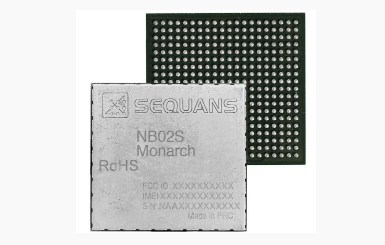
Renesas to acquire Sequans for its IoT chipsets and modules

Tokyo-based Renesas Electronics agreed to acquire Sequans Communications S.A. for approximately US$249 million, including net debt. Under the deal, Renesas will initiate a cash tender offer of $3.03 per Sequans ADS, subject to certain conditions. This offer represents a premium of 42.3% to Sequans’ closing price on August 4th.

Sequans, which was founded in 2003 and is based in Paris, is a fabless semiconductor company that designs and develops chipsets and modules for Internet of Things (IoT) devices. Offering products with extensive 5G/4G cellular categories, including 5G NR, Cat 4, Cat 1 and LTE-M/NB-IoT, Sequans provides reliable IoT wireless connectivity without the need for a gateway. 

Renesas said it intends to integrate Sequans’ breadth of cellular connectivity products and IP into its core product lineup, including microcontrollers, microprocessors, analog and mixed signal front ends. The acquisition will allow Renesas to immediately expand its reach to the Wide Area Network (WAN) market space encompassing a broad range of data rates. It will also enhance Renesas’ already rich portfolio of Personal Area Network (PAN) and Local Area Network (LAN) connectivity products.

“We are thrilled to take our partnership with Sequans to the next level,” said Hidetoshi Shibata, President and CEO of Renesas. “Sequans is a leader in the fast-growing cellular IoT market with wide cellular IoT network coverage. The company’s technology gives Renesas a path to offer broad connectivity capabilities across IoT applications to address the evolving customer needs.”

“We have been working closely with Renesas to serve the growing market demand for massive IoT and broadband IoT customers,” said Georges Karam, Chairman and CEO of Sequans. “As many telecom operators around the world continue to invest in 5G infrastructure and with the expanding deployment of IoT applications, combining with Renesas opens up vast opportunities to usher in a new era of seamless connectivity and digital mobility that can transform a multitude of industries.”

https://www.renesas.com/us/en/about/press-room/renesas-acquire-cellular-iot-technology-leader-sequans-through-tender-offer


MaxLinear releases storage accelerator OCP adapter card

MaxLinear announced the production-release of an OCP 3.0 storage accelerator adapter card designed to quicken key storage workloads, including database acceleration, storage offload, encryption, compression, and deduplication enablement for maximum data reduction. 

The company says its Panther III OCP card can transfer data up to 12 times faster than without a storage accelerator. The OCP version of the card is available immediately with a PCIe version available in Q3 2023.

“Panther III is unprecedented in its power and scale – offering 3x better performance than its predecessor - and is poised to set a new standard in storage acceleration,” said Mark Moran, Senior Director of Marketing Acceleration Products for MaxLinear. “This OCP release provides a production-ready solution designed for volume applications and allows for fast integration with fully tested and certified boards and a rich software ecosystem package.”

Panther III card opens all tiers of storage media, from NVMe, SSD, HDD and tape, to a groundbreaking bandwidth potential with no CPU or software limitations. 

Highlights:

  • Maximize data reduction: Panther III enables 12:1 data reduction, allowing storage solutions to not only store 1/12th the data, but also allow users to access, process, and transfer data 12 times faster even in slower HDD system.
  • Free capital and optimize storage costs: MaxLinear MaxHash provides independent hash block size and programmable offset to enhance deduplication hit rates, resulting in improved effective storage capacity and $/GB savings.
  • Encryption acceleration: Advanced encryption capabilities eliminate the need for Self-Encrypting Drives (SED) and removes the cost of and need for security routers.
  • Scalable performance and throughput: Ultra-low latency enables 200Gbps throughput (scalable to 3.2Tbps cascaded) delivering high performance data analysis and better workload accuracy.
  • Rich software ecosystem: Software development kit (SDK) contains API, drivers, and source code for easy incorporation with end application software and software-defined storage (SDS).
  • Six 9’s Reliability: Built-in, end-to-end data protection, Real Time Verification (RTV) of all transforms, NVMe protection, and in-line CRCs/parity assures data integrity and eliminates data loss.


Cogent opens POP in Guam’s GTA GNC Data Center

Cogent Communications has established a PoP in the GTA GNC Data Center. 

GTA, the leading telecommunications provider in Guam, operates the territory’s only modern, purpose-built carrier neutral data center with direct connectivity to each of Guam’s cable landing stations and related 12 subsea cable systems. The landing of so many trans-Pacific cable systems on Guam have given the island the moniker of “NAP of the Pacific.” 

“We are thrilled to welcome Cogent to GTA’s GNC Data Center,” said Roland Certeza, President, and CEO of GTA. “The strategic position of our facility is increasingly appealing to carriers in need of an Asia Hub for IP transit, peering, and colocation with content data networks. The trust that major carriers place in our infrastructure is a testament to the quality of our Data Center and the benefits Guam provides with its close proximity to Asia combined with the benefits of US rule of law and banking system. With state-of-the-art facilities and a reliable, secure network, GTA offers carriers an unparalleled value proposition for their connectivity requirements.”

https://www.gta.net

Micron samples CXL 128G and 256G memory expansion modules

Micron Technology is now sampling its new CZ120 CXL memory expansion modules in 128GB and 256GB capacities in the E3.S 2T form factor, which uses PCIe Gen5 x8 interface. 

The CZ120 modules are capable of running up to 36GB/s memory read/write bandwidth and augment standard server systems when incremental memory capacity and bandwidth is required. The CZ120 modules use Compute Express Link™ (CXL™) standards and fully support the CXL 2.0 Type 3 standard. 

Micron says that by leveraging a unique dual-channel memory architecture and its high-volume production DRAM process, the Micron CZ120 delivers higher module capacity and increased bandwidth. Workloads that benefit from more memory capacity include AI training and inference models, SaaS applications, in-memory databases, high-performance computing and general-purpose compute workloads that run on a hypervisor on premise or in the cloud.

“Micron is advancing the adoption of CXL memory with this CZ120 sampling milestone to key customers,” commented Siva Makineni, vice president of the Micron Advanced Memory Systems Group. “We have been developing and testing our CZ120 memory expansion modules utilizing both Intel and AMD platforms capable of supporting the CXL standard. Our product innovation coupled with our collaborative efforts with the CXL ecosystem will enable faster acceptance of this new standard, as we work collectively to meet the ever-growing demands of data centers and their memory-intensive workloads.”

"To accelerate the industry initiative to establish and expand the CXL ecosystem, Intel is collaborating with Micron to test and evaluate their CZ120 memory expansion module on our 4th generation Xeon Scalable processors and Xeon platforms," said Jim Pappas, director of Technology Initiatives at Intel.

“AMD and Micron have had a long and successful history of collaboration. Since the introduction of our EPYC™ processors, we have validated Micron memory on multiple platforms powered by AMD EPYC processors. With the introduction of the CXL standard, we have extended our joint efforts to include the Micron CZ120 memory expansion module. We’ve recently tested our AMD EPYC 9754 processor with the CZ120 modules and are seeing impressive results in TPC-H benchmark performance compared to DRAM only,” said Mahesh Wagh, senior fellow of Server Systems Architecture at AMD.


KIOXIA unveils 30TB data center SSDs

KIOXIA introduced a new line of data center-class solid state drives (SSDs)  boasting capacities up to 30.72 terabytes  (TB) and in both Enterprise and Data Center Standard Form Factor (EDSFF) E3.S and 2.5-inch (U.2) form factors.

Key specs:

  • Random readii performance up to 2,000K IOPS and random writeii performance up to 400K IOPS
  • Low and consistent 99.999th percentile latency of under 250us in standard random read workloadsiii, and under 1.8ms in standard OLTP-style mixed workloadsiv

The new 5th generation data center drives are based on the KIOXIA BiCS FLASH 3D flash memory triple-level cell (TLC) technology, and utilize an in-house developed controller. KIOXIA CD8P Series SSDs are compliant with PCIe 5.0 and NVMe 2.0 specifications as well as the NVMe Management Interface (NVMe-MI) v1.1d, and support Open Compute Project (OCP) Datacenter NVMe SSDv specification (not all requirements).

“We are proud to introduce our latest data center PCIe 5.0 NVMe SSD, for general-purpose server and cloud applications,” said Neville Ichhaporia, senior vice president and general manager of the SSD business unit, KIOXIA America, Inc. “The CD8P Series is ready for next-gen PCIe 5.0 servers, delivering a great combination of high performance with low latency in both E3.S and 2.5-inch form factors.”


Edmund Optics opens laser optics factory in Florida

Edmund Optics, which specializes in laser optics coatings, components, and assemblies optimized for high-power laser systems, inaugurated a state-of-the-art 34,000 sq. ft. Laser Optics Center in Oldsmar, Florida.

The new facility is dedicated to manufacturing a wide variety of optical components with high laser damage thresholds from the UV to the far IR. In addition, this facility expands Edmund Optics’ laser optics manufacturing capabilities across laser crystal and glass fabrication, polishing, metrology, inspection, and testing, and is home to approximately 50 employees.

"We are excited to significantly enhance our laser optics manufacturing capabilities and capacity with the new Florida facility," says Marisa Edmund, Chairman and Chief Marketing & Sales Officer for Edmund Optics. "With over 30+ years of regional presence and global design, manufacturing, and applications expertise, we are well-equipped to respond to customer demand for increasingly high-quality laser optics.”

Tareq Amin steps down from Rakuten Mobile

Tareq Amin has stepped down as Rakuten Mobile Representative Director and Co-CEO effective 07-August-2023. On LinkedIn, Amin expressed gratitude to Rakuten employees and leadership, saying he looks forward to new opportunities that lie ahead.

Rakuten Mobile named Kazuhiro Suzuki and Sharad Sriwastawa as co-CEOs going forward.

https://corp.mobile.rakuten.co.jp/english/news/press/2023/0807_01/

MaxLinear and Silicon Motion spar over terminated merger

MaxLinear and Silicon Motion each issued press releases accusing the other of bad faith in their merger agreement, which MaxLinear terminated unilaterally on July 26th.

MaxLinear cited multiple grounds for its decision, including that Silicon Motion experienced a material adverse effect and multiple additional contractual failures in the 15 months since the deal was announced.

For its part, Silicon Motion categorically rejected MaxLinear’s assertions and said it will seek damages for the failed deal.


Adtran posts Q2 sales of $327 million

Adtran reported Q2 revenue of $327.4 million, up 90% year-over-year and 1% quarter-over-quarter. Net loss attributable to the company for the second quarter of 2023 was $33.3 million, down 1,655% year-over-year and up 3% quarter-over-quarter. Non-GAAP net income was $0.1 million, down 99% year-over-year and up 102% quarter-over-quarter. 

ADTRAN Holdings Chairman and Chief Executive Officer Tom Stanton stated, “Our Q2 2023 results were in line with our expectations. Although new customer acquisitions remain near an all-time high, we anticipate the second half of 2023 will continue to present challenges due to customers optimizing inventory and the macroeconomic environment. Nevertheless, we continue to believe that we are in the early stage of an unprecedented investment cycle and ADTRAN Holdings is well positioned to be one of the largest beneficiaries.”

https://investors.adtran.com/overview/default.aspx

Sunday, August 6, 2023

Tech Update: Rethinking networking for AI

Wondering how AI is transforming data center networking?


https://youtu.be/IzmkDppguY8

Shekar Ayyar, CEO of Arrcus, explains how:

  • The rise of AI applications is causing enterprises to rethink their network architectures. These applications demand massive scale and flexibility, pushing the boundaries of traditional, rigid data center technology.
  • Arrcus promotes the concept of flexible networking with their network operating system, ArcOS. This system can be distributed as needed, from the core to the edge, providing a unique architecture that saves cost and connects to the 5G ecosystem.
  • The transformation of data center networking is not just a nice-to-have, but a necessary architectural improvement to support applications like AI. This shift towards flexibility and scalability is the future of data center networking.


OFS offers Fiber Solutions for America's Broadband Buildout

In support of the Build America, Buy America Act, OFC is kicking off  Fiber Solutions for America's Broadband Buildout emphasizing its well-established U.S. manufacturing capabilities. The program supports fiber broadband and middle-mile infrastructure builds under the Biden administrations BEAD initiative.


For nearly five decades, OFS with its AT&T Bell Labs heritage has been at the forefront of optical fiber, fiber optic cable, and optical connectivity development and production in the United States. The company notes that part of its heritage includes being an inventor of original fiber optic technologies.

OFS currently operates manufacturing facilities in Connecticut, Georgia, Massachusetts, and New Jersey.

OFS expanded its domestic production of optical fiber and fiber optic cable with a $139M investment in Georgia completed in 2020 and employs over 1000 people in Georgia alone.

https://www.ofsoptics.com

Sandia Labs develops method to intregrate photonic devices on chip

Sandia National Laboratories has patented a method to create hybrid silicon devices: hybrid lasers and amplifiers made from both indium phosphide and silicon, and similarly modulators made of both lithium-niobate and silicon. The lasers generate light in the C-band and the O-band wavelengths, which are commonly used in the telecommunications industry.

The Sandia team used many of the same tools found at commercial semiconductor plants.

“We know our process is scalable, so that’s one way we’re supporting the CHIPS Act mission,” Patrick said. “Sandia is eager to collaborate with others and start building new technologies together,” stated Patrick Chu, who co-leads the National Security Photonics Center, a group of more than 60 photonics scientists and engineers at Sandia’s Microsystems Engineering, Science and Applications complex.

https://www.sandia.gov/labnews/2023/07/27/what-do-you-do-with-a-shrunken-laser/


Virtual connections on the Equinix Fabric surpass 50,000

Equinix reported Q2 revenue of $2.0 billion, up 11% over the same quarter last year or 14% on a normalized and constant currency basis. Net income was $207 million, a 4% decrease from the same quarter last year, primarily due to lower income from operations and higher income tax expense given a favorable tax settlement in 2022.

“We continue to see momentum in our business as digital transformation accelerates the pace of innovation and changes the way business is done. By 2026, IDC is forecasting that 40% of revenue from G2000 companies will come from digital products, services and experiences, a dynamic that is reshaping the basis of competition in nearly every industry, and making digital an unprecedented force for economic growth,” stated Charles Meyers, President and CEO, Equinix.

Some highlights for Q2

  • Equinix added 12 new projects including new International Business Exchange data center builds in Lisbon, Monterrey and Mumbai—in addition to the company's first build in Kuala Lumpur, one of the most strategic markets in Asia.
  • Equinix was selected to build incremental data center capacity in Singapore in response to the Singapore Government's Data Center Call for Application process. 
  • Equinix's Channel program delivered another strong quarter, accounting for 40% of bookings and nearly 60% of new logos. It continues to see growth from partners like Accenture, Avant, Cisco, Dell and HPE.
  • Equinix's global interconnection franchise continues to perform with over 456,000 total interconnections. 
  • In Q2, interconnection revenues stepped up 10% year over year as reported or 11% year over year on a normalized and constant currency basis.
  • Equinix Fabric saw total virtual connections surpassing 50,000 in the quarter for the first time, as it continues to add new capabilities to support larger workloads, like data-intensive AI training models and scalable enterprise networks. 
  • Beginning in the third quarter, Equinix Fabric customers will be able to provision virtual connections to cloud providers with bandwidths of up to 50 gigabits per second, with Google Cloud as the first cloud provider to support this capability.  


https://investor.equinix.com

Ericsson opens 5G manufacturing site in Penang

Ericsson inaugurated a 5G radio equipment manufacturing site in Penang, Malaysia.

The production was inaugurated by Communications and Digital Minister YB Ahmad Fahmi bin Mohamed Fadzil (who was represented by Deputy Minister YB Teo Nie Ching), Penang Caretaker Chief Minister Tuan Chow Kon Yeow, and Swedish Ambassador to Malaysia, His Excellency Dr Joachim Bergstrom.

Ericsson has been in Malaysia since 1965 and is rolling out the 5G network for Malaysia.

In addition to delivering a world-class 5G network, the selection of Malaysia for manufacturing also increases Ericsson’s socio-economic contribution to the country. Malaysia already hosts a Global Maintenance Center in Bukit Jelutong, which is one of the largest in the world, a Regional Distribution Centre at KLIA’s Free Trade Zone. It is also the base for a Regional Competence Hub that hosts 5G expertise and regional support functions, as well as promotes local talent globally.

https://www.ericsson.com/en/press-releases/2/2023/8/malaysia-joins-ericssons-global-5g-equipment-manufacturing-supply-chain