Thursday, August 3, 2023

CoreWeave secures $2.3 billion debt financing for its GPU cloud

CoreWeave, a specialized cloud provider built for large-scale GPU-accelerated workloads, secured $2.3 billion in debt financing led by Blackstone and Magnetar with participation from Coatue, DigitalBridge, BlackRock, PIMCO,  Carlyle and Great Elm.

The company says the debt facility provides the financial headroom and flexibility to scale and to continue acquiring cutting edge technology.

Coreweave recently announced a new $1.6 billion data center in Texas, its first facility in the state. 

Last month, CoreWeave reported record-breaking performance results on the MLPerf benchmark.  

https://www.coreweave.com/

Cloudflare posts Q2 sales of $308.5 million, up 32% yoy

Cloudflare reported Q2 venue of $308.5 million, representing an increase of 32% year-over-year. Non-GAAP net income was $33.7 million, compared to $0.3 million in the second quarter of 2022. Non-GAAP net income per diluted share was $0.10, compared to $0.00 in the second quarter of 2022.

“In the second quarter, we grew revenue 32% year-over-year to $308.5 million, had a record quarter for new ACV bookings, and delivered the fourth consecutive quarter of record operating profit. Our team has proven that we can execute in good times and can also deliver operational improvements while we're in more challenging times,” said Matthew Prince, co-founder & CEO of Cloudflare. “Our innovation engine remains in high gear, and by our estimates, Cloudflare is the most commonly used cloud provider across leading AI startups. In the second quarter alone, we shared ten major announcements and features to extend Cloudflare Workers as the preeminent development platform built for the age of AI. We believe we’re uniquely positioned to become a leader in AI inferencing and have a lot more in store across the entire AI lifecycle to help enable companies to build the future.”

https://cloudflare.net/events-and-presentations/default.aspx

Dell'Oro: Single-Vendor SASE to grow twice as fast as multi-vendor SASE

The increased enterprise preference for single-vendor SASE solutions is expected to propel its growth at twice the rate of multi-vendor SASE solutions, according to a new report from Dell'Oro Group. Enterprises are anticipated to spend nearly $34 B between 2022 and 2027 on single-vendor SASE solutions. Though multi-vendor SASE solutions are projected to grow slower, they will continue to occupy a significant part of the SASE market, with enterprise spend expected to be $29 B between 2022 and 2027.

"Since we started tracking the SASE market in 2019, multi-vendor solutions have represented most of the market compared to single-vendor. However, in 2023 we anticipate that single-vendor SASE will become the majority of the market," said Mauricio Sanchez, Sr. Director, Enterprise Security and Networking at Dell'Oro Group. "As single-vendor SASE solution maturity increases, so is the comfort in purchasing it all from a single vendor. The pressure to go after best-of-breed from multiple vendors is slowly diminishing," added Sanchez.

Additional highlights from SASE and SD-WAN 5-Year July 2023 Forecast Report:

  • Total spend on SASE solutions, whether single- or multi-vendor, to eclipse $63 B between 2022 and 2027.
  • Unified SASE is anticipated to grow at a five-year compound annual growth rate (CAGR) of over 30 percent between 2022 and 2027, over twice the disaggregated SASE rate.
  • The report further divides the total SASE market along its two components, Security Service Edge (SSE) and SD-WAN, and details how the substantial spend on both is expected to drive SD-WAN annual spending to nearly $6 B and SSE spending to over $8 B by 2027.
  • SD-WAN sales to service providers that offer managed SD-WAN will continue to outpace SD-WAN sold to enterprises that self-manage.

www.delloro.com

Tenstorrent raises 100M for its AI processors

Tenstorrent, a start-up based in Toronto with offices in Austin and Santa Clara, closed a $100M strategic financing up-round led by Hyundai Motor Group and Samsung Catalyst Fund, with participation from Fidelity Ventures, Eclipse Ventures, Epiq Capital, Maverick Capital, and more. 

Tenstorrent specializes in AI processors and licenses AI and RISC-V IP.  The company says it will use the funding for the design and development of AI chiplets, and its ML software roadmap.   

“The trust in Tenstorrent shown by Hyundai Motor Group and Samsung Catalyst Fund leading our round is truly humbling,” said Jim Keller, CEO of Tenstorrent.  “It has been impressive watching Hyundai Motor Group become the third largest automaker in the world through their aggressive adoption of technology including their acquisition of Boston Dynamics, their joint venture with Aptiv, and now their investment in us.”


MACOM appoints SVP for Advanced Semiconductors

MACOM announced the appointment of Wayne Struble as Senior Vice President, Advanced Semiconductor Technology.

Struble, who has served as a MACOM Distinguished Fellow of Technology since joining MACOM in 2010, is an expert in Radio Frequency, microwave and millimeter wave integrated circuit design, semiconductor device modeling and testing, compound semiconductor process development and wireless communication system design. 

During his distinguished 40-year career, Mr. Struble has made significant technical contributions to the semiconductor industry in the areas of Gallium Arsenide (GaAs) and Gallium Nitride (GaN) circuit design and process development, published more than 25 technical papers and holds more than 50 patents in the field of RF and microwave semiconductors.

Wednesday, August 2, 2023

Microsoft launches Azure Operator Nexus

Microsoft announced general availability of Azure Operator Nexus, a carrier-grade and hybrid platform that enables telecom operators to use cloud technology to modernize and monetize their network investments.

AT&T has been working with Microsoft on Azure Operator Nexus has begun deploying Network Function workloads in its labs, with the intent to deploy them into production environments. 

Microsoft previewed the platform earlier this year at Mobile World Congress.  New capabilities added since then include:

  • * Network Fabric Automation—enables operators to build, operate, and manage carrier-grade network fabric from Azure. It performs several functions like bootstrapping and configuration, application of network policies, lifecycle management, creation of tenant workload network, and providing observability of the network devices. Network Fabric Automation provides a single point of control and visibility across the entire network fabric for the Operator Nexus platform and host tenant workloads.  
  • Network Packet Broker—allows operators to efficiently capture, aggregate, filter, and monitor traffic. It enables operators to monitor large complex networks and provide network-level visibility to aid with service planning and troubleshooting of service problems. It also plays a vital role in enhancing troubleshooting capabilities, meeting regulatory requirements, and enabling organizations to maintain the optimal performance and security of their networks.  
  • Enhanced Azure Kubernetes Service (AKS)—for on-premises use. Operator Nexus contains specific extensions to optimize the automated creation of containers to host tenant network function workloads. This new extension improves resilience and the availability of the cluster; it also enables operators to isolate and manage the performance of specific workloads. 
  • Azure Lockbox—provides operators with an additional layer of operational control over access to their data stored in the Azure cloud platform. This feature allows operators to approve or deny access to their data by Microsoft support engineers who may require access for troubleshooting or maintenance purposes. In those rare circumstances where such access is required, Azure Lockbox provides an interface for customers to review and approve or reject customer data access requests. 
  • Placement control of network functions—this feature gives more control to the operators on workloads deployment placement within a cluster. The operators can use this feature for improved performance, efficiency, and resiliency of the workloads. 
  • For observability, Operator Nexus has native integration with Azure Monitor—operators can send data to either Azure Operator Insights, Log Analytics Workspace (LAW), or Azure Data Explorer (ADX) cluster. Log Analytics Workspace offers a wide range of built-in capabilities, including log analytics, visualization, alerting, and more. Alternatively, operators can view the logging data using ADX cluster, which provides a low-cost alternative to LAW. If the main purpose is to retain the observability data for Retention and Information Management (RIM) compliance, operators can choose to send the data to a storage account. 
  • As part of the Azure AIOPs offers, Azure Operator Service Manager (AOSM)—transforms the operator service management experience into a modern cloud service. It simplifies the management of complex, multi-part, multi-vendor service deployments across thousands of hybrid cloud sites, including Azure regions, edge platforms, and Azure Arc-connected infrastructure. AOSM offers benefits like a single management experience for Microsoft and third-party network functions, automation enriched with Azure’s industry-leading cognitive services, and strict software distribution security enforcement, ensuring that what is published is what gets deployed. 

“Operator Nexus GA is an important milestone in our journey with Microsoft and ecosystem collaborators on Telco Grade cloud for Mobility 5G Core. We are excited to see our vision of Telco grade cloud powered by Microsoft Azure and AI technologies deployed in AT&T data centers and operated by AT&T. This will help deliver simplified operations, lower total cost of ownership, and improved time to market so we can continue to forge ahead with building the world’s best 5G service,” stated Igal Elbaz, Senior Vice President, Network CTO, AT&T.

https://azure.microsoft.com/en-us/blog/modernize-and-monetize-your-network-investments-with-microsoft-azure-operator-nexus/


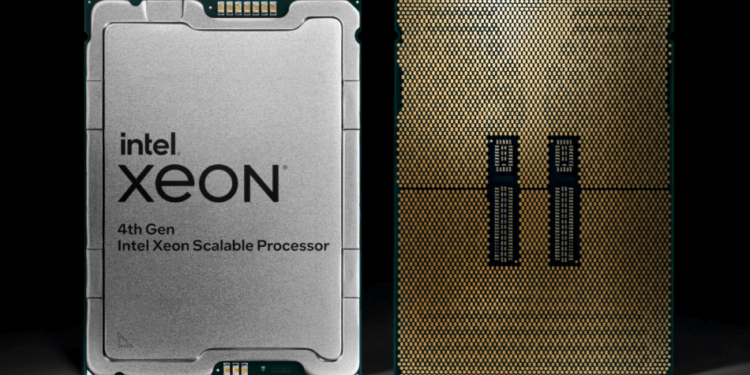
AWS launches EC2 instances powered by 4th Gen Intel Xeons

 Amazon Web Services (AWS) announced the general availability of new Amazon Elastic Compute Cloud (Amazon EC2) instances powered by custom 4th Gen Intel Xeon Scalable processors, promising up to 15%  better price performance compared the previous generation.

The new M7i-flex and M7i instances are available in the following AWS Regions: US East (Ohio), US East (N. Virginia), US West (Oregon) and Europe (Ireland). 

Intel said the new M7i instances offer price performance benefits for key workloads, such as large application servers and databases, gaming servers, CPU-based machine learning and video streaming. The new processors can support larger instance sizes (up to 192 vCPUs and 768 GiB memory). They also feature new built-in accelerators that enable efficient offload and acceleration of data operations that help in optimizing performance for databases, encryption and compression, and queue management workloads. 

https://aws.amazon.com/about-aws/whats-new/2023/08/amazon-ec2-m7i-flex-m7i-instances/

  • In January 2023, Intel launched its 4th Gen Xeon Scalable processors (code-named Sapphire Rapids), Xeon CPU Max Series (code-named Sapphire Rapids HBM) and Data Center GPU Max Series (code-named Ponte Vecchio)
  • Intel described the rollout as one of the most important product launches in company history.
  • The new processors promise a leap in data center performance, efficiency, security and new capabilities for AI, the cloud, the network and edge, and the world’s most powerful supercomputers. Intel said 4th Gen Intel Xeon customers can expect a 2.9x average performance per watt efficiency improvement for targeted workloads when utilizing built-in accelerators, up to 70-watt power savings per CPU in optimized power mode with minimal performance loss, and a 52% to 66% lower TCO.
  • For 5G core workloads, built-in accelerators help increase throughput and decrease latency, while advances in power management enhance both the responsiveness and the efficiency of the platform. And, when compared to previous generations, 4th Gen Xeon delivers up to twice the virtualized radio access network (vRAN) capacity without increasing power consumption. This enables communications service providers to double the performance-per-watt to meet their critical performance, scaling and energy efficiency needs.

Openreach expands Optical Spectrum Access 100G with Adtran

Openreach, the UK’s largest wholesale broadband network, has deployed Adtran’s FSP 3000 open optical transport technology to enable its new Optical Spectrum Access 100G Single enterprise service. 

Openreach’s new product offers a dedicated fiber link for point-to-point 100Gbit/s data transport.  The service can be configures with point-to-point Ethernet links at 100Gbit/s or 10 separate channels at 10Gbit/s.  The service uses Adtran’s FSP 3000 optical transport technology,.

“Corporate cloud applications and other data-intensive tasks such as data centre backhaul are fueling a growing demand for bandwidth. Adtran’s scalable optical technology enables us to offer a managed, high-speed service that satisfies that demand at a highly competitive price point,” said Simon Williams, head of optical products at Openreach. “With no filters or amplifiers required, our Optical Spectrum Access 100G Single service offers secure and always-on optical services that can transport enormous amounts of data. We’re also making dedicated, uncomplicated and customizable access available in a slimmed-down package that’s even easier to manage.”

“Our FSP 3000 technology gives Openreach a powerful optical transport solution that efficiently delivers high-bandwidth services for enterprise customers. Using the Optical Spectrum Access 100G Single service, businesses can now smoothly manage substantial data transfers, even during peak operational hours,” commented Stuart Broome, GM of EMEA sales at Adtran. “


Mubadala takes minority stake in Aligned Data Centers

Mubadala, the Abu Dhabi sovereign investment company,  has acquired a minority stake in Aligned Data Centers, alongside majority partners managed by Macquarie Asset Management.

Aligned offers both Scale Data Centers (colocation) and Build-to-Scale (build-to-suit) solutions to support global hyperscale and enterprise customers, helping to meet the demand for sustainable and scalable infrastructure. Aligned’s footprint will span more than 2.5 GW of critical capacity across 40+ data centers at full buildout.

While majority of the group’s operations remain in North America, Aligned recently expanded into Latin America with its acquisition of LatAm data center provider, ODATA. This positions Aligned among the largest private data center operators in the Americas. The group’s growing LatAm operations include data centers in Brazil, Chile, Colombia, and Mexico.

 Commenting on the transaction, Khaled Abdulla Al Qubaisi, Chief Executive Officer of Real Estate and Infrastructure Investments at Mubadala, said: “Mubadala is pleased to invest in Aligned, one of the fastest-growing and dynamic data center providers in the Americas. Our investment will support Aligned’s rapid expansion, further reinforcing the company’s position as a preferred partner in the Pan-American data center market. In addition to Aligned’s continued business growth, we are further excited by its AI-ready status, making it strategically positioned to support infrastructure requirements for a broad set of AI, ML, and DL services. We look forward to working with Aligned’s talented management and employees to deliver essential digital infrastructure across the Americas.”

www.mubadala.com

  • In June of this year, Mubadala committed to invest US $500 million in Brightspeed, a U.S.-based broadband and telecommunications services company, which is aiming to deliver fiber services that can reach up to three million homes and businesses over the next five years.
  • In 2022, Mubadala invested US $350 million into Princeton Digital Group, a leading pan-Asian data center company focused on expanding world-class data center services to meet increasing demand across Asia. 
  • Mubadala has also invested £800 million into CityFibre, the UK’s largest independent full-fiber platform.

Intelsat’s Galaxy 37/Horizons-4 launches aboard SpaceX

SpaceX succesfully launched Intelsat’s Galaxy 37/Horizons-4 (G-37/H-4) satellite to a geosynchronous transfer orbit from Space Launch Complex 40 (SLC-40) at Cape Canaveral Space Force Station in Florida.

The satellite, which advances Intelsat’s Galaxy fleet refresh plan, carries a  C-band payload that will provide North American capacity for television media and telecommunication network customers. The H-4 Ku-band payload will provide continuity for Intelsat’s mobility, network and U.S. government customers and will be owned jointly by Intelsat and JSAT International, the U.S.-owned subsidiary of SKY Perfect JSAT Corp.

The Falcon 9 first stage booster supporting this mission previously launched Crew-5, GPS III-6, Inmarsat I6-F2, CRS-28, and one Starlink mission.

The satellite was manufactured by Maxar.

https://www.intelsat.com/launches/galaxy-37-horizons-4/

Extreme Networks hits quarterly sales of $363.9 million, up 31% yoy

Extreme Networks posted sales of $363.9 million for its ffourth quarter ended June 30, 2023., up 31% year-over-year, and up 9% quarter-over-quarter. Non-GAAP diluted EPS $0.33, compared to $0.15 in the prior year quarter. Non-GAAP operating margin 17.4 % compared to 9.6% in the prior year quarter.

"Extreme delivered a year of exceptional performance, with revenue growth accelerating to 31% in the fourth quarter and 18% overall for the year," said Ed Meyercord, President and Chief Executive Officer. "This marks our second consecutive year of double-digit growth. We're outgrowing our competitors, gaining share, and winning new logos, which helped drive more than 30% growth in the value of deals over $1 million. We're breaking the status quo of networking through product innovation with differentiated solutions like universal hardware, end-to-end cloud management, enhanced AI, and our unique fabric technology, which greatly simplifies network management and bolsters security. Our focus on simplicity, flexibility, and performance continues to fuel our funnel of large opportunities. I remain confident in our growth prospects and am excited about the new innovations and opportunities we have in store for FY24 and beyond," concluded Meyercord.


Dell’Oro: Cumulative Broadband Equipment Spending to Exceed $120B for 2022-2027

Sales of PON equipment for fiber-to-the-home deployments, cable broadband access equipment, and fixed wireless CPE will show a 0.2 percent Compounded Annual Growth Rate (CAGR) from 2022 to 2027, as service providers continue to expand their fiber and DOCSIS 3.1/4.0 networks, while also increasing the reliability and sustainability of their broadband access networks, according to a new report from Dell’Oro Group.

"After three consecutive years of tremendous broadband network expansions and upgrades, 2023 is expected to show a return to normalized levels of spending," said Jeff Heynen, Vice President of Broadband Access and Home Networking research at Dell'Oro Group. "After 2023, spending is expected to increase through 2026 and 2027, driven by 25 Gbps and 50 Gbps PON, Fixed Wireless CPE, as well as DAA and DOCSIS 4.0 deployments."

Additional highlights from the Broadband Access & Home Networking 5-Year July 2023 Forecast Report:

  • PON equipment revenue is expected to grow from $11.8 B in 2022 to $13.3 B in 2027, driven largely by XGS-PON deployments in North America, EMEA, and CALA.
  • Revenue for Cable Distributed Access Equipment (Virtual CCAP, Remote PHY Devices, Remote MACPHY Devices, and Remote OLTs) is expected to reach $1.6 B by 2027, as operators ramp their DOCSIS 4.0 and fiber deployments.
  • Revenue for Fixed Wireless CPE is expected to reach $2.7 B by 2027, led by shipments of 5G sub-6GHz and 5G Millimeter Wave units.
  • Revenue for Residential Wi-Fi Routers will surpass $5.2 B in 2027, owing to massive shipments of Wi-Fi 7 units.


GSA: 115 mobile operators are now deploying 5G Standalone

GSA reports that 115 mobile operators are now investing in 5G Standalone technology, representing 21.4% of the 535 operators known to be investing in 5G licences, trials or deployments of any type. 

In addition to the investment in 5G SA for public mobile networks, GSA is also tracking organizations testing, piloting or deploying 5G SA technologies for private networks. As of the last update in May 2023, GSA had collated information about 1,148 organisations known to be deploying or granted a licence for LTE or 5G private mobile networks. Of those, 505 are known to be using 5G networks for private mobile networks, with 66 (just over 13% of them) known to be working with 5G SA already. They include manufacturers, academic organisations, commercial research institutes, construction, communications and IT services, rail and aviation organisations. The private mobile networks database is available to GSA Members and Associates.

“Operators are increasingly testing and deploying 5G standalone networks,” said Joe Barrett, President, Global mobile Suppliers Association. “With a totally new, cloud-based, virtualised, microservices-based core infrastructure, 5G SA brings benefits including lower latency, support for massive numbers of devices, and programmable systems enabling faster and more-agile creation of services and network slices. As the momentum behind 5G SA networks and devices continues, we can expect to see more operators deploying the new services they enable such as voice over New Radio.”

https://gsacom.com/paper/5g-standalone-july-2023-summary/

Tuesday, August 1, 2023

Nile seeks to redefine Network-as-a-Service, closes $175M funding

 Nile, a start-up based in San Jose, California, closed a $175 million Series C investment round, bringing its total funding to date to $300 million.

Nile, which emerged from stealth mode less than a year ago, offers a network-as-a-service (NaaS) solution designed to deliver a more secure wired and wireless service through the ex Nile’s service incorporates Campus Zero Trust Network Access (ZTNA) principles by design, and automates network access control (NAC) mechanisms that traditionally required significant manual effort to provision and maintain. 

The latest funding round was  co-led by March Capital and Sanabil Investments, with strategic participation from solutions by stc, Prosperity7, Liberty Global Ventures, and stc CIF (Corporate Investment Fund), and contribution from 8VC, Geodesic Capital, U First Capital, and Valor Equity Partners. 

Nile was founded in 2018 by Pankaj Patel, formerly former EVP and Chief Development Officer at Cisco, and Suresh Katukam , who were joined by John Chambers and Sri Hosakote. John Chambers is the former Executive Chairman and CEO at Cisco. 

The company says this round of financing will further its mission to eliminate the operational complexities plaguing enterprise networks in their ability to support cloud-born enterprise IT solutions, while also delivering the highest levels of integrated defenses to protect both wired and wireless connectivity from cyber attacks. 

“Nile is in a strong position to take advantage of several paradigm shifts occurring across the technology ecosystem,” said Pankaj Patel, CEO and co-founder of Nile. “Cloud-born edge infrastructure solutions are altering the way we engage with each other and interact with physical spaces in offices, schools, and venues. AI is enabling data-driven decision-making to be adopted at a rapid pace. Cloud migration strategies for anywhere access to enterprise apps is top of mind for all IT executives, creating a tremendous opportunity for Nile. These trends present unique challenges in the way enterprise infrastructure is consumed, and Nile is committed to addressing them head-on, making our service as agile and innovative as the technology solutions it enables.”

Tech Update: Rethinking Networking with Nile

What's the story with Nile? Is there room for another networking start-up? Pankaj Patel, CEO and co-Founder of Nile, discusses:

  • Nile's mission to remove human dependency from the management of the network, similar to what cloud computing has done for storage and computing. 
  • Nile's goals to transform the traditional network, often associated with security risks, into a security force multiplier with zero-trust access that requires no manual network operations.
  • How Nile is committed to delivering outcome-based SLAs that matter most to customers on availability, capacity, and coverage, all through an insane level of automation and heavy use of AI/ML-driven automation and data analytics.


Have a tech update that you want to brief us on? Contact info@nextgeninfra.io

Lumen takes $8.8 billion goodwill impairment charge

Lumen Technologies reported revenue $3.661 billion for the second quarter 2023, compared to $4.612 billion for the second quarter 2022. The company recorded a Net Loss of $(8.736) billion for the second quarter 2023, which included a non-cash goodwill impairment charge of $8.793 billion, compared to reported Net Income of $344 million for the second quarter 2022

(revenue for the second quarter of 2022 includes $707 million of revenue from the Latin American business divested Aug. 1, 2022 and the 20-state ILEC business divested Oct. 3, 2022)

Under GAAP, the company is required to perform periodic impairment tests related to its goodwill asset. The sustained decline in our share price during the second quarter was considered a triggering event requiring evaluation of goodwill impairment. Based on this analysis, the company recorded a non-cash $8.8 billion goodwill impairment charge in the second quarter of 2023. The goodwill impairment was driven by the difference between the company's market capitalization and the carrying value, primarily in its North America business reporting unit.

"In the second quarter, we made progress on our three-pronged growth strategy to secure the base, drive commercial excellence, and innovate for growth," said Kate Johnson, president and CEO of Lumen. "While it is early in our journey, we are driving solid revenue performance in our portfolio of next-generation growth products through intentional migration from legacy services, expanding our addressable market through network upgrades and product innovation, and improving operational excellence to better serve our customers."


https://ir.lumen.com/home/default.aspx

Cisco acquires Code BGP

Cisco has acquired Code BGP, a privately held BGP monitoring company based in Greece. Financial terms were not disclosed.

Code BGP was founded in 2021 by Fontas Dimitropoulos, Vasileios Kotronis and Lefteris Manassakis.

BGP security remains a critical issue. The companies report that this year alone there have been 6,000 incidents of BGP hijacks, route leaks, and other issues across the many thousands of networks that make up the Internet. 

Cisco said the Code BGP team will enhance its capabilities already provided by its ThousandEyes division.

https://www.thousandeyes.com/blog/cisco-announces-acquisition-of-codebgp

Vodafone deploys Nokia’s 5G monetization software

Vodafone started deploying Nokia’s Converged Charging (NCC) software in multiple European countries, enabling rating and charging for 5G services.

NCC operates as a containerized network function in a 5G standalone environment and allows Vodafone to tap new revenue streams from 5G services, including network slicing and flexible product offerings.

Deployment spans several Vodafone markets in Europe, including the UK and Italy, and drives next generation charging standardized across Vodafone networks and provides real-time rating and charging capabilities; it represents a full migration from legacy charging to 5G-ready next generation methods.

https://www.nokia.com/about-us/news/releases/2023/08/01/nokia-starts-deploying-5g-monetization-software-for-vodafone/

Cambium posts disappointing Q2, former CommScope exec named CEO

Cambium Networks reported Q2 evenues of $59.5 million, a decrease of 23% sequentially, and an increase of 14% year-over-year. There was a net loss of $2.6 million or $0.10 per diluted share, non-GAAP.

"Our second quarter results were disappointing as a result of lower demand for Enterprise products caused by lower order volumes from distributors and high channel inventories, and a challenging macroeconomic environment, especially in EMEA," said Atul Bhatnagar. "The company has recently initiated a cost reduction plan to increase profitability ahead of our next phase of growth which includes the FCC's anticipated approval of 6 GHz spectrum products, the ramp of our 28 GHz cnWave 5G fixed, 60 GHz cnWave technologies for service providers, and the expansion of our fiber-based solutions."

Bhatnagar continued, "We remain confident that new product cycles for next generation multi-gigabit fixed wireless and fiber products, increased government funding in North America, defense, and a return to growth for our Enterprise business will drive future growth."

Cambium also announced that Morgan Kurk, most recently a senior executive at Honeywell International, and prior to that, the executive vice president broadband market segment leader and chief technology officer at CommScope, has been appointed president and chief executive officer, effective immediately. 

Atul Bhatnagar is stepping down as the company's CEO but will continue to serve as a member of the company's board of directors.

"Cambium has established itself as a leader in the fixed wireless broadband and wireless networking categories and has achieved many product innovations since its spin-off from Motorola in 2011. We could not be more thrilled to have Morgan lead Cambium in the next phase of its journey. As a proven industry leader with a three-decade track record of delivering outstanding results, Morgan brings the right vision, experience and energy to drive growth at the company for years to come," said Robert Amen, Cambium's chairman. "We also want to acknowledge and thank Atul for his many years of leadership in establishing a culture of growth, integrity and innovation and in leading Cambium to where it is today."

Cisco intros Automated Ransomware Recovery tool

Cisco is extending its ransomeware Extended Detection and Response (XDR) capabilities with a set of third-party integrations to include infrastructure and enterprise data backup and recovery vendors.

A new integration with Cohesity enables Cisco XDR to automatically detect, snapshot, and restore business critical data at the very first signs of ransomware.

During Q2 2023, the Cisco Talos Incident Response (IR) team responded to the highest number of ransomware engagements in more than a year.

“The exponential growth of ransomware and cyber extortion has made a platform approach crucial to effectively counter adversaries. Our objective is to build a resilient and open cybersecurity platform that can withstand ransomware assaults and recover with minimal impact, ensuring uninterrupted business operations,” said Jeetu Patel, Executive Vice President and General Manager of Security and Collaboration at Cisco. “As a global infrastructure provider that built the network, Cisco is redefining what a security product should deliver. Our innovations with automated ransomware recovery are a significant step towards achieving truly unified detection and response data, turning security insights into action.”