Wednesday, February 22, 2023

Samsung announces 5G NTN modem for smartphone-to-satellite

Samsung Electronics has secured standardized 5G non-terrestrial networks (NTN) modem technology for direct communication between smartphones and satellites, especially in remote areas. The company plans to integrate this technology into the company’s Exynos modem solutions, accelerating the commercialization of 5G satellite communications and paving the way for the 6G-driven Internet of Everything (IoE) era.

Samsung did not cite the source of its technology acquisition.

"This milestone builds on our rich legacy in wireless communications technologies, following the introduction of the industry’s first commercial 4G LTE modem in 2009 and the industry’s first 5G modem in 2018," said Min Goo Kim, executive vice president of CP (Communication Processor) Development at Samsung Electronics. "Samsung aims to take the lead in advancing hybrid terrestrial-NTN communications ecosystems around the world in preparation for the arrival of 6G."

For highly reliable NTN communication with low Earth orbit (LEO) satellites, Samsung has developed and simulated 5G NTN standard-based satellite technology using its Exynos Modem 5300 reference platform to accurately predict satellite locations and minimize frequency offsets caused by the Doppler shift. Based on this technology, Samsung’s future Exynos modems will support two-way text messaging as well as high-definition image and video sharing.

Additionally, Samsung plans to secure a standardized NB-IoT NTN technology for use in its next-generation modem platforms. With integrated satellite connectivity, Samsung’s NB-IoT solutions will eliminate the need for a separate high-power wireless antenna chip inside smartphones, providing mobile device makers with much greater design flexibility.


Arrcus and VMware partner on end-to-end slicing

Arrcus is spotlighting its telco cloud work with VMware at the upcoming Mobile World Congress 2023.

The Arrcus and VMware solution combines the Arrcus Connected Edge (ACE) platform with VMware Telco Cloud Platform architecture, providing CSPs with end-to-end slicing for 5G, from radio access network (RAN) to multi-access edge computing (MEC) to core networks. This capability leverages Arrcus’ advanced traffic engineering technology, enabling CSPs to set different policies and service level agreements (SLAs) for unique customers and applications on various slices of their networks.

Network automation is another key CSP benefit of the joint solution. And CSPs can create instances across RAN, 5G core, (MEC)/edge and transport networks. The Arrcus-VMware solution also delivers a service assurance platform for transport network, 5G core and RAN telemetry, so CSPs receive metadata on key network parameters.

“CSPs need truly modern infrastructure to gain the greatest value from their 5G investments,” said Arrcus CEO and Chairman Shekar Ayyar. “Arrcus’ ACE platform and our partnership with VMware provide CSPs with an agile network overlay to automate network operations, expedite the delivery of new services on and monetize their 5G infrastructure.”

“VMware brought software-defined networking to service providers,” said Lakshmi Mandyam, vice president of product management and partner ecosystem, service provider and edge, VMware. “VMware’s Telco Cloud Platform, in concert with innovator Arrcus, is transforming 5G networks with virtualization and SDN, distributed computing, cloud technology, automation and agility.”

Mavenir intros containerized Open vRAN on Red Hat

Mavenir launched its Open Virtualized RAN (Open vRAN) solution running on Red Hat OpenShift for cloud deployment, running on general purpose, common-off-the-shelf (COTS) hardware.

The solution complies with O-RAN Alliance’s O-Cloud specifications, using the O-RAN O2 interface to allow Mavenir’s cloud-native network functions (CNF) to manage the resources provided by Red Hat OpenShift. The integrated offering provides a full stack solution to operationalize Open RAN, including life cycle management, orchestration, and automation, to lower the barrier to entry for service providers and enterprises deploying 4G and 5G public and private networks with real-time use cases that require on-premises equipment. The solution is being deployed by three tier-1 service providers in global markets including Asia, North America, and Europe.

BG Kumar, President, Access Networks, Platforms and MDE, Mavenir, said, “This collaboration with Red Hat allows Mavenir to address the requirements of operators and enterprises needing hybrid or multi-cloud solutions, as well as those looking for a solution that runs on-premises but benefits from the automation and orchestration of a cloud deployment.”

“Red Hat is building a bridge for customers to embrace the Open RAN movement, connecting business needs with the underlying technologies with our open source expertise. Red Hat OpenShift offers a consistent and flexible cloud-native foundation to accelerate application development and Open RAN deployments across any network landscape,” said Honoré LaBourdette, Vice President, Telco, Media, Entertainment & Edge Ecosystem, Red Hat. “By supporting the Mavenir Open vRAN solution on Red Hat OpenShift, service providers are better equipped to meet unique network requirements on a trusted, agile open source platform.”


Keysight launches test platform for 5G RedCap spec

Keysight Technologies introduced a streamlined network emulator designed to provide protocol, radio frequency, and functional testing of all cellular internet of things technologies, including RedCap. 

The new E7515R solution based on Keysight's 5G Network Emulation Solutions platform, a streamlined network emulator specifically designed for protocol, radio frequency (RF), and functional testing of all cellular internet of things (CIoT) technologies, including RedCap. The E7515R expands Keysight’s 5G Network Emulation Solutions portfolio, the industry’s most robust, which is used in mobile device validation across the workflow, from early design to acceptance and deployment.

The 5G RedCap specification introduces support for wireless devices with reduced 5G capabilities. These devices are less complex, and consume less power, allowing them to address new CIoT use cases such as industrial sensors and wearables such as smartwatches. Like other cellular devices, RedCap devices require time-consuming and expensive certification from accredited labs before they can be released to the market. By performing lab validation ahead of time to identify and correct design issues, device and module manufacturers can shorten the certification process for RedCap and other CIoT devices.

Mosaab Abughalib, General Manager of Keysight’s Wireless Device Development R&D Group, said: “With the introduction of the E7515R solution, Keysight is providing chipset, module, and device makers with a proven test solution that enables the development workflow of the next generation 5G New Radio (NR) RedCap devices. The E7515R solution is optimized for the development of devices that do not require full 5G NR capability, which allows our customers to maximize their return on investment.”

Rivada signs manufacturer for its laser-connected space network

Rivada Space Networks has signed Terran Orbital's wholly owned subsidiary Tyvak Nano-Satellite Systems, to manufacture 300 low-earth-orbit (LEO) satellites for its "network in the sky".

RSN will offer access to a secure satellite network with pole-to-pole reach, offering end-to-end latencies similar to or better than terrestrial fiber. The RSN network combines inter-satellite links with advanced onboard data routers creating an optical backbone in space to deliver an ultra-secure and highly reliable global data network for business operations in the telecom, enterprise, maritime, energy and government services markets.

Rivada Space Networks Executive Chairman Declan Ganley said: "With this contract, Rivada is one step closer to launching a global network dedicated to the wholesale sale of connectivity and capacity at market rates, making truly global connectivity-as-a-service a reality." He added: "The constellation we are building with Terran Orbital in combination with our patented Open Access Wireless Market Platform allow us to offer a network with unprecedented flexibility to users around the world. It will be instrumental in driving the next leg of the ongoing communications revolution." 

www.rivadaspace.com

Tuesday, February 21, 2023

Ciena unveils 1.6 Tbps WaveLogic 6 coherent optics

Ciena introduced its latest generation, WaveLogic 6 coherent optics, supporting up to 1.6Tb/s single-carrier wavelengths for metro ROADM deployments, 800Gb/s over the longest links, and energy-efficient 800G pluggables across 1000km distances. Ciena expects to begin shipping WaveLogic 6 in the first half of 2024. 

Highlights

  • WaveLogic 6 Extreme (WL6e), Ciena’s performance-optimized solution, integrates new coherent DSP innovations to provide the highest capacity over fiber, supporting 1.6Tb/s single-carrier wavelengths for metro ROADM networks, 800Gb/s across the longest links, and 15% improvement in spectral efficiency compared to the previous generation. WL6e will also deliver significant economic benefits, including a 50% reduction in space and power per bit compared to Ciena’s industry-leading 800G technology today. The first coherent optical solution operating at 200GBaud, WL6e will maximize coverage of 800Gb/s connectivity across networks.
  • WaveLogic 6 Nano (WL6n), Ciena’s footprint-optimized solution, powers 400G-800G coherent pluggables to drive cost, power, and space efficiencies in 400G long-haul and 800G metro/regional applications, as well as interoperable 800ZR DCI applications. With Ciena’s unique engineering innovations, WL6n can also deliver a fit-for-purpose 800LR design, bringing coherent technology inside the data center campus for the first time.
  • WL6 will be supported across a range of Ciena’s optical and routing and switching platforms. 
  • WL6 will also be made available for use in third-party solutions.

“The last few years have irreversibly changed our expectations of networks, showing the critical importance of enabling greater connectivity to help fuel our digital lifestyles. At the same time, we all need to do more to help the environment. As the pioneer in coherent optical technology, and the first to bring coherent 40G, 100G, 400G and 800G to the industry, we continue to set the standard in optical transport and push the limits of innovation by creating solutions that significantly reduce cost per bit, improve network performance, and drive energy efficiency,” states Scott McFeely, Senior Vice President, Global Products and Services, Ciena.

https://www.ciena.com/about/newsroom/press-releases/ciena-unveils-wavelogic-6

Amazon launches AWS Telco Network Builder

Amazon introduced AWS Telco Network Builder, a fully managed network automation service that enables CSPs to deploy, run, and scale their telco networks on AWS faster and more easily. 

To start, a CSP populates their network architecture (e.g., routing requirements, location of deployment, specific NFs) as a template in the service’s console using telecom industry standard language, making it intuitive and easy to begin. AWS Telco Network Builder translates the customer’s network specifications into a cloud-based network architecture, streamlining programming requirements across multiple software vendors and accounting for the network’s geographic footprint. 

AWS Telco Network Builder automatically maps the provided topology to network services, provisions the necessary compute and storage resources, and connects the NFs to create an operational telco network. Customers can then reuse the uploaded templates to replicate that network architecture in new regions. As customers change their network configuration or run software updates, AWS Telco Network Builder handles lifecycle management for the NFs, performs updates to the NFs, and adjusts related infrastructure. 

Together, AWS Telco Network Builder and Amazon CloudWatch provide a comprehensive view of the NFs and AWS infrastructure, so customers can efficiently monitor and manage their networks to identify and remediate issues more quickly. AWS Telco Network Builder also integrates with popular third-party, end-to-end orchestrators for CSPs to maintain continuity across existing telco network operations and business systems. With AWS Telco Network Builder, customers only pay for the AWS products and services they use, so they can quickly scale their network based on business requirements.

“The telecom industry is undergoing a transformation as CSPs navigate building their telco networks in the cloud,” said Jan Hofmeyr, vice president of Amazon Elastic Compute Cloud (Amazon EC2). “Some of the biggest challenges CSPs face as they look to migrate include manually configuring and then managing these complex networks, which impedes growth and stifles innovation. Groundbreaking in the value it provides to the telecom industry, AWS Telco Network Builder removes the burden of translating a customer’s desired telco network into a cloud architecture, empowering them to easily modernize and quickly scale to meet demand while freeing time and capital to build new offerings, expand coverage, and refocus on invention.”

AWS Telco Network Builder is generally available today in US East (N. Virginia), US West (Oregon), Asia Pacific (Sydney), Europe (Frankfurt), and Europe (Paris), and with availability in additional AWS Regions coming soon.

AWS also announced a number of customers and partners using AWS Telco Network Builder, including: Amdocs, Cloudify, Infosys, Mavenir, and O2 Telefónica.

https://aws.amazon.com/blogs/aws/new-aws-telco-network-builder-deploy-and-manage-telco-networks/

T‑Mobile and AWS to offer 5G advanced network solutions

T-Mobile and AWS agreed to pair T-Mobile's 5G Advanced Network Solutions portfolio with AWS cloud-based services and scalable, pre-integrated applications leveraging 5G edge compute.

The companies will also collaborate on customizable, use case specific offerings as part of the new Integrated Private Wireless on AWS program. These offerings help businesses get the performance and applications they need for their unique use cases – for example, monitoring worker safety on remote industrial campuses, performing predictive maintenance on manufacturing equipment, or ensuring faster aircraft turnaround times at the airport.

“T-Mobile and AWS are coming together to do what industry-leading companies do best – make things easier for customers,” said Callie Field, President, T-Mobile Business Group. “Businesses need a combination of connectivity and compute that fits into their current infrastructure. With our flexible 5G network deployment options and AWS’s cloud compute capabilities, we can quickly provide customers a right-sized solution to make their applications – new and existing – perform like never before.”

“AWS and T-Mobile share a common desire to work backwards from customer feedback to deliver innovation,” said Adolfo Hernandez, Vice President, Telco Industry at AWS. “One of the biggest challenges in galvanizing industries and revenue for 5G services has been the lack of flexible 5G solutions that meet the compute and connectivity needs for customers. Together with T-Mobile's innovative suite of 5G Advanced Network Solutions and our Integrated Private Wireless Program, we have the power to meet customers where they are."

https://www.t-mobile.com/news/business/t-mobile-and-amazon-web-services-join-forces-on-5g-advanced-network-solutions

Europe’s 6GTandem project gets underway

 The 6GTandem consortium aims to co-design novel dual-frequency operation and a new highly integrated and distributed radio transceiver architecture to deliver energy-efficient services for future 6G applications, and enhance Europe's position in telecommunications. The project is funded by the European Union and Switzerland. Work was started in January 2023 and will run over the next three-and-a-half years.

Participating companies and organizations include: Technikon Forschungs, Ericsson, KU Leuven (University, Belgium), Infineon, Huber + Suhner, and Sweden's Chalmers University of Technology, Linköping University, and LUND University.

"We are excited to be part of this consortium," said Hannes Grubinger, Head of Product Management Cable Connectivity. "Our over 50+ year heritage in radio frequency, fiber optics and low frequency technologies in the communication, transportation and industrial markets has helped us gain valuable experience in connectivity solutions for infrastructure. We look forward to lending our expertise in electrical and optical connectivity to the 6GTandem project, working with other experts with the goal of bringing innovation to the next generation of mobile communication."


As published by 6GTandem, the key elements for the consortium include the development of a system defining an aligned tandem dual-frequency distributed MIMO architecture, medium-aware waveforms, transmission schemes and communication strategies, novel "radiostripe" hardware at 130GHz – 175GHz, an easily-deployable sub-THz infrastructure, and a combined low-frequency and sub-THz distributed MIMO system to support joint high-resolution sensing, high-accuracy positioning, and high-resilience and reliable communication.


https://horizon-6gtandem.eu

https://www.hubersuhner.com/en/company/media/news

Blueprint: Brazil looks to municipal Wi-Fi 6E

 by Atul Bhatnagar, president and CEO of Cambium Networks

Given its immense size and bountiful natural resources, Brazilians have long talked about their country as the “land of the future.” One unexpected area where Brazil is indeed taking the lead over the rest of the world is in the realm of Wi-Fi connectivity.

In December, Brazil became the first country in Latin America to test outdoor Wi-Fi 6E as part of a joint project in cooperation with the Municipality of São Paulo and the Campo Belo Gastronomia Association, and the results of the test will be eagerly monitored by service providers around the world. 

With the deployment of Wi-Fi 6E in the Campo Belo neighborhood of São Paulo, users are able to take advantage of the faster speeds and lower latencies than were available through Wi-Fi 6 and earlier iterations. In fact, this deployment delivers 10X the capacity of traditional Wi-Fi.  

This is a watershed moment for the spread of advanced broadband. For Brazil and other early adopters, Wi-Fi 6E finally puts the prospect of realizing multi-Gigabit speeds with a 6 GHz fixed wireless infrastructure within reach as Wi-Fi 6E extends the capacity, efficiency, coverage, and performance benefits of advanced Wi-Fi into the 6-GHz band, which allows for internet speeds of greater than 1Gbps.

While the United States approved the 6 GHz spectrum for Wi-Fi use in 2020, a decision that allowed the development and deployment of Wi-Fi 6E devices to move forward, this marks the first real-world study of its use. The insights these tests could provide around the true efficiency and data throughput of these congestion-free connections could prove substantial for others considering the spectrum.

Many service providers in the U.S. have been testing new 6 GHz equipment under experimental licenses granted by the FCC for the purposes of technical evaluation but not for commercial deployment. The outdoor network in São Paulo will now serve as a petri dish for the country to help officials in the U.S. and abroad better understand the benefits this Wi-Fi 6 technology provides and hopefully move us one step closer to a 6 GHz reality.  

This is a particularly exciting moment when you consider the potential impact of advanced internet technology on closing the digital divide for underserved communities around the world and, in this case, the daily life in Brazil, where about 50% of homes are still not connected to broadband. More broadly speaking, these and other multi-Gigabit wireless technologies entering the market will allow providers in the US and around the world to bring fast broadband to more people than ever before.

Mavenir and HPE collaborate on Open vRAN

Mavenir expanded its existing partnership with Hewlett Packard Enterprise (HPE) by validating its Open vRAN DU software on the HPE ProLiant DL110 Telco server.


Mavenir’s O-RAN compliant, fully containerized Open vRAN solution works on open interfaces supporting O-RAN Split 7.2x and Split 2 configurations. It further disaggregates into a Distributed Unit (DU) and Centralized Unit (CU). These entities work as containerized network functions running on general purpose infrastructure and are designed to support multiple fronthaul splits simultaneously – making the vRAN solution an ideal choice for a future-proof strategy.

The HPE ProLiant DL110 Telco server is workload optimized for edge applications that require low power, high bandwidth and low latency such as 5G cellular processing (vRAN.) In addition, the server is open and standards-compliant, carrier grade infrastructure offering dense I/O capabilities with PCI2 Gen4 speed, acceleration and powerful compute driven by 3rd Generation Intel Xeon Scalable Processors.

“This milestone aligns with Mavenir’s mission to create network solutions built around virtualized software that can run on any cloud,” said Ramnik Kamo, EVP, CIO and CPO, Mavenir. “Adding HPE as an infrastructure partner strengthens Mavenir’s Open vRAN by expanding the technology ecosystem with a reliable, high performance hardware platform that meets the needs of the most demanding customers.”


Monday, February 20, 2023

Zain Kuwait builds National Cloud with Microsoft Azure

Zain Kuwait and its ICT solutions arm, ZainTech, is working with Microsoft to introduce a national cloud offering for public and private sectors in the country.

The collaboration will see the development of a cloud environment combining Microsoft’s extensive portfolio, Zain’s private cloud infrastructure, and ZainTech’s expertise, enabling data and applications to be shared between them. 

Zain said the new national cloud  in Kuwait can help organizations modernize their data centers by bringing cloud techniques, such as software-defined data centers, self-service, and elasticity based on virtualization, into their data centers. Using a single centralized perspective, the national cloud offering can enable organizations to efficiently manage compliance with proliferating standards and infrastructure that is expanding across on-premises, public cloud, and multi-cloud implementations.

Commenting on this collaboration, Hamad Al Marzouq, Zain Kuwait Chief Enterprise Business Officer said, “Cloud offerings are driving efficiencies that have never been experienced before, and the Kuwait government has been quick to realize its benefits and has been investing in cloud infrastructure accordingly. Our alliance with Microsoft and ZainTech is geared towards supporting and accelerating these developments further and comes from a shared vision of the benefits the flexibility of cloud offerings has on driving digitization in our country.

Vodafone develops 5G radio based on Raspberry Pi

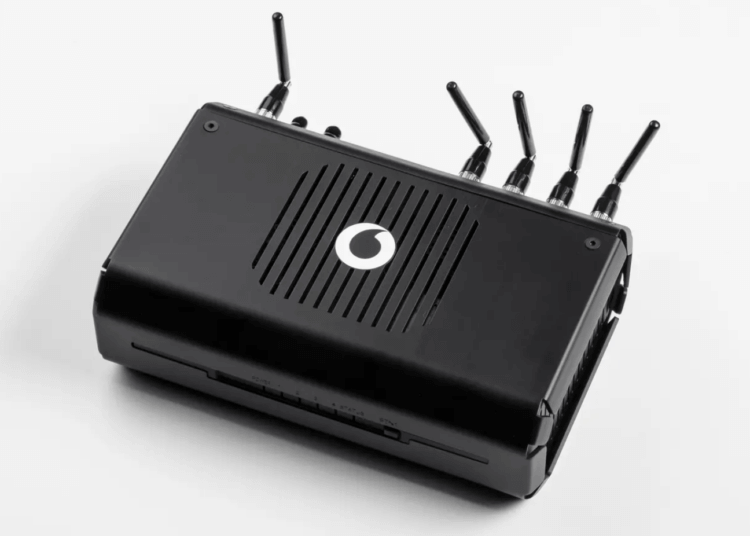
Vodafone introduced a prototype 5G radio based on a credit card sized Raspberry Pi personal computer and an equally small, advanced silicon chipset. The unit is designed to extend 5G coverage in small businesses and households.

The new system, which was developed at  Vodafone’s new European R&D Centre in Málaga, combines a Raspberry Pi 4 with a small 5G compatible embeddable software-defined radio (SDR) circuit board, made by UK-based specialist, Lime Microsystems. 

Vodafone said it aims to make 5G-based mobile private networks (MPNs) more accessible to the 22 million small-and-medium-sized enterprises (SMEs) across Europe. It could also offer households extended coverage providing an additional fast broadband link at times when many residents are online simultaneously.

Santiago Tenorio, Vodafone’s Director of Network Architecture, said: “We looked at what Raspberry Pi did for computing, in terms of making it more accessible to people of all ages, and we wanted to do the same with 5G.”

ADVA cites high demand from telecom service providers

Citing very high demand from telecommunications service providers, ADVA reported revenues of EUR 195.7 million for Q4 2022, up by 9.0% from EUR 179.6 million in Q3 2022, also up by 24.1% compared to EUR 157.7 million in Q4 2021. Pro forma gross profit in Q4 2022 increased by 17.4%, reaching EUR 71.4 million (36.5% of revenues) compared to EUR 60.9 million (33.9% of revenues) in Q3 2022 and increased by 27.4% compared to EUR 56.1 million (35.6% of revenues) reported in Q4 2021. The margin increase was due to a reduction in freight costs and expedited fees associated with the semiconductor crisis.

Net income reached EUR 3.8 million in Q4 2022 and increased by 329.2% from EUR 0.9 million in Q3 2022 but decreased by 78.4% from EUR 17.5 million in Q4 2021.

"We’re proud to report a highly successful fiscal year, where we achieved the highest revenues in our company’s history. Despite ongoing challenges caused by the semiconductor crisis, bottlenecks in the supply chains, inflation and fears of recession, we were able to stay on course, comprehensively serving and supporting our customers with innovative communications technology, software and services,” said Christoph Glingener, CEO of ADVA. “Looking forward, we are optimistic about future growth prospects. We have a strong pipeline of new products and services and are well-positioned to benefit from the major trends in our industry. Our capabilities in software and services are strengthening, delivering increasing value to our customers and partners. Together with Adtran, we will continue to focus on cost management and operational efficiency while investing in key areas to enter new growth markets.”

“Today, we report financial results of a strong 2022 with revenue growth of 18% year-over-year. Considering the various macroeconomic challenges and ongoing constraints in global supply chains, we’re very pleased with our profitability, which came in as expected,” commented Uli Dopfer, CFO of ADVA. “We’re optimistic that global supply chains will ease during this year and that cash generation will improve. We also expect to benefit from our business combination with Adtran and see first revenue synergies in 2023. We remain committed to increasing software and service revenues, which will drive continued margins improvement.”

https://www.adva.com/en/about-us/investors/financial-results/conference-calls

Friday, February 17, 2023

Ericsson and Telia offer Northstar 5G for industrial enterprises

Telia and Ericsson are launching NorthStar – a 5G innovation program for industrial enterprises.

NorthStar aims to accelerate the 5G adoption and transformation of industries, thereby strengthening the country’s international competitiveness. 

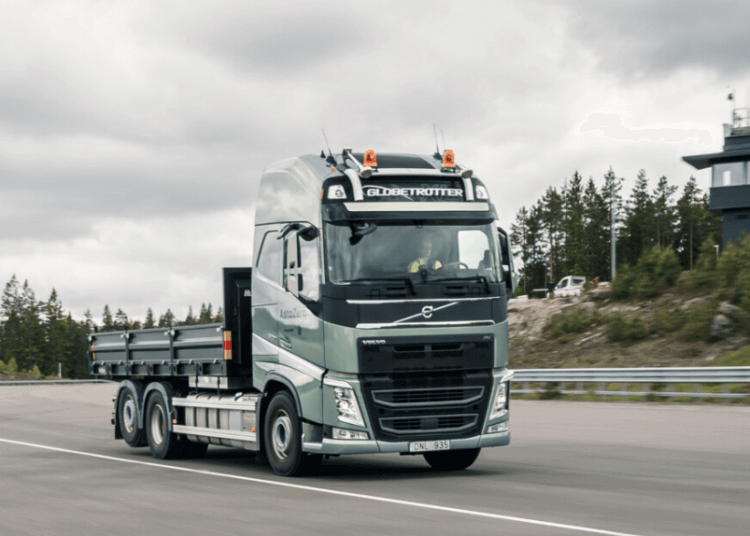
The program will initially focus on customers´ innovation and R&D units in the automotive and transportation sectors and the first customer is AstaZero, an independent test environment for automated transport systems.

NorthStar’s 5G network utilizes Ericsson’s dual-mode 5G Core, and connects to Telia’s existing public 5G network, currently being rolled out across Sweden. Additionally, customers will be able to build their own networks at their own locations, for example test sites and R&D facilities, and connect them to the NorthStar network.

Anders Olsson, CEO at Telia Sweden, says: “Sweden is an industrial powerhouse with iconic brands that reach around the globe. Scaling digital solutions and turning new technologies into tangible business benefits is critical if these companies, and Sweden as a nation, are to remain competitive. Without access to robust and secure digital infrastructure, businesses risk falling behind. Through the NorthStar program, we welcome industrial players to collaborate and trial their solutions using the latest 5G technology, which will help accelerate the development of smart and sustainable transport solutions.”

Telefónica to open 5G mmWave at MWC Hall 3

Telefónica will operate a live 5G mmWave base station at its stand in the upcoming MWC 2023 in Barcelona. 

The 5G mmWave deployment will cover Hall 3 of the MWC Barcelona event using ample mmWave spectrum bandwidth secured by Telefónica from the recent Spanish spectrum auction. Ericsson is providing its mmWave radio AIR 5322 and high-capacity RAN Processor 6651 to enable the 5G millimeter coverage. The radio access network equipment is powered by Ericsson Silicon chipset. 

Qualcomm Technologies will showcase the broad range of global 5G mmWave devices powered by Snapdragon mobile platforms. 

Gerardo Rovira, director of Radio Access Telefónica Spain, says: “This first commercial deployment of 5G mmWave services we are launching together with Ericsson and Qualcomm, along with the massive spectrum that Telefónica has obtained in the last auction, is the last milestone in a series of 5G long term projects that Telefónica has been developing in collaboration with enterprises and institutions in the last 3 years, and it goes a long way in showing the commitment that Telefónica has in the development and leadership of a strong 5G ecosystem that will be a key factor in bringing compelling services for both the public and private sectors”

Equinix builds 2nd data center in Barcelona

 Equinix disclosed plans to open a second data center in Barcelona to serve as a hub for the growing subsea cables landing in the region. 

Major cables include: 2Africa, connecting key coastal metros around the entire African continent and Arabian Peninsula; Aqua Comms' Europe Middle East India cable, due to link Barcelona with Salalah and Mumbai; Medloop by Sipartech, connecting Barcelonato Ajaccio, Genoa and Marseille; and the Medusa cable, due to link Barcelona with Lisbon and a number of important Mediterranean, European and African metros.

Equinix already operates hubs inkey Mediterranean metros such as Bordeaux, Genoa, Lisbon and Milan.

Jim Poole, Vice President at Equinix, noted: "Subsea cables play a vital role in enabling the modern digital world, and we anticipate much progress in the next couple of years following the pandemic-induced backlog. Subsea cables provide the underlying capacity between metros on different continents, while Equinix democratizes that capacity, making it easily accessible to a wide range of businesses and enabling rapid international expansion without the need for significant CAPEX investment."

Dell'Oro: Nokia and Samsung are on the rise in RAN

Preliminary findings from Dell'Oro show that the slower momentum that has characterized the broader 2G-5G Radio Access Network (RAN) market since 4Q 2021 extended to 4Q 2022, with four out of the six tracked regions declining on a year-over-year basis.

"The results in the quarter further validate the reduced growth scenario we have discussed now for some time, reflecting more challenging MBB comparisons in the advanced 5G markets," said Stefan Pongratz, Vice President at Dell'Oro Group. "At the same time, even if the gap between the early adopters and the laggards is generally smaller with 5G than it was with LTE, the state of 5G still varies significantly across the globe," continued Pongratz.

Additional highlights from the 4Q 2022 RAN report:

  • Top 5 RAN 2022 RAN suppliers include Huawei, Ericsson, Nokia, ZTE, and Samsung.
  • Top 4 RAN 2022 RAN suppliers outside of China include Ericsson, Nokia, Huawei, and Samsung.
  • Nokia and Samsung recorded the strongest RAN revenue growth out of the top 5 suppliers
  • Short-term RAN revenue prospects have been revised downward to reflect the lower starting point, however, relative growth rates are now more favorable, with global RAN revenues expected to be flat in 2023 as surging investments in India is offset by more challenging comparisons in North America and China.


Dell'Oro: SASE to exceed $60B 2022-2027

The modernization of networking and security for enterprise branches and hybrid workers is expected to drive the total SASE revenue to surpass $60 B between 2022 and 2027.  The report further divides the total SASE market along its two components, Security Service Edge (SSE) and SD-WAN, and details how the strong demand for security is expected to fuel SSE revenue to double between 2022 and 2027.

“The last three years of the pandemic, and the subsequent need to modernize enterprise branches and address hybrid work needs, have fueled great interest in SASE as evidenced by the total SASE market to double in size to over $6 B in 2022,” said Mauricio Sanchez, Research Director, Network Security, and SASE & SD-WAN at Dell’Oro Group. “While angst about the macroeconomic environment is starting to lead to some belt-tightening, we expect growth in SASE to continue unabated and double again by 2027,” added Sanchez.

Additional highlights from SASE and SD-WAN 5-Year Forecast Report:

  • SD-WAN and SSE revenues are expected to see a double-digit compounded annual growth rate (CAGR) over the 2022 to 2027 timeframe.
  • Unified SASE revenue is anticipated to grow 5X by 2027.

Frontier opens Fiber Innovation Labs

Frontier opened a Fiber Innovation Lab in Lewisville, Texas to test and learn new methods in real-world environments to install and maintain its fiber-optic network.

The facility is designed as a miniature suburban neighborhood with roads, sidewalks, a state-of-the-art central office, a small house and a reconstructed manhole system. It also simulates weather elements and temperature changes. Here, the Frontier team can 

Frontier hopes Fiber Innovation Labs will identify new ways to drive efficiencies and improve the customer experience as the company transforms with its fiber-first strategy. For example, the team will invent and test next-generation technology for fiber deployment and connectivity while also looking for more efficient ways to do installation and repairs.