Wednesday, June 25, 2014

Blueprint: The Ethernet of Things

By Nicholas Ilyadis
Vice President and Chief Technical Officer, Infrastructure & Networking Group 
Broadcom Corporation

It’s hard to avoid the buzz these days about the Internet of Things (IoT), the next evolution of computing where the connections are made, not just between PCs and servers or across mobile devices but to billions of devices across the Internet. As IoT gains traction, connections are being made among wearable devices, thermostats, cars, medical devices and myriad other things in order to communicate, share data and take action.

As IoT proliferates, the demands on enterprise, service provider and home networks grow exponentially, placing additional demands on network architects and administrators to build and maintain networks that operate effectively and efficiently. A key component of that is the wider adoption of Ethernet connectivity, which has been migrating to 10 gigabits per second (Gbps), 40 Gbps and, eventually, 100 Gbps capacity. Trusted Ethernet represents the underlying networking layer on which IoT devices and the operating systems and software applications that power them run.

IoT growth predictions can be stunning. Research firm IDC predicts the number of connected things on the planet to reach 212 billion by the end of 2020. According to the Cisco Global Cloud Index, annual global data center IP traffic will reach 7.7 zettabytes by the end of 2017. A zettabyte is one byte times 10 to the 21st power. That’s a huge amount data to be in motion across Ethernet networks and at rest in storage devices.

IoT connections are being made not just on wired networks, but also on fast-growing wireless networks using Wi-Fi and Bluetooth technology. Much of the IoT buzz is driven by fascinating new things that are being developed by multiple companies. In addition to a range of non-conventional Internet-connected devices such as smart appliances, IoT includes a growing number of intelligent wearable products such as fitness trackers that provide real-time data on the user’s vital signs and activity levels. In industrial settings, an IoT device embedded in a jet engine can send statistics on how the engine is running to system controllers.

But all those devices – and more – generate and consume data that has to go somewhere. The networking industry is responding to this coming data deluge with innovations that are intended to move data quickly, efficiently and reliably:


  • Software-Defined Networking (SDN). SDN delivers a network-wide software platform to deliver better coordination, control and programmability in order to reduce the complexity of these modern networks. Ethernet switches are ideally suited for SDN as they provide the fabric of the Internet and data centers.
  • Network Function Virtualization (NFV). Complementing SDN, NFV moves networking functions from dedicated appliances – such as routers and switches -- to general purpose servers that run virtualization technology in order to make Ethernet networks more scalable, agile and efficient.
  • Cloud Computing. The cloud delivers the additional computing capacity required to satisfy growing demand to an enterprise or small business from a third party. With the cloud, organizations can crank up capacity to meet growing user demand without having to invest in new IT infrastructure. In addition, the ability to host processing and data in the cloud provides a mechanism to relocate that capacity to geographic locations where the data is being created as well as control the devices that are generating the data. Cloud Computing also depends on a well-designed Ethernet network, since low latency and high bandwidth are required to actualize the value.
  • Big Data. As more things seek to connect to the Internet and each other, the volume of data traversing networks increases, but the larger those data haystacks grow, the harder it is to find the all-important needles within them. Big Data analyzes vast databases of information to glean the most relevant insights from which end users will most benefit. Ethernet, with its high capacity and low latency capabilities, is again ideal for interconnecting the servers that crunch this data.
  • Green Data Center. As data centers grow in size and complexity, energy costs can skyrocket and efficiency can suffer. The New York Times reported in 2012 that data centers may waste as much as 90 percent of the electricity they obtain from their local electric utility. Migrating to more energy-efficient and higher capacity Ethernet connectivity does much to green-up the data center. One study shows that if networks migrated to 10G Energy Efficient Ethernet, from 1G devices, CO2 emissions could be reduced by up to 3.5 million metric tons, which is the equivalent of taking 2.3 million cars off the road or eliminating consumption of 1.3 billion gallons of gasoline or 27 million barrels of oil.

Network automation tools such as SDN, NFV and others, combined with Ethernet connectivity at 10Gbs and faster speeds, will together deliver a networking foundation onto which the software layer for IoT devices will run. That physical network will be complemented by wireless connectivity with processors built into Wi-Fi and Bluetooth-based devices to extend network connections. Together, they will allow end users to get the most out of the billions of connected things expected in the future.

About the Author
Nicholas (Nick) Ilyadis serves as Vice President and Chief Technical Officer of Broadcom’s Infrastructure and Networking Group (ING), responsible for product strategy and cross portfolio initiatives for a broad portfolio of Ethernet chip products including Network Switch, High Speed Controllers, PHY, Enterprise WLAN, SerDes, Processors and Security.

Prior to Broadcom, Ilyadis served as Vice President of Engineering for Enterprise Data Products at Nortel Networks and held various engineering positions at Digital Equipment Corporation and Itek Optical Systems.  Ilyadis holds an MSEE from the University of New Hampshire and a BTEE from the Rochester Institute of Technology.

About Broadcom
Broadcom Corporation (NASDAQ: BRCM), a FORTUNE 500® company, is a global leader and innovator in semiconductor solutions for wired and wireless communications. Broadcom® products seamlessly deliver voice, video, data and multimedia connectivity in the home, office and mobile environments. With the industry's broadest portfolio of state-of-the-art system-on-a-chip solutions, Broadcom is changing the world by Connecting everything®. For more information, go to www.broadcom.com.

Google Cloud Platform Gains Analytic and Mobile Tools

Google introduced a number of new tools to help developers build applications and gain insight on data sets hosted on the Google Cloud Platform.  The new cloud capabilities include:

Cloud Dataflow, a fully managed service for creating data pipelines that ingest, transform and analyze data in both batch and streaming modes. Cloud Dataflow is a successor to MapReduce, and is based on Google's internal technologies like Flume and MillWheel.

Google Cloud Save, the latest release enables Android applications to synchronize data between devices with push notifications with no server code required.

Cloud Debugger, a new tool that provides a full stack trace and snapshots of all local variables for any watchpoints set in code with no performance impact.

Cloud Trace, a tool that provides deep insights into the performance of cloud applications. It helps visualize and understand the time spent by an application for request processing.  A developer can compare performance between various releases of an application, see latency distributions and correlate application changes to performance changes.

Google Cloud Monitoring powered by Stackdriver, designed to identify and address unusual behavior across your application stack. Cloud Monitoring is aware of popular open source applications and will automatically generate dashboards and alerting tuned for them.

Cloud Platform integration into Android Studio, simplifies the process of adding a Google App Engine backend to a mobile app. Android Studio now has three built-in App Engine backend module templates including Java Servlet, Java Endpoints, and an App Engine backend with Google Cloud Messaging.

http://googlecloudplatform.blogspot.com/

Swisscom Selects PLUMgrid OpenStack Networking Suite

Swisscom has selected PLUMgrid's OpenStack Networking Suite as a foundational element of its cloud-based IT infrastructure.

PLUMgrid features a highly distributed, software-based network virtualization platform designed for cloud operators and large-scale cloud environments. The company said its technology enables Swisscom to leverage existing physical infrastructure to build a secure multi-tenant virtual network with PLUMgrid’s Virtual Domains and reduce the provisioning time from weeks to seconds.

Swisscom is Switzerland’s leading telecommunications provider and ranks as one of the leading Swiss providers specializing in the integration and operation of complex IT systems, with 6.4 million mobile customers, more than one million Swisscom TV customers and roughly 2 million retail broadband connections. The carrier has decided to use OpenStack as its core component for cloud virtualization orchestration.

“Over the next few years we’ll migrate the majority of our IT applications and services to our cloud, and OpenStack is the core of our cloud virtualization orchestration,” said Lukas Fluri, Head of Cloud Development at Swisscom. “PLUMgrid delivers not only best-in-class technology that ensures a highly secure environment for our customers but also ease of use, integration with OpenStack, and the flexibility needed for today’s clouds.”

“Swisscom sets high standards of support, services and security for its customers,” said Awais Nemat, Co-Founder and CEO at PLUMgrid. “The industry’s most advanced, scalable, and high-capacity VNI, PLUMgrid OpenStack Networking Suite allows Swisscom to quickly, easily and efficiently offer new services and give their customers greater security, performance, visibility, and control over their cloud infrastructure.”

http://www.plumgrid.com

PLUMgrid, a start-up based in Sunnyvale, California, offer its PLUMgrid Platform, an infrastructure virtualization solution that enables the creation of on-demand programmable networks, which the company calls Virtual Domains. The goal its to allow administrators to create, copy and deploy secure multi-tenant virtual networks in seconds.

The PLUMgrid Platform integrates security, operations and maintenance tools, and network visibility and analytics.  It runs on existing standard-based x86 servers to deliver dynamic and scalable virtual data center networks. The company says network services can be added or removed in seconds, without network disruption or downtime.

PLUMgrid is building an ecosystem of industry partners, including A10 Networks, Arista Networks, Broadcom, Cavium, Check Point Software Technologies, Citrix, Cumulus Networks, F5 Networks, Ixia, Mellanox Technologies, Palo Alto Networks, Silver Peak and Zerto.

NETGEAR Delivers Triband WiFi Router Powered by Broadcom

NETGEAR introduced its new Nighthawk X6 AC3200 Tri-Band WiFi Router (R8000)-- the first tri-band WiFi router based on the new Broadcom 5G WiFi XStream platform.

The WiFi router uses six high-performance antennas and three network bands, one 2.4GHz and two 5GHz, to deliver a combined WiFi speed of up to 3.2 Gbps (1300+1300+600 Mbps) -- the fastest to date. It balances the network load to ensure the best WiFi performance for each device and deliver the maximum wireless range.

The Nighthawk X6 is powered by a 1GHz dual core processor with three additional offload processors. It supports NETGEAR Beamforming, a smart, signal-focusing technology that improves WiFi connections by locking onto a wireless device on the network and pinpointing WiFi signals directly at the device.

In a typical dual band router, for example, the video streamer and the Internet gamer have to effectively "time-share" the 5GHz band. With the Nighthawk X6 Tri-Band Router, however, video streaming and Internet gaming traffic can each operate on separate 5GHz bands so that each of them gets double the speed of a dual band router.

"Home networks are being weighed down by an exploding number of WiFi devices demanding bandwidth for more and more video content," said Sandeep Harpalani, NETGEAR's director of product marketing for Retail Network Products. "Nighthawk X6 solves these issues by not only providing more WiFi bandwidth but also segmenting slower and faster devices across different WiFi bands, and balancing the number of devices in each band to deliver the best-in-class experience for streaming, sharing and gaming."

Broadcom noted that the average household is expected to own roughly 50 Internet-connected devices by 2022, up from approximately 10 today. Its 5G WiFi XStream Platform features five core "Penta Core" central processing unit (CPU) to maximize network capacity. SmartConnect software is used to ensure each Wi-Fi device operates on best frequency band. The platform automatically separates coexisting 802.11n and 802.11ac Wi-Fi devices into distinct frequencies.

http://www.netgear.com/
http://www.broadcom.com

Google Drive for Work Offers Unlimited Storage for $10/Month

Another shot in the online storage wars -- Google announced Drive for Work, a new premium offering for businesses that includes unlimited storage, individual file sizes up to 5TB, advanced audit reporting and new security controls for $10/user/month.

Google Drive for Work offers 24x7 phone support and a 99.9% uptime guarantee. It include all of Google’s productivity apps like Docs, Sheets, Slides, Sites and Hangouts.  Google is also adding enterprise-grade security and compliance, including a SSAE 16 / ISAE 3402 Type II, SOC 2-audit, ISO 27001 certification, adherence to the Safe Harbor Privacy Principles, and can support industry-specific requirements like HIPAA.

http://www.google.com/enterprise/apps/business/driveforwork/index.html


Earlier this month, Microsoft announced 1 TB of OneDrive storage for all versions of Office 365, including the 5-person home version that costs $9.99 per month and the personal version costing $6.99 per month.

Microsoft said the landscape for online services is quickly changing and that merely providing cloud storage is table stakes.  By providing 1 TB with Office 365, Microsoft effectively supersedes the storage-only providers.  For those who only want online storage and not Office 365, OneDrive pricing has been cut 70% to $1.99 for 100GB and $3.99 for 200GB.

ZTE Launches 400G OTN Platform for Metro Cores

ZTE introduced a 400G OTN solution based on its ZXONE 8000 large-capacity cross-connect platform and ZXONE 9700 Packet OTN platform.

The 400G OTN solution is aimed at metro/regional core infrastructure networks. It features multiple modulations including Nyquist QPSK, 16QAM and 8QAM. Additionally the 400G OTN solution supports software-defined optical networking using ZTE-designed low-power chip sets, and photonic components.

“Faced with the challenges of rapid traffic growth, high bandwidth data centre applications and cloud computing, carriers have increasingly been considering building large capacity, evolving and ‘elastic’ networks. The ZTE 400G transmission equipment with multiple, adaptive modulations will be a must for all future networks,” said Mr. Wei Xiaoqiang, Director of ZTE BN products.

http://wwwen.zte.com.cn/en/press_center/news/201406/t20140625_425310.html

Juniper Enhances its SRX Services Gateway

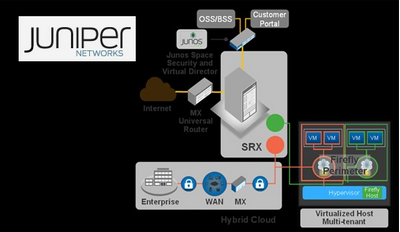
Juniper Networks introduced a set of enhancements to its SRX Series Services Gateways to help large organizations manage a broad range of deployments and use cases while simplifying administrative overhead. The enhancements offer simplified and centralized management and an open services platform for essential security features, including intrusion prevention system (IPS), unified threat management (UTM) and application visibility.

Some highlights:

  • Junos Space Security Director's integrated logging and reporting and role-based access controls can now be used to manage next generation security services including user firewall, application security (AppSecure) and UTM. A single, central management platform delivers a simple method for managing all Juniper Networks firewalls, eliminating the complexity and time needed to support multiple management platforms.
  • Juniper Networks SRX now integrates directly with Active Directory to apply user role-based firewall policies without requiring any additional devices or agents.
     
  • AppID delivers granular management of application visibility and control on a per policy basis. It can be used to combine security for the data center and enterprise edge into a single box. The new AppID engine includes a heuristics engine optimized for identifying evasive or tunneled applications. This feature is important for blocking risky applications such as peer-to-peer applications or adding control over social, video and communications applications such as Skype or BitTorrent. AppID will also identify nearly twice as many unique applications as before.
  • Firefly Perimeter, Juniper's virtual firewall, now supports NGFW capabilities like IPS and UTM. These services enable Firefly Perimeter customers to layer additional levels of security into their networks to protect against exploits trying to compromise weaknesses in applications and protect against malware, spam and other content-based threats.

http://www.juniper.net

Alcatel-Lucent Invests in EBlink for Wireless Fronthaul

Alcatel-Lucent announced a EUR 3 million investment in Eblink, a company based near Paris, France that offers a wireless fronthaul solution for connecting base stations and small cells.

EBlink's radio system support up to three sectors, or tri-band sectors and is CPRI compatible.  It is currently available in the 5.8 GHz band, and the company expects to add additional licensed and unlicensed bands in the near future.

ALU also signed a commercial and technological partnership agreement with EBlink.

Alcatel-Lucent said EBlink’s wireless solutions complement its own wireless LTE and small cells offerings.

http://www.alcatel-lucent.com


FlexPod Passes $3 Billion in Sales for Cisco and NetApp

Cisco and NetApp passed the $3 billion milestone in sales for their FlexPod integrated infrastructure solution, which combines compute, networking and storage into a single unit.  FlexPod unit shipments have grown 81 percent year-over-year, with demand for FlexPod solutions now reaching a $2 billion annualized demand run rate. FlexPod is deployed with more than 4,100 customers and available in over 100 countries, an increase from 2,300 customers, and 70 countries last year.  The product was first shipped in 2010.

"Our partnership with Cisco on the FlexPod integrated infrastructure redefined how enterprises deployed private cloud infrastructure," said Tom Georgens, Chairman and CEO, NetApp. "As the data center extends to include public cloud services for better economics and infinite scale, NetApp and Cisco are again leading the way, helping customers realize the transformative business benefits of hybrid cloud.”

“As CIOs look to simplify IT and focus on delivering business outcomes, there’s been a major industry shift toward integrated infrastructure,” said John Chambers, Chairman and CEO, Cisco. “In 2010 Cisco and NetApp launched FlexPod to deliver a more efficient, agile data center infrastructure to customers. Together, we’re evolving the FlexPod architecture together to help our customers unleash their applications and realize the promise of hybrid cloud environments.”

http://newsroom.cisco.com
http://www.netapp.com

ZTE Wins TD-LTE Contract in Dominican Republic

Wind Telecom has selected ZTE to build the first 4G TD-LTE network in the Dominican Republic. The network will operate in 2.5 – 2.7 GHz spectrum and cover major cities and rural areas of the nation.

ZTE said its unified platform EPC and eNodeB solutions, based on ZTE’s proprietary Cloud Radio technology, will help Wind Telecom achieve savings in capital expenditure, and operation and maintenance costs, and lay solid foundations for future growth.

ZTE will also provide mobile devices that will appeal to users and help them take advantage of the broadband capabilities of the new network.

"This next-generation network is an investment in the future of the Dominican Republic,” said José Clase, Chairman of the Board of Wind Telecom. “This platform will help bridge the digital divide and raise the economic competitiveness of the Dominican Republic by helping to lift the standard of education. The high-speed network connectivity will also deliver an enhanced user experience for consumers.”

ZTE has deployed commercial 4G TD-LTE networks for operators globally including China Mobile, China Mobile Hong Kong, Bharti Airtel and Hi3G in Sweden.

http://wwwen.zte.com.cn/en/press_center/news/201406/t20140624_425255.html

Tuesday, June 24, 2014

Equinix Picks Ciena 6500 for Metro Connectivity and Cloud Exchange

Equinix is utilizing Ciena’s 6500 platform in its metropolitan networks in the United States, Europe, Middle East and Asia-Pacific.  The deployment supports 100G connectivity to Service Provider and enterprise customers today – with a path to 400G and beyond in the future.

In addition, Ciena’s V-WAN network resource broker and scheduling application, as well as its network management capabilities, lay the foundation for multi-layer SDN control.

Ciena’s coherent optical technology and software also supports the Equinix Cloud Exchange, a new service that combines the automated interconnection of cloud, network and managed service providers with advanced service orchestration, providing enterprises with simple, scalable, direct access to multiple cloud services.

Ciena said this deployment illustrates how its OPn architecture can facilitate network integration within and between the data center to transform connectivity, compute and store into a programmable platform for a variety of new services.

The Equinix Cloud Exchange gives customers the ability to create a private and secure 1Gb or 10Gb connection to transfer data between their own infrastructure and multiple cloud providers, such as Amazon Web Services (AWS) and Microsoft Azure.

“Many Equinix customers are looking for the ability to expand their networks globally and they require high speed connections within a metro, or globally, between our IBX data centers. Through our relationship with Ciena, we can offer customers a dynamic and automated interface to the hundreds of network and cloud service providers inside our data centers and meet their needs for next-generation connectivity solutions,” stated Ihab Tarazi, Chief Technology Officer at Equinix.

“Enterprises and service providers today require ‘on-demand’ network capabilities, and market leaders like Equinix are in an excellent position to capitalize on this industry shift. We’ve worked closely with Equinix to design an intelligent, open and programmable network architecture that delivers elastic, high-speed, high-performance for inter- and intra- data center connectivity. Equinix Cloud Exchange customers in major markets worldwide will have access to affordable, private connectivity on demand to support their cloud and network service requirements,” said Francois Locoh-Donou, Senior Vice President, Global Products Group, Ciena.

http://www.equinix.com
http://www.ciena.com

  • In April, Equinix launched its new Cloud Exchange, an advanced interconnection solution that enables seamless, on-demand and direct access to multiple clouds and multiple networks.  The goal is to give enterprises direct access to services for building sophisticated hybrid cloud solutions inside Equinix International Business Exchange (IBX) data centers.
    With the Equinix Cloud Exchange customers can connect to Microsoft Azure ExpressRoute in Silicon Valley, Washington, D.C. and London with planned expansions into 13 additional markets by the end of 2014.  Customers can also access Amazon Web Services via the Equinix Cloud Exchange in Silicon Valley, Washington, D.C. and London. In addition, Equinix is working with other key cloud and network service providers to provide access to their services via the Cloud Exchange. Equinix provides a Cloud Exchange Portal and APIs to simplify the process of managing connections to multiple cloud services. Businesses can use the Portal and APIs to allocate, monitor and provision virtual circuits in near real-time with the provisioning of those circuits automated end-to-end from the Cloud Exchange to the service provider.

    Equinix expects to be serving a total of 19 markets by the end of 2014 with its Cloud Exchange.

tw telecom to Launch Ethernet via Equinix Cloud Exchange

tw telecom is preparing to launch Business Ethernet connectivity directly to the new Equinix Cloud Exchange.  The carrier expects to be the first to provide Ethernet service in the Seattle SE3 International Business Exchange (IBX) data center facility. The service will enable seamless and direct access to multiple cloud services and providers on the Equinix Cloud Exchange

The presence in Seattle also enables tw telecom to offer SE3 tenants secure performance and optimized connectivity directly to the Amazon Web Services (AWS) cloud via a direct connection to the Western US and GovCloud regions.

"We are excited to have tw telecom connect to SE3 and look forward to supporting their present and future data center needs," said Jim Poole, vice president, global service providers, Equinix. "Seattle is a very strategic market for our customers as they implement robust networking and cloud solutions to facilitate business growth. This relationship with tw telecom demonstrates our ability to collaborate with one of the nation's top network service providers to offer a robust IT backbone to our customers."

"As our customers' business needs continue to evolve, security, capacity and access to the cloud are critical priorities for us to help solve their most pressing challenges," said David King, vice president and general manager, tw telecom Seattle. "Expanding our relationship with Equinix here in Seattle is a critical step in helping solve capacity challenges while offering more efficient access to the cloud for our customers. Working with Equinix and leveraging its Cloud Exchange ecosystem provides the speed to market, cost efficiency and return on investment that are paramount to our customers' success."

http://www.equinix.com
http://www.twtelecom.com


  • Earlier this month, Level 3 Communications agreed to acquire tw telecom in a deal that will combine its global fiber network and international data centers with tw telecom's extensive metro footprint in major U.S. markets. The stock-and-cash transaction is valued at $40.86 per TWTC share, or $5.7 billion in aggregate, based on market close as of June 13, 2014. tw telecom stockholders will receive $10 cash and 0.7 shares of Level 3 common stock for each share of tw telecom common stock that is owned at closing.


Nutanix Lands OEM Deal with Dell for Data Center Appliances

Dell will offer a new family of converged infrastructure appliances based on Nutanix web-scale technology under an OEM deal announced by the firms.

The companies said the combination of Nutanix’s software running on Dell’s servers delivers a flexible, scale-out platform that brings IT simplicity to modern data centers.

Specifically, the new Dell XC Series of Web-scale Converged Appliances will be built with Nutanix software running on Dell PowerEdge servers, and will be available in multiple variants to meet a wide range of price and performance options. The appliances will deliver high-performance converged infrastructure ideal for powering a broad spectrum of popular enterprise use cases, including virtual desktop infrastructure (VDI), virtualized business applications, multi-hypervisor environments and more.

Nutanix’s web-scale software runs on all popular virtualization hypervisors, including VMware vSphere, Microsoft Hyper-V and open source KVM, and is uniquely able to span multiple hypervisors in the same environment. The Dell XC Series appliances are scheduled for availability in the fourth quarter of this year and will be sold by Dell sales teams and channel partners worldwide.

The agreement also includes joint sales, marketing, support and service investments, as well as alignment of product roadmaps.

“Nutanix is a recognized leader in the converged infrastructure market with a software-driven offering that fits with Dell’s efforts to redefine datac enter economics and simplify IT for our customers,” said Alan Atkinson, vice president and general manager, Dell Storage. “By combining market-leading infrastructure and software technologies from both companies with Dell’s world-class go-to-market capabilities, we believe our new solutions will be positioned to be a significant player in the growing, multi-billion dollar converged infrastructure market.”

http://www.nutanix.com/2014/06/24/nutanix-announces-global-agreement-with-dell/


Puppet Labs Extends Automation from Servers to Networking/Storage

Puppet Labs is extending its software automation tools across networking and storage platforms for data centers.  The company's Enterprise product already is the leading server automation solution.

The newly launched Puppet Supported certification program now aims to ensure interoperability of the Puppet automation tools across an entire data center.  Launch partners for this program include Arista Networks, Brocade, Cisco, Cumulus Networks, Dell, EMC, F5, Huawei and NetApp. Puppet Labs is certifying Puppet Enterprise for platforms and devices.

Puppet Labs said this collaboration will allow organizations to deploy software faster and with fewer errors, iterate more quickly, and rapidly adapt to fast-changing business needs.
“With the Puppet Supported Program, we're extending our software automation leadership into networking and storage, allowing organizations to break down the barriers between IT silos that have traditionally created bottlenecks and delays," said Luke Kanies, founder and CEO of Puppet Labs. "Our goal is to extend the reach of automation to every device in the data center, making it easier than ever for organizations to deliver great software quickly and reliably. That's a big competitive advantage in today's technology-driven business environment."

http://puppetlabs.com/about/press-releases/puppet-labs-partners-leading-vendors-deliver-automation-networking-and-storage
  • Earlier this month, Puppet Labs announced $40 million in new funding from existing investors Cisco, Google Ventures, Kleiner Perkins Caufield & Byers, Triangle Peak Partners, True Ventures and VMware.  Puppet Labs, which develops IT automation software, said it now has over 18,000 enterprises using its software to accelerate operations. The software can automate repetitive tasks, deploy applications across multiple machines, proactively manage infrastructure where on-premise or in the cloud.
    Puppet Labs is based in Portland, Oregon, and has about 300 employees. The company will use the new funding to expand internationally.

    Puppet's has now raised a total of $86 million since June 2009.

Violin Memory's All Flash Array Scales to 280TB per Rack

Violin Memory unveiled its Concerto 7000 All Flash Array along with new software that adds synchronous and asynchronous replication and metro cluster capabilities.

Violin's Concerto 7000 All Flash Array scales to 280TB in a fully configured, super-dense 18RU, low power footprint. The platform delivers micro-second latency for up to 20x faster application response times.  Flash also uses 90 percent less floor space, power and cooling.

Violin's Concerto enterprise data services software also offers continuous data protection, WAN optimized replication and in-flight encryption that can be configured on a LUN-by-LUN basis. The advanced software capabilities ensure long flash life with array-wide flash management, wear leveling and vRAID.

“The Concerto 7000 All Flash Array helps our customers deliver ‘Business in a Flash’, by transforming IT resources into competitive assets that create new possibilities based on the performance, data protection, and transactional capabilities we design into our all-flash solutions,” said Violin Memory CEO Kevin DeNuccio.

http://www.violin-memory.com/

IEEE Forms Study Group to Address Automotive Ethernet

A new IEEE 802.3 Single Twisted Pair 100 Mb/s Ethernet Study Group has been formed to explore the market opportunities and needs for a 100 Mbps speed for Ethernet in automotive networking.

The IEEE said that many vehicle manufacturers, and their suppliers, desire IEEE 802.3 standards-based interoperable solutions in order to enable and extend a multi-vendor eco-system for the automotive industry.

“A 100 Mb/s single twisted pair solution provides another option for Ethernet used in networking automotive technology systems. The new study group expects to lay the groundwork for another single twisted pair technology standard and ‘future proof’ these systems, while maintaining traditional Ethernet compatibility with higher-performance 1000BASE-T1 links that may also be used in the car,” said Thomas Hogenmüller, chair of the IEEE 802.3 Single Twisted Pair 100 Mb/s Ethernet Study Group and team manager, E/E-Architecture Engineering Communication Technologies, with Robert Bosch GmbH. “The 100 Mb/s option will also allow for a more rapid adoption of driver assist and other vehicle safety systems into low to mid-range vehicles.”

“Automotive manufacturers and suppliers require standards-based networking to enable and extend the industry’s multi-vendor eco-system,” said David Law, chair of the IEEE 802.3 Ethernet Working Group and distinguished engineer with HP Networking. “This study group will provide the opportunity to explore the possible development of a single twisted pair 100 Mb/s Ethernet standard supporting automotive applications, as well as broader transportation and distributed applications.”

http://www.ieee.org

NTT Com Opens 4th Data Center in Malaysia

NTT Communications opened its Malaysia Cyberjaya 4 data center in Cyberjaya, Selangor.

The new data center, which is NTT Communications’ 146th data center worldwide. is a self-owned, self-built and self-operated facility that measures 87,000 square feet -- twice the size of Cyberjaya 3.  The data center is connected via NTT Com's Asia Submarine-cable Express (ASE) to its data centers in Singapore.  The Malaysia Cyberjaya 4 Data Center is certified to the latest global standards, including TIA-942 Tier 3 equivalence, ISO27001:2005, GBI, LEED and PCIDSS.

http://www.ntt.com/aboutus_e/news/data/20140423.html

Mellanox to Acquire Israel's Integrity Project

Mellanox Technologies announced its intent to acquire privately-held Integrity Project, which includes an accomplished team of software technology veterans.

Based in Ramat-Gan, Israel, Integrity Project was formed out of an elite military technology unit, specializing in the fields of connectivity, low-level development, real-time applications, and security.

Mellanox said the acquisition will broaden its customer base by adding software solutions designed to enable customers to achieve optimal performance from all interconnect components.

“The new and emerging Web 2.0 and cloud applications that influence our daily lives depend on the rapid handling of data,” said Eyal Waldman, president and CEO of Mellanox Technologies. “We expect that the Integrity Project acquisition will further enhance our software team’s capabilities to provide the best compute and storage platforms, such as CloudX™, to enable our customers to best meet the growing demands of applications and the usage of the data within high-performance, Web 2.0, cloud, and storage environments. We welcome the talented team from Integrity Project and look forward to their contribution to Mellanox’s continued growth.”

http://www.mellanox.com
https://he-il.facebook.com/IntegrityProject

Agilent Collaborates with China Mobile on 5G

Agilent Technologies agreed to collaborate with China Mobile Communications on the next–generation 5G wireless communication systems.

Agilent will actively support the research and development programs on 5G, led by China Mobile, and provide test and measurement solutions for next-generation 5G wireless communication systems.

As the deployment and commercial operation of 4G systems are speeding up, technologists worldwide have begun searching for next-generation wireless solutions to meet the anticipated demands in the 2020 era given the explosive growth of mobile Internet, and this will lead us to the fifth generation 5G.

The 5G research areas of CMRI will focus on the major technical aspects of 5G, including large-scale antenna systems (LSAS), full-duplex radio, energy efficiency and spectral efficiency co-design, and new signaling/control mechanisms to achieve the main theme of "green and soft."

"Our strong collaboration with CMRI on the 5G research will allow us to lead the technology exploration of next-generation wireless communication systems," said Andy Botka, Agilent vice president and general manager of the Microwave and Communications Division. “We will provide the CMRI research teams with the measurement expertise required to design, develop and validate their new 5G systems and set up the 5G prototype test-bed."

http://www.agilent.com/find/5G

Monday, June 23, 2014

Intel Unveils Knights Landing Processor and Omni Scale I/O Fabric

Intel announced microarchitecture and memory details of its next-generation Intel Xeon Phi processor (code-named Knights Landing) and an end-to-end interconnect fabric optimized for fast data transfers, both aimed at powering High-Performance Computing (HPC) systems.

Knights Landing, which is expected to debut in the second half of 2015, will include up to16GB high-bandwidth, on-package memory at launch – designed in partnership with Micron – to deliver five times better bandwidth compared to DDR4 memory, five times better energy efficiency and three times more density than current GDDR-based memory. Knights Landing will be available in a PCIe-based card option, or mounted directly on the motherboard socket to remove the bandwidth bottlenecks of data transfer over PCIe, common in GPU and accelerator solutions.

Powered by more than 60 HPC-enhanced Silvermont architecture-based cores, Knights Landing is expected to deliver more than 3 TFLOPS of double-precision performance and three times the single-threaded performance compared with the current generation.

Intel's new Omni Scale fabric, which is built upon a combination of enhanced acquired IP from Cray and QLogic along with tis own in-house innovations, addresses the I/O requirements of the HPC sector.  Intel Omni Scale Fabric is an end-to-end I/O solution encompassing adapters, edge switches, director switch systems, cables and management software. Intel intends to replace traditional electrical transceivers in the director switches with silicon photonics, enabling increased port density, simplified cabling and reduced costs. Intel Silicon Photonics-based cabling and transceiver solutions may also be used with Intel Omni Scale-based processors, adapter cards and edge switches.

Intel noted continued market gains in powering the HPC sector.  The company said its current generation of Xeon processors and Xeon Phi coprocessors powers the top-rated system in the world – the 35 PFLOPS "Milky Way 2" in China, and its designs account for 85 percent of all supercomputers on the 43rd edition of the TOP500 list.

http://newsroom.intel.com/community/intel_newsroom/blog/2014/06/23/intel-re-architects-the-fundamental-building-block-for-high-performance-computing