Wednesday, December 9, 2015

Blueprint: NFV Brings Changes to Carrier Purchasing Patterns

by Greg Collins, Founder, Exact Ventures

Spurred by increasing competition from over-the-top (OTT) service providers like Apple, Facebook, Google, and Microsoft, many network operators have an urgent need to transition and adapt their networks in order to be able to quickly develop, deploy and monetize competing services as well as to open their networks to new services that may originate from outside of the operator.  This need for ‘service agility’ for network operators is being enabled by the increasing maturity of Network Function Virtualization (NFV) technology whereby many network nodes will increasingly be virtualized.   In other words, over time mobile network cores will look more like the datacenters you would find at the OTT service providers, than more traditional central offices with many racks of purpose-built equipment.

While practically every network operator has virtualization as a key criteria in evaluating core network element, most current deployments are of legacy physical platforms consisting of both hardware and software.  AT&T’s Domain 2.0, Deutsche Telecom’s Terrestream, and Telefónica’s UNICA efforts are prominent examples of network operators aggressively driving this change through their supply chain.  While we are at the very early stages of IT and datacenter technology spreading to operator core networks, we believe that this architectural transition is generational and will gradually increase over the next decade.

Those network elements that are low-bandwidth and compute-intensive can be moved into a virtualized datacenter, either in an operator’s network or a public cloud network, more easily than data intensive network functions that benefit from specific packet processing or transcoding.  This change offers operators several advantages like cost savings, scale and efficiency.  Deploying common, off-the-shelf (COTS) server hardware and virtualization software is potentially less expensive than purchasing dedicated hardware for each network node or function.  System capacity can also be scaled up or down almost instantly depending on demand.  Redundancy and high-availability features are often inherent in datacenter infrastructure and would not have to be duplicated, as is the case in many network functions today.  As service providers begin to trial and evaluate NFV architectures and individual virtual network functions (VNFs), this process will likely trigger another round of vendor selection for network elements centered on the NFV and management and network orchestration (MANO) architectures.

Given this change, the value of the funds spent on networking infrastructure is slowly being reallocated.  Network specific hardware spending is trending downward—toward zero perhaps—while these funds will ostensibly be reallocated to software elements that perform the same function on top of COTS hardware.  These software elements will come at a lower price than the hardware-based networking solutions.  Moreover, the software elements, or VNFs, will be sold in the traditional manner of perpetual licenses with an annual software maintenance fee, but also as an annual or multi year subscription aka networking-as-a-service (NaaS) or infrastructure-as-a-service (IaaS).  Service providers will increasingly but gradually look at their infrastructure costs in terms of opex versus capex, which will change the way they budget and plan as well as how they communicate with the investment community.  This can be quite a change for some network operators who expect to purchase networking equipment once and then squeeze every bit of value that they can get from it over the next five to ten years or more.

About the Author


Greg Collins is a technology analyst and strategist with extensive experience in creating innovative, highly analytical and enduring market segmentation and research practices in technical networking, telecommunications, and wireless markets. Greg founded Exact Ventures in 2011 in order to provide market intelligence with greater depth and context than traditional, static pillars of market data. - See more at: http://www.exactventures.com/founder-bio/#sthash.h4uhWszD.dpuf

About Exact Ventures

Exact Ventures covers NFV in each of its research areas: Evolved Packet Core, IMS/VoLTE, Policy Servers/PCRF, Session Border Controllers, Signaling, etc. http://www.exactventures.com/

Verizon Enhances its Collaboration Portrfolio with Cisco

by James E. Carroll

Verizon is expanding its global Collaboration portfolio with the introduction of additional rich conferencing and mobile collaboration tools based on Cisco WebEx Cloud Connected Audio, Collaboration Meeting Room and Verizon’s  UCCaaS Mobile First service.

Verizon is rolling out UCCaaS Mobile First, an advanced collaboration solution based on Cisco Hosted Collaboration Solution.  The service is aimed at an increasingly mobile workforce that offers end-users the ability to boost the audio and video performance of the Cisco Jabber mobile unified communications client application on Verizon’s 4G LTE network for a high quality experience.
Cisco Jabber enables users to make and receive voice and HD video calls and access other tools such as instant messaging and WebEx conferencing on their preferred device, whether it is a smartphone, tablet, PC or MAC.

Verizon said that by leveraging its UCCaaS in conjunction with its Private Network Traffic Management solution, which offers QoS over 4G LTE, workers can benefit from prioritized voice and video calls when using the Cisco Jabber client from select 4G LTE smartphones and tablets in the United States.

Verizon is also enabling a more cost-effective conferencing solution through Cisco WebEx with Cloud Connected Audio and Collaboration Meeting Rooms – an “any device” solution in more than 150 countries and 2,700 cities worldwide.  The Meeting Rooms offer a personalized, 24x7 collaboration meeting resource to meet at an instance’s notice with a simple click.

“The rise of the mobile enterprise and necessity for voice, video and collaboration anywhere, at any time, requires solutions which can provide a seamless high-quality experience that doesn’t distinguish between working in an office, from home or on the road,” said Tony Recine, senior vice president and chief marketing officer for Verizon Enterprise Solutions. “With Verizon’s cloud-based Collaboration Suite, Verizon is putting all the right tools in place to provide a simple, secure and reliable experience for corporate workers when meeting and collaborating with colleagues, partners and customers.”

http://news.verizonenterprise.com/2015/12/enhanced-collaboration-portfolio-verizon-cloud/

Deutsche Telekom Launches Public Cloud based on Cisco

Deutsche Telekom launched of a new public cloud service compliant with German data sovereignty legislation. T-Systems, the business division of Deutsche Telekom, will operate and manage the new infrastructure-as-a-service (IaaS) offering – DSI Intercloud – from its highly secure data centers in Germany.

Services include computing, storage and networking in a pay-as-you-go model through Telekom’s new cloud portal. The service will be available without minimum purchase requirements and contract periods, starting from EUR 0.05 per hour. Additional storage starts at EUR 0.02 per gigabyte.

Deutsche Telekom said its public cloud also creates the foundation for a secure European Internet of Things that offers the highest availability and scalability for real-time analytics. Innovative platform-as-a-service (PaaS) and software-as-a-service (SaaS) offerings are slated to follow in the first half of 2016.

Deutsche Telekom's public cloud is based on the Cisco cloud platform and its Intercloud initiative.  Cisco and Telekom will focus on delivering the necessary high availability and scalability for real-time analytics at the edge of the network to make Telekom’s cloud the foundation for innovative IoT experiences.

T-Systems has been providing cloud services for business customers for ten years, including for multinational companies such as Shell, Daimler and Thyssen-Krupp.

http://www.telekom.com/media/company/294832

BT to Deploy Virtual Riverbed SteelHeads to Accelerate Cloud Services

BT will deploy virtual Riverbed SteelHead application acceleration technology in the core of its global network, providing superior application performance for customers accessing BT’s own cloud services as well as other leading Software-as-a-Service (SaaS) offerings. It is the first time Riverbed technology has been deployed into the core of a global telecoms network.

Specifically, BT and Riverbed are embedding their services at global business hubs in Europe, North America and Asia in locations where BT has direct links to leading cloud providers and high-capacity internet breakout. The service will be available globally from early 2016 and accessible through BT’s IP Connect VPN from 198 countries and territories.

BT said the deployment is part of its Cloud of Clouds vision, which is about allowing customers to connect easily and securely to the applications and data they need, regardless of where they’re hosted and where they are based.

Keith Langridge, vice president, network services at BT Global Services, said: “Our Cloud of Clouds vision is rapidly coming to fruition. By including Riverbed-as-a-service in our offering, we address one of the key issues faced by our customers: the performance and reliability of applications hosted in the cloud. The new service builds on the direct network connectivity we already provide to major cloud providers by bringing better speed, performance and control to applications hosted with these cloud providers. This joint offering with Riverbed is a milestone on the journey to software-defined networks, and creates an additional differentiator against our competitors.”

Paul O’Farrell, Senior Vice President and General Manager, SteelHead and SteelFusion, at Riverbed said, “CIOs want to enjoy all of the benefits of the hybrid enterprise while solving the challenges of application delivery in this complex environment. Riverbed invented WAN optimization in 2004 with the launch of SteelHead and is today the leader in application performance infrastructure. The new integrated cloud-based solution from BT and Riverbed will provide unmatched application availability and acceleration as a service, offering an easier on-ramp to cloud computing via BT’s Cloud Connect service.”

http://www.bt.com
http://www.riverbed.com

HPE Opens OpenNFV Solution Portal

Hewlett Packard Enterprise (HPE) is launching an OpenNFV Solution Portal, providing communication service providers (CSPs) access to pre-validated virtual network function (VNFs) solutions from HPE OpenNFV partners.
 
The OpenNFV Solution Portal provides CSPs access to a catalog of more than 60 OpenNFV partners. CSPs can search the catalog by use case or vendor, connecting them with the solutions that best address their specific requirements. By providing CSPs access to pre-validated VNFs, HPE is delivering a critical component of the NFV service lifecycle management process, helping streamline onboarding and accelerating time-to-market, while reducing capital and operational expenditures.

“Providing CSPs with an array of pre-validated VNFs is critical to accelerating their journey to the telco cloud,” said Werner Schaefer, vice president, Network Functions Virtualization, Hewlett Packard Enterprise. “The HPE OpenNFV Portal gives CSPs access to the breadth of the OpenNFV partner ecosystem and ready-to-deploy solutions, helping them offer more compelling services and adapt quickly to changing demands.”

The catalog containing pre-validated VNFs, is available now. Future phases, including a marketplace to acquire pre-validated VNFs, a solution designer and deployment services are planned for release in 2016.

http://www.hpe.com

Australia's NBN Sees 50 Mbps Fixed Wireless Home Connections

Australia's nbn announced an upgrade to its fixed wireless service, which aims to reach half a million homes and business in rural areas of the country.

nbn said its fixed wireless service can provide access to wholesale speeds of up to 50 Mbps download and 20 Mbps upload. It is currently available in hundreds of communities across the country.

“Following the launch of Sky Muster, nbn’s first satellite, this milestone is yet another critical part of our plan to help bridge the nation’s digital divide. We’re closer than ever before to being on a level playing field between the city and the bush by providing kids in rural areas with access to digital textbooks, farmers with the latest technology and creating a world of new possibilities for regional small businesses,” stated Gavin Williams, Executive General Manager, Fixed Wireless and Satellite Product.

http://www.nbnco.com.au/

IP Infusion Intros SDN OS for Data Centers

IP Infusion introduced its network operating system for data center and enterprise networking based on SDN.

OcNOS provides protocol support for enterprise class routing, switching and MPLS.  The company said its code can be used to build scalable network platforms that align with the Open Compute Project.

IP Infusion also announced that Dell customers are now able to purchase the OcNOS network operating system to run on Dell’s S6000 high performance Open Networking systems through a distribution agreement both companies signed in April 2015. Under this partnership, Dell worked closely with IP Infusion to help provide enterprise customers with a cost-effective and scalable Data Center Switching, enterprise class Layer 2, Layer 3 switching and MPLS-based network virtualization solution that provides secure connectivity and aggregated management. This joint solution enables enterprise customers to adopt MPLS virtualization capabilities within their data centers and campus environments at a fraction of the cost, power, space and cooling requirements as compared to today’s market offerings.

http://www.ipinfusion.com

CommScope's Frame Connects High-Density Fiber Blocks

CommScope has significantly enhanced its Next Generation Frame (NGF) portfolio by introducing an Enhanced High Density NGF for data center owners and network operators.

The new frame accommodates increased fiber density blocks to seamlessly add fiber terminations without requiring significant changes to the data center layout while conserving floor space. It measures seven feet in height and 24 inches in depth and can be installed directly next to existing traditional 30-inch wide NGF frames. The pre-terminated fiber blocks eliminate the need to individually plug in hundreds of connectors at the rear of the panel, thus replacing a large number of installation steps. Installers plug pre-terminated MPO assemblies directly into modules at the rear, which distribute trunk fibers into 10G or 40G channels at the front. All pre-populated blocks are factory tested, assembled, and packaged to provide maximum craft friendliness. Pre-terminated blocks with cable stubs are also available.

“Network managers need rapid deployment and space efficiency to cope with the accelerated need for bandwidth due to increased mobile traffic, big data demands, and other factors,” said Jaxon Lang, general manager and vice president of Broadband Network Solutions for Central and North America, CommScope. “Our Enhanced High Density NGF system promotes speed and efficiency by delivering outstanding density and flexibility.”

http://www.commscope.com

VI Systems Launches Opto Wafer Test Services

VI Systems GmbH, which specialized in high performance optical semiconductor components, is expanding its service portfolio for optic semiconductor wafers of up to 6 inches.

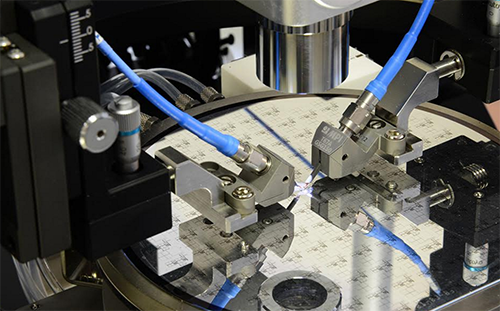
The new semi-automatic wafer prober station performs high-speed electrical and optical testing of wafers early in the manufacturing process. The test parameters include optical output power and optical spectrum. Electrical parameters which can be tested include operation voltage, bias voltage, drive current and dark current.

In addition, high frequency characterization test of up to 38 GHz can be performed including digital transmission experiments of up to 64 Gbps. The new facilities also include nearfield and farefield analysis tools as well microscopic characterization equipment.

http://www.v-i-systems.com/

Tuesday, December 8, 2015

Juniper Brings 3X Boost and New Automation to MX Edge Routers

Juniper Networks rolled out a major upgrade for its MX Series 3D Universal Edge Routing portfolio, including new line cards and software features that triple throughput and enable network automation.

Some highlights:

  • Three new MX Series line cards (MPC7, MPC8 and MPC9) powered by a new iteration of Juniper's programmable Trio silicon.  At the high-end, the 400 GbE-ready MPC9 provides an industry-leading 1.6 Tbps of throughput, enabling a single MX2020 to scale to 32 Tbps of throughput, enough to stream more than 2 million 4K videos simultaneously. The MPC7 doubles the performance and density of all currently installed MX240, MX480 and MX960 routers, providing customers with investment protection.
  • Juniper Extension Toolkit (JET), which uses open APIs, yields new automation capabilities in Junos software. JET provides a programmatic interface to develop highly customized third-party applications, such as provisioning and self-healing capabilities. These applications can reside on or off the MX2010 or MX2020 to seamlessly interact with the network layer. Not limited to the MX Series, JET is available on all Juniper platforms that run Junos software. In addition, JET includes support for OpenConfig, a standardized, vendor-independent configuration and management capability with customizable YANG data models for flexible vendor integration.
  • Junos Telemetry Interface: a high-frequency telemetry export function for optimizing network performance and fault management. Junos Telemetry Interface facilitates SDN/NFV migrations by synchronizing operational states to external controllers. Advanced analytics and real-time data correlation to deliver real-time reporting at scale are made possible through advanced technologies from companies like SevOne, a leading global provider of digital infrastructure management solutions. Junos Telemetry Interface are expected to be available in 1H 2016.

“You know you’re onto something when you have a platform that has continually outpaced Moore’s Law since the first MX shipped in 2006. As Juniper’s flagship edge routing platform, the MX Series is the market leader in feature availability, use case support, performance, reliability, scale, and now, with the addition of advanced Junos software features, we are extending our automation capabilities. In an industry that’s constantly touting the ‘new,’ it’s important to remember that customers are making significant technology investments with the expectation that it will continue to deliver ROI for many years. With the MX Series, we believe customers can invest with the confidence that the platform will exceed requirements for future network demands,” stated Jonathan Davidson, executive vice president and general manager, Juniper Development and Innovation.

Juniper noted that its MX series, which was first introduced in 2006, has been deployed by more than 90 percent of the 50 largest telecom companies.

http://www.juniper.net

Coriant Unveils 1 RU Data Center Interconnect Platform

Coriant unveiled a stackable data center interconnect (DCI) platform packaging 3.2 terabits of capacity in a compact 1RU form factor.

The Coriant Groove G30 DCI Platform boasts up to six times higher system density and up to 70% better power efficiency than comparable offerings.  Coriant said its platform simplifies provisioning of 10G, 40G, and 100G Wide Area Network (WAN) cloud connectivity services in metro, regional, and long haul DCI applications while offering a pay-as-you-grow approach that enables the lowest startup costs, cost-effective scalability, and reduced equipment sparing costs. It supports dynamically adjustable modulation formats (16QAM, 8QAM, QPSK) to deliver cost-optimized optical reach in both metro and long haul applications

"Coriant is changing the game in data center interconnect with a breakthrough solution that helps cloud and data center operators deliver highly competitive and profitable services," said Paul Smelters, Executive Vice President, Product Management and Marketing, Coriant. "The Coriant Groove™ G30 DCI Platform builds upon our leadership in high-speed optics and ensures the best end-user cloud experience at the lowest operational cost."

The Coriant Groove G30 DCI Platform is currently entering customer trials. The product is planned for availability in Q2 2016.

http://www.coriant.com

Open Container Initiative Cites Progress and Growing Membership

The Open Container Initiative (OCI), which was launched earlier this year with a mission to host an open source, technical community and build a vendor-neutral, portable and open specification and runtime for container-based solutions, cited a number of milestones and a growing membership base.

Founding members, including nine new companies committed to the OCI include: Amazon Web Services, Apcera, Apprenda, AT&T, ClusterHQ, Cisco, CoreOS, Datera, Dell, Docker, EMC, Fujitsu Limited, Goldman Sachs, Google, Hewlett Packard Enterprise, Huawei, IBM, Infoblox, Intel, Joyent, Kismatic, Kyup, Mesosphere, Microsoft, Midokura, Nutanix, Odin, Oracle, Pivotal, Polyverse, Portworx, Rancher Labs, Red Hat, Resin.io, Scalock, Sysdig, SUSE, Twistlock, Twitter, Univa, Verizon Labs, VMware and Weaveworks.

Key points:

  • The OCI follows an open governance model that guides the project’s technical roadmap, currently available on GitHub. 
  • A Technical Developer Community (TDC) has been formed for the project and includes independent maintainers as well as maintainers from founding members including Docker, CoreOS, Google and Huawei. The TDC is responsible for maintaining the project and handling the releases of both the runtime and specification. 
  • A Technical Oversight Board (TOB) will be appointed by the members of the OCI and the TDC. The TOB will work closely with the TDC to ensure cross-project consistencies and workflows. The governance model also includes a Trademark Board to oversee the development and use of the OCI’s trademarks and certifications. 
  • As part of the original formation of the OCI in June of this year, Docker has donated both a draft specification for the base format and runtime and the code associated with a reference implementation of that specification. 
  • Since the OCI’s inception, there have been two releases of the specification and six releases of runc. Docker will be integrating the latest version of runc into future releases of Docker and Cloud Foundry has implemented runc as part of its Garden Project. 

“Collaborative development continues to prove its ability to transform markets and advance emerging technologies. The OCI is a welcome addition to The Linux Foundation Collaborative Project ecosystem,” said Jim Zemlin, executive director, The Linux Foundation. “This level of industry support illustrates the prevalence of container technologies across IT infrastructures, much in the way we saw with virtualization 10 years ago. I’m very excited to support the work of this community.”

https://www.opencontainers.org
http://www.linuxfoundation.org

IBM Acquires Clearleap for Cloud Video Platform

IBM has acquired Clearleap, a privately-held provider of cloud based video services based in Duluth, Georgia. Financial terms were not disclosed.

The Clearleap video platform is optimized for massive scalability, which enables clients to ramp up and support millions of concurrent users within seconds to support special events. Clearleap offers an open API framework that enables organizations to easily build video into applications and to adapt to specific business needs such as custom workflows and advanced analytics. The framework also enables access to key third-party applications and includes subscription and monetization services, and data centers from which to host digital video assets.

Clearleap said it serves leading brands such as HBO, A+E Networks, the NFL, BBC America, Sony Movie Channel, Time Warner Cable, and Verizon Communications, among others. The company operates data centers in Atlanta; Las Vegas; Frankfurt, Germany; and Amsterdam.

Clearleap will be integrated into the IBM Cloud platform to provide enterprises with a fast and easy way to manage, monetize and grow user video experiences and deliver them securely over the Web and mobile devices.

IBM said the acquisition is part of its broader strategy to help clients unlock the value of video as it grows in importance in business. IBM is advancing its cloud strategy to improve the performance and management of this powerful tool, and help clients extract insight from it.

“Clearleap joins IBM at a tipping point in the industry when visual information and visual communication are not just important to consumers, but are exploding across every industry," said Robert LeBlanc, Senior Vice President, IBM Cloud. "This comes together for a client when any content can be delivered quickly and economically to any device in the most natural way."

http://www.ibm.com

IBM Wins U.S. Research Grant for Quantum Computing

The U.S. Intelligence Advanced Research Projects Activity (IARPA) program has award a multiyear research grant to IBM to advance the building blocks for a universal quantum computer.

The award is funded under the Logical Qubits (LogiQ) program of IARPA led by Dr. David Moehring. The LogiQ Program seeks to overcome the limitations of current quantum systems by building a logical qubit from a number of imperfect physical qubits.

IBM said its research team will continue to pursue the leading approach for building a universal quantum computer by using superconducting qubits. By encoding the superconducting qubits into a logical qubit, one should then be able to perform true quantum computation. These logical qubit designs will be foundational to future, more complex quantum computing systems.

“We are at a turning point where quantum computing is moving beyond theory and experimentation to include engineering and applications,” said Arvind Krishna, senior vice president and director, IBM Research. “Quantum computing promises to deliver exponentially more speed and power not achievable by today’s most powerful computers with the potential to impact business needs on a global scale. Investments and collaboration by government, industry and academia such as this IARPA program are necessary to help overcome some of the challenges towards building a universal quantum computer.”

http://www.ibm.com


IBM Announces Two Breakthroughs for Quantum Computing

Researchers at IBM have demonstrated for the first time the ability to detect and measure the two types of quantum errors (bit-flip and phase-flip) that will occur in any real quantum computer. The researchers have also shown a new, square quantum bit circuit design that could scale to larger dimensions.

“Quantum computing could be potentially transformative, enabling us to solve problems that are impossible or impractical to solve today," said Arvind Krishna, senior vice president and director of IBM Research. “While quantum computers have traditionally been explored for cryptography, one area we find very compelling is the potential for practical quantum systems to solve problems in physics and quantum chemistry that are unsolvable today. This could have enormous potential in materials or drug design, opening up a new realm of applications.”

The research is published in the April 29 issue of the journal Nature Communications (DOI: 10.1038/ncomms7979).

http://www-03.ibm.com/press/us/en/pressrelease/46725.wss

Pluribus Develops Virtualization-Centric Fabric

Pluribus Networks introduced its Virtualization-Centric Fabric (VCF), its SDN architectural approach based on proven approaches to networking, clustering, management and resiliency.

Pluribus VCF, which is available now as part of the company's family of Netvisor operating systems for open switches, is a completely virtualized networking fabric with macro segmentation capabilities and flow-level visibility.

Key attributes of Pluribus VCF include:

Virtualized networking fabric - the creation of a virtualized networking fabric at the hardware layer in dedicated switches, rather than consuming server-level resources. Each switch participates in the switching fabric as an equal partner, with complete visibility into the entire network and its end-points and flows.

Virtual fabric automation - maintains virtualized connectivity across the entire fabric, regardless of the number of switches or intermediaries involved.

Virtual Port (vPort) and Virtual Network (vNet) segmentation - at the macro and micro levels, enabling any source and destinations, physical or virtual, to be combined into virtual networks.

Virtual TAP - provides visibility to information that flows between any source and destination, physical or virtual. Virtual flow (vFlow) management, enabling sessions to be copied, re-directed or terminated via user or programmatic command.

Virtual fabric API - allows advanced applications to take advantage of the fabric as a single entity, using common programming interfaces including REST, Java, JSON and C++.

Fabric-wide Command Line Interface (CLI) - allowing interaction from any point to the entire fabric, making simple changes that span the infrastructure. This ensures compatibility with existing tools, processes and associated management best practices.

Relies on industry-standard TCP/IP protocols - providing full compatibility with existing networking infrastructures, and the use of existing spines and backbones during the transition to a more agile topology.

“In the data center networking space, Pluribus’ advanced fabric technology was exactly the approach we were looking for as we developed our hyperscaled Cloud solutions, like our recently announced HDS8000. Pluribus shares our vision of elastic capacity, with deep visibility and control,” said Howard Wu, Head of Product Line, Hyper Cloud Solution, Business Unit Cloud & IP, Ericsson. “Ericsson has a long standing expertise in optical networking and when combined with Pluribus’ VCF fabric architecture, our customers will realize a level of on-demand and subscription capabilities not available anywhere else.”

http://www.pluribusnetworks.com


Pluribus Ports Open Netvisor Linux OS onto Dell’s ONIE compatible 10G/40G Switches


Pluribus Networks announced an agreement to port its Open Netvisor Linux operating system onto Dell’s family of Open Networking (ONIE compatible) 10G/40G switches, including the S6000-ON and S4048-ON. Pluribus Open Netvisor Linux combines the benefits of Linux with a plug-and-play, application-aware fabric, advanced network flow programming and embedded analytics and visibility capabilities. It offers interoperability with the Layer 2 and IP/BGP...


Blueprint: Ready to Evolve with SDN and Open Alternatives?


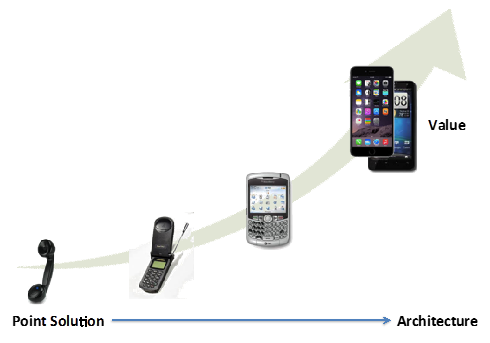
by Kumar Srikantan and Dave Ginsburg, Pluribus Networks One of the great promises of SDN is its programmability and interoperability.   Both are required if the evolution from legacy approaches in the way our networks are deployed and operated is to succeed. I’ll first look at programmability, the software and applications, and a great comparison is the evolution of the phone.  For those old enough to experience the old black handset,...


Pluribus Races Ahead in SDN with $50 Million in New Funding


Pluribus Networks, a start-up based in Palo Alto, California, announced $50 million in a Series D round of funding to advance its vision for unified computer, network, storage and virtualization driven by a single, open and programmable SDN platform. Pluribus features a distributed network hypervisor operating system that converges compute, network, storage and virtualization with an open, programmable approach. The platform brings full bare-metal...


PMC Intros Smart Solutions for Data Center Storage Connectivity

PMC-Sierra introduced its HBA 1000 series of 12Gb/s SAS/SATA Host Bus Adapters, the first products in PMC’s new Smart family of solutions for high-performance cloud and enterprise server storage connectivity.

The HBA 1000 use field-proven Smart intellectual property (IP) from the most widely deployed server storage stack and PMC’s SmartIOC controller. It offers up to 16 internal or external SAS/SATA ports in a low-profile MD2 form factor.

A low-profile form factor and mini-SAS HD connectors allow the HBA 1000 to install into 2U servers for maximum native connectivity in the smallest footprint with no impediment to air flow. It is fully compatible with RAID adapters and expanders for complete scalability to store, retrieve, and manage data across SSDs, HDDs and tape drives. The HBA 1000 saturates the PCIe Gen 3 bus and delivers up to 1.3 million I/Os Per Second (IOPS) with SAS SSDs, utilizing 60 percent less power than competing HBAs. This lowers energy consumption and helps avoid the heat dissipation issues that are typically found in dense server environments. The HBA 1000 also delivers 2.5 times greater sequential throughput and 85 percent higher random read performance for cloud data centers deploying SATA drives for application acceleration, compared to a common configuration of up to 10 SATA SSDs attached directly to the server without an HBA.

“PMC’s new Smart Storage Solutions combine over 25 years of Adaptec compatibility with our high performance and resilient Smart IP that’s based on the industry’s most broadly deployed server stack, running on high-density PMC silicon,” said Pete Hazen, vice president of the Scalable Solutions Group at PMC. “The HBA 1000 products are the first offering in our Smart family, enabling storage connectivity at less than half the power of alternatives.”

http://www.pmc-sierra.com

Monday, December 7, 2015

AT&T to Expand its Fiber Residential Footprint to 38 More Metros

AT&T unveiled plans to extend its  fiber residential network, which offers Internet speeds of up to 1 Gbps, to an additional 38 metro areas across the U.S..  This rollout will double the reach of the AT&T GigaPower service, which currently passes over 1 million locations, bringing the total number of metros served to 56.

AT&T also announced the launch of its ultra-fast Internet service in parts of 2 of these metros – Los Angeles and West Palm Beach.  AT&T GigaPower is now available in 20 of the nation’s largest metros.  

“Customer demand for AT&T GigaPower and sales have exceeded expectations since launching speeds up to 1 gigabit per second in Austin,” said Brad Bentley, executive vice president and chief marketing officer, AT&T Entertainment Group. “The faster speeds offered through AT&T GigaPower keep consumers and small businesses connected as they are accessing more content on more devices. This improves a customer’s experience when they are connecting to the cloud, hosting a videoconference, streaming videos and music, playing online games and more.”

The 38 metro areas that AT&T will be entering, starting with the launch of service in parts of the Los Angeles and West Palm Beach metros today, are:

  • Alabama: Birmingham, Huntsville, Mobile and Montgomery
  • Arkansas: Fort Smith/Northwest Arkansas and Little Rock
  • California: Bakersfield, Fresno, Los Angeles, Oakland, Sacramento, San Diego, San Francisco and San Jose4
  • Florida: Pensacola and West Palm Beach
  • Georgia: Augusta
  • Indiana: Indianapolis
  • Kansas: Wichita
  • Kentucky: Louisville
  • Louisiana: Baton Rouge, Shreveport-Bossier, Jefferson Parish region and the Northshore
  • Mississippi: Jackson
  • Missouri: St. Louis5
  • Michigan: Detroit
  • Nevada: Reno
  • North Carolina: Asheville
  • Ohio: Cleveland and Columbus
  • Oklahoma: Oklahoma City and Tulsa
  • South Carolina: Charleston, Columbia and Greenville
  • Tennessee: Memphis
  • Texas: El Paso and Lubbock
  • Wisconsin: Milwaukee

http://www.att.com/gigapowermap

GSMA: Mobile Industry Boosts European Economy

The mobile industry’s contribution to European GDP will increase from EUR500 billion in 2014 to EUR600 billion by 2020, as markets across the region benefit from the improvements in productivity and efficiency brought about by the adoption of new mobile technologies, including machine-to-machine (M2M) communications, according to a new study by GSMA.

“Europe’s mobile operators have invested heavily in 4G over the past few years despite challenging macroeconomic and regulatory conditions, and we expect investments in 4G deployments, capacity and spectrum to be sustained for the remainder of the decade,” said Alex Sinclair, Acting Director General and Chief Technology Officer at the GSMA. “Mobile subscribers in Europe are now benefiting from download speeds that far exceed the global average and are taking advantage of a range of innovative new services made possible by next-generation networks and devices.”

Some highlights:

  • 4G will account for 60 per cent of the continent’s mobile connections1 by 2020, according to the report, up from 20 per cent today.
  • 4G network coverage passed 80 per cent of the European population in early 2015 and is forecast to exceed 95 per cent by the end of the decade.
  • Smartphones are forecast to account for 76 per cent of Europe’s mobile connections by 2020, up from 60 per cent this year.
  • Average monthly data usage for Western Europe is set to grow from less than 1GB per month in 2014 to nearly 6GB in 2019, a 45 per cent compound annual growth rate, according to Cisco.
  • The EUR500 billion generated by the mobile industry in Europe last year was equivalent to 3.2 per cent of the region’s GDP. 
  • The mobile industry directly and indirectly supported 3.8 million jobs and contributed approximately EUR84 billion to public funding in the form of various types of taxation. 

http://www.gsmamobileeconomy.com/europe/

QLogic and Brocade Demo NVMe Over Fabrics with Fibre Channel

QLogic and Brocade demonstrated a Non-Volatile Memory Express (NVMe) over Fabrics solution using Fibre Channel as the fabric.

The demonstration, which is an industry first, is based on the draft specification of NVMe over Fabrics under definition by the NVM Express, Inc. organization and the draft Fibre Channel over NVMe (FC-NVMe) standards under definition by T11.

The companies said this FC-NVMe proof of concept (POC) sets a foundation for lower latency and increased performance, while providing improved fabric integration for flash-based storage.

NVMe provides a standards-based approach for PCI Express (PCIe) solid state drive (SSD) access that significantly improves performance by reducing latency and streamlining the command set while providing support for security and end-to-end data protection. NVMe over Fabrics defines an efficient mechanism to utilize these devices in large scale storage deployments and provides investment protection by allowing the latest in innovations and advances in low latency SSD flash to be used over proven Fibre Channel fabrics. This enables the NVMe storage devices to be shared, pooled and managed more effectively.

“Next-generation data intensive workloads are utilizing low latency NVMe flash-based storage to meet ever increasing user demand,” said Vikram Karvat, vice president of products, marketing and planning, QLogic. “By combining the lossless, highly deterministic nature of Fibre Channel with NVMe, FC-NVMe targets the performance, application response time, and scalability needed for next generation data centers, while leveraging existing Fibre Channel infrastructures. QLogic is pioneering this effort with industry leaders, which in time, will yield significant operational benefits to data center operators and IT managers.”

http://www.qlogic.com
http://www.brocade.com

Spirent to Acquire Epitiro for Wi-Fi Experience Monitoring

Spirent Communications has acquired Epitiro, a privately-help company specializing in Wi-Fi experience monitoring.

Epitiro, which is based in Cardiff (UK), offers compact, rugged probes that may be deployed in office buildings, factories, stadiums and other mobility locations providing real-time insight into the availability and experience of services.  Key metrics include availability of Wi-Fi connectivity, file transfer and web browsing speed, availability and performance of social media applications like Facebook, etc..

Spirent said the acquisition of Epitiro builds on the success of a strategic partnership which has led to experience monitoring system deployments at multiple customers, including a tier 1 US service provider. Spirent’s service assurance suite enables providers to proactively identify problems, often before they impact the customer experience. The suite consists of four product lines: Device and End-to-End, Network, In-Home and Mobility.

“Our service provider and enterprise customers increasingly see Wi-Fi as an integral part of their strategy to provide services anywhere and anytime,” said Des Owens, general manager of Service Assurance at Spirent. “With this acquisition, we’re building on the success of our strategic partnership with Epitiro and see an exciting opportunity to improve the visibility of Wi-Fi experience for many more service providers and enterprises worldwide. We’ll also be better positioned to integrate Epitiro’s pioneering Wi-Fi technology across our suite and to provide our customers with seamless support and services.”

http://www.spirent.com/Solutions/Service-Assurance