Saturday, June 1, 2013

NTT Opens Massive Data Center in Hong Kong Amidst Strong Demand

NTT Communications opened phase one of a new Hong Kong Financial Data Centre (FDC™).  The company said over 80% of phase one capacity in the new data centre was reserved prior to launch.

The Tier IV ready facility boasts a100% uptime service level, unrivalled security, connection to NTT's ultra-low latency networks and close proximity to the data centre operations of regional exchanges.

FDC also features a continuous cooling system, continuous rating generators and compartmentalized infrastructure design. Once complete, the facility will offer over 70,000 m2 of gross floor area and over 6,000 racks in total.

The FDC houses the landing station of the new Asia Submarine-cable Express (ASE) which connects key financial hubs in Asia with the shortest possible route that boasts industry leading network latency of less than 43 milliseconds from Hong Kong to Tokyo and less than 64 milliseconds from Singapore to Tokyo. Furthermore, the FDC is collocated with NTT Communications’ global network node that connects to Europe and North America.

The Hong Kong Government is committed to promoting the development of high-tier data centres. Today the Tseung Kwan O Industrial Estate houses a cluster of 12 high-tier data centres, occupying a total of 20 hectares of land and the Hong Kong Financial Data Centre of NTT is the latest addition to this impressive data centre family. These centres with stringent performance requirements provide valuable support to the business operations and growth of both our local and international enterprises," stated Ms. Susie Ho Shuk-yee, JP, Permanent Secretary for Commerce and Economic Development, Hong Kong.

http://www.ntt.com/aboutus_e/news/data/20130531_2.html

NextiraOne Picks Equinix UK for Cloud Infrastructure

NextiraOne, a European multinational company based in Paris that designs, installs, maintains and supports business communications services for over 60,000 private and public sector organizations, selected Equinix’s LD5 International Business Exchange(IBX) as the primary data center to support the roll-out of its new modular private cloud infrastructure portfolio.

The new Equinix LD5 facility is located on same campus in Slough, England, as its LD4 data center.  The Equinix campus is linked by more than 1,000 diverse dark fiber links into Central London with global access to more than 900 network providers.  The location (just outside of London) provides access to transatlantic cables for low-latency connections to New York.

“The past twelve months have seen a significant increase in the number of businesses consolidating IT legacy systems, which have proven costly to update and slowed commercial growth. By locating in Equinix, we will not only be able to deliver our services to customers but also have direct access to a prospective client base of cloud driven customers and partners through Equinix Marketplace portal," stated Geraint Davies, head of business development, Data Centers, NextiraOne.

Separately, Equinix received an award from the European Commission Joint Research Center that oversees the EU Code of Conduct (CoC) on Data Center Energy Efficiency for the company's new International Business Exchange (IBX) data center in Amsterdam (AM3). The new AM3 facility is build to LEED Gold standards.

http://www.equinix.com/

Okinawa Open Laboratory Targets SDN

A new Okinawa Open Laboratory has been established by NTT Communications, NEC and IIGA Co. with a mission to develop software-defined networking (SDN) and cloud computing technologies.

The laboratory, which is located in Okinawa IT Shinryo Park in Okinawa Prefecture, will invite engineers from private companies and academic organizations in Japan and other countries to work at the facility on the development of SDN and cloud-computing technologies and verification for commercial use. 

The three companies set up the Okinawa Open Laboratory in cooperation with Okinawa Prefecture, which aims to become a leading ICT base in Asia. Yukio Ito, Senior Vice President and concurrently Director of Service Infrastructure at NTT Com, has been named Director of the new facility.

Friday, May 31, 2013

Interxion Plans 8th Frankfurt Data Center

Interxion announced plans to build its 8th data center in Frankfurt, Germany.  The new facility will be built on an adjoining campus, consists of four phases, each of approximately 900 m2.  CAPEX for the first two phases is expected to total EUR 30 million.

Interxion said the data center market in Frankfurt is being driven by cloud services, digital media and the financial sector.

http://www.interxion.com

Huawei Announces LTE Carrier Aggregation Solution

Huawei introduced a Carrier Aggregation designed to maximize spectrum resource utilization for existing operators.  It is deployable using Huawei's SRC (Single Radio Controller) hardware platform solution for centralized cell resource coordination.

Peter Zhou, VP & COO for Huawei LTE, said: "Through customer-centric innovation and strong partnerships, we are dedicated to providing competitive solutions that create maximum value for our customers. Our CA total solution not only dramatically increases spectrum resource utilization and increase peak data rates, but does so while flexibly combine bandwidth to solve spectrum discontinuity."

In October 2012, Huawei partnered with a leading operator to launch the world's first commercial LTE-Advanced network that provides downlink peak rates of up to 300 Mbps. 

As of April 2013, Huawei had won more than 160 commercial LTE networks and deployed 78 commercial LTE networks worldwide. 


Thursday, May 30, 2013

Cyan's Blue Planet SDN Digs into Multi-Vendor Network Inventory and Resources

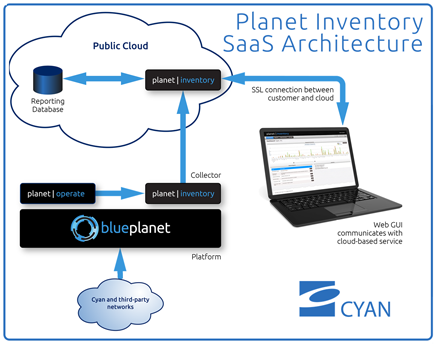
Cyan introduced Planet Inventory, a multi-vendor network asset management application that forms part of the company's Blue Planet suite of software-defined network (SDN) applications.

Planet Inventory provides physical asset and logical resource management in complex, multi-layer, multi-vendor environments, including Cyan’s Z-Series family of packet-optical transport platforms, as well as equipment from a broad range of third-party network equipment suppliers. It includes a dynamic set of tools to browse collected data, including an advanced search-driven Object Browser, as well as a dynamic Object Graph, showing the relationships between various object types, such as cards, ports and services.

Cyan said accurate network asset information helps network operators reduce operating costs and accelerate service availability. Cyan’s Blue Planet SDN system provides a centralized orchestration service from which network operators can configure and manage network-wide services. Because Blue Planet has direct access to the equipment, the data it provides represents the true state of the network. Operators may use this network-side data for a variety of needs, including inventory management.

"Rapidly changing demands on networks is causing an increased emphasis on the performance and ROI of network assets. As a result, many network operators are asking for a clear, multi-vendor view of what is in their network and how it is performing. Our Planet Inventory application significantly improves their visibility," stated Michael Hatfield, Cyan's president,

Cyan will offer Planet Inventory both as a cloud-based service and as a locally-hosted implementation.

http://www.cyaninc.com


GSMA: Average Mobile Data Speed 75% Faster in U.S. Than Europe

Europe now lags far behind the United States in the deployment of next-generation mobile technologies and the advanced services, according to a new report from the GSMA.

As recently as five years ago, the European mobile market was performing as well as, or even better than, the United States. However, since then, the situation has dramatically reversed. The report, developed in collaboration with Navigant Economics, explores the many factors that have contributed to Europe's lost mobile leadership and offers policy recommendations.

Some key findings of the report:

  • On average, U.S. consumers spend more each month than their EU counterparts and use mobile services much more intensely, consuming five times more voice minutes and nearly twice as much data.
  • The U.S. has opened up a large lead in deployment of next-generation technologies; by the end of 2013, nearly 20 per cent of U.S. connections will be on LTE networks, compared to fewer than two per cent in the EU.
  • Average mobile data connection speeds in the U.S. are now 75 per cent faster than those in Europe and by 2017 will be more than twice as fast.
  • Mobile investment in the United States has outpaced that in Europe, with capital expenditure in the U.S. growing by 70 per cent since 2007 while declining in the EU and the gap continues to widen.

"Europe was the early leader in mobile, with a wide range of companies pioneering the innovation that now benefits more than 3.2 billion men and women around the world," said Anne Bouverot, Director General, GSMA. "However, this report confirms the very sobering reality that Europe has lost its edge in mobile and is significantly underperforming other advanced economies, including the United States. While there are many factors that have contributed to Europe's current position, it is clear that enlightened policy reforms could bring improvement, creating substantial benefits for EU consumers and driving economic growth."

Some policy recommendations in the report: prioritise spectrum allocation and harmonisation; allow for efficient mergers & acquisitions; discriminations in favour of new entrants should be discontinued, allowing market forces to take hold; drive a single European market for mobile services; and encourage mobile innovation and investment in Europe.

http://www.gsmamobilewirelessperformance.com/

Telefónica Announces Digital Wallet Joint Venture with Spanish Banks

Telefónica will form a joint venture company with CaixaBank and Santander to develop new business opportunities based on the latest mobile and communication technologies. The new company will build an online community to ease the connection between merchants and consumers when it comes to offers, discounts and promotions. It also plans to offer a Digital Wallet in which customers can keep all their cards, which will serve as identification in stores and for making purchases within the digital community, as well as being a person-to-person (P2P) mobile payment service for community members.

The companies described their agreement as the first such alliance in Europe between financial institutions and a telecom operator. They believed there is the potential to reach more than 600,000 businesses in Spain.  An international expansion is also part of the plan.

"There is a profound change happening in the way we buy things. Digital technologies are transforming how consumers research products and then identify the best prices, promotions or discounts. This joint venture combines the partners’ technical and financial services expertise to create an ecosystem for the benefit of both retailers and consumers," stated José María Álvarez-Pallete, CEO of Telefónica.

http://www.telefonica.com

Rogers and Videotron Announce LTE Network Sharing Deal in Québec and Ottawa

Videotron and Rogers announced a 20-year, LTE network sharing agreement in the province of Québec and the Ottawa region. The two companies will pool their efforts to quickly build out and operate a shared LTE wireless network.  The deal will deliver capital and operating savings, allowing both companies to reinvest in their customers and networks. Videotron and Rogers will maintain their business independence, including their product and service portfolios, billing systems and customer data.

In addition to the network sharing agreement, Videotron and Rogers have also come to an agreement regarding Videotron's unused AWS spectrum in the Greater Toronto Area. Videotron will have the option to transfer its Toronto spectrum licence to Rogers, subject to regulatory approvals, beginning January 1, 2014 for a price of $180 million.

Rogers said the deal builds on its extensive LTE footprint across Canada, including Montreal, Ottawa and Québec City. The fast-paced rollout of LTE infrastructure will position the two companies to meet the steadily growing needs of consumers and businesses, ensuring many more can enjoy incredibly fast speeds, throughput and take advantage of the latest and greatest LTE enabled devices.

Videotron serves 1,849,200 cable television customers in Québec, including 1,500,300 subscribers Digital TV. Videotron also has 1,397,300 subscribers to its cable Internet service, 420,900 subscriber connections to its mobile telephone service, and 1,274,000 subscribers to its cable telephone service.

"This agreement will benefit businesses and consumers and is part of Rogers focused, strategic game plan," said Nadir Mohamed, President and CEO, Rogers Communications Inc. "This network and spectrum sharing agreement, combined with the expansion of our LTE footprint, will allow even more consumers to experience the superior connectivity and incredibly fast speeds that LTE delivers."

"This is excellent news for our customers and our shareholders. This agreement will enable us to go farther and to do it faster and is indicative of our determination to anticipate our customers' needs and to maintain the close relationship we have built with them." said Robert Dépatie, President and CEO of Quebecor Inc. and CEO of Videotron.

http://www.rogers.com
http://www.videotron.com


Digital Realty Buys Six Buildings to Expand Austin Data Centers

Digital Realty Trust has acquired six buildings at the MetCenter Business Park in Austin, Texas for $31.9 million.  The facilities include operating data centers and flex office space totaling approximately 337,000 square feet.  The overall portfolio is currently 90% leased to a variety of data center, biotechnology, technology and/or telecommunications enterprises.

The six buildings are located adjacent to Digital Realty's data center at 7500 Metro Center Drive, near Austin-Bergstrom International Airport.

"The acquisition of this portfolio achieves several key objectives for us," said Scott Peterson, Chief Acquisitions Officer at Digital Realty. "It expands our existing data center footprint in the Austin market, while providing stable cash flow immediately at an attractive going-in cap rate. Second, it provides near-term opportunity to add value by lease existing vacant space. And third, it offers the option to convert a portion of the property to data center space over the longer term as leases expire."

http://www.digitalrealty.com

Verizon Pumps its Private IP network with 100GE Access

Verizon is bringing 100GE to the edge routers of its Private IP network, giving its enterprise customers faster access speeds to support growing cloud applications.  The company confirmed plans to implement the technology on the same U.S. and European routes where 100G long-haul is deployed. In addition, Verizon now is offering standardized 1GE and 10GE access for its Private IP network to continue to support the growing bandwidth needs of customer applications. Standardization of these services means quicker ordering and delivery, compared with previous processes.

Verizon's Private IP service provides the foundation for communication and business-process automation both within and between companies, including e-commerce, shared intranets and extranets, as well as video applications.

"The increase in demand for cloud and data center connectivity is driving the decision to expand our service offering to higher speeds in order to meet the bandwidth needs of our customers by providing reliable, high-performance and secure services," said Ihab Tarazi, vice president of product technology. "Verizon is a leader in high-bandwidth technology, and extending 100GE to the edge is the next natural step for us."

"Our customers are transforming the way they access information and increasingly are looking to quickly turn their big data into information that offers real business advantages," said Rich Montgomery, Verizon group vice president for Europe, the Middle East and Asia. "Extending 100GE to the edge gives customers the connectivity they need to run their businesses most effectively while staying competitive in the global market."

http://www.verizon.com

Broadcom's Bluetooth Smart SoC Targets Android Peripherals

Broadcom introduced a new Bluetooth Smart system-on-a-chip (SoC) designed to connect a broader range of low-cost, low-power peripherals to work with Android-based smartphones and tablets.

Broadcom's new BCM20732 Bluetooth Smart SoC seamlessly connects peripheral devices like heart rate monitors, pedometers, door locks, lighting, proximity alarms, etc. that are powered by coin cell batteries.  It is powered by an ARM Cortex M3.  Broadcom said its new SoC makes it possible to operate Bluetooth Smart-enabled products for more than one year without recharging the small batteries that power them.

Broadcom also announced the contribution of its Bluetooth software stack, including classic Bluetooth and Bluetooth Smart (formerly Bluetooth Low Energy) technology, to the Android Open Source Project (AOSP). The new Broadcom chip and contribution of its software will help drive proliferation of Bluetooth technology in the "Internet of Things" ecosystem. For more news, visit Broadcom's Newsroom.

"The integration of Bluetooth Smart into the Android community is a huge step forward for the 'Internet of Things'," said Brian Bedrosian, Broadcom's Senior Director, Embedded Wireless, Wireless Connectivity Combo Group. "Broadcom is committed to driving new standards of connectivity for OEMs by providing both software and hardware for simplified development of high-performance products. Adding direct support for Bluetooth Smart directly into the most widely used mobile OS will greatly expand the opportunities for users to easily monitor and control aspects of their health, fitness, and security for smartphones and tablets."

http://www.broadcom.com

Telecom Italia to Spin-Off Fixed Line Infrastructure

The board of directors of Telecom Italia adopted a plan to spin-off the company's fixed line access business into a separate company. Infrastructure belonging to the separated company will include resources for developing and managing the passive access network (both copper and fibre) and the active components of the fibre, consisting of OLTs (Optical Line Terminals) and cabinets.

Telecom Italia said its new structure will guarantee all operators (OLOs and Telecom Italia) access to the fixed-line network, including Unbundled Local Loops (ULLs) and Virtual Unbundled Line Access (VULA) for next-generation networks leveraging FTTx and FTTH architecture.

http://www.telecomitalia.com/


Octasic Enables 20 km Small Cell Radius

Octasic released an updated version of its flexiPHY HSPA software, adding support for a cell radius of 20 kilometers.

Octasic’s flexiPHY software, which runs on Octasic’s OCT2224W base station devices and Octasic’s small cell platform products such as the OCTBTS2000 and OCTBTS4000, offers 3GPP-compliant physical layers for GSM, UMTS, and LTE, integrated with leading RNC and Iuh stack vendor products. This eliminates the need for OEMs to develop the baseband and stack portion of their design.

Octasic noted that small cells with a large radius could prove especially useful in rural areas or for applications such as emergency networks, search and rescue, public safety, and military deployments.

http://www.octasic.com//news/details/809

NSN and MediaTek Test Orthogonal Sub-Channel for GSM Spectral Efficiency

Nokia Siemens Networks has successfully completed testing of Orthogonal Sub-Channel (OSC) support for Voice services over Adaptive Multi-user channels on One Slot (VAMOS) handsets with the mobile chipsets provided by MediaTek. OSC, which was invented by NSN, improves the spectral efficiency for GSM.

Nokia Siemens Networks Liquid Radio Software Suite uses OSC to support up to four devices in one radio timeslot, providing up to double voice capacity in GSM.  The company said the OSC feature is currently in commercial use in networks serving more than 500 million users.

By enhancing OSC with support for VAMOS handsets, an average capacity increase of 5% can be provided, helping operators further reduce the capacity required for GSM and dedicate more network resources to WCDMA and LTE when they are re-farming spectrum. Successful compatibility testing with VAMOS capable chipsets is a major milestone in this development.

"Collaboration with MediaTek to implement OSC enhancements for VAMOS-capable devices puts us in a position to offer even better GSM spectral efficiency to our customers,” said Kimmo Virkki, head of GSM product management at Nokia Siemens Networks. “We will continue innovating in this area."

Nokia Siemens Networks’ OSC support is compliant with 3GPP GERAN release 9.

http://www.nokiasiemensnetworks.com/news-events/press-room/press-releases/nokia-siemens-networks-mediatek-collaborate-for-improved-gsm-spectral-efficiency

Wednesday, May 29, 2013

Cisco: Total IP Traffic to Grow 3X from 2012 to 2017

Total global IP traffic will grow three-fold between 2012 and 2017, according to Cisco's newly released Visual Networking Index Forecast. 

Cisco is projecting that PC-originated traffic will grow at a 14% CAGR, while other devices/connections will have higher traffic growth rates over the forecast period ― TVs (24%), tablets (104%), smartphones (79%), and machine-to-machine (M2M) modules (82%).

Some highlights from the latest Cisco VNI:


Global IP Traffic Projections and Analysis
  • By 2017, annual global IP traffic will reach 1.4 zettabytes (23% CAGR from 2012 to 2017). – A zettabyte is equal to a sextillion bytes.
  • By 2017, more traffic will traverse global networks than all prior "Internet years" combined
    1984 – 2012: 1.2 zettabytes
    2017 Forecast: 1.4 zettabytes
  • "Busy hour" Internet traffic, (hours of the day during which traffic is highest), is increasing faster than average Internet traffic. Busy hour Internet traffic increased 41% in 2012, compared to 34% growth in average traffic.
  • Metro traffic will surpass long-haul traffic in 2014, and will account for 58% of total IP traffic by 2017. Metro traffic will grow nearly twice as fast as long-haul traffic from 2012 to 2017.
  • Content delivery networks (CDNs) will carry over half of total Internet traffic by 2017.
  • Wi-Fi and mobile-connected devices will generate 68% of Internet traffic by 2017.
  • Nearly half of total IP traffic will originate with non-PC devices (including tablets, smartphones, and televisions) by 2017.
Standout IP Networking Trends
  • Fixed/Wi-Fi traffic will grow at a CAGR of 26% between 2012 and 2017, compared to a 16% CAGR for fixed/wired traffic.
  • Globally, the average household had 4.7 devices / connections (including M2M) in 2012; the average household will have 7.1 devices / connections (including M2M) by 2017 (an 8.8% CAGR).
  • Globally, there will be 8 billion IPv6-capable fixed & mobile devices/connections in 2017, up from 1.6 billion in 2012 (38% CAGR).
  • Globally, 42% of all fixed & mobile networked devices/connections will be IPv6-capable in 2017, up from 14% in 2012.
Regional & Country IP Traffic Projections
  • Asia-Pacific (APAC) will generate the most IP traffic by 2017 (43.4 exabytes/month), maintaining its leadership from last year.
  • The Middle East and Africa will continue to be the fastest growing IP traffic region from 2012 – 2017 (5-fold growth, 38% CAGR over the forecast period); MEA was the fastest growing region last year as well (10-fold growth, 57% CAGR for the 2011 – 2016 forecast period) in this category.
  • By 2017, the highest traffic-generating countries will be the United States (37 exabytes per month) and China (18 exabytes per month).
  • For fastest growing IP traffic at the country-level, India will have the highest IP traffic growth rate with a 44% CAGR from 2012 – 2017. Second is Indonesia (42% CAGR) and third is South Africa (31% CAGR) over the forecast period.
Regional IP Traffic Growth Breakouts
  • APAC: 43.4 exabytes/month by 2017, 26% CAGR, 3-fold growth
  • North America: 40.7 exabytes/month by 2017, 26% CAGR, 3-fold growth
  • Western Europe: 24.3 exabytes/month 2017, 17% CAGR, 2-fold growth
  • Central Europe: 8.8 exabytes/month by 2017, 21% CAGR, 3-fold growth
  • Latin America: 7.4 exabytes/month by 2017, 17% CAGR, 2-fold growth
  • Middle East and Africa: 3.5 exabytes/month by 2017, 38% CAGR, 5-fold growth
Global Consumer Internet Video Consumption

  • Globally, there will be nearly 2 billion Internet video users (excluding mobile-only) by 2017, up from 1 billion Internet video users in 2012.
  • Internet video-to-TV traffic will increase nearly 5-fold between 2012 (1.3 exabytes per month) and 2017 (6.5 exabytes per month).
HD and 3D Internet Video Traffic
  • By 2017, 3D and HD Internet video will comprise 63% of consumer Internet video traffic.
  • Advanced consumer Internet video (3D and HD) will increase 4-fold between 2012 and 2017.
Global Consumer VoD Traffic                               
  • VoD traffic will increase 3-fold between 2012 and 2017.
Global Consumer Internet File Sharing Traffic

  • Peer-to-peer (P2P) traffic will decline at a CAGR of -9%, while web-based and other file sharing traffic will grow at CAGR of 17% from 2012 – 2017.
  • By 2017, global P2P traffic will be 65% of global consumer Internet file sharing traffic, down from 85% in 2012.
Global Business IP Traffic              
  • Overall business IP traffic, which includes Internet, backup, VoIP, etc., will nearly triple between 2012 and 2017.
  • In 2012, business IP traffic represented 20% of monthly total global IP traffic (consumer IP traffic represented 80% of monthly total global IP traffic).
  • By 2017, business IP traffic will represent 18% of monthly total global IP traffic (consumer IP traffic will represent 82% of monthly total global IP traffic).
Global Business Internet Video Traffic                
  • Business Internet video traffic will from 5.3-fold from 2012 to 2017.
  • Business Internet video traffic grew 52% in 2012.
  • Video will account for 58% of all business Internet traffic in 2017, up from 31% in 2012.

Last year's VNI


Cisco Forecasts 4X Global IP Traffic by 2016


By 2016, annual global IP traffic is forecast to be 1.3 zettabytes – (a zettabyte is equal to a sextillion bytes, or a trillion gigabytes), according to the newly issued Cisco Visual Networking Index (VNI) Forecast (2011-2016). For comparison, the total global IP traffic generated in 2011 was 369 exabytes. The additional traffic added in 2015-2016 alone is expected to be 330 exabytes, or an addition over that 12 month period nearly equal to the entire IP traffic volume last year.

Not surprisingly, Cisco finds the leading factors of growth to be:

More devices: Cisco predicts that by 2016 there will be nearly 18.9 billion network connections ―- almost 2.5 connections for each person on earth -- for tablets, mobile phones, and other smart devices as well as machine-to-machine (M2M) devices. Cisco estimates there were 10.3 billion connections in 2011.

More Internet users: By 2016, there are expected to be 3.4 billion Internet users ― about 45 percent of the world's projected population according to United Nations estimates.

Faster broadband speeds: The average fixed broadband speed is expected to increase nearly fourfold, from 9 Mbps in 2011 to 34 Mbps in 2016.

More video: By 2016, 1.2 million video minutes―the equivalent of 833 days (or over two years) ―would travel the Internet every second.

Wi-Fi growth: By 2016, over half of the world's Internet traffic is expected to come from Wi-Fi connections.

D11: Mary Meeker’s Internet Trends Report

Mary Meeker, a partner at the venture investment firm of the Kleiner Perkins Caufield & Byers, presented her annula Internet Trends report at the D11 conference organized by The Wall Street Journal.  Her series of 117 slides covers a wide range of key trends in mobile networking, smartphone adoption, advertising and social issues.

Here are a few highlights on the networking side:

  • 2.4 billion Internet users is 2012, up 8% Y/Y.
  • 80% of Top Ten Global Internet sites are "Made in USA" while 81% of users are outside USA.
  • 500 million photos are now uploaded and shared every day on Flickr, Snapchat, Instagram and Facebook.
  • 100 hours of video are uploaded per minute to YouTube as of May 2013.
  • More than 1.1 billion Facebook users, 68% on mobiles, 60% log-in daily, average 200+ friends
  • Global mobile traffic is about 15% of total Internet traffic. Rising rapidly.
  • In China, more users are now accessing the web via mobiles than via desktop PCs
  • In Korea, mobile search queries surpassed PC search queries in Q4 2012.
  • There are currently about 1.5 billion smartphone users, representing about 21% penetration. The growth rate is 31% Y/Y.

http://www.slideshare.net/kleinerperkins/kpcb-internet-trends-2013


BT Reduced Energy Consumption by 3.3% in Last Year

BT published its annual Better Future sustainability report, promising to use the power of communication to improve lives, ways of doing business and to make its overall impact on society a positive one.
Some highlights of the report:
  • BT invested £27 million in 2012/13 to support its commitment to being a responsible and sustainable business.  There are three focus areas - Connected Society, Net Good and Improving Lives – each with its own vision and an ambitious goal to achieve by the end of 2020.
  • BT's 2020 goal is that more than nine out of ten people in the UK will have access to fibre-based products and services.
  • BT's investment alongside 19 partnership investment projects has accelerated UK fibre broadband rollout to around 15 million premises already.
  • BT's Connecting Africa initiative is providing internet services via satellite to 20 locations, creating access to information and critical services for up to 700,000 people.
  • BT's 2020 goal is to help customers reduce carbon emissions by at least three times the end to end carbon impact of its business.
  • BT has achieved its target of hitting an 80% reduction in UK carbon emissions three years ahead of deadline despite increased volume.
  • BT reduced its energy consumption in 2012/13 by 3.3%, saving the business £33m annually.
  • BT's 2020 goal is to use BT's skills and technology to help generate more than £1bn for good causes. 
"Our Better Future programme signals BT's evolution to a new model in which every part of the business and every employee has a role to play in realising our visions and achieving our goals to create a better business with a better future. It's a long-term commitment, focusing on what we do best – bring together our networks and our technology with the expertise of our people to make a better world. Using the power of communications, we can benefit our customers, our bottom-line and the communities we operate in," Niall Dunne, stated Chief Sustainability Officer.


Sprint + Softbank -- No Unresolved National Security Concerns

The Committee on Foreign Investment in the United States (CFIUS) completed its investigation of the proposed transaction between Sprint and SoftBank and determined that there are no unresolved national security issues relating to the transaction.

As part of this aspect of the transaction’s clearance, Sprint and SoftBank have entered into a National Security Agreement with the U.S. government.

Details of the agreement were not made public but it is expected to cover the exclusion of telecom infrastructure from Huawei and ZTE in the merged company's U.S. network, including Clearwire. The National Security Agreement will terminate in the event that the merger between Sprint and SoftBank is not completed.

The FCC is still conducting its public interest review of the proposed merger.  Sprint shareholders must also vote on the deal.  The companies believe the deal is on track for consummation in July 2013.

http://www.sprint.com

AMD Debuts Opteron Processors for Scale-out Data Center Servers

AMD introduced its Opteron X-Series x86 processors for scale-out server architectures.

The first AMD Opteron X-Series processors, formerly known as “Kyoto,” will come in two variants:

  • The AMD Opteron X2150, which consumes as little as 11 watts, is the first server APU system-on-a-chip integrating CPU and GPU engines with a high-speed bus on a single die. It incorporates AMD Radeon HD 8000 graphics technology for multimedia-oriented server workloads.
  • The AMD Opteron X1150, which consumes as little as 9 watts, is a CPU-only version optimized for general scale-out workloads.

“The data center is at an inflection point and requires a high number of cores in a dense form factor with integrated graphics, massive amounts of DRAM and unprecedented power efficiency to keep up with the pace of innovation of Internet services,” said Andrew Feldman, corporate vice president and general manager, Server Business Unit at AMD.

“Fundamental changes in computing architectures are required to support space, power and cost demands organizations need to deliver compelling, new infrastructure economics,” said Paul Santeler, vice president and general manager, Hyperscale Server business segment, HP. “The new x86 AMD Opteron X-Series processors integrated into future HP Moonshot servers will continue to push the boundaries of power efficiency for social, mobile, cloud and big data workloads."

http://www.amd.com/us/press-releases/Pages/amd-launches-the-2013may29.aspx