Wednesday, February 20, 2013

AT&T Partner Exchange Opens APIs for IT Solution Providers


AT&T is opening up its application programming interfaces (APIs) to allow solution providers to develop their own customized solutions for a differentiated experience.

A newly launched AT&T Partner Exchange promises visibility into certain AT&T systems, processes, and tools.  By opening up certain APIs to partners, AT&T said it can accelerate its delivery of mobility managed services, cloud and networking solutions to the tens of thousands of businesses.  Solution providers will be able to develop customized solutions that fully integrate with AT&T's IP network.

"We're throwing open the doors to our center of innovation - the AT&T Foundry and inviting solution providers to work directly with us to create more choices for business customers," said Brooks McCorcle, president of AT&T's new Emerging Business Markets organization. The organization was established within AT&T Business Solutions.

"Through this new approach and collaboration with solution providers, we expect to rapidly expand our market reach and deliver more tailor-made cloud, mobility managed services and networking solutions to companies across a number of industries," she added.

AT&T Partner Exchange Benefits for Solution Providers:

  • Ability to bundle solutions from one of the leading worldwide providers of IP-based communications to businesses, including cloud solutions, mobility managed services and virtual private networking services 
  • Business growth with a new recurring revenue stream for AT&T and solution providers
  • Attractive financial rewards such as market development funds and a simple, straightforward rate structure
  • Easy-to-use portal with resources, tools and visibility into certain AT&T systems – automated and customized support structure that provides cost efficiencies 
  • Ability to customize solutions and client experience with open APIs
  • Speed to market: emphasis on ordering, delivery and support
  • Robust 360° support and access to a dedicated account team, 24x7 online ticketing, live chat and more.

https://www.att.com/partnerexchange/

IBM's MobileFirst Combines Security, Analytics, App Development

IBM outlined a MobileFirst product initiative that combines  security, analytics and app development software, with cloud-based services and deep mobile expertise. The goal is to provide enterprises with solutions for managing employee mobile devices, as well as tools for developing mobile apps.

"To date, mobile computing has been dominated by discussions of new smartphones, operating systems, games and apps," said Robert LeBlanc, senior vice president, middleware software, IBM. "But enterprises have yet to tap into the potential of mobile business. Just as the Internet transformed the way we bank, book vacations and manage our healthcare, mobile computing is also transforming industries. As these devices become ingrained in everything that we do, businesses are now in the palms of their customers' hands. IBM MobileFirst is designed to make the transformation to becoming a mobile enterprise a reality."

IBM MobileFirst includes:
  • IBM MobileFirst Platform – New updates include expanded capabilities of IBM Worklight to simplify deployment. It also features single sign-on capabilities for multiple applications. A new beta of the Rational Test Workbench for mobile helps to improve the quality and reliability of mobile apps.
  • IBM MobileFirst Security – IBM extends its context-based mobile access control solutions and expands mobile application vulnerability testing with support for Apple iOS apps with the latest release of AppScan.
  • IBM MobileFirst Management – New updates to IBM Endpoint Manager include enhanced support for Bring Your Own Device (BYOD) programs and increased security standards that are critical to governments and regulated environments.
  • IBM MobileFirst Analytics – IBM is expanding its Tealeaf CX Mobile solution to give enterprises more visual insight into mobile behaviors so they can better understand where improvements are needed and create exceptional and consistent consumer experiences across mobile devices.

  • IBM MobileFirst Strategy and Design Services – Clients can tap into IBM expertise to map out a mobile strategy for employees and customers, and key experience design skills from IBM Interactive to build compelling mobile experiences.
  • IBM's new Mobile Maturity Model can assess how a business is progressing towards becoming a mobile enterprise, while new Mobile Workshops help clients develop applications, architect infrastructure and accelerate their mobile progress.
  • IBM MobileFirst Development and Integration Services – IBM offers services that help organizations roll out a mobile infrastructure and manage mobile application portfolios and BYOD environments. Enhanced Network Infrastructure Services for Mobile provide IT network strategy, optimization, integration and management. Mobile Enterprise Services for Managed Mobility help manage and secure smartphones, tablets and devices across a business. Mobile Application Platform Management helps speed deployment of mobile infrastructure to develop mobile applications more easily and quickly.
IBM is also announcing a relationship with AT&T that will enable developers to enhance mobile apps by using IBM Worklight to access AT&T's APIs in the cloud. Now, developers have another tool with AT&T to quickly and easily create apps with rich features such as speech recognition and rapid payment.

http://www.ibm.com/mobilefirst

NTT Expands its SDN-enabled Enterprise Cloud Internationally

NTT Communications is expanding the geographic availability of its Enterprise Cloud virtualized Infrastructure as a Service (IaaS)to data centers in the United States, the United Kingdom and Asia Pacific.


NTT Com first launched its Software-Defined Networking (SDN)-based Enterprise Cloud via data centers in Japan and Hong Kong in June 2012.

NTT Com anticipates opening three more data centers in Australia, Malaysia and Thailand in March 2013, to further enhance global coverage.

“NTT Com understands the enterprise client, their struggles, goals and needs," said Mr. Motoo Tanaka, Senior Vice President of Cloud Services at NTT Com. “Being truly enterprise class is what makes NTT Com the leading partner of choice for client cloud transformation through comprehensive cloud lifecycle services, and is what has led us to develop this real-world cloud, built on a foundation of advisory, migration, operational and management services." To illustrate the benefits, Mr. Tanaka spoke about four clients already using the Enterprise Cloud platform:

http://www.ntt.com


Cyan Ships 100G Coherent Transponder

Cyan introduced a single-slot 100G coherent transponder for its Z-Series family of packet-optical transport platforms (P-OTPs). The single-slot design enables a high-density of 100G modules within a single chassis.

It also offers integrated support for short, medium, long, and extended reach C form-factor pluggable (CFP) client interfaces. Key features include:

  • Ability to support 100 Gigabit Ethernet and G.709 OTU4 regeneration.
  • Higher network capacity due to greater spectral efficiency of 100G vs. 40G or 10G.
  • Support for client SR10 (100 meter), LR10 (2 kilometer), LR4 (10 kilometer), and ER4 (40 kilometer) interfaces with flexible, pluggable CFP optics.
  • C-band tunable DWDM interface.
  • Integrated dispersion compensation to mitigate the need for fiber-based compensation.
  • Compatible with the Cyan Z22, Z33 and Z77 platforms for investment protection.
  • Leverages hitless upgrade capabilities of the Z-series platforms.
  • Complements Z-Series LAD and WSS modules.
  • Ability to mix 10G and 100G channels.
  • 1+1 optical protection using Cyan's Optical Protection Switch module.

The DTM-100G can be matched with Cyan's Blue Planet software-defined network (SDN) system.  The company said this solution will eventually allow virtual machines to be spun up in large data centers to dynamically create 100G data center interconnect (DCI) circuits for large scale backup and disaster recovery.

http://www.cyaninc.com


UK Announces 4G Auction Winners

Ofcom announced the following winners of its 4G mobile spectrum auction:  Everything Everywhere, Hutchison 3G UK, Niche Spectrum Ventures (a subsidiary of BT Group plc), Telefónica UK and Vodafone.

A total of 250 MHz of spectrum was auctioned in two separate bands – 800 MHz and 2.6 GHz. This is equivalent to two-thirds of the radio frequencies currently used by wireless devices such as tablets, smartphones and laptops.

The lower-frequency 800 MHz band is part of the "digital dividend" previously used by analogue terrestrial TV.

Ed Richards, Ofcom Chief Executive, said: “This is a positive outcome for competition in the UK, which will lead to faster and more widespread mobile broadband, and substantial benefits for consumers and businesses across the country. We are confident that the UK will be among the most competitive markets in the world for 4G services.

http://consumers.ofcom.org.uk/2013/02/ofcom-announces-winners-of-the-4g-mobile-auction/

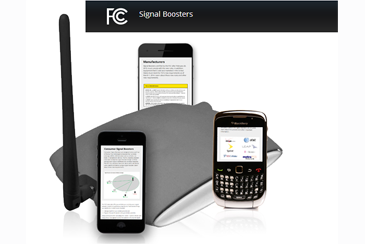
FCC Sets Rules for Consumer & Industrial Signal Boosters

The FCC will implement new rules allowing the use of consumer and industrial signal boosters in order to improve mobile voice and mobile broadband coverage.  The four leading wireless operators in the country are supporting the initiative.

Consumer signal boosters must be designed to be used "out of the box" by individuals to improve their wireless coverage within a limited area such as a home, car, boat, or recreational vehicle.  Consumers will need to register the booster with their wireless provider.  Consumers will also be required to de-activate their boost if any operator detects interference.

The new rules also cover Industrial Signal Boosters designed to cover larger areas such as stadiums, airports, office buildings, hospitals, tunnels, and educational campuses. Industrial Signal Boosters sold and marketed starting on March 1, 2014 must meet new FCC requirements.

http://www.fcc.gov

FCC Proposes Wi-Fi Boost with 195 MHz in 5 GHz Band

The FCC is proposing to make up to 195 MHz of additional spectrum in the 5 GHz band (a 35% increase) available to unlicensed wireless devices.  The proposed modifications would provide access to additional contiguous spectrum with consistent technical requirements, allowing unlicensed devices to use wider bandwidth channels, leading to faster speeds.

Specifically, the FCC is looking at adding the  5.35-5.47 GHz and 5.85-5.925 GHz bands for Unlicensed National Information Infrastructure (U-NII) use.

http://www.fcc.gov

In 1997, the Commission made available 300 megahertz of spectrum at 5.15-5.25 GHz, 5.25-5.35 GHz, and 5.725-5.825 GHz available for unlicensed use.

Global Automakers Concerned About Expanded Wi-Fi in 5 GHz


The Association of Global Automakers (Global Automakers), which is an industry group representing car manufacturers, expressed concern that the FCC's proposal to open 195 MHz of spectrum in the 5 GHz band for unlicensed Wi-Fi could compromise the integrity of new vehicle-to vehicle (V2V) accident-prevention systems using the 5.9 GHz band.

"Automakers are expending significant resources and effort to develop V2V safety technologies because of the potential to significantly reduce automobile crash fatalities, injuries, and congestion on our highways," said Michael Cammisa, Global Automakers' Director of Safety.   "There is no room for error when it comes to motor vehicle safety and we want to make sure that the FCC initiative will not interfere with the anticipated benefits that V2V communication systems could deliver."

The Association noted that ten major automakers and numerous technology providers have participated in a V2V pilot study in Ann Arbor, Michigan based by the Department of Transportation's (DOT) Connected Vehicle Research Program.

http://www.globalautomakers.org

DragonWave Intros Sub-6 GHz Microwave System for Urban Small Cells

DragonWave introduced Avenue Link Lite -- a sub-6 GHz point-to-point microwave radio that supports both licensed and unlicensed spectrum and suited for non-line-of-sight(NLOS) scenarios where obstructions are found between link endpoints.

The compact unit, which measures only 7.5 in square including antenna, can be configured and monitored remotely.

It offers low power consumption (under 15W), PoE compatibility,reduced cabling requirements and in-band synchronization which eliminates the need for anexternal synchronization source. The high capacity and low latency capabilities of the AvenueLink Lite make it one of the first LTE-ready NLOS system.

Avenue Link Lite can be deployed using a tree topology, with macrocell traffic aggregation points on rooftops, or with tail, chain or small hub microsites at street level, which reduces interference and offers more flexible network connectivity, as well as simplifying network expansion and helping to ensure protected network architectures.

http://www.dragonwaveinc.com


Sprint and Telefónica Form Global Advertising Alliance


Sprint and Telefónica announced a mobile advertising alliance with the potential to reach 370 million mobile customers across the United States, Europe and Latin America with targeted advertising.

Under the agreement, Telefónica Digital and Pinsight Media+, powered by Sprint will collaborate on advertising campaigns for global brands.

"Telefónica Digital has led the way in Europe and Latin America in mobile advertising, championing consumer privacy, innovative targeting and impactful formats to create a fresh approach for brands to reach their most relevant customers with the right message at the optimal time,” said Simon Birkenhead, director of Global Advertising Sales at Telefónica Digital. “Joining forces with Pinsight Media+ extends Telefónica’s geographic reach and builds on our ongoing strategy to make it easier for global brands to gain access to global audiences, no matter where they reside.”

“This agreement fulfills a need in the advertising market for meeting the mobile advertising requirements of global brands,” said Mike Cooley, vice president of New Ventures at Sprint. “Through this alliance, we are seeking to efficiently expand our capabilities to deliver mobile marketing solutions for U.S.-based advertisers into Europe and Latin America, while Telefónica Digital aims to do the same for their regional customers in the United States."

http://newsroom.sprint.com/article_display.cfm?article_id=2515
http://www.telefonica.com

Altair's Latest Silicon Supports LTE Release 10

Altair Semiconductor unveiled a new family of chipsets, including two new baseband processors - the FourGee-3800 and FourGee-3802 - and a new radio chip - the FourGee-6300.

Key features of the new chipset family include:
  • Support for LTE Release-10 features
  • Based on Altair's 3rd generation SDR architecture, software upgradable to future Release-11
  • Category 4 throughput 150 Mbps DL / 50 Mbps UL
  • Support for Carrier Aggregation (CA)
  • High performance 700MHz network processor subsystem
  • Wide frequency band span of 400-3800MHz with 6 concurrent LTE bands for both primary and diversity antennas, enabling global band combinations
  • Integrated IMS/VoLTE with support for HD-Voice
  • Incorporates Altair's proprietary interference cancellation (INCA™) technology
  • Incorporates Envelope Tracking (ET) technology
  • Supports enhanced Inter-cell Interference Coordination (eICIC)  
  • Ultra low Active and Idle power consumption
  • Rich set of host and peripheral interfaces to support a variety of applications including smartphones, tablets, mobile hotspots, routers and M2M.

Dell'Oro: Evolved Packet Core Market Grows in Q4


Wireless Packet Core market revenues grew 25 percent year-over-year during the fourth quarter of 2012, driven by significant expansion of the Evolved Packet Core (EPC) segment, according to a new report from Dell'Oro Group.

The report finds that Ericsson achieved top ranking in the overall market by revenue, while Huawei achieved top ranking by licenses shipped. Alcatel-Lucent and Samsung are benefitting from the industry transition towards Evolved Packet Core (EPC), taking significantly greater share in EPC than their share in the Traditional Packet Core segment.

"Since the emergence of Long-Term Evolution (LTE) a couple years ago, hundreds of Service Providers around the world have awarded EPC vendor contracts to companies such as Alcatel-Lucent, Cisco Systems, Ericsson, Huawei, Nokia Siemens, Samsung and ZTE," said Chris DePuy, Analyst of Wireless Packet Core at Dell'Oro Group.  "While we expect more EPC contracts to be awarded, much of the vendor landscape for LTE-focused networks has been settled.  In the near future, we expect that important market transitions providing new opportunity for vendors will involve Software Defined Networking and virtualized computing architectures, consolidation of WiFi traffic to service packet core networks, and LTE network optimization to deliver Voice over LTE (VoLTE)."

http://www.delloro.com

Xilinx Tunes its 28nm FPGA for PtP Microwave

Xilinx introduced a new Gigabit class 1024QAM point-to-point (PtP) microwave modem IP (intellectual property) for backhaul applications.

The modem uses Xilinx's 28nm All Programmable device and is designed for point-to-point outdoor deployments. It supports legacy interfaces such as multiple E1/T1 and SDH as well as Gigabit Ethernet interfaces. The data rates are scalable to 1 Gbps in a single polarization and 2 Gbps in dual polarized mode. 

Key features include supporting modulation from QPSK up to 1024QAM, channel spacing from 3.5 -112 MHz, Adaptive Modulation, Adaptive Digital Pre-distortion, Forward Error Correction, I/Q imbalance correction, automatic frequency recovery, hybrid Decision Directed Equalizer, integrated payload and configuration interfaces.  


AT&T West and Union Reach Labor Deal


AT&T West announced a tentative agreement with the Communications Workers of America District 9 in wireline contract negotiations.

The three-year agreement covers more than 17,000 wireline employees in California and Nevada.

http://www.att.com/corewirelinebargaining
http://www.cwa-union.org/


Marvell Supports LTE TDD/FDD on Quad-core Modem Chip

Marvell released LTE TDD/FDD Capability on its quad-core world-mode modem chip.

Marvell's LTE solution supports 5-mode cellular modems, including LTE TDD and FDD, High Speed Packet Access Plus (HSPA+), Time division High Speed Packet Access Plus (TD-HSPA+) and Enhanced Data for GSM Environment (EDGE).

"Marvell has accelerated the pace of innovation and commercialization by bringing our industry leading TDD-LTE and FDD-LTE solutions into our quad-core mobile platform. We believe that with our design win success we can support our partners to accelerate the mass adoption of LTE solutions around the world," said Weili Dai, Co-Founder of Marvell.

At Mobile World Congress, ZTE will demo the first Dual Radio Dual Standby (DRDS) LTE smartphone based on Marvell's LTE solution. Marvell's LTE platform will support both TD-SCDMA and dual-radio dual standby LTE voice solution, in addition to a Circuit Switched Fallback (CSFB) voice solution.

http://www.zte.com.cn
http://www.Marvell.com

Tuesday, February 19, 2013

Vistapointe: Mobile Analytics and the Customer Experience


What's really interesting about Vistapointe is that they've developed a real-time, customer intelligence engine that leverages only necessary data to understand the customer experience and get a better handle on application security. Understanding the impact that applications are having on the network is essential, explains Andrew Coward, Principal Consultant at Kirin Solutions and Board Advisor at Vistapointe. http://vistapointe.net

0:40 -- Some Use Cases
2:18 -- Getting a Hold of Quality of Experience
4:15 -- Customer Care
5:24 -- Mobile App Security

Vistapointe, a start-up based in San Ramon, California with R&D in Bangalore, India, offers a cloud-based and embedded network intelligence solutions for mobile and enterprise Wi-Fi operators.

Cisco's Quantum Unites Analytics, Policy, SON and WAN Optimization

Cisco is introducing a "Quantum" product suite that integrates network analytics, policy control, Self-Optimizing Network (SON), and WAN orchestration capabilities to give network operators better tools for monetizing traffic.

Cisco said its goal is to identify data-in-motion revenue opportunities via a monitoring abstraction layer and then apply real-time or near real-time policy control via PCRF to ensure better subscriber services.

The wide range of technologies brought together in Cisco Quantum originate both in-house and through a number of acquisitions carried out by Cisco in recent months, including BroadHop (policy control), Intucell (Self-Organizing Networks), ThinkSmart Technologies (location data analysis using Wi-Fi), and Cariden (network planning, design and traffic management).

The Cisco Quantum suite includes:

  • Cisco Quantum Network Abstraction Suite: provides a real-time network abstraction layer for network data collection, aggregation and orchestration to augment available information in all network decision processes.
  • Cisco Quantum Policy Suite: offers a next-generation policy management solution that enables service providers to scale, control, monetize and personalize any service on any type of network through a flexible, interactive architecture that supports application-centric policy capabilities.
  • Cisco Quantum Analytics Suite: provides business and network analytics capabilities that enable both historical and real-time predictive policy decisions. It includes dashboards for data visualization and programmable interfaces to create system alerts in conjunction with policy.
  • Cisco Quantum Wide Area Network (WAN) Orchestration Suite: provides network management tools to simplify capacity and traffic management, increase network efficiency, and reduce operational costs for service providers, particularly in IP/MPLS (Internet Protocol/Multiprotocol Label Switching) environments.


http://newsroom.cisco.com/press-release-content?type=webcontent&articleId=1137579

Cisco Extends Carrier Wi-Fi with 3G Plug-in, Mini ASR Edge Router

Cisco is looking to extend its considerable reach in campus and enterprise Wi-Fi by introducing licensed radio small-cell carrier capabilities.

The rollout includes:

  • Cisco 3G Small Cell Module for Cisco Aironet Access Points is Wi-Fi compatible and integrates licensed and unlicensed small cells with a plug-in 3G radio for ease of deployment.  Cisco said the upgrade slot on its latest Aironet APs could accommodate 4G radio plug-in, although this has not been announced so far. The 3G plug-in does not require a separate antenna as it uses the AP's antenna.
  • Cisco 3G Small Cell expands Cisco’s solution for enterprises with a channel to market for premises-based deployments.
  • Cisco ASR 901S is designed to enable wide-scale deployment of outdoor small cells by extending carrier-class small-cell routing to the outdoor installation pole to break the backhaul bottleneck.


Mandiant: China's Cyber Espionage Led by PLA Unit in Shanghai

A highly publicized report from Mandiant, a security consulting firm based in Arlington, Virginia, links cyber attacks on over 140 U.S. corporations to a specific unit of China's People's Liberation Army.

The report, called "APT1: Exposing One of China’s Cyber Espionage Units," details how it has the PLA's Unit 61398 systematically carried out spear-phishing attacks and stole confidential data from leading companies across multiple industries.  Mandiant claims the widespread attacks are on-going.  

In addition to describing the methodology of the attacks, the Mandiant report provides domain names, MD5 hashes of malware and X.509 encryption certificates associated with the attackers.

Some highlights of the widely-cited Mandiant report:
  • APT1 has systematically stolen hundreds of terabytes of data
  • APT1 is believed to have dozens, if not hundreds of human operators.
  • APT1 maintains an extensive infrastructure of computer systems around the world.
  • In over 97% of the 1,905 times Mandiant observed APT1 intruders connecting to their attack infrastructure, APT1 used IP addresses registered in Shanghai and systems set to use the Simplified Chinese language.
  • Mandiant observed APT1 establish a minimum of 937 Command and Control (C2) servers hosted on 849 distinct IP addresses in 13 countries. The majority of these 849 unique IP addresses were 
  • registered to organizations in China (709), followed by the U.S. (109). 

NSN Expands Small Cell Portfolio and Accelerates Deployments with FlexiZone

Nokia Siemens Networks is introducing new Micro and Pico base stations for LTE and Wi-Fi designed to complement standard base station capacity in hot zones - areas of high subscriber density. The new Micro and Pico bases stations can be integrated into the company’s Flexi Zone architecture for mobile traffic hot zones.

Nokia Siemens Networks’ Flexi Zone supports up to 100 access points per hot zone while operating as a single base station from the network’s point of view. 

NSN said the unique architecture of Flexi Zone helps manage interference and significantly reduces the core network and maintenance demands of large small cell deployments while addressing street level challenges. The compact next generation Flexi Zone Micro and Pico can be operated as stand-alone base stations initially and then evolved into Flexi Zone Access Points in a Flexi Zone architecture, as hot spots grow into hot zones from areas covering a few cells to large indoor spaces like shopping malls and airports.

At next week's Mobile World Congress, NSN is also introducing new HSPA+ and LTE Femtocells for small cell coverage in enterprises and indoor public areas. The two new products feature plug-and-play deployment and provisioning to enable rapid ramp-up of new services, tap into new revenue streams, and capitalize on value-added enterprise services. The FAPe-hsp 5620 Femtocell for HSPA+ offers high output power for large coverage, while the FAPe-lte 7610 is the company’s first Femtocell Access Point for LTE.

The company is also enhancing services for Heterogeneous Networks (HetNets) to include customer experience management capabilities to analyze traffic hotspots and ensure backhaul capacity. Services for HetNets includes hotspot analysis, optimization and small cell planning and deployment to help operators optimize their mix of macro and small cells. It now provides customer experience management capabilities to help operators understand the effect of traffic hotspots on the end user experience.

"To support the dramatic growth in mobile broadband demand, operators will need to significantly increase capacity in high-traffic areas by adding small cells that complement their macro network. Our complete small cell portfolio comprises a package of products and services to combine macro and small cells to provide the best coverage and capacity in all locations," said Bill Payne, head of the small cells business, Nokia Siemens Networks. “With these launches, we are extending our industry lead in small cells by offering a complete portfolio across both macro and small cell technologies that delivers the best return on operator investment.”

http://www.nokiasiemensnetworks.com