Thursday, June 6, 2019

Ciena delivers strong Q2, increases guidance

Citing continued market share gains and favorable industry dynamics, Ciena reported strong revenue and earnings for its fiscal second quarter ended April 30, 2019, beating market expectations. Q2 revenue amounted to $865.0 million, increasing 18.5% year over year, while Q2 net income per share amounted to $0.33 GAAP and $0.48 adjusted (non-GAAP). Ciena also increased its outlook for fiscal-third-quarter revenue to be in the range of $915 million to $945 million. Full year growth is now projected to be 13%-14% year over year, up from previous guidance in the 6%-8% range.

"Today we reported very strong quarterly performance, including continued market share gains, driven by our technology leadership and diversified customer base in high growth markets," said Gary Smith, President and CEO, Ciena. "We are entering the second half with strong visibility and increased confidence for the full fiscal year supported by favorable industry dynamics and growing competitive advantage."

On an investor conference call, Ciena executives said demand for capacity is robust and that the competitive landscape of the industry is being redefined as major carriers reassess their vendor choices. Regarding global trade tensions, Ciena has no revenue exposure to China. However, the company has seen some carrier seek to reduce their dependence on certain Chinese vendors.

https://investor.ciena.com/news/press-release-details/2019/Ciena-Reports-Fiscal-Second-Quarter-2019-Financial-Results/default.aspx


https://s22.q4cdn.com/890175405/files/doc_presentations/2019/06/Q219_Earnings_Presentation_PostCall_draft.pdf

Google to acquire Looker for cloud analytics

Google agreed to acquire Looker, a start-up with a platform for business intelligence, data applications and embedded analytics, for $2.6 billion in cash.

The Looker platform integrates data at web scale. The company claims 1,700 customers, including Amazon, Etsy, IBM, Kickstarter, Lyft, Sony, Spotify and The Economist. Looker is headquartered in Santa Cruz, California. Investors included CapitalG, Kleiner Perkins Caufield & Byers, Meritech Capital Partners, Premji Invest, Redpoint Ventures and Goldman Sachs.

“Google Cloud is being used by many of the leading organizations in the world for analytics and decision-making. The combination of Google Cloud and Looker will enable customers to harness data in new ways to drive their digital transformation,” said Thomas Kurian, CEO, Google Cloud. “We remain committed to our multi-cloud strategy and will retain and expand Looker’s capabilities to analyze data across Clouds.”

“The combination of Looker and Google Cloud advances our mission that we undertook from the beginning — to empower humans through the smarter use of data,” said Frank Bien, CEO, Looker. “Now, we’ll have greater reach, more resources, and the brightest minds in both Analytics and Cloud Infrastructure working together to build an exciting path forward for our customers and partners. Together, we are reinventing what it means to solve business problems with data at an entirely different scale and value point.”

https://looker.com/

LF Edge marks first release of Akraino

LF Edge marked the first release of Akraino Edge Stack Release 1, which is an open source software stack for edge computing systems and applications.

LF Edge is part of the Linux Foundation.

“Akraino R1 represents the first milestone towards creation of a much-needed common framework for edge solutions that address a diverse set of edge use cases,” said Arpit Joshipura, general manager, Networking, Automation, Edge and IoT, the Linux Foundation. “With the support of experts from all across the industry, we are paving the way to enable and support future technology at the edge.”

Akraino is currently comprised of 11+ blueprint families with 19+ specific blueprints under development to support a variety of edge use cases. These blueprints include:

  • Radio Edge Cloud (REC), part of the Telco Appliance Blueprint Family, REC is a telco- grade edge cloud platform for  containers. It’s main use case is supporting the near real-time RAN Intelligent Controller, a new network element that enables external applications to control aspects of the 5G radio network. REC is the first example of the Telco Appliance Blueprint family which provides a reusable set of modules that will be used to create sibling blueprints for other purpose tuned near real time appliances.
  • Integrated Edge Cloud (IEC) Type 1 (Small Edge) & 2 (Medium Edge) is a platform that enables new functionalities and business models on the network edge. It targets telco applications with small and medium deployments of Edge Cloud and supports Arm processors and architecture.
  • The Network Cloud family of blueprints enables hardware configuration and fully automated deployment of multiple edge sites from a remote Regional Controller. Specific Network Cloud blueprints in R1 include Unicycle with SR-IOV; Unicycle with OVS-DPDK; and Rover, which supports multiple Telco and Enterprise edge use cases including 5G.
  • The StarlingX Far Edge Distributed Cloud blueprint addresses edge and far edge use cases at high-density locations such as malls, airports and sports stadiums to support value added services (such as caching, processing, and analyzing data) at these events and locations.
  • Edge Lightweight and IOT (ELIOT) supports use cases for IOT gateway and uCPE (SD-WAN). Addressing Industrial IoT, smart cities, and uCPE, ELIOT enables a lightweight software stack which can be deployed on edge nodes with limited hardware capacity.
  • The Kubernetes-Native Infrastructure (KNI) Provider Access Edge blueprint leverages best practices from Kubernetes to manage edge computing stacks at scale and with a consistent, uniform user experience from the infrastructure up to the workloads, on bare metal or public cloud.

https://www.lfedge.org/projects/akraino/release-1/

Linux Foundation targets Unified Open Source Framework for the Edge

The Linux Foundation is unifying a number of its projects into a new umbrella organization to establish an open, interoperable framework for edge computing independent of hardware, silicon, cloud, or operating system. The goal is the formation of a software stack that brings the best of telecom, cloud, and enterprise (representing location, latency and mobility differentiation).

LF Edge is initially comprised of five projects: Akraino Edge Stack, EdgeX Foundry, and Open Glossary of Edge Computing, formerly stand-alone projects at The Linux Foundation. The initiative also includes a new project contributed by Samsung Electronics, which will create a hub for real-time data collected through smart home devices, and another project from ZEDEDA, which is contributing a new agnostic standard edge architecture.

LF Edge is already supported by the following founding members: (Premier) Arm, AT&T, Baidu, Dell EMC, Dianomic Inc., Ericsson, HP Inc., HPE, Huawei, IBM, Intel, inwinStack, Juniper Networks, MobiledgeX, Netsia, Nokia Solutions, NTT, OSIsoft, Qualcomm Technologies, Radisys, Red Hat, Samsung Electronics, Seagate Technology, Tencent, WindRiver, Wipro, ZEDEDA; and (General) Advantech Co., Alleantia srl,  Beechwoods Software Inc., Canonical Group Limited, CertusNet, CloudPlugs Inc., Concept Reply, DATA AHEAD AG, Enigmedia, EpiSensor, Foghorn Systems Inc., ForgeRock US Inc., Foundries.io, Hangzhou EMQ Technologies Co. Ltd., IOTech Systems Ltd., IoTium, KMC, Linaro, Mainflux, Mocana, NetFoundry, Packet, Pluribus Networks, RackN, Redis Labs, VaporIO, Vitro Technology Corp., Volterra Inc., Wanxiang Group; and (Associate) Automotive Edge Computing Consortium (AECC), Beijing University of Posts and Telecommunications (BUPT), Electronics and Telecommunications Research Institute (ETRI), Infrastructure Masons, Inc., and Project Haystack.

More about LF Edge projects:

  • Akraino Edge Stack -- creating an open source software stack that supports high-availability cloud services optimized for edge computing systems and applications;
  • EdgeX Foundry -- focused on building a common open framework for IoT edge computing.
  • Home Edge Project -- seed code contributed by Samsung Electronics, is a new project that concentrates on driving and enabling a robust, reliable, and intelligent home edge computing framework, platform and ecosystem running on a variety of devices in our daily lives.
  • Open Glossary of Edge Computing -- provides a concise collection of terms related to the field of edge computing.
  • Project EVE (Edge Virtualization Engine) -- contributed by ZEDEDA, will create an open and agnostic standard edge architecture that accommodates complex and diverse on- and off-prem hardware, network and application selections.

Arista intros campus edge switches

Arista Networks introduced unified wired and wireless campus edge products designed to help enterprises support IoT.

The Arista 720XP Series, which represents Arista’s first purpose-built campus leaf products, includes four fixed configuration models and offers capabilities for new multi-gigabit access port speeds (2.5GBASE-T and 5GBASE-T) enabling the transition to higher speed access devices, up to 60 watts of Power over Ethernet (PoE) for powering IP phones, access points, and IoT devices, and a choice of 25G, 40G and 100G uplink ports for connectivity to Arista Campus Spline platforms.

The 720XP Series runs the same Arista EOS and CloudVision software, bringing a consistent and simplified operational model to the campus edge. Key benefits include:

  • Device Analyzer, providing endpoint inventory and deep flow analysis for all connected devices and helping to proactively identify security threat vectors.
  • Cloud-like operations, including workflows to simplify change controls though network-wide automation, to reduce the maintenance windows duration, and to quickly assess network compliance.
  • Network access control integration through standard RADIUS solutions as well as a standards-based group-based segmentation approach with VXLAN and EVPN.
  • Wireless mobility and roaming, leveraging integrated VXLAN tunnel termination instead of legacy controller-based options.
  • Expanded device support to manage PoE usage through CloudVision’s dashboards.
  • End-to-end Troubleshooting - leverage CloudVision’s network-wide database for unprecedented time-series visibility across campus, data center, and cloud networks in a single view.

Arista said its new campus leaf switches integrate directly with its Cognitive WiFi portfolio, including Arista’s first WiFi 6 access point. The new C-250 access point supports the full 802.11ax standard including 8x8 MU-MIMO, uplink OFDMA & MU-MIMO. Like other Arista enterprise access points, it also includes a 2x2 dual band 3rd radio. With target use cases for WiFi 6 such as higher bandwidth video, and many more simultaneous users, the 3rd radio will be essential. Along with a variety of other data sources, the 3rd radio provides a continuous stream of telemetry data into Arista’s Cognitive WiFi architecture where the power of cloud is harnessed to apply machine learning and cognitive intelligence.

Arista's enterprise focus also includes a broader partnership scope, including an ecosystem of channel partners, managed services partners, and technology partners.

WhatsApp outage linked to Cogent' London data center

WhatsApp users from multiple locations around the world experienced a major service disruption on Thursday, 06-June-2019 from 10:50am - 11:30am BST & from 1:10pm - 2:13pm BST.

ThousandEyes picked up the outages & identified the issue to 100% packet loss w/in Cogent’s London data center.


https://www.thousandeyes.com/

Cisco to acquire Sentryo for industrial IoT

Cisco agreed to acquire Sentryo, a company based in Lyon, France that provides device visibility and security solutions for industrial control system (ICS) networks. Financial terms were not disclosed.

Sentryo’s industrial IoT/OT technology helps ensure the resilience of industrial networks and protect against cyber security attacks. The solution is used in the energy, manufacturing, oil and gas and transportation sectors.

Cisco said it will combine Sentryo's capabilities with its own intent-based network architecture.

https://blogs.cisco.com/news/cisco-industrial-iot-news
https://www.sentryo.net/


NTT Comm signs Zscaler for web security

Zscaler announced a global alliance partnership agreement with NTT Communications to deliver cloud-based internet and web security that scales to all users, regardless of location, enabling enterprises to securely embrace the cloud.

“As a DX Enabler™ of digital transformation, we wish to provide services that help customers transform existing businesses and create new ones. To achieve this aim, we need a cloud platform that is not only flexible and reliable but, also enables utilizing data safely and securely,” said Mr. Fumitaka Takeuchi, a security evangelist at NTT Communications. “By uniting our global communication infrastructure with the world’s highest level of robustness and managed security services with Zscaler’s flexible cloud security services, we provide data management solutions for a new era and support increased resilience in a zero-trust environment.”

“NTT Communications’ reliable communication infrastructure combined with Zscaler’s extensive cloud security platform will enable enterprises to securely transform into cloud-enabled enterprises,” said Al Caravelli, Vice President of Worldwide Global Alliances and Channels at Zscaler.

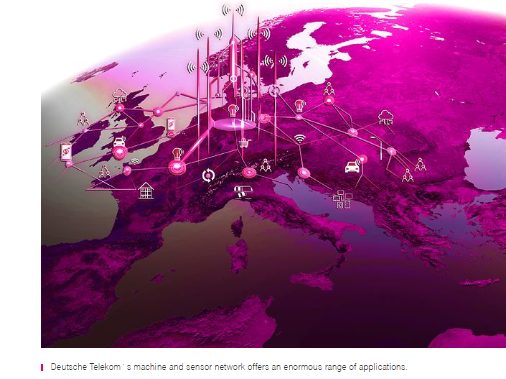
Deutsche Telekom launches NB-IoT in Germany

Deutsche Telekom launched its NarrowBand IoT (NB-IoT) service in Germany. The network currently covers 90 percent of the nation's territory and 90% of its population. The rollout will be completed by the end of 2019.

"Our machine and sensor network offers an enormous range of applications," says Kai-Ulrich Deissner, Head of International Technology & Services Delivery, Deutsche Telekom. "Mobility, security or waste management are just a few areas that the new network revolutionizes. It is an important prerequisite for the development of mobile IoT in the years to come."

Deutsche Telekom is also introducing NB-IoT roaming in Europe. As a first step, the national companies in Germany, Austria, the Netherlands, Hungary, Slovakia and the Czech Republic support roaming among each other. Other countries will follow.
Nine European subsidiaries and the USA have introduced NB-IoT so far. The Netherlands completed their nationwide rollout in mid-2017. Austria and Slovakia have been covered nationwide since 2018.

Sprint's mobile hotspot hits 1 Gbps

Sprint is offering mobile hotspot from Inseego Corp. that boasts gigabit-speed performance and enterprise-grade security features.

The MiFi 8000 leverages LTE Advanced-Pro (category 18) technology and 5x carrier aggregation, resulting in higher peak data rates. It allows up to 15 Wi-Fi clients to connect in 2.4GHz or 5GHz bands simultaneously. It also offers IT admin controls, on-board VPN, guest Wi-Fi network, anti-hacking cybersecurity features and advanced enterprise-grade encryption protocols.

“The MiFi 8000 series of gigabit LTE mobile hotspot delivers everything our customers have come to expect from the MiFi brand, with compelling features such as best-in-class security with IT admin controls, the latest advancements in 4G LTE Advanced-Pro technology, and ultra-fast dual-band Wi-Fi,” said Ashish Sharma, CMO and EVP IoT & Mobile Solutions at Inseego. “Inseego solutions provide the missing link for data-hungry enterprise users, SMB, and prosumers who want fast and reliable connections wherever they go, whether it’s a domestic or an international business trip, their home office, or a remote field office.”

Nokia supplies virtualized Distributed Access Architecture in Norway

Altibox, one of the largest regional telecommunication operators in Norway and Denmark, will deploy Nokia's Gainspeed Unified Cable Access solution, based on a fully virtualized Distributed Access Architecture (vDAA).  The solution enables the operator to deliver enhanced all-IP-based ultra-broadband services to residential and business customers.

Nokia says that by moving the cable access layer functions in the headend and hub sites to the access nodes that sit closer to customers, Altibox and its partners can eliminate some of its legacy cable-specific hardware,  dramatically reducing the amount of power, space and equipment required in the headend. Nokia's vDAA solution will also enable Altibox and Eidsiva BredbÃ¥nd  to significantly reduce the number of hub offices, realizing significant real estate cost savings while simplifying network operations.  By virtualizing the headend and network functions, Altibox effectively pushes the digital portion out to the node, ensuring a better signal quality and experience for subscribers.


  • In 2016, Nokia acquired Gainspeed, a start-up specializing in DAA (Distributed Access Architecture) solutions for the cable industry via its Virtual CCAP (Converged Cable Access Platform) product line. Financial terms were not disclosed. Gainspeed's Virtual CCAP enables cable operators to increase the capacity of their existing HFC (Hybrid Fiber Coax) infrastructure and rapidly deploy new services, while simultaneously reducing space and power requirements in the headend. The solution also enables cable operators to migrate their networks to a software-driven, all-IP architecture. Gainspeed's design eliminates the physical CCAP by leveraging SDN and NFV to distribute the CCAP’s functions to other devices and locations in the network. This centralizes routing, control and management in the data center or cloud and pushes the physical layer, DOCSIS processing and RF modulation into the node.

Sharon White to step down as CEO of Ofcom

Sharon White is to step down as Chief Executive of Ofcom, the telecoms regulator for the UK, to become Chairman of The John Lewis Partnership.

White joined Ofcom in March 2015 from HM Treasury where she was Second Permanent Secretary.

https://www.ofcom.org.uk/about-ofcom/how-ofcom-is-run/ofcom-board

Wednesday, June 5, 2019

China issues four commercial 5G licences

China's Ministry of Industry and Information Technology (MIIT) issued commercial 5G licenses to China Mobile, China Unicom, and China Telecom, and China Broadcasting Network.


http://www.miit.gov.cn/

Multi-core fiber testbed established in L’Aquila, Italy

The University of L’Aquila, Sumitomo Electric Industries, and Optoscribe have deployed a testbed for multi-core fiber communications in the city of L’Aquila, in Italy.

The multi-core fiber (MCF) testbed, which uses space-division multiplexed (SDM) technology, is part of INCIPICT project.

An MCF is an optical fiber with multiple cores in a glass cladding.

For INCIPICT, Sumitomo Electric fabricated two types of uncoupled MCFs and one type of coupled MCFs with a standard glass diameter of 125 µm (details in the table). The standard glass diameter enabled the use of conventional optical fiber cable and connector technologies. The MCFs were cabled into conventional loose-tube jelly-filled cables widely used in Europe.

Optoscribe manufactured fan-in/fan-out (FIFO) devices for the conversion between MCFs and multiple standard single-mode fibers (SMFs). The MCF cable was installed in a microduct placed on INCIPICT’s rack in the walkable multi-service underground tunnel

The total length of the installed MCF cable is 6.3 km, of which 5.6 km in the tunnel and 0.7 km in the laboratory that gives access to the fibers. The optical properties of the MCFs were evaluated before and after the installation, and no significant degradations due to the installation were observed.

Microsoft Azure and Oracle Cloud to interconnect

Microsoft and Oracle announced a cloud interoperability partnership.

The arrangement enables customers to migrate and run enterprise workloads across Microsoft Azure and Oracle Cloud. The companies promise seamlessly connections between Azure services, like Analytics and AI, to Oracle Cloud services, like Autonomous Database.

The new set of capabilities:

  • Connect Azure and Oracle Cloud seamlessly, allowing customers to extend their on-premises datacenters to both clouds. This direct interconnect is available starting today in Ashburn (North America) and Azure US East, with plans to expand additional regions in the future.
  • Unified identity and access management, via a unified single sign-on experience and automated user provisioning, to manage resources across Azure and Oracle Cloud. Also available in early preview today, Oracle applications can use Azure Active Directory as the identity provider and for conditional access.
  • Supported deployment of custom applications and packaged Oracle applications (JD Edwards EnterpriseOne, E-Business Suite, PeopleSoft, Oracle Retail, Hyperion) on Azure with Oracle databases (RAC, Exadata, Autonomous Database) deployed in Oracle Cloud. The same Oracle applications will also be certified to run on Azure with Oracle databases in Oracle Cloud.
  • A collaborative support model to help IT organizations deploy these new capabilities while enabling them to leverage existing customer support relationships and processes.
  • Oracle Database will continue to be certified to run in Azure on various operating systems, including Windows Server and Oracle Linux.

“With Oracle’s enterprise expertise, this alliance is a natural choice for us as we help our joint customers accelerate the migration of enterprise applications and databases to the public cloud,"  said Scott Guthrie, executive vice president of Microsoft’s Cloud and AI division.

Carriers activate LTE-M roaming across North America and Europe

AT&T, KPN, Orange and Swisscom activated LTE-M roaming across their respective IoT networks, providing coverage across North America and Europe.


  • AT&T's LTE-M network is deployed across the U.S. and Mexico.
  • KPN operates an LTE-M across the Netherlands.
  • Orange’s LTE-M network is available in France and Romania with Belgium, Slovakia, Spain and Poland coming this year.
  • Swisscom has deployed LTE-M across Switzerland.

The carriers expect to add additional supporting operators to this roaming arrangement to expand their cross-border capabilities in the coming months. According to the GSMA, LTE-M networks will fully cover Europe by the end of 2020.

John Wojewoda, AVP, Global Connections Management, AT&T: “More and more of our enterprise customers require global capabilities as they deploy IoT devices and applications. These LTE-M roaming agreements help meet that demand and make it easier for businesses around the world to benefit from the power of a globalized IoT.”

Celllnex acquires BT high towers across UK

Celllnex has acquired the marketing and operation rights for 220 high towers from BT for the next 20 years. The deal was valued at £100 million.

Cellnex operates 45,000 wireless communications towers and sites in Spain, Italy, Netherlands, France, Switzerland and now the UK. The company closed the 2018 financial year with revenues of € 901 million (up 14%) and EBITDA of € 591 million (up 18%). Cellnex is based in Barcelona.

“For Cellnex, this deal is a landmark first step into the UK market and follows our recent successful acquisitions of 10,700 sites from Iliad and Salt as well as a strong set of Q1 results. This agreement demonstrates the Company’s commitment and confidence in the market as we look ahead to further opportunities in the UK,” stated Alex Mestre, Cellnex’s Global Business Managing Director.

Rakuten selects NEC to build Open vRAN Architecture

Rakuten Mobile has selected NEC to build its 5G open vRAN infrastructure in Japan.

Through the partnership, Rakuten and NEC will jointly develop a 3.7 GHz massive MIMO 5G antenna radio unit (RU), which will be manufactured by NEC at its facilities in Japan. Rakuten and NEC/Netcracker are already working together on an end-to-end BSS/OSS solution to support the mobile network launch and subsequent operations.

Rakuten Mobile is building a fully virtualized, end-to-end cloud-native mobile network.

In April 2019, Rakuten Mobile received approval from the Japanese Ministry of Internal Affairs and Communications for its 5G special radio station deployment plan and aims to launch 5G services in June 2020.

"We are very excited to partner with a network technology leader such as NEC in building the world's first 5G open RAN architecture here in Japan," said Tareq Amin, chief technology officer of Rakuten Mobile, Inc. "NEC's technology and expertise will allow us to not only cost-effectively create a highly secure, high quality 5G network, but by designing and producing the antennas in the local market, we look forward to contributing to the development of the Japanese telecommunications industry and economy."

"NEC is delighted to contribute to Rakuten Mobile's strategy for building the world's first fully virtualized, end-to-end cloud native mobile network," said Atsuo Kawamura, executive vice president and president of the Network Services Business Unit at NEC Corporation. "Going forward, NEC aims to drive the global expansion of virtualized network architecture with Rakuten Mobile."

Rakuten will use Small Cells powered by Qualcomm


Rakuten upcoming next-generation end-to-end cloud-native mobile network across Japan will use small cells based on Qualcomm FSM Small Cell Platforms. Rakuten plans to utilize small cells to reduce site acquisition and deployment cost and to provide indoor capacity. Rakuten will leverage network virtualization and small cells from the start and thereby create a network that can be scaled easily and deliver on the promise of 5G experiences to subscribers. Qualcomm's...

Rakuten picks Mavenir's NFV-Based RCS


Rakuten, which is preparing to launch Japan’s newest mobile network, selected Mavenir for. The deployment will include Mavenir’s 5G ready platform that monetizes voice and messaging in a single application for least-cost roaming, integration to Rakuten ID single sign-on, that is completely cloud-based with full NFV deployed on the Rakuten Cloud Platform. Mavenir’s fully virtualized RCS AS and Client will enable Rakuten to launch new innovative services...

Rakuten invests in Altiostar for virtual RAN


Rakuten, the Japanese e-commerce and fintech company and soon to be the operator of Japan’s newest mobile network, will make a strategic investment in Altiostar Networks, a start-up based in Tewksbury, Mass. The investment is subject to approval by the Committee on Foreign Investment in the United States. Altiostar provides a 5G-ready virtualized RAN software solution that supports open interfaces and disaggregates the hardware from the software...

Rakuten picks VIAVI to validate cloud-native mobile network


Rakuten, one of the world's leading internet services companies and soon to be the newest mobile network operator in Japan, selected the VIAVI TM500 system to support the rapid deployment of a nationwide, end-to-end cloud-native mobile network. Rakuten offers e-commerce, fintech, digital content and communications services to over one billion members worldwide. The company received approval for its 4th generation mobile communications system (4G)...

Sweden's EcoDataCenter and Fortalax to merge

Two Swedish data center companies have agreed to merge.

EcoDataCenter, which is based in Falun, will acquire shares in Fortlax, which operates data centers in Piteå. Financial terms were not disclosed.

The companies said their ambition is to create a Nordic giant in carbon-positive data centers.

https://blog.ecodatacenter.se/uk/ecodatacenter-and-fortlax


BT to consolidate 300 offices to 30

BT Group will consolidate its footprint of more than 300 locations across the UK to around 30. The first eight of these locations are
Belfast, Birmingham, Bristol, Cardiff, Edinburgh, Ipswich (Adastral Park), London and Manchester.

BT previously announced plans to exit its St Paul’s headquarters in London and is currently identifying a new home for the business in the capital.

“The Better Workplace Programme is about bringing our people together in brilliant spaces, and transforming the way we work,” BT Group chief executive Philip Jansen said. “Revealing these eight locations is just the first step; we have dedicated teams working on identifying the best buildings to move into and which ones to redesign for the future. As a result of this programme, BT people will be housed in inspiring offices that are better for our business and better for our customers.”

https://www.btplc.com/news/#/pressreleases/bt-group-reveals-first-eight-locations-as-part-of-biggest-uk-workplace-improvement-programme-2882815

Tuesday, June 4, 2019

Blueprint column: The importance of Gi-LAN in 5G

by Takahiro Mitsuhata, Sr. Manager, Technical Marketing at A10 Networks 

Today's 4G networks support mobile broadband services (e.g., video conferencing, high-definition content streaming, etc.) across millions of smart devices, such as smartphones, laptops, tablets and IoT devices. The number of connected devices is on the rise, growing 15 percent or more year-over-year and projected to be 28.5 billion devices by 2022 according to Cisco's VNI forecast.

Adding networking nodes to scale-out capacity is a relatively easy change. Meanwhile, it's essential for service providers to keep offering innovative value-added services to differentiate service experience and monetize new services. These services including parental control, URL filtering, content protection and endpoint device protection from malware and ID theft, to name a few. Service providers, however, are now facing new challenges of operational complexity and extra network latency coming from those services. Such challenges will become even more significant when it comes to 5G, as this will drive even more rapid proliferation of mobile and the IoT devices. It will be critical to minimize latency to ensure there are no interruptions to emerging mission-critical services that are expected to dramatically increase with 5G networks.

Gi-LAN Network Overview

In a mobile network, there are two segments between the radio network and the Internet: the evolved packet core (EPC) and the Gi/SGi-LAN. The EPC is a packet-based mobile core running both voice and data on 4G/ LTE networks. The Gi-LAN is the network where service providers typically provide various homegrown and value-added services using unique capabilities through a combination of IP-based service functions, such as firewall, carrier-grade NAT (CGNAT), deep packet inspection (DPI), policy control and traffic and content optimization. And these services are generally provided by a wide variety of vendors. Service providers need to steer the traffic and direct it to specific service functions, which may be chained, only when necessary, in order to meet specific policy enforcement and service-level agreements for each subscriber.

The Gi-LAN network is an essential segment that enables enhanced security and value-added service offerings to differentiate and monetize services. Therefore, it's crucial to have an efficient Gi-LAN architecture to deliver a high-quality service experience.

 Figure: Gi-LAN with multiple service functions in the mobile network

Challenges in Gi-LAN Segment

In today's 4G/ LTE world, a typical mobile service provider has an ADC, a DPI, a CGNAT and a firewall device as part of Gi-LAN service components. They are mainly deployed as independent network functions on dedicated physical devices from a wide range of vendors. This makes Gi-LAN complex and inflexible from operational and management perspective. Thus, this type of architecture, as known as monolithic architecture, is reaching its limits and does not scale to meet the needs of the rising data traffic in 4G and 4G+ architectures. This will continue to be an issue in 5G infrastructure deployments. The two most serious issues are:

1. Increased latency
2. Significantly higher total cost of ownership

Latency is becoming a significant concern since, even today, lower latency is required by online gaming and video streaming services. With the transition to 5G, ultra-reliable low-latency connectivity targets latencies of less than 1ms for use cases, such as real-time interactive AR/ VR, tactile Internet, industrial automation, mission/life-critical service like remote surgery, self-driving cars and many more. The architecture with individual service functions on different hardware has a major impact on this promise of lower latency. Multiple service functions are usually chained and every hop the data packet traversing between service functions adds additional latency, causing overall service degradation.

The management overhead of each solution independently is also a burden. The network operator must invest in monitoring, management and deployment services for all devices from various vendors individually, resulting in large operational expenses.

Solution – Consolidating Service Functions in Gi-LAN

In order to overcome these issues, there are a few approaches you can take. Service-Based Architecture (SBA) or microservices architecture address operational concerns since leveraging such architecture leads to higher flexibility and automation and significant cost reduction. However, it is less likely to address the network latency concern because each service function, regardless of VNF or microservice, still contributes in the overall latency as far as they are deployed as an individual VM or microservice.

So, what if multiple service functions are consolidated into one instance? For example, CGNAT and Gi firewall are fundamental components in the mobile network, and some subscribers may choose to use additional services such as DPI, URL filtering. Such consolidation is feasible only if the product/ solution supports flexible traffic steering and service chaining capabilities along with those service functions.

Consolidating Gi-LAN service functions into one instance/ appliance helps to drastically reduce the extra latency and simplify network design and operation. Such concepts are not new but there aren't many vendors who can provide consolidated Gi-LAN service functions at scale.

Therefore, when building an efficient Gi-LAN network, service providers need to consider a solution that can offer:
  • Multiple network and service functions on a single instance/ appliance
  • Flexible service chaining support
  • Subscriber awareness and DPI capability supported for granular traffic steering
  • Variety of form-factor options - physical (PNF) and virtual (VNF) appliances
  • High performance and capacity with scale-out capability
  • Easy integration and transition to SDN/NFV deployment
About the author

Takahiro Mitsuhata, Sr. Manager, Technical Marketing at A10 Networks

About A10

A10 Networks (NYSE: ATEN) provides Reliable Security Always™, with a range of high-performance application networking solutions that help organizations ensure that their data center applications and networks remain highly available, accelerated and secure. Founded in 2004, A10 Networks is based in San Jose, Calif., and serves customers globally with offices worldwide. For more information, visit: www.a10networks.com and @A10Networks