Monday, April 20, 2015

Boingo - Building a S.M.A.R.T.er Network

Derek Peterson, CTO of Boingo Networks, discussed his company's evolution to a S.M.A.R.T. infrastructure powered by NFV.  The acronym stands for Secure, Multiplatform, Analytics-driven, Responsive and Tiered.

Underlying the network is deep packet inspection technology that enables Boingo to deliver an enhanced experience for its users.

The video is presented by Procera Networks.

See video:  https://youtu.be/7uJzgEcrpGo

Broadcom Optimizes Trident-II+ Switching Silicon for 10GbE Virtualized Data Centers

Broadcom has begun sampling the next-generation of its StrataXGS Trident Ethernet switching silicon, which has been optimized to meet the bandwidth, scalability and efficiency demands of 10GbE virtualized data centers.  The new silicon offers 1.28 terabit per second (Tbps) switching performance, 30 percent lower power and double the performance for data center virtualization overlays, such as VXLAN.

The 28 nanometer (nm) Trident-II+ Series, which provides a drop-in power and efficiency improvement over the previous version, brings a number of features for network virtualization, including single-pass VXLAN routing that doubles gateway performance in all network topologies, as well as support for pre-standard GENEVE overlays.

As a complement to Broadcom's latest StrataXGS Tomahawk and StrataDNX switch SoCs, the Trident II+ Series provides 100GbE connections to the spine layer and between racks, while supporting 10GbE connections to the servers in enterprise and private cloud deployments.

StrataXGS Trident-II+ (BCM56860) Series Key Features

  • Standards-compliant high-density 10GbE/40GbE/100GbE switch SoC
  • Single-pass routing in/out of tunnels (RIOT) at 1.28 Tbps
  • High-performance tunneling support for VXLAN, NVGRE, MPLS, SPB, and pre-standard Geneve
  • 128 low-power optimized 10Gbps serial interfaces with up to 8 ports of 100GbE
  • Broadview instrumentation featuring buffer statistics tracking (BST) and flex counters
  • Enhanced ContentAware engines with 4x larger ACL rule databases versus previous generation devices
  • OpenFlow 1.3.1+ support scaling to several 10,000's of flows using OF-DPA and third-party controllers
  • Configurable SmartTable technology to maximize L2 MAC,L3 Host, LPM forwarding database capacities
  • Full IPv4 and IPv6 unicast and multicast routing support
  • Integrated SmartBuffer for optimal burst absorption, dynamic thresholding and lossless service
  • SmartHash flexible engine featuring highly scalable ECMP load balancing and network resiliency
  • FlexPort technology enables dynamically configurable ports/MACs
  • Ethernet Port Multiplier technology supports fine-grained channelization over Ethernet and enterprise fabrics

"Over the past five years, multiple StrataXGS Trident generations have helped drive the adoption of 10GbE in cloud and mega scale data centers with standard, cost-efficient, merchant silicon based platforms," said Ram Velaga, Broadcom Senior Vice President & General Manager, Network Switch. "Our latest Trident-II+ series offers the economics, performance and virtualization capabilities required to lead a similar transition across enterprise data centers worldwide."

"The collaboration between Broadcom and VMware to define and build robust underlay-overlay technologies allows customers today to deploy fully virtualized networks for greater operational efficiency," said Hatem Naguib, vice president, Networking and Security at VMware. "Mainstream enterprises using our VMware NSX™ network virtualization platform on top of a StrataXGS Trident-II+ based physical network get first-class VXLAN support as well as future support for Geneve - enabling efficient, secure and agile data center networks."

http://www.broadcom.com/press/release.php?id=s907324

Gigamon Automates Network Traffic Visibility for Rapid Response to Security Threats

Gigamon outlined its framework for leveraging software-defined intelligent traffic visibility to automatically detect threats and then programmatically adapt security policies.

“Software Defined Visibility is a first of its kind breakthrough. It enables security tools, such as IPSs, WAFs, Secure Web Gateways, Sandboxes and other in-line or out-of-band security appliances to program the Gigamon Visibility Fabric to automatically update traffic Flow Maps and GigaSMART operations based on real-time conditions,” said Shehzad Merchant, chief technology officer at Gigamon.  “By enabling the programmability of our Visibility Fabric, customers gain the ability to dynamically adjust and enhance their visibility posture thereby improving security, while reducing costs and network complexities.”

Software Defined Visibility is a framework that allows customers, security and network equipment vendors, as well as managed service providers, to control and program Gigamon’s Visibility Fabric via REST-based Application Program Interfaces (APIs).  By writing programs that utilize Gigamon’s APIs, critical functions previously requiring manual intervention can be automated to improve responsiveness, enhance analysis and increase protection of key resources and information assets. Potential use case examples include:

  • Improve Security Efficiencies – Security administrators can develop applications to improve network detection, reaction and response by automating NetFlow generation and SSL decryption so that current security appliances are not overtaxed when performing deep packet inspection. For example, administrators can use the APIs that program the Visibility Fabric to dynamically change the traffic forwarding policies in response to threats or anomalous network traffic changes. 
  • Automate Policy Management – As new virtual machines are spun up, administrators can write policy management programs that utilize Gigamon’s APIs to automatically follow new changes within virtual and physical networks.
  • Simplify Provisioning and Ticketing – For many organizations, IT Operations Management (ITOM) groups are burdened to manually perform common tasks, such as provisioning and ticketing of network port configurations, monitoring of new IP subnets and VLANs, and upgrading software images. With Software Defined Visibility, ITOM groups can develop programs to automate these processes.

The new capabilities are enabled in GigaVUE-FM 3.0 Fabric Manager, which delivers a single pane-of-glass view of physical and virtual nodes across the Visibility Fabric.  A single instance of GigaVUE-FM can manage hundreds of visibility nodes across multiple locations, containing more than a quarter of a million physical ports in addition to managing virtual infrastructures.

Flow Mapping technology helps reduce traffic and improve analyzer performance. Flow Mapping is a patented technology at the heart of Gigamon’s GigaVUE Visibility Fabric nodes that takes line-rate traffic at 1Gb, 10Gb, 40Gb or 100Gb from a network TAP or a SPAN/mirror port (physical or virtual) and then optimizes flows based on individual traffic profiles of the tools and applications that secure, monitor, and analyze the network infrastructure.

http://www.gigamon.com

Japan Internet Exchange Deploys Infinera Cloud Xpress

Japan Internet Exchange (JPIX) has deployed the Infinera Cloud Xpress to help accommodate bandwidth growth in its network in the metropolitan Tokyo area in Japan.

Infinera's Cloud Xpress isa compact, high-density, optical system optimized for interconnecting multiple data centers within a metro area. It leverages existing Infinera technologies, including its Photonic Integrated Circuit (PICs) and super-channel aggregation, to provide massive bandwidth in a form factor that data center operators can rack-n-stack.

JPIX is Japan's first commercial IX provider, established in 1997, offering a set of neutral locations that allows telecom, Cloud and wholesale service providers to exchange traffic as well as interconnect with enterprise users. The JPIX IX service is a significant exchange point for major service and content providers in Japan and plays an important role in powering the Japanese Internet backbone. With the IX service delivered by JPIX, Internet service providers (ISPs) and content providers are able to respond to continuous increases in Internet traffic as demand increases from their customers.

Infinera said JPIX chose its Cloud Xpress for its small form factor, low power consumption and its ability to easily scale bandwidth in 100 Gbps increments without any changes in hardware. The Cloud Xpress provides JPIX up to one terabit per second (Tbps) of input and output capacity in just two rack units. Further, the Cloud Xpress simplifies operations with a single fiber to deliver a 500 Gb/s super-channel of line-side capacity, a highly-reliable photonic integrated circuit, the flexibility of 10 gigabit Ethernet (GbE) and 40 GbE today, and 100 GbE client side interfaces with Cloud Xpress product family in the future.

"The tremendous demand for bandwidth globally puts immense pressure on the Cloud," said Stu Elby, senior vice president of Cloud network strategy and technology at Infinera. "JPIX's deployment of Cloud Xpress further underscores the need for simple, highly scalable interconnect solutions across a variety of markets."

http://www.infinera.com

Ericsson and Intel Security Target Managed Security for Telcos

Ericsson and Intel Security (formerly McAfee) are working together to make managed security solutions available for telecom operators to bundle with the existing services they provide to enterprises.

The alliance combines Ericsson's managed services expertise, global delivery capability and network security expertise with Intel Security's broad portfolio of consumer and enterprise security solutions will enable enterprises to strengthen their security posture.

Chris Young, Senior Vice President and GM of Intel Security, says: "Telecommunications networks are a critical component of the economic and social infrastructures that we rely upon. Together, Intel Security and Ericsson are working to keep the well over three billion people across the globe that use these systems safe and secure."

Jean-Claude Geha, Vice President and Head of Managed Services at Ericsson, says: "Intel Security has an exceptional, end-to-end consumer and enterprise security product portfolio. Ericsson is the leader in telecom managed services with the scale, skills and people required to make Intel's security solutions available to telecom operators around the world. Together, we will be able to provide exceptional managed security solutions to telecom operators."

http://www.ericsson.com
http://www.intelsecurity.com/

CenturyLink Acquires Orchestrate - a Managed Database Service Company

CenturyLink has acquired Orchestrate, a company that offers a fully managed database service. Financial terms were not disclosed.

CenturyLink said the acquisition brings a new Database-as-a-Service (DBaaS) to its Cloud platform.  Earlier this year, Orchestrate's service became deployable via CenturyLink Cloud.

"CenturyLink's customers, like most enterprises, are expressing interest in solutions that help them meet the performance, scalability and agile development needs of large-scale big data analytics," said Glen F. Post, III, chief executive officer and president of CenturyLink. "The Orchestrate database service's ease of use and ability to support multiple database technologies have emerged as key differentiators that we are eager to offer our customers through the CenturyLink Cloud platform."

Orchestrate co-founders Antony Falco, chief executive officer, and Ian Plosker, chief technology officer, as well as Dave Smith, vice president of engineering, are among those joining CenturyLink.

http://www.centurylink.com


  • CenturyLink's other recent big data analytics moves include the acquisition of Cognilytics, a leading provider of advanced predictive analytics and big data solutions; the launch of Hyperscale high-performance cloud server instances designed for web-scale workloads, big data and cloud-native applications; and the availability of automated cloud-based Hadoop solutions. Other recent additions to the CenturyLink Cloud ecosystem include the acquisition of DataGardens for disaster recovery services. 


Korea-Japan Cable Upgrades to 100G with Ciena

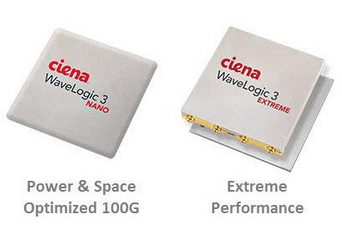
The Korea-Japan Cable Network (KJCN) has selected Ciena's GeoMesh submarine solution for a 100G network upgrade.  KJCN has deployed Ciena’s 6500 Packet-Optical Platform, powered by WaveLogic coherent optics. The network will utilize high-powered Raman amplification to enable very high capacity transmission over long unrepeatered cable spans to increase the ultimate capacity of the system.

The KJCN network is owned by the global consortium of communications companies, including KT (Korea Telecom), SoftBank Mobile, QTNet (Kyushu Telecommunication Network) and others. KJCN is comprised of two 250 km repeater-less submarine cables with diverse routes connecting Korea and Japan. The KJCN network is used by traditional carrier customers, as well as web-scale operators and content delivery providers to transfer of a plethora of on-demand service and applications between Japan and South Korea.

http://www.ciena.com/about/newsroom/press-releases/KJCN-Turns-to-Ciena-for-Submarine-Network-Upgrade.html

Catbird Intros Discovery Tool for Virtual Fabrics

Catbird, a start-up based in Scotts Valley, California, introduced a software tool to help organizations discover, organize and analyze their virtual fabric to reduce security risks.

Catbird Insight works by first automatically discovering all assets within an organization’s virtual fabric.  It then allows grouping of these virtual assets into logical Catbird TrustZones (micro-segments) that can be monitored and analyzed for appropriate interactions, relationships and/or compliance based on network flow data. For example, all e-commerce applications might be grouped into one Catbird TrustZone so that security and compliance teams can validate whether the security policies associated within that Catbird TrustZone work effectively based on visualizing actual traffic flows.  From there, the solution provides visibility into all flows in and out of Catbird TrustZones with customized detailed reporting of traffic.

“Companies today want to adopt micro-segmentation to improve their security posture, yet find themselves lacking a good understanding of all the assets within their virtual fabric and missing insight into the baseline connectivity of those assets,” said David Keasey, CEO of Catbird. “With Catbird Insight, we easily and quickly eliminate these issues by providing a perfect inventory of assets and real-time network traffic and visualization, so organizations can easily define micro-segments and the fine-grained application-centric security policies protecting them.”

http://www.catbird.com/

Sunday, April 19, 2015

Blueprint: How Mobile Operators Can Benefit From WebRTC

by Arvind Rangarajan, BroadSoft

WebRTC is one of the most discussed communications technologies today, as it enables enterprises to conduct real time voice and video calls with customers, partners and suppliers via a Web browser. By 2019, there will be more than 6 billion WebRTC devices and up to 2.5 billion active users of “embedded” communications worldwide, according Disruptive Analysis’ 2014 WebRTC Market Status & Forecasts Report. Even today, WebRTC is already enabled on more than a billion browsers, which indicates a very real and immediate opportunity for mobile operators and telcos.


Moderating a WebRTC session at Enterprise Connect 2015, one industry analyst estimated there to be approximately 200 WebRTC vendor solutions commercially available (or at least announced) at this moment. The sheer volume of WebRTC products, platforms, and applications is particularly remarkable given that most have been launched over just the past few months.

For mobile operators and service providers eyeing WebRTC but unsure how to move forward, the good news is that it doesn’t take years, months, or even weeks to benefit from WebRTC-enabled applications. A growing set of WebRTC-enabling tools simplify the process for service providers seeking to design and customize their own unified communications (UC) offers, which can increase service provider revenue opportunities, enhance the customer experience, future proof investments as the technology evolves, and deliver several additional key benefits.

Extend Unified Communications Beyond Enterprise

Most of the initial WebRTC-enabled technologies focus on delivering more enhanced customer support and a superior customer experience through capabilities such as click-to-call. However, it is becoming increasingly clear that businesses view WebRTC as a way to extend real-time unified communications beyond the confines of an enterprise – to any customer, partner or supplier with a WebRTC-enabled browser.

By extending the benefits of UC to an enterprise's entire ecosystem, external company communications are as simple and efficient as internal communications, in turn lowering enterprise costs by enabling users to take advantage of UC without the need for expensive client software or hardware.  This is significant for mobile operators and telcos attempting to determine where the most immediate and tangible WebRTC business opportunity lie.

WebRTC Can Power Mobile Applications

WebRTC adoption in the mobile world has been slow largely due to the challenges with the use of browsers; for example, it is difficult to notify a subscriber using a mobile browser about an incoming WebRTC call if the browser is not open. That is among a handful of reasons that, initially, apps may be used more than browsers in this context, and until browser enhancements are made, WebRTC can serve as the underlying technology for mobile apps for real-time communications.

The fact is that there are several factors positioning 2015 as the year when the explosion of WebRTC offerings will be matched by a growing user base and tangible revenues for service providers. First, telcos around the world are moving from traditional circuit-switched networks to full IP-based 4G networks to reduce costs as well as offer rich new mobile communications services.

Second, there is also significant demand from enterprises and consumers to have the ability to access all of their communications services on multiple devices. More specifically, data indicate customer interaction will increasingly be mobile-centric. By 2017, research firm IDC projects 87% of the worldwide smart connected device markets will be smartphones and tablets, while only 13% of the devices will be desktops and laptops. At the same time, 2014 research by ThinkJar finds 78% of organizations indicate mobile customer service is valuable to them (up from 31% the prior year).

Mobile smart phone data usage is very different compared to traditional browsing with laptops and tablets. There has been consistent data showing app usage dominating the overall mobile data consumption. For that reason, mobile operators should start by building apps that use WebRTC technology on the back end or even integrating WebRTC into existing apps. By creating a more compelling customer experience on mobile devices, mobile operators will drive more mobile access network usage. For example, adding voice or video capability into an app provided by a mobile operator that gives account details like usage would be of tremendous value. The capability could help the subscriber reach a representative for more personalized support.

Improve user experience for the future

Through WebRTC, enterprises can improve the customer experience by adding a rich media communication experience within their Website, email communications and mobile apps as the solution enables real-time, browser-based video and voice calling. This will prove especially critical for mobile devices, as research firm Gartner recently indicated that weak mobile customer service is harming customer engagement. For this reason, the ability of organizations to leverage WebRTC across all devices – of note given Gartner’s projection that one-third of all customer service interactions will still require the support of a human intermediary by 2017 – will go a long way in creating a superior customer experience.

Beyond mobile specifically, service providers are able to leverage WebRTC to customize their UC offers for a particular business need; enabling innovative services that address business issues and current market trends, including an increasingly disparate workforce, the growing share of millennials in the workforce, and a growing desire to access communications applications across a broad array of connected devices.

WebRTC is a true enabling technology; one with all the ingredients to improve the user experience, spark innovation and unlock new customer and revenue opportunities for mobile operators able to rapidly, cost-effectively and efficiently bring compelling solutions to market.

About the Author

Arvind Rangarajan is Director, Product Marketing at BroadSoft, a leading provider of cloud-based unified communications and collaboration solutions.

About BroadSoft 

BroadSoft is the leading provider of software and services that enable mobile, fixed-line and cable service providers to offer Unified Communications over their Internet Protocol networks. The Company’s core communications platform enables the delivery of a range of enterprise and consumer calling, messaging and collaboration communication services, including private branch exchanges, video calling, text messaging and converged mobile and fixed-line services. For additional information, visit http://www.BroadSoft.com


Got an idea for a Blueprint column?  We welcome your ideas on next gen network architecture.
See our guidelines.

Ericssson: LTE Release 13 Brings Improvements

LTE release 13, currently under standardization in 3GPP,  will significantly increase user data
rates and overall capacity, as well as support new use cases and further strengthen LTE as a vital
part of future radio access, according to a new white paper published by Ericsson.

Some of the big improvements in LTE release 13 will include:

  • Licensed assisted access (LAA) -- which used unlicense spectrum to boost overall LTE network capacity. LAA targets operator-deployed small cells in the 5GHz band.  Initially, it will support downlink traffic although a later extension is planned for uplink traffic.
  • Carrier-aggregation enhancements -up to 32 carriers in both the uplink and downlink, compared to five with LTE Release 10.
  • Multi-antenna enhancements - two-dimensional base station antenna arrays with up to 64 antenna ports are being studied for exploitation of both the azimuth and elevation domain. 
  • Latency reduction


The Ericsson white paper also touches on machine-to-machine use case for LTE.

http://www.ericsson.com/res/docs/whitepapers/150417-wp-lte-release-13.pdf

Comcast Readies 2 Gbps Residential Service in California

Comcast will roll out its residential multi-gigabit broadband service to nearly three million California homes starting in June.  Gigabit Pro is a symmetrical, 2 Gigabit-per-second service that will be delivered via a fiber-to-the-home solution and offered to customers in the Chico, Fresno, Marysville/Yuba City, Merced, Modesto, Monterey, Sacramento, Salinas, San Francisco Bay Area, Santa Barbara County, Stockton and Visalia metro areas.

In addition, Comcast announced its 15th speed increase in 13 years for its other broadband Internet tiers. The company will increase its Performance tier from 50 Mbps to 75 Mbps and its Blast tier from 105 Mbps to 150 Mbps, both at no additional cost to customers.

Comcast noted that it has been doubling the capacity of its network every 18 months.  Additionally, the company has been delivering multi-gig (up to 10 Gbps) Ethernet service to businesses in California since 2011.

http://www.comcast.com

ARM Acquires Two Bluetooth Companies

ARM announced the acquisitions of Wicentric, a Bluetooth Smart stack and profile provider, and Sunrise Micro Devices (SMD), a provider of sub-one volt Bluetooth radio intellectual property (IP).  Financial terms were not disclosed.

Wicentric is a privately held provider of Bluetooth Smart software solutions focused on enabling the development of low-power wireless products. Their product line includes Bluetooth protocol stack and profiles for creating interoperable smart products and the link layer for silicon integration.

SMD is a privately held provider of radio IP solutions including a pre-qualified, self-contained radio block and related firmware to simplify radio deployment. Central to all SMD radios is native sub-one volt operation. Operating below one volt enables the radio to run much longer on batteries or harvested energy.

ARM said it will incorporate the intellectual property of both companies into a new ARM Cordio portfolio. This portfolio will complement ARM’s existing processor and physical IP targeting end markets requiring low-power wireless communications such as the Internet of Things (IoT).

http://www.arm.com/about/newsroom/arm-announces-acquisition-of-wicentric-and-sunrise-micro-devices.php

@Napatech Video: Accelerating Time-to-Market with Dell OEM

The Napatech Acceleration Platform is a pre-integrated hardware platform suitable for development of high-performance network management and security appliance products.

Based on Napatech accelerators for network analysis, the Napatech Acceleration Platform enables vendors of appliances to significantly reduce time-to-market with a reliable, pre-tested and pre-integrated product that can meet the most challenging analysis requirements.

See video: https://youtu.be/i9CV61UtpIU


Integra Announces Milestones, Executive Appointments

Integra's fiber-based network infrastructure now connects more than 3,000 buildings throughout its 11-state network footprint.  The facilities-based carrier cited significant growth in the Phoenix, Portland, Salt Lake City and Seattle markets.

“Integra’s fiber networks comprise a blend of diverse network routes, direct access along key corridors and built-in reliability, scalability and security that together provide a valuable and differentiated solution for our customers,” said Dan Stoll, president, Electric Lightwave. “With 3,000 locations now on-net, our infrastructure is more flexible, powerful and enterprise-ready than ever, and we look forward to continuing to lay new fiber connections to businesses whose needs align with our network’s unique set of capabilities.”

Integra announced tha appointment of Christopher Camut as president. Camut most recently served as CEO of Ajubeo, a Boulder-based IaaS provider, and holds degrees from the University of Toledo.

In addition, Scot Oslund has joined Electric Lightwave as vice president, premier channel. Oslund will report to Dan Stoll, who was named president of Electric Lightwave in January after 15 years with Integra where he most recently served as the company’s senior vice president of strategy and development. Also, Integra has promoted Jason Koenders to the newly formed office of chief technology officer.

http://www.integratelecom.com/

Cloud Raxak Intros Security Compliance Service based on HP CSA

Cloud Raxak, a start-up based in Los Gatos, California, introduced its Cloud Raxak Protect, a cloud-based security compliance service for helping IT organizations and application development teams to secure and ensure compliance of their compute infrastructures, starting with their environment provisioning process and through the lifecycle, for both public and private clouds.

Cloud Raxak Protect leverages HP’s Cloud Service Automation (CSA) solution, which provides open, extensible enterprise-grade hybrid cloud service management for businesses.

Prasanna Mulgaonkar, Cloud Raxak CEO and founder, said, “Cloud Raxak Protect™ enables application teams and enterprise IT to apply security profiles such as DISA and NIST approved technical security controls across private and public cloud infrastructures. Cloud Raxak Protect™ makes it as simple to apply security compliance profiles to a set of virtual machines, as it is to provision them. We are very pleased to have partnered closely with HP and their industry leading CSA solution to bring this service to market.”

http://www.cloudraxak.com

Thursday, April 16, 2015

Researchers at NTT Envision Quantum Repeaters in Future Photonic Networks

Researchers at Nippon Telegraph and Telephone Corporation (NTT) and the University of Toronto are proposing all-photonic quantum repeaters for long-distance quantum communication.  If achieved, such devices would disprove the necessity of matter quantum memories in long distance quantum communications, which is seen by many as the ultimate future of optical communications.

In a paper published this week by the journal Nature Communications, the researchers said their all-photonic scheme paves a completely new route towards long-distance quantum communication based only on optical devices. Compared to matter quantum memories, this approach eliminates the quantum interface between matter and photons.  The design is based on existing optical technology, such as linear optical elements, single-photon sources, photon detectors and an active feed-forward technique.

http://www.ntt.co.jp/news2015/1504e/150415a.html

Juniper's New SRX5800 Firewall Hits 2 Tbps Throughput

Juniper Networks unveiled new hardware for its new SRX5800 Services Gateway firewall boasting throughput up to 2 Terabits per second (2 Tbps), empowering service providers and large enterprises will more capacity to minimize the potential for security bottlenecks as they manage increased and unpredictable demands for bandwidth placed on their networks.

The new hardware for the SRX5800 includes third-generation input/output cards (IOC3), an enhanced midplane chassis and third-generation system control boards (SCB3). Each IOC3 line card supports two packet forwarding engines (PFE), a high density configuration of 2x100GbE and 4x10GbE high speed interfaces. Additionally, it delivers 240Gbps bandwidth and 2X bandwidth increase over the prior hardware card.

The new product enhancements will be available during the first half of 2015.

http://newsroom.juniper.net/press-release/juniper-networks-introduces-the-industrys-fastest-firewall

Illumio Raises $100 Million for Adaptive Security

Illumio, a start-up based in Sunnyvale, California, raised $100 million in Series C funding for its adaptive security platform for data centers and public clouds.

The software-based Illumio Adaptive Security Platform (ASP) programs and enforces security policies across applications, workloads and processes as they are provisioned, operated and moved in any data center or private and public cloud infrastructure.

Illumio has recently extended its policy model to F5's BIG-IP Local Traffic Manager (LTM) and NGINX product lines. The company also announced continuous delivery of security policies and enforcement down to the process level within workloads.  Illumio said its ASP introduces this form of nano-segmentation for application isolation and control down to individual processes on a single host.  If any part of an application changes (such as auto scaling the web tier with new web servers), Illumio ASP automatically adapts security policies on all impacted workloads or processes.

“Perimeter security solutions leave 80 percent of the data center and cloud exposed and vulnerable to attacks that often lead to costly data breaches,” said Andrew Rubin, co-founder and CEO, Illumio. “Our market traction demonstrates that Illumio ASP is delivering security across all computing resources, infrastructures and applications. The funding and strong vote of confidence from investors will allow us to expand our market opportunity much more aggressively and to extend our platform deeper into more data center and computing elements.”

Participating in the round are new investors BlackRock Funds and Accel Partners, joined by existing venture investors Formation 8, Andreessen Horowitz and General Catalyst. Also participating are Microsoft Chairman John W. Thompson, Salesforce CEO Marc Benioff and Yahoo co-founder Jerry Yang.

https://www.illumio.com

Certes Networks Launches CryptoFlow for Encrypting Application Flows

Certes Networks introduced its new CryptoFlow App, a software-defined security product for encrypting data in motion thereby safeguarding applications from data breaches.

CryptoFlow App is a user-aware and application-aware solution for protecting sensitive data traffic. It enables IT managers to automatically crypto-segment application flows across networks inside or outside the enterprise and grant access to these CryptoFlows based on a user’s security profile. Sensitive applications are isolated and controlled end-to-end, from the application server to the user’s end-point devices, regardless of where they are.

CryptoFlow App solution sets include:

CryptoFlow LAN - Providing strong crypto-segmentation of internal enterprise application flows based on user roles, blocking the top attack vector used in data breaches around the world. CryptoFlow LAN provides automatic security to users connected on the LAN, isolates sensitive applications to only authorized users, and protects applications when hackers get past firewalls.

CryptoFlow B2B - Enabling enterprises to safely extend internal applications to external partners, including contractors, suppliers, trading partners and others beyond the enterprise perimeter. CryptoFlow B2B limits authorized business partners to only the applications they need, protecting the most sensitive applications even when business partners have been compromised.

CryptoFlow Mobile - Securing application traffic to mobile devices, smartphones and tablets, including personal BYOD end-points. Now enterprise IT and security managers can automatically extend enterprise apps to mobile devices with end-to-end security and a single point of control across a wide range of mobile devices inside or outside the enterprise.

The new solution is an extension of Certes’ CryptoFlow security products.  The company claims a perfect 15-year track record of 7,000 product deployments in 70 countries without a single hack of any protected application.

“Today’s enterprise applications are borderless and easily shared, but the security architecture has not kept pace with this evolution,” said John Lochow, CEO of Certes. “In every major data breach of the past two years, hackers exploited inadequate security of networked applications and cut through the firewalls with ease. Our CryptoFlow App solutions are the first products to directly address this major gap. As thousands of product deployments have shown, our customers are protected even when the rest of the security architecture fails.”

http://certesnetworks.com

ADVA Intros ConnectGuard Encryption for DCI and Ethernet Links

ADVA Optical Networking introduced its ConnectGuard security solution for service providers and enterprises. Two variants are offered:
  • ConnectGuard Optical for the ADVA FSP 3000 provides robust transport layer security and is ideal for data center interconnection applications that need advanced protection for the transportation of enormous data volumes. It provides a transparent, wire-speed service for securing mission-critical data and incorporates a strictly separated encryption domain manager to ensure compliance with the most stringent regulatory demands. With a protocol-agnostic approach, ADVA ConnectGuard™ Optical can transport all storage area network protocols, including Ethernet, Fibre Channel and InfiniBand with line speeds of up to 100 Gbps. As part of the ADVA FSP 3000, it eliminates the need for stand-alone security equipment, simplifying network operations and reducing the overall cost of data protection.
  • ConnectGuard Ethernet for the ADVA FSP 150 delivers Ethernet layer security and is critical for protecting data as it travels across third-party packet networks. It enables scalable and secure Ethernet connectivity between locations on top of unprotected Carrier Ethernet networks. 

“Today’s networks are more vulnerable than ever before. The frequency of attacks has never been higher and the ease of data interception has never been simpler,” said Christoph Glingener, CTO, ADVA Optical Networking. “By encrypting data in motion we’re providing the strongest protection possible. Make no mistake, ConnectGuard is a line in the sand for network protection.”

http://www.advaoptical.com/en/newsroom/press-releases-english/20150416-adva-optical-networking-launches-connectguard-for-ultimate-data-protection