Monday, January 7, 2019

Cable industry outlines vision for 10G services

NCTA – The Internet & Television Association, CableLabs and Cable Europe outiline a vision for delivering 10G consumer broadband services in the United States and across the globe in the coming years.

Cable operators in the U.S., whose networks currently pass 85 percent of U.S. homes, including Comcast, Charter, Cox, Mediacom, Midco and others – plus international operators, including Rogers, Shaw Communications, Vodafone, Taiwan Broadband Communications, Telecom Argentina, Liberty Global and more, are implementing the new 10G initiative, with lab trials already underway, and field trials beginning in 2020. 1 gigabit service is currently available across 80% of the cable footprint in the U.S., up from 5% in 2016.

Intel promises 10G-ready technology from the network infrastructure to home gateways.

“With groundbreaking, scalable capacity and speeds, the 10G platform is the wired network of the future that will power the digital experiences and imaginations of consumers for years to come,” said NCTA President and CEO Michael Powell. “As an industry, we are dedicated to delivering an exceptional national infrastructure that will power digital advancement and propel our innovation economy into the future.”

“CableLabs creates the technology that supports the deployment of high-capacity broadband networks and gigabit services at scale for the industry,” said CableLabs President and CEO Phil McKinney. “With the 10G platform, CableLabs will help ensure the broadband infrastructure will be in place globally with the capacity and performance needed in the future to fuel new innovations and emerging technologies that will transform and enhance the way we live.”

https://www.10gplatform.com/

Intel previews Snow Ridge for 5G base stations


by James E. Carroll

At CES 2019 in Las Vegas, Intel announced a new SoC family codenamed "Snow Ridge" that is targeted at 5G base stations. Compared to existing base station silicon, which conventionally has been fixed function and proprietary, Intel said it will deliver a solution that leverages all of the technology it has developed for the server market. Snow Ridge will be delivered in 10nm.

At a CES keynote, Intel demonstrated how a Snow Ridge-powered base station could prioritize traffic based on the application. The company also reiterated that its first 5G modem on track for the second half of the year.

Also announced at the event was Intel Project Athena, which is new set of industry specifications for building a new class of advanced laptops designed for 5G connectivity and artificial intelligence. Intel says instant-on connectivity will enable new user experiences.

Project Athena Project specifics:
  • An annual spec outlining platform requirements
  • New user experience and benchmarking targets defined by real-world usage models
  • Extensive co-engineering support and innovation pathfinding
  • Ecosystem collaboration to accelerate key laptop component development and availability
  • Verification of Project Athena devices through a comprehensive certification process

Intel’s Project Athena partners include Acer, Asus, Dell, Google, HP, Innolux, Lenovo, Microsoft, Samsung and Sharp, among others.

Intel also showed a "Lakefield" sample motherboard based on 10nm hybrid CPU architecture and is 3D "Foveros" packaging technology. Lakefield has five cores, combining a 10nm high-performance Sunny Cove core with four Intel Atom processor-based cores into a tiny package that delivers low-power efficiency with graphics and other IPs, I/O and memory.

Intel also said it is on track to release its Nervana Neural Network Processor (NNP-I) later this year, promising industry-leading inference performance. Inference applications will include image recognition and image classification. Facebook is a development partner.

Qualcomm cites momentum with Wi-Fi 6

Qualcomm is gaining traction with its Wi-Fi 6 networking solution (based on the forthcoming 802.11ax standard with the announcement of a home mesh networking product from NETGEAR, along with enterprise and carrier networking products from Ruckus, Huawei, H3C, NEC, EnGenius, Charter Communications, Calix, and KT.

Defining Wi-Fi 6 features include improved individual throughput per device, extended range, improved battery life for Wi-Fi 6 connected devices, and the WPA3 advanced security protocols
.

Key features of Qualcomm's Wi-Fi 6 platform:

  • Highly integrated SoC offering significant flexibility built on a 14nm FinFET process, optimized for superior power
  • Up to 12 streams of dual-band Wi-Fi with up to eight spatial streams in the 5 GHz band and four in the 2.4 GHz band.
  • Peak aggregate speeds of up to 6 Gbps that can support more than 1000 simultaneously connected Wi-Fi clients.
  • Virtually simultaneous multi-user radio access enabling up to 8 simultaneous transmissions using upstream/ downstream MIMO or more than 32 simultaneous transmissions using OFDMA.  
  • A quad-core 2.2GHz ARM A53 64-bit CPU  

“Our world-class engineering capabilities in combination with proactive investments in R&D has delivered time to market advantages for our customers to capitalize on the significant performance upgrades Wi-Fi 6 has to offer,” said Rahul Patel, senior vice president and general manager, connectivity and networking, Qualcomm Technologies, Inc. “With today’s announcements, wireless networking customers across home networking, carrier and enterprise segments can experience the capacity and network efficiency benefits our Wi-Fi 6 platforms are delivering around the world.”

Support of the Wi-Fi Alliance’s third-generation of security protocol, Wi-Fi Protected Access (WPA3), to provide robust protection of user passwords and stronger privacy across both public and private Wi-Fi networks.

Aquantia and Qualcomm target 802.11ax with 5GbE and 10 GbE ports

Aquantia is collaborating with Qualcomm to support the design and implementation of next generation Wi-Fi 6 routers, access points and gateways based on the forthcoming 802.11ax standard and which integrate Aquantia’s Ethernet connectivity technology.

Aquantia said this new breed of Wi-Fi devices in most cases will offer 5Gb and 10Gb Ethernet ports.

“Aquantia is very pleased to work with Qualcomm Technologies to deliver best-in-class Multi-Gig networking devices for this new 802.11ax Wi-Fi standard,” said LK Bhupathi, Vice President of Marketing at Aquantia. “We expect the combination of our Multi-Gig PHY expertise with Qualcomm Technologies’ industry leading Wi-Fi 6 networking platforms could drive a large upgrade cycle as businesses look to upgrade their networks.”

“Qualcomm Technologies is committed to delivering innovations that offer seamless connectivity in any environment,” said Gopi Sirineni, Vice President, Product Management, Qualcomm Technologies, Inc. “Working with Aquantia to deliver the Multi-Gig wired backhaul for the next generation of Wi-Fi 6 networking devices helps us deliver an increase in capacity and improved efficiency – thus delivering an excellent user experience.”

In order for new platforms to fully utilize the power of Wi-Fi 6, OEMs need to move beyond the bottleneck of gigabit Ethernet to Multi-Gig technology. The ever-growing number of Wi-Fi devices, fueled by the rapid expansion of

T-Mobile completes first 5G call on 600 MHz

T-Mobile US completed the first 5G data call and video call on 600 MHz (including successful uplink and downlink communication) over its commercial network. Ericsson and Intel were key technology partners.

T-Mobile said the test generated a 5G signal capable of covering more than a thousand square miles from a single tower. The carrier also tested a tri-band 5G video call with three users on different spectrum bands – 600 MHz, 28 GHz and 39 GHz.

“This is a huge accomplishment for Neville and his team, who had a vision for nationwide 5G and are building it out the right way – across multiple spectrum bands,” said John Legere, Chief Executive Officer of T-Mobile. “While the other guys focus on 5G millimeter wave on a handful of blocks in a handful of cities, we’re building 5G for everyone, everywhere! And together with Sprint, we’ll add much-needed spectrum depth, creating a truly transformative 5G network!”

T-Mobile tests 5G on 600 MHz spectrum

T-Mobile completed a test of 5G data transmission on low-band spectrum (600 MHz) over its live commercial network. Nokia supported the test, which was performed in Spokane, Washington.  T-Mobile said the test proves that low-band airwaves will provide 5G coverage across hundreds of square miles from a single tower.

T-Mobile notes that it is the only wireless provider building 5G on multiple spectrum bands, including low-band and millimeter wave. The company said it is on track for delivering nationwide 5G in 2020.

Equinix to build 4th data center in Singapore

Equinix will invest US$85 million to build its fourth International Business Exchange (IBX) data center in Singapore, called SG4. The new seven-story data center is scheduled to open in Q4 2019, offering an initial capacity of more than 45,400 square feet (approximately 4,220 square meters) of colocation space and 1,400 cabinets in the first phase.

Equinix said the facility will accommodate more than 4,000 cabinets at full build out, with a total colocation space of more than 132,180 square feet (approximately 12,280 square meters). The new SG4 will be strategically situated at the East of Singapore in one of the country's five data center clusters — Tai Seng Industrial Estate — providing location diversity from the three existing Equinix IBX data centers in Singapore.

SG4 will also provide software-defined interconnection through Equinix Cloud Exchange Fabric (ECX Fabric) to more than 1,300 businesses including some of the largest cloud service providers (CSP) among them Alibaba Cloud, Amazon Web Services (AWS), Google Cloud Platform, Microsoft Azure, Oracle Cloud and Tencent Cloud.

Currently, the three Equinix IBX data centers in Singapore comprise more than 445,000 square feet (41,400 square meters) of colocation space. In Q3 2018, Equinix announced the completion of an expansion of the SG3 IBX data center in Singapore that nearly doubled the size of the facility.

NTT Com activates Global IP PoP in Toronto

NTT Communications (NTT Com) has expanded its tier-1 Global IP Network with a new Point-of-Presence (PoP) in Toronto, Canada.

NTT Com customers will be able to connect at numerous capacity levels including 100G ports with confirmed diversity and direct connections to multiple points in the Global IP Network to ensure the highest reliability and the lowest latency in the IP services.

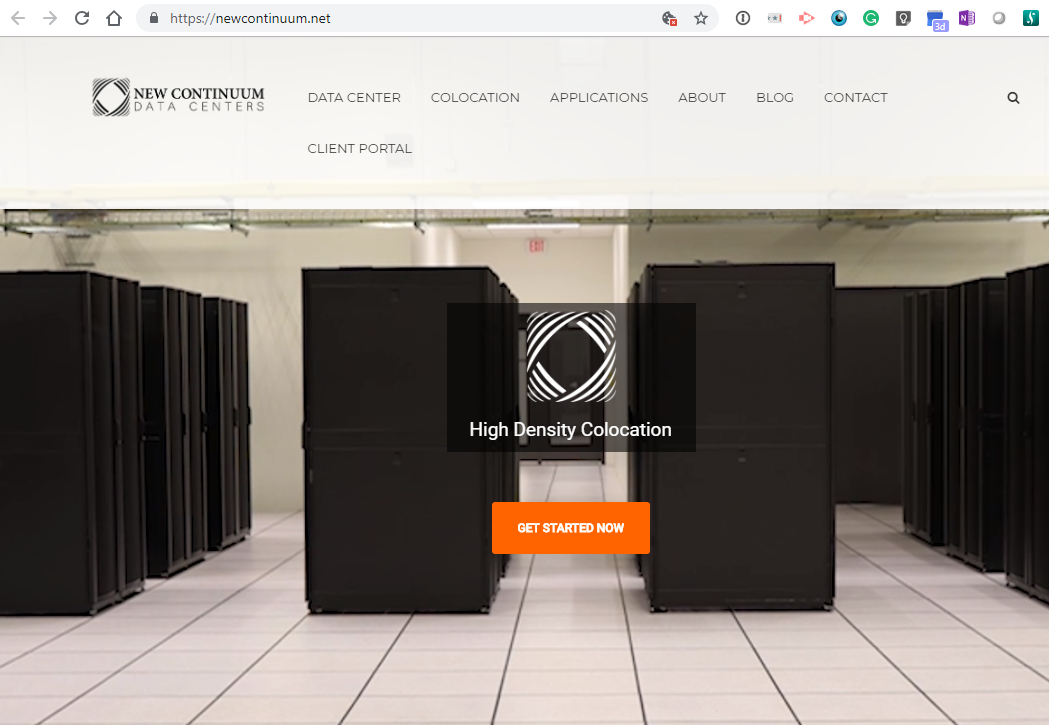
New Continuum acquires flagship west Chicago data center

New Continuum Holdings has acquired its flagship, mission-critical data center located at 603 Discovery Drive in West Chicago, Illinois from Post Road Group'

New Continuum began leasing the property in the fall of 2013 when it commenced construction on a redevelopment project for the building. The company began operating a multi-tenant data center on the premises in 2015 when the initial construction was completed, and then added incremental cooling capacity in the summer of 2018.

“We are excited about providing New Continuum capital to finance the acquisition of this data center. We look forward to working with the New Continuum team as they continue to execute their business plan,” said Jason Carney, Managing Director, Post Road Group.

“This is a major milestone for New Continuum,” adds Eli D. Scher, founder, Chairman and CEO of New Continuum. “When we began this re-development project, it was always our objective to eventually own the underlying real estate asset as well. With this transaction completed, we can now begin the next chapter in New Continuum’s evolution as an owner and operator of this critical data center.”

https://newcontinuum.net/

Mellanox supplies 200 Gigabit HDR InfiniBand for supercomputing

Mellanox Technologies is supplying its 200 Gigabit HDR InfiniBand to accelerate a world-leading supercomputer at the High-Performance Computer Center of the University of Stuttgart (HLRS). The 5000-node supercomputer named “Hawk” will be built in 2019 and provide 24 petaFLOPs of compute performance.

The mission of the HLRS Hawk supercomputer is to advance engineering development and research in the fields of energy, climate, health and more, and if built today, the new system would be the world's fastest supercomputer for industrial production.

Mellanox said its Scalable Hierarchical Aggregation and Reduction Protocol (SHARP) technology enables the execution of data algorithms on the data as it is being transferred within the network, providing the highest application performance and scalability.

“HDR InfiniBand delivers the best performance and scalability for HPC and AI applications, providing our users with the capabilities to enhance research, discoveries and product development,” said Gilad Shainer, vice president of marketing at Mellanox Technologies.

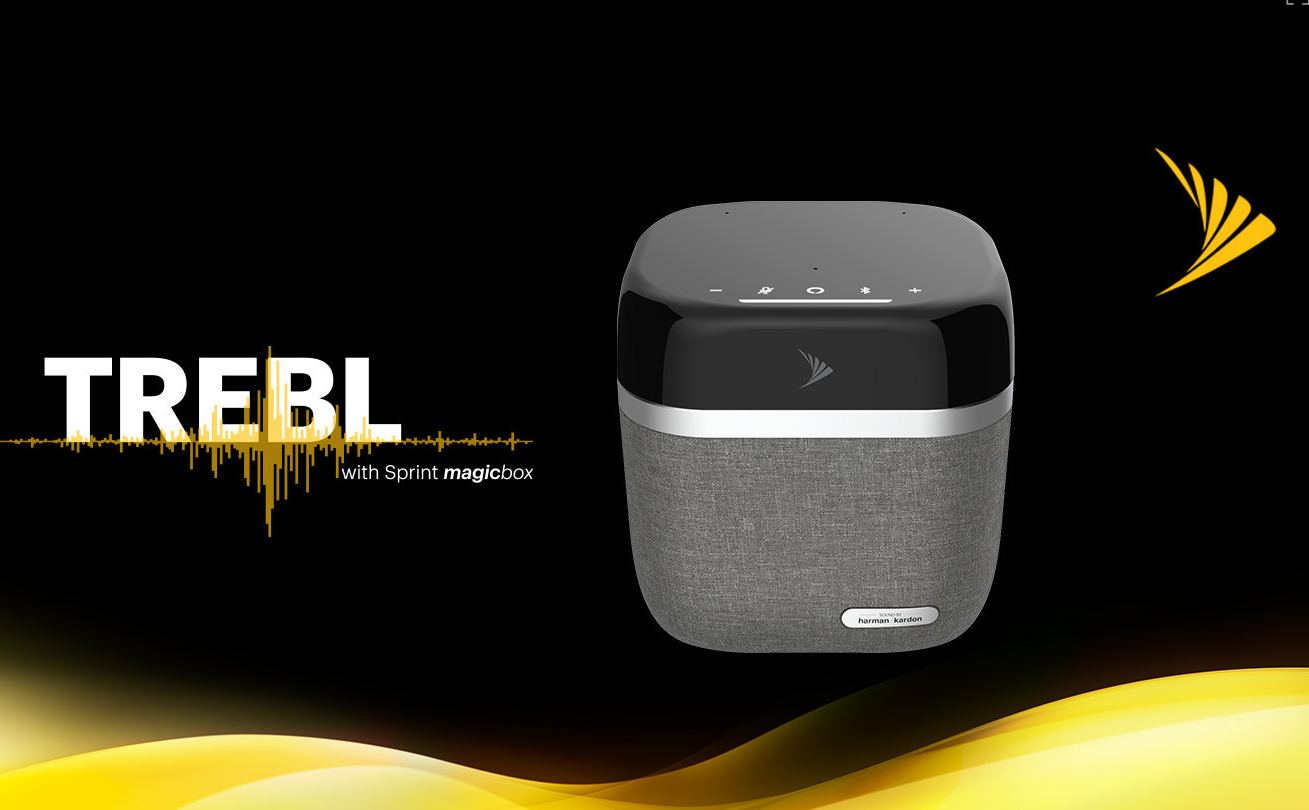
Sprint's Magic Box home small cell adds Alexa

Sprint introduced TREBL with Magic Box, a smart home small cell solution providing enhanced LTE coverage, integrated Alexa voice assistant and Harman Kardon sound

The unit has three built-in far field microphones, Bluetooth, and noise and echo cancellation. It provides fully integrated personal voice assistant and control of Smart Home Devices using the Amazon Alexa eco-system.

"We're excited to provide our customers with an improved at-home wireless data experience along with the added benefits we've built in for voice assistance and great audio," Robert Kingsley, head of small cell development at Sprint. "It was great to work with the team at HARMAN Connected Services to deliver on our vision for a combined small cell and smart home solution that is stylish enough to fit in any home."

T-Mobile offers payment option for government shutdown workers

T-Mobile will offer flexible payment account support to customers directly affected by the U.S. government shutdown. T-Mobile says customers who are Federal government employees and need short-term account assistance can work with T-Mobile Customer Care representatives on solutions tailored to meet their needs, including flexible payment options that allow customers to spread their service payments over time. Payment deferral is also an option.

Toshiba announces 16TB HDDs for cloud data centers

Toshiba Electronic Devices & Storage introduced a 16TB Conventional Magnetic Recording (CMR) HDD -- a new industry record, according to the company, and 14% more capacity than prior 14TB models. The drive is optimized for mixed random and sequential read and write workloads in both cloud and traditional data center environments.

The MG08 Series is Toshiba’s second-generation helium-sealed HDD family, and eighth-generation Enterprise Capacity HDD family. It uses a 9-disk helium design and features 7,200rpm performance, a 550TB per year workload rating, a 2.5 million-hour MTTF, a 512Mib cache buffer, and a choice of SATA and SAS interfaces—all in an industry-standard, 3.5-inch form factor.

“Toshiba’s new 16TB MG08 Series delivers new levels of storage capacity and density while delivering improved power efficiency for our cloud-scale and storage solutions customers. Only high-density HDD technology can achieve our customers’ critical TCO objectives at a cost of pennies per GB”

Sunday, January 6, 2019

CTA: US tech revenue to hit $398 billion in 2019, up 3.9%

U.S. consumer retail spending on tech products is expected to hit $398 billion in 2019, up 3.9%, according to the Consumer Technology Association (CTA).

"The consumer tech sector is fast approaching another milestone – almost $400 billion in annual revenues – as more consumers embrace the efficiency, safety, entertainment and anytime/anywhere communication that technology brings to our everyday lives," said Gary Shapiro, president and CEO, CTA.

Some highlights from CTA's newly released, flagship, semi-annual U.S. Consumer Technology Sales and Forecasts report:

  • Smartphones: revenue is expected to reach $80 billion, a two percent increase in 2019. Unit shipments are expected to grow one percent to 170.7 million. This year marks the launch of the first 5G smartphones on the market. CTA expects 2019 U.S. sales will reach 2.1 million units and cross $1 billion in revenue. By 2022, 76 percent of all smartphones sold will be 5G-enabled.
  • Laptops: In 2019, the U.S. laptop market will sell 51 million units, up three percent over last year, and earn $28.4 billion in revenue (unchanged from 2018). Convertible models and cloud-based laptops remain high-growth areas within computing, as consumers continue to upgrade to the latest operating systems.
  • Televisions: Overall, unit sales of total digital displays in 2019 will remain above 42 million units (one percent decrease) and register $22.6 billion in revenue (two percent increase). More than three-quarters of TV shipments will be sets with 40-inch screens or larger. Future upgrades will be driven by 4K Ultra High-Definition (4K UHD) sets, which now make up more than half of all TV unit sales. 4K UHD will sell 22 million units (14 percent increase) and $16.4 billion in revenue (eight percent increase). Raising the bar on resolution, inaugural shipments of 8K UHD TVs will reach $545 million in revenue. And budding OLED shipments will reach 1.4 million sets with double-digit growth through 2022.
  • In-Vehicle Tech: With more technology built into new cars than ever before, factory-installed automotive technology is projected to contribute $17 billion in revenue (nine percent increase) in 2019. Led by in-vehicle entertainment and driver-assist features such as active collision avoidance, lane keep assist and adaptive cruise control, consumer demand for advanced safety features pave the road for the self-driving car of the future.

Huawei unveils 7nm, 64-core ARM-based CPU

Huawei introduced Kunpeng 920, a 7nm ARM-based server CPU independently designed by Huawei based on ARMv8 architecture license.

The Kunpeng 920 integrates 64 cores at a frequency of 2.6 GHz. This chipset integrates 8-channel DDR4, and memory bandwidth exceeds incumbent offerings by 46%. System integration is also increased significantly through the two 100G RoCE ports. Kunpeng 920 supports PCIe 4.0 and CCIX interfaces, and provides 640 Gbps total bandwidth. In addition, the single-slot speed is twice that of the incumbent offering, effectively improving the performance of storage and various accelerators.

Huawei says its design significantly improves processor performance by optimizing branch prediction algorithms, increasing the number of OP units, and improving the memory subsystem architecture.

Huawei also introduced its TaiShan series servers powered by Kunpeng 920, including three models: one with a focus on storage, another on high density, and a third focused on balancing both requirements. The TaiShan servers are built for big data, distributed storage, and ARM-native application scenarios. The ARM architecture is best suited for these scenarios with advantages in many-core and performance per watt.

"With Kirin 980, Huawei has taken smartphones to a new level of intelligence. With products and services (e.g., Huawei Cloud) designed based on Ascend 310, Huawei enables inclusive AI for industries," William Xu noted. "Today, with Kunpeng 920, we are entering an era of diversified computing embodied by multiple cores and heterogeneity. Huawei has invested patiently and intensively in computing innovation to continuously make breakthroughs. We will work with our customers and partners to build a fully connected, intelligent world."

Huawei said it will continue to work with Intel to develop servers.

Continental develops 5G-Hybrid Vehicle-to-Everything (V2X)

Continental unveiled a 5G hybrid Vehicle-to-Everything (V2X) platform that integrates technologies not only for 4G and 5G network access, but also Dedicated Short Range Communication (DSRC) and Cellular-V2X for direct V2X communication.

The company said its V2X, which is being demonstrated at this week's CES 2019 in Las Vegas, provides a global solution for auto manufacturers as the technical path to establish direct V2X communication varies regionally. Some regions prefer the established DSRC and others lean toward the upcoming Cellular-V2X standard.

A practical example: if vehicles approach a construction site, short-range V2X communication begins to communicate this situation within a half mile range. As a result, the driver is prepared for the situation when the car reaches the actual construction site or the end of a forming line of traffic. If seamless long-range communication also transmitted this warning with a longer lead time, the driver would be offered more options, having more time to prepare for a forming traffic jam or to get into the recommended lane, as an example. The construction workers also benefit from the advanced information as it reduces the risk of a car running into them. Based on Continental’s platform, such use cases could soon become reality on roads throughout the world. For China, this global project even marks the first series development of a V2X product.

“Winning a first project based on our 5G-Hybrid-V2X platform is not only great news for us but for the entire industry. Bringing 5G on the development roadmap so early demonstrates that the automotive industry has its finger on the pulse of digitalization,” said Johann Hiebl, head of the business units Body & Security and Infotainment & Connectivity at Continental. “Additionally, deploying V2X on such a large, global scale marks an important stepping stone for safer and more intelligent mobility.”

“Ad-hoc networking through V2X has the potential to drastically increase driving safety. Direct information from other vehicles can improve the decision-making of drivers and automated driving functions,” said Murali Srinivasan, head of Passive Safety and Sensorics for Continental North America. “To fulfill this task, V2X technology must be as fast and reliable as possible – and it must be available globally. To date, short-range communication and long-range communication are two different systems with dedicated Electronic Control Units (ECUs). Networking both types of communication more closely will bring safety benefits.”

MaxLinear and jjPlus offer building penetration for 5G fixed wireless

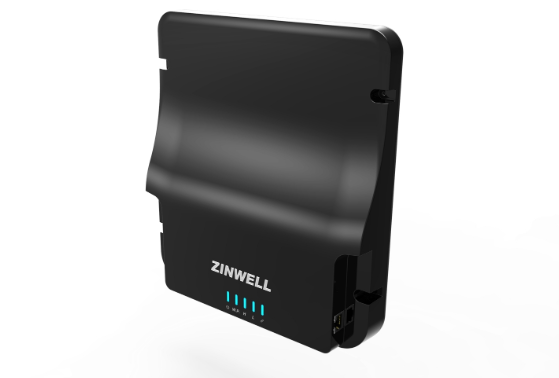
Zinwell, a manufacturer of wired and wireless broadcast and broadband communication equipment, has integrated MaxLinear’s AirPHY multi-gigabit modem technology with jjPlus’s latest 65W magnetic resonant wireless power module into its 3rd generation ZRA-003 device, which can transfer power and gigabit data through glass windows or structural walls up to 20cm thick. jjPlus is a supplier of wireless power transfer products.

The companies said the solution enables wireless internet service providers (WISPs) to offer a 4G/LTE or 5G millimeter wave wireless broadband service with gigabit speeds and deliver it without any wires to an indoor Wi-Fi router, eliminating the need for drilling holes and costly professional installations. Consumers are able to connect an outdoor unit (ODU) with an indoor unit (IDU). Resonant coupling occurs when specially designed magnetic "resonators", consisting of a transmitter module and a receiver module, share the same resonant frequency.

“Until now, consumer wireless power solutions were limited to about 15 Watts and could only transfer power up to 5 centimeters,” said Will Torgerson, Vice President & General Manager of MaxLinear’s Broadband Group. “With MaxLinear’s AirPHY solution and the latest high power AirFuel Resonant solutions from jjPlus, Zinwell was able to meet the demanding cost, size and power requirements of service providers aiming to deploy gigabit wireless CPEs that can be self-installed on walls or windows.”

"jjPlus develops magnetic resonant wireless power transfer solutions to enable various applications which require wireless power at a distance," said Gary Chi, Chief Marketing Officer of jjPlus Corporation. “Powering a gigabit wireless CPE through a concrete wall up to 20cm thick is a perfect example of our technology put to good use. We are excited to be part of the MaxLinear and Zinwell team to demonstrate how wireless power can expedite the deployment of 5G Fixed Wireless to indoor environments cost-effectively.”

“In partnership with MaxLinear and jjPlus, Zinwell has successfully integrated the most innovative state-of-the-art technologies into the ZRA-003 to save wall drilling costs and time required to deploy 5G Fixed Wireless Access (FWA) internet services. With this powerful device, mobile network operators (MNOs) can enhance user experience of millimeter wave technology in residential and office environments,” said Paul Wu, Senior Director of Sales and Marketing of Zinwell.

The solution is being demonstrated at CES 2019.

Verizon to offer McAfee-based Home Network Security

Verizon is introducing a Home Network Protection (HNP) service powered by McAfee to provide protection throughout a home network.The servuce protects against malicious websites, provides parental controls and helps keep devices connected to the home network, including Internet of Things (IoT) devices, protected.

“Our homes are more connected than ever before. It’s imperative that consumers look beyond their PCs to keep their devices and information safe,” said Shailaja Shankar, general manager, mobile and ISP business units, McAfee. “We are delighted that Verizon shares our vision of making the home a secure space and chose us to help ensure its customers are protected from online threats.”

“We are committed to providing the security solutions that help our customers enjoy their digital lives to the fullest,” said Darren Kaufmann, executive director, Verizon. “Together with McAfee, we can help ensure the home network is secure, and that parents have the peace of mind knowing they have the simple tools they need to provide a safe online environment for their children.”

D-Link shows 5G home gateway - coming 2H19

At this week's CES 2019 in Las Vegas, D-Link is showcasing its new high-speed 5G NR Enhanced Gateway (DWR-2010) for fixed services, promising download speeds more than 40x faster than current average fixed broadband download speed in the U.S. of 70 Mbps.

As 5G adoption accelerates within the coming year, more people may be turning to wireless carriers as their home internet provider. D-Link's 5G gateway will help them take full advantage of the new wireless capability.

The DWR-2010 will offer customization options for service providers including remote management (TR-069) and FOTA. The gateway features an embedded 5G NR (New Radio) NSA module and can operate on the sub-6 GHz or mmWave frequencies in 200 MHz (2 x 100 MHz) or 800 MHz (8 x 100 MHz) configurations.

The 5G NR Enhanced Gateway will be available in the second half of 2019. Pricing will vary depending on preferred service providers.

Sequans and GeoTraq partner on LTE IoT module w 10 year life

GeoTraq has adopted Sequans’ Monarch LTE-M/NB-IoT Platform for a new series of GeoTraq modules targeting LTE for IoT markets.

The new GeoTraq NB-400 series of IoT modules use non-IP data delivery (NIDD), which GeoTraq believes offers the fastest, most secure, and efficient LTE connectivity.

The module measures 12 by 16 mm and includes connectors for sensor, battery, and antenna.

GeoTraq cites a price affordable enough to be disposable, battery optimization for 10+ years of battery life, and tier 1 global cellular coverage in 193+ countries. GeoTraq’s patent-pending technology allows for global non-IP data delivery over the control channel, providing the most efficient design, extremely secure data delivery, and speeds 7x faster than SMS.

For the first NB-400 module, GeoTraq is using Sequans Monarch SiP LTE-M/NB-IoT chip combined with the universal radio front end of Skyworks. Monarch provides full support for power saving mode (PSM) and extended discontinuous reception (eDRX) to enable the long battery life needed by many IoT use cases, and it provides the enhanced coverage modes that extend coverage for deep-indoor and remote deployments. For LTE positioning, Monarch incorporates the positioning technology of Polte for accurate, low power indoor and outdoor positioning capability using only the LTE radio. Monarch delivers programmable RF filtering for global band support in a Single-SKU™, and proprietary dynamic power management technology enabling rock bottom low power consumption of 1 micro amp. Monarch is certified by operators worldwide.

GeoTraq expects the modules will be available for testing in Q2 and samples of the first GeoTraq NB-400 module will be on display at CES 2019.


Sequans to embed Polte's Cloud Location over Cellular (C-LoC)

Sequans Communications plans to embed  Polte’s C-LoC software on on its Monarch LTE platform, thereby creating a low-cost, low-power LTE for IoT location solution that does not require GPS/ GNSS or other radios for accurate indoor and outdoor positioning. Polte says its C-LoC solution provides excellent indoor location capability where GPS/ GNSS cannot.

“Polte’s cloud-based positioning technology on Monarch provides great value to our IoT customers, especially asset tracker device makers who need low-cost, low-power solutions for outdoor and indoor locations, such as inside warehouses,” said Georges Karam, Sequans CEO. “Polte’s technology allows a significant cost-per-device savings, a power consumption savings of 70 percent — up to 90 percent for indoor locations — along with indoor accuracy superior to GNSS devices. With Polte technology integrated, we add real and measurable value to our Monarch platform.”

“We are excited to work with Sequans to bring Polte’s location technology to market on Monarch,” said Ed Chao, Polte CEO. “The small form factor of Monarch is well-suited for IoT use cases in which space is constrained, and   C-LoC positioning allows Sequans to maintain their advantage.”  Chao continued, “The launch of Polte’s positioning solution on Monarch will enable an entirely new category of use cases, which will help drive adoption of IoT across every vertical from asset tracking to manufacturing.”