Wednesday, February 1, 2017

Network Visibility 2017 - AT&T


Carriers around the globe are embracing SDN and NFV to enhance the experience of their customers while also increasing their organizational agility and driving down operational costs, says Paul Hooper, CEO of Gigamon.

AT&T really started with the customer experience , says Josh Goodell, VP, Network on Demand, AT&T. Customers want control and flexibility in the network. He discusses how AT&T has reengineered the core fabric of its network to enhance the customer experience.

Series produced by Converge! Network Digest and sponsored by Gigamon.

https://youtu.be/rWw5ZV6gztA


What is AT&T's Indigo?


What is AT&T's Indigo?

Indigo is the convergence of software-defined networking, artificial intelligence, 5G and other new access technologies, says Steve McGaw, Chief Marketing Officer for AT&T Business Solutions.

First unveiled in January 2017 at the AT&T Developer Summit, Indigo is a "Network 3.0" initiative to create a trusted environment where organizations can share data and collaborate on analytics.

See video:  https://youtu.be/vTDKfaqQrL8


AT&T Develops its Indigo Platform, Moves ECOMP to Linux Foundation

AT&T is pushing ahead with its Network 3.0 Indigo (“Indigo”) framework, which aims to integrate technologies like Big Data, artificial intelligence (AI) and machine learning, cybersecurity and software-defined networking (SDN).

“We see Indigo as the third generation of modern networking,” said John Donovan, chief strategy officer and group president, Technology and Operations. “Indigo is our term for a world where it isn’t just your connection speeds that are accelerating, but every element of the network becomes more seamless, efficient and capable. It is a living, evolving, upgradeable platform. Think of Indigo like the operating system on your phone. We’re taking that model to the network.”

At an event in San Francisco, AT&T laid out several elements of its network innovation that are helping the company drive to Indigo:

5G Evolution – AT&T plans to launch its first “5G Evolution Markets” in the coming months in Austin and Indianapolis, with a goal of theoretical peak speeds of 400 Mbps or higher.  As its continue densifying the network and deploying technologies, like carrier aggregation and LTE-License Assisted Access (LAA), AT&T expects to enable theoretical peak speeds up to 1Gbps in some areas in 2017.

Software-defined networking – Data on the AT&T mobile network has increased about 250,000% since 2007, and most of that traffic is video. AT&T has already converted 34% of its network functionality to SDN and is on the way to 75% by 2020. AT&T is announcing a network virtualization goal for year end 2017 of 55%.

Open sourcing ECOMP – ECOMP (Enhanced Control, Orchestration, Management and Policy) is the orchestration platform created to power AT&T's software-defined network. AT&T is officially announcing that ECOMP will be part of an open source project, hosted by the Linux Foundation. The code is built in a CI/CD environment and consists of 11 different modules, all set up as separate virtual machines filled with code in 1 or more containers.

Data Platform – AT&T aims to create a trusted environment where organizations can share data and collaborate on analytics in a secure environment. One where privacy choices and requirements are respected.

“Indigo is unique because it will be data powered and software controlled,” said Andre Fuetsch, president AT&T Labs and chief technology officer. “Those are powerful tools, but they also require a unique level of collaboration with software developers and other third parties. In particular, we think the open source community has a huge role. Open source ECOMP is part of that. We’re also heavy users and developers of OpenStack, Open Contrail and other open source software tools. We encourage developers and other innovators to get involved. We need their input as much as we need the expertise of the big, traditional vendors.”

http://about.att.com/story/indigo_redefining_connectivity.html

AT&T to Acquire FiberTower for 24 and 39 GHz Spectrum

AT&T confirmed its intention to acquire FiberTower, a privately-held company that holds an extensive spectrum footprint in 24 GHz and 39 GHz bands. Financial terms were not disclosed.

At the AT&T Innovation Summit in San Francisco, John Donovan, Chief Strategy Officer and Group President at AT&T, said the acquired spectrum assets will have advance the company's 5G plans.

http://www.att.com
http://www.fibertower.com

AT&T Brings NetBond Connectivity to IoT Control Center

AT&T's IOT solutions are now part its NetBond Ecosystem, which brings IP/MPLS VPN connectivity to cloud services.

Enterprise customers will now be able use AT&T NetBond connectivity to reach the cloud-based AT&T Control Center, powered by Cisco Jasper, which helps businesses launch, manage and monetize IoT services.

The solution will give businesses highly secure connectivity to leading cloud service providers and to their own data centers. The connection travels through the AT&T Virtual Private Network (VPN), isolated from public internet risks. It also saves costs through work resources on demand, and consistent and predictable performance.

“The industry is growing rapidly with analysts forecasting there will be tens of billions of connected devices by 2020.  This acceleration will introduce new risks for businesses,” said Chris Penrose, President, Internet of Things Solutions, AT&T. “By integrating AT&T Control Center and AT&T NetBond, we can give businesses a robust and highly secure solution to address those risks.”

“AT&T NetBond isn’t just about connecting customers to their clouds. It offers simple, scalable, and highly secure software-defined connections for all businesses,” said Mo Katibeh, Senior Vice President, AT&T Advanced Solutions.  “Bringing our IoT solutions into AT&T NetBond keeps businesses’ critical IoT devices, workloads and information off of the public internet and on a private network. That brings inherent security and latency benefits at an incredibly affordable price.”

http://www.att.com/netbond

Verizon Completes XO Acquisition

Verizon completed its $1.8 billion purchase of XO Communications’ fiber-optic network business. The deal was first announced in February 2016. Network integration work begins immediately.

"This transaction with XO will bring significant benefits in how we deliver superior services to our customers," said John Stratton, Verizon executive vice president and president of Operations.  "XO’s fiber network will add ever greater capacity and reach to Verizon’s networks, a combination that will lead to enhanced capabilities, better services and faster rollout of next generation communication networks."

Separately, Verizon will simultaneously lease available XO wireless spectrum, with an option to buy XO’s entity that holds its spectrum by year-end 2018.

http://www.verizon.com
http://fios.verizon.com

Nokia's Network Sales Down 14% in Q4

Nokia posted non-IFRS net sales in Q4 2016 of EUR 6.7bn (reported: EUR 6.6bn), down from the year-ago quarter when non-IFRS net sales would have been EUR 7.7bn on a comparable combined company basis (reported: EUR 3.6bn on a Nokia stand-alone basis).

Nokia's networks business declined 14% year-on-year net sales decrease in Q4 2016, reflecting challenging market conditions in Q4 2016 and the difficult comparison against the strong performance by Alcatel-Lucent in Q4 2015.

Nokia Technologies experienced a 25% year-on-year net sales decrease and 49% operating profit decrease in Q4 2016, primarily due to the absence of the Samsung arbitration award, which benefited Q4 2015.

Alcatel Submarine Networks posted strong sales in Q4.

Rajeev Suri, President and CEO of Nokia, stated: "At the start of the year, Nokia was focused primarily on mobile networks.  We ended the year as a company with a complete portfolio spanning mobile, fixed, routing, optical, stand-alone software and more; with solid opportunities to drive higher returns through expansion into new customer segments; with emerging businesses in digital health and digital media; and with greatly expanded patent and brand licensing activities."

"Pleasingly, we saw growing customer support for Nokia's strategy. Our sales pipeline with customers beyond our traditional communication service provider base accelerated over the course of the year, we saw an increasing share of our Networks pipeline coming from opportunities covering products and services from two or more of our business groups, and the potential of cross-selling started to become a reality."

"We also ended the year having successfully concluded the integration of Alcatel-Lucent faster than anticipated, allowing us to shift our full focus to cost savings, continuous improvement programs and the execution of our strategy."

http://www.nokia.co

Tuesday, January 31, 2017

Network Visibility 2017 - CenturyLink


To really understand how your application is performing it is critical to gain end-to-end visibility across the network, says Andy Huckridge, Director of Service Provider Solutions at Gigamon. You have to be able to measure performance across multiple layers and network boundaries.

Customers are more demanding these days, says Drew Flechsig, Director of Network Policy, Traffic and Security for CenturyLink.  Customers want visibility at Layer 2, 3 and up through the OSI stack.

Series produced by Converge! Network Digest and sponsored by Gigamon.

See video: https://youtu.be/juZgYIrw2xM


Pascal Menezes, CTO, MEF – Automating Carrier Networks


Pascal Menezes, CTO, MEF provides an update on key MEF initiatives to enable orchestrated Third Network services over automated networks.  He notes that MEF is seeing “huge demand” to develop “East-West” APIs  for orchestration across multiple providers. MEF also is working on “North-South” APIs to orchestrate services over multiple technology domains within a single operator.  Stay tuned for news in the coming months about MEF’s expanded certification programs centered on orchestrated services and open APIs.

Filmed at PTC'17 in Honolulu, Hawaii.

See video:  https://youtu.be/oVYvbaq4djA


Juniper Unveils Unite Cloud Framework for Hybrid Environments

Juniper Networks introduced "Unite Cloud" - a data center framework for helping enterprises to simplify the creation and management of hybrid, multi-cloud environments.  The solution complements the previously announced Unite Campus and Unite Cloud-Enabled Branch solutions to further broaden Juniper's Unite architecture.

Juniper's Unite Cloud is aimed at building and managing many virtualized elements spread across multiple geographies and cloud environments.

The framework includes the latest version of Juniper's Junos Space Network Director data center management tool, provides advanced automation for simple management, allowing networks to scale securely with analytics that enable an enhanced experience to visualize, analyze and control the network. This provides the ability to to configure and visualize multiple data centers through a single pane of glass, relieving network administrators from performing manual provisioning and configuration. It features controller-less network virtualization to automate the building and management for overlay fabrics on top of layer 3 fabrics, utilizing Ethernet VPN (EVPN) control plane and Virtual Extensible LAN (VXLAN) overlay.

The Unite Cloud framework uses Juniper's new QFX5110 data center switch, which is designed to be scalable and agile enough to handle high-bandwidth applications, including server virtualization and simple leaf and spine topologies to web scale fabric architectures.  Juniper is offering Contrail JumpStart services to assist customers with the deployment of the Contrail Cloud Platform or Contrail Networking software in their data centers.

"The move to hybrid, multi-cloud IT is accelerating with workloads migrating to cloud data centers at lightspeed. Enterprises require agility and elasticity for applications or services to be spun up quickly and managed efficiently and securely with limited resources. With the solutions announced today, Juniper is changing the landscape for IT leaders who are in search of open, automated and secure solutions to deploy hybrid cloud environments," stated Denise Shiffman, senior vice president, Juniper Development and Innovation, Juniper Networks.

http://newsroom.juniper.net/

AT&T Advances Project AirGig to Trials

AT&T reported progress with its Project AirGig, which aims to deploy low-cost plastic antennas along medium-voltage power lines as a means of propagating millimeter wave (mmWave) signals that can be used for 4G LTE and 5G multi-gigabit mobile and fixed deployments. AT&T confirmed that it is now in advanced discussions with power companies and others to trial Project AirGig in at least two locations by this fall. One location will be in the United States with others to be determined in the coming months.

Project AirGig ueses patented broadband-over-power lines (BPL) technology developed at AT&T Labs.  The technology has been tested at an AT&T outdoor facility for some time with positive results, leading to the development of new innovations like the Radio Distributed Antenna System (RDAS).

Significantly, there’s no direct electrical connection to the power line required and it has the potential of multi-gigabit speeds in urban, rural and underserved parts of the world.

“We are looking forward to begin testing the possibilities of AT&T Labs’ invention for customers and utility companies,” said Andre Fuetsch, president of AT&T Labs and chief technology officer. “AT&T is focused on delivering a gigabit-per-second speed everywhere we can with our wired and wireless technologies. Project AirGig represents a key invention in our 5G Evolution approach. AT&T Labs is ‘writing the textbook’ for a new technology approach that has the potential to deliver benefits to utility companies and bring this multi-gigabit, low-cost internet connectivity anywhere there are power lines – big urban market, small rural town, globally.”

AT&T noted that it now has more than 200 patents and patent applications for Project AirGig. AT&T Labs engineers and scientists invented low-cost plastic antennas, a Radio Distributed Antenna System (RDAS), mmWave surface wave launchers and inductive power devices. The RDAS will reconstruct signals for multi-gigabit mobile and fixed deployments. A typical DAS carries cellular signals throughout buildings and stadiums, using fiber and/or coaxial cables to transmit analog signals.


AT&T also confirmed that it has started deploying small cells using Centralized RAN (C-RAN) architecture on light posts in San Francisco.

In addition, based on the learnings of a G.fast trial at a multifamily property in Minneapolis, AT&T now plans to make G.fast access available at additional locations beginning mid-2017.

http://www.att.com


FCC Eliminates Two Rules in First Meeting

The FCC, now under the Chairmanship of Ajit Pai, announced the elimination of two public inspection file requirements: (i) the requirement that commercial broadcast stations retain in their public inspection file copies of letters and emails from the public; and (ii) the requirement that cable operators maintain for public inspection the designation and location of the cable system’s principal headend.

The FCC said the eliminating the correspondence file and principal headend public file requirements will reduce regulatory burdens on commercial broadcasters and cable operators.

http://www.fcc.gov

Telefónica Picks Huawei for Large Scale Virtual EPC in 13 countries

Telefónica has selected Huawei for building a large scale virtual Evolved Packet Core (vEPC) covering eleven countries in Latin America:  Brazil, Argentina, Uruguay, México, Colombia, Peru, Panama, Costa Rica, Nicaragua, El Salvador and Guatemala; and two in Europe: Germany and Spain.

Huawei’s vEPC solution, named CloudEPC, enables carriers to build agile networks that quickly scale to match the performance demands of new services, reduce production costs, support faster service rollout, and dynamically allocate virtual resources while providing carrier-grade availability, security and reliability and enabling seamless integration with Telefónica's legacy networks.

The vEPC allows serving diverse use cases that include traditional customer-centric services, IoT/M2M, MVNO, private LTE, and Mobile-Edge Computing. Huawei vEPC maintains the same features as its existing physical version, SingleEPC, inheriting the long-term experience and the advantages of its leadership in communications technology.

Telefónica said it has been working with Huawei on testing CloudEPC performance in its NFV Reference Lab in Madrid. During the test, Huawei CloudEPC showed one of the best performances in both data and signaling planes by good cloud-formation architecture and by using EPA (Enhanced Platform Awareness) technologies. That achievement was a joint effort by both companies within the Telefónica NFV Reference Lab framework. Telefónica and Huawei are currently testing the onboarding of the CloudEPC solution over Telefónica´s UNICA infra cloud platform that will allow full automatization of the vEPC deployments and life cycle management within Telefónica networks.

“Telefónica has been actively working for some time in the evolution of network virtualization technologies. Huawei is a reliable EPC vendor, and a strategic partner of Telefónica collaborating in many NFV areas. This large scale vEPC network deployment is a further step within the Telefónica UNICA virtualization program where a smooth migration to UNICA infra cloud capabilities will be reached following extensive test in Telefónica LAB. These results provide the confidence needed to continue with the adoption and deployment of virtualized solutions and to enable the transformation to software-driven networking," said Javier Gavilán, Planning and Technology Director at Telefonica, Global CTO.

“Huawei is leading the All Cloud strategy for operators´ business success. This CloudEPC network build out represents a significant step forward in Telefónica’s cloud transformation roadmap and reinforces our long standing partnership as main EPC provider to Telefónica. We are delighted Telefónica has entrusted Huawei the cloudification of such critical network function, which further strengthens the cooperation within Telefónica UNICA program.” said Michael Ma, President of Cloud Core Network at Huawei.

http://www.telefonica.com

Nokia Extends IP/MPLS for Power Distribution Smart Grids

Nokia introduced its 7705 SAR-Hm, an LTE/3G wireless router aimed bring IP/MPLS to the distribution networks of utilities and other vertical applications.

Nokia noted that many power utilities currently use narrowband or proprietary wireless solutions to connect their field devices to each other and the control center, with most remote devices have no connectivity at all.

The SAR-Hm uses standards-based LTE/3G and IP/MPLS technologies, and security features in both hardware and software implementations, including Network Group Encryption (NGE).  The SAR Hm expands Nokia's mission critical WAN solution set, already deployed in over 100 utility customers globally.

Sri Reddy, head of the IP Routing and Packet Core Business Unit for Nokia, said: "Power utilities worldwide are in the midst of a significant transformation as they gear up to meet new market forces, green environmental regulations and disruptive renewable energy technologies. Grid reliability, power quality and automation are all key areas that will require improved field area networks. We are excited to offer our utility customers wireless options for extending the proven, secure and reliable IP/MPLS services of our Service Router portfolio. This will not only allow them to modernize their field area operations with more automation and monitoring for improved grid reliability and power quality, it will position them well to maximize tomorrow's opportunities."

http://www.nokia.com

DISH Acquires DBS and OTT Assets from EchoStar

DISH Network Corporation will acquire certain EchoStar assets and operations, including its EchoStar Technologies hardware and software development group, its national and regional uplink business, its managed fiber backhaul network serving all U.S. DMAs and its OTT development group, in exchange for DISH’s 80 percent economic interest in Hughes Retail Group held in the form of a tracking stock. The deal also transfers to DISH the 10 percent stake in Sling TV held by EchoStar, wireless spectrum licenses covering four markets in the 28 GHz band and certain real estate properties.

DISH will continue to market satellite broadband under the brand dishNET to rural customers.

“With this transaction we will vertically integrate all the elements that define our customer experience – one team will deliver the full DISH and Sling TV experience end to end,” said DISH President Erik Carlson. “Not only do we gain full control of product development roadmap for DBS and Sling TV but we also anticipate achieving operational efficiencies.”

http://www.dish.com

Monday, January 30, 2017

Network Visibility 2017 - Verizon


Network operators are in the early days of a significant  transformation as they provide visibility and insight into the performance of applications running across their infrastructure.  Paul Hooper, CEO of Gigamon, provides perspective on the power of visibility solutions to transform networks.

Customers want better visibility and Verizon is now providing end-to-end metrics of network services, says Greg Harris, Associate Director of Ethernet Services, Verizon.

Series produced by Converge! Network Digest and sponsored by Gigamon.

https://youtu.be/AEVdhDlmb6c

Dense Fiber Connectivity for New York City


ZENFI is rolling out over 400 route miles of high-density fiber cabling across New York City to serve the growing demand for bandwidth especially from mobile networks.

Walter Cannon, Vice President of Sales & Marketing at ZenFi,  discusses the wholesale fiber market in NYC, including the recent partnership with Cross River Fiber of New Jersey to collaborate on metro cross-connects across the wider metropolitan region.

Filmed at PTC'17 in Honolulu, Hawaii.

See: https://youtu.be/fv4XLCl6hC0


Telstra Launches Gigabit LTE with Ericsson, Qualcomm

Telstra is launching commercial Gigabit LTE service is select capital cities across Australia. The gigabit downlink performance is enabled by LTE Advanced features including 4x4 MIMO, 3CA (Three Carrier Aggregation) and higher order modulation (256QAM). Ericsson is a key technology provider for the rollout.

At its "Gigabit LTE Experience" event in Sydney, Telstra said that n addition to Gigabit LTE speeds on the downlink, its new network capability also delivers up to double the previous uplink speeds, meaning a peak upload speed of 150 Mbps. On the uplink, Telstra's new network capability uses 64QAM and 2CA (Two Carrier Aggregation) for a peak upload speed of up to 150Mbps.

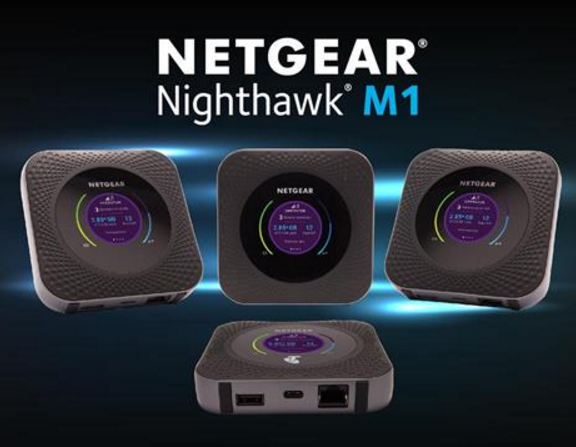
NETGEAR's Nighthawk M1 Mobile Router (MR1100) will first be made available to consumers in Australia in late February, 2017. The device leverages 4x4 MIMO and is equipped with the Qualcomm Snapdragon(TM)  X16 LTE modem.

Mike Wright, Group Managing Director, Networks, Telstra says: "As the roll out of Gigabit LTE continues, our customers with a Gigabit capable device can enjoy a faster mobile experience for both downloads and uploads. As our customers continue to use increasing amounts of data for entertainment and business use, Telstra's continuous innovation ensures our network is ready to deliver the country's best mobile experience.
"Gigabit LTE is also an important step on our journey to 5G and demonstrates Telstra's commitment to delivering Australians a world class network now and into the future. We are well placed to evolve our 4G network and are putting the building blocks in place for Australia to be ready for 5G - this will deliver more bandwidth and lower latencies which are critical for emerging applications such as downloading 4K video, IoT, autonomous vehicles, augmented reality and shared virtual reality," said Wright.

Per Narvinger, Vice President Network Systems, Ericsson says: "Once again we are pleased to partner with Telstra to deliver the world's first commercial Gigabit LTE network which we see as an important step as Telstra continues toward 5G. Gigabit LTE provides end users with even faster mobile broadband speeds, further improving their mobile experience while supporting new emerging bandwidth intensive applications. It is exciting to deliver LTE advances that employ LTE carrier aggregation of 60MHz of spectrum with higher order MIMO, and advanced LTE modulation which are all necessary ingredients for Gigabit LTE."

http://www.ericsson.com


F5 Networks Names François Locoh-Donou as CEO

F5 Networks announced the appointment of François Locoh-Donou as its new President and CEO.  He will also served on the company's Board of Directors.

Locoh-Donou succeeds current President and CEO, John McAdam, who will remain a Director on F5's Board upon his retirement on April 3, 2017. Since McAdam joined in 2000, he has led F5 to $2.0 billion in annual revenue, with 49 of the Fortune 50 as customers, and numerous industry and community awards.

Locoh-Donou currently serves as Senior Vice President and Chief Operating Officer of Ciena, a network strategy and technology company. He previously held successive leadership positions at Ciena, including Senior Vice President, Global Products Group; Vice President and General Manager, EMEA; Vice President, International Sales; and Vice President, Marketing. Prior to Ciena, Locoh-Donou held research and development roles with Photonetics, a French opto-electronics company.

Locoh-Donou also serves on the advisory board of Jhpiego, a non-profit global health affiliate of Johns Hopkins University dedicated to providing high-quality healthcare for women and their families in developing countries. He holds engineering degrees from École Centrale de Marseille and Télécom ParisTech in France and a M.B.A. from the Stanford Graduate School of Business.

http://www.f5.com

25 Gigabit Ethernet Consortium Completes 25G/50G Plugfest

The 25 Gigabit Ethernet Consortium announced record participation in, and successful completion of, the first 25G and 50G Ethernet plugfest.

The plugfest, which was held at the University of New Hampshire InterOperability Laboratory (UNH-IOL) in Durham, New Hampshire, provided a forum where consortium members could collaborate and ensure interoperability of feature sets and configurability between their products. Sixteen companies attended the week-long event with a wide variety of test scenarios including auto-negotiation and stressed conditions. The testing demonstrated a high degree of multi-vendor interoperability and specification conformance.

The plugfest was highlighted by the following activities:

  • Interoperability between vendors including adapters, switches, test and measurement devices, and interconnects
  • Proving advanced infrastructure connectivity
  • Plug and play multi-vendor compatibility
  • Successful auto-negotiation
  • Support for both forward and backward compatibility

“In order to handle the increasing amount of data, server architectures all too often require multiple 10G ports. 25G Ethernet arrives just in time and has started its climb towards dominance as the leading server-to-ToR switch interconnect. As this transition occurs, plugfests assure users that 25G and greater speeds from different vendors will perform as advertised with solid plug-and-play interoperability,” said Vittal Balasubramanian, chair of the 25G/50G Ethernet Interop Committee and Principal Signal Integrity Engineer at Dell.

“Due to the success of this interoperability test event, the steering committee of the consortium has decided to make its specification available to the public,” stated Brad Booth, chair of the 25G Ethernet Consortium. “The consortium is looking forward to future events to evaluate interoperability between the consortium specification and IEEE Std. 802.3by™-2016.”

http://www.25gethernet.org