Showing posts with label Symantec. Show all posts

Tuesday, February 12, 2019

Symantec acquires Luminate Security for perimeter defense

Symantec announced the acquisition of Luminate Security, a privately held company developing Software Defined Perimeter technology. Financial terms were not disclosed.

Luminate enables security and IT teams to create Zero Trust Application Access architecture without traditional VPN appliances.

Luminate's Secure Access Cloud securely connects any user from any device, anywhere in the world to corporate applications, on-premises and in the cloud, while all other corporate resources are cloaked without granting access to the entire network.

The company says its approach prevents any lateral movements to other network resources while eliminating the risk of network-based attacks.

Symantec said Luminate’s Secure Access Cloud technology further extends the power of its own Integrated Cyber Defense Platform to users as they access workloads and applications regardless of where those workloads are deployed or what infrastructure they are accessed through.

http://www.luminate.io

Monday, November 5, 2018

Symantec acquires Javelin and Appthority

Symantec announced the acquisition of Javelin Networks and Appthority. Financial terms were not disclosed

Javelin Networks offers advanced software technology to defend enterprises against Active Directory-based (AD) attacks, which recently have risen in frequency and severity. Multiple major advanced persistent threat (APT) campaigns have used AD credentials to move laterally in the network beginning with a single compromised endpoint. Javelin has developed software to protect AD and commonly-used domain resources, including domain controllers, domain identities, and domain credentials. Javelin Networks’ advanced technology can detect AD misconfigurations and backdoors and help prevent AD reconnaissance and credentials misuse by authorized devices and applications. The privately held company was founded in 2014 and has employees based in Israel and the U.S.

“In the cloud generation, identity management services, such as Active Directory, are a critical part of a user’s interaction with their organization’s applications and services. They are also a critical information repository that attackers regularly exploit,” said Javed Hasan, senior vice president of endpoint and data center products, Symantec. “The addition of Javelin Networks technology to our industry-leading endpoint security portfolio gives Symantec customers a unique advantage in one of the most vulnerable and critical areas of IT infrastructure. Most importantly, it can help expose exploitable backdoors in AD and stop attacks at the point of breach while preventing lateral movement.”

Appthority, which was founded in 2011 and is based in San Francisco, offers Mobile Application Security Analysis. The Appthority Mobile Threat Protection (MTP) solution provides threat detection and remediation across a broad range of device, app and data network risks. Last year, Symantec acquired Skycure, a leading Mobile Threat Defense (MTD) technology, that enabled the launch of Symantec Endpoint Protection Mobile (SEP Mobile). Appthority’s technology will be built into SEP Mobile, further enhancing Symantec’s ability to protect the broadest spectrum of modern endpoints and operating systems. Prior to the acquisition, Appthority was a Symantec Ventures portfolio company.

“Mobile apps are a critical threat vector that every company must address to protect their enterprise security,” said Adi Sharabani, SVP, Modern OS Security. “The Appthority technology extends SEP Mobile’s capabilities in limiting unwanted app behaviors, supporting regulatory compliance, and assessing vulnerabilities.”

Sunday, November 26, 2017

Symantec names AWS as strategic infrastructure provider

Symantec has chosen Amazon Web Services (AWS) as its strategic infrastructure provider for the vast majority of its cloud workloads.

Highlights of the announcement: (1) Symantec is undertaking a major operational move to AWS (2) Symantec will leverage the global footprint of the AWS Marketplace to deliver its security services (3) Symantec has already built a data lake on AWS that collects tens of terabytes of data every day from 175 million endpoints and more than 57 million attack sensors.

“Our cloud-first approach to engineering requires a highly scalable and reliable infrastructure that helps our team deliver faster time-to-market and ensure that security remains our top priority,” said Raj Patel, Vice President, Cloud Platform Engineering at Symantec.

Monday, November 6, 2017

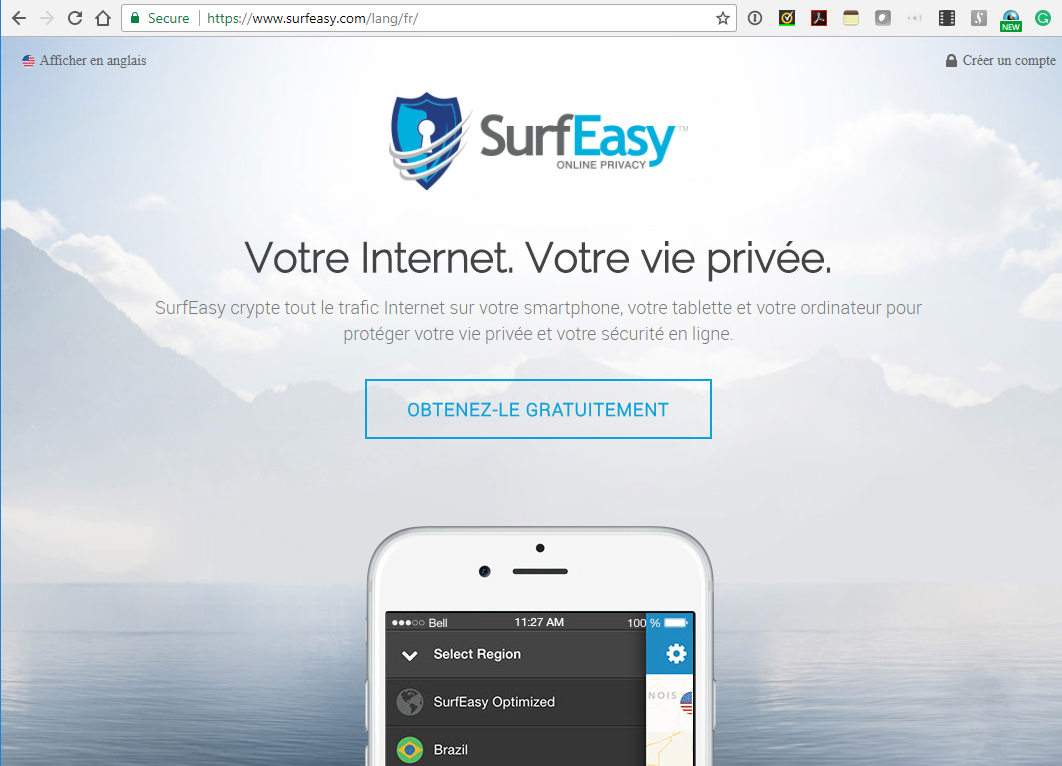
Symantec acquires SurfEasy for personal VPN

Symantec has acquired SurfEasy, a leading Virtual Private Network (VPN) provider, from Opera Software, its parent company. Financial terms were not disclosed.

SurfEasy's personal VPN ensures online privacy and security on smartphones, tablets and computers. SurfEasy has been an existing OEM technology provider to Symantec, powering Symantec’s Norton WiFi Privacy product with VPN technology.

SurfEasy will become part of Symantec’s Consumer Business Unit, which includes the Norton and LifeLock brands, bringing VPN to the portfolio of Consumer Digital Safety solutions.

“SurfEasy has been a great partner to Symantec and we look forward to bringing their expertise and leading technology inside the company,” said Greg Clark, Symantec CEO. “The addition of SurfEasy to our Consumer business will benefit our customers as we continue to strengthen our Norton WiFi Privacy solution so consumers can use public Wi-Fi without fear of exposing their information to cyber criminals.”

Thursday, February 9, 2017

Symantec Completes LifeLock Acquisition for $2.3 Billion

Symantec completed its acquisition of LifeLock, a leading provider of identity theft protection, for approximately $2.3 billion.

Symantec said the deal transforms its consumer business, helping people protect their information, identities, devices and families.

“The combination of Symantec, the leader in consumer security, and LifeLock, with more than 4.5 million members, paves the way for us to deliver comprehensive digital safety solutions for consumers who face an onslaught of new risks every day,” said Symantec CEO Greg Clark. “With the addition of LifeLock, consumers will now have a single place to get the protection services they need for their entire digital lives – from two trusted, industry-leading brands.”

http://www.Symantec.com/invest

Tuesday, December 13, 2016

Symantec Files Patent Complaint Against Zscaler

Symantec has filed a patent infringement lawsuit against Zscaler, asserting violation of seven Symantec patents across a variety of network security technologies including web security, data loss prevention, threat prevention, access control and antivirus techniques. This lawsuit is based on U.S. Patent Nos. 6,279,113; 7,203,959; 7,246,227; 7,392,543; 7,735,116; 8,181,036; and 8,661,498.

https://www.symantec.com/about/newsroom/press-releases/2016/symantec_1212_01

Wednesday, June 29, 2016

Google's Project Zero Discloses Symantec Vulnerabilities

The Project Zero team at Google published details of multiple critical vulnerabilities in all platform editions of Symantec Endpoint Protection.

The report said the "vulnerabilities are as bad as it gets", with the potentila for remote exploits corrupting kernel memory without requiring any user action.

Symantec has responded by publishing a long list of security advisories.

http://googleprojectzero.blogspot.com/2016/06/how-to-compromise-enterprise-endpoint.html

Monday, June 13, 2016

Symantec to Acquire Blue Coat for $4.65 Billion in Cash

Symantec agreed to acquire Blue Coat for approximately $4.65 billion in cash. Symantec intends to finance the transaction with cash on the balance sheet and $2.8 billion of new debt. In connection with the transaction, Silver Lake has agreed to make an additional investment of $500 million in 2.0% convertible notes due 2021 of Symantec, doubling its investment in Symantec to $1 billion. In addition, Bain Capital has agreed to make an investment of $750 million in the convertible notes.

Symantec said the acquisition of Blue Coat enhances its position to define the future of cybersecurity and set the pace for innovation.

“With this transaction, we will have the scale, portfolio and resources necessary to usher in a new era of innovation designed to help protect large customers and individual consumers against insider threats and sophisticated cybercriminals. Together, we will be best positioned to address the ever-evolving threat landscape, the massive changes introduced by the shift to mobile and cloud, and the challenges created by regulatory and privacy concerns,” said Dan Schulman, Chairman of Symantec.

For its fiscal year ending April 30, 2016, Blue Coat reports GAAP revenue of $598 million and non-GAAP revenue was $755 million, with 17% year-over-year growth, supported by new products and new customers. For the same time period, the company had non-GAAP operating margins of 22% and cash flow from operations of $135 million. Also for this time period, GAAP operating margins were -42%.

The combined Symantec + Blue Coat would have had $4.4 billion in revenues in fiscal year 2016, of which 62% would come from enterprise security. By the end of fiscal 2018, Symantec expects to realize $550 million in run-rate cost savings, of which $400 million will come from Symantec’s previously announced cost efficiency program.

Greg Clark, CEO of Blue Coat, will be appointed Chief Executive Officer of Symantec and join the Symantec Board upon closing of the transaction. The Board of Directors will continue to be led by Symantec’s current Chairman, Mr. Schulman. Mr. Clark will serve as CEO and Mr. Seifert will continue as Chief Financial Officer.

http://www.symantec.com
http://www.bluecoat.com

Tuesday, June 7, 2016

Symantec Debuts Automotive Anomaly Detection

Symantec is launching a new security product aimed at protecting automobiles from zero-day attacks. The idea is to leverage machine learning to provide passive in-vehicle security analytics that monitor all Controller Area Network (CAN) bus traffic without disrupting vehicle operations, learn what normal behavior is and flag anomalous activity that may indicate an attack.

Key benefits of Symantec Anomaly Detection for Automotive include:

  • Learning the vehicle’s behavior in a deeper, more precise way, enabling automakers to see previously unseen attacks.
  • Automatically prioritizing incidents based on perceived criticality and risk.
  • Automatically detecting anomalies without requiring manufacturers to set rules or create policies.
  • Using minimal memory and CPU power with an analytics solution built from the ground up for vehicles.

“Automotive security threats have gone from theory to reality,” said Shankar Somasundaram, senior director of product management and engineering at Symantec. “Symantec is bringing the world’s most comprehensive portfolio of security technologies to the car. The infrastructure and technology that already helps protect billions of devices and trillions of dollars now protects the car. We’re building long-term comprehensive security all while delivering ground breaking protection for cars today.”

http://www.symantec.com

Tuesday, August 25, 2015

Symantec Secures More Than 1 Billion IoT Devices

Symantec said it is now securing more than one billion Internet of Things (IoT) devices, including everything from televisions and cars to smart meters and critical infrastructure.

Symantec's IoT security portfolio includes:

  • Device Security with Symantec’s Embedded Critical Systems Protection: Symantec’s newest offering protects IoT devices by locking down the software embedded in the device to protect against zero-day attacks and prevent compromise. Symantec has signed Wincor, the world’s leading providers of IT solutions and services to retail banks and the retail industry, along with other leading manufacturers in the industrial and automotive ecosystems.
  • IoT Roots of Trust and Device Certificates: Symantec is working with the world’s largest chip providers and cryptographic library partners, including Texas Instruments and wolfSSL, to embed security at the hardware level. These partnerships combine Symantec’s leading Certificate Authority with the partner’s embeddable engines to create new “Roots of Trust,” the cornerstones for devices to safely encrypt and authenticate information.
  • Code Signing Certificates and Secure App Services: To ensure that code running on IoT devices is authorized, Symantec provides code signing certificates and a cloud based signing-as-a-service for a number of code formats relevant to IoT.

http://www.symantec.com

Tuesday, August 11, 2015

Symantec to sell Veritas to The Carlyle Group for $8 Billion

Symantec agreed to sell its information management business, known as Veritas, to an investor group led by The Carlyle Group together with GIC, Singapore’s sovereign wealth fund, and other expected co-investors for $8 billion in cash. The deal is expected to close at the end of the year and Symantec expects to receive approximately $6.3 billion in net cash proceeds, subject to certain customary post-closing adjustments.

Michael A. Brown, Symantec president and CEO, said, “This transaction strengthens our financial foundation, paving the way for Symantec to grow its security business and increase its lead as the world’s largest cybersecurity company. We believe the agreement with the investors, including The Carlyle Group and GIC, delivers an attractive and certain value for the Veritas business, and is in the best interests of all stakeholders.”

https://www.symantec.com/about/news/release/article.jsp?prid=20150811_01

  • In October 2014, Symantec first announced plans to separate into two, independent publicly traded companies: one business focused on security and one business focused on information management (“Veritas”).

Thursday, October 9, 2014

Symantec to Split in Two: Security and Information Mgt

Symantec announced a plan to split into two, independent publicly traded companies: one business focused on security and one business focused on information management (“IM”).

The security business, which will retain the Symantec name, generated revenue of $4.2 billion in fiscal year 2014 -- twice the size of the nearest competitor, according to the company. Product lines include consumer and enterprise endpoint security; endpoint management; encryption; mobile; Secure Socket Layer (“SSL”) Certificates; user authentication; mail, web and data center security; data loss prevention; hosted security; and managed security services. Michael A. Brown will be the President and CEO of Symantec and Thomas Seifert will continue to serve as CFO.

The IM business generated revenue of $2.5 billion in fiscal year 2014. The Information Management business will include: backup and recovery; archiving; eDiscovery; storage management; and information availability solutions.  This division will also look at new opportunities, such as integration with cloud providers that enable customers to help manage data across public and private clouds, such as cloud connectors for NetBackup and Recovery-as-a-Service (RaaS) for Azure Cloud.  John Gannon will be General Manager of the new information management business and Don Rath will be its acting CFO.

“As the security and storage industries continue to change at an accelerating pace, Symantec’s security and IM businesses each face unique market opportunities and challenges. It has become clear that winning in both security and information management requires distinct strategies, focused investments and go-to market innovation,” said Michael A. Brown, Symantec president and chief executive officer. “Separating Symantec into two, independent publicly traded companies will provide each business the flexibility and focus to drive growth and enhance shareholder value.”

Monday, May 5, 2014

Symantec Unveils New Advanced Threat Protection

Symantec announced a new approach to advanced threat protection (ATP) that correlate alerts and intelligence across a range of security technologies to deliver more comprehensive attack prevention.  The company said this holistic approach transforms the complex fight against advanced threats into a manageable function that delivers stronger protection and more value to businesses. The company’s new ATP efforts will be informed by what Symantec has learned about advanced threats though its existing endpoint solutions that protect a base of 200 million endpoints, and from its current email and web security solutions that review over 8.4 billion email messages and 1.7 billion web requests a day.

“There is a significant need in the market for greater advanced threat protection, and many vendors do not have the holistic coverage or full-functionality needed to adequately detect and respond to targeted attacks,” said Jon Oltsik, senior principal analyst, Enterprise Security Group (ESG). “Symantec is well positioned to deliver an end-to-end advanced threat solution by building on the technologies it offers today, integrating across its portfolio, and delivering it as a service enhanced by an evolving partner ecosystem. By leveraging its global intelligence and building-in completely new incident response capabilities, Symantec can really address a multitude of enterprise cybersecurity requirements.”

The next piece in Symantec’s ATP approach is Symantec Managed Security Services - Advanced Threat Protection (MSS-ATP), a managed service that significantly reduces the time it takes to detect, prioritize and respond to security incidents by producing integration between its endpoint security and third-party network security vendors’ products. The service launches next month.

Symantec also highlighted an Advanced Threat Protection Alliance that currently includes Check Point Software Technologies, Palo Alto Networks and Sourcefire (now part of Cisco). Through this ecosystem, the detection and correlation of malicious network and endpoint activity helps substantially reduce false alerts by pinpointing the important incidents, empowering customers to respond faster to the most critical incidents.

http://www.symantec.com

Thursday, March 20, 2014

Symantec Fires its CEO

Symantec's board of directors removed Steve Bennett as the company's president and chief executive officer and appointed Michael Brown as interim president and chief executive officer.

Symantec also reiterated its guidance for the fourth quarter of fiscal 2014, which was previously provided on January 29, 2014:

  • Revenue of $1.615 to $1.655 billion, compared to $1.748 billion in the year-ago period.
  • GAAP operating margin of 18.0 to 19.5 percent compared to 14.6 percent in the year-ago period.
  • Non-GAAP operating margin of 24.5 to 26.0 percent compared to 24.1 percent in the year ago period.
  • GAAP diluted earnings per share between $0.29 and $0.31 as compared to $0.27 in the year-ago period.
  • Non-GAAP diluted earnings per share between $0.40 and $0.42 as compared to $0.44 in the year-ago period.

On behalf of Symantec's board, chairman Daniel Schulman said, "We recognize Steve's contributions to Symantec, including developing and leading a series of successful initiatives focused on organizational realignment, cost reduction and process effectiveness. These changes have helped establish a solid foundation for Symantec's future, and we remain committed to our previously announced greater-than 5% organic revenue growth and better-than 30% non-GAAP operating margin targets by FY17. Our priority is now to identify a leader who can leverage our company's assets and leadership team to drive the next stage of Symantec's product innovation and growth. This considered decision was the result of an ongoing deliberative process, and not precipitated by any event or impropriety."

http://www.symantec.com

Sunday, April 21, 2013

Symantec Tracks Growing Phishing and Watering Hole Attacks


Targeted cyber attacks, such as spear phishing, rose 42% in 2012 compared to a year earlier, according to Symantec's Internet Security Threat Report, Volume 18 (ISTR), released last week.

Over the past year, Symantec noted an increase in cyberespionage attacks targeted at the manufacturing sector as well as small businesses, which now constitute 31 percent of these attacks. This could be due to more sophisticated defenses in place at larger enterprises, or simply that the criminals have extended their reach to more organization.

Two significant attack vectors, according to the report, remain unpatched but legitimate websites (nearly 53% of legitimate websites were found to have unpatched vulnerabilities that hackers could potentially exploit to place malware) and mobile malware.

"This year’s ISTR shows that cybercriminals aren’t slowing down, and they continue to devise new ways to steal information from organizations of all sizes," said Stephen Trilling, chief technology officer, Symantec. "The sophistication of attacks coupled with today’s IT complexities, such as virtualization, mobility and cloud, require organizations to remain proactive and use ‘defense in depth’ security measures to stay ahead of attacks."

Some highlights of the report:

  • Watering hole attacks, where a legitimate website is poisoned and the hackers then wait for a victim to arrive, emerged as a rising threat in 2012. A large number of victims can be compromised in a short period of time.
  • Symantec estimates that 61% of websites serving malware are in fact legitimate website and unaware they have been compromised.
  • Global spam rates declined slightly in 2012.  Spam represented about 69% of all email sent in October 2012 compared to 79% in January 2011.
  • Symantec estimates that 1 in 414 emails is a phishing attack.
  • Symantec estimates that 1 in 283 emails is a malware attack.
  • Symantec found that Apple’s iOS had the most documented vulnerabilities in 2012, but that there was only one threat created for the platform. On the other hand, the Android OS only had 13 vulnerabilities reported, but led all mobile operating systems in the amount of malware written for the platform. 

http://www.symantec.com/about/news/release/article.jsp?prid=20130415_01

http://www.slideshare.net/symantec/istr-volume-18

Sunday, February 24, 2013

Symantec at Mobile World Congress and RSA


This Google Hangout covers:

0:00 -- Trusted Network Services -- Paul Shaneck, Global Business Development Director, Symantec

1:42 -- Next Generation Network Protection -- Jason Blackwell, Senior Principal Telco Architect, NGNP Solutions, Symantec

2:43 - Telco Business Models -- Ray Greenan, Global Marketing Director, Symantec

4:50 - Value-Added Information Protection, Frank Bunn, Global Marketing Director, Symantec

Tuesday, October 9, 2012

Symantec Enhances Enterprise Mobility Solutions


Symantec has expanded its enterprise mobility solutions with two new programs – the App Center Ready Program, which helps developers rapidly build trusted enterprise apps with no code changes, and the Mobility Solution Specialization Program for channel partners.

Symantec now offers a mobile suite spanning device management, application management and mobile security.

The Symantec App Center Ready Program allows mobile application developers to embed Symantec’s security and management features, such as encryption, authentication, data loss prevention policies, app distribution and revocation, into their apps without changing their source code.  Symantec supports both iOS and Android.

Symantec is announcing a dedicated mobility channel specialization program that will allow partners to offer Symantec’s enterprise mobility products to their customers. The Mobility Solution Specialization will cover the full Symantec Mobile Management Suite and will provide partners with access to opportunity registration, expert resources, enablement programs, and accreditations in a multi-tier model. 

“Organizations are looking for applications, partners and products they can depend on to confidently achieve their business objectives,” said Anil Chakravarthy, senior vice president, Enterprise Security Group, Symantec. “By consolidating our portfolio into one suite that is priced per user, not by device, we help IT organizations increase employee mobility and productivity without compromising protection with a straightforward, predictable deployment model. We are pleased to move to a licensing model that takes into account the reality companies are facing of two or more devices per employee.”

Symantec is also announcing the availability of Symantec Mobile Management Suite, a single solution that covers mobile device management, mobile application management and mobile security. This new suite can be deployed on a per-user meter with both subscription and perpetual pricing models. T

Wednesday, December 7, 2011

Focus on a Premium Mobile User Experience

by Ray Greenan, Global Marketing Director, Symantec

If you step back and look at mobile carriers and what they offer, you will see that they are catering to both enterprises and consumers alike as consumers are bringing their own technology into the workplace. Mobile device users always want the latest and greatest – whether it is a 4G network, applications, more bandwidth, music, or mobile banking. Users want the best not only for their own personal use, but for business use as well. We want to be able to place orders like we do on our laptops, but with a handset and the ability to use the device at the cash register like we do our cash or credit cards. This is what I like to call retail with a twist.

With so many applications and features to make our lives easier by using our mobile devices, carriers can no longer say they have the best network, device or app – everybody has them. So what is left for the service provider to differentiate themselves from their competition? It is the user experience. Since the playing field has been leveled for mobile devices, the most important thing carriers can do is focus on the user experience to create loyalty and drive revenue. Providers know that you have choices, so they need to manage your experience in a positive way to prevent customer churn. Research has found that it takes a provider an average of two years to cross over into the line of profit with a new customer.

By driving revenue through extra services and going the extra mile for customers, they can shorten that line. According to Forrester research on mobile app design, it is important to know your customer personas, and take a walk in their shoes. The concerns of a busy business professional will differ from those of a 17-year-old music lover. When we as consumers feel we are getting value, options, worry-free connectivity, and the price is right, we tend to be more loyal because we feel we are being taken care of. It is what I like to call “the Nordstrom experience.”

The Nordstrom Experience

So you may be thinking, “What in the world is the Nordstrom experience?” Well, when you are in that premium department store, you know you will be treated well, the product quality is superior to anything else, and the store is bright and clean. You know if you have a problem it will be resolved quickly, and to your satisfaction. For this experience, you are willing to spend a premium because you know it will always meet your expectations. This is why communications service providers must drive to this type of model. When the playing field is level, making the user feel special and unique will help put you ahead of the competition.

Another way to help customers focus on quality is to eliminate their worry. We live in an always-connected world, so most of us have a device in our pocket or handbag just like we would a wallet or keys. The mobile device has taken on that exact same identity in our lives. When we are thinking about what we want in a device – good connection, no dropped calls, choice of apps, access to money payment services, location-based services, social media – we want it all at the press of a button. Users may want the experience to be simple, easy, and worry-free, and feel safe in knowing that their identity is safe. Users may also want messaging in a mobile world that allows them to check their bank account or health records with no privacy concerns – they don’t want to worry about someone getting their data when they hit a button on their phone.

Strategy Analytics in their March 2010 report indicate that at the end of 2009, almost 530 million users browsed the mobile web on their handset. They expect this number to rise to over one billion by 2015. When using a mobile device, we don’t want to have to think about if it is secure or not – if there is malware or a virus that can take down their whole system. We want to know that when we have a mobile device it always works –no virus, no problems. Just like when we get in our cars – when we turn the key, we don’t want to worry if it will start.    

Partnering With a Security Vendor

This is where service providers can partner with a security vendor that enables them to provide secure access to their customers’ devices and services. Consumers want their devices to be secure, but they don’t want to have to think about it – they want all of that taken care of behind the scenes. If customers want to make a call, send an email, or buy something online, they want to do so with security and privacy already handled. In addition, according to a Symantec mobile survey conducted earlier this year, end users don’t fully realize the potentially sensitive nature of the information stored on mobile devices such as your smartphone.

It is important for service providers to remember that security software specifically designed for smartphones can stop hackers and prevent cybercriminals from stealing information or spying on users when using public networks. It can also eliminate annoying text and multimedia spam messages, and detect and remove viruses and other mobile threats before they reach the user. It is also imperative that all software is up-to-date. Mobile devices need to be managed and monitored - this will protect the device from new variants of malware and viruses that threaten a company’s critical information by compromising employees’ mobile devices.
With the proper attention and focus service providers can stand out from the competition and give their customers what they need – a secure device that allows them to do what they want, all at the push of a button – always on, always available, and always secure.
About the Author

Ray Greenan, Global Marketing Director, Symantec Communications Service Providers, is responsible for strategy and implementation of Symantec marketing solutions designed to help Communication Service Providers transform their networks and businesses to deliver new applications and services to their customers in a secure and reliable way. 

Prior to his current position, Greenan spent 14 years at IBM where he held multiple positions including Marketing Program Director for the IBM Green Data Center group which focused on Green Technology and Sustainability for the Utility market and its customers. He also held the position of Power Marketing Program Director responsible for strategy and execution of marketing programs for the Greater China Region for IBM’s Power Architecture and IBM’s membership within Power.org.

 
Greenan was awarded a Masters in Business Administration in Management Information Systems from Manhattan College, where he also received his Bachelor of Arts in English. He has also earned certification from NJIT for Sustainable Design and Green Technology.
About Symantec


Symantec is a global leader in providing security, storage and systems management solutions to help consumers and organizations secure and manage their information-driven world. Our software and services protect against more risks at more points, more completely and efficiently, enabling confidence wherever information is used or stored. More information is available at www.symantec.com.