Wednesday, July 18, 2018

Google to build private "Dunant" cable from Virginia to France

Google is planning a new transatlantic subsea cable system linking the east coast of the United States to Europe to bolster its global network.

Dunant, which is named in honor of Swiss businessman and humanitarian Henri Dunant, will be a four-fiber pair cable system spanning over 6,400km from Virginia Beach to the French Atlantic coast.

Google has selected TE SubCom to build the Dunant submarine cable system. Activation is expected in late 2020.

Google said it continues to consider three options when considering its subsea connectivity needs: (1) purchasing capacity on existing cables (2) joining a consortium to build new cables (3) building a private cable system. In this case, there is a growing need for capacity between its cloud data center regions in Virginia and Belgium.

“We are proud to be working with Google on this important cable system and to be helping to increase internet performance for all,” said Sanjay Chowbey, president of TE SubCom. “The Dunant cable system will be built using SubCom’s industry-leading A1 cable family, which is optimized for projects compatible with higher DCR. As a leading supplier of submarine cable systems, we look forward to continuing to work with our global partners to create more accessible and faster internet access.”

Henri Dunant was the founder of the Red Cross and recipient of the first Nobel Peace Prize.


https://blog.google/products/google-cloud/delivering-increased-connectivity-with-our-first-private-trans-atlantic-subsea-cable/
http://www.te.com/global-en/about-te/news-center/subcom-dunant-cable-system-google-071618.html

Google commissions own subsea cable from CA to Chile

TE Subcom has been awarded a contract by Alphabet, the parent company of Google, to build a subsea cable from California to Chile. A ready-for-service date is expected in 2019.

The Curie Submarine Cable will be a four fiber-pair subsea system spanning over 10,000 km from Los Angeles to Valparaiso. It will include a branching unit for future connectivity to Panama.

The project is believed to be the first subsea cable to land in Chile in 20 years.

Google joins Havfrue and HK-G subsea cable projects

Google announced its participation in the HAVFRUE subsea cable project across the north Atlantic and in the Hong Kong to Guam cable system, both of which are expected to enter service in 2019.

In addition, Google confirmed that it is on-track to open cloud regions (data centers) in the Netherlands and Montreal this calendar quarter, followed by Los Angeles, Finland and Hong Kong.

HAVFRUE is the newly-announced new subsea cable project that will link New Jersey to the Jutland Peninsula of Denmark with a branch landing in County Mayo, Ireland. Optional branch extensions to Northern and Southern Norway are also included in the design. The HAVFRU system will be owned and operated by multiple parties, including Aqua Comms, Bulk Infrastructure, Facebook, Google and others. Aqua Comms, the Irish cable owner/operator and carriers’ carrier, will serve as the system operator and landing party in U.S.A., Ireland, and Denmark. Bulk Infrastructure of Norway will be the owner and landing party for the Norwegian branch options. The HAFVRUE subsea cable system will be optimized for coherent transmission and will offer a cross-sectional cable capacity of 108Tbps, scalable to higher capacities utilizing future generation SLTE technology. SubCom will incorporate their Wavelength Selective Switching Reconfigurable Optical Add Drop Multiplexer (WSS-ROADM) for flexible wavelength allocation over the system design life. It is the first new cable system in almost two decades that will traverse the North Atlantic to connect mainland Northern Europe to the U.S.A. TE Subcom is the system supplier.

The 3,900 kilometer Hong Kong - Guam Cable system (HK-G) will offer 48 Tbps of design capacity when it comes into service in late 2019. It features 100G optical transmission capabilities and is being built by RTI Connectivity Pte. Ltd. (RTI-C) and NEC Corporation with capital from the Fund Corporation for the Overseas Development of Japan's ICT and Postal Services Inc. (Japan ICT Fund), along with syndicated loans from Japanese institutions including NEC Capital Solutions Limited, among others. In Hong Kong, the cable is slated to land in Tseung Kwan O (TKO) and will land in Piti, Guam at the recently completed Teleguam Holdings LLC (GTA) cable landing station. HK-G will land in the same facility as the Southeast Asia - United States Cable System (SEA-US).

Google also noted its direct investment in 11 cables, including those planned or under construction:

Telecom Argentina to host ARBR subsea cable to Brazil

Telecom Argentina will host the ARBR submarine cable system between Argentina and Brazil at Telecom Argentina cable landing station in Las Toninas, Argentina. Telecom Argentina will provide ARBR with dark fiber on a backhaul route between Las Toninas and Buenos Aires, as well as point of presence (POP) space in Buenos Aires.

ARBR is a forthcoming fiber subsea cable system developed by Seaborn and co-owned by Seaborn’s Seabras Group together with The Werthein Group, an Argentine investment holding company. Construction of the ARBR cable is scheduled to commence in 2018 and to be completed in 2019. ARBR’s Brazil landing will be in Seaborn’s existing Seabras-1 cable landing station in Praia Grande, Brazil, thereby enabling direct onward connectivity to New York on the fully operational Seabras-1.

“The landing station, backhaul and POP to be provided by Telecom Argentina are perfect complements to our ARBR and Seabras-1 systems, enabling customers on ARBR to benefit from the most modern and direct route between Buenos Aires and New York,” said Larry Schwartz, Chairman & CEO of Seaborn Networks.

Xtera selected for ARBR subsea cable from Brazil to Argentina

Xtera will supply its subsea optical transmission system for the ARBR submarine fibre optic cable system, which is a fully-funded project developed jointly by Seaborn Networks and the Werthein Group.  The 2,700 km open system, 4-fibre pair, 48Tbps, direct PoP-to-PoP subsea cable will connect Argentina and Brazil. The ARBR subsea cable system will allow for direct onward connectivity to New York, via the new Seabras-1 system.

Specifically, the ARBR subsea cable system will utilize Xtera’s submarine repeaters with hybrid EDFA-Raman design. When combined with Xtera’s Open Systems Gateway, this transmission system will provide Seaborn Networks and its customers with freedom of choice for the selection of its preferred terminal supplier.  All these elements, including the Power Feed Equipment, are tightly monitored and managed by Xtera’s Network Management Systems.


Inphi samples 100G single Lambda PAM4 for QSFP28 and SFP-DD

Inphi has begun sampling a 100Gbps/56GBaud platform solution for 100G QSFP28 and SFP-DD DR/FR optical modules for wired network infrastructure including hyperscale cloud data center, service provider, wireless 5G and enterprise networks.

The new 100G platform is an expansion of Inphi's 16nm Porrima Single-Lambda Pulse Amplitude Modulation (PAM4) family, which includes field-proven PAM4 DSP technology, Linear TIA and Driver for PAM4 based client optical modules.

The new 100Gbps variant is built from the same foundation as the 400Gbps 16nm PAM4 DSP that Inphi announced at OFC 2018 earlier this year,

Inphi said its Porrima 100G platform will enable the anticipated fast ramp of 100G DR QSFP optics inside megascale cloud data centers and wireless 5G deployment. Porrima 100G DSP supports all relevant IEEE PCS and KR/KP FEC options for legacy support and backward compatibility with 3.2T and 6.4T switches with 25G NRZ I/O.

Key attributes and benefits of the new Porrima 100G PAM4 platform:
  • Low power consumption for next generation 100Gbps module applications, enabling under 3.5W DR/FR optical modules per IEEE standards and MSA
  • Also, enables the DR/FR optical modules for legacy 3.2/6.4T switches while offering an effortless upgrade path for 12.8T switches
  • Optimally designed DSP and TIA receive chain for power-performance trade-offs
  • Enables customers to develop a 100Gbps optical interconnects in a compact form factor for applications with up to 10km
  • The supporting IN5630DE Linear Driver and IN566x Linear TIA provide packaging flexibility for excellent linearity, high bandwidth, adjustable gain to optimize the PAM4 system performances and wide dynamic range to meet the different performance and link requirements for optical applications
  • Implemented in small form factor and power efficiency on proven, high-volume 16nm process technology node, ensuring fastest time to production
Porrima 100G PAM4 DSP IC provides a full bi-directional interface with host ASICs that have 28GBaud PAM4and NRZ electrical interfaces while bridging to 56GBaud optics. The product family can support PAM4 or NRZ signaling, with packaging options specifically designed for the following optics modules:
  • Porrima 100G – 4x25Gbps NRZ <-> 1x100Gbps PAM4 for 100G QSFP28 DR
  • Porrima 100G – 2x50Gbps PAM4 <-> 1x100Gbps PAM4 for QSFP28/uQSFP/SFP-DD
“We are very excited to deliver yet another industry first with our latest 100G Porrima platform offering,” said Siddharth Sheth, SVP, Networking Interconnects at Inphi. “The Porrima 100G is ideally suited for both QSFP and SFP module form factors, offering our customers both legacy QSFP support and an upgrade path to higher density 100Gbps with the upcoming 12.8T switches.”

http://www.inphi.com

Kaiam builds optical transceiver reserve as a hedge against US-China trade war

Kaiam, a leading manufacturer of advanced data center optical transceivers, has initiated a strategic transceiver reserve program to protect U.S. and European data centers from the effects of the incipient US-China trade war.

The company said the need for a reserve supply of optical transceivers arises because of the broad tariffs recently enacted by the Trump administration, which could impede the importation of Chinese-made optical transceivers into the United States. Kaiam notes that U.S. cloud data centers are largely dependent on this supply of Chinese-made transceivers, making them vulnerable to collateral damage from the increasingly turbulent US-Chinese relationship.

Kaiam is a vertically-integrated manufacturer based in Newark, California with large-scale manufacturing in Livingston, Scotland.

“In today’s global economy, it’s easy to assume goods will flow seamlessly across borders indefinitely. We sometimes forget that the optical components that power Cloud companies like Google, Facebook, Amazon, and others are virtually all made in China and are thus susceptible to trade tensions. As patriots, we believe a transceiver reserve is necessary for our domestic security,” said Jeremy Dietz, VP of Global Sales and Marketing at Kaiam. “Our advanced technology and manufacturing process allows us to easily build a buffer to protect our nation in case of an embargo or even a natural disaster. We are currently exploring secure underground locations in states such as Utah and Nevada.”

“Our Constitution implicitly guarantees the fundamental right to engage in online activities ranging from the sublime to the abject on a 24/7 basis,” said CTO Rob Kalman of Kaiam. “We view it as our patriotic duty to protect these rights, for it is more true than ever that the price of freedom is eternal vigilance!”

“All humor aside, we are seeing the benefits of our $80m investment in the automated UK line, and have the capacity to serve a large fraction of the high-performance optical transceiver market. The MEMS-based micro-packaging technology, together with our recent massive investments in automation and infrastructure, provides our Western customers with a secure source, free of potential trade issues,” said Bardia Pezeshki, President and CEO of Kaiam. “As we announced in a recent press release, we aim to serve the Asian market, with a similar local source, through our partnership with Broadex. This dual strategy eliminates any potential supply issues on both sides of the globe.”

Kaiam debuts 400G QSFP-DD

Kaiam unveiled an 8-lane, single-mode 400G transceiver in a QSFP-DD form factor at OFC 2018.

The new device, which is enabled by the company's LightScale2 architecture used in its XQX5000 series of 100GBASE-CWDM4 QSFP28 pluggables, is optimized for high-volume, low-cost manufacturing.

The company said its LightScale2 platform supports both 4-lane and 8-lane 200G and 400G transceiver variants, including 400G-LR8/FR8, 400G-FR4, 2x100G-LR4, 2x100G-CWDM4, 2x100G-4WDM-10, 200G-FR4, and 2x200G-FR4. These can be supported in either QSFP-DD or OSFP packages. The platform can further extend to future 800G solutions, and even beyond pluggables to Kaiam’s Co-Packaged Photonics Interconnect (CoPPhI).

“As capacity and density requirements increase in the data center, our MEMS-based PLC approach further outperforms traditional approaches,” commented Bardia Pezeshki, CEO. “At OFC 2018, we are demonstrating a transceiver that has 4x the bandwidth of the previous generation in roughly the same QSFP form factor, highlighting the bandwidth and density scalability of Kaiam’s technology.”


Kaiam reaches volume production of 100G CWDM4 transceivers


Kaiam, a manufacturer of optical transceivers for hyperscale data centers based in Newark, California, has begun shipping its XQX5000-series of QSFP28 100G-CWDM4 transceivers in commercial volume. The new transceivers are based on the company's LightScale2 architecture, which eliminates hermetic “gold boxes” and flex circuits. Kaiam maintains large-scale manufacturing in Livingston, Scotland. The company reports that the LightScale2 production...

IBM's cloud revenue growing at 23% annual clip

IBM reported 2Q18 revenue of $20.0 billion, up 4 percent (up 2 percent adjusting for currency) and GAAP EPS from continuing operations of $2.61.

"We delivered strong revenue and profit growth in the quarter, underscoring IBM's progress and momentum in the emerging, high-value segments of the IT industry," said Ginni Rometty, IBM chairman, president and chief executive officer. "More clients are engaging IBM on their journey to the cloud, and deploying IBM Cloud, Watson AI, analytics, blockchain and security solutions.

Some highlights:


  • Strategic imperatives revenue over the last 12 months was $39.0 billion, up 15 percent (up 12 percent adjusting for currency). 
  • Total cloud revenue over the last 12 months was $18.5 billion, up 23 percent (up 20 percent adjusting for currency), with $8.2 billion from hardware, software and services to enable IBM clients to implement hybrid cloud solutions across public, private and multi-cloud environments, and $10.4 billion delivered as a service. 
  • The annual exit run rate for as-a-service revenue increased in the quarter to $11.1 billion, up 26 percent (up 24 percent adjusting for currency).
  • Revenues from analytics increased 7 percent to $5.4 billion (up 5 percent adjusting for currency); revenues from mobile increased 5 percent to $1.3 billion (up 3 percent adjusting for currency); and revenues from security increased 81 percent to $1.0 billion (up 79 percent adjusting for currency).
  • As-a-service annual exit run rate for cloud revenue of $11.1 billion in the quarter, up 26 percent year to year (up 24 percent adjusting for currency)


Intuit sells its data center, goes all-in with AWS

Intuit sold its data center in Quincy, Washington to H5 Data Centers, one of the leading privately-owned data center operators. Financial terms were not announced but Intuit said the sale is expected to result in a GAAP operating loss of $75 to $85 million.

Intuit said the move is part of its strategy to move operations to AWS.

“We chose to move to Amazon Web Services (AWS) to accelerate developer productivity and innovation for our customers, and to accommodate spikes in customer usage through the tax season,” said H. Tayloe Stansbury, Intuit Executive Vice President and Chief Technology Officer. “Our TurboTax Online customers were served entirely from AWS during the latter part of this tax season, and we expect to finish transitioning QuickBooks Online this year. Now that most of our core applications are in AWS, the time is right to transition the ownership and operation of this data center to a team who will expertly manage the infrastructure through the remainder of this transition.”

Ericsson gets boost in Q2 from pre-5G rollouts in North America

Ericsson returned to profitability in 2Q18, although its overall sales decreased by -1% YoY (adjusted for comparable units and currency). Ericsson's Networks group showed a sales growth of 2% YoY, with strong growth in North America, where mobile operators are now engaged in pre-5G rollout activities

“We continue to execute on our focused business strategy and are tracking well towards our 2020 target of an operating margin of at least 10%. The investments in technology leadership have resulted in increased gross margin1  to 37% (31%) and growth in segment Networks," stated Börje Ekholm, President and CEO of Ericsson.

The first two use cases that Ericsson is seeing for 5G are:
(1) Managing the growth in mobile data traffic
(2) Fixed broadband access over 5G

Some highlights for the quarter:


  • Gross margin was 34.8% (29.1%). 
  • Gross margin excluding restructuring charges improved to 36.7% (30.9%), driven mainly by cost reductions and the continued ramp-up of Ericsson Radio System (ERS).
  • Operating expenses were SEK 17.2 (15.4) b. Operating expenses excluding restructuring charges increased to SEK 16.3 (14.8) 
  • Operating income was SEK 0.2 (-0.5). 
  • Operating income excluding restructuring charges was SEK 2.0 (1.0).
  • Ericsson's total workforce was reduced by more than 2,000 in the quarter and by 20,500 in total since last year.

https://www.ericsson.com/en/press-releases/2018/7/ericsson-reports-second-quarter-results-2018

ADVA posts revenue of EUR 123.8 million, up 2.7% sequentially

ADVA Optical Networking reported Q2 2018 revenue of EUR 123.8 million up 2.7% sequentially from EUR 120.5 million in Q1 2018 and down by 14.2% from EUR 144.2 million in the same year-ago period. Revenues for Q2 2018 were within the guidance forecast the company provided on April 26, 2018 of between EUR 120 million and EUR 135 million.

Pro forma operating income for Q2 2018 was EUR 6.1 million (5.0% of revenues), compared to EUR 2.2 million (1.9% of revenues) in Q1 2018 and EUR 9.2 million (6.4% of revenues) in the same year-ago period. Therefore, pro forma operating income for Q2 2018 was at the upper end of the company's guidance of between 1% and 6%.

Operating income for Q2 2018 increased to EUR 4.1 million, compared to an operating loss of EUR 0.4 million reported for Q1 2018, and down from EUR 8.1 million in the same year-ago period.

Net profit for Q2 2018 was EUR 4.6 million compared with EUR 4.5 million in the same year-ago period.

"Q2 2018 marked the third consecutive quarter of sequential revenue growth along with increasing profitability," said Ulrich Dopfer, CFO, ADVA. "Although the market for optical transmission technology remains highly competitive, our broad and growing customer base and diversification into different network applications provide us with a stable business foundation. Our acquisition of MRV, which we completed in August 2017 and have now fully integrated into our business, has delivered the anticipated revenue contributions and synergies. Coupling this with our continued financial discipline and strategic focus, we believe ADVA is on track towards increasing profitability and sustainable growth."

"Our Q2 2018 financial results underscore yet again the positive effects of our strategic investments over the past three years," commented Brian Protiva, CEO, ADVA. "Our open, programmable, optical transmission technology offers significant value in terms of capacity, flexibility and automation to network operators, large enterprises, and internet content providers. Our technological advantage in cloud access solutions and network synchronization is growing, and we are developing a strategic presence with Tier 1 network operators. Both technology pillars are delivering increasing revenue contributions and opening doors to new customers. Altogether, we expect continued positive business development in the second half of the year."

SWIM.AI raises $10m for edge intelligence

SWIM.AI, a start-up based in San Jose, California announced $10 million in Series B funding for its edge intelligence software.

SWIM.AI combines local data processing/analytics, edge computing and machine learning to efficiently deliver real-time business insights from edge data on edge devices. The goal is to help customers analyze high volumes of streaming edge data and deliver real-time insights that can easily be shared and visualized.

The company said the funding will be used to launch a Cambridge UK based AI R&D center.

The funding round was led by Cambridge Innovation Capital plc (CIC), the Cambridge-based builder of technology and healthcare companies, with a strategic investment from Arm, and further participation from existing investors Silver Creek Ventures and Harris Barton Asset Management.

“Demand for the EDX software is rapidly increasing, driven by our software’s unique ability to analyze and reduce data, and share new insights instantly peer-to-peer, locally at the ‘edge’ on existing equipment. Efficiently processing edge data and enabling insights to be easily created and delivered with the lowest latency are critical needs for any organization,” said Rusty Cumpston, co-founder and CEO of SWIM.AI. “We are thrilled to partner with our new and continuing investors who share our vision and look forward to shaping the future of real-time analytics at the edge.”

Intel celebrates its 50th birthday

Intel marked the 50th anniversary of its founding on July 18, 1968 by Robert Noyce and Gordon Moore.

A ceremony in New York City and Santa Clara, California was presided over by Bob Swan, Intel’s chief financial officer and interim chief executive officer. Instead of ringing the Nasdaq opening bell, Intel’s well-known five-note jingle was played accompanied by the Intel bong.

“We’re only just beginning to explore the impact that technologies like autonomous driving, artificial intelligence and quantum computing can have. And over the next several decades, we’ll create computing platforms that make the world a better place — from safer and smarter models of mobility to the eradication of disease,” stated Bob Swan, Intel CFO and interim CEO.

Intel also set a new record for most synchronized drones flying in formation -- 500.


ADTRAN posts Q2 sales of $128 million

ADTRAN posted Q2 2018 sales of $128.0 million compared to $184.7 million a year earlier. Net loss was $7.7 million compared to net income of $12.4 million for the second quarter of 2017. Earnings per share, assuming dilution, were a loss of $0.16 compared to income of $0.26 for the second quarter of 2017. Non-GAAP earnings per share were a loss of $0.10 compared to income of $0.30 for the second quarter of 2017. GAAP earnings per share include the expense of stock-based compensation, acquisition related amortizations and other expenses, and a restructuring program. The reconciliation between GAAP earnings per share, diluted, and non-GAAP earnings per share, diluted, is in the table provided.

ADTRAN Chairman and Chief Executive Officer Tom Stanton stated, “Our second quarter results showed steady improvement from the previous quarter. We are pleased with our quarter-over-quarter growth in revenue and gross margins. Looking ahead, we expect our international business to remain strong through the second half of the year. We are also encouraged by what we are seeing in our North American carrier and cable/MSO business – all of which indicate further momentum as we head into 2019.”

The Company also announced that its Board of Directors declared a cash dividend for the second quarter of 2018. The quarterly cash dividend is $0.09 per common share to be paid to holders of record at the close of business on August 1, 2018. The ex-dividend date is July 31, 2018, and the payment date is August 15, 2018.

SolarWinds acquires Trusted Metrics,

SolarWinds, which supplies IT management software, has acquired Trusted Metrics, a provider of real-time threat monitoring and management software. Financial terms were not disclosed.

SolarWinds said the deal extends its IT management portfolio to include security monitoring. Trusted Metrics' Threat Monitor tool can detect suspicious activity and malware by aggregating asset data, security events, host intrusion detection, network intrusion detection, and correlating that data with continuously updated threat intelligence, identifying the danger signals amidst all the innocent noise of a normal network.

“For nearly 20 years, SolarWinds has focused on helping to address our customers’ everyday IT management challenges—working to make sure that our products are designed to be powerful, yet easy to use, and work the way that technology professionals need them to work. And because we serve such a wide range of technology professionals, we understand the unique challenge that security presents—whether an organization is managing its IT infrastructure directly or working with a managed service provider (MSP),” stated Kevin Thompson, CEO, SolarWinds.

Tuesday, July 17, 2018

AT&T offers a Cisco-powered NFV solution for enterprises

AT&T has begun offering the Cisco 5000 Series Enterprise Network Compute System (ENCS) as part of its Edge Solutions portfolio.

The Cisco ENCS supports virtual network functions – including routing, switching, firewall, and WAN optimization – and can be dynamically upgraded.

Cisco ENCS with AT&T will provide these functions on a single piece of AT&T-managed Cisco hardware with Cisco software. Multiple configurations are available, along with a library of virtual network functions.

AT&T said this NFV solution is available to customers who prefer a Cisco-based infrastructure.

"No business has the same network needs, and our expanded relationship with Cisco is helping us support more businesses that need managed services," said Josh Goodell, vice president, Edge Solutions, AT&T Business. "As companies continue to transform their businesses to digital models, having more choices becomes more important than ever."

https://www.business.att.com/solutions/Portfolio/network-services/

AWS lands Major League Baseball and 21st Century Fox

Major League Baseball (MLB) has chosen AWS as its official provider for machine learning, artificial intelligence, and deep learning workloads. Specifically, MLB will use AWS machine learning services to continue development of Statcast—the tracking technology that runs on AWS to analyze player performance for every game—and develop new technologies to support MLB Clubs.

AWS said it's cloud-based machine learning services will enable MLB to eliminate the manual, time-intensive processes associated with record keeping and statistics, such as scorekeeping, capturing game notes, and classifying pitches.

“Incorporating machine learning into our systems and practices is a great way to take understanding of the game to a whole new level for our fans and the 30 clubs,” said Jason Gaedtke, Chief Technology Officer at Major League Baseball. “We chose AWS because of their strength, depth, and proven expertise in delivering machine learning services and are looking forward to working with the Amazon ML Solutions Lab on a number of exciting projects, including detecting and automating key events, as well as creating new opportunities to share never-before-seen metrics.

AWS also announced that 21st Century Fox has selected it for the vast majority of its key platforms and workloads. The media company is also leveraging AWS’s machine learning and data analytics services to create a consistent set of digital media capabilities across its brands. the companies said 21st Century Fox has already reduced its data center needs by 50 percent and moved over 30 million assets—approximately 10 petabytes of content—to Amazon Glacier and Amazon Simple Storage Service (Amazon S3). Continuing this transformation, 21st Century Fox will use AWS as the primary platform to deliver over 90,000 titles on demand for key brands such as FOX, FX, National Geographic, 20th Century Fox Television, 20th Century Fox Film, and FOX Sports. 21st Century Fox has also. implemented a company-wide approach to data collection, processing, and instrumentation using AWS’s technologies.

AppLovin raises $400 million for mobile game discovery

AppLovin, a start-up based in Palo Alto, California, announced a $400 million investment from KKR, a leading global investment firm, to accelerate its global mobile game discovery business

AppLovin said the partnership with KKR advances its goal of giving app developers of all sizes the ability to finance, market, and grow their businesses.  KKR is making the investment primarily from its KKR Americas XII Fund.

Mobile gaming projected to be a $70.3 billion industry in 2018, growing over 25% year-over-year according to Global Games Market Report.

AppLovin currently reaches over 300 million daily active users and drives over one billion installs for gaming companies annually.

“We’re honored to be partnering with KKR, one of the best investment firms in the world," said Adam Foroughi, CEO and co-founder of AppLovin. “This investment will further fuel the growth of our product and our investment in Lion Studios. KKR’s expertise will be invaluable as we continue to scale our company globally and help more app developers meet and exceed their business goals.”


  • AppLovin was founded in 2012.  In 2018, the company launched its own mobile gaming division, Lion Studios, which has already published multiple chart-topping games. The company is headquartered in Palo Alto with offices in San Francisco, New York, Dublin, Beijing, Tokyo, Seoul, and Berlin.


Keysight Joins 5G Device Forerunner Initiative

Keysight Technologies is joining the 5G Device Forerunner Initiative project, which was created earlier this year to accelerate the commercial availability of 5G devices.  More than 20 key chipset, component, and end solution providers are in the ecosystem.

Keysight said it is supplying its suite of 5G NR network emulation solutions to companies involved in the 5G trials to perform device characterization, design validation and conformance verification.

"We are pleased to extend our close collaboration with China Mobile in support of a connected ecosystem to realize the full potential of 5G across a wide range of applications and devices", says Satish Dhanasekaran, senior vice president of Keysight Technologies, and president of the Communications Solutions Group. "Keysight brings industry-leading 5G expertise and 5G test solutions to the project, supporting China Mobile’s strategic goals of promoting 5G development towards 5G’s commercialization in 2020."

REFLEX launches 800G acceleration card based on Intel FPGA

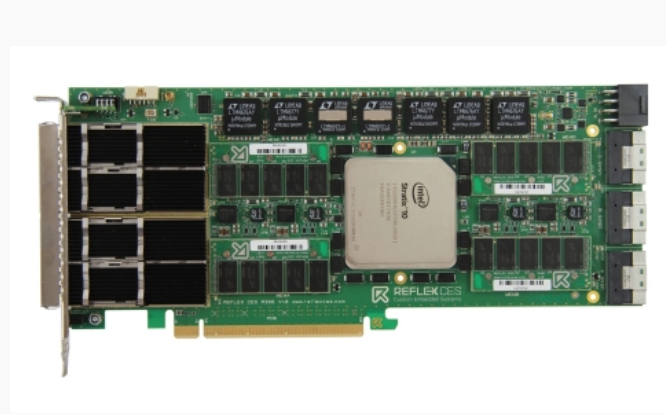
Paris-based Reflex CES introduced a 800 GbE accelerator card powered by Intel's S GX FPGA. The board comes in different variants where clients can choose from different memory or FPGA densities.

This board features the largest Stratix 10 GX device with 2800 KLE and is designed for processing intensive and various data a Stratixalgorithms thanks to its unique mix of memory capabilities of DDR4 and QDR2+ modules. REFLEX CES has adopted the disruptive QSFP-DD technology for the optical interfaces, delivering up to 800GbE in total. This is combined with a huge storage capability using 3 SlimSAS interfaces at the rear of the board. The hardware is delivered with a custom passive heat-sink.

http://reflexces.com


Red Hat Ansible Engine adds multicloud automation

The latest Red Hat Ansible Engine 2.6 release features new capabilities for automating across hybrid and multicloud environments, along with simplified connections to network APIs and updates for Ansible deployments overseeing Windows environments.

This includes updated modules covering Amazon Web Services (AWS), Google Cloud Platform and Microsoft Azure. The public cloud modules add capabilities designed to match the latest functionality available in the respective cloud environments. Additionally, an improved AWS EC2 Instance module can provide a more streamlined user experience when provisioning new and managing existing EC2-backed instances. Red Hat has also extended support for VMware vSphere-deployed infrastructure, including VMware Cloud on AWS, enabling users to use automation across the hybrid cloud including legacy infrastructure.

http://www.redhat.com

Verodin raises $21 million for cyber security instrumentation

Verodin, a start-up based in Tysons, Virginia, announced $21 million in Series B funding for its Security Instrumentation Platform (SIP), which continuously executes tests and analyzes the results to proactively alert on drift from a known-good security baseline The system validates and optimizes control configuration, and provide evidence demonstrating if the controls purchased and deployed are actually delivering the desired business outcomes.

The new funding was led by TenEleven Ventures and Bessemer Venture Partners (BVP). Capital One Growth Ventures, Citi Ventures and all existing investors participated in the round.

Dell'Oro: Rising shipments of campus Ethernet switches

Ethernet campus switches with enhanced software and hardware capabilities will fuel market growth through 2022, according to a new report from Dell'Oro Group. Power over Ethernet (PoE) port shipments are expected to rise to nearly 850 million total ports over the next five years.

“The Ethernet campus switch market is about to undergo a major upgrade cycle that will drive sustained growth over the next five years,” said Sameh Boujelbene, Senior Director at Dell’Oro Group. “The campus switch installed base is ripe for refresh, not only because it’s an aging infrastructure, but also due to the lack of support of new capabilities needed to enable the digital transformation. New campus switches are expected to provide additional features such as automation, security, analytics and network visibility. We also expect a higher portion of campus switch ports to support PoE due to increased demand from PoE enabled devices such as WLAN, security cameras and PoE lighting,” added Boujelbene.

Key topics covered by the Ethernet Switch – Layer 2+3 5-Year Report:
  • How will extended switching software capabilities affect the Ethernet Switch market?
  • When will 2.5 Gbps shipments surpass 5.0 Gbps and what is the expected price point for both speeds?
  • The impact of the move towards subscription-based sales models in campus switching.