Monday, July 1, 2024

GlobalFoundries acquires Tagore Technology’s GaN IP

GlobalFoundries announced the acquisition of Tagore Technology’s proprietary and production-proven Power Gallium Nitride (GaN) IP portfolio. This high-power density solution is designed to enhance efficiency and performance in various power applications, including automotive, IoT, and AI datacenters. As the digital landscape evolves with technologies like Generative AI, GaN is emerging as a crucial solution for sustainable and efficient power management, especially in datacenters.


Tagore Technology, founded in January 2011, specializes in GaN-on-Silicon (GaN-on-Si) semiconductor technology for RF and power management applications. As a fabless semiconductor company, it operates design centers in Arlington Heights, Illinois, USA, and Kolkata, India. Tagore Technology’s R&D team focuses on developing innovative solutions leveraging wide bandgap technologies to address RF and power design challenges, accelerating time-to-market for a wide range of applications. This acquisition includes a team of experienced engineers from Tagore Technology, who will join GlobalFoundries, enhancing its technical expertise and manufacturing capabilities.

Key Points:

  • GlobalFoundries acquires Tagore Technology’s Power GaN IP portfolio. Financial terms were not disclosed.
  • GaN technology enhances efficiency and performance in automotive, IoT, and AI datacenter applications.
  • The acquisition supports large-scale manufacturing, improving datacenter power efficiency, reducing costs, and managing heat.
  • Tagore Technology engineers will join GlobalFoundries, bringing expertise in GaN technology.
  • GlobalFoundries received $1.5 billion under the U.S. CHIPS and Science Act, with part of the investment aimed at high-volume GaN manufacturing.
  • Gallium Nitride (GaN) is a wide bandgap semiconductor material known for its high efficiency and performance in power electronics. GaN technology is used in various semiconductor applications due to its ability to operate at higher voltages, temperatures, and frequencies compared to traditional silicon-based semiconductors. This makes GaN particularly advantageous in power conversion systems, RF amplifiers, and high-frequency communication devices. In power electronics, GaN transistors and diodes offer lower switching losses, faster switching speeds, and higher power density, leading to more efficient and compact power supplies and inverters. In RF applications, GaN’s high electron mobility and breakdown voltage enable the development of powerful and efficient RF amplifiers for wireless communication and radar systems. Furthermore, GaN is crucial in developing next-generation power devices for electric vehicles, renewable energy systems, and various industrial applications, where its superior performance characteristics contribute to overall system efficiency and reliability

AST SpaceMobile touts its 850 MHz low-band spectrum

Following the recent signing of commercial agreements with Verizon and AT&T, Abel Avellan, Chairman and Chief Executive Officer of AST SpaceMobile, published a letter to partners, shareholders, and future space-based cellular broadband network users highlighting recent milestones.

The integration of 850 MHz spectrum from both AT&T and Verizon will enable AST SpaceMobile to provide reliable cellular broadband across the United States. This dual partnership ensures that AT&T and Verizon subscribers can benefit from seamless nationwide satellite coverage without needing specialized equipment. The strategic use of low-band frequencies ensures exceptional propagation, superior coverage, and compatibility with existing smartphones, promising a more consistent and reliable cellular experience for users.

These developments are part of AST SpaceMobile’s broader mission to bridge the digital divide. With plans to deploy a constellation of satellites in low Earth orbit, the company aims to provide global cellular broadband coverage. The collaboration with industry leaders like AT&T and Verizon, along with innovative technologies such as the AST5000 ASIC, positions AST SpaceMobile to transform connectivity, particularly in remote and underserved areas. The company’s partnerships with over 45 mobile network operators worldwide, including Vodafone, Rakuten, and Bell Canada, further solidify its path toward achieving this goal.

Key Points:

  • Strategic Partnerships: Agreements with Verizon and AT&T to use 850 MHz low-band spectrum for nationwide satellite coverage.
  • Technological Advancements: Deployment of the largest commercial communications satellite in low Earth orbit and innovative AST5000 ASIC architecture.
  • Global Ambition: Aiming to bridge the digital divide with a constellation of satellites providing worldwide cellular broadband coverage.
  • Seamless Integration: Ensuring compatibility with existing smartphones for a consistent user experience without the need for specialized equipment.
  • Broad Collaboration: Partnerships with over 45 mobile network operators globally, targeting a market of more than 2.8 billion subscribers.

https://ast-science.com/

Japan's APRESIA to integrate Infinera's ICE-X coherent pluggables

APRESIA Systems,a Japanese provider of network infrastructure solutions, will integrate Infinera’s software-programmable ICE-X coherent pluggables into its own portfolio of locally manufactured Layer 2/3 switching and optical transmission products. 

APRESIA, a resale partner of Infinera in Japan and a member of the Open XR Optics Forum, will utilize the XR optics-enabled capabilities of Infinera’s ICE-X pluggables to expand its access network applications. This integration will initially focus on high-speed point-to-point and 100G bidirectional transport applications. It will enable APRESIA’s telecommunications service providers and cable operator customers to extend the reach of high-speed optical services cost-effectively using Infinera ICE-X’s unique digital subcarrier technology. APRESIA also plans to support point-to-multipoint functionality with ICE-X, significantly improving network efficiency and potentially reducing CapEx and OpEx by up to 70 percent.

“The growing demand for capacity at the edge of the network is driving the need for innovative access solutions optimized for speed, flexibility, and efficiency,” said Kenta Watabiki, Director, Sales Div., APRESIA Systems Ltd. “With the integration of Infinera’s ICE-X pluggables into our portfolio of networking devices, we can offer our service provider, data center, cloud, and cable operator customers new approaches to access and edge connectivity as their networks scale.”

“APRESIA’s strong track record of providing high-performance access network solutions makes it an ideal partner as Japan’s service providers, data center operators, and cable operators face pressing new traffic demands at the edge of the network,” said Ryan Perera, Senior Vice President, Infinera APAC Sales. “The addition of our suite of ICE-X pluggables in APRESIA’s product portfolio will unlock new value for these customers.”

https://www.infinera.com/press-release/japans-apresia-systems-expands-network-with-infinera-ice-x/

Telefónica teams with Nokia for Private 5G in Spain

 Nokia announced a strategic agreement with Telefónica, encompassing its divisions Telefónica Mobile Spain and Telefónica IoT & Big Data Tech Spain, to foster the growth of the 5G private network market in Spain. This three-year partnership will see the deployment of 100 Nokia Digital Automation Cloud (DAC), Modular Private Wireless (MPW), MX Industrial Edge (MXIE) solutions, and industrial devices. These deployments aim to address the needs of critical industries such as ports, manufacturing, and logistics, focusing on enhancing productivity, worker safety, and sustainability in the Spanish enterprise market.

Nokia’s platform for industrial digitalization, which includes DAC, MXIE, industrial devices, and digitalization applications, is designed to streamline digital transformation. By providing a secure, reliable wireless infrastructure and on-premises computing capabilities, Nokia’s solutions facilitate real-time operational technology (OT) data access, accelerating the digitalization process. This initiative not only enhances Telefonica’s network capabilities but also sets a clear trajectory for migrating various use cases to 5G technology.

Key Points:

  • Nokia Digital Automation Cloud (DAC): Provides a high-performance, reliable wireless infrastructure for industrial digitalization.
  • Modular Private Wireless (MPW): Offers customizable private wireless network solutions tailored to specific industrial needs.
  • MX Industrial Edge (MXIE): Delivers on-premises computing capabilities to enable real-time OT data access and processing.
  • Deployment Scope: 100 DAC, MPW, and MXIE solutions, along with industrial devices, to be implemented over three years.
  • Industry Impact: Aimed at key sectors such as ports, manufacturing, and logistics to improve productivity, safety, and sustainability.
  • Private 5G momentum: Nokia has deployed mission-critical networks to over 2,600 enterprise customers and over 730 private wireless customers worldwide.

https://www.nokia.com/about-us/news/releases/2024/07/01/nokia-and-telefonica-collaborate-to-develop-the-private-network-market/

ZTE launches Nebula Telecom Large Model for Autonomous Networks

ZTE launch its Nebula Telecom Large Model product series with the goal of empowering global operators to achieve highly autonomous networks.

The Nebula Telecom Large Model, leveraging the “ZTE Digital Nebula” assemblable architecture, is designed to address complex issues and accelerate the development of autonomous networks. It facilitates collaboration from cross-domain to single-domain operations and provides full-scenario empowerment centered around agents. This model aims to transform operational systems by shifting from “human+machine” to “machine+human” interactions, promoting a new era of network autonomy.


In addition to the core model, ZTE has introduced the agent factory, a development and maintenance platform that industrializes the creation and management of agents. This platform enables operators to refine their application development modes and product forms. In complex scenarios, agents can orchestrate human-machine interactions using LUI mode and integrate traditional AI and generative AI models for seamless operational evolution. Key applications such as Network Insight Expert, Monitoring Expert, and iAssurance Expert have been launched, demonstrating the practical benefits of the Nebula Telecom Large Model in enhancing network planning, fault diagnosis, and emergency response efficiency.

Lightmatter appoints Simona Jankowski as CFO

Lightmatter, a start-up developing photonic interconnect and compute products, has appointed Simona Jankowski as Chief Financial Officer (CFO). Jankowski previously was vice president of investor relations and strategic finance at NVIDIA during a period of unprecedented growth for the company. Before that, she was a managing director at Goldman Sachs, where she led equity research for the hardware and communications technology sectors and managed the Global Investment Research office in San Francisco.

"Generative AI is driving unprecedented demand for a new class of extreme-scale data centers. Lightmatter has made foundational breakthroughs in photonics that enable data centers to increase in scale and performance by orders of magnitude, and with greater energy efficiency. With a generational performance lead, Lightmatter is poised to drive the data center photonics revolution,” said Jankowski. “I am thrilled to join this brilliant team of inventors, technologists, and accomplished industry executives to help scale the company for significant growth in the years ahead."

The appointment follows Lightmatter’s $310M fundraise in 2023, which valued the company at $1.2B, and comes at a time of significant growth for the company. 

  • Company Focus: Lightmatter specializes in photonic computing, using light for data processing to achieve higher efficiency and lower heat production.
  • Products: The company offers photonic chips like Envise for AI workloads and Passage for interconnecting processors with optical networks.
  • Funding and Valuation: Lightmatter has raised approximately $420 million, achieving unicorn status with a valuation of $1.2 billion.
  • Expansion Plans: Lightmatter has offices in Boston and Mountain View, California. The company plans to expand its team and open a new office in Toronto in 2024.
  • Investors: Key investors include GV (formerly Google Ventures) and Viking Global Investors.

https://lightmatter.co/


Sunday, June 30, 2024

Tracing the DNA of Nokia through its many mergers and acquisitions

 Nokia’s recent announcement to acquire Infinera marks another significant step in the company’s extensive history of mergers and acquisitions. This deal aims to enhance Nokia’s networking capabilities, solidifying its position as a leader in the telecommunications industry. Over the years, Nokia has strategically acquired companies like Alcatel-Lucent in 2016, which greatly expanded its telecommunications equipment and services portfolio. This merger itself was a combination of Alcatel and Lucent Technologies, highlighting the layers of consolidation that have shaped Nokia into a global powerhouse.

Alongside these acquisitions, Nokia has been actively restructuring to streamline its operations and enhance profitability. As part of a strategic plan announced in October 2023, Nokia aims to empower its business groups with more autonomy and agility. This includes embedding sales teams directly into business groups to better align with customer needs and seize growth opportunities. The restructuring plan targets a reduction in the cost base by EUR 800–1,200 million by the end of 2026, involving significant operational changes and a projected reduction in personnel from 86,000 to between 72,000 and 77,000 employees. This restructuring is designed to ensure Nokia’s long-term sustainability and competitive edge in the evolving telecommunications landscape.

Nokia’s strategy focuses on leveraging its technological leadership and innovation to drive growth. The company emphasizes investments in 5G, cloud, and digital infrastructure to support future capabilities. By aligning its operations with market demands and enhancing its cost-efficiency, Nokia aims to maintain its position as a B2B technology innovation leader, ready to meet the challenges and opportunities of digitalization across various industries .

Here is a timeline of Nokia’s mergers, acquisitions, and strategic moves:

• 2021: Nokia acquired Deepfield, a network analytics company.

• 2021: Nokia formed a joint venture with China Huaxin, effectively withdrawing from direct operations in the Chinese mobile network market.

• 2020: Nokia acquired Elenion Technologies, a US-based company specializing in silicon photonics technology.

• 2020: Nokia acquired Unium, a software company specializing in mesh Wi-Fi technology for enhancing home networking solutions.

• 2016: Nokia acquired Withings, a French consumer electronics company specializing in health-related products (later rebranded as Nokia Health).

• 2016: Nokia acquired Alcatel-Lucent, significantly expanding Nokia’s presence in telecommunications equipment and services.

• 2016: Nokia sold its HERE digital mapping and location services business to a consortium of German automotive companies (Audi, BMW, and Daimler).

• 2015: Nokia acquired Siemens’ stake in the Nokia Siemens Networks joint venture, renaming it Nokia Networks.

• 2014: Nokia sold its Devices and Services division to Microsoft, which included the Lumia smartphone business.

• 2010: Nokia acquired MetaCarta, a company specializing in geographic search and referencing software.

• 2008: Nokia acquired Trolltech, a company known for its Qt development framework.

• 2008: Nokia acquired Navteq, a digital map data and location-based services company.

• 2006: Nokia acquired Intellisync, a mobile software and device management company.

• 2006: Nokia sold its mobile phone manufacturing plant in Bochum, Germany, amid restructuring efforts.

• 1998: Nokia acquired Technophone, a UK-based mobile phone manufacturer.

• 1997: Nokia acquired Ipsilon Networks, a company specializing in IP switching.

• 1991: Nokia acquired Mobira, a company specializing in radio telephones, marking its entry into the mobile phone market.

• 1988: Nokia sold its television manufacturing business to Finlux, exiting the consumer electronics market.

Alcatel-Lucent Pre-Acquisition by Nokia:

• 2014: Alcatel-Lucent acquired Optoplan, a provider of fiber-optic sensing technology.

• 2011: Alcatel-Lucent acquired OpenPlug, a mobile software company specializing in application development environments.

• 2011: Alcatel-Lucent acquired Kailight Photonics, an optical networking technology company.

• 2011: Alcatel-Lucent acquired the remaining stakes in LGS Innovations, focusing on secure networking solutions for the US government.

• 2010: Alcatel-Lucent acquired Velocix, a digital media delivery company.

• 2009: Alcatel-Lucent acquired ReachView Technologies, a provider of network operations and field maintenance services.

• 2008: Alcatel-Lucent acquired Motive, Inc., a provider of service management software for broadband and mobile data services.

• 2007: Alcatel-Lucent acquired Tropic Networks, a Canadian optical networking company.

• 2006: Alcatel merged with Lucent Technologies to form Alcatel-Lucent.

Lucent Technologies Timeline:

• 2005: Lucent Technologies acquired Riverstone Networks, a supplier of carrier Ethernet products.

• 2004: Lucent Technologies acquired Telica, a provider of next-generation switching technology.

• 2002: Lucent spun off Agere Systems, its semiconductor business.

• 2001: Lucent spun off Avaya, its enterprise communications systems and services unit.

• 2000: Lucent Technologies acquired Chromatis Networks, a maker of metropolitan area network optical systems.

• 2000: Lucent Technologies acquired Spring Tide Networks, a provider of IP service switches.

• 1999: Lucent Technologies acquired Ortel Corporation, a manufacturer of optical networking components.

• 1999: Lucent Technologies acquired Nexabit Networks, a high-speed switching company.

• 1999: Lucent Technologies acquired International Network Services (INS), a network consulting and integration company.

• 1999: Lucent Technologies acquired Kenan Systems, a billing and customer care software company.

• 1999: Lucent Technologies acquired Excel Switching Corporation, a provider of programmable switches for telecommunications networks.

• 1998: Lucent Technologies acquired Prominet Corporation, a company specializing in Ethernet switching products.

• 1998: Lucent Technologies acquired Yurie Systems, a manufacturer of ATM access products.

• 1998: Lucent Technologies acquired Ascend Communications, a major supplier of networking equipment.

• 1997: Lucent Technologies acquired Livingston Enterprises, a company specializing in remote access servers.

• 1997: Lucent Technologies acquired Octel Communications, a leading provider of voicemail systems.

• 1996: Lucent Technologies was spun off from AT&T as an independent company, comprising the former AT&T Network Systems and Bell Labs.

Alcatel Timeline:

• 2005: Alcatel acquired Spatial Wireless, a provider of mobile wireless network solutions.

• 2003: Alcatel acquired iMagicTV, a Canadian provider of software for IP television services.

• 2002: Alcatel acquired Astral Point Communications, a provider of optical networking solutions.

• 2000: Alcatel acquired Genesys, a leading provider of customer interaction management solutions.

• 2000: Alcatel acquired Assured Access Technology, a provider of remote access solutions.

• 2000: Alcatel acquired Packet Engines, a provider of high-speed network equipment.

• 2000: Alcatel acquired Xylan, a US-based network equipment manufacturer.

• 1998: Alcatel Alsthom was rebranded as Alcatel.

• 1997: Alcatel Alsthom acquired Digital Microwave Corporation, a US-based microwave communication company.

• 1996: Alcatel Alsthom acquired Newbridge Networks, a Canadian data networking company.

• 1993: Alcatel Alsthom acquired DSC Communications, a US-based digital switching company.

• 1991: Alcatel Alsthom acquired Rockwell International’s switching equipment business.

• 1990: Alcatel Alsthom acquired STL, a UK-based optical fiber and cable manufacturer.

• 1987: CGE merged with Alsthom, forming Alcatel Alsthom.

• 1986: CGE acquired Telettra, an Italian telecommunications equipment manufacturer.

• 1982: CGE acquired ITT Corporation’s European telecommunications business, forming Alcatel N.V.

• 1968: CGE acquired Compagnie Industrielle des Téléphones (CIT), which was later renamed CIT-Alcatel.

• 1925: CGE acquired Société Alsacienne de Constructions Mécaniques (SACM).

• 1898: Compagnie Générale d’Electricité (CGE) was founded in France by Pierre Azaria.

Infinera Mergers and Acquisitions Timeline:

• 2015: Infinera acquired Transmode, a Swedish supplier of metro packet-optical networking solutions.

• 2018: Infinera acquired Coriant, a global supplier of open, disruptive, and hyperscale networking solutions.

Coriant Mergers and Acquisitions Timeline:

• 2013: Coriant was formed as an independent company after being spun off from Nokia Siemens Networks’ optical networking business.

• 2014: Coriant merged with Tellabs, a provider of packet optical and mobile backhaul solutions.

• 2015: Coriant acquired Sycamore Networks Solutions, a company specializing in intelligent bandwidth management solutions.

Tellabs Timeline:

• 1975: Tellabs was founded in Naperville, Illinois.

• 1992: Tellabs acquired Martis Oy, a Finnish provider of network management and transmission equipment.

• 1997: Tellabs acquired Coherent Communications Systems Corporation, a provider of network access products.

• 1998: Tellabs acquired Steinbrecher Corporation=

CBRE Group acquires Direct Line Global for data center infrastructure

CBRE Group announced the acquisition of Direct Line Global, a provider of data center infrastructure, from Guardian Capital, a private equity firm. Financial terms were not disclosed

Direct Line Global, founded in 1997 and headquartered in Fremont, California, specializes in design, installation, maintenance, and management solutions for data center owners and operators, primarily serving the U.S. hyperscale market and major technology companies. The company has over 1,000 employees and significant operations in northern Virginia, as well as in Hong Kong, the Philippines, Singapore, and South Korea. Bill Nelligan, CEO of Direct Line Global, expressed enthusiasm for the growth opportunities afforded by CBRE’s global platform, particularly in the context of the booming demand for data and artificial intelligence. Direct Line Global will now operate within CBRE’s Data Centers Solutions business under the Global Workplace Solutions segment.

CBRE noted that this strategic acquisition would immediately boost its core earnings-per-share.

The acquisition aligns with CBRE’s strategy to enhance its capabilities in asset classes benefiting from the increasing digitization of the global economy. Vikram Kohli, COO of CBRE, highlighted that Direct Line Global’s technical services perfectly complement CBRE’s existing facilities management services. This combination allows CBRE to offer integrated data center solutions, providing a comprehensive service unmatched in the industry.

Key Points:

Acquisition Details: CBRE acquires Direct Line Global from Guardian Capital, enhancing earnings-per-share.

Service Integration: The acquisition combines Direct Line Global’s technical services with CBRE’s facilities management, offering unmatched integrated data center solutions.

Growth Potential: Direct Line Global benefits from CBRE’s global platform, expanding opportunities in the rapidly growing data and AI market.

Operational Scope: Direct Line Global has over 1,000 employees and operations in the U.S., Hong Kong, the Philippines, Singapore, and South Korea.

https://ir.cbre.com/press-releases/detail/232/cbre-enhances-differentiates-data-center-capabilities-with

Amazon begins satellite manufacturing for Project Kuiper

 In preparation for Project Kuiper’s first full-scale launch later this year, Amazon is starting up satellite production and testing at a new facility in Kirkland, Washington. Opened in April, this 172,000-square-foot factory is set to become the manufacturing hub for the more than 3,000 satellites that will comprise Project Kuiper’s low Earth orbit constellation. The facility includes advanced custom equipment and a clean space environment designed to protect sensitive electronics, supporting rapid satellite production and testing.

In a blog post, Amazon said it now plans to ship the first completed production satellites this summer, with the inaugural full-scale Kuiper mission scheduled for the fourth quarter of this year aboard an Atlas V rocket from United Launch Alliance (ULA). The new facility is expected to produce up to five satellites per day at peak capacity. These satellites will be integrated with systems from partners like Beyond Gravity, Blue Origin, ULA, SpaceX, and Arianespace for deployment from launch sites in Florida and French Guiana.

• Facility Location: Kirkland, Washington

• Production Capacity: Up to five satellites per day

• First Full-Scale Launch: Q4 2024 aboard Atlas V rocket

• Partners: Beyond Gravity, Blue Origin, ULA, SpaceX, Arianespace

• Initial Satellite Deployment: Over 3,000 satellites in the coming years

Amazon’s Project Kuiper is a $10 billion initiative aimed at deploying a constellation of 3,236 satellites to provide high-speed internet access globally, particularly to underserved communities. The Federal Communications Commission (FCC) has granted approval for the deployment, requiring Amazon to launch at least half of the satellites by mid-2026. The project has achieved significant milestones, including successful tests of prototype satellites KuiperSat-1 and KuiperSat-2, which demonstrated high-speed, low-latency broadband capabilities. Amazon has partnered with key industry players such as United Launch Alliance, Blue Origin, and Arianespace for the satellite launches.

https://www.aboutamazon.com/news/innovation-at-amazon/inside-project-kuiper-satellite-facility-kirkland

  • In December 2023 following successful tests of 100 Gbps optical links between its prototype satellites, Amazon confirmed that its is now confident in the optical inter-satellite link (OISL) capabilities of Project Kuiper.These tests validated Project Kuiper’s advanced communications architecture by maintaining 100 Gbps optical links between prototype satellites, KuiperSat-1 and KuiperSat-2, over nearly 621 miles (1,000 kilometers) for the entire test window. The plan now is for each Project Kuiper satellite to be equipped with multiple optical terminals to connect many satellites at a time, establishing high-speed laser cross-links that form a secure, resilient mesh network in space.

New subsea cable lands at Timor-Leste

 On June 24th, 2024, the “Timor-Leste South Submarine Cable” (TLSSC) landed at the Cable Landing Station in Bebonuk, Dili. This groundbreaking project connects Timor-Leste to Darwin, Australia, marking a pivotal step in the nation’s digital transformation and showcasing its commitment to infrastructure development and modernization.

The TLSSC is a significant advancement for Timor-Leste, an island nation situated in Southeast Asia, northeast of Australia, with a population of approximately 1.3 million people. Since liberalizing its telecommunications sector in 2012, Timor-Leste has seen increased mobile service coverage across all municipal towns, reaching 96% of the population by 2015. Despite these strides, the country has relied on costly satellites for international connectivity. The government recognized these limitations and decided in 2016 to invest in an international optic fiber cable system to enhance connectivity and support economic growth.


At a press event, Prime Minister Gusmão highlighted the TLSSC’s role in stimulating economic activities, promoting diversification, and creating job opportunities. The fiber optic cable, capable of transferring data at 27 terabits per second, is a significant upgrade from the current 20-30 Gbps usage. With a length of 607 km, including seven repeaters and a dedicated Greater Sunrise Branch Unit, the cable ensures fast and secure internet connections to major hubs like Darwin, Sydney, and Los Angeles. The project was realized through the collaboration of Alcatel Submarine Networks, Vocus, and the Australian Government, with Australia’s Ambassador Caitlin Wilson and ASN’s Vice President Marc Genot lauding the initiative’s future benefits for the Timorese population.


Key Points:


• Historic Launch: TLSSC connects Timor-Leste to Darwin, Australia, marking a major step in the nation’s digital transformation.

• Significant Upgrade: The cable can transfer data at 27 Tbps, vastly improving upon current satellite-based international connectivity.

• Economic Impact: The TLSSC is expected to stimulate economic growth, job creation, and industry diversification in Timor-Leste.

• Collaborative Effort: The project involved key contributions from Alcatel Submarine Networks, Vocus, and the Australian Government, emphasizing international cooperation.


https://timor-leste.gov.tl/?p=38073&lang=en&n=1

NTT DATA launches Tsuzumi AI model on Microsoft Azure

NTT DATA announced the launch of Tsuzumi through the Microsoft Azure AI Models-as-a-Service (MaaS) offering. This development marks a significant milestone in their 25-year collaboration, focused on creating technological solutions that drive sustainability and innovation. Tsuzumi, a Large Language Model (LLM) proficient in Japanese and English, addresses environmental and financial challenges by adjusting model size without compromising performance, making advanced AI technologies accessible to a wider range of users. The model’s operational adaptability, through efficient tuning processes with industry adapters, enhances its relevance and versatility, reducing service provisioning costs.

  • Milestone Launch: Tsuzumi AI model released on Microsoft Azure AI MaaS platform, marking a 25-year collaboration.
  • Advanced Capabilities: Tsuzumi supports Japanese and English, tackling environmental and financial challenges by adjusting model size while maintaining performance.
  • Operational Adaptability: Features efficient tuning with industry adapters for customized knowledge learning, enhancing versatility and reducing costs.
  • Future Expansion: Initially available in Japan, with plans to expand globally and advancements in multimodality to meet evolving business needs.

https://www.nttdata.com/global/en/news/press-release/2024/june/ntt-data-announces-strategic-enhancement-of-collaboration

Astera Labs to open R&D site in Bangalore

Astera Labs, a start-up based in Santa Clara, California,  plans to expand its operations to India with a new site in Bangalore set to open later this year. This expansion aims to leverage the region’s rich engineering talent to develop advanced interconnect technologies essential for AI architectures in data centers. 

Sanjay Gajendra, President and COO of Astera Labs, highlighted India’s thriving market and world-class technical workforce as key factors for this strategic move, supporting the company’s growth and vision. 

The Bangalore site will join Astera Labs’ existing R&D centers in Santa Clara, Toronto, Vancouver, and Haifa.


Thursday, June 27, 2024

Nokia to acquire Infinera for $2.3 billion

Nokia has agreed to acquire Infinera for $6.65 per share, representing an enterprise value of US$ 2.3 billion and a premium of 28% to Infinera’s share price at the close of 26 June 2024.

The combined entity will benefit from substantial in-house capabilities, including an expanded digital signal processor (DSP) development team and expertise in silicon photonics and indium phosphide-based semiconductor material sciences. Additionally, the merger will deepen Nokia’s competency in photonic integrated circuit (PIC) technology.

The merger will also strengthen Nokia’s presence in the North American optical market, an area where the two companies have minimal customer overlap. Infinera, which has established a solid foothold in North America with approximately 60% of its sales, will enhance Nokia’s optical scale in the region. This complements Nokia’s strong market positions in APAC, EMEA, and Latin America. The combination builds on Nokia’s commitment to US-based manufacturing and advanced testing and packaging capabilities.

The companies cited increased scale and profitability as driving factors for the merger.

Key benefits listed by Nokia

  • Enhanced Global Scale: Increases Nokia’s Optical Networks business by 75%.
  • Advanced Capabilities: Expanded DSP development, silicon photonics expertise, and PIC technology.
  • North American Market Growth: Strengthens position with Infinera’s established presence.
  • Enterprise and Webscale Expansion: Accelerates growth in the enterprise sector and webscale market, leveraging Infinera’s 30% sales in this segment and recent advancements in high-speed, low-power optical components.

Nokia said the deal will strengthen its leadership in optical and increase exposure to webscale customers, the fastest growing segment of the market. The combination with Infinera is projected to accelerate Nokia’s journey to a double-digit operating margin in its Optical Networks business. Nokia targets to achieve EUR 200 million of net comparable operating profit synergies by 2027. This transaction along with the recently announced sale of Submarine Networks will create a reshaped Network Infrastructure built on three strong pillars of Fixed Networks, IP Networks and Optical Networks. Nokia targets mid-single digit organic growth for the overall Network Infrastructure business and to improve its operating margin to mid-to-high teens level.

Under the deal, for each Infinera share, Infinera shareholders will be able to elect to receive either: 1) $6.65 cash, 2) 1.7896 Nokia shares, or 3) a combination of $4.66 in cash and 0.5355 Nokia shares for each Infinera share. All Nokia shares will be issued in the form of American Depositary Shares. The definitive agreement includes a proration mechanism so that the Nokia shares issued in the transaction do not exceed an amount equal to approximately 30% of the aggregate consideration that may be paid to Infinera shareholders.

Pekka Lundmark, President and CEO of Nokia, said: “In 2021 we increased our organic investment in Optical Networks with a view to improving our competitiveness. That decision has paid off and has delivered improved customer recognition, strong sales growth and increased profitability. We believe now is the right time to take a compelling inorganic step to further expand Nokia’s scale in optical networks. The combined businesses have a strong strategic fit given their highly complementary customer, geographic and technology profiles. With the opportunity to deliver over 10% comparable EPS accretion, we believe this will create significant value for shareholders.”

Federico Guillén, President of Network Infrastructure at Nokia, said: “Today, Network Infrastructure offers a unique portfolio across the fixed access, optical and IP networks domains built on leading technology innovation and a strong customer focus. This acquisition will further strengthen the optical pillar of our business, expand our growth opportunities across all our target customer segments and improve our operating margin. I am extremely pleased that we are bringing together these two talented and dedicated teams. Separately, we have long respected each other as competitors. Together, we find the logic of combination irresistible.”

David Heard, CEO of Infinera, said: “We are really excited about the value this combination will bring to our global customers. We believe Nokia is an excellent partner and together we will have greater scale and deeper resources to set the pace of innovation and address rapidly changing customer needs at a time when optics are more important than ever – across telecom networks, inter-data center applications, and now inside the data center. This combination will further leverage our vertically integrated optical semiconductor technologies. Furthermore, our stakeholders will have the opportunity to participate in the upside of a global leader in optical networking solutions.”


https://www.nokia.com/about-us/news/releases/2024/06/27/inside-information-nokia-to-acquire-infinera-to-increase-scale-in-optical-networks-and-accelerate-product-roadmap/

Nokia to sell Submarine Networks business to French State

In a strategic move to streamline its portfolio, Nokia has announced plans to sell Alcatel Submarine Networks (ASN) to the French government. The telecommunications giant will initially retain a 20% stake in the company, with the intention of a full exit in the future. This decision aligns with Nokia's focus on core markets and its goal to improve profitability in its Network Infrastructure business group.

The proposed sale, which is subject to employee consultation and regulatory approvals, is expected to close by late 2024 or early 2025. The French State, represented by the Agence des participations de l'Etat (APE), has been deemed the most suitable custodian for ASN, given its long-term interest in critical infrastructure operations and maintenance. This move is anticipated to ensure continuity for ASN's customers, employees, and partners.

Following the divestment, Nokia's Network Infrastructure Business Group will be restructured to comprise three units: Fixed Networks, IP Networks, and Optical Networks. While this reorganization is projected to reduce the group's net sales by approximately €1 billion, it is expected to boost its operating profit margin by 100-150 basis points. Nokia has stated that this transaction will not affect its previously announced financial outlook for 2024.

Key points:

  • Nokia to sell ASN to the French government, retaining a 20% stake initially
  • Sale aligns with Nokia's strategy to focus on core markets and improve profitability
  • Transaction expected to close by late 2024 or early 2025, subject to approvals
  • Nokia's Network Infrastructure group to be restructured into three units
  • Deal expected to reduce net sales but increase operating profit margin

Pekka Lundmark, President and CEO of Nokia, said: “This is a good step forward in our strategy of actively managing our portfolio. ASN has been a standalone part of our Network Infrastructure business and through the divestment, Network Infrastructure will benefit from a streamlined portfolio with a focus on growth and strengthening its technology leadership. ASN has gone through a significant transformation in recent years and has a strong market position. I am pleased we have found a natural owner for the business. The French State will ensure continued investment in ASN and protection of critical industry know-how.” 

 Alain Biston, President and CEO of ASN, said: “This is an incredibly exciting moment for ASN as we undertake the next phase of our development. The French State’s ownership gives us a stable platform to further develop our vertically integrated technology offering. This, combined with Nokia’s retained stake, underscores all parties’ aligned interests in delivering a smooth transition for the benefit of our customers, suppliers and other stakeholders.” 

 Bruno Le Maire, French Minister of Economy, said: “The French State, represented by the Agence des Participations de l’Etat (French shareholding Agency), is thrilled to announce its willingness to acquire 80% shareholding of ASN. The Company is one of the world leaders in the submarine cable market, and the only company of its kind in Europe.”

https://www.nokia.com/about-us/news/releases/2024/06/27/nokia-enters-into-an-agreement-with-the-french-state-regarding-the-sale-of-leading-submarine-networks-business-asn/


  • Alcatel Submarine Networks (ASN) has a rich history dating back to the first submarine cables for telegraphs in the 1860s and 1870s. 
  • Over the decades, through various mergers and acquisitions, ASN has evolved into a global leader in undersea communication networks.
  • In recent years, ASN has been at the forefront of major submarine cable projects worldwide. One of its most notable achievements is the SEA-ME-WE 5 (South East Asia-Middle East-Western Europe 5) cable system, completed in 2016. This 20,000-kilometer cable connects Southeast Asia to Europe, enhancing connectivity across 17 countries. Another significant project is the Dunant cable, a joint venture with Google, stretching 6,600 kilometers across the Atlantic Ocean between Virginia Beach in the United States and Saint-Hilaire-de-Riez in France.
  • ASN has also been instrumental in developing innovative technologies for the submarine cable industry. The company has pioneered advancements in fiber optic technology, amplification systems, and cable protection methods. Its contributions have been crucial in meeting the ever-increasing demand for global data transmission capacity, supporting the growth of internet usage, cloud computing, and international telecommunications.
Timeline
  • 1923: Submarine Telegraph Company (STC) is founded in Paris, France, to lay underwater cables for telecommunications.

  • 1954: STC merges with Compagnie Française de Télécommunications (CFT) to form Compagnie Générale de Télécommunications (CGT).
  • 1969: CGT creates a dedicated submarine cable manufacturing division, which becomes known as Submarine Systems (SS).
  • 1985: Alcatel is formed through the merger of CGT and ITT Corporation's European telecom activities.
  • 1987: Alcatel acquires Submarine Systems (SS) and renames it Alcatel Submarine Networks (ASN).
  • 1990s: ASN becomes a leading player in the submarine cable industry, providing turnkey solutions for fiber-optic cable systems.
  • 1998: Alcatel acquires Vitrove, a French fiber-optic component manufacturer, and incorporates its technology into ASN's products.
  • Early 2000s: ASN faces increased competition from other telecom equipment manufacturers, including Huawei.
  • 2006: Alcatel merges with Lucent Technologies to form Alcatel-Lucent.
  • 2013: Nokia acquires Alcatel-Lucent, including ASN, and merges it with its own submarine cable business.

Marvell debuts 1.6T PAM4 DSP for active electrical cables

Marvell introduced a high-performance, 1.6T PAM4 DSP for active electrical cables (AECs) designed for the greater connectivity bandwidth requirements between AI accelerators, server to top-of-rack links and switch-to-switch interconnects within data center racks..s

The new Marvell Alaska A 1.6T DSP, which leverages 5nm process technology and over a decade of Marvell PAM4 leadershio, features eight 200 Gbps SerDes lanes to the host device and eight 200 Gbps SerDes lanes to the copper cable. The industry-leading equalization engine built into the Alaska A 1.6T DSP enables cable reaches of greater than three meters, addressing the reach requirements for inside-the-rack copper connections. The Alaska A 1.6T DSP is designed for next-generation accelerated infrastructure with 200 Gbps I/O interfaces on AI accelerators, GPUs, NICs and switches.

Key features of the Alaska A 1.6T AEC DSP include:

  • Proven DSP-based 200G PAM4 SerDes
  • Advanced digital equalizer with Feed Forward (FFE), Decision Feedback (DFE) and Maximum Likelihood Sequence Detection (MLSD)
  • Greater than 3-meter reach at 200G/lane
  • 200 Gbps per lane electrical line-side interface
  • Optimized for QSFP-DD and OSFP form factors
  • Retiming and gearboxing support
  • Cable reference design for 1.6T AECs
  • SDK support for advanced telemetry and diagnostics


The new device has gained support from leading copper cable manufacturers, including Amphenol, Molex, and TE Connectivity.

Marvell says the traditional method of using direct attached cable (DAC) for short-reach copper connections between AI accelerators and other components in server racks is facing limitations as data speeds increase to 200G/lane. The use of passive DACs is becoming less viable due to the declining distance over which they can effectively operate. To address this, Active Electrical Cables (AECs) are emerging as a critical solution. AECs leverage PAM4 DSPs to retime signals, thereby extending the reach of copper interconnects and allowing for the use of thinner cables in high-density data center environments.

“The next wave of AI clusters will need 200 Gbps signaling to handle the bandwidth requirements of generative AI and large language models,” said Venu Balasubramonian, vice president of product marketing, Connectivity Business Unit, at Marvell. “The newest addition to our Alaska A product line extends our leadership in delivering PAM4 DSP technology for short-reach copper connectivity for cloud AI clusters.”

https://www.marvell.com/company/newsroom/marvell-extends-connectivity-leadership-industry-first-1-6t-pam4-dsp-active-electrical-cables.html

Etched.ai targets highest performance ASIC for AI transformers

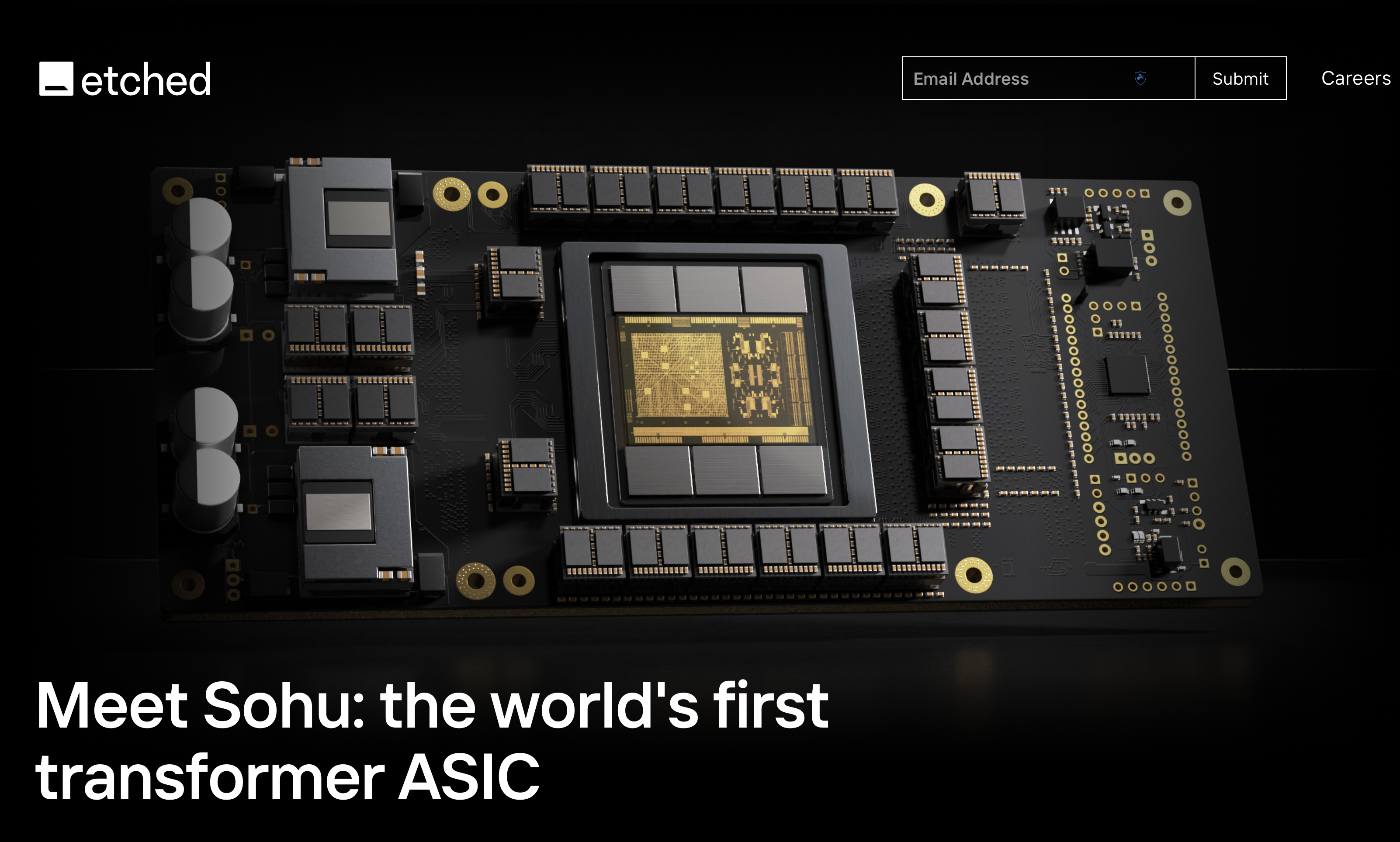
Etched.ai, a start-up based in Cupertino, California, has introduced its Sohu ASIC, a specialized chip designed specifically for transformer architecture-based artificial intelligence models. According to the company, Sohu is capable of processing over 500,000 tokens per second in Llama 70B throughput, surpassing the performance of leading AI chips from Nvidia and other major players.

Key Points:

  • Sohu ASIC claims to be the fastest AI chip of all time
  • Processes over 500,000 tokens per second in Llama 70B throughput
  • Designed specifically for transformer architecture-based AI models, such as ChatGPT, SD3, and Sora
  • Partners with TSMC on 4nm process and secured HBM and server supply from top vendors
  • Raised $120M in funding from multiple investors, including Primary Venture Partners and Positive Sum
https://etched.ai

Google Cloud and Gulf Edge to offer sovereign cloud in Thailand

Google Cloud has entered a multi-year agreement with Gulf Edge Company to provide sovereign cloud services in Thailand. This partnership aims to support organizations in critical industries with their digital transformation efforts by leveraging advanced AI and analytics capabilities. The services will adhere to Thailand’s stringent data residency, security, and privacy requirements, ensuring data, operational, and software sovereignty for customers.

Key details of the collaboration include Gulf Edge’s authorization to operate Google Distributed Cloud (GDC) as a Managed GDC Provider (MGP), focusing on air-gapped configurations for Thai organisations. Deployment options will include GDC air-gapped on-premises or within Gulf Group data centers, offering flexible hardware choices to meet specific workload needs while ensuring compliance with local legal frameworks, such as the Personal Data Protection Act. Through GDC, organizations will access core features of Google Cloud’s Vertex AI, enabling the development and deployment of advanced ML and AI applications within Thailand. Additionally, customers can utilize Google Cloud’s hardware and software resources, including Google Kubernetes Engine (GKE), NVIDIA Tensor Core GPUs, AlloyDB Omni database engine, and Dataproc, in a secure, air-gapped environment.

Key Points:

  • Strategic Partnership: Google Cloud and Gulf Edge team up to deliver sovereign cloud services in Thailand.
  • Managed GDC Provider: Gulf Edge authorised to operate Google Distributed Cloud with a focus on air-gapped configurations.
  • Local Compliance: Solutions adhere to Thailand’s data residency, security, and privacy requirements, including the Personal Data Protection Act.
  • Advanced AI Capabilities: Access to Google Cloud’s Vertex AI for developing ML and AI applications.
  • Comprehensive Resources: Includes GKE, NVIDIA Tensor Core GPUs, AlloyDB Omni, and Dataproc in a secure environment.

Gulf Edge Company Limited is a subsidiary of Gulf Energy Development Public Company Limited, a prominent energy and infrastructure company based in Bangkok, Thailand. Gulf Energy Development is known for its extensive investments in power generation and infrastructure projects. 

Singtel and Hitachi Digital collaborate to 5G + AI

Singtel announced a new collaboration with Hitachi Digital, a provider of comprehensive digital transformation services and technologies. This partnership will combine Hitachi’s advanced AI expertise with Singtel’s Paragon platform, an integrated orchestration solution for 5G, edge computing, and cloud services.

In the initial phase, Hitachi Digital will deploy the Paragon platform at Hitachi Americas’ Santa Clara R&D Labs. This will be followed by a pilot project at a U.S. factory to explore Industry 4.0 use cases. The pilot aims to validate the interoperability of Hitachi’s AI applications, focusing on quality assurance, workplace safety, immersive training, and pre-emptive maintenance using the Paragon platform. Additionally, this trial will facilitate the integration of Paragon with Hitachi’s industry cloud applications and digital services, addressing the challenges of complex, low-latency connectivity and enhancing productivity.

Hitachi’s pre-built Industrial AI applications, combined with the Paragon platform’s network and multi-cloud orchestration capabilities, will enable the creation of various Paragon-related offerings. These solutions are designed to help clients improve and accelerate their cloud operations. Moving forward, Hitachi Digital Services will market these offerings as a Singtel Paragon authorized System Integrator, providing a unique value proposition to enterprise customers seeking to leverage multiple network protocols for digital transformation in industrial environments.

Key Points:

  • Strategic Collaboration: Singtel and Hitachi Digital join forces to integrate AI with 5G, edge computing, and cloud.
  • Pilot Project: Initial deployment at Hitachi’s Santa Clara R&D Labs, followed by a U.S. factory trial for Industry 4.0 applications.
  • Interoperability Testing: Focus on validating AI applications for quality assurance, safety, training, and maintenance.
  • Enhanced Offerings: Creation of new solutions to improve cloud operations and digital transformation in industrial settings.


América Móvil consolidates its share in Chile's ClaroVTR

América Móvil and Liberty Latin America confirmed that América Móvil will be consolidating ClaroVTR into its ongoing operations. 

ClaroVTR is a Chilean telecommunications company that operates under a joint venture of the Mexican telecommunications giant América Móvil and Liberty Latin America.

ClaroVTR was formed in 2000 through the merger of Chile's fourth and fifth largest telecommunications companies, VTR (owned by Telefónica) and Claro (owned by América Móvil).

In 2004, América Móvil acquired a majority stake in ClaroVTR, and since then, the company has expanded its services and network coverage across Chile.

In 2016, Liberty Latin America Limited, a publicly traded company listed on the NASDAQ stock exchange, acquired a 20% stake in ClaroVTR from América Móvil for approximately $800 million. As of 2022, ClaroVTR has around 1.3 million subscribers across Chile.

In a press release, América Móvil said it has been providing fundingto ClaroVTR through convertible notes to support the execution of its business plan and for the refinancing of certain bank debt existing at the formation of the JV. Liberty Latin America had the right to catch-up its respective portion of such funding commitments by the middle of this year for ClaroVTR to continue as a 50:50 joint venture.

On June 23, 2024, Liberty Latin America informed América Móvil it would not be exercising such right. As a result, AMX will convert its outstanding notes held in ClaroVTR into equity resulting (subject to adjustments at closing) in a controlling interest of approximately 91%. LLA will continue to own approximately 9% of the equity of ClaroVTR (subject to final adjustments at closing). 


Wednesday, June 26, 2024

Intel highlights 4 Tbps optical compute interconnect chiplet

Intel announced an integrated optical compute interconnect (OCI) chiplet co-packaged with an Intel CPU, representing a leap forward in high-bandwidth interconnect by enabling co-packaged optical input/output (I/O) in emerging AI infrastructure. 

The prototype chiplet was demonstrated earlier this year at OFC 2024 (see video below).

The fully Integrated OCI chiplet leverages Intel’s field-proven silicon photonics technology and integrates a silicon photonics integrated circuit (PIC), which includes on-chip lasers and optical amplifiers, with an electrical IC. The OCI chiplet demonstrated at OFC was co-packaged with an Intel CPU but can also be integrated with next-generation CPUs, GPUs, IPUs and other system-on-chips (SoCs).

This first OCI implementation supports up to 4 terabits per second (Tbps) bidirectional data transfer, compatible with peripheral component interconnect express (PCIe) Gen5. The live optical link demonstration showcases a transmitter (Tx) and receiver (Rx) connection between two CPU platforms over a single-mode fiber (SMF) patch cord. The CPUs generated and measured the optical Bit Error Rate (BER), and the demo showcases the Tx optical spectrum with 8 wavelengths at 200 gigahertz (GHz) spacing on a single fiber, along with a 32 Gbps Tx eye diagram illustrating strong signal quality.

The current chiplet supports 64 channels of 32 Gbps data in each direction up to 100 meters (though practical applications may be limited to tens of meters due to time-of-flight latency), utilizing eight fiber pairs, each carrying eight DWDM wavelengths. In terms of energy efficiency, the co-packaged solution consumes only 5 pico-Joules (pJ) per bit compared to pluggable optical transceiver modules at about 15 pJ/bit. 

Key features of Intel's OCI chiplet include:

  • Fully integrated die stack, consisting of a single Intel® Silicon Photonics Integrated Circuit (PIC) with on-chip DWDM lasers and SOAs, and an advanced node CMOS electrical integrated circuit (EIC) with all the electronic devices required to form a complete optical I/O subsystem. No external laser source or optical amplification is required.
  • The first-generation chiplet supports 4 Tbps bidirectionally, with a roadmap to tens of Terabits per second per device.
  • Works over standard single-mode fiber (SMF-28). No polarization-maintaining fiber (PMF) is required.
  • A path to incorporate a detachable optical connector.
  • Designed to be co-packaged with next-generation CPU, GPU, IPU, and other SOCs. Stand-alone on-board implementations can also be supported.
  • Chiplet-level evaluation platforms to be available.
  • Based on the field-proven Intel Silicon Photonics platform, which has already shipped more than 8 million PICs with over 32 million on-chip lasers embedded in pluggable optical transceivers for data center networking, with industry-leading reliability.

“The ever-increasing movement of data from server to server is straining the capabilities of today’s data center infrastructure, and current solutions are rapidly approaching the practical limits of electrical I/O performance. However, Intel’s groundbreaking achievement empowers customers to seamlessly integrate co-packaged silicon photonics interconnect solutions into next-generation compute systems. Our OCI chiplet boosts bandwidth, reduces power consumption and increases reach, enabling ML workload acceleration that promises to revolutionize high-performance AI infrastructure,” stated Thomas Liljeberg, senior director, Product Management and Strategy, Integrated Photonics Solutions (IPS) Group.

https://www.intel.com/content/www/us/en/products/details/network-io/silicon-photonics.html

#OFC24: Intel's Optical I/O Chiplet Co-Packaged with Server CPU

At #OFC24, Intel demonstrated an advanced Optical Compute Interconnect (OCI) chiplet co-packaged with a prototype of a next-generation Intel CPU.

The OCI chiplet contains a single Silicon Photonics Integrated Circuit (PIC) with integrated lasers, an electrical IC with RF Through-Silicon-Vias (TSV), and a path to incorporate a detachable/re-usable optical connector.  The 4 Tbps bidirectional chiplet is compatible with PCIe Gen5, supporting 64 lanes of 32 Gbps data in each direction over 10’s of meters, realized as eight fiber pairs each carrying eight DWDM wavelengths.

Christian Urricariet, Senior Director of Product Marketing, from Intel's Silicon Photonics Products Division explains:

- Intel demoed its first Optical Compute Interconnect(OCI) chiplet, a high-density optical interconnect solution for compute elements like CPU or GPU clusters.

- The capabilities of the OCI chiplet, which can support up to 4 terabits per second bi-directionally, and its integration with next-generation Intel CPUs.

- The performance of the OCI technology, showcasing its ability to run over standard, widely deployed single-mode fiber (SMF-28), without requiring Polarization Maintaining Fiber (PMF) like other technical approaches in the market.

https://youtu.be/xYmiAS5zoFE

See Intel's blog on this topic:


undefined