Sunday, January 7, 2024

The PON Wars: Debunking the 25G vs. 50G Debate

by Maurizio Severi, Head of Fiber Business Line at Nokia Fixed Networks

When listening to the arguments in the telecom industry about 25G and 50G PON, you could get the impression that there’s some kind of PON war going on. Even though 25G PON is being deployed, fierce debate still surrounds it. 

However, the debate concerning 25G versus 50G PON is fruitless, and it detracts from what is important. It’s not about the technology; it is never about the technology. It is about business.

In the broadband business, the point is that different operators have different needs. Different variations of passive optical network (PON), therefore, are just tools in the fiber toolbox that enable broadband operators to address their business needs.

In short, both 25G and 50G PON technologies will have a place in the industry, serving the different business needs and use cases of different operators. So, let’s put to rest the arguments against 25G PON, once and for all.

Short Term vs Long Term Thinking

One of the most frequent claims from 25G PON opponents is: “25G PON is a temporary solution. Why invest in it when you can invest a bit more and have 50G PON?”

There are quite a few problems with such a short statement. The first pertains to labeling 25G PON as a temporary solution. All technologies are temporary. Innovation never stops, and there will always be another technological evolution on the horizon (luckily). 

Pioneers of GPON deployments would have never started if they waited for hardware solutions with higher speeds, higher density and lower power solutions. Waiting might be fine in a closed monopoly but rarely is it an option when competition is involved. If one always waits for the next thing, opportunities will pass by or be stolen by a competitor. 

Every operator must evaluate when it is the right moment for them to jump into the next technology. This decision will be based on the business case: the cost, market demand, what the additional services will enable compared to available technologies, potential revenues, competitor actions and, hence, what is the overall opportunity for your business.

Another glaring flaw in the argument above is the part about investment. For many operators, the whole point of 25G PON is that they don’t need to make a huge investment because they already have 25G PON capabilities in their networks. It is on the same chassis and the line card that they are using today for XGS-PON and can run alongside and complement GPON and XGS-PON services.

In contrast, 50G PON will require at least new line cards and quite possibly new optical line terminals (OLT). Essentially, the difference is about building on something you already have or ripping it out and buying something new. 

Perhaps the biggest piece of misdirection in the anti-25G PON statement is that even if one was ready to invest more and get 50G PON, they can’t – yet. 

The earliest we’ll see a commercial 50G PON solution at a reasonable price point will be the second half of the decade. 50G PON is a complex technology, and the solutions needed to solve the challenges are still costly and need to mature. The industry will overcome these challenges but not for a few more years. In contrast, 25G PON is based on known mature technologies. It has already been successfully deployed and, hence, it is a low risk. 

Backwards Compatibility 

Lastly, the naysayers are often insisting that you need to choose between 25G and 50G. This is simply not true. 

Just as XGS-PON was designed to run alongside GPON, and 25G PON to run alongside both XGS and GPON, one will be able to run 50G and 25G PON together on the same infrastructure. 

Depending on priorities, service strategy, competition, and so on, there is a good chance that unleashing 25G now will pay dividends and bring a greater return than waiting for 50G. If that isn’t the case, one can wait for 50G PON, and once it becomes available, they will be able to move from XGS-PON to 50G PON. There is no lock-in to a single option. 

PON evolution is about business, not about technology, and the need for these increased capacities is already here. Mobile backhaul, high-density Gigabit residential and wholesale, as well as business services all require capacity beyond 10G. and 25GPON is addressing these use cases today. For services requiring bandwidth above 25 Gb/s, 50G PON will be the best fit. 

Both 25G and 50G serve as tools within a PON toolbox. They are options for unlocking more value from fiber broadband networks, and the availability of options empowers operators to make the choice that best suits their needs. 


DZS refocuses as it divests Asian business and adds capital

DZS secured $25 million in debt and equity funding and signed a definitive agreement to sell its Asia operations to Korea-based DASAN Networks Inc. (DNI), a significant stockholder of DZS, for $48 million, consisting of $5 million of cash and the elimination of approximately $43 million of debt.

The restructuring will transform DZS into a broadband networking and AI-driven software pure play focused on the Americas, Europe, Middle East, and Africa (EMEA), and Australia/New Zealand (ANZ) regions.

The company said it will focus on its Velocity access edge optical line terminal (OLT) portfolio; Saber optical edge reconfigurable optical add-drop multiplexer (ROADM) dense wavelength-division multiplexing (DWDM) platform resulting from its Optelian acquisition in 2021; and its advanced AI-driven orchestration, automation, slicing, network assurance and WiFi management software portfolio resulting from the company’s acquisitions of RIFT and ASSIA software and R&D assets in 2021 and 2022 respectively.

“The $30 million of incremental working capital and the divestiture of our Asia business is expected to enable us to focus on our momentum with fiber-forward service providers across the Americas, EMEA and ANZ,” said Charlie Vogt, President and CEO, DZS. “The sale of our Asia business additionally enables us to transition to a more software-centric, AI-driven business model. Service providers in our new focused regions are embracing our open, standards-based, software-defined solutions and are increasingly transitioning away from Chinese vendors due to security concerns. During the second half of 2023, we secured several new multi-year, FTTX and 5G projects spanning our new Velocity V6 Access Edge, Saber 4400 Optical Edge, and AI-driven 5G slicing, automation and network orchestration software platforms. Our refined geographic focus allows us to scale common platforms across these regions and aligns with the numerous government stimulus initiatives designed to bring high speed digital communications services to unserved and underserved communities that are underway across these markets and expected to ramp during the next 12-18 months. We expect that our focus now on the Americas, EMEA and ANZ regions, with disruptive and differentiated access and optical networking solutions and a higher percentage of cloud-controlled software, will enable us to achieve improved gross margins by the end of 2024.”

Vogt concluded, “Although 2023 was a reset across our industry as service providers worked through post-pandemic supply and inventory challenges, DZS will enter 2024 right-sized, recapitalized and better positioned for long-term sustainable growth focusing on higher margin software-defined solutions and markets. While the past six months have been challenging due to our previously announced restatement process, as well as a global supply chain reset, our leadership team and financial advisors have worked very well together securing $25 million of working capital and through the proposed sale of our Asia business, an additional $5 million in cash together with the elimination of approximately $43 million of debt. Our employees are committed to the vision and strategy unveiled in 2020 and remain focused on our customers and partners as we enter 2024.”

CableLabs highlights 10G progress

CableLabs highlighted the significant strides in 2023 toward the imminent widespread launch of the 10G network. These include:

  • DOCSIS 4.0 Technology: Enabling the next generation of broadband over HFC networks, DOCSIS 4.0 technology delivers symmetrical multigigabit speeds while supporting high reliability, high security and low latency. In 2023, CableLabs hosted two interoperability events, convening suppliers and operators to share knowledge and bring DOCSIS 4.0 technology to the field. The first interoperability event focused on speed, with the second delving into security. Earlier in 2023, CableLabs also publicly made the certification for DOCSIS 4.0 cable modems available.
  • FTTP adoption: Beyond advancing DOCSIS 4.0, CableLabs doubled down on fiber network collaboration by spearheading two new working groups focused on fiber-to-the-premise (FTTP) adoption. Since accelerating FTTP adoption is critical to harnessing the passive optical network (PON) potential, one working group prioritizes optical operations and maintenance, while the other aims to define and specify a consistent way to deliver PON-based services using current and future management and provisioning systems. 
  • Low Latency DOCSIS (LLD): In 2023, CableLabs member, Comcast, kicked off the first Low Latency DOCSIS field trials. CableLabs also certified the first cable modem with Low Latency DOCSIS support. 
  • Coherent Passive Optical Networks (CPON) specification: With DOCSIS 4.0 technology well positioned following 2023 interoperability testing and certification and FTTP adoption accelerating, CableLabs also focused on defining the PON physical layer via the newly released CPON specification. CPON’s increased capacity per wavelength, extended reach and higher port density help prepare networks for future demands.

In addition, cable broadband providers serving communities around the world made significant announcements for 10G adoption, with some beginning physical deployment: 

  • Charter continued to expand its network across the United States, naming several vendor partners to support its roadmap toward network-wide symmetrical multi-gigabit service.
  • Comcast began the largest and fastest multi-gig rollouts with its Xfinity 10G network, upgrading service to 10 million homes and businesses. The company also introduced next-generation internet powered by DOCSIS 4.0 technology to the world’s first residential customers. 
  • Cox has continued to reaffirm its commitment to the 10G initiative through its recent lab tests of DOCSIS 4.0 technology. The company has committed to a multibillion-dollar annual infrastructure investment to build a 10G network over the next several years.
  • GCI and Midco are also among CableLabs’ members who are on target to achieve 10G speeds by 2025.
  • Mediacom began transitioning Iowa’s leading gigabit network to the new 10G platform.
  • VodafoneZiggo, Liberty Global’s Dutch subsidiary, became the first company in the world to conduct a DOCSIS 4.0 test on a live network. 

“CableLabs, along with our members and the vendor community, made remarkable progress on the path to 10G in 2023. The near future is here,” said Phil McKinney, CableLabs president and CEO. “When we announced the promise of 10G in 2019, we set ambitious goals on our 10G roadmap. We are pleased that our efforts have delivered transformative, next-generation technology that will support future generations for years to come.”

https://CableLabs.com/10G

Maxlinear’s Puma 8 cable modem delivers 10G for MSOs

MaxLinear confirmed that its Puma 8 ESD/FDD DOCSIS 4.0 cable modem and gateway platform is capable of greater than 10Gbps data throughput as an Ultra DOCSIS 3.1 solution. 

For Multi Service Operators (MSOs), this provides a DOCSIS upgrade solution that requires minimal capital expenditure to achieve 10Gbps service over cable versus the cost of a full-scale DOCSIS 4.0 infrastructure overhaul. F

For MSOs who want to upgrade to DOCSIS 4.0 immediately, Puma 8 can be coupled with MaxLinear’s single-chip, low-power DOCSIS 4.0 Ultra High Split (UHS) Upstream Programmable Gain Amplifier (PGA) that together can achieve upstream speeds of up to 7Gbps based on 6 x OFDMA channels in the 108MHz to 684MHz band and 1 x OFDMA channel on the legacy 5MHz to 85MHz band.

MaxLinear notes that is single-chip low-power DOCSIS 4.0 Ultra High Split (UHS) Upstream Programmable Gain Amplifier (PGA) was developed specifically to work and interface seamlessly with Puma 8, providing an unmatched end-to-end solution. Its low-power design, with minimal external discrete passive components, contributes to energy efficiency, small board footprint and reduced operational costs for OEMs and operators.

The DOCSIS 4.0 UHS PGA’s ultra-high split upstream capability is pivotal for optimizing network performance as it enables a more efficient allocation of upstream frequency spectrum, facilitating increased upstream data capacity. This results in improved network responsiveness, reduced latency, and enhanced overall user experience, critical factors in meeting the growing demand for high-speed, low-latency connectivity.

MaxLinear’s new Puma 8 platform marks a significant leap forward in DOCSIS 4.0 technology,” said Will Torgerson, VP/GM Broadband Group. “Our platform is designed for exceptional performance and energy efficiency, achieving over 10Gbps data speeds that rival fiber. This positions our MSO partners to deliver ultra-fast broadband with smart capital expenditure, elevating the home connectivity experience for consumers today and into the future.”

Puma 8 presents significant cost advantage to MSOs, who are aiming to immediately provide customers with 10Gbps service via an Ultra DOCSIS 3.1 solution, with a cost-effective upgrade pathway to DOCSIS 4.0 in the future. By leveraging Puma 8 as an incremental upgrade to Ultra DOCSIS 3.1 within their existing traditional Hybrid Fiber-Coaxial (HFC) network, operators can significantly enhance their network data-speed performance without incurring the substantial costs associated with full-scale infrastructure overhauls required for full-duplex DOCSIS 4.0. This cost-efficient approach allows MSOs to tap into the benefits of advanced DOCSIS 4.0 technology, achieving enhanced data speeds and network capabilities, while strategically managing capital expenditure. This CAPEX control provides yet another layer of flexibility, minimizing and/or deferring the need for costly extensive network infrastructure modifications while navigating the evolving, multi-faceted landscape of providing high-speed broadband data services.

  • At CES 2024 in Las Vegas, MaxLinear will demonstrate: a speed test of its new DOCSIS 4.0 platform, Puma 8; a performance test of its new ultra-high split upstream programmable gain amplifier (PGA); and a demonstration of the power efficiency of its Wi-Fi 7 platform. 

Sparkle’s GreenMed Submarine Cable Project Underway

Sparkle has kicked off the development of GreenMed, a new submarine cable system that will cross the Adriatic Sea connecting Italy to Croatia, Montenegro, Albania, to Greece and Turkey, before extending further into the Mediterranean.

The GreenMed project will create a fiber optic infrastructure corridor to connect, through a diversified and low-latency route, Central Europe, the Balkans, and the Central-Eastern Mediterranean countries. 

From Italy’s Adriatic coast, the system will connect by land to Milan and, from there, to the other major European internet and cloud nodes.

The project also aims to support the strong development of the Balkan digital market – with a growth forecast of 25% (CAGR 22-29) – by offering a secure and diversified route in addition to the already existing terrestrial backbones.

Enrico Bagnasco, CEO of Sparkle, comments: “With GreenMed, Sparkle continues the expansion of its network by creating a route with highly innovative features that crosses the Mediterranean basin to support the demand for intercontinental connectivity and the growing digitalization of the Balkan area.”


https://www.tisparkle.com/media/press-release/sparkle-launches-greenmed-submarine-cable-adriatic-connect-italy-balkans-and

TDK invests in Singapore’s Silicon Box for chiplet fabrication

TDK Ventures, Inc. has invested in Silicon Box, a start-up based in Singapore that is focused on semiconductor chiplet packaging design and fabrication.

Silicon Box was co-founded Dr. Sehat Sutardja and Weili Dai, who previously founded Marvell, along with Dr. Byung Joon (BJ) Han, who was formerly CEO of STATS ChipPAC (acquired by JCET in 2015). 

Silicon Box says its innovative, large format semiconductor package design and fabrication method enables up to 8x more chiplet devices per production unit, with 90+% yield – compared to industry alternatives, which top out around 60%.

TDK Ventures’ President Nicolas Sauvage commented, “TDK Ventures is excited to partner with the world-class team at Silicon Box. Their standout chiplet design is making waves in the industry, and they dalready have a proven concept in a 750,000 square foot facility to support production. We are ommitted to supporting their success for a positive impact on the world.”

Silicon Box CEO Dr. BJ Han also discussed the partnership saying, “Teaming with TDK Ventures is ideal for us, and we are looking forward to continuing what has already been an incredible collaboration. We have significant synergies with many of their business units, and in addition to their investment, we are excited to engage with their extensive network, subject matter experts, and industrial base. Bring on the TDK Goodness!”

Singapore’s Silicon Box targets chiplet fab and packaging

Silicon Box, a start-up based in Singapore, unveiled plans for a $2 billion advanced semiconductor foundry and packaging facility.

The venture, which as founded by Sehat Sutardja, his wife Weili Dai, and BJ Han, says it has developed a chiplet interconnect technology in sub 5 micron for design flexibility, power efficiency, and low manufacturing cost.

The 73,000 sqm facility in the district of Tampines will employ up to 1,200 people when fully developed.

“Silicon Box is well poised to solve the unique challenge for chiplets, which are essential to power emergent technologies. Our team of experts with over 30 years of multi-sectoral experience, critical ecosystem of partners and proprietary interconnection technology will shorten the design cycle of chiplets, lower new device costs, reduce power consumption and enable faster-time-to-market for industry partners involved in areas such as artificial intelligence (AI), data centres, electronic vehicles (EVs), mobile, and wearables, while protecting their intellectual property (IP),” states Dr. Han Byung Joon, CEO of Silicon Box.

https://www.edb.gov.sg/en/about-edb/media-releases-publications/silicon-box-launches-world-most-advanced-semiconductor-interconnection-facility-in-singapore.html

https://www.siliconboxinc.com

EchoStar merges with DISH, combining 5G terrestrial + satellite coverage

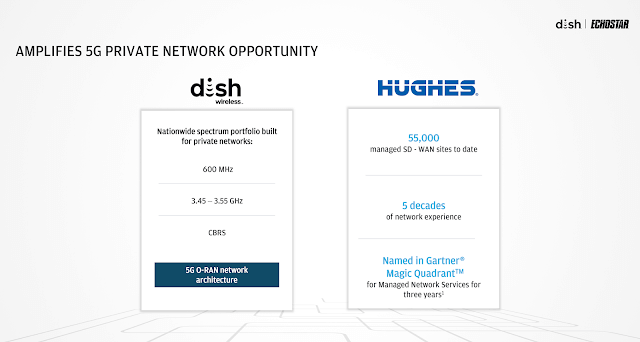
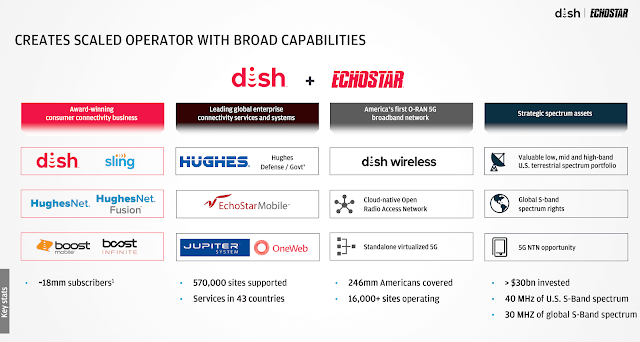
EchoStar Corporation completed its acquisition of DISH Network Corporation, creating a global leader in terrestrial and non-terrestrial wireless connectivity.  

The deal combines DISH Network’s satellite technology, streaming services and nationwide 5G network with EchoStar’s satellite communications solutions.

  • DISH Network’s 5G wireless network that now covers more than 70 percent of the U.S. population.
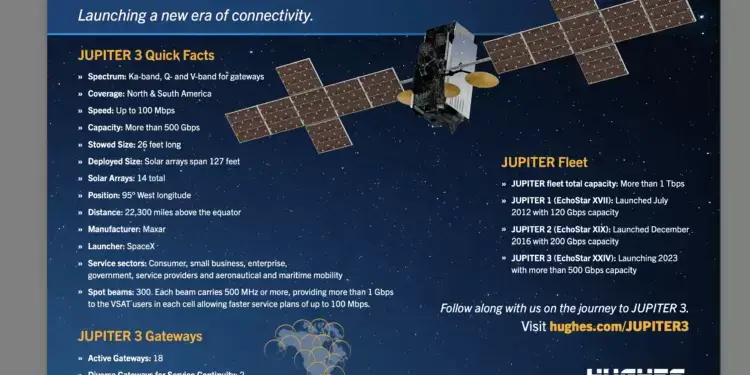
  • EchoStar’s successful launch of its JUPITER 3 satellite provides significant available capacity for converged terrestrial and non-terrestrial services. 

The company, with its headquarters located in Englewood, Colorado, operates globally under an array of consumer and business brands including Boost Mobile, Boost Infinite, Sling TV, DISH TV, as well as EchoStar, Hughes, and JUPITER satellite services, HughesON managed services, and HughesNet satellite internet. The integration of these brands has enabled the company to offer a comprehensive range of services across multiple sectors, providing customers with a diverse and technologically-advanced set of options.

“The completion of this merger marks an important milestone for our company and our customers, launching a new era of connectivity,” said Charles Ergen, Executive Chairman of the Board of EchoStar. “We have brought together two trailblazing companies with complementary portfolios to create a global connectivity leader with premier wireless, satellite, and video distribution capabilities. Together, EchoStar and DISH offer an enhanced consumer connectivity business and an unmatched enterprise managed services business. In a world that is increasingly wireless, we are well-positioned to drive revenue and profitable growth.”

“This merger brings us one step closer to our goal of offering ubiquitous connectivity to people, enterprises and things, everywhere,” said Hamid Akhavan, President and Chief Executive Officer of EchoStar. “Together we’re better positioned to realize the connected future by leveraging every type of transport, combined with smart, enabling technologies and fully integrated services. Our superior portfolio of technology, spectrum, engineering, manufacturing and network management expertise will deliver the unparalleled connectivity solutions that customers demand.”

Thursday, December 21, 2023

Luna acquires Silixa for fiber optic sensing

Luna Innovations announced a $50 million investment by White Hat Capital Partners as well as the acquisition of Silixa, a UK-based supplier of distributed fiber optic sensing solutions. 

Silixa Ltd is a company specializing in fiber optic-powered data services, primarily serving sectors like alternative energy, mining, and others. They provide distributed fiber optic sensing solutions, which are used to measure temperature, strain, and acoustics, even in hostile environments. These solutions are particularly significant for their high fidelity and real-time, high-resolution data collection, enabling a more comprehensive understanding of various environments and assets.

Founded in 2007, Silixa is based in both London, UK, and the US. It was established by Mahmoud Farhadiroushan and Tom Parker. The company is privately held and has been supported by major investors such as Lime Rock Partners, Chevron Technology Ventures, and Equinor Technology Ventures.

Silixa is expected to achieve approximately $30 million in 2023 revenue, representing approximately 15% annual growth on a constant currency basis. The purchase price consists of $21.5 million in upfront cash consideration and up to an additional $16.5 million in earnouts payable in 2025 upon the achievement of certain 2024 financial performance milestones. The transaction was funded with a portion of the proceeds from White Hat Capital Partners’ strategic investment in Luna. Inclusive of modest cost synergies, the acquisition is expected to be accretive to non-GAAP earnings in the first year.

Luna Innovations, which was founded in 1991 and is based in Roanoke, Virginia, is known for its fiber optic sensing products (like ODiSI), fiber optic test and measurement products (including OVA, OBR, and tunable lasers), and terahertz test and measurement devices (such as T-Ray and T-Gauge).

Luna Innovations reported a revenue of $109.5 million in the fiscal year 2022. 

Under the investment deal, White Hat has initially purchased 52,500 shares of Series B convertible preferred stock at a purchase price of $50.0 million, to be used for the Silixa acquisition and other corporate purposes.

Luna said the acquisition advances its position in the fiber optic sensing market, adding capabilities in distributed acoustic sensing (DAS), distributed temperature sensing (DTS) and distributed strain sensing (DSS) that offer enhanced performance for applications in energy, natural environments, mining and defense.


“The addition of Silixa not only elevates the portfolio of solutions we already offer in our key end markets, but also further strengthens our position as an enabler of energy transition by extending our reach into exciting new growth sectors, such as carbon capture and storage, as well as into monitoring processes that will help sustain ecosystems and safeguard fragile environments,” said Scott Graeff, President and Chief Executive Officer of Luna. “Silixa brings important technology capabilities and strong talent that we expect to leverage across our EMEA footprint, which we expect will drive profitable growth across our European enterprise.”

“Today’s announcement is a pivotal milestone in the history of Silixa and a testament to the hard work and dedication of our employees,” said Co-Founders Mahmoud Farhadiroushan and Tom Parker, who are both continuing with Luna. “We’re thrilled to be joining a company that shares our focus on innovation and our passion to provide solutions to some of the world’s most critical challenges,” added Glynn Williams, CEO at Silixa, who will remain as an advisor to Luna through 2024.

Cisco to acquire Isovalent for eBPF-based open source security

Cisco agreed to acquire Isovalent, a start-up focused on open source cloud native networking and security. Financial terms were not disclosed.

Isovalent holds leadership positions in the Cloud Native Computing Foundation and eBPF Foundation, in addition to upstream software contributions, and has led the development of Cilium, the leading cloud native solution for networking and security. 

eBPF, which stands for extended Berkeley Packet Filter,” provides a lightweight, efficient, and secure framework for running bytecode in the Linux kernel without changing kernel source code or loading kernel modules. Originally designed for network packet filtering, eBPF has evolved to offer more generalized functionality, including:

  • Network Functionality: eBPF is widely used for networking tasks, such as filtering, monitoring, and routing of network packets.
  • Observability: It allows for detailed monitoring and tracing of system and application behaviors. eBPF can be used to trace kernel and user-space functions, making it a powerful tool for performance analysis and debugging.

Cilium provides IT and platform engineering teams with networking capabilities and visibility into the behavior and communication of cloud native applications, enabling seamless policy definition of software-defined networks. Isovalent has also recently introduced:

  • Cilium Mesh:  allows for the easy connection of Kubernetes clusters with existing infrastructure across hybrid clouds,
  • Tetragon: an eBPF-based open source security solution that provides visibility to and enforces runtime behavior within an application and on the network.  
  • Isovalent Enterprise: an enterprise distribution of Cilium and Tetragon

Cisco said the acquisition will bolster its secure networking capabilities across public clouds, building on its Cisco Security Cloud vision for an AI-driven, cloud delivered, integrated security platform. The Cisco Security Cloud enables customers to abstract security controls from multicloud infrastructure to provide advanced protection against emerging threats across any cloud, application or workload.

“Together with Isovalent, Cisco will build on the open source power of Cilium to create a truly unique multicloud security and networking capability to help customers simplify and accelerate their digital transformation journeys,” said Jeetu Patel, executive vice president and general manager of Security and Collaboration at Cisco. "Imagine in today's distributed environment - of applications, virtual machines, containers and cloud assets - having security controls with total visibility, without hindering networking and application performance. The combination of Cisco and Isovalent will make this a reality.”

“Cisco is committed to nurturing, investing in, and contributing to the eBPF and Cilium open source communities,” said Stephen Augustus, Head of Open Source at Cisco. “Isovalent’s team will join Cisco's deep bench of open source governance and technical leadership to solve complex cloud native, security, and networking challenges. Their knowledge will accelerate innovation across the business and help further strengthen the Cisco Security Cloud platform to meet the growing demands of our customers.”

  • Isovalent, which is based in Cupertino, California, was founded in 2017 by Dan Wendlandt and Thomas Graf. In terms of funding, Isovalent has successfully raised a total of $69 million over two rounds of funding. The latest funding round was a Series B, which took place on September 7, 2022. The company has attracted a notable group of investors, including Andreessen Horowitz, Mango Capital, Mirae Asset Capital, Thomvest Ventures, M12, Grafana Labs, Google, Cisco, and SV Angel.

https://isovalent.com/

https://newsroom.cisco.com/c/r/newsroom/en/us/a/y2023/m12/cisco-to-acquire-isovalent-to-define-the-future-of-multicloud-networking-and-security.html

Equinix allocates $4.9B in green bonds to support 172 projects

Equinix completed the allocation of $4.9 billion in investment-grade green bonds, marking a significant step towards its science-based target of achieving climate neutrality by 2030 and enhancing operational eco-efficiency. Since 2020, the company has issued six bond offerings, with full allocation achieved by June 2023. These bonds have financed 172 green building projects at 105 sites, 33 energy efficiency projects, and two Power Purchase Agreement (PPA) projects over the past five years. The PPAs contribute to 225 megawatts of renewable energy capacity, expected to reduce or avoid 383,300 metric tons of CO2e annually, which is equivalent to the emissions from over 85,296 gasoline-powered vehicles driven for a year.

The cited a number of examples of its green projects, including:

  • Equinix's Co-Innovation Facility (CIF) in Ashburn, VA, which provides a platform for trialing and showcasing advanced power, cooling and control methodologies—such as fuel cells and liquid cooling—for use in its future data centers. The facility, located in Equinix's DC15 International Business Exchange™ (IBX®) data center, allows the company to work with key innovative suppliers to develop prototype approaches, such as direct-to-chip liquid cooling. Last week the company announced plans to expand support for advanced liquid cooling technologies—such as direct-to-chip—to more than 100 of its IBX data centers in more than 45 metros around the world.
  • Equinix's MU4 IBX data center, located in Aschheim, Germany, is designed for optimal efficiency and includes technologies for hybrid cooling and an Aquifer Thermal Energy Storage (ATES) system for efficient storage and recovery of thermal energy. The building also has a green façade and partially planted roof aimed at enhancing biodiversity while acting as additional natural insulation and cooling. Equinix is also exploring options to share the site's waste heat with external consumers.
  • Entering PPAs with developers to help build new renewable energy resources on the grids where Equinix operates, can enable the company to grow its business responsibly. This includes projects like the Rush Springs wind farm, a 125-megawatt wind farm in Grady and Stephens Counties, OK, where Equinix made a 15-year commitment. The projects are expected to deliver average annual avoidance of more than 218,600 metric tons of CO2e relative to the energy grid in the region.
  • The redesign of the chilled water production system at LD5, located in Slough near London. The new system enables the site to harness low outside temperatures during colder months and lowers energy consumption. This project has the potential to result in an average annual avoidance of more than 2,600 metric tons of carbon dioxide equivalent (MTCO2e) due to reduced electricity demand.

"Equinix considers green bonds a valuable tool to raise capital and finance large projects that can increase the sustainability of our business. Our green bonds demonstrate Equinix's continued commitment to design, build and deliver the most reliable, secure and sustainable data center and digital infrastructure possible in order to benefit our customers, the communities in which we operate, our investors, and the planet," said Katrina Rymill, SVP Corporate Finance & Sustainability, Equinix. "Through the allocation of our green bonds, we continue to be able to directly align our financing needs with our sustainability strategy."

https://www.equinix.com/newsroom/press-releases/2023/12/equinix-fully-allocates-4-9-billion-of-green-bond-proceeds

KT deploys 600G transmission route with Ciena

KT completed the construction of South Korea's first nationwide 600G transmission network.

The transmission network, operational since September 2023, spans over 1,000 km and is capable of transmitting 600G per wavelength in long-distance segments, connecting major cities nationwide from Seoul to Busan, Gwangju, and even Jeju Island.

The deployment uses Ciena’s 6500 flexible grid Reconfigurable Optical Add/Drop Multiplexer (ROADM) with WaveLogic 5 Extreme (WL5e) coherent optics, and Ciena's Manage, Control and Plan (MCP) domain controller.

Henry Kim, Regional Managing Director of Ciena North Asia, stated: “As pioneers in coherent optical technology, Ciena has been supplying optical transmission equipment capable of delivering 100G and 400G services to domestic telecom operators. The 600G transmission network introduced by KT is expected to provide a groundbreaking, cost-effective solution for transmitting high-capacity traffic throughout South Korea. This, in turn, is anticipated to enhance dedicated circuit services significantly.”

https://www.ciena.com/about/newsroom/press-releases/ciena-and-kt-build-first-nationwide-600g-transmission-route-in-south-korea

EIB awards €300m loan to iliad for 5G rollouts in France

The European Investment Bank issued a €300m loan to iliad SA to expand its 5G network rollout in France. This is iliad SA’s seventh loan from EIB, bringing its total amount of EIB financing granted since 2009 to more than €1.7 billion.

The iliad Group is now Europe’s sixth-largest mobile operator with some 38 million mobile subscribers. the Group’s 5G coverage rate in France is now over 94.4% of the population, and it has almost 15 million mobile subscribers across the country, of which 11 million are on the 4G/5G Free Mobile Plan.

“This financing transaction – the seventh loan granted to iliad SA by the EIB since 2009 – reaffirms the strength of the long-standing relations that unite our two groups, not only in France, but also in Poland via our subsidiary Play since the beginning of 2022. We’re delighted to be furthering our partnership with the EIB, which will enable us to pursue our ambitious objectives of rolling out and densifying our mobile networks in France so we can provide the best connectivity to our subscribers,” said Thomas Reynaud, CEO of the iliad Group.

https://www.iliad.fr/en/investisseurs/groupe/communiques-de-presse-financiers/all/all

Wednesday, December 20, 2023

NTT partners with TEPCO Power Grid for Tokyo data centers

NTT Global Data Centers Japan (NTT GDCJ), a subsidiary of NTT DATA Group Corporation, and TEPCO Power Grid will establish a new company to jointly develop and operate data centers in the Inzai-Shiroi area, of Greater Tokyo, Japan. The forthcoming enterprise, set to be launched in the spring of 2024, anticipates making its initial capacity available in the latter half of the 2026 fiscal year.

The inaugural endeavor of this collaboration involves purchasing land in the Inzai-Shiroi zone, a key location for substantial data centers in the Asia-Pacific area. The initial objective is to construct data centers in Inzai-Shiroi, aiming for a total IT capacity of 50MW. 

NTT Global Data Centers is investing 1.5 trillion yen (approx. US$12 billion) over the next five years to expand and upgrade its data center business globally.

TEPCO Group said it is aiming to improve the efficiency and sustainability of power generation/transmission by fostering the development of data centers and other facilities with local communities, making the most of its expertise in construction and operation of power facilities and utilizing its existing assets including land, in accordance with its fourth comprehensive special business plan.

https://www.nttdata.com/global/en/news/press-release/2023/december/ntt-global-data-centers-japan-and-tepco-power-grid-to-establish-a-new-company

AWS launches Canada West (Calgary) Region

Amazon Web Services (AWS) activated its second AWS infrastructure Region in Canada—the AWS Canada West (Calgary) Region. 

With this launch, AWS has 105 Availability Zones across 33 geographic regions, with announced plans to launch 12 more Availability Zones and four more AWS Regions in Malaysia, New Zealand, Thailand, and the AWS European Sovereign Cloud.

The AWS Canada West (Calgary) Region consists of three Availability Zones and joins the existing AWS Canada (Central) Region, which opened in December 2016. 

AWS also released a new economic impact study highlighting that the company is planning to invest an estimated $17.9 billion (approximately CA $24.8 billion) in Canada through 2037 via the new AWS Canada West (Calgary) Region and the existing AWS Canada (Central) Region in Quebec. 

The company also noted the following investments in Canada:

  • AWS has launched eight total Amazon CloudFront (CDN) locations in Toronto, Montreal, and Vancouver. 
  • AWS has announced AWS Local Zones in Toronto and Vancouver. AWS Local Zones are a type of AWS infrastructure deployment that places compute, storage, database, and other select services closer to customers for applications that require single-digit millisecond latency to end users.

“With the launch of the AWS Canada West (Calgary) Region, customers and partners across Canada now have additional infrastructure to deploy applications with greater resilience, availability, and lower latency, while enabling more customers to innovate with advanced technologies like artificial intelligence to help fuel economic development across the country,” said Prasad Kalyanaraman, vice president of Infrastructure Services at AWS. “AWS is committed to helping organizations of all sizes and across all industries increase agility and drive innovation. We are proud to deepen our investment by driving local job creation, building cloud skills, and creating opportunities for growth and collaboration with our local customers and AWS Partners.”


https://aws.amazon.com/about-aws/global-infrastructure

  • AWS Regions are composed of Availability Zones that place infrastructure in separate and distinct geographic locations. Availability Zones are located far enough from each other to support customers’ business continuity, but near enough to provide low latency for high availability applications that use multiple Availability Zones. Each Availability Zone has independent power, cooling, and physical security and is connected through redundant, ultra-low-latency networks. AWS customers focused on high availability can design their applications to run in multiple Availability Zones to achieve even greater fault tolerance.

Dell'Oro: AI boosts the server semiconductor and component market

Accelerators, mainly used for AI applications, drove the server semiconductor and component market to 29 percent year-over-year in 3Q 2023, according to a new report from Dell'Oro Group. The report observes that the accelerator market is on track to surpass the CPU market in revenues by nearly two-fold in 2023.

"The server and storage system component market is poised for an 11 percent growth for full-year 2023, primarily propelled by accelerators. Excluding accelerators, a 27 percent decline in revenue is forecasted, attributed to reduced demand resulting from inventory adjustments by system vendors and hyperscale cloud service providers for general-purpose computing," stated Baron Fung, Senior Research Director at Dell’Oro Group. "Looking ahead to 2024, we anticipate strong double-digit growth in accelerator revenue. Moreover, our forecasts indicate a comprehensive recovery in the market across various categories, including CPU, memory, storage drives, and network interface cards (NICs), as vendors increase their inventories in anticipation of healthier server demand. Alongside the unit growth of these component categories, we expect pricing to improve in tandem with higher demand and the transition to the next-generation server platforms," explained Fung.

Additional highlights from the 3Q 2023 Data Center IT Semiconductors and Components Quarterly Report:

  • NVIDIA led in server and storage system component revenues in 3Q 2023, driven by GPU accelerators, followed by Intel and Samsung. Accelerator revenues are on track to surpass CPU revenues for the first time in 2023, reflecting a shift towards accelerated computing.
  • NIC shipments declined briefly in 1H 2023 but returned to growth in 3Q 2023, driven by increased adoption of higher-speed ports and Smart NICs, especially for accelerated computing.
  • GPU revenue is forecasted to achieve a 70 percent growth in 2024. Although NVIDIA currently dominates this market, potential challenges arise from new competitive offerings by AMD and Intel, coupled with the emergence of custom accelerators by the hyperscale cloud service providers.

 https://www.delloro.com/news/ai-boosts-the-server-semiconductor-and-component-market-to-29-percent-growth-in-3q-2023/

stc expands global ambitions with acquisition of CMC Networks

center3, a wholly owned subsidiary of the stc Group, agreed to acquire CMC Networks, a global service provider across Africa and the Middle East, from the Carlyle Sub-Saharan Africa Fund. Financial terms were not disclosed.

CMC Networks boasts a pan-African Layer 2/Layer 3 MPLS network, with significant presence across Africa and the Middle East. It operates more than 110 service locations, servicing 51 out of 54 countries in Africa and 12 countries in the Middle East. The company also has regional hubs in key interconnected locations across Europe, the Americas, and the Asia-Pacific, enhancing its global reach. 

Fahad AlHajeri, CEO at center3, said: "This acquisition is a landmark moment for center3. CMC's enviable global footprint, high value customer base and portfolio of capabilities is very complementary to center3's digital infrastructure and connectivity assets. This acquisition exemplifies our strategic commitment to enter key markets with significant growth potential. Our previous investment in 2Africa Cable, coupled with this acquisition, underscores our conviction in Africa's essential role in center3's future growth. We are excited about the possibilities that CMC Networks will bring including its wealth of knowledge, capability in the African region and promising growth in the Middle East."

https://center3.com

  • In October 2022, Saudi Arabia’s stc Group launched Center3 Company, a new company that will be the owner of the digital infrastructure assets owned by stc Group, including data centers, submarine cables, international points of presence, and internet exchange points. Center3 Company aims to be the digital regional center for the Middle East and North Africa, operating a group of carrier-neutral data centers and a provider of international communication for the telecommunications sector through a submarine fiber-optic network. It aims to develop digital businesses and enhance investment opportunities in international communication services and data centers by providing the latest communication, hosting technologies and raising the capacity of data centers to meet the needs of the Asian, European, and African markets, and the rest of the world.
  • Earlier this year, center3 completed a 9.6MW expansion of its hyperscaler-grade data center Khurais in Riyadh. The state-of-the-art facility is built to meet global hyperscalers requirements. This expansion follows center3’s plan to build new data centers across Jeddah, Riyadh, Dammam, and other strategic locations in the Kingdom to address its customers’ requirements for high availability, disaster recovery, and scalability. The new facilities will feature operational standards that support service-level agreements and key performance indicators aligned with best-in-class international standards.


Nokia divests Device Management and Service Management unit

Lumine Group Inc. will buy Nokia’s Device Management (DM) and Service Management Platform (SMP) businesses FOR EUR 185 million, which includes a contingent consideration of up to EUR 35 million based on the performance of the business during the first year following close. 

Nokia Device Management software capabilities help communication service providers remotely manage home broadband access devices, as well as IoT sensors and devices from a variety of different vendors; while the company’s Service Management Platform improves customer care service, with coverage spanning more than 150 deployments worldwide and more than 1 billion devices under management.

Lumine Group acquires, manages, and builds industry-specific software, focused in the telecom and media space. The company intends to operate the acquired business as a standalone entity called "Motive". Approximately 500 Nokia Device Management and Service Management Platform employees are expected to transfer to Lumine Group as part of the deal.

Nokia says the divestiture reflects its strategy to focus resources on its core business. 

Raghav Sahgal, President of Cloud and Network Services, at Nokia said: “Nokia is pleased to enter this agreement with Lumine as another sign of progress in our strategy to focus investment in those areas most important to our business. Lumine Group has the telecom industry expertise as well as the strategic focus and resourcing to drive the Device Management and Service Management Platform businesses forward to a stronger future.”

David Sharpley, Group President at Lumine Group said: “We are absolutely thrilled to welcome Device Management and Service Management Platform customers and employees to Lumine. Consistent with our autonomous operating model, we will be reviving the heritage Motive brand for this new stand-alone Lumine company and we look forward to partnering with Nokia to ensure operational continuity with all customers.”

https://www.nokia.com/about-us/news/releases/2023/12/20/nokia-announces-deal-to-sell-device-management-and-service-management-platform-businesses-to-lumine-group/

  • Earlier this year, Nokia announced plans to sell its VitalQIP products to Cygna Labs Corp and to make Red Hat the primary infrastructure platform for Nokia Core Network applications.

Arelion activates new PoP at LightEdge in San Diego

Arelion announced a new Point-of-Presence (PoP) in San Diego at the Lightwave Data Center (LWDC) operated by LightEdge Solutions, a provider of secure cloud and colocation services. LightEdge Solutions’ Lightave carrier-neutral data center site is strategically located in the Kearny Mesa area of San Diego, offering colocation, cloud services and direct connectivity to AWS and Microsoft Azure. The PoP provides enhanced access to Arelion’s number one ranked Internet backbone, AS1299, as well as Arelion’s portfolio of connectivity services, including high-speed IP Transit, Dedicated Internet Access (DIA), Cloud Connect, Global 40G Ethernet Virtual Circuit (VC), IPX and DDoS Mitigation services for service providers, content providers and enterprises. 

This will be Arelion’s second fully diverse PoP in the emerging tech hub, providing wholesale and enterprise customers with high-speed connectivity to the carrier’s global IP backbone and access to its ecosystem of cloud and content services.


“Arelion’s new PoP at LightEdge’s Lightwave data center in San Diego extends our network to provide wholesale and enterprise customers with direct connectivity to our ecosystem of cloud and content services, allowing them to support end users in San Diego, Tijuana, Mexicali and surrounding regions,” said Art Kazmierczak, Arelion Director Strategic Sales & Network Development. “LightEdge’s facility provides the added power, security and scale our customers require, helping us deliver business-critical applications to meet the needs of these emerging technology markets.” 

 “We're thrilled about adding Arelion as a customer, a pivotal step in delivering advanced connectivity solutions. This strengthens our commitment to advanced, secure services, offering clients expanded connectivity options for improved user experiences. Together, Arelion and LightEdge are well-equipped to meet the evolving needs of our customers in emerging technology markets,” said Rob Carter, LightEdge Solutions Chief Growth Officer.


Extreme Networks names Monica Kumar as CMO

Extreme Networks named Monica Kumar as its new Executive Vice President and Chief Marketing Officer (CMO). 

Prior to Extreme, Kumar served as CMO at Hitachi Vantara, where she  drove a product simplification strategy that brought the company’s portfolio of data storage products together into one easy-to-consume, scalable, and resilient platform. Previously, she served as SVP of Marketing and Cloud go-to-market at Nutanix and spent more than 20 years at Oracle in a variety of marketing roles. 

At both Nutanix and Oracle, Kumar was instrumental in evolving both organizations from traditional hardware companies to thriving software subscription businesses. Kumar is an active board member for UPWARD Women and City Year San Jose/Silicon Valley, and a founding member of Neythri Futures Fund, a historic first fund with a mission to increase the diversity quotient in the venture capital ecosystem.

Monica Kumar, CMO at Extreme, said, “Extreme has made its mark in the industry by reducing complexity and creating an innovative, flexible, and simple approach for customers to deploy and manage their networks through the cloud. I’m thrilled to join at a time where we have a significant opportunity to further elevate our story, our brand and market leadership position – and it starts with customer-centricity and a vibrant partner ecosystem. I am looking forward to making an impact as part of Extreme’s incredible customer, partner, and people-centric leadership team.”

Tuesday, December 19, 2023

Lightmatter pulls in additional $155M for photonic interconnects / processors

Lightmatter, a start-up based in Boston that is developing photonic interconnect and compute products, annouced $155 million in a Series C-2 funding round. The company has raised over $420 million to date and is now valued at over $1.2 billion. The latest funding round was led by GV (Google Ventures) and Viking Global Investors, with participation from others. 

Lightmatter said its full stack of photonics-enabled hardware and software solutions will reduce power consumption and increase performance.

“Lightmatter is positioned to be a key driver in powering the next generation of computing systems that will further enable AI innovation. Through photonic technologies, Lightmatter is ensuring the steady progress in computing performance continues, despite growing power consumption challenges and slowing progress with transistor scaling,” said Lightmatter co-founder and CEO, Nick Harris. “We are thankful for the support of our investors, each of whom share our vision of Lightmatter playing an integral role in the future of computing. By increasing speed, lowering cost, and reducing environmental impact, our technologies can continue to push the limits of what’s possible, fueling greater AI adoption and innovation.”

Some additional notes:

  • Since May 2023, Lightmatter has grown its headcount more than 50% to meet client demand and product milestones. 
  • Lightmatter plans to open a Toronto office in 2024. 
  • Danner Stodolsky has been appointed Vice President of Data Center Architecture.  Danner was previously Senior Vice President of Cloud at SambaNova and a Vice President of Engineering at Google.
  • Colin Sturt has been appointed General Counsel. He brings over 20 years of semiconductor industry experience to Lightmatter and was most recently Senior Vice President and General Counsel at Dialog Semiconductor.

https://lightmatter.co/